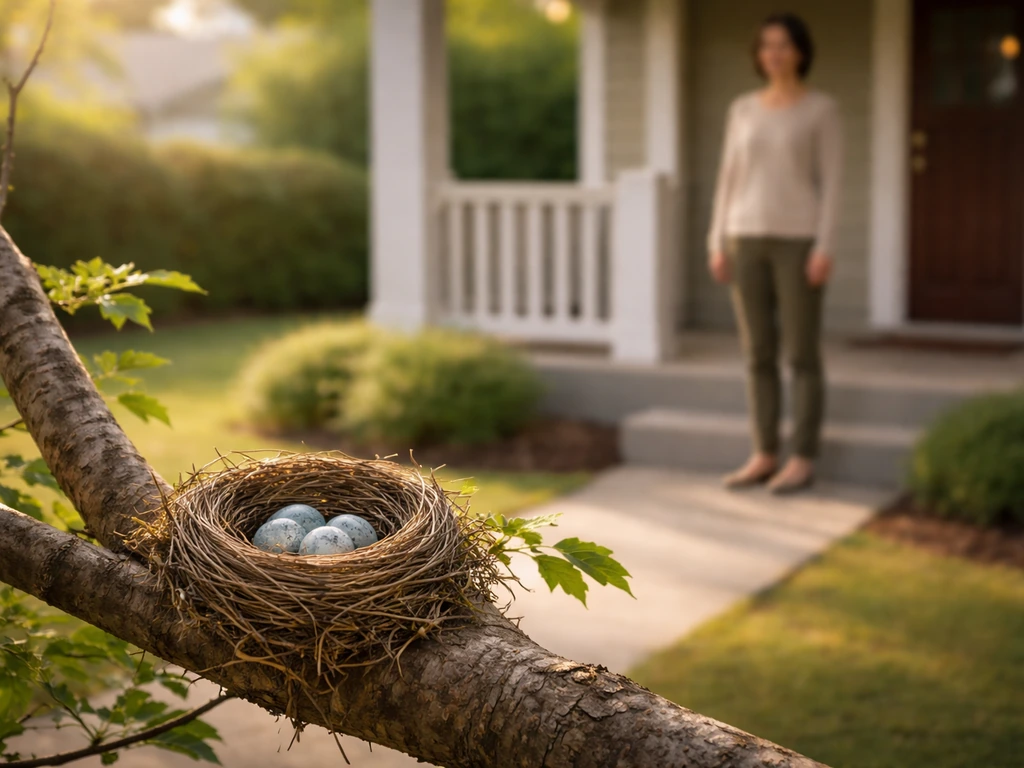
Yes, you can put a bird or an egg back in its nest, and in most cases you should, as long as the nest is still active, the egg or chick is healthy, and you can do it quickly and carefully. [The old myth that a mother bird will reject her young if you touch them is just that: a myth. ](https://www. reddit.
Can You Put a Bird Back in Its Nest? Plus Egg Return Guide

Maya Bennett
13 Apr 2026
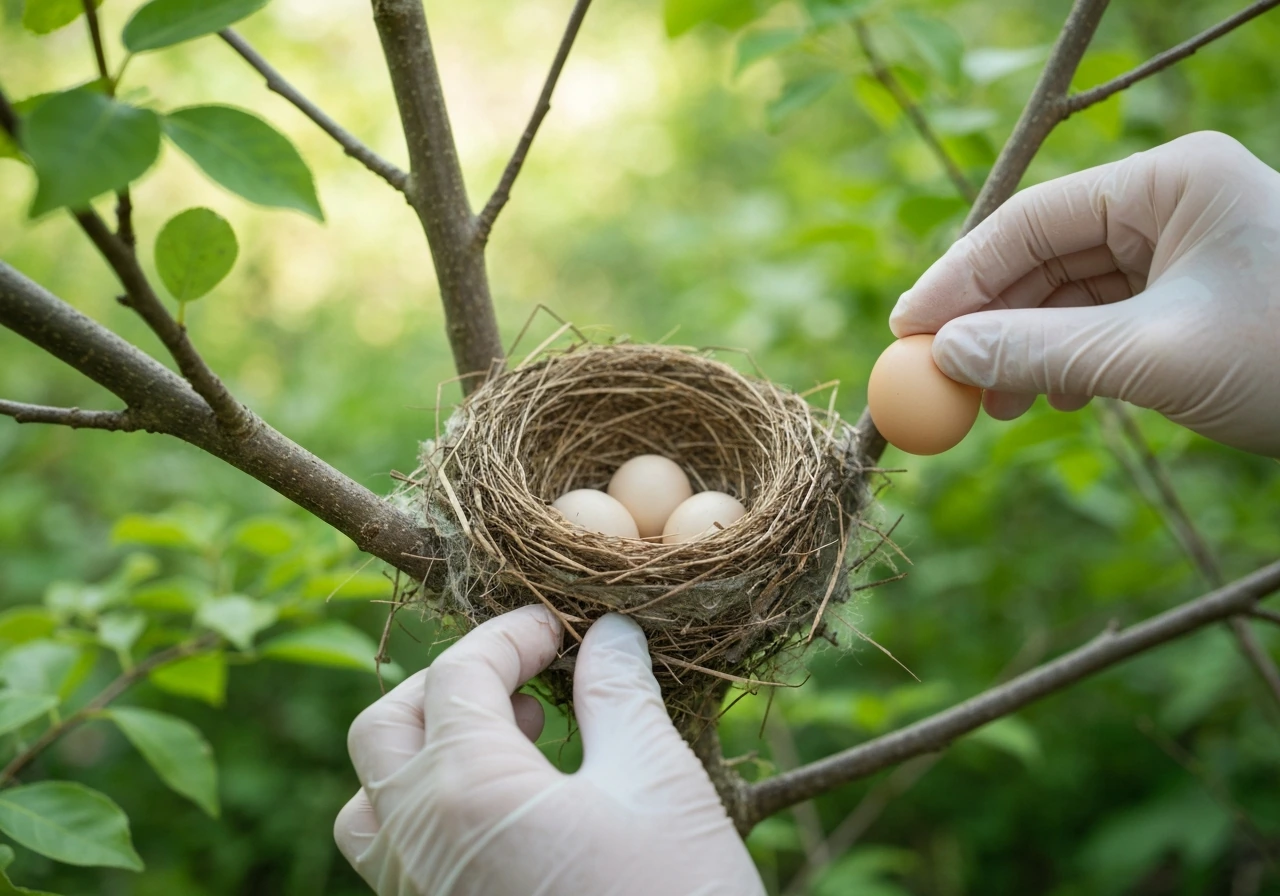
com/r/NoStupidQuestions/comments/egqdjt) Mass. gov also notes that if you find a hatchling or nestling outside the nest, you can try to return it to its nest and that parents will not reject it just because you touched it parents will not reject it if you touch it.
Most birds have a limited sense of smell and will not abandon their eggs or chicks because a human briefly handled them. That said, the decision is not always straightforward. Before you touch anything, you need to answer one critical question: is the nest actually abandoned, or are the parents still working?
Is the nest really abandoned? Check this first

This is the step most people skip, and it causes the most harm. NestWatch has documented cases where people assumed a nest was abandoned, only for the eggs to hatch days later, meaning the parents were still tending the nest all along. Before you do anything, take a few steps back and watch from a distance. Use binoculars if you have them. A parent bird actively brooding may be sitting very still and can be nearly invisible inside a nest cup. If the eggs are exposed and no adult is visible, that still does not mean the nest is abandoned.
Many species, especially during hot weather, will leave eggs unattended for stretches of time during the day. Incubation patterns vary widely by species: some parents alternate shifts every few minutes, while others may be away from the nest for 20 to 30 minutes at a stretch. A nest that looks empty at 10 a. m.
may have a brooding adult back on it by 10:30 a. m. NestWatch's monitoring manual even notes what could be called an "one-month rule" when assessing true abandonment: if eggs are present and no parents have been seen over a substantial observation period, only then can you cautiously conclude the nest is no longer active. That is a long time, and most people do not wait that long before intervening.
The safest approach is to observe from at least 30 feet away for a minimum of two hours before concluding that a nest is abandoned. Bring a folding chair, set a timer, and be patient. For fledglings (the older, more feathered young that hop around on the ground), the "abandoned" read is almost always wrong. Fledglings are supposed to be out of the nest and on the ground.
Their parents are nearby, watching and feeding them. They do not need your help. The distinction between a nestling (featherless or nearly so, eyes possibly closed, totally helpless) and a fledgling (feathered, alert, hopping) is the single most important ID you can make. North Carolina Wildlife specifically highlights this difference as the key factor in deciding whether any intervention is appropriate.
The legal side: what you can and cannot do
Here is where a lot of well-meaning people get into trouble. In the United States, most native songbirds, migratory birds, and their nests and eggs are protected under federal law, specifically the Migratory Bird Treaty Act (MBTA). That protection extends to the eggs and the nest structure itself. USFWS makes it clear: handling, moving, or disturbing an active native bird nest without a permit can be illegal, and violations can be reported to USFWS law enforcement.
Once the first egg is laid, Bi-State Wildlife Hotline says no further action can be taken without an egg or nest destruction permit, and it provides emergency guidance and a hotline contact for certain nest or egg situations no further action can be taken without an egg/nest destruction permit. Eagles have an additional layer of protection under the Bald and Golden Eagle Protection Act, where even non-physical disturbance can qualify as a prohibited "take.
" Ohio state law (Ohio Revised Code 1533. 07) similarly prohibits disturbing or destroying the eggs, nest, or young of nongame birds. Florida's FWC notes that permits for active nest removal may not even be available at the state level, requiring a federal MBTA permit instead.
What does this mean practically? Returning a healthy nestling or egg to its own undisturbed nest is generally considered the least harmful and most defensible action you can take, and it is widely encouraged by wildlife agencies including Arizona Game and Fish, CDFW, and NestWatch. What is not acceptable is moving a nest to a different location, removing eggs for transport, or disturbing a nest repeatedly. If you are unsure whether a bird is a protected species, assume it is. The burden is on you to verify otherwise, not the other way around.
When to return an egg, and when not to
Returning an egg to the nest makes sense in a specific set of circumstances. It does not make sense in others. Here is the honest breakdown.
Return the egg when:

- The egg fell or was knocked out of an active nest (by wind, a pet, or mowing) and the nest is intact and still reachable.
- The egg has been out of the nest for less than an hour in cool weather, or less than 30 minutes in temperatures above 85°F.
- The egg shell shows no cracks, no foul odor, and no fluid leaking from it.
- The nest still shows signs of active use: fresh droppings, intact cup structure, and no insects or mold.
- You can return the egg without climbing, disturbing nearby vegetation excessively, or spending more than a minute or two at the nest.
Do not return the egg when:
- The egg is cracked, crushed, oozing, or smells foul. These are signs of non-viability, and a compromised egg in the nest can introduce bacteria that harm the remaining eggs.
- The nest itself is destroyed, heavily disturbed, or inaccessible at a safe height.
- A cat or dog has had the egg in its mouth. Bacteria from a cat bite or puncture wound are lethal even without visible damage, and the same logic applies to eggs that have been mouthed by a pet.
- You have had the egg in your possession for more than a couple of hours, especially in a warm environment where bacteria can accelerate.
- The parents have clearly moved on: nest material is dried and collapsing, no fresh droppings are present, and no adults have been spotted after two or more hours of observation.
It is also worth asking whether you should be moving the nest itself if the site has become unsafe. That is a separate decision with its own rules, and understanding whether a bird nest can be relocated legally and safely will help you think through whether the nest needs to move at all, rather than just the egg.
How to put an egg back: step by step
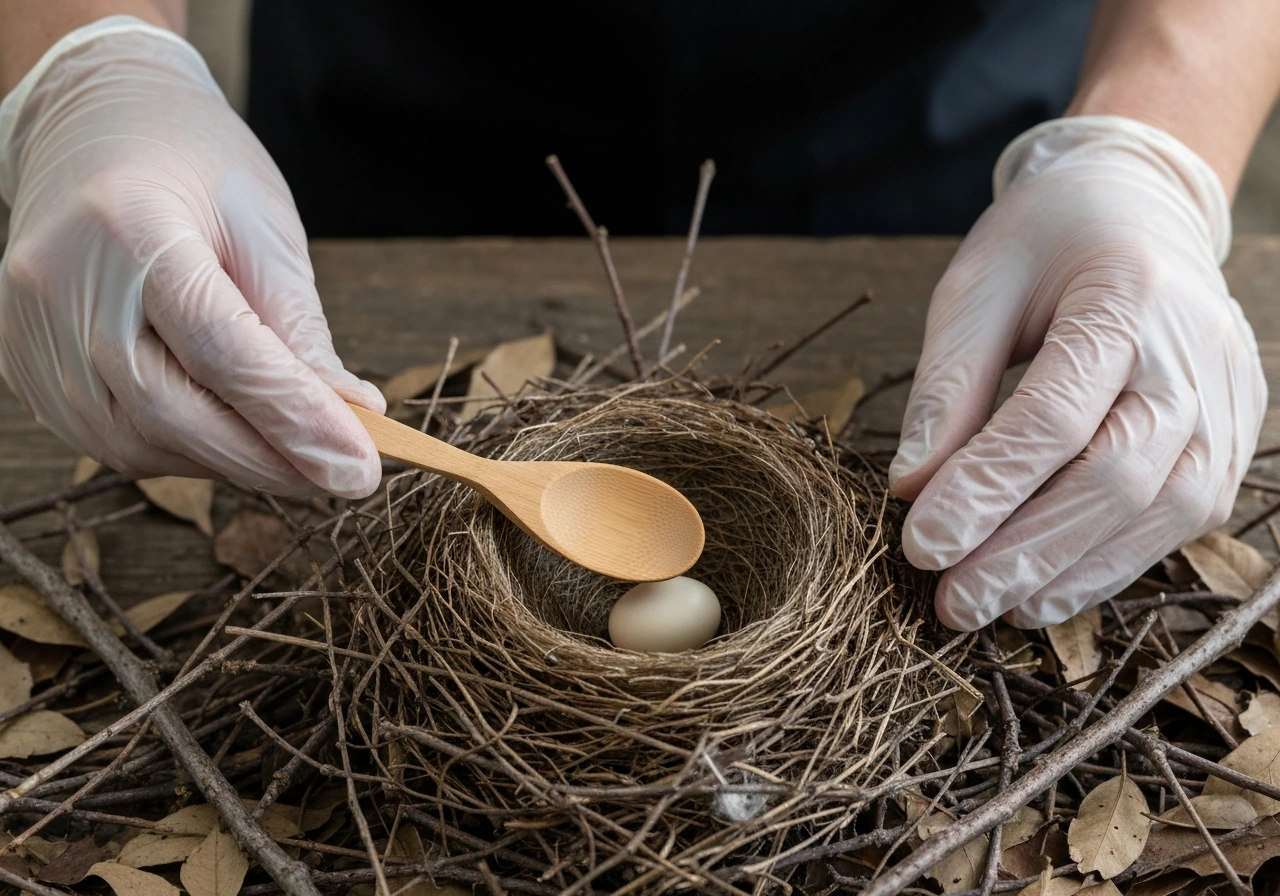
Assuming you have confirmed the nest is active, the egg is viable, and you can reach the nest safely, here is exactly how to do it.
- Wash your hands with plain soap and warm water and rinse thoroughly. Do not use strongly scented soaps or hand sanitizers. Dry completely. Alternatively, wear thin nitrile gloves, but unscented and powder-free only.
- Pick up the egg by cupping it gently in your palm rather than pinching it between fingers. You want even pressure distribution. Eggs are surprisingly durable but will crack under a fingertip.
- Move to the nest quickly and calmly. Do not linger near the nest or make repeated trips. Every second you spend there is time the parents stay away and time the remaining eggs are unattended.
- Place the egg into the nest cup in the same orientation you found it, with the larger end slightly elevated if possible. Eggs do not need to be in a specific orientation to be viable, but avoid placing the egg on top of other eggs; nestle it alongside them.
- Step away immediately, move at least 30 feet from the nest, and begin your monitoring period. Do not check the nest again for at least two hours.
- Take a quick photo from a distance before and after, using a phone's zoom function rather than walking close. This gives you a baseline to track whether anything changes.
Timing matters more than people think. Early morning is the best window for this kind of intervention because temperatures are cooler and the parent birds are typically most active. Avoid working near nests at dusk, as NestWatch's Code of Conduct specifically cautions that females may be returning to roost for the night and you risk flushing them off the nest permanently.
What to do in the hours and days after
Once the egg is back in the nest, your job is mostly to stay out of the way. Here is how to monitor responsibly without creating new problems.
- After the first two hours, observe from a distance using binoculars. You are looking for one thing: has an adult returned to the nest and resumed sitting on it? If yes, you are done. Leave it alone.
- If no adult has returned after two full hours, Bi-State Wildlife Hotline advises contacting a licensed wildlife rehabilitator for next steps rather than improvising further. The Northwoods Wildlife Center similarly recommends reaching out to a rehabilitation contact if parents have not returned within the expected timeframe.
- Do not check the nest daily by approaching it physically. One careful observation every 24 to 48 hours from a distance is more than enough. Repeated disturbance is one of the primary reasons parents abandon nests.
- If the egg was returned and the parents are actively brooding again, note the approximate date and estimate a hatch window. Most small songbirds incubate for 11 to 14 days; larger birds take longer.
- Watch for predator activity around the nest site. If a crow, jay, squirrel, or cat has been investigating, consider whether simple deterrents (like a physical baffle on a nest pole) make sense. Do not disturb the nest to install protection.
One question that comes up often is whether the parents will actually find their way back if anything about the nest environment has changed. If you have had to handle the nest or the egg was on the ground for a while, you might be wondering about what happens when the parents return to an altered situation. The short answer is that most birds are strongly site-faithful and will return to the nest location even after brief disruptions. For a fuller explanation of the factors involved, see whether a bird will find its nest if you move it, which covers the behavioral science behind nest fidelity.
Species differences and common real-life scenarios
Not every bird behaves the same way after a nest disturbance. Here is how to think about the most common situations you are likely to encounter.
Robins, sparrows, and most backyard songbirds
These are your most common scenarios. Robins and house sparrows are fairly tolerant of brief human proximity and tend to return to nests after short disturbances. If a robin egg has rolled out of the nest after a storm or mowing, returning it within an hour is almost always the right call as long as the nest cup is still intact. Robin eggs are a distinctive blue and usually undamaged after a short fall onto soft ground. Check the shell carefully for hairline cracks before returning it.
Mourning doves
Doves build notoriously flimsy nests and eggs fall out more often than with other species. They also tend to flush off the nest quickly when approached, which makes them appear "abandoned" to casual observers. If you return a dove egg, give the parents extra time to resettle, up to three or four hours before concluding there is a problem. Mourning doves incubate for about 14 days and both parents take turns, so an absent parent at any given moment is completely normal.
Raptors and eagles
Do not attempt to handle raptor eggs or intervene with raptor nests without professional guidance. Eagles are protected under a separate law with disturbance provisions stricter than the MBTA. Even approaching an eagle nest too closely can constitute illegal disturbance. For injured or displaced raptor chicks, Bi-State Wildlife Hotline's raptor guidance makes clear that containment and immediate contact with a licensed wildlife rehabilitator is the only appropriate response. These birds have powerful talons and require specialist handling.
Ground-nesting birds

Killdeer, meadowlarks, and other ground-nesters present a different problem. Their nests are shallow scrapes in the soil, often with minimal materials, and eggs can be difficult to distinguish from the surrounding ground. If you have disturbed a ground nest while mowing or walking, replace any displaced eggs carefully and mark the area with a small flag or stake placed a few feet away (not directly at the nest) so you can avoid that spot going forward. Ground-nesters are particularly vulnerable to predator activity after disturbance because your scent trail can attract mammals.
After a pet encounter
If your cat or dog had an egg or chick in its mouth, the rule is clear: contact a wildlife rehabilitator immediately, even if the animal appears uninjured. Bacteria from a cat's mouth are particularly lethal to birds and can cause fatal infection within hours even without a visible wound. CDFW's rehabilitation guidance makes this explicit. Do not return a pet-mouthed egg or chick to the nest and consider the situation done; get it professional help.
Eggs that look old or "forgotten"
Sometimes people find an old nest with eggs still in it long after the breeding season has ended. Before touching anything, it is worth asking whether those eggs are even from the current season. Off-season or multi-year-old nests sometimes retain unhatched eggs. If you are curious about what you are dealing with and whether keeping it is even an option, see whether you can keep an old bird nest for guidance on the legal and practical rules around nest retention.
A quick comparison: return vs. contact a rehabilitator
| Situation | Best Action |
|---|---|
| Healthy egg fell from intact, active nest, parents visible nearby | Return egg to nest immediately |
| Healthy nestling on ground, nest visible and reachable, no injury | Return to nest, monitor from distance |
| Fledgling hopping on ground, feathered, alert | Leave it alone, parents are close |
| Egg or chick mouthed by cat or dog | Contact wildlife rehabilitator now |
| Egg cracked, oozing, or foul-smelling | Do not return; dispose of safely |
| Nest destroyed or inaccessible | Contact wildlife rehabilitator for renesting advice |
| Parents not seen after 2+ hours of observation | Contact wildlife rehabilitator |
| Raptor, eagle, or protected listed species involved | Contact wildlife rehabilitator and USFWS |
When the nest location itself is the problem
Sometimes the egg keeps falling out because the nest placement is inherently dangerous, near heavy foot traffic, under a leaking gutter, or on a branch that is too exposed. In these situations, returning the egg once is reasonable, but if the same egg keeps falling, you are not solving the problem. Consider whether predator protection (a baffle on a pole nest, thorny branch placement, or a temporary shelter from rain) is more practical than repeated interventions. The Wildlife Care Association's hotline manual notes that renesting is not always appropriate if the nest location itself is unsafe, and they recommend contacting a rehabilitator to discuss whether a temporary substitute nest structure is a viable option.
One important clarification: there is a meaningful difference between putting an egg back in its original nest versus physically moving a nest to a new location. The latter is far more disruptive and legally riskier. If you are wondering whether the whole nest should be moved, the guidance around whether a mom bird will find a moved nest covers the behavioral risks and what the research actually says about whether parents successfully relocate after a nest has been repositioned.
When to call a wildlife rehabilitator
A licensed wildlife rehabilitator is not a last resort. They are often the first call you should make when you are unsure. Every state has licensed rehab facilities, and most have hotlines that can give you advice over the phone in minutes without requiring you to bring the animal in.
Call them if: the bird or egg was in a pet's mouth, the bird appears injured or unresponsive, you cannot reach the nest safely, the parents have not returned after two hours, or the species involved is a raptor or other large protected bird. Do not try to raise or foster a nestling yourself. Beyond being illegal for most protected species, it is genuinely bad for the bird's long-term survival and socialization.
The bottom line is this: if a healthy egg has fallen from a clearly active nest and you can return it within the hour without disturbing the nest further, do it. Wash your hands, move quickly, place the egg gently, and walk away. Then watch from a distance and let the parents do their job. That is the most useful thing you can do, and in most situations, it is all the bird needs from you.
FAQ
What should I do if I can’t safely reach the nest to put the egg back?
If you cannot reach the nest safely (for example, it requires climbing, stepping into unsafe areas, or reaching under a ledge that puts you at risk), do not try. Call a licensed wildlife rehabilitator for direction. Even when returning the egg would otherwise be appropriate, you can cause abandonment or injury by putting yourself in a risky situation.
Can I put the egg back if it was out of the nest for a while or got cold?
Yes, but only when the egg was removed briefly and you can immediately replace it. Keep the handling time short, avoid blowing on the egg, and place it back gently in the nest cup so it sits like it did before. If the egg is cold for a long period, cracked, or appears unusually wet or dirty, skip return and contact a rehabilitator.
Is it okay to glue, tape, or pad the nest to keep the egg from rolling or falling out?
Don’t use any adhesives, “nest fixes,” or substitute nesting materials to secure an egg. If the original nest structure is intact, place the egg back as-is. If the nest is damaged or the egg keeps falling due to the nest being structurally unsafe, the better move is to reassess the location (predator and weather protection) or get rehabilitator guidance about a lawful, temporary substitute.
Should I wash a found egg before returning it to the nest?
Washing the egg is generally not recommended. In most cases, quick handling is sufficient, and you should not scrub or soak it. The key steps are clean hands, minimal time, and gentle placement. If the egg has visible heavy contamination (for example, pesticide residue, fuel, or persistent debris), contact a rehabilitator rather than trying to clean it yourself.
Can I substitute another egg if I found one that seems like it belongs in the nest?
No, do not put a different egg into the nest. Even if it seems like a “fix,” you can harm the parents’ ability to incubate properly and you may trigger rejection or increased exposure. If the concern is multiple eggs or uncertain species, treat it as a rehabilitator case, especially if you cannot confirm the nest is active and the egg belongs there.
What if the parents still aren’t back after I put the egg in?
If a parent bird does not return immediately, wait rather than intervening again. Many species have short off-nest intervals, and even two hours can be too soon if you only observed briefly. However, if you observed for about two hours (from a distance) and no adults return, contact a wildlife rehabilitator for the right next step.
Do I return a chick to the nest if it looks injured or not moving normally?
If the chick is injured, appears unresponsive, is bleeding, has missing skin/feathers, or was in a pet’s mouth, do not return it to the nest as your first action. Contact a rehabilitator immediately. A chick that looks “messy” may be salvageable, but pain, shock, or contamination from pets can require professional care right away.
How can I tell whether the baby on the ground is a nestling that needs returning or a fledgling that should stay put?
Use the species present and the chick stage to guide your choice. A featherless or nearly featherless nestling generally needs to be kept with the nest and returned if it fell out. A feathered fledgling on the ground is usually fine where it is, with parents nearby. If you are uncertain, assume you have a fledgling versus a nestling ID problem and get rehabilitator help rather than moving it repeatedly.
What if the nest keeps getting disturbed by people, lawn work, or pets?
Avoid making the situation worse by keeping additional people and pets away and stopping other activities near the nest. If the nest is in a spot that is repeatedly disturbed (mowing paths, foot traffic, pets repeatedly approaching), you may need predator or weather protection measures at a safe distance, or talk to a rehabilitator about next steps. Repeated nest visits often do more harm than the original “abandoned” appearance.
How do I monitor responsibly after I return the egg without causing more disturbance?
After returning the egg, you should not repeatedly check it closely. Keep observation at a distance and limit your visits to once or twice. If you must mark the area to avoid stepping there, place the marker a few feet away from the nest and do not trap predators or block adult flight paths.
What should I do if I find eggs in an old nest or it seems like the breeding season is over?
If you suspect the nest is off-season, multi-year, or eggs are likely old, do not handle it for return. Old eggs may not be from the current breeding cycle, and the legal and welfare implications differ from active nests. It is safer to observe from a distance and get guidance if you are unsure whether the adults are currently incubating.
What if the nest looks like it might be a raptor nest?
If the species is a raptor, you should not attempt egg or nest handling at all without professional guidance. Even approaching closely can create legal and survival risks. For injured or displaced raptor chicks, the correct path is immediate contact with a licensed wildlife rehabilitator or the appropriate local hotline.
Next Article
Should I Let a Bird Build a Nest? What to Do Today
Decide if to let a bird nest, how to check activity, avoid disturbance, and handle conflicts safely and legally.