Birds build bird nests, and in most species both parents share the work. The female typically takes the lead on construction, weaving and shaping the structure, while the male gathers materials, guards the site, and sometimes adds finishing touches. Which bird built the specific nest you're looking at depends on species, materials, location, and time of year, and narrowing that down is easier than most people think once you know what to look for.
Who Builds the Bird Nest? How to Identify Active Nests

Maya Bennett
23 Apr 2026

So who actually builds bird nests?
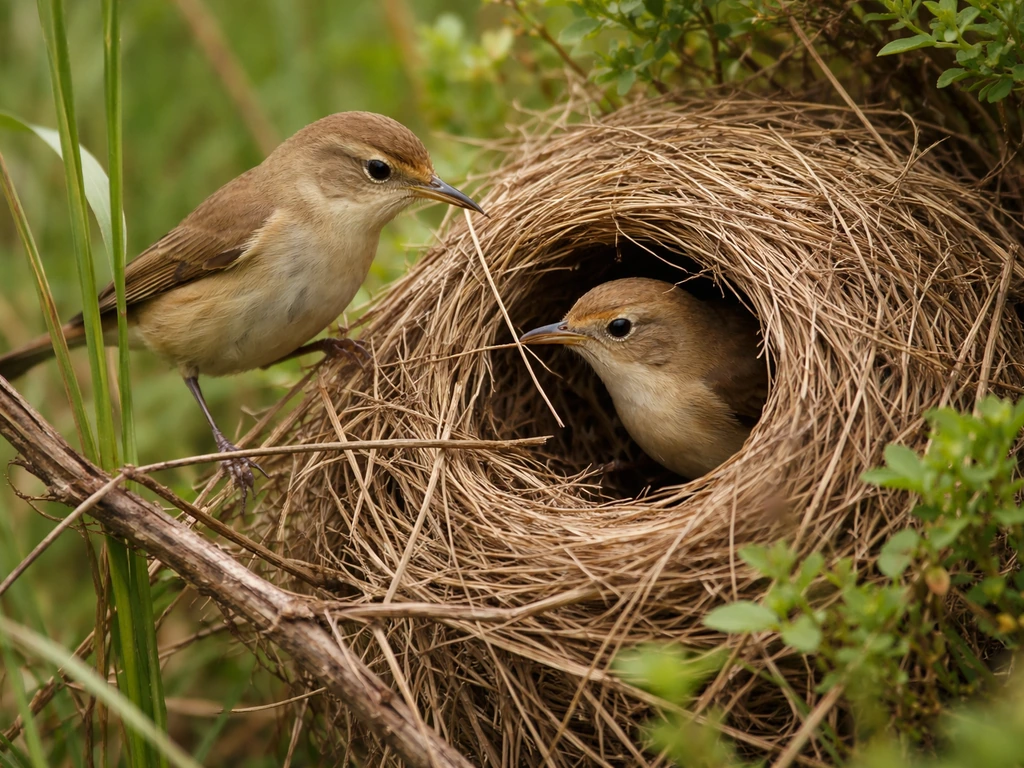
Birds build their own nests. No other animal is regularly doing this work for them, and no human needs to build one on their behalf. The builder is almost always the breeding pair, though the split of labor varies by species. In barn swallows, for example, both sexes contribute directly to nest construction, pressing mud pellets and dry grass into a cup shape under eaves or inside barns. American robins follow a similar pattern where the female does most of the building but the male gathers materials. Northern mockingbirds divide duties too, with males typically selecting the site and females doing most of the actual weaving and shaping, though both parents feed the young once the eggs hatch.
In some species, only one sex builds. Male weaverbirds, for instance, construct elaborate woven pendant nests entirely on their own to attract a mate, a behavior that's worth comparing to the more cooperative approach of swallows or robins. If you are wondering how does weaver bird make its nest, the easiest way is to look for that signature woven pendant structure.
Tailor birds sew living leaves together with plant fibers to form a hidden cup, again with the male doing most of the stitching. If you want a kid-friendly step-by-step comparison, see how does a tailor bird make its nest class 3 for how that stitched living-leaf pocket is put together. This tailor bird nest approach is a great fit for Class 3-level questions about how the stitched pocket is made how does a tailor bird make its nest class 3. Cavity nesters like woodpeckers excavate their own holes, while secondary cavity nesters like chickadees and house wrens move into already-hollowed spots.
The point is: there is no single universal answer, but the common thread is that it is always the birds themselves.
Which bird species built the nest you found?
Most people in North America who stumble on a nest in their yard, garden, or on their house are dealing with one of a handful of common species. Here is a quick breakdown of who builds what and where.
| Species | Who Builds | Typical Location | Key Materials |
|---|---|---|---|
| American Robin | Female builds, male gathers | Tree forks, ledges, gutters | Mud cup lined with grass |
| Barn Swallow | Both sexes | Under eaves, inside structures | Mud pellets, dry grass, feathers |
| Northern Mockingbird | Primarily female | Shrubs, low trees | Twigs, grass, bark strips |
| House Sparrow | Both sexes | Cavities, vents, gutters | Loose grass, feathers, trash |
| American Robin (platform variation) | Female | Building ledges, porch lights | Mud, grass, sometimes string |
| Carolina Wren | Male builds multiple starts, pair finishes | Dense shrubs, nest boxes, sheltered corners | Leaves, bark, feathers |
| House Finch | Female | Dense vegetation, wreaths, hanging planters | Grass, twigs, string, feathers |
| Eastern Phoebe | Female | Under bridges, on ledges, under eaves | Moss, mud, grass |
| Woodpecker (various) | Both sexes excavate | Tree trunks, wooden structures | Wood chips inside cavity |
If you are in a region where weaver birds or tailor birds are present, the nest architecture becomes an even more distinctive clue. A tightly woven pendant hanging from a branch tip points strongly to a weaver species. A pocket formed from stitched-together living leaves is a tailor bird's signature. Both of those nest styles have very specific construction techniques that make identification almost straightforward once you know the design.
How nest building actually works: materials, locations, and timing
The main nest types and what they tell you
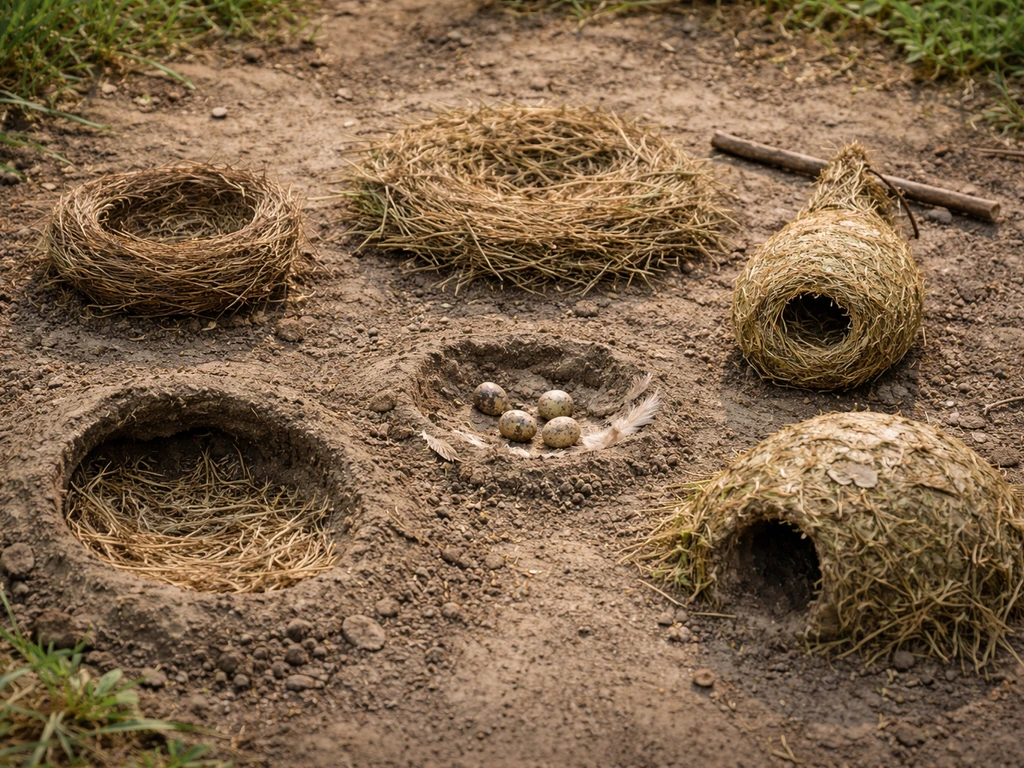
Cornell Lab identifies several core nest designs, and each design is a strong clue about the builder. A simple scrape or depression in bare ground is used by shorebirds and some ground-nesters. A platform of sticks is typical of raptors and herons. The most familiar backyard structure is a cup nest made from vegetation, often reinforced with mud. Domed nests have a roof and a side entrance. Cavity nests are inside enclosed spaces, either excavated by the bird or found ready-made. Pendant or woven nests, like those of weavers and orioles, hang from branches. Knowing which type you are looking at immediately narrows the list of possible builders significantly.
What materials birds use
Birds are pragmatic builders. They use what is locally available and structurally useful. Mud is a binder used by robins, swallows, and phoebes. Dry grass and plant fibers provide the bulk of most cup nests. Twigs form the outer scaffold of larger nests. Feathers, animal hair, and moss line the inside for insulation. Spider silk shows up in hummingbird and vireo nests as a flexible binding material. String, plastic, and human debris appear in house sparrow and house finch nests regularly. If you see a nest packed with feathers and loose trash in a gutter or vent opening, that is almost certainly a house sparrow.
Where birds choose to build
Location is one of the most useful identification clues you have. Under your eaves or inside your barn almost always means barn swallow. In a dense shrub at head height, probably a mockingbird or catbird. Wedged into a hanging flower basket or wreath on your front door, likely a house finch or robin.
Inside a vent or gap in your siding, house sparrow or starling. On a ledge above a porch light, phoebe or robin. In a tree cavity or nest box, any number of cavity nesters from bluebirds to chickadees. One Reddit user in [r/whatsthisbird](https://www.
reddit. com/r/whatsthisbird/comments/1sfke4z/mystery_nest/) said they were monitoring western bluebird nests in a NestWatch-style way and initially misidentified what looked like a mammal’s nest versus a cup-shaped bird nest. Birds choose sites that balance shelter from weather, concealment from predators, and proximity to food.
When birds build: seasonal timing
In temperate North America, most songbirds begin nesting in spring, typically March through June, timed so that hatchlings emerge when insect food is most abundant. American robins commonly raise two to three broods per season, meaning you could see a nest in active use from early April through late July. Barn swallows arrive later, usually May, and can still be feeding fledglings in August. Most species begin incubation after the full clutch is laid, so all eggs hatch within a day or two of each other. A robin's eggs hatch after about 12 to 14 days of incubation. Barn swallow eggs take 13 to 17 days. Knowing this helps you estimate whether a nest you found is still in use.
What to do immediately when you find a nest
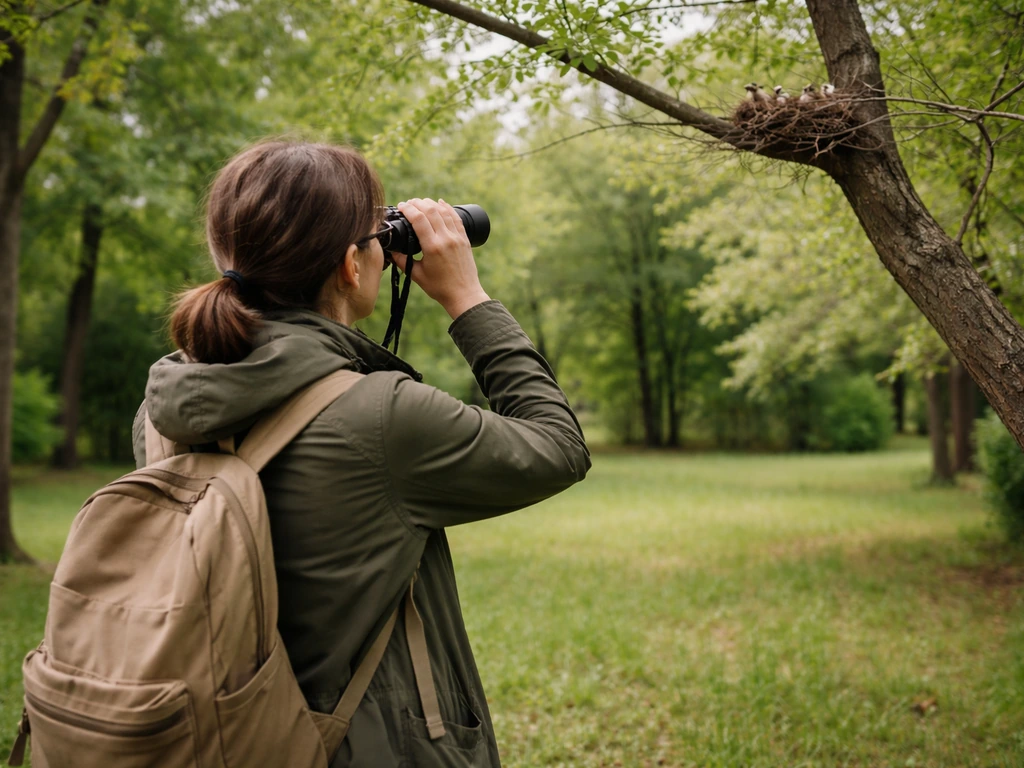
The instinct to get close and have a good look is completely understandable. The practical advice is to resist it. Here is what to do instead, step by step. NestWatch also advises minimizing disturbance by monitoring from a distance when possible and keeping check-ins brief, including avoiding approaches at dusk when adults are returning to roost Nest Monitoring Protocol.
- Stop where you are and observe from a distance. The National Park Service recommends staying about 75 feet away from nesting wildlife as a general minimum, using binoculars or a telephoto lens to get a good look without approaching.
- Take photos from that distance. A clear photo of the nest, its location, and any visible eggs or adults will help you identify the species later without repeated visits.
- Note the details: nest shape, materials visible on the outside, height from the ground, what the nest is attached to, and whether you see eggs, adults, or chick activity.
- Determine whether the nest is active. An active nest has eggs or chicks, or shows fresh material, adult visits, or a bird flushing when you approached. An empty, weathered, or collapsed nest is more likely abandoned.
- If it is active, back away completely and minimize further visits. NestWatch recommends keeping any monitoring check to under two minutes and avoiding visits at or after dusk when females are returning to roost on the nest.
- Do not touch the nest, move it, or block access to it. Do not remove it even if it is in an inconvenient spot.
- If the nest is in a location that poses genuine safety risk (a nest inside an air vent, a nest on machinery), contact your local wildlife agency or a licensed wildlife rehabilitator before taking any action.
One important caution: do not assume a nest is abandoned just because you do not see a bird on it for a few hours. Incubating birds leave the nest regularly to feed. NestWatch specifically warns that people often write off a nest as abandoned, then later discover it was still very much in use. When in doubt, observe quietly for a full day from a safe distance before drawing any conclusions.
The legal basics: what you can and cannot do
In the United States, the Migratory Bird Treaty Act (MBTA, 16 U.S.C. 703-711) makes it unlawful to destroy, relocate, or disturb an active nest of a migratory bird species without a permit or specific authorization. The U.S. Fish and Wildlife Service defines a nest as active from the moment the first egg is laid until fledged young are no longer dependent on the nest. Destroying an active nest, its eggs, or its chicks is a federal offense. This covers the vast majority of songbirds and backyard birds across the country.
An inactive nest is treated differently. If a nest is genuinely empty, no eggs, no chicks, and no active use, the MBTA generally does not prohibit removing it. The practical challenge is being certain it is truly inactive, which is why FWS recommends contacting your local wildlife office rather than making that call yourself. Individual states may have additional protections on top of the federal law, so always check your local rules.
- Never remove or relocate an active nest without a permit, regardless of how inconvenient the location is.
- Never handle eggs or chicks without authorization from a licensed wildlife rehabilitator or agency.
- Do not block access to an active nest; that counts as disturbance.
- If a nest is in a genuinely dangerous location (inside electrical equipment, for example), call your state wildlife agency or USDA Wildlife Services for guidance first.
- Canada and Mexico have parallel protections under their own wildlife legislation, and similar principles apply in most countries with migratory bird treaties.
- If you are unsure whether a nest is active, treat it as active until you can confirm otherwise.
Figuring out who built it: practical troubleshooting
Use the nest's design as your first clue
Start with shape and structure. A tidy mud-and-grass cup in a shrub fork is almost certainly a robin or thrush. A rough platform of sticks higher up in a tree is more likely a crow or larger species. A perfectly round woven pouch hanging from a branch tip signals a weaver or oriole. A pocket made from stitched living leaves is distinctly a tailor bird's work. If you are trying to identify a common tailor bird nest, remember that its stitched living-leaf pocket is the signature clue. The architecture alone eliminates most possibilities before you even look at materials.
Watch for common lookalikes that are not bird nests
Not everything that looks like a nest is one. Paper wasp nests are a frequent source of confusion, especially when built under eaves or on sheltered branches. They have a papery, gray, layered structure that is quite different from the organic bulk of most bird nests, but at a glance in dim light they can fool you. Look for hexagonal cells and a smooth, papery exterior to identify a wasp nest. Give these a wide berth since disturbing an active wasp colony is genuinely dangerous.
Bird's nest ferns (Asplenium nidus) are another common source of confusion, particularly for people who grow tropical houseplants or live in subtropical regions. The plant forms a rosette of broad fronds that radiates from a central fibrous core, which can look remarkably like a large nest from a distance. It is a plant, not an animal structure, and it poses no wildlife concerns at all.
How to confirm the nest is active vs. abandoned
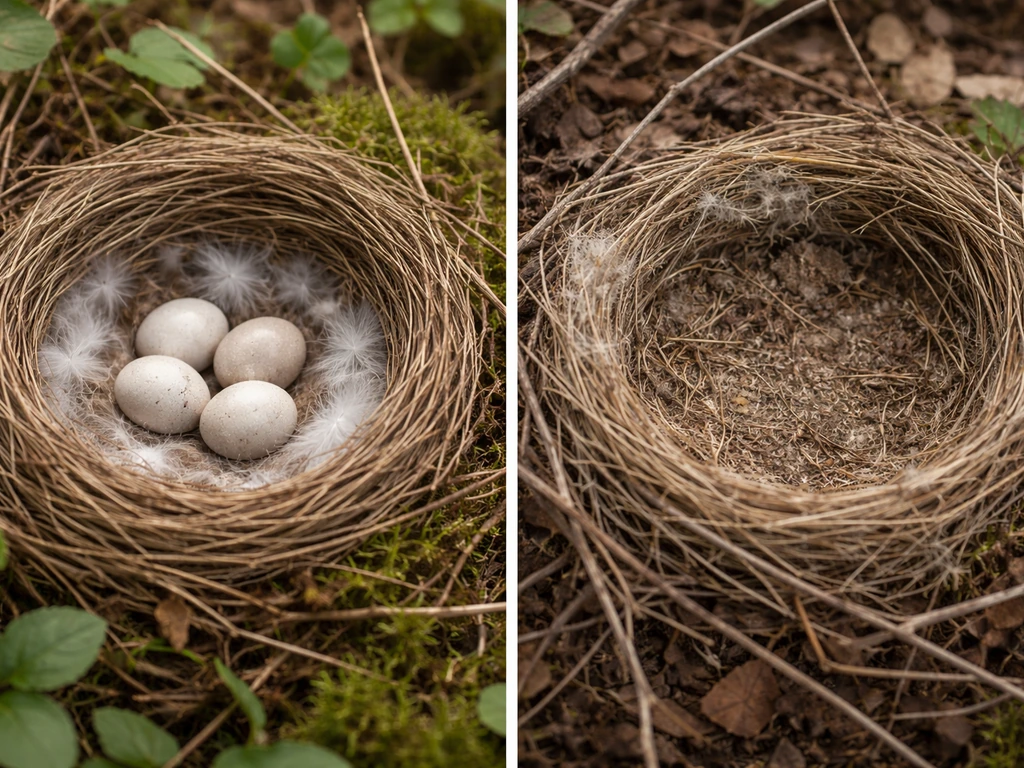
A fresh, well-formed nest with clean interior lining is more likely active or recently active. Signs of activity include eggs or down-covered chicks visible from a safe distance, adult birds returning regularly, and fresh droppings (whitewash) on the rim or below the nest. A collapsed, weathered, or heavily soiled nest with no adult visits over a full day of observation is more likely abandoned. For nests inside cavities where you cannot see in, NestWatch recommends using a mirror on a long pole rather than inserting your hand or face into the opening.
Your quick identification checklist
- What shape is the nest? (cup, platform, pendant, cavity, scrape, domed)
- What materials are visible on the outside? (mud, twigs, grass, moss, spider silk, feathers, human debris)
- What is the nest attached to or built inside? (tree fork, eaves, ledge, cavity, hanging branch tip)
- How high off the ground is it?
- What birds have you seen in the area recently?
- Are there eggs, chicks, or adult birds visiting?
- Is there fresh material or fresh droppings around the nest?
- What time of year is it, and is this consistent with the local nesting season?
Run through that list, take your photos, and then cross-reference with a regional field guide or a resource like Cornell Lab's All About Birds. You will have a confident ID in most cases without ever touching the nest. If you genuinely cannot tell whether the nest is active or if the location creates a safety concern, that is the moment to call your local wildlife agency rather than act unilaterally. Being patient and keeping your distance is almost always the right move, and it is the one that keeps both you and the birds out of trouble.
FAQ
If I cannot see birds at the nest, how can I tell who builds the bird nest?
In most cases, the builder is the breeding pair, but sometimes one sex does nearly all construction (for example, male weaverbirds). If you cannot see the bird, rely on consistent architecture plus materials and site, then confirm by watching from a distance for adult visits rather than trying to identify sex by appearance.
Is it safe to assume a nest is abandoned if I do not see the adult bird for a few hours?
Disturbance cues matter more than “time without sightings.” Incubating and brooding parents leave the nest briefly to feed, so a few hours of silence can still mean it is active. Use a safe, quiet observation window of up to a full day before concluding it is abandoned.
What is the best way to check whether a nest in a hole is active without getting too close?
If you must check activity in a cavity, use a mirror on a long pole from outside the opening. Avoid inserting your hand, face, or tools into the cavity, because that can directly expose eggs or chicks to harm and may increase abandonment.
Does a clean, newly built nest always mean it is currently active?
A “fresh-looking” nest is not automatically active. Nests can be rebuilt, repaired, or reused, so confirm with signs like eggs or down-covered chicks visible from a distance, regular adult traffic, and fresh droppings near the rim.
How do I tell the difference between a wasp nest and a bird nest?
Many people mistake wasp nests for bird nests, but wasp nests are usually papery gray and show hexagonal cells. Bird nests are typically organic bulk (mud, grass, twigs, feathers, hair) and do not have the smooth papery layered look of wasps.
Can a bird’s nest fern or other plant look like a bird nest, and could it host birds?
Yes. Some plant rosettes (like bird’s nest ferns) resemble a nest shape but are not animal structures. If it is attached to a living plant and made of fronds, it is a plant, not a nesting site.
If I see a certain bird near the nest, does that mean it built the nest?
Do not rely on “which bird is nearby” as a builder clue. Adults that are guarding or feeding can be different from the individuals that constructed the nest, especially in species where building tasks shift between sexes. Prioritize nest structure, materials, and consistent site behavior.
How does time of year help me figure out whether a nest is still in use?
Estimate seasonality using local timing, because nests found in spring to early summer are far more likely to be in active breeding. The pattern also helps interpret what you see, for instance, songbird incubation usually means eggs hatch within days of each other, so a nest can remain in active use across multiple visits.
What should I do if a nest seems empty from my angle but I cannot confirm it is truly inactive?
Yes, and it is a common edge case: some nests look “empty” from one angle but still contain eggs or chicks. If you cannot verify from a safe vantage, treat it as possibly active, keep distance, and contact your local wildlife agency if you need certainty.
What is the safest next step if I think the nest might be inactive and I want it removed?
If you are considering removing or relocating something you believe is inactive, do not act based on guesswork. Even if it looks abandoned, U.S. protections generally apply to active migratory bird nests, and states can add extra rules, so verification through a local wildlife office is the safer next step.