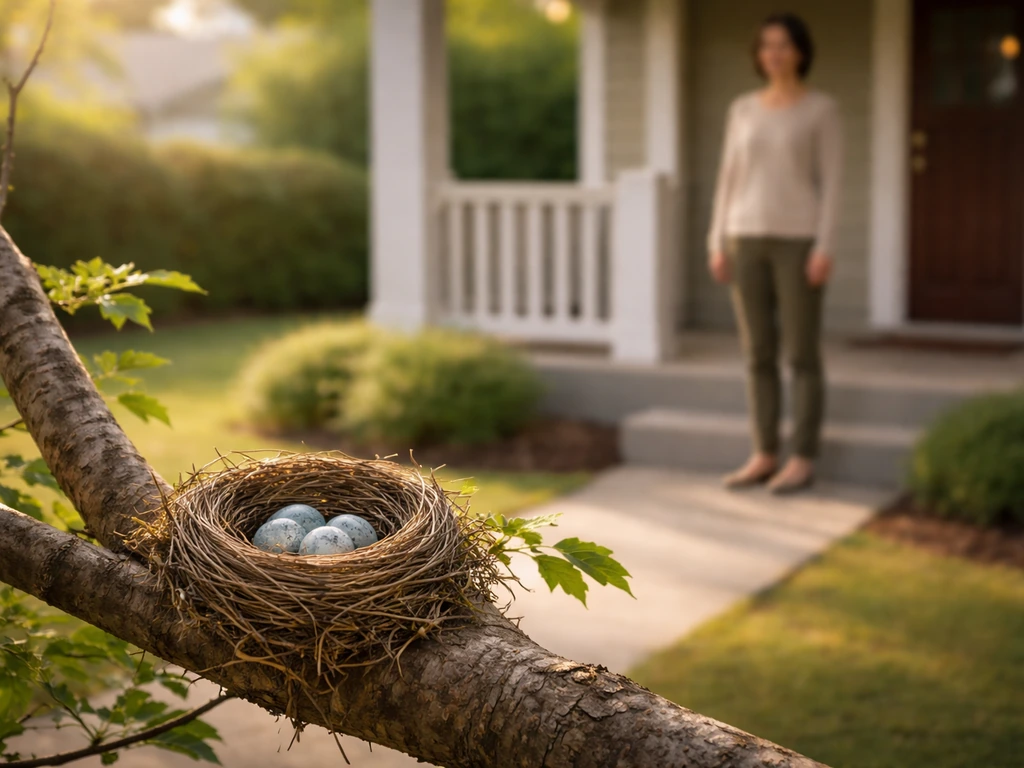
Yes, another bird can absolutely use an abandoned nest, but whether it actually will depends on the species involved, the time of year, the nest's condition, and what birds happen to be in your area. It is not a given. Some species, like Cooper's hawks, will return to the same nest for two to three years running. Others, like American robins, almost never touch a year-old nest and prefer to build fresh. The short answer: do not move or disturb anything until you are certain the nest is truly abandoned, and even then, know the law before you act.
Will Another Bird Use an Abandoned Nest? What to Do

Maya Bennett
12 Apr 2026
Which birds reuse nests (and which ones don't)
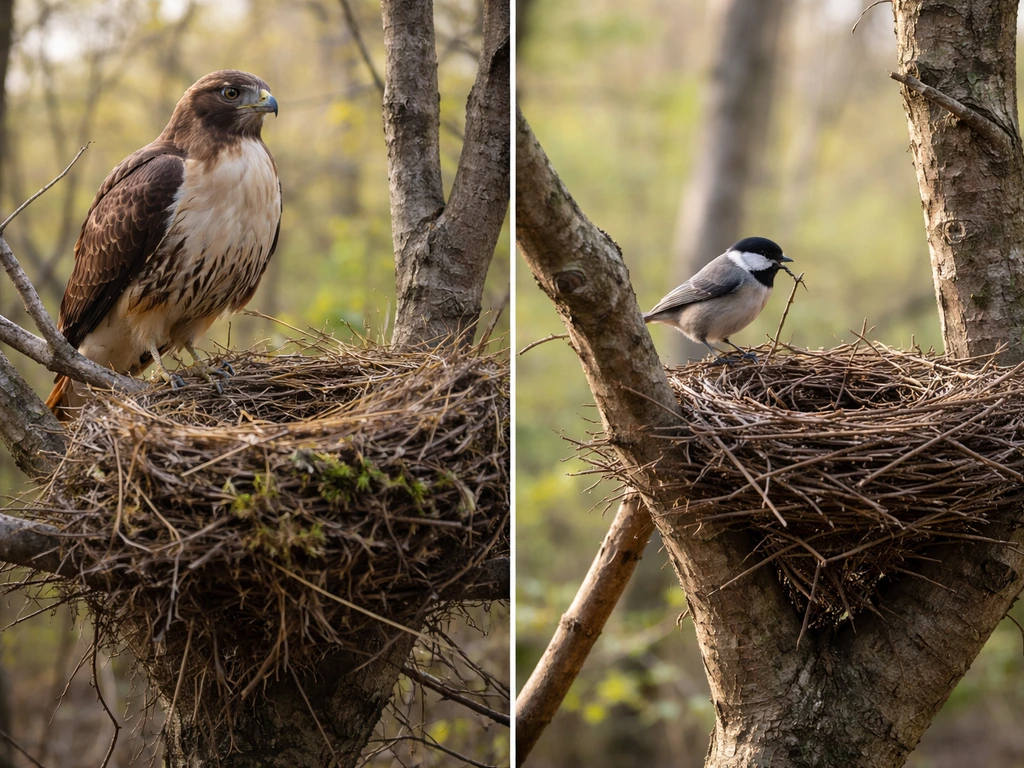
Species-level patterns matter a lot here. Raptors are the most consistent reusers. Cooper's hawks have been documented using the same nest structure for up to four years, though two to three years is more typical. Bald eagles and other large raptors build on their nests year after year, adding material each season until the structure can weigh hundreds of pounds. Common ravens also scavenge sticks from old nest sites and incorporate them into new construction, so even when they "start fresh," they are often drawing on old material nearby.
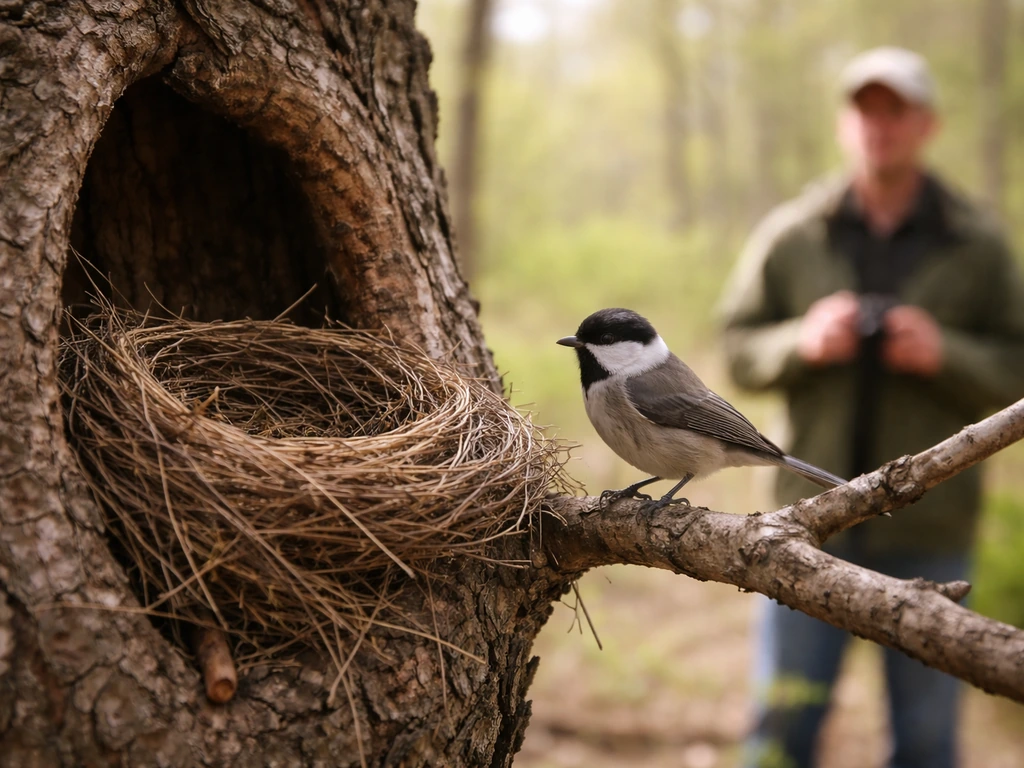
Cavity nesters are a complicated group. Tree swallows, for example, show a measurable response to old nest material left in a nest box: its presence actually influences whether they choose that site and how they build. Bluebirds and other cavity nesters tend to be more likely to reuse a site where they previously had a successful brood. Meanwhile, the question of whether a bird will use another bird's nest gets especially relevant with European starlings, which aggressively take over woodpecker cavities and nest boxes abandoned or vacated by native species.
Open-cup passerines are the least likely reusers. American robins, for instance, almost never reuse a year-old nest. blank" rel="noopener noreferrer">One study of open-cup nesters found only around 10% of females reused old nests, and that was within the same season, not across winters. Swallows in a colony context may build off traces of old mud at a site but still construct a largely new cup. If you want a fuller breakdown of how often bird nests are reused across species, the patterns are more nuanced than most people expect.
| Species / Group | Reuse Tendency | Reuses Same Structure? | Notes |
|---|---|---|---|
| Cooper's Hawk / Raptors | High | Yes, 2–4 years typical | Add material each season |
| Bald Eagle | Very High | Yes, indefinitely | Nests grow massively over time |
| Common Raven | Moderate–High | Partial (scavenges material) | May rebuild nearby using old sticks |
| Tree Swallow | Moderate | Site yes, structure partial | Old nest material influences site choice |
| Bluebirds / Cavity nesters | Moderate | Site often; structure sometimes | More likely after successful brood |
| European Starling | High (opportunistic) | Takes over others' cavities | Major competition risk for native birds |
| American Robin | Low | Rarely | Almost never reuses year-old nest |
| Most open-cup passerines | Low (~10%) | Occasionally within season | Usually build new each attempt |
Is it actually abandoned? Here's how to tell
This is the most critical step, and it is where people get into legal trouble. A nest that looks empty for a few hours is not abandoned. Adult birds routinely leave the nest during incubation to feed, especially early in the incubation period when eggs do not yet need constant warming. Female birds also typically leave before sunrise and after sunset for short periods. Some species, especially ground-nesting or cryptic birds, deliberately stay away from the nest to avoid drawing your attention to it.
NestWatch has documented cases where blank" rel="noopener noreferrer">monitors assumed abandonment, stepped in, and then discovered eggs hatched fine days later. That is why the standard field approach is: if the female is not on the nest when you check, come back and check again the following day. Do not draw conclusions from a single observation. The question of whether a bird will use an old nest is genuinely secondary to confirming you are not looking at an active one.
Signs the nest is genuinely abandoned
- No adult visits in 48–72 hours of careful, distant observation (use binoculars from at least 30 feet away)
- Eggs or chicks are cold to the touch if you can see into the nest without reaching in (cold eggs that have been unattended for more than 24–48 hours in cool weather are a strong signal)
- Nest structure is visibly deteriorating: mold on eggs, collapsed cup, heavy debris accumulation
- No alarm calling or defensive behavior from adults when you approach the area
- Known cause of abandonment: predator raid you witnessed, sudden death of a parent, or nest knocked down and replaced
The leaf test for uncertain situations
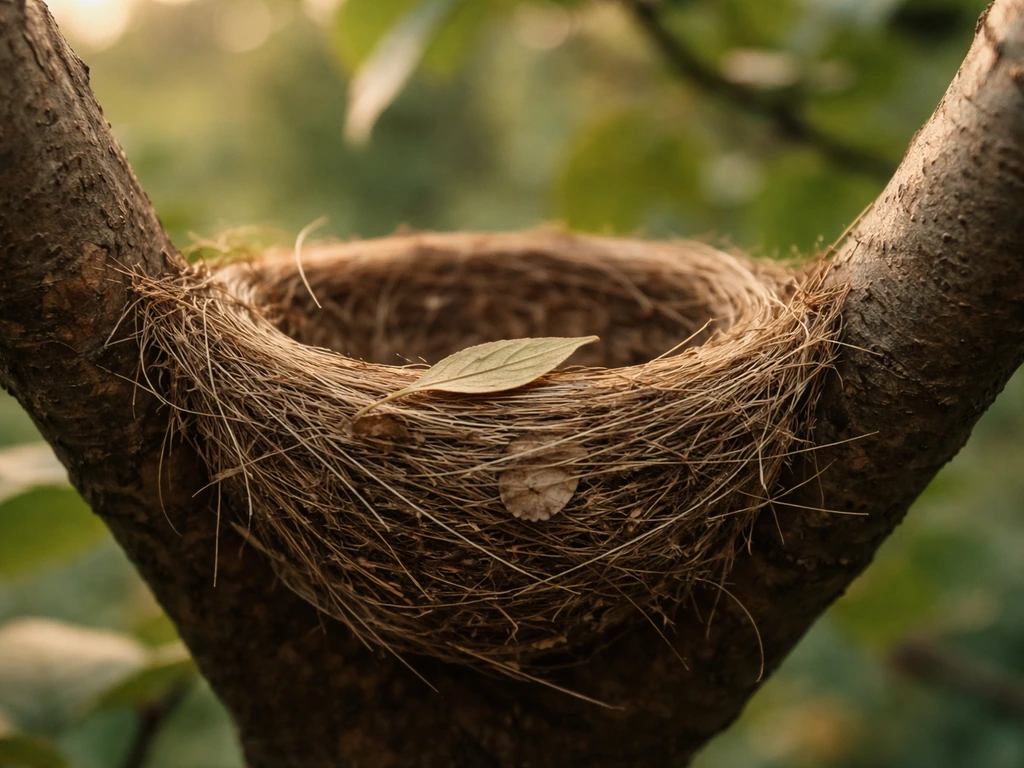
One practical monitoring trick: gently place a small leaf or a single piece of dried grass on the rim of the nest cup and check back in 24 hours. If active birds are using the nest, they will almost always remove or rearrange it. If it sits exactly where you left it after a full day, that is a meaningful signal the nest may be unoccupied. It is a low-interference way to gather data without ever touching the nest itself.
What makes reuse more or less likely
Season is the biggest factor. Right now in mid-April, you are in the heart of spring nesting season for most of North America. A nest that was built this spring and has been abandoned is far more likely to attract another bird than one that has sat through a winter. Old nests degrade fast: rain compresses the cup, parasites like mites and blowfly larvae can persist in old material, and the structural integrity weakens. A first-year nest in good shape in April has a much better shot at reuse than a weathered nest from last August.
Location matters just as much. Cavity nests (in nest boxes, tree holes, or building gaps) hold up structurally much better than open-cup nests exposed to weather, so they are more likely to remain usable. A nest tucked under an eave or in a dense shrub has better protection than one in an open tree branch. Nest material also plays a role: mud-based nests like those of cliff swallows are more durable than grass-and-rootlet cups. Birds pay attention to which species use other birds' nests as a kind of habitat signal, and an intact, well-placed cavity is essentially an advertisement.
Your local bird community determines who the candidates are. If you have starlings nearby, an unoccupied cavity will attract their attention quickly, which may or may not be what you want. If you have bluebirds, wrens, or swallows in the area, a clean nest box vacated mid-season can be claimed within days. Habitat quality, including nearby water, dense shrubs for cover, and insects for food, affects how much competition there is for any given nest site.
What to do right now: watch first, act later

- Step back and observe from a distance of at least 30 feet for a full hour. Note any adult movement to or from the nest, alarm calls, or defensive posturing.
- Record what you see: take a photo if you can without approaching. Note the time, weather, and any adults in the immediate area.
- Come back tomorrow at roughly the same time and repeat. Two separate observation sessions across 24–48 hours will tell you far more than one.
- Do not touch the nest, eggs, or any chicks. This is both a legal requirement and the right conservation move.
- If you see eggs or hear chick sounds, treat the nest as active until proven otherwise and continue monitoring.
- Use the leaf test if you want a simple physical signal to track between observations.
People often ask whether nests are used for anything other than nesting, which is worth addressing here. Bird nests are not only for eggs: some species roost in old nests on cold nights, and abandoned nests can also provide nesting material for other builders in the area. So even a nest that no one is actively using for breeding may still be serving a purpose.
When reuse seems unlikely: how to encourage new nesting nearby
If 72 hours of observation confirms the nest is genuinely abandoned, and you have identified a species that almost never reuses nests (like a robin), you can shift your energy toward supporting new nesting activity nearby. The most effective thing you can do is install a species-appropriate nest box at the correct height and placement. Bluebird boxes should be mounted on a post 4–6 feet high in an open area with a 1.5-inch entrance hole. Wren boxes can be hung lower in shrubby habitat. Tree swallow boxes do best near open water or meadows, mounted 5–10 feet up on a pole with a predator guard.
Habitat improvements compound the effect. Dense native shrubs within 10–20 feet of a nest box give birds cover and shelter for approaching and departing. A reliable water source, like a shallow birdbath kept fresh and clean, draws birds into the area and signals that the habitat is suitable. Reducing lawn pesticides increases the insect prey available to insectivorous nesters, which matters enormously in spring when parents are feeding nestlings. You can think of it as making your yard the most attractive option in the neighborhood. The broader question of whether a bird will reuse a nest at the same site year after year often comes down to how good the surrounding habitat is.
Quick placement guide for common nest boxes
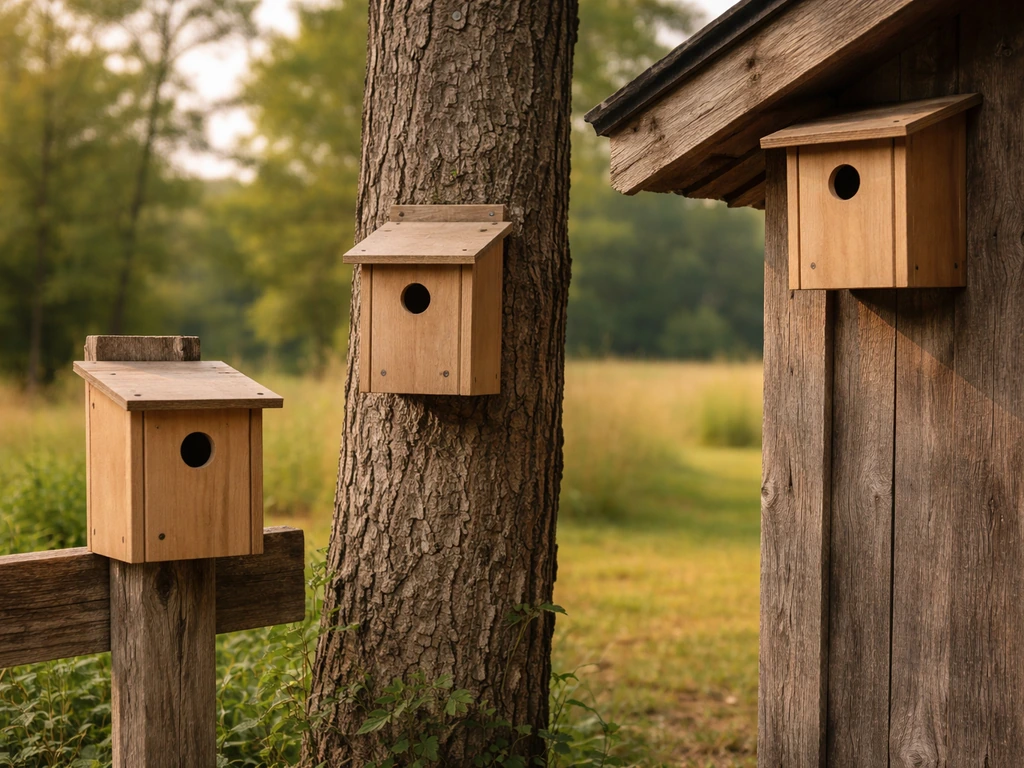
| Target Species | Entrance Hole Diameter | Mounting Height | Preferred Habitat |
|---|---|---|---|
| Eastern Bluebird | 1.5 inches | 4–6 feet on post | Open field, edge habitat |
| House Wren | 1.0–1.125 inches | 5–10 feet on post or tree | Shrubby gardens, woodland edge |
| Tree Swallow | 1.5 inches | 5–10 feet on post | Near open water or meadow |
| Chickadees / Nuthatches | 1.125–1.25 inches | 5–15 feet on tree | Wooded or semi-wooded yards |
| Wood Duck / Screech-Owl | 3–4 inches | 10–20 feet over water or field | Near water, mature trees |
The legal and ethical lines you need to know
The Migratory Bird Treaty Act (MBTA) makes it illegal to destroy, relocate, or tamper with any active native bird nest that contains eggs or chicks, or where young birds remain dependent on the structure. "Active" does not mean you saw a bird there yesterday. It means the nest has not been definitively confirmed as abandoned. Violating the MBTA can result in significant fines, and ignorance of the law is not a defense.
Even after a nest is confirmed abandoned, removal is only clearly permitted under federal law once the nesting attempt is fully complete and no birds are dependent on it. For species like swallows that nest on structures, U.S. Fish and Wildlife Service guidance is explicit: removal applications generally must be justified by compelling reasons such as a human health or safety hazard, property damage, or a direct threat to the birds themselves. Casual "I don't want it there" is not sufficient justification for a permit.
If you are unsure whether a nest is protected, contact your state wildlife agency or the U.S. Fish and Wildlife Service directly before doing anything. They are generally helpful and can clarify what is legal in your specific situation, especially for species that might have additional state-level protections beyond the MBTA.
Do's and don'ts at a glance
- DO observe from a distance using binoculars and document what you see with photos and notes
- DO wait a minimum of 48–72 hours across multiple observation sessions before drawing conclusions
- DO contact your state wildlife agency or U.S. Fish and Wildlife Service if you are uncertain
- DO clean out nest boxes after a confirmed completed nesting season to prepare them for the next attempt
- DON'T touch, move, or disrupt any nest without confirming it is legally inactive
- DON'T assume a nest is abandoned because you haven't seen a bird in the past hour
- DON'T remove a nest with eggs or chicks under any non-emergency circumstance without a permit
- DON'T place food scraps or bait near a nest to attract birds, as this also attracts predators
Troubleshooting the tricky situations
The nest was active recently and the young just fledged
Recent fledging is one of the most commonly misread situations. Young birds leave the nest before they can fully fly, and they spend one to two weeks on the ground or in low shrubs nearby, still being fed by parents. If you saw active nestlings last week and the nest appears empty now, assume fledging happened recently. The parents are probably still in the area. Leave the nest alone entirely: the adults may attempt a second brood in the same structure or begin scouting adjacent sites, and disturbing the area can cause them to abandon their dependent fledglings nearby.
You suspect there are still eggs or hatchlings but can't see clearly
If the nest is in a cavity or at a height that prevents a clear view, do not reach in or climb up to check. Instead, listen: hatchlings produce audible begging calls that can often be heard from a few feet away. You can also watch for adults carrying food, which is a definitive sign of active nestlings. If you genuinely cannot determine the status and you have a pressing reason to know (say, a contractor needs to work on that eave), call a licensed wildlife rehabilitator in your area. They can assess the situation legally and with minimal disturbance.
A predator hit the nest or a competitor is taking over
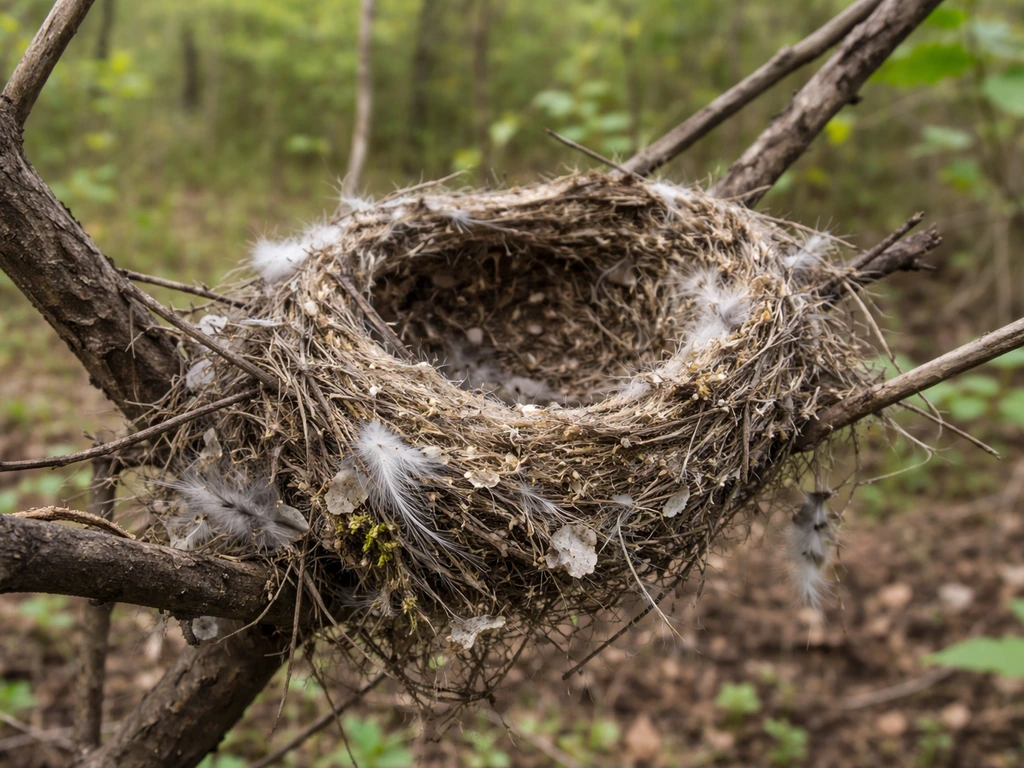
Predator raids, especially by corvids, raccoons, or snakes, can devastate a nest overnight. If you find a disturbed nest with shells, scattered feathers, or debris, the adults may still return and assess the site. Give them 24–48 hours before concluding they have moved on. In the case of nest-site competition, European starlings are the main threat to native cavity nesters across most of North America. If starlings are actively taking over a nest box you have installed, you are legally allowed to remove European starling nests and eggs because starlings are not protected under the MBTA (they are an introduced species). Use that option to protect native nesters. Monitoring the cavity closely and acting quickly on starling incursion is one of the most concrete things a conservation-minded homeowner can do.
The nest is damaged but not completely destroyed
A partially collapsed or rain-soaked nest is still potentially active. Birds are surprisingly good at refurbishing a damaged cup quickly. If you can see the structure is compromised but there is still evidence of adult presence (alarm calls, adults nearby, material additions), leave it alone. If the nest has fallen from its original position and you can safely restore it to the exact spot without touching any eggs or chicks, that is generally considered acceptable by wildlife rehabilitators, though it is always better to consult one first. A nest that has been replaced by the homeowner in the same location has a reasonable chance of being reclaimed by the adults, who identify their nest primarily by location rather than by memory of the exact structure.
Understanding what drives birds to return to or avoid a nest comes down to recognizing that they are making risk-based decisions: Is this site safe? Did it work last time? Is there competition? Answering those same questions from the outside, through careful observation and patience, is exactly how you make the right call for both the birds and yourself.
FAQ
If I clean out debris from an abandoned-looking nest, will another bird still use it?
Yes, but typically only if the nest is truly empty and intact, and you confirm inactivity over multiple checks. Offering “help” by adding lining material or cleaning out old debris can accidentally make the site look active or attract new birds before you are sure it is abandoned, so it is safer to wait until you have 72 hours of observation and any visible signs (like begging calls or adult food delivery) are clearly absent.
How long do I need to watch before I can assume it is safe to remove?
Be very careful. If you remove a nest that you only suspect is abandoned, you may be destroying an active protected nest under the Migratory Bird Treaty Act. Use a second observation window (often the next day) and, if the nest is in a cavity or hard to see, rely on listening for begging calls and watching for adult food-carrying before concluding it is inactive.
Will birds move back to the same nest spot after I find it empty?
If the nest was used by a species that reuses and the adults are still in the area, birds can start inspecting the site again surprisingly quickly, sometimes within days. After fledging or failed incubation, many birds will either start a new attempt nearby or reoccupy the same structure if it is protected and in the right season.
What is the difference between reusing a nest structure and reusing nest material?
A “new” bird may use an older nest material, even if the original builders are gone. Some species reuse the same structure, while others rebuild almost from scratch but incorporate nearby old material, so your best indicator is whether birds remove or rearrange what is already there during your observation period.
Can a nest look empty because adults are just off feeding?
Yes, nest boxes and cavities can attract the wrong timing. For example, a cavity may look unused because the adults are away feeding, then return later. That is why a single check during midday or late afternoon can be misleading, especially early in incubation.
What should I do if I find eggshells or a broken egg in what seems to be an abandoned nest?
If you find a nest with one or more broken eggshells, treat it as unresolved for legal purposes, because eggs may have hatched or a second attempt may occur. Give it 24 to 48 hours of watching for adult activity, and avoid any handling or relocation until you can confirm there are no dependent young or ongoing behavior.
How fast can a new bird claim an empty nest site?
For some species, yes, competition can cause quick takeovers, but usually you will see signs like new birds arriving at the site, repeated inspection, or material being carried in. If European starlings are present, they can dominate vacated cavities fast, sometimes within days, so timely but noninvasive monitoring matters.
Can abandoned nests be used for roosting or other purposes?
Often, yes. Even when a nest is not being used for breeding, some animals may use it for shelter or as a building material source, especially if it is still sheltered. However, if it is an active nest at any point, removing it or disturbing it is not allowed, so “secondary use” should never be your reason to act first.
If I never see the parents, is the nest definitely abandoned?
Do not assume “abandoned” just because you do not see the parents. Listen for begging calls if you are near enough, watch for adults carrying food, and if you cannot safely observe from the ground, treat it as potentially active and call a licensed wildlife rehabilitator.
If I do not want a certain species to reuse the nest, what is the safest approach?
If you are trying to prevent reuse or reduce the chance of a specific species taking over, timing is key. Many removals or deterrents are restricted during nesting windows, and deterrents that alter habitat can attract other species too. If your goal is starling exclusion in a nest box, the safest approach is to use species-appropriate box design and correct entrance hole sizes rather than disturbing the cavity when status is unclear.
Next Article
Should I Let a Bird Build a Nest? What to Do Today
Decide if to let a bird nest, how to check activity, avoid disturbance, and handle conflicts safely and legally.