
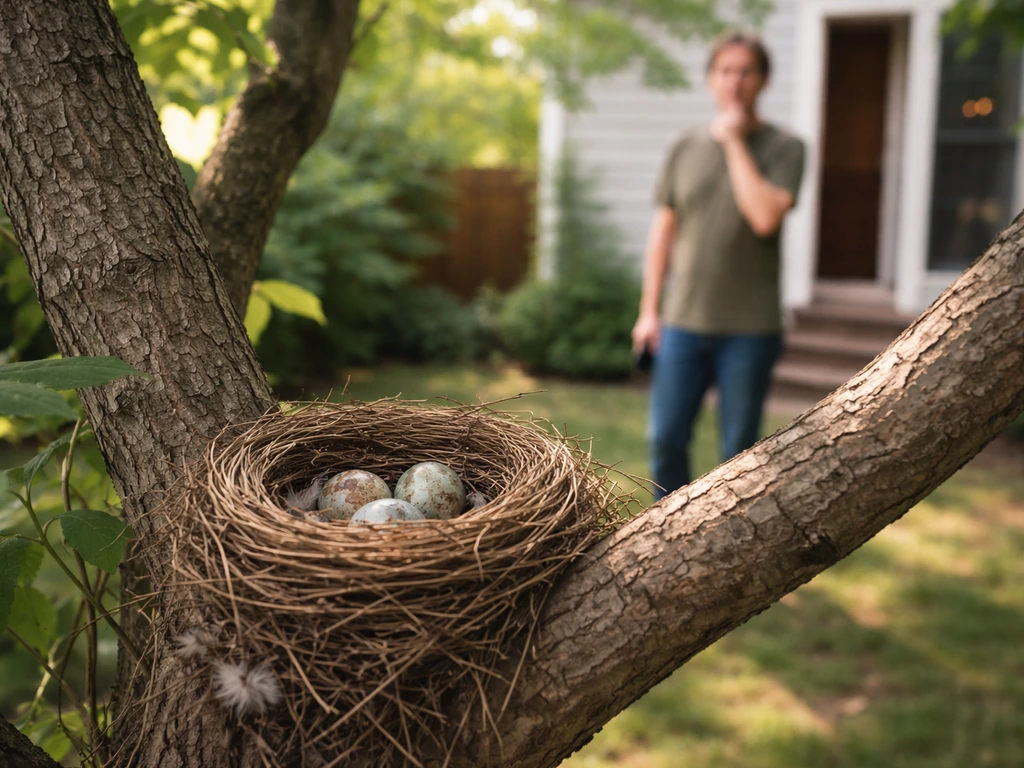
Here is the short answer: relocating an active bird nest is almost always illegal and almost always harmful. If the nest has eggs or chicks in it, you need to leave it alone and protect it in place. That is true whether it is wedged in your dryer vent, tucked into your porch light, or dangling over your driveway. The law (in the U.S., the Migratory Bird Treaty Act covers roughly 1,100 native species, their eggs, and their nests) means a permit is required to destroy or move an in-use nest. The biology compounds that: if the nest disappears, the parents do not go searching for it. The eggs or chicks simply die. What you can do is protect the nest where it sits, reduce disturbance, and plan your response based on whether the nest is active, what species built it, and exactly where it ended up.
Can a Bird Nest Be Relocated? Legal and Safe Options

The quick answer: relocation vs. what you can legally do
Under the U.S. Migratory Bird Treaty Act (MBTA), a nest is considered "in-use" from the moment the first egg is laid until the nestlings fledge and are no longer dependent on it. During that entire window, destroying or relocating the nest requires federal authorization. No permit, no touching. The same basic protection exists in the UK under the Wildlife and Countryside Act 1981, which makes it illegal to intentionally damage, destroy, or remove a nest that is being built or used. Legal exceptions exist but they are narrow: the USFWS does allow the prompt removal of migratory birds, including nests, eggs, and nestlings, from the interior of buildings when they create a genuine health, safety, or property risk, but that exception applies specifically to interior spaces under defined conditions, not to outdoor nests on your eaves or in your shrubs.
So what can you legally do right now? You can protect the nest in place, redirect foot traffic and pets, postpone maintenance or construction, document what you are seeing, and in genuine emergencies contact a licensed wildlife rehabilitator or your state or local wildlife agency. You cannot move the nest, remove eggs, or disturb chicks without authorization. Once the nest is inactive (fully abandoned or fledging is complete), you have more options, and those are covered later in this article.
Is it actually active? How to check without disturbing anything
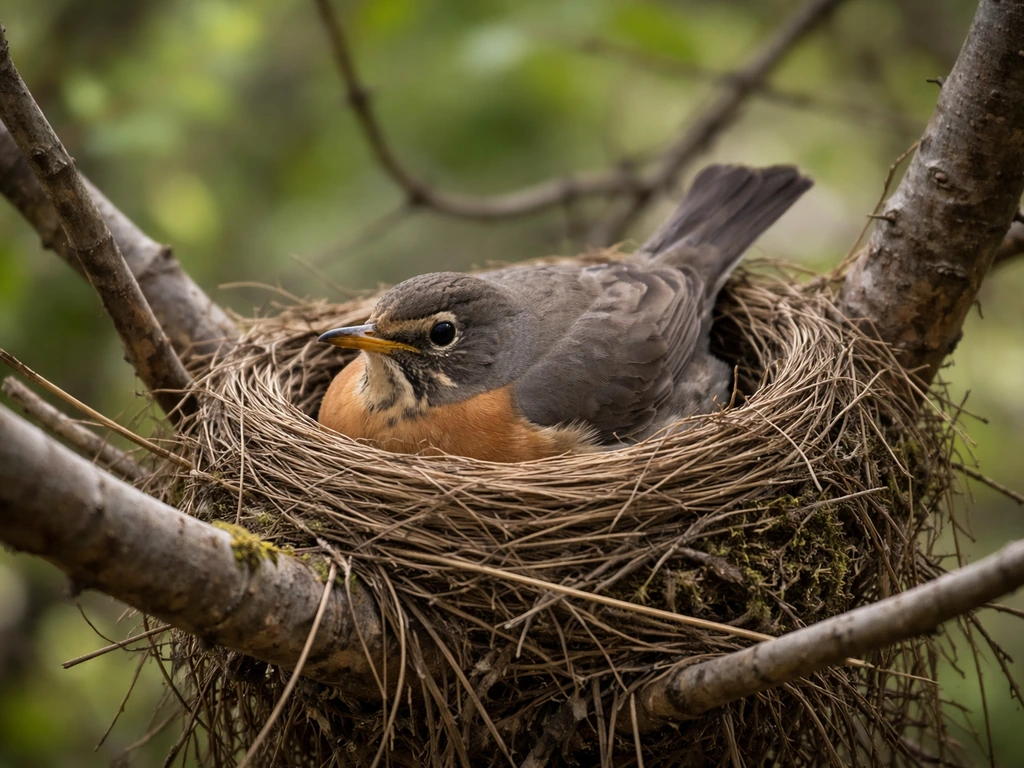
Before you do anything else, confirm whether the nest is active. This is the single most important decision point, and you can usually figure it out in five to ten minutes of quiet observation from a respectful distance (at least 10 to 15 feet). Do not touch the nest. Do not tap the structure it is attached to. Just watch.
Signs a nest is active
- An adult bird sitting in or on the nest (incubating eggs) or perching nearby and returning repeatedly
- Adults flying in carrying food or nesting material
- Adults carrying fecal sacs away from the nest (small white membranous pellets), which is a reliable sign of active chicks
- Audible peeping or begging calls from inside the nest cup
- Eggs visible inside the nest (pale, spotted, or colored depending on species)
- Fresh droppings on the rim or below the nest
Signs a nest is inactive or abandoned
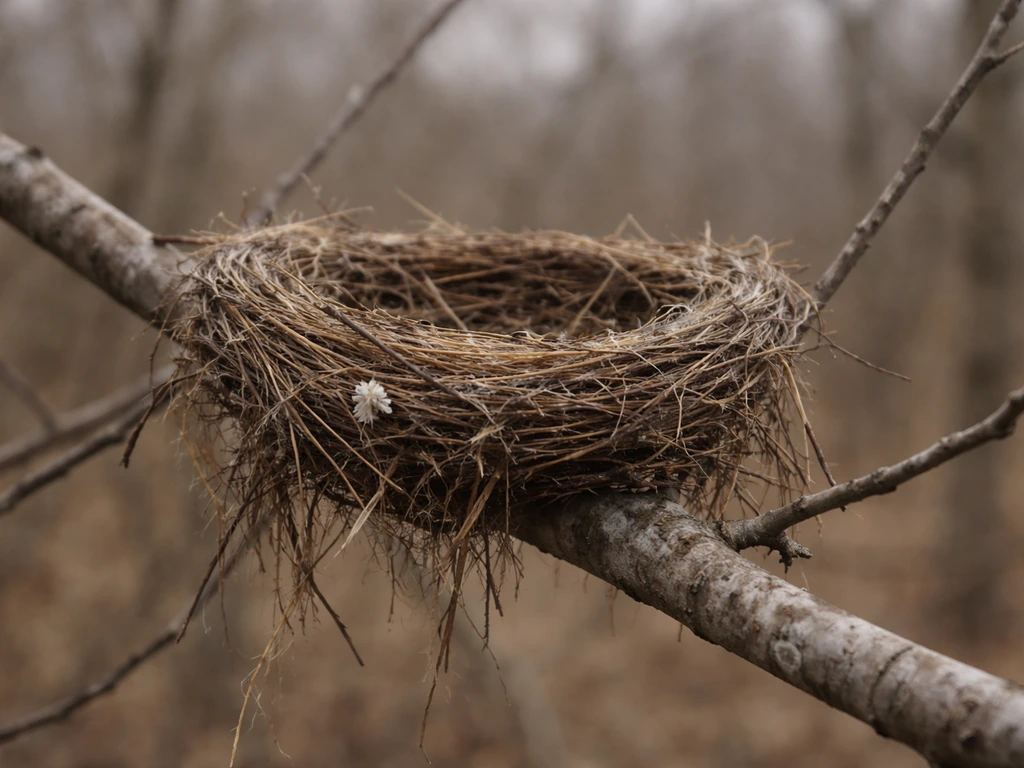
- No adult activity after 2 to 3 days of observation at different times of day
- Nest is weathered, flattened, or visibly deteriorating
- Late fall or winter observation (most passerine nests are abandoned after fledging and not reused)
- Nest appears to have been predated (feathers, eggshell fragments, visible damage)
Identifying the species (and why it matters)
Species identification changes your timeline and your options. A robin's nest holds eggs for about 13 days, then chicks fledge around 14 to 16 days after hatching, so the total active window is roughly 4 to 5 weeks. A mourning dove may cycle through 28 days total. A house sparrow or European starling, both non-native and not protected under the MBTA, occupies a different legal category entirely. Identifying the builder helps you estimate how long you actually have to wait, and whether federal protections apply. Use size, shape, placement, and materials as your first clues: a cup nest woven from grass and mud wedged in a shrub at eye height is likely a robin or thrush; a dome-shaped nest of bark strips in a tree cavity suggests a nuthatch or chickadee; a messy pile of straw and feathers stuffed into a vent is almost always a house sparrow or starling. Take photos. A clear photo of the adult bird is the fastest path to a confident ID.
Quick nesting stage and timeline reference
| Species (common) | Incubation period | Nestling period | Total active window (approx.) | MBTA protected? |
|---|---|---|---|---|
| American Robin | 12-14 days | 14-16 days | 4-5 weeks | Yes |
| Mourning Dove | 14 days | 12-15 days | 4-5 weeks | Yes |
| House Wren | 13-15 days | 15-17 days | 5-6 weeks | Yes |
| Northern Mockingbird | 12-13 days | 12-13 days | 4-5 weeks | Yes |
| House Sparrow | 10-14 days | 14-17 days | 4-6 weeks | No (non-native) |
| European Starling | 12 days | 21-23 days | 5-6 weeks | No (non-native) |
| Canada Goose | 25-28 days | Precocial (no nestling stage) | ~4 weeks | Yes |
Legal and ethical rules, and when to call a professional
The MBTA is a federal law, and ignorance of it is not a legal defense. It covers nearly all native bird species in the U.S., and the prohibition on taking, possessing, or destroying nests, eggs, or birds applies to private landowners just as it does to commercial developers. If you are in the UK, the Wildlife and Countryside Act 1981 provides equivalent protection. The basic principle in both countries: if the nest is being built or is in use, do not touch it, do not destroy it, and do not move it without a permit or licence.
Non-native species like house sparrows and European starlings are not protected under the MBTA in the United States, which means their nests, eggs, and adults can be removed without a federal permit. However, state laws vary, so check your local regulations before acting. Even when legal, removal of eggs or chicks should be done humanely, and if you are uncertain, do not proceed without advice.
Call a licensed wildlife rehabilitator or your state wildlife agency if: a bird or chick appears injured, the nest has been partially destroyed by a predator, a baby bird has fallen from the nest and cannot be safely returned, or you believe there is a genuine public health or safety emergency (a bird trapped inside a building, for example). Mass.gov provides a state resource to find a wildlife rehabilitator, and rehabilitators must have a federal Migratory Bird Rehabilitation permit to care for migratory birds licensed wildlife rehabilitator. Rehabilitators are licensed to handle situations that a homeowner legally cannot. Find your nearest one through the National Wildlife Rehabilitators Association or a quick search for your state's wildlife agency hotline.
Protecting the nest in place: barriers, exclusion, and reducing disturbance
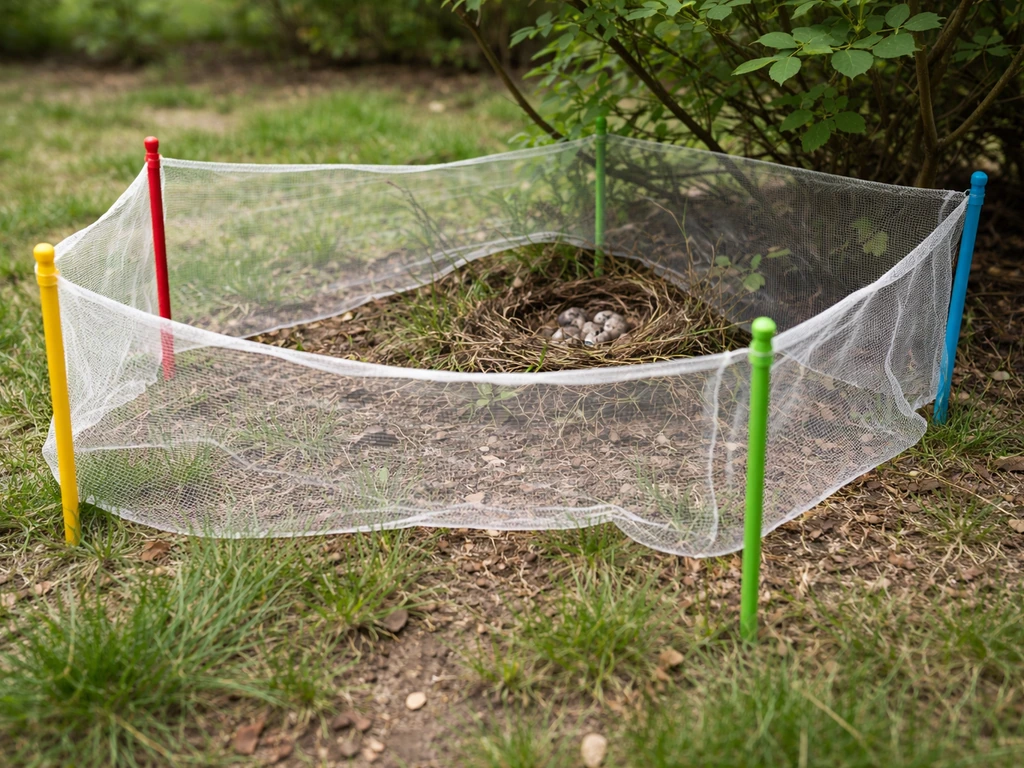
This is almost always your best and first option when a nest is active. Protecting the nest where it sits is legal, practical, and gives the birds the best chance of success. Here is how to do it.
- Mark the zone. Use temporary garden stakes, a few pieces of bright tape, or a simple cone barrier to create a buffer of at least 6 to 10 feet around the nest site. This tells household members, delivery drivers, and anyone doing yard work to stay back.
- Redirect foot traffic. If the nest is near a walkway, temporarily route people around it. A small hand-lettered sign ("Active bird nest, please give space") works better than you might expect.
- Secure pets. Keep dogs and cats indoors or on leash around the nest area until fledging is complete. Cats are the single largest human-associated cause of bird mortality in North America.
- Postpone maintenance. Reschedule mowing, trimming, pressure washing, gutter cleaning, or any construction within the buffer zone until the nest is inactive. Most nest cycles are 4 to 6 weeks, so the delay is manageable.
- Reduce noise and vibration near the nest. Loud power tools or repetitive vibration on an attached structure can cause nest failure or parental abandonment.
- Do not add supplemental food near the nest. Feeders attract competing birds and predators. Move feeders at least 20 to 30 feet away from the nest site.
- Document with photos from a distance. A dated photo record is useful if you later need to report the nest or demonstrate due diligence to a contractor or neighbor.
One thing that surprises people: parent birds are usually far more tolerant of calm, brief human presence near a nest than dramatic flushing and retreating suggests. The real risks are sustained disturbance, noise, vibration, and predator pressure. Calm observation from distance is fine. Hovering over the nest repeatedly is not.
When relocation is actually possible (and what it really means)
Genuine nest relocation, moving the physical nest with its eggs or chicks to a new spot, is almost never a viable option for active nests. The parents locate the nest visually and spatially. If it moves even a few feet, they will not find it. Mass Audubon notes that relocating an active nest is not an option because if the nest disappears, the parents will not go searching for it blank" rel="noopener noreferrer">the parents do not go searching for it. If you are wondering whether a bird will find its nest if you move it, the answer is usually no for active nests. Audubon and Mass Audubon are both direct on this point: if the nest disappears, the parents will not go searching for it. The eggs or chicks will be abandoned and will die.
The rare cases where some movement is permissible
- The nest is inactive (no eggs, no chicks, confirmed abandoned or post-fledging) and you want to move it for preservation or cleanup purposes
- The nest belongs to a non-MBTA species (house sparrow, European starling) and removal is legal under your state law
- A licensed wildlife rehabilitator or permitted agency is handling an emergency relocation under proper authorization
- The nest is in the interior of a building under the specific USFWS building-interior exception, and proper conditions are met (health, safety, or property risk)
Providing a replacement site (not the same as relocation)
If the species is a cavity nester like a wren, bluebird, or chickadee, and the nest is in a structure you genuinely cannot leave in place, you may be able to mount an appropriate nest box very close to the original site before eggs are laid, during nest building only. This is not moving the nest, it is offering an alternative. The birds may or may not use it. This approach only has any chance of working during nest construction (before eggs are present) and only if the box matches the species' entrance hole size, mounting height, and habitat preferences. Once eggs are in the original nest, this approach is irrelevant and the nest must stay.
Handling tricky locations: yards, roofs, eaves, balconies, and inside structures
The location of the nest shapes your options more than almost anything else. Here is a practical breakdown by scenario.
Yard shrubs and garden beds
This is the most common situation and the easiest to manage. Stake off a buffer, postpone pruning, and wait. Most yard nests are 4 to 5 weeks from eggs to fledging. Take the hit on your garden schedule and let them finish. Once the nest is empty and inactive, you can trim as needed.
Eaves, gutters, and roof overhangs
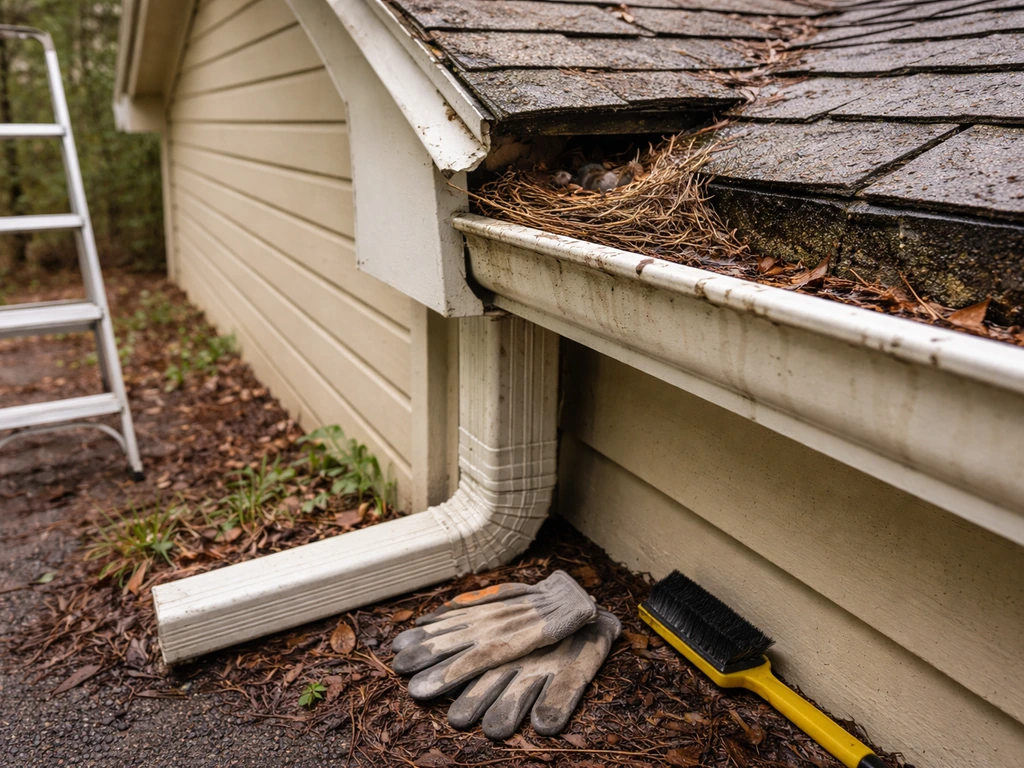
Nests in gutters or on roof ledges are common for robins, swallows, and mourning doves. If the nest is active, postpone gutter cleaning. Clogged gutters are a nuisance, not an emergency, and the 4 to 6 week wait will not cause structural damage. After the nest is inactive, clean the gutter thoroughly, then use physical exclusion (mesh gutter guards, hardware cloth, or bird spikes on preferred ledges) to prevent re-nesting in that exact spot.
Porches, balconies, and outdoor fixtures
Nest on your porch light or in a potted plant on the balcony? Limit use of that specific light or door if possible, and ask household members to use a quieter route for 4 to 6 weeks. A gentle sign on the door helps. If the nest is on a porch column or rafter, avoid sitting directly underneath it during peak feeding hours (early morning and late afternoon) to reduce parental stress.
Garage, shed, or inside a structure
This is the scenario with the most legal nuance. The USFWS does allow prompt removal of migratory birds (including nests, eggs, and nestlings) from inside buildings when they disrupt normal use, create health or safety hazards, risk injury because birds are trapped, or cause property damage. That said, "prompt removal" under this provision still means you should contact your regional USFWS office or a wildlife agency to confirm you are acting within the specific conditions of that authorization before you remove anything. For nests built inside a garage or barn but not yet containing eggs, your best move is to close the entry point once the bird has left and before she returns with more material. Once eggs are present, the exception criteria apply, and a call to your state wildlife agency first is still strongly recommended.
Nests attached to HVAC vents or dryer vents
Blocked dryer vents are a genuine fire hazard. House sparrows and starlings (both non-MBTA protected) are the most frequent offenders, and their nests can be removed legally. For native species, the interior-building exception may apply, but again, confirm with your wildlife agency before acting. After removal, install a proper vent cover with a flap or mesh immediately. This is one situation where waiting is genuinely not safe, and getting professional help (pest control certified in wildlife, or a wildlife rehabilitator) is the right call.
After the nest goes quiet: cleanup, preservation, and preventing a repeat
Once you are confident the nest is inactive (no activity for at least 3 to 5 days, no chicks visible, no adults returning), you can act. Most songbird nests in temperate climates are single-use: the parents will not return to the same nest in the same season, though some species (robins, mourning doves) may raise a second brood nearby. Confirm it is truly empty before touching anything.
Cleaning up the nest site
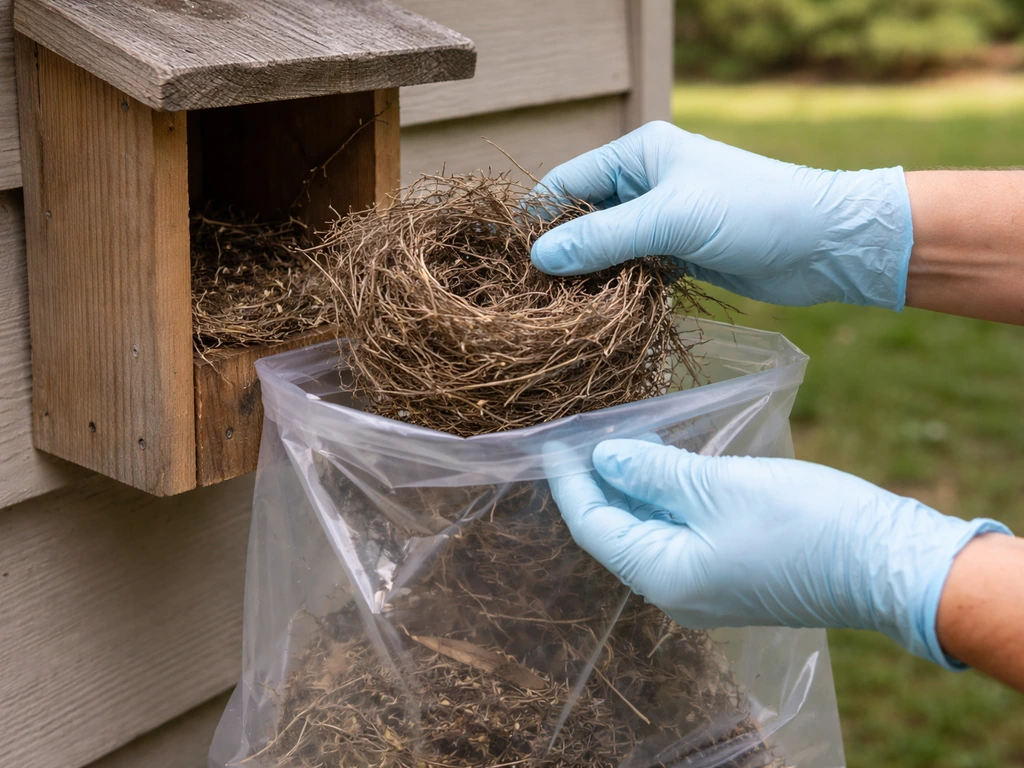
- Wear gloves. Old nests can contain mites, parasites, and fecal matter.
- Remove the nest and any debris. Bag it and dispose of it, or set it aside if you want to preserve it.
- Clean the surface underneath with a mild disinfectant if it is on a manmade structure.
- Inspect the area for damage (staining, blocked drainage, structural wear) and address it now.
- Apply exclusion materials: hardware cloth, wire mesh, bird spikes, or vent covers to prevent re-nesting in the exact spot.
Keeping or preserving the old nest
Inactive bird nests can be kept legally in most circumstances, though rules vary by state. If you want to preserve one for display or education, let it dry completely, then gently spray it with a diluted white glue solution (about 1 part glue to 3 parts water) to stabilize the structure. Store or display it somewhere dry and away from direct sunlight. This works beautifully for cup nests with interesting weave patterns. A related topic covered elsewhere on this site goes into detail on the options for keeping or displaying old nests safely and legally. If you are wondering “can I keep an old bird nest,” the safest answer is to verify your local rules before handling it keeping or displaying old nests.
Preventing re-nesting in problem spots
The best time to install exclusion is immediately after a nest goes inactive, before the next nesting season begins. February and March are your window in most of North America before spring nesting ramps up. Hardware cloth (half-inch mesh) stapled or zip-tied over eave gaps, vent covers with one-way flaps on dryer and HVAC vents, and bird spikes on narrow ledges are all effective. If you want birds nesting on your property but just not in the problem spot, put up appropriate nest boxes in better locations 20 to 30 feet away. This redirects nesting activity rather than just displacing it.
What to expect after the nest is done
If everything went well, fledglings will have left the nest and be spending a few days on the ground or in nearby low vegetation while their flight feathers develop. This is normal. They are not abandoned. The parents are still feeding them. If you find a healthy fledgling on the ground (feathered, alert, hopping), leave it alone. If you found a younger nestling (naked or sparsely feathered) on the ground, a guide on whether and how to return a baby bird to its nest covers that situation in full. Expect the adults to move on within a week or two of fledging. Some species, like robins, may attempt a second brood in a nearby location within the same season. If you made the area inhospitable and installed exclusion, they will typically find a more suitable spot.
Document everything: dated photos of the nest site before and after, the species if you identified it, and any interventions you made. That record is useful if a neighbor or contractor questions your actions, and it is a satisfying record of a successful outcome. A nest that goes from eggs to fledglings in your yard is genuinely good news, even when the location was inconvenient.
FAQ
If I move a nest only a few feet, will the parents still find it?
Not usually. If a nest is active, moving the nest or eggs almost always leads to abandonment because the parents do not “hunt” for a displaced nest. The safer alternative is to block access and wait until the nest is inactive, then address the area (cleanup or repairs) and install exclusion to prevent a repeat.
What if the eggs look abandoned or the parents are not coming by for a day or two?
You should not. Even if the eggs appear cold, a nest can still be in-use. Treat any nest with eggs, visible nestlings, or frequent adult activity as active, and keep people and pets away until it is confirmed inactive for at least 3 to 5 days.
Can I remove a nest if it seems to belong to a house sparrow or European starling?
First, identify whether it is an unprotected non-native species or a native protected species, because the legal rules differ. Even for non-native birds, many states and municipalities have additional wildlife or animal welfare rules, and humane removal is still expected. When in doubt, contact your state or local wildlife agency or a licensed wildlife professional.
Is it ever legal and effective to replace a “problem nest” with a nest box?
Yes, but only if you use a species-appropriate artificial alternative and you set it up before eggs are laid. Match the entrance hole size, cavity depth, mounting height, and location to the target species, and place it near (but not on top of) the original site. It is not guaranteed they will use it.
How close can I stand to watch the nest, and how often can I check it?
For active nests, reduce disturbance rather than “checking” frequently. Brief observation from a distance is usually fine, but repeatedly returning to look, shaking nearby structures, or using bright lights at nest level can increase stress and predation risk. Choose one timed observation window instead of multiple visits throughout the day.
Does owning my home or yard mean I can remove a nest if it is causing inconvenience?
Do not assume you can remove the nest if it is on your property. Federal rules apply to native species even on private land, and state rules can add more restrictions. If you are considering removal, repairs, or landscaping that would affect an active nest, contact the appropriate wildlife authority first.
What should I do if I must do repairs right now and the nest is in the way?
Not as a DIY fix. If a nest is in a building exterior that you cannot leave untouched, the correct move is to postpone until inactive, or use a permitted alternative approach (like setting up a nest box during the construction stage, if applicable). For active nests in situations like vents or structural hazards, contact a wildlife rehabilitator or wildlife control provider rather than cutting access on your own.
How can I make the area safer without touching an active nest?
Block access and leave the birds alone. A good rule of thumb is to stage a “quiet zone” that keeps humans and pets away from the nest area, then document what you see. If you later need to make the space safe, do it only after you have confirmed inactivity.
When exactly can I remove materials or clean the area after the nest is “empty”?
A nest can be considered inactive when there has been no adult return and no visible chicks for several days, typically 3 to 5, and there is no recent nesting behavior. This confirmation matters because many songbirds can attempt another brood, and an “empty-looking” nest can still be in transition.
What is the best way to prevent re-nesting once the nest is gone?
Exclusion should be timed to the empty period and then kept consistent. Install barriers (mesh, flaps, or guards) immediately after inactivity is confirmed and ensure there are no gaps large enough for the target species. If you install too early, you can trap adults or interrupt nesting and create a worse problem.
Can I clean up droppings or use deterrent sprays while the nest is still active?
Do not use pesticides, sprays, or vacuuming to deal with nests. Those actions can harm birds directly and can also increase legal risk if protected species are involved. For odor, droppings, or pest concerns near a nest, wait until it is inactive, then clean safely and seal openings to prevent return.
What should I do if I see a baby bird on the ground near the nest?
If you find a healthy fledgling (feathered, alert, hopping), usually leave it alone, because parents still feed it nearby. If it appears very young (naked or sparsely feathered) or you suspect it is injured or orphaned, contact a wildlife rehabilitator for guidance, since the correct “return to nest” steps depend on the nest stage and species.
What counts as a genuine emergency where I can get help immediately?
In most cases, you should not disturb the nest yourself. Even when you suspect it is “just a nest,” sudden removal can be illegal for native species and dangerous for nestlings. If there is a true emergency, like a bird trapped inside where it cannot escape, contact the relevant wildlife agency or a licensed rehabilitator to confirm the right action quickly.
Can I save an old nest for education or display, and are there safety issues with handling it?
If you want to keep an old nest, the safest approach is to verify your local rules before handling it, because regulations can vary by jurisdiction and species. Wait until it is fully abandoned, let it dry completely, and avoid actions that could spread parasites or allergens when you handle it.