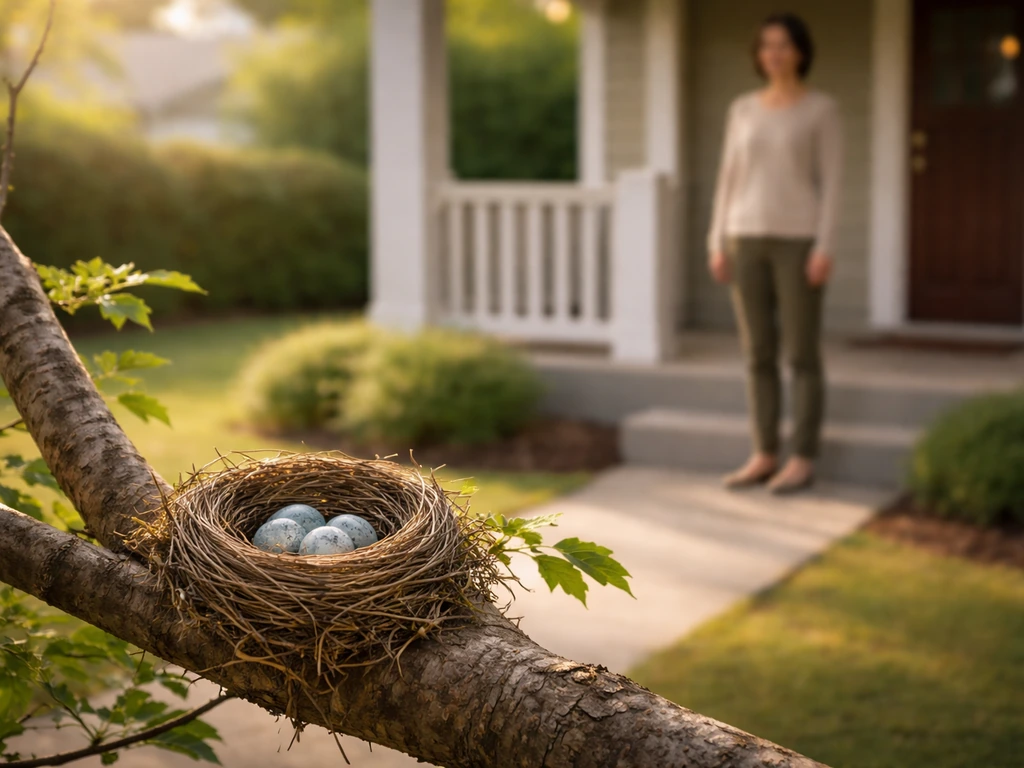
The answer to how to display a bird nest depends entirely on one thing: whether the nest is active or empty. If it is active, your only real option is to display it from a distance, without touching it. If it is empty and legally obtained, you have real choices: clean it, preserve it, and mount it beautifully. Everything else flows from that single distinction.
How to Display Bird Nests Safely and Ethically
Maya Bennett
13 Apr 2026
What kind of display are you actually going for?
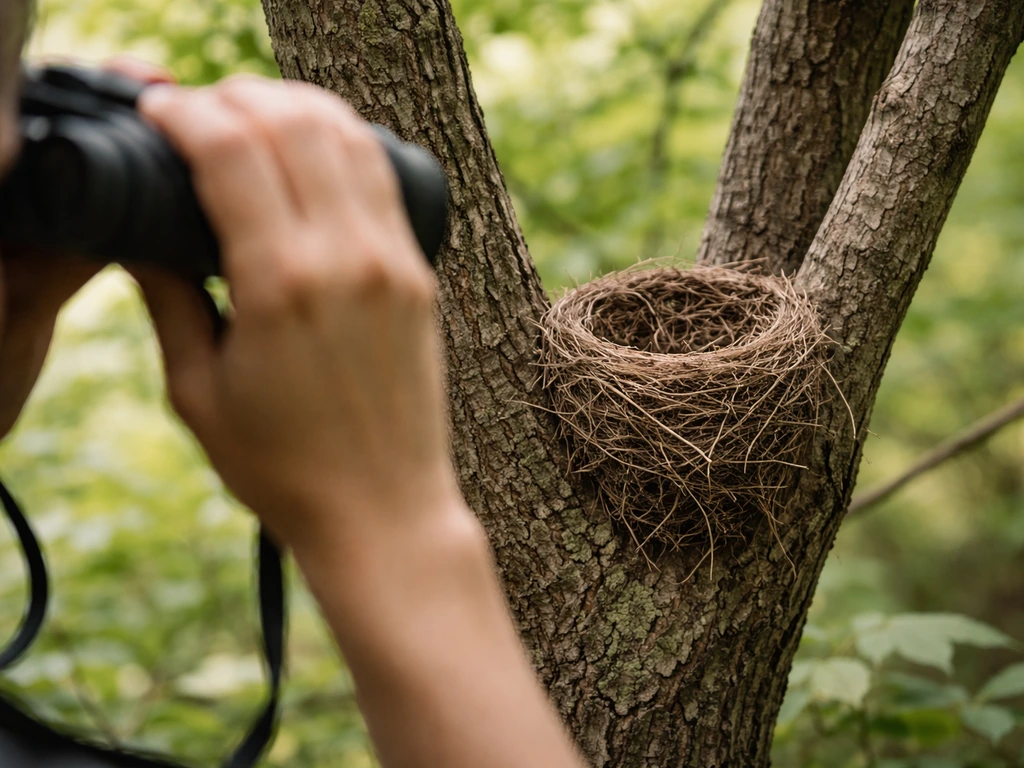
People mean very different things when they say they want to display a bird nest. Before you do anything, it helps to get clear on your actual goal, because each one comes with different rules and steps.
- In-place observation: watching or photographing a nest that is still attached to a tree, bush, ledge, or structure on your property
- Home or classroom display: mounting a found empty nest in a shadow box, on a shelf, or in a nature exhibit
- Preservation and mounting: cleaning, drying, and sealing a nest so it holds its shape long-term
- Temporary relocation: moving a nest out of harm's way for a specific reason, such as maintenance work
Each path has different legal standing, different handling requirements, and different risks. This guide walks through all of them, in the order you are most likely to need them.
Is the nest active or empty? This changes everything
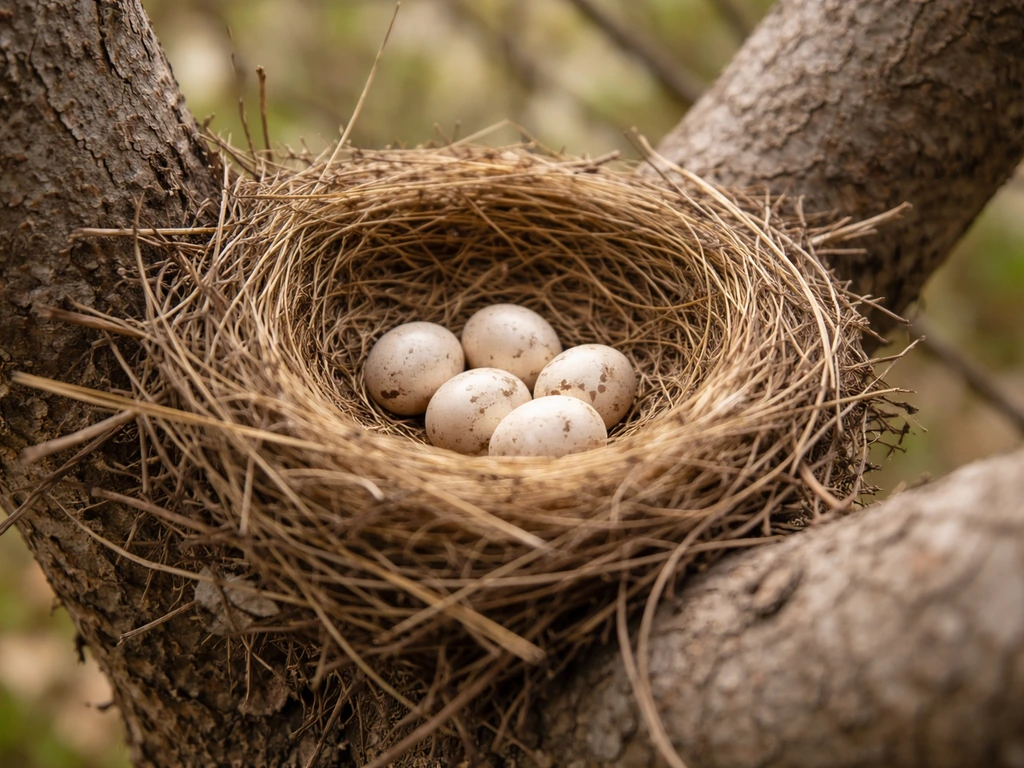
The very first thing you need to do is determine whether the nest is active. An active nest contains eggs, live chicks, or a brooding adult. A nest that looks tidy but has not been visited in days may be abandoned. Getting this wrong has legal and animal welfare consequences. Telling whether a bird nest is active is something you can do through careful observation over 24 to 48 hours without touching or approaching the nest closely.
Watch for adult birds returning regularly to the nest site, listen for chick calls, and look for eggshell fragments or droppings around the base of the structure. A nest that shows none of these signs over two full days is likely inactive. However, do not assume a nest is abandoned just because you have not seen a parent for an hour or two. Incubating females often sit motionless for long periods. If you are genuinely unsure, the guidance on how to know if a bird nest is abandoned gives you a clear checklist to work through before drawing any conclusions.
Once you know the nest status, the path forward is clear. Active nest: observe from a distance, do not move it, do not display it in any hands-on way. Empty nest: you can consider preservation and display, but only after confirming it is genuinely no longer in use and you are legally permitted to handle it.
The legal reality: what the law actually says
This is the section most people skip, and it is the one that matters most. In the United States, the Migratory Bird Treaty Act (MBTA) protects the vast majority of native bird species. Violating the MBTA can result in misdemeanor or even felony penalties depending on the nature of the violation. In practice, this means you cannot collect, move, or disturb an active nest of a protected species without a permit, full stop.
In the UK, all wild bird species, their nests, and their eggs are protected under the Wildlife and Countryside Act 1981. Deliberately disturbing a Schedule 1 species while it is nest building, brooding, or tending dependent young is a separate, more serious offence. In Canada, the Migratory Birds Regulations prohibit damaging, destroying, disturbing, or removing a migratory bird's nest that contains a live bird or viable egg. In the EU, the Birds Directive prohibits deliberate significant disturbance of wild birds, particularly during breeding and rearing seasons.
What does this mean practically? You cannot legally pick up and bring inside a nest that has eggs in it, even if it fell off a branch. You cannot remove an active nest from your porch because it is inconvenient. You cannot sell or give away nests of protected species. Empty nests that have been genuinely abandoned and are no longer in use occupy a legal grey zone in many jurisdictions: technically still protected under some readings of the law, but enforcement of empty-nest collection is rare when there is no commercial intent and the species is not threatened. When in doubt, contact your local wildlife agency before collecting anything.
How to display an active nest safely (in place, from a distance)
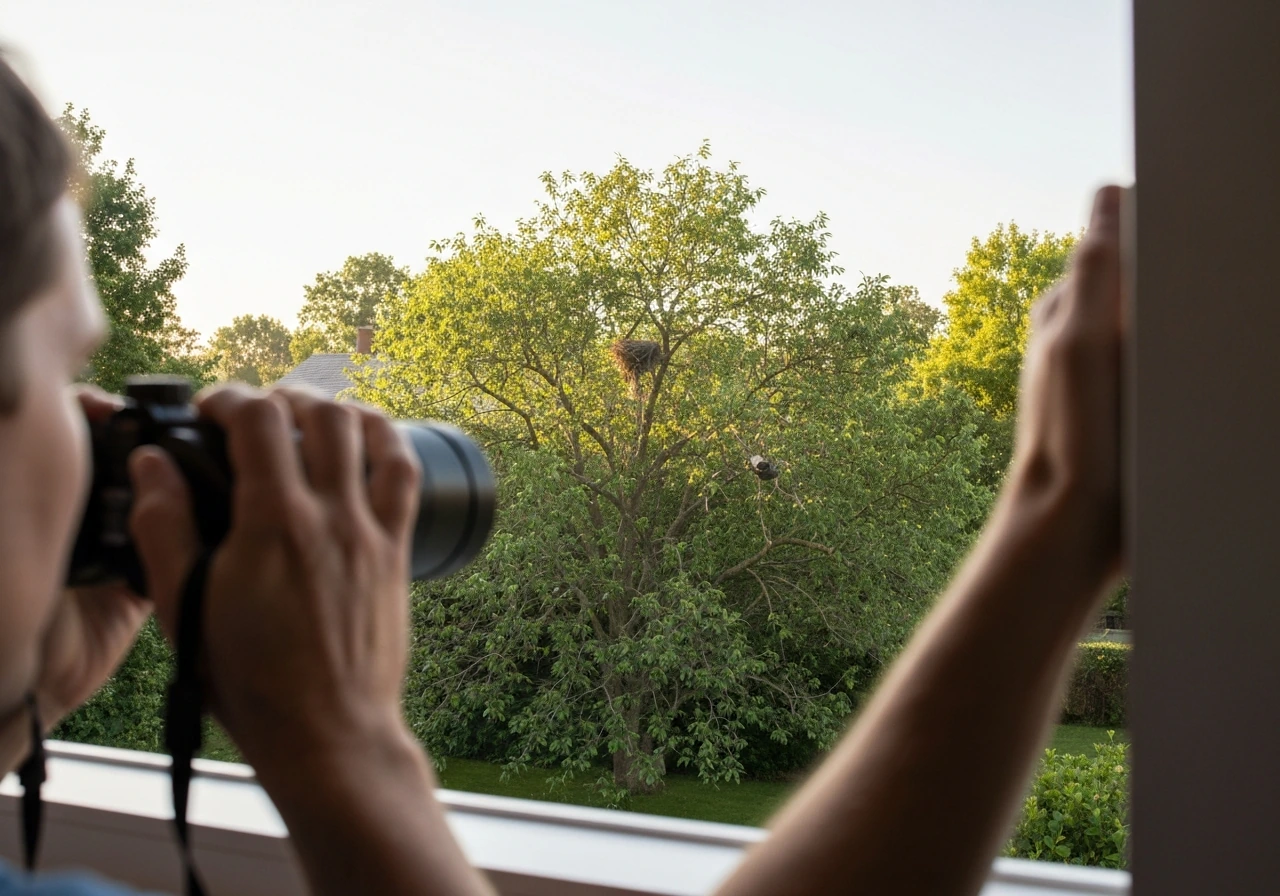
If the nest is active, the best display is the one that leaves everything exactly as it is. Cornell Lab's NestWatch Code of Conduct is direct about this: observe from a distance and approach only when the female has left the nest voluntarily. Never push closer if the bird is sitting tight. The BTO's Nesting Neighbours code makes the same point: if a bird appears stressed by your presence, back off immediately and check again later.
In practice, set up your viewing spot at least 10 to 15 metres away and use binoculars. If you want photographs, a telephoto lens of at least 300mm will let you capture clear images without closing the distance. Texas Parks and Wildlife's Wildlife Watchers Code of Ethics specifically recommends using a telephoto lens from a viewing blind or a parked vehicle, both of which reduce your visible profile and perceived threat to the birds. If you have a car near the nest, it often makes an excellent mobile hide.
For active nests on your own property, there are a few practical things you can do to create a better display environment without disturbing the birds. Cordon off a two-metre radius around the nest location with garden stakes and string, or temporarily close off a doorway or section of a balcony with a baby gate. Put a polite note on the gate explaining the situation to visitors or delivery drivers. Keep cats and dogs completely away from the area. Do not trim nearby vegetation during the nesting period, because the cover is part of what keeps the nest safe. The goal is to protect the nest while allowing you and others to appreciate it from a respectful distance.
If you have children who want to watch, this is also a good time to involve them in logging what they see: date, time, how many adults visited, what they brought. A simple notebook works perfectly. Avoid checking the nest at dusk or dawn when adults are returning, as this is when disturbances are most disruptive to the nesting cycle.
Know the nest before you observe it
Part of displaying any nest well, whether in place or mounted, is actually understanding what you are looking at. If you are not sure which species built it, take a look at how to identify a bird nest by its materials, structure, and placement. Knowing the species tells you how protective you need to be legally (is it a Schedule 1 or MBTA species?), how long the nesting period will last, and how to interpret what you are seeing. For example, a cup nest built tightly from plant fibres and mud, roughly 10 cm across and 7 cm deep, is likely a robin or thrush nest in most of the UK and North America. A loose platform of sticks 30 cm or wider, placed high in a tree, suggests a corvid or larger raptor.
If you find yourself wanting to look for nests to observe in your local area, learning where to find a bird nest in different habitats will help you locate them without stumbling in too close. Dense shrubs at 1 to 2 metres height, the forks of young deciduous trees, and dense hedgerows in spring are always worth a slow, quiet sweep with binoculars.
Cleaning, drying, and preserving an empty nest for display
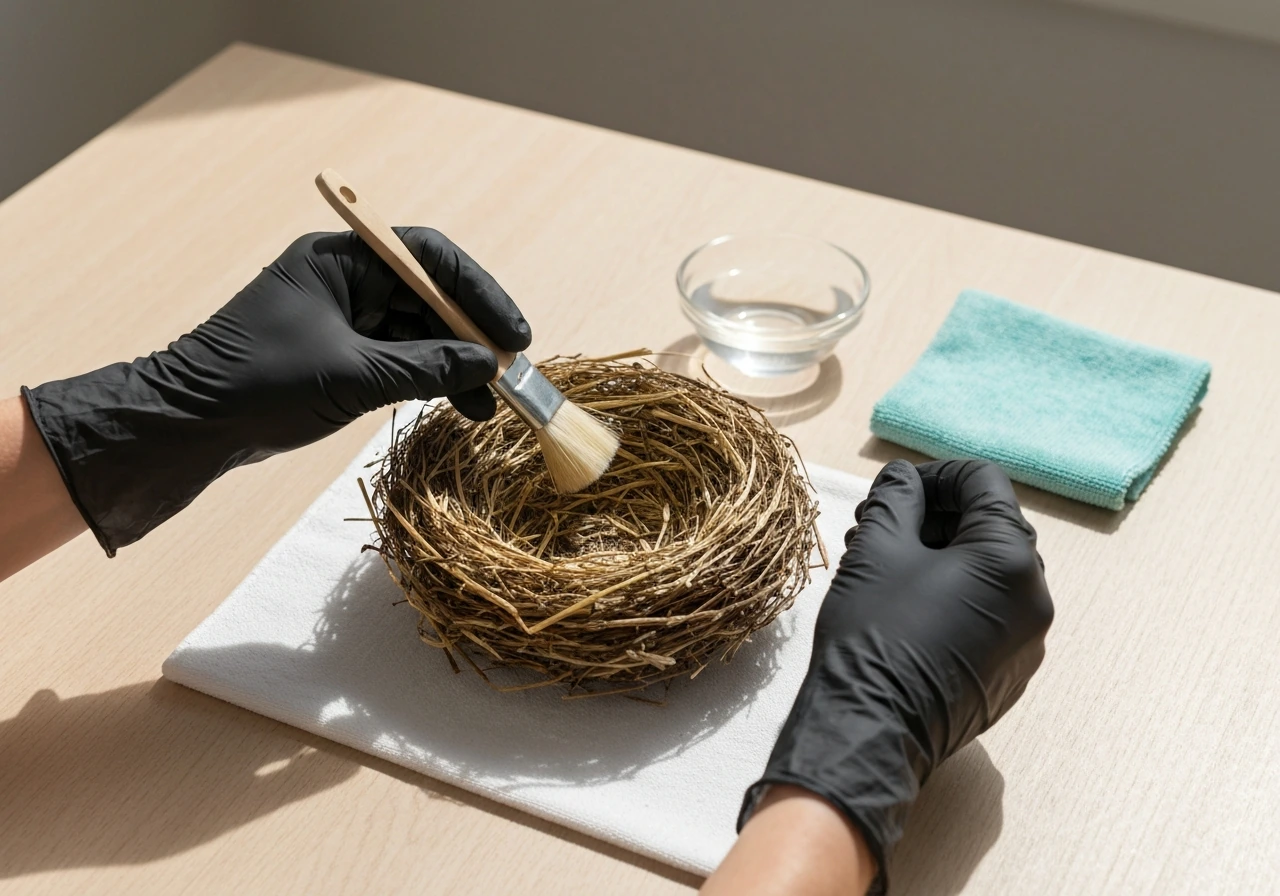
Once you have confirmed the nest is truly empty and inactive, and you have satisfied yourself that collecting it is permitted in your jurisdiction, the preservation process begins. Do not skip the health precautions here. Bird nests regularly contain mites, lice, bacteria, fungal spores, and dried droppings. Handle with nitrile gloves and, if there is visible droppings contamination, wear a NIOSH-approved N95 respirator or equivalent. The CDC has flagged that aerosolizing material contaminated with bird droppings during disturbance or cleanup can increase the risk of histoplasmosis, a fungal lung infection caused by Histoplasma spores. This is not a reason to panic, but it is a reason to take twenty seconds to put gloves on.
- Put on nitrile gloves and, if the nest is dusty or has visible droppings, add an N95 respirator before picking it up.
- Place the nest in a paper bag (not plastic, which traps moisture) and take it outdoors or to a well-ventilated workspace.
- Inspect for live insects. If mites are visible (small, fast-moving specks), freeze the nest in a sealed plastic bag for 72 hours at -18°C to kill them before proceeding.
- Using tweezers or a soft paintbrush, gently remove large debris: loose feathers, dead insects, visible droppings, and any plant matter that is rotting or blackened.
- Do not wash the nest with water. Water dissolves the mud and saliva that binds the structure and will cause it to collapse. Instead, use a can of compressed air (held 20 cm away) to blow out fine dust.
- Allow the nest to air-dry in a warm, dry location for at least 48 to 72 hours. A sunny windowsill or airing cupboard works well.
- Once fully dry, apply a very light mist of clear matte acrylic fixative spray (the kind used for artwork preservation) from 30 cm away. Two thin coats, with 20 minutes drying between them, will consolidate loose fibres without changing the colour or texture.
- Seal and store in a cardboard box with acid-free tissue paper until you are ready to mount.
Mounting and placing the nest: practical display tips
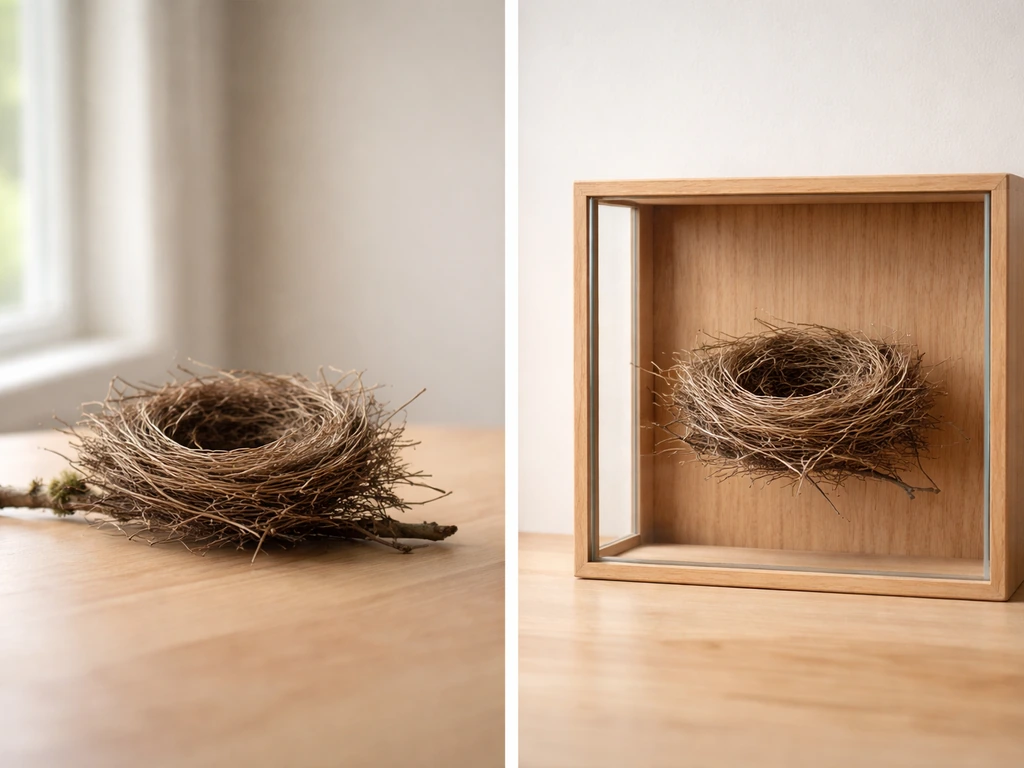
A preserved nest looks best when the display highlights its structure and materials rather than competing with them. Keep backgrounds simple and neutral: off-white, slate grey, or natural wood work far better than bright or patterned surfaces. A shadow box frame with a 5 to 8 cm depth is ideal for most small cup nests, as it protects the nest from dust and accidental contact while still leaving it fully visible.
To mount the nest inside a shadow box, use a small piece of floral foam or a crumpled ball of acid-free tissue paper to cradle the base, then secure it with a few loops of natural twine tied through small holes drilled in the shadow box backing. Avoid using hot glue directly on the nest structure, as it can pull fibres loose when removed. If you want to display the nest on an open shelf rather than in a box, a small piece of driftwood, a section of branch, or a ceramic dish all work as natural mounts. Secure the nest to the mount with a thin strip of museum putty underneath the base.
For lighting, avoid direct sunlight, which will bleach and dry out the nest over months. Indirect natural light or a warm-toned (2700K) LED spotlight positioned at a 45-degree angle from above will show the nest's texture beautifully without degrading it. If you are displaying in a classroom or nature exhibit, consider adding a small printed card identifying the species, the materials used, where it was found, and the approximate season it was built. This transforms the display from a curiosity into an educational object.
A quick comparison of display options
| Display method | Requires touching/moving nest? | Legal for active nests? | Best for | Main risk |
|---|---|---|---|---|
| Observe in place from distance | No | Yes, when done carefully | Birdwatchers, homeowners with nesting birds | Accidental disturbance if too close |
| Photography with telephoto lens | No | Yes | Photographers, educators | Flushing the bird if approach is too close |
| Temporary relocation for safety | Yes | Only with permit or for non-protected species outside nesting season | Construction, maintenance work | Abandonment, legal liability |
| Preserved empty nest in shadow box | Yes | Generally yes, for empty nests of non-threatened species | Home decor, classrooms, nature exhibits | Health risks during handling without PPE |
| Open shelf or natural mount display | Yes | Generally yes, for empty nests of non-threatened species | Home decor, informal displays | Dust accumulation, structural damage over time |
For most readers, the preserved empty nest in a shadow box is the most satisfying long-term display option. The in-place observation approach is the most legally safe and the best for animal welfare during nesting season.
Health risks and safe handling basics
Nests can harbour more than you expect: bird mites, blowfly larvae, feather lice, dried droppings, dust, and fungal material all accumulate over a nesting season. The most significant health risk is histoplasmosis, a lung infection caused by Histoplasma capsulatum fungal spores that live in soil and organic material contaminated by bird or bat droppings. The CDC explains that histoplasmosis happens when you breathe in Histoplasma spores that are associated with bird or bat droppings in the environment breathe in Histoplasma spores associated with bird or bat droppings. The Mayo Clinic notes that cleaning up bird droppings yourself carries real risk and that a respirator mask may be needed. The Illinois Department of Public Health recommends respiratory protection designed to filter small particles, specifically NIOSH-approved respirators with HEPA-capable filtration, when removing or cleaning up bird or bat droppings.
Beyond histoplasmosis, bird mites can bite humans and cause skin irritation if live mites are present in a nest brought indoors. Allergens from feathers, down, and dried droppings can also trigger respiratory reactions in sensitive people, particularly in enclosed spaces. The freeze-then-clean method described in the preservation steps above eliminates live insects and significantly reduces these risks. Always wash your hands thoroughly after handling any nest material, even through gloves, and change clothes if you have been working in a heavily contaminated area.
Troubleshooting real-life situations
There is an active nest in my doorway or porch light
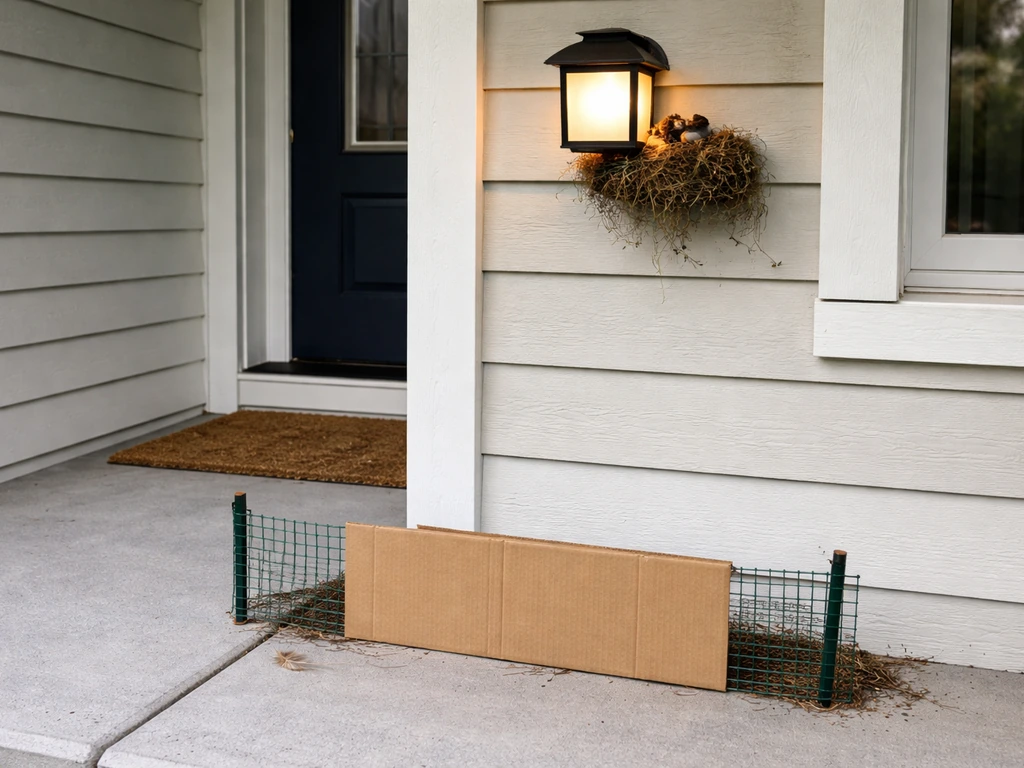
This is one of the most common situations. If the nest is active, you are legally required in most jurisdictions to leave it alone until the nesting cycle is complete. Most small songbirds fledge within 10 to 21 days of hatching. Mark the date you first noticed eggs or chicks and count forward. Temporarily redirect foot traffic around the door, switch off the porch light to reduce disturbance at night, and wait. Once the young have fledged and the nest is clearly abandoned, you can remove it.
I found a nest on the ground during cleanup
If the nest is empty and undamaged, you can safely pick it up with gloves, follow the cleaning and preservation steps, and display it. If it contains eggs or a chick that appears alive but alone, do not assume it is abandoned. Leave it in place and watch from a distance for two to four hours. If you found it during late autumn or winter cleanup and it is clearly an old, dry, weathered nest with no signs of recent use, it is almost certainly inactive and safe to handle.
I am not sure the parent will come back
If you are dealing with a situation where the nest seems to have been abandoned with eggs or young inside, do not intervene without proper information. Read up on what to do if the mom bird abandons the nest before making any decisions. In most cases, the parent is still returning and you have simply not been watching at the right time. If the young are clearly in distress, cold, or injured, contact a licensed wildlife rehabilitator rather than attempting to care for them yourself.
I found a young bird near the nest and cannot tell what it is
Before you decide whether to intervene or leave the bird alone, it helps to know exactly what developmental stage it is at. Learning how to identify a nestling bird versus a fledgling will tell you whether it is too young to be out of the nest (a nestling, which needs to be replaced) or old enough to be on the ground intentionally (a fledgling, which should be left alone).
It is spring and I want to find a nest to observe
If you want to find a nest yourself rather than waiting for one to appear on your property, learning how to find a bird nest in your local habitat will save you hours of aimless searching. The key is to follow the adults during the early morning feeding rush, when they are most actively visiting the nest and less cautious about being tracked. Once you have located it, keep your distance and apply all the observation protocols above. If you think you have found a nest but have lost the precise location, the advice on how to help a bird find its nest after displacement may also be useful context for understanding adult behaviour and attachment to nest sites.
What about bird's nest ferns?
If you searched for "bird nest display" and landed here while actually thinking about a bird's nest fern (Asplenium nidus), that is a completely different topic. Bird's nest ferns are houseplants named for the rosette shape of their fronds, which resembles a nest. They have nothing to do with actual bird nests and are not covered by wildlife protection laws. They do, however, make excellent companions to a preserved nest display: a mounted empty nest placed beside a small bird's nest fern on a shelf creates a striking and coherent nature display. Just do not confuse the two when it comes to handling or legal guidance.
The short version, if you need it now
Active nest: do not touch it, do not move it, observe from at least 10 metres with binoculars or a telephoto lens, protect it from pets and foot traffic, and wait for the nesting cycle to finish. Empty nest: confirm it is genuinely inactive, check your local regulations, then collect it with gloves, freeze if mites are present, clean with compressed air, dry for 48 to 72 hours, fix lightly with matte acrylic spray, and mount in a shadow box on a neutral background away from direct sunlight. Whatever you do, let the nest status drive your decisions, not your schedule.
FAQ
What if I see a nest on my porch and I need to use that door, can I move around it or relocate the viewing area?
Use the nest as-is. Redirect people and pets away from the nest for the nesting period, for example block access to the doorway with a temporary baby gate or close that entrance part-time. Avoid trimming or moving nearby plants, and keep bright lights off at night if the nest is close to the entry. If you truly cannot avoid the area, contact local wildlife authorities for site-specific guidance.
How long should I watch from a distance before I conclude an empty nest is inactive?
Plan on 24 to 48 hours of careful observation without approaching, ideally across a full day and one additional day (watch especially for adult return patterns and chick-related sounds). Incubating birds can sit motionless, so absence for an hour or two is not enough. If you still cannot confirm inactivity, treat it as active.
I found a nest that looks old and dry, but it is still warm or smells, does that mean it is active?
Not necessarily, but you should be cautious. Warmth or odor can come from decomposing plant material or weathering, not only from live birds. The practical test is behavioral evidence: adult visits, chick calls, droppings, or eggshell fragments over the observation window. If there are signs of recent use, do not handle.
Can I knock an old nest out of a gutter or remove it for safety if birds are not there right now?
Avoid removal until you have confirmed it is inactive, because “not there right now” can still mean incubation or a brief absence. If you must address a safety hazard, use the least intrusive option, for example cordon off the area and delay until you can verify inactivity. For critical hazards (water, electrical, construction), contact a local wildlife service or licensed pro.
What’s the safest way to take photos of an active nest without disturbing the birds?
Stay back and make the birds come to the situation you create, not the other way around. Use binoculars for inspection and a telephoto lens for photos, avoid flash, and do not approach to “get one more shot.” If the adult bird shows stress behavior (rapid alarm calls, repeated circling, abrupt leaving followed by a return you can see is delayed), stop and back away.
Is it legal to keep an empty nest if it is from a species that is common in my area?
“Common” does not automatically mean “unprotected.” Many native species are protected even when not threatened, and laws vary by country and sometimes by local rules. If you are unsure about the species or jurisdiction, verify with your local wildlife agency before collecting.
What should I do if I find eggs or a chick inside a nest that appears unattended?
Do not assume abandonment. Leave it in place and observe from a distance for two to four hours, focusing on adult return and any signs of ongoing incubation or chick care. If the young are injured, very cold, or in clear distress beyond typical conditions, contact a licensed wildlife rehabilitator rather than attempting care yourself.
Can I harvest a nest if it fell from a tree during a storm?
A fallen nest can still contain eggs or viable chicks, and handling can still violate wildlife protections. Treat it as possibly active first, confirm inactivity with observation, then check local regulations for the species and whether collection is allowed. If you cannot confirm, do not move it.
How do I reduce health risk if I decide to preserve an empty nest?
Don’t skip respiratory protection decisions. Wear nitrile gloves, and if you see visible droppings contamination or dry dust, use a NIOSH-approved respirator with appropriate particle filtration (often described as HEPA-capable). Work in a ventilated area, avoid shaking the nest, and wash hands thoroughly after handling and after removing gloves.
Does freezing the nest always kill parasites, and do I still need to clean afterward?
Freezing is helpful for eliminating live insects and larvae, but it does not remove contamination like dried droppings or spores. You still need to clean carefully afterward, ideally using low-agitation methods such as gentle compressed air and controlled handling, then dry the material thoroughly before mounting.
Can I mount the nest outdoors or in a humid bathroom, to keep it looking natural?
Avoid high humidity and outdoor exposure. Moisture can reactivate odors, encourage mold, and degrade plant fibers and feathers. For longevity, store and display indoors away from direct sunlight and bathrooms or kitchens where humidity and temperature swings are common.
How should I label a preserved nest display without encouraging collection?
Include educational, non-instructional details. A species identifier, approximate season, and general location type (for example “backyard shrub line” or “deciduous tree canopy”) are useful. Avoid posting exact coordinates or instructions that might lead others to seek and collect nests.
Next Article
Should I Let a Bird Build a Nest? What to Do Today
Decide if to let a bird nest, how to check activity, avoid disturbance, and handle conflicts safely and legally.