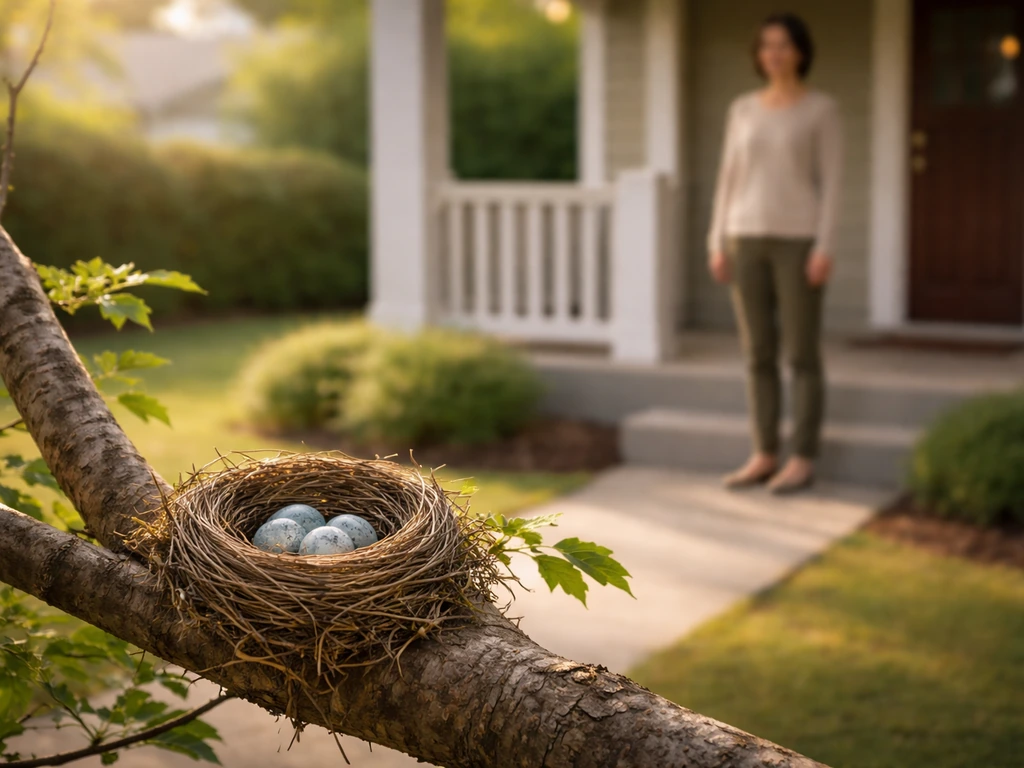
Birds build nests by following a remarkably consistent sequence: scout a site, gather structural materials, weave or stack them into a form, reinforce the structure, and finally line the interior with soft insulating material. The whole process can take anywhere from two days for a simple cup nest to two or more weeks for complex woven or mud-based designs. What makes it fascinating is that birds are not just acting on pure autopilot. Instinct provides the blueprint, but experience, mate behavior, and environmental cues all shape the result. If you are trying to figure out what is happening in your yard right now, this guide will walk you through both the biology and the practical steps you should take today.
How Does a Bird Make a Nest Step by Step and Why

Maya Bennett
9 Apr 2026
Why birds build nests (and when)
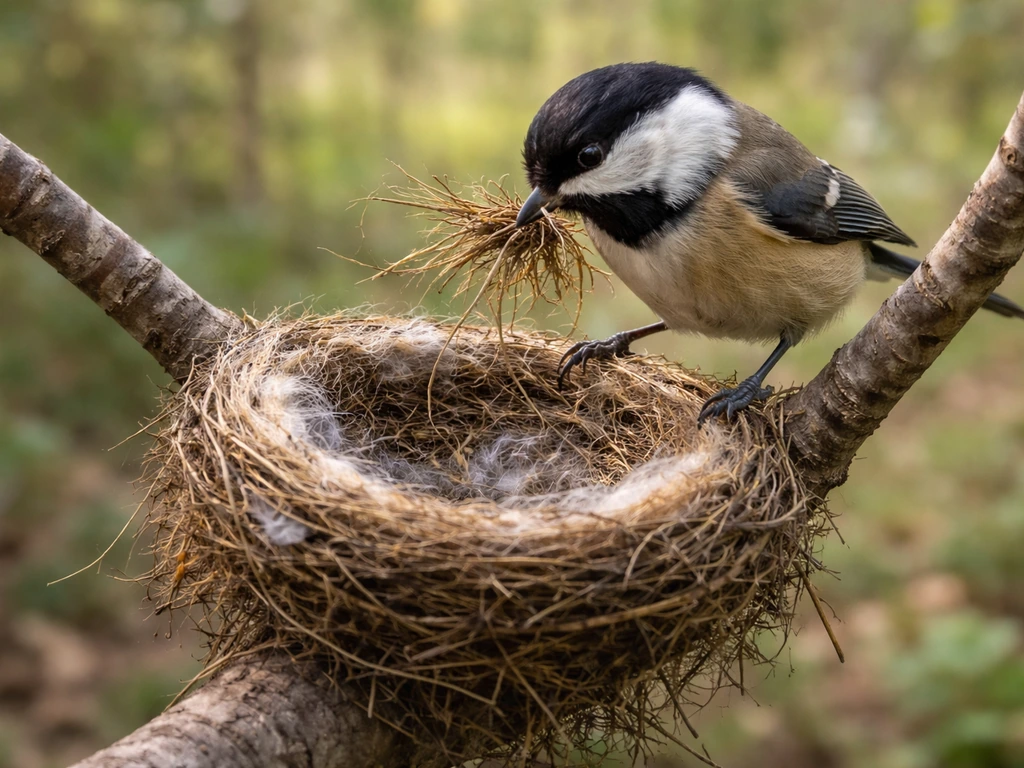
Nests exist for one reason: to give eggs and newly hatched chicks a safe, insulated environment long enough for them to survive. That said, not every bird uses a nest the same way, and not all bird species build nests in the traditional sense. Some ground-nesters use a bare scrape in the soil. Others rely on cavities already carved by woodpeckers. The ones most people encounter, the cup-builders, small songbirds nesting in shrubs and gutters and on porch ledges, weave tight bowls from plant fibers lined with down or fur, primarily to insulate eggs and buffer chicks against temperature swings.
Timing is driven by daylight. As spring days lengthen, increasing photoperiod triggers a hormonal cascade in birds: rising day length activates thyroid hormones that stimulate gonadotropin-releasing hormone (GnRH), which causes gonadal growth and sets reproductive behavior in motion. Research shows that birds become physiologically primed for breeding around 15 to 16 hours of light per day. This is why when a bird makes a nest is not arbitrary. It is tightly tied to the calendar of light, and the window closes just as predictably: prolonged exposure to long days eventually causes photorefractoriness, a kind of hormonal shutdown that ends the nesting season even if conditions still look favorable.
How birds "know" what to build: instinct, learning, and cues
For most of the 20th century, nest-building was treated as pure instinct, a fixed action pattern baked into the genome. That view has shifted. While a species-specific template is genuinely innate (a zebra finch raised in isolation will still attempt to build a recognizable zebra finch nest), experience refines the outcome significantly.
Studies show that birds with a successful first breeding attempt tend to stick with the same material choices in subsequent nests, while birds whose first nests failed often change both their material selection and the quantity they use. In other words, birds are learning from outcomes, not just executing a program.
Audubon (via BirdNote) also notes that many small birds use spider silk as a binding material, including collecting spider silk during nest construction What Do Birds Use ‘Duct Tape’ Their Nests Together? .
Social and mate influences also matter. Whether the mom or dad bird builds the nest varies by species, and that division of labor is itself part of the inherited behavioral package. American robin females do the majority of the building; the male's role is mostly to accompany and occasionally bring material.
A Female American Robin Reinforces Her Nest With Mud on Cornell Lab education materials explains that a female American robin reinforces the nest with soft mud gathered from worm castings as part of nest construction American robin females do the majority of the building. In many weaverbird species, the male builds an elaborate structure first and the female inspects and approves it before laying.
The point is that "knowing how" is a blend of genetic programming, trial and error, and in some species, genuine observation of other birds.
Step-by-step nest building: site selection to lining
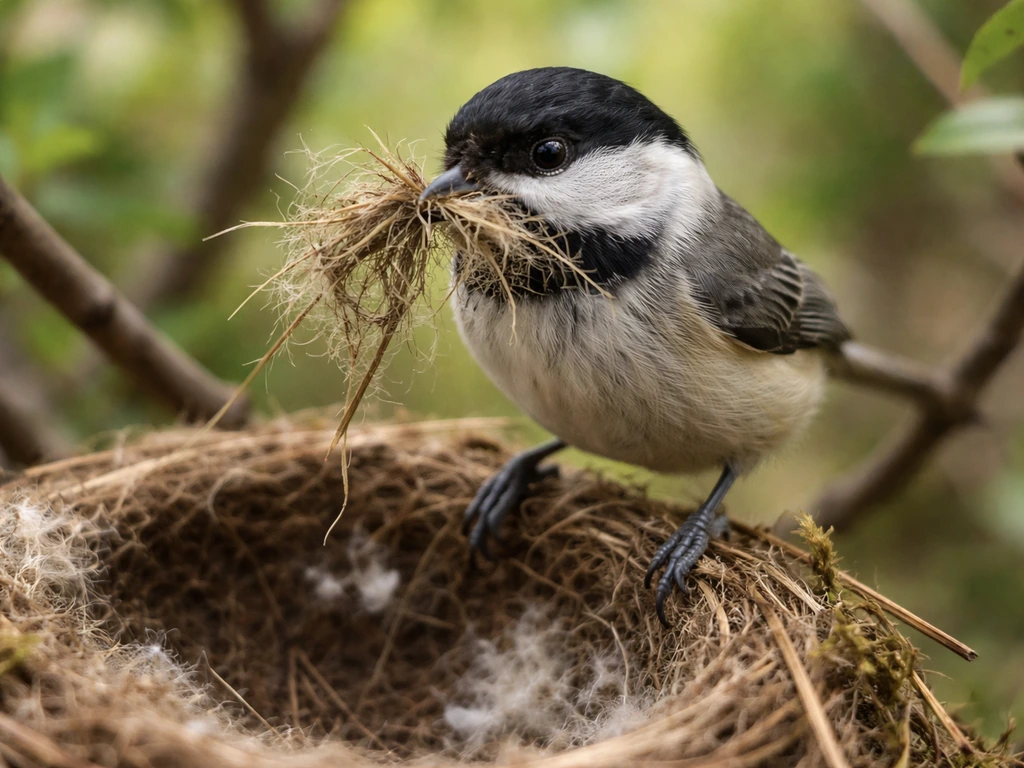
Understanding how bird nests are made is easiest if you think of it as four distinct phases. Birds do not always follow a rigid order, but this sequence covers what you will observe in most common backyard species.
- Site selection: The bird surveys potential locations, testing structural stability by landing, shifting weight, and probing with its beak. Factors include shelter from wind and rain, proximity to food, concealment from predators, and (for cavity nesters) the diameter of the entrance hole. This phase can look like restless, repetitive visits to a single spot over one to three days.
- Structural base: The bird brings coarse materials first, typically twigs, bark strips, dry grass stems, or mud, and anchors them to the chosen surface. This foundation layer establishes the outer diameter and overall shape. For cup nesters, the bird uses its body as a mold, pressing and rotating in the forming cup to shape the curvature.
- Weaving and reinforcing: Finer plant fibers, rootlets, pine needles, or strips of bark are woven or pressed into the base. Many nests at this stage are held together with spiderweb silk or caterpillar silk, which acts like a natural elastic binding, allowing the nest to flex without collapsing. American robins add a distinctive layer of mud gathered from worm castings at this stage, smoothing the interior wall before the final lining goes in.
- Interior lining: The last phase is lining the cup with the softest available material: feathers, animal fur, plant down, moss, or fine grass. This is the insulating layer that keeps eggs at the right temperature. Tree Swallows almost always use feathers here, making a white-feather lining one of the clearest field clues for identifying their cavity nests. The entire build can take as little as 2 to 6 days for a simple cup nest, or up to two to four weeks for more complex or mud-heavy structures.
One number that sticks with me from observational research: a single bird may make roughly 180 or more material-gathering trips during nest construction. Watch a bird carefully near a suspected nest site and you will see that back-and-forth pattern, always returning with something in its beak, almost always landing at the same spot.
Common nest types and materials by bird group
Field identification gets a lot easier once you know the five major nest categories. What a bird nest is made of is usually the fastest clue to which category you are looking at, and that in turn tells you which species are likely candidates.
| Nest Type | Typical Builders | Key Materials | Placement |
|---|---|---|---|
| Cup / Bowl | Robins, sparrows, finches, warblers | Grass, twigs, mud, plant fiber, spider silk, soft lining | Tree forks, shrub branches, ledges, gutters |
| Cavity | Tree Swallows, chickadees, wrens, bluebirds | Grass, moss, feathers (especially feathers for swallows) | Natural tree holes, nest boxes, old woodpecker cavities |
| Platform | Eagles, ospreys, herons, storks | Large sticks and branches, accumulated over years | Tall trees, cliff edges, utility poles, artificial platforms |
| Pendulum / Pendant | Baltimore orioles, weaverbirds | Woven plant fibers, bark strips, spider silk | Hanging from branch tips over open ground or water |
| Ground / Scrape | Killdeer, terns, many shorebirds | Minimal; pebbles, shells, or bare soil | Open ground, gravel, beaches, meadows |
Mud-and-grass combinations signal swallows of several kinds. Welcome Swallows, for example, build open cup nests of mud and grass attached directly to vertical structures like building eaves or rock walls, then line the interior with feathers and fur. If you see a perfectly semicircular mud cup stuck to your barn wall, that is your answer. Cliff Swallows take it further, building enclosed gourd-shaped mud structures in colonies. Saliva-based nests are mostly a tropics phenomenon (swifts), and you are unlikely to encounter them in a typical North American backyard.
It is also worth noting a curiosity from the animal world: some fish build nests that look surprisingly bird-like, which is a fun reminder that nest-building as a behavior has evolved independently across very different lineages. The mechanics are obviously different, but the protective function is the same.
How to identify an active nest and what you can safely do today
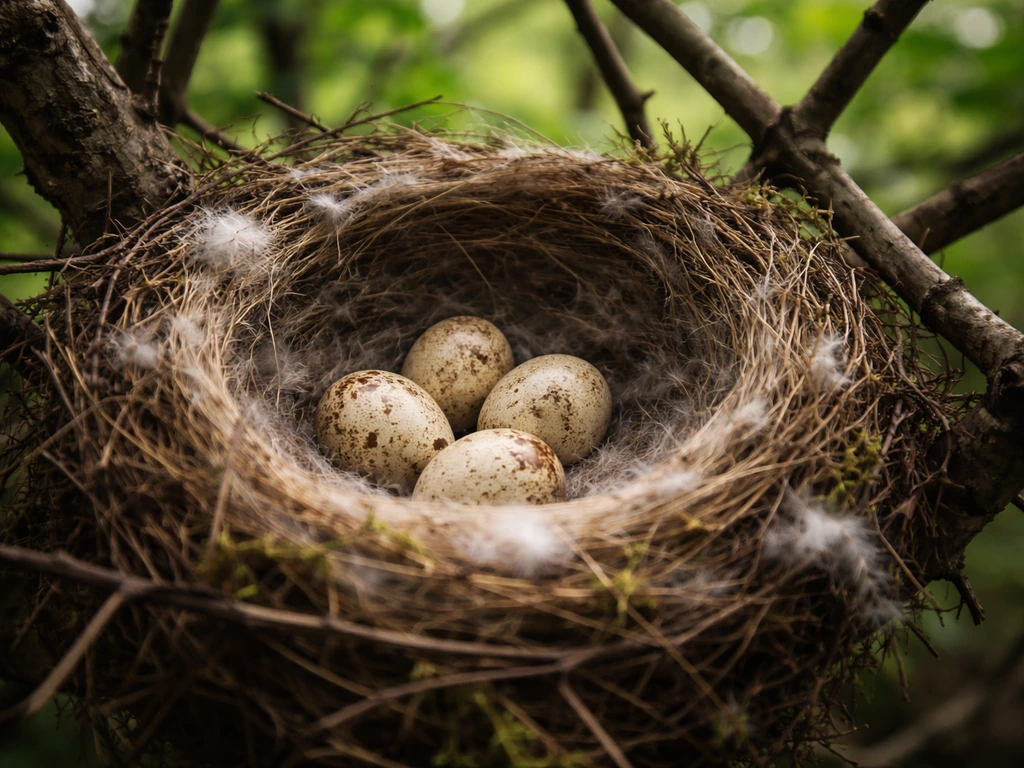
An active nest is one that currently contains eggs or young, or is being actively built or incubated. This matters legally and practically. Here is how to assess what you are looking at without causing harm.
Signs a nest is active
- Adult birds making repeated short trips to the same location, often carrying material (building phase) or food (nestling phase)
- A visible brooding posture: an adult sitting very still in or on the nest structure, often with only the head and tail visible above the rim
- Nestling sounds: soft peeping or louder begging calls when a parent approaches
- A bulging crop on an adult returning to the nest (a swollen throat pouch indicates the bird is carrying regurgitated food for very young nestlings)
- Fresh droppings or fecal sacs (white capsules) near the nest or on surrounding branches
- Material that looks freshly woven or damp mud that has not yet dried and cracked
Observing safely
Cornell's NestWatch program offers a clear code of conduct that I think every backyard observer should follow: observe from a distance, keep visits brief, and approach only after the female has left voluntarily. Do not startle a brooding adult. When a bird flushes suddenly, it can knock eggs or small chicks out of the nest as it takes off. Most songbirds' nesting cycle runs roughly four weeks from egg laying to fledging, so the active period is shorter than people expect. If you find a bird building a nest on your porch, that tight timeline is useful to know: you may only need to adjust your behavior for three to five weeks.
Take notes and photos from a distance rather than moving in close repeatedly. Record the location, the date you first noticed activity, and what materials you can see. That information helps you assess progress and gives you something concrete to share with a wildlife officer if a conflict develops later.
Ethical and legal safety guidance for homeowners
This is where the biology connects directly to your responsibilities. A bird building a nest is an example of a federally protected behavior in the United States for most species. The Migratory Bird Treaty Act (MBTA) makes it illegal to disturb, destroy, or relocate an in-use nest of any migratory bird species without authorization. Violations can result in misdemeanor or even felony penalties. Canada's Migratory Birds Regulations (MBR 2022) extend protection to the nest structure itself even after the season ends, because many species reuse cavities and nest sites in subsequent years.
What you can do
- Observe from a respectful distance (at minimum 10 to 15 feet for small songbirds; farther for raptors or ground-nesters)
- Minimize foot traffic in the area around an active nest during the nesting cycle
- Postpone nearby construction, landscaping, or trimming until after chicks have fledged; if possible, delay yard cleanup until late April to avoid disturbing early nesters
- Keep cats and dogs away from the nest area for the duration
- Use binoculars or a zoom lens rather than approaching to verify activity
What you should not do
- Do not move, relocate, or remove an active nest without federal authorization, even if it is in an inconvenient location
- Do not block nest access points while eggs or young are present
- Do not photograph from close range repeatedly during incubation; disturbance can cause nest abandonment
- Do not assume a nest is abandoned just because you have not seen the adult recently. Adults leave the nest frequently but briefly during incubation
- Do not offer well-intentioned "help" by adding materials to the nest or moving it to what you think is a safer spot
When to call for help
If a nest absolutely must be addressed (for example, a safety hazard involving active construction that cannot be postponed), contact the U.S. Fish and Wildlife Service Migratory Bird Permit Office for your region before doing anything. In Florida and surrounding states, the Florida Fish and Wildlife Conservation Commission specifically directs homeowners to contact the USFWS Region 4 Migratory Bird Permit Office to determine what federal authorization is required. Acting first and asking later is not a workable approach under the MBTA. The same principle applies in Canada under the MBR 2022: the nest structure of Schedule 1 species is protected even between seasons because of documented reuse patterns.
The good news is that for the vast majority of homeowners who simply discover a nest on their property, the right answer is also the easiest one: leave it alone, watch from a distance, and enjoy the few weeks of activity. Birds are extraordinarily efficient once they get going. By the time most people notice a nest, the eggs are probably already laid. A little patience, a good pair of binoculars, and the knowledge of what you are actually watching makes those weeks genuinely rewarding rather than stressful.
FAQ
How long does it take a bird to finish a nest after it starts building?
Even if nest building looks like one continuous job, many species add materials in bursts. Simple cup nests may look “finished” quickly, but lining, reinforcement, and final adjustments can continue after the basic bowl exists. If you see repeated short return trips and fresh lining material being carried in, assume the nest is still being finalized and treat it as active until the birds stop all building and incubation activity.
Do birds use the same nest again, or do they rebuild every year?
Some birds reuse structures, while others build fresh each season. Cavity nesters and certain site-loyal species may return to the same location (or even the same cavity) in later years, which is why nest-site protection can extend beyond the active season. If you spot repeated use of the same site across weeks or seasons, avoid cleanup until you are sure birds have fully left and you know local guidance for that species.
What should I do if a nest is in a high-traffic spot, like a porch or doorway?
First, minimize disturbance rather than moving objects right away. Use a visual boundary (keep doors closed, limit foot traffic, park cars away from the area) and observe from a distance. If a hazard truly requires action (for example, construction work you cannot delay), contact the appropriate permit office before changing anything, since relocating or altering an in-use nest can be illegal.
How can I tell whether a nest is active if I cannot get close?
Look for ongoing behavior signals: adults carrying nesting material, repeated visits to the exact same spot, adults incubating in short intervals, or loud begging calls from nearby. If you only see scattered material or a one-time presence with no follow-up visits for several days, it may be abandoned, but you still should confirm timing before removing anything.
Is it ever okay to remove an abandoned-looking nest?
Not automatically. “Abandoned” can be misleading if the nest is idle during a pause (cooling weather, changing feeding routines, or a temporary absence). If eggs or young were ever present, the nest and site may remain protected depending on species and jurisdiction rules. The safest approach is to wait until you are confident the nest has been inactive for the full window you’re allowed to assess, then check local wildlife guidance.
Why do birds bring so many different materials, and does it matter if some are “wrong”?
Different material types can serve different roles, insulation, cushioning, camouflage, or structural reinforcement. Birds may also use whatever is available in their territory, including human-associated items like string or hair, which can be structurally or chemically less ideal. If you see them repeatedly incorporating a specific material, do not interfere, since stopping their building can lead to nest failure even if the “materials look odd” to you.
What if I find a nest where building is clearly causing property damage risk, like in gutters or near lights?
Treat it as an authorization question, not a DIY cleanup question. Reduce risk through avoidance (turn off or cover nearby lights only if it does not require approaching the nest, keep ladders and tools away, and secure your access routes). For any work that might disturb the nest or its immediate surroundings, contact the relevant permit office to determine what you can do legally and how to do it safely.
Can I help by putting out nesting materials or “nest boxes” in the same area?
Often, the best time to add nest boxes or nesting aids is after nesting is complete, because attracting birds to a currently occupied area can increase conflict and disturbance. If you want to support local birds, choose a box sized for likely cavity nesters, place it away from heavy traffic, and follow species-specific entry hole sizes and height guidance. During an active nest period, focus on letting the current birds finish rather than changing conditions.
Do all bird species build nests the same way, and could I be misidentifying what I’m seeing?
Yes, many species do not build a “classic” woven cup. Ground scrapes, cavity nests, and mud structures vary widely, and some birds rely on existing structures like woodpecker holes. If you are trying to identify what you’re seeing, use the nest architecture (cup, cavity, mud cup, enclosed gourd, scrape) and the location (ground, shrub, cavity, eave, colony wall) rather than assuming every bird makes the same type of nest.
How should I behave when observing, so I do not accidentally cause harm?
Keep your distance and avoid repeated visits that cause adults to flush at the same times each day. Use binoculars instead of walking closer, limit photography to brief bursts, and never touch the nest or adjust branches. If the adult leaves for a long stretch or you hear heightened alarm calls, back away and reduce time on site immediately.
Next Article
Should I Let a Bird Build a Nest? What to Do Today
Decide if to let a bird nest, how to check activity, avoid disturbance, and handle conflicts safely and legally.