
[Weaver birds build their nests](/how-birds-build-nests/who-builds-the-bird-nest) by weaving strips of grass, palm fronds, or reed into a tight, rounded basket, almost entirely using just the beak and feet. The male does all the work, making hundreds of trips to collect fibers, then threading, looping, and knotting them together branch by branch until a fully enclosed, roofed chamber takes shape.
How Does a Weaver Bird Make Its Nest Step by Step

Maya Bennett
29 Apr 2026
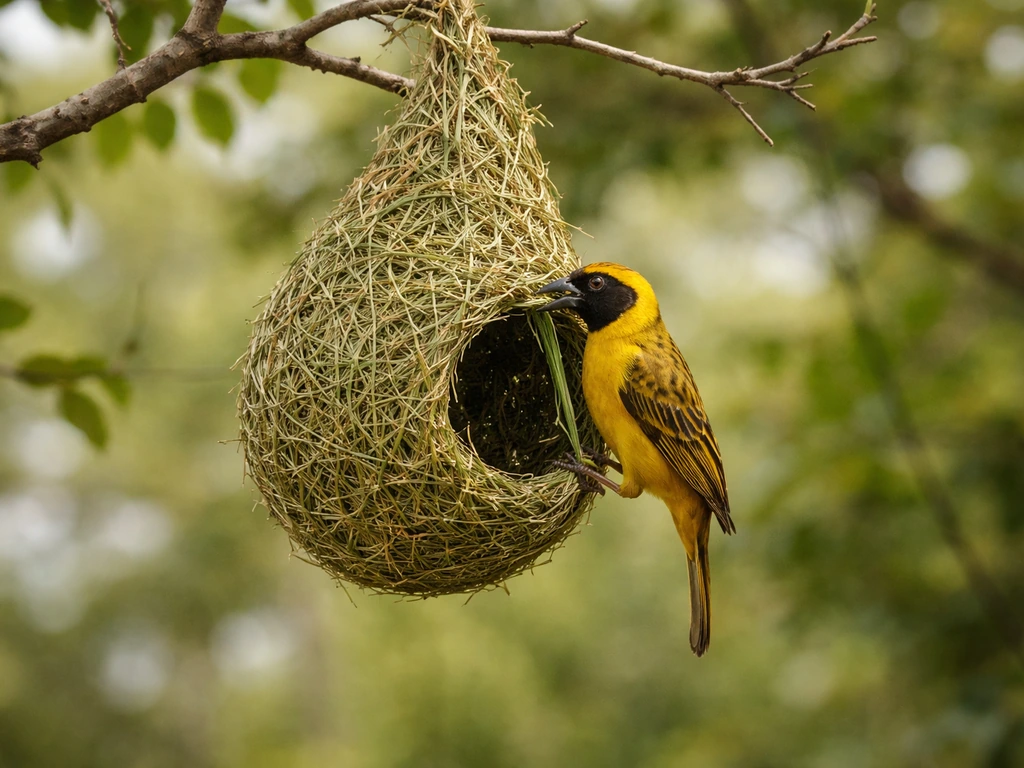
The exact structure depends on the species: some make a kidney-shaped globe with a downward-facing hole, others build a long entrance tube hanging below the main chamber, and a few construct simple U-shaped grass bundles for communal roosting. If you're watching one build, you'll see a male rapidly stripping green leaves, flying back to the nest site, and systematically weaving from the attachment point outward, often tearing down and restarting if the structure doesn't hold.
Types of weaver bird nests by species
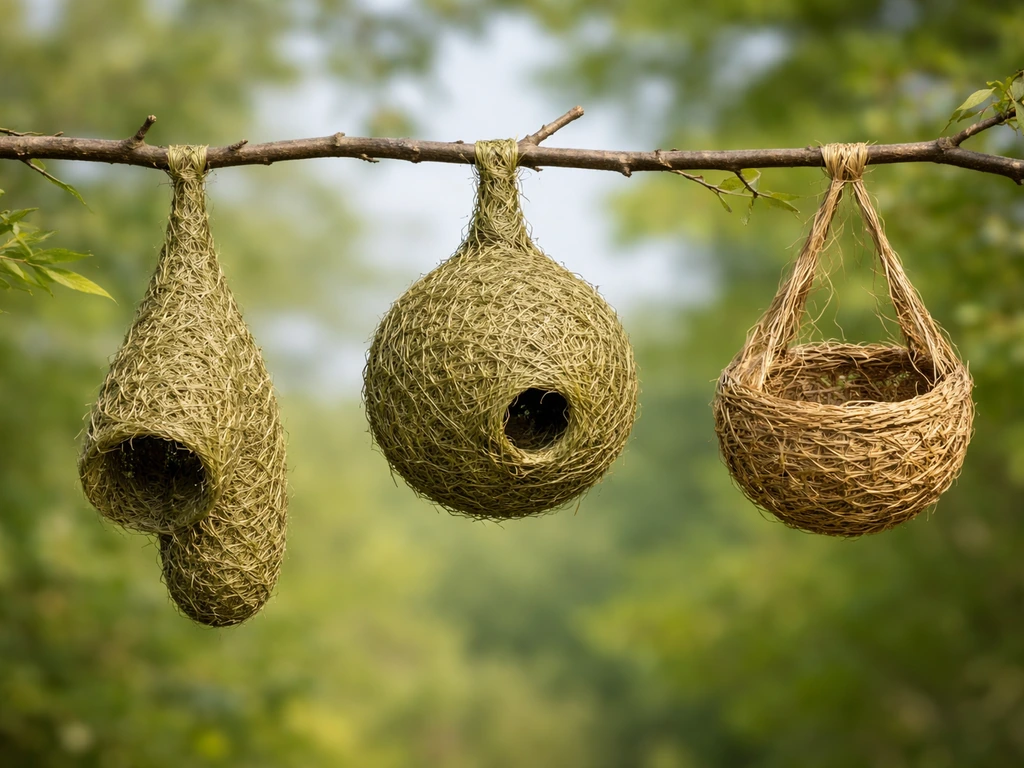
Weaver birds aren't a single species, so the nest you're looking at (or reading about) can look very different depending on which bird built it. Here are the main types you're likely to encounter:
| Species | Nest Shape | Entrance Style | Typical Placement |
|---|---|---|---|
| Village weaver (Ploceus cucullatus) | Large, roofed globe with antechamber | Downward-facing hole | Suspended from drooping branches, 6–18 m up; sometimes over water on reeds |
| Baya weaver (Ploceus philippinus) | Retort-shaped pendulous basket | Long vertical entrance tube at bottom | Colonies near water and food; occasionally under building eaves |
| Southern masked weaver (Ploceus velatus) | Kidney-shaped globe | Large entrance at bottom | Woven into leafy foliage, often 1–3 m above ground |
| White-browed sparrow-weaver | Inverted-U grass bundle | One entrance (breeding) or two (roosting) | Dry grass, lower shrubs and trees in arid areas |
The village weaver and southern masked weaver are the two species most people encounter in sub-Saharan Africa, while the baya weaver is the one you'll find across South and Southeast Asia. Each has a recognizable silhouette once you know what to look for, but the construction process shares the same core technique across all of them.
Step-by-step: how weaver birds build nests
The build follows a clear sequence. Learning how tailor bird build nest works in a similar step-by-step way, with the right fibers and weaving sequence how weaver birds build nests. To understand how does a weaver bird make its nest class 3, follow the same step-by-step sequence from selecting fibers to weaving an enclosed structure how weaver birds build nests. Males don't just pile material together randomly; there's a real workflow with distinct phases. Understanding it helps you know what stage you're watching when you're out in the field.
- Site selection: The male scouts for a suitable branch, usually a thin, drooping, or flexible tip that offers some natural predator protection. Colony nesters like the baya weaver choose sites near water, food, and nesting material simultaneously.
- Initial attachment phase: The male tears a long strip of grass or palm leaf and loops it tightly around the chosen branch, anchoring the whole structure. This first attachment is critical; if it slips or looks unstable, the male may abandon it and start fresh elsewhere.
- Ring phase: Once the anchor holds, the male builds a rough ring or loop of woven fibers hanging from the attachment point. This ring becomes the structural skeleton of the nest. Studies on southern masked weavers show these two early phases are the most variable across individuals and experience levels.
- Chamber weaving: Working from the ring outward and downward, the male interlaces strip after strip, building the domed roof and rounded sides of the main nesting chamber. Village weavers seize each strip near its end and double it back on itself repeatedly through the structure, essentially creating a braid.
- Entrance formation: Once the chamber is mostly closed, the male shapes the entrance. In village and masked weavers this is a simple downward-facing hole. In baya weavers, the male extends the opening into a long vertical tube, sometimes adding considerable length over several days.
- Finishing and female inspection: The male displays at the completed nest, hanging and fluttering at the entrance to attract females. Females inspect and test the structure. Village weaver females strongly prefer fresh green nests; older, dried-out brown nests are routinely ignored, which means males often tear down rejected nests and rebuild with fresh material.
- Female lining: If a female accepts the nest, she moves in and lines the interior with soft grasses, feathers, or plant down before laying eggs. The male's job is essentially done at this point.
First-year males produce noticeably untidy, loosely woven nests compared to experienced adults. If you're watching a colony and see a rough, uneven structure next to a tight, neat one, you're likely looking at two different age groups working side by side.
Materials, tools, and weaving techniques
What they use
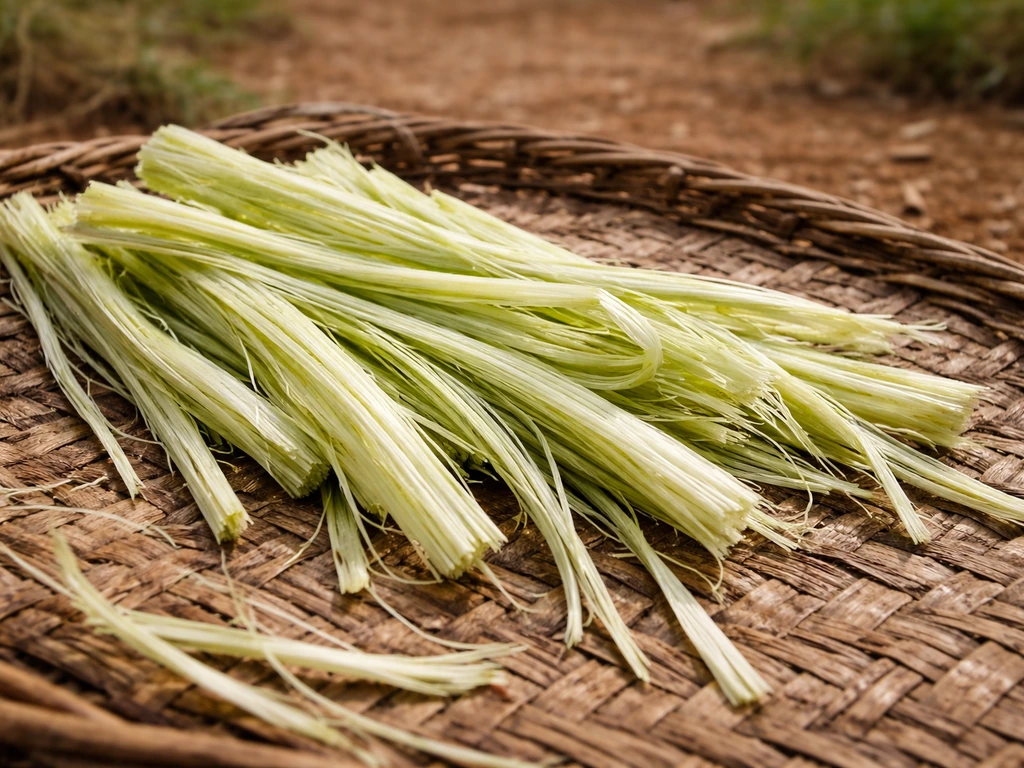
The core material is long, flexible plant fiber, almost always freshly torn rather than gathered from the ground. Village weavers prefer strips from large-leafed palms or tall grasses like Arundo donax. Baya weavers use paddy leaf strips, rough grasses, and long palm-frond strips. Southern masked weavers work with reed, palm, or grass depending on what's locally available. The strips are typically torn lengthwise from the leaf blade, creating long, narrow ribbons that are easier to interlace.
Freshness matters more than you might expect. Green plant material is pliable enough to loop and knot without snapping, and as it dries in place it stiffens and locks the weave. This is partly why females prefer green nests: they're structurally tighter and more recently built.
The actual weaving technique
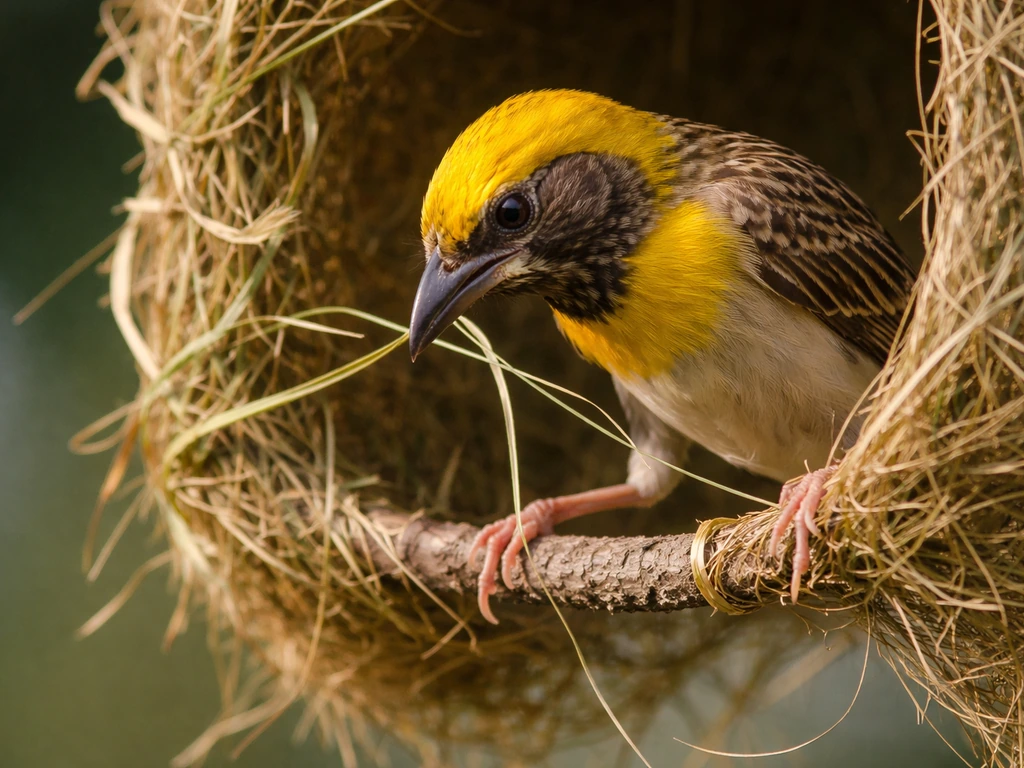
The bird has no hands, so everything happens with the beak and feet. The male grips the branch or nest frame with its feet, holds one end of a strip in the beak, then threads the strip through existing loops and doubles it back on itself. This doubling-back motion is the key weaving action: it creates interlocked loops rather than just a pile of crossed fibers. The beak acts as both needle and clamp, pushing, pulling, and twisting the strip into position. Baya weaver males are particularly persistent builders, making up to around 500 collection and weaving trips to complete a single nest.
Not all fibers in a nest serve the same function. Research on baya weavers shows that males selectively use different fiber types for different parts of the structure, with platform attachment fibers chosen differently from those used to build the main body. This isn't random material-gathering; there's real selectivity happening.
Nest placement, timing, and what to expect during building
Placement is driven by a combination of predator avoidance, proximity to food and water, and available anchoring points. Village weaver nests are typically suspended from drooping branches between 6 and 18 meters above the ground, and in wetter habitats they're often supported by reeds 1 to 2 meters above water, which creates a natural barrier against ground predators. Southern masked weaver nests tend to sit lower, around 1 to 3 meters up, tucked into leafy foliage. Baya weavers build in colonies, sometimes 20 to 30 nests in a single tree, often near paddy fields or marshes.
Baya weavers breed during the monsoon season, timing nest construction to coincide with peak grass growth so material is fresh and abundant. Village weavers are more flexible across their range but similarly prefer to build when green plant material is available. Building activity is most intense in the early morning hours. If you're watching a colony, expect to see males working almost continuously from dawn, ferrying strips back every few minutes and weaving them in quickly.
One behavior that surprises many observers: males regularly tear down their own nests. This behavior is also documented as part of the nest-building process in an experimental study of weaverbird nest-building mechanisms archived by the University of South Florida males regularly tear down their own nests. If a female doesn't accept the nest within a reasonable window, or if the nest dries out and loses its green color, the male dismantles it strip by strip and either rebuilds at the same site or moves to a new branch. This isn't failure; it's the normal cycle. You might see a colony tree with several nests at different stages simultaneously, some nearly complete and some being actively demolished.
How to identify a weaver nest vs similar birds
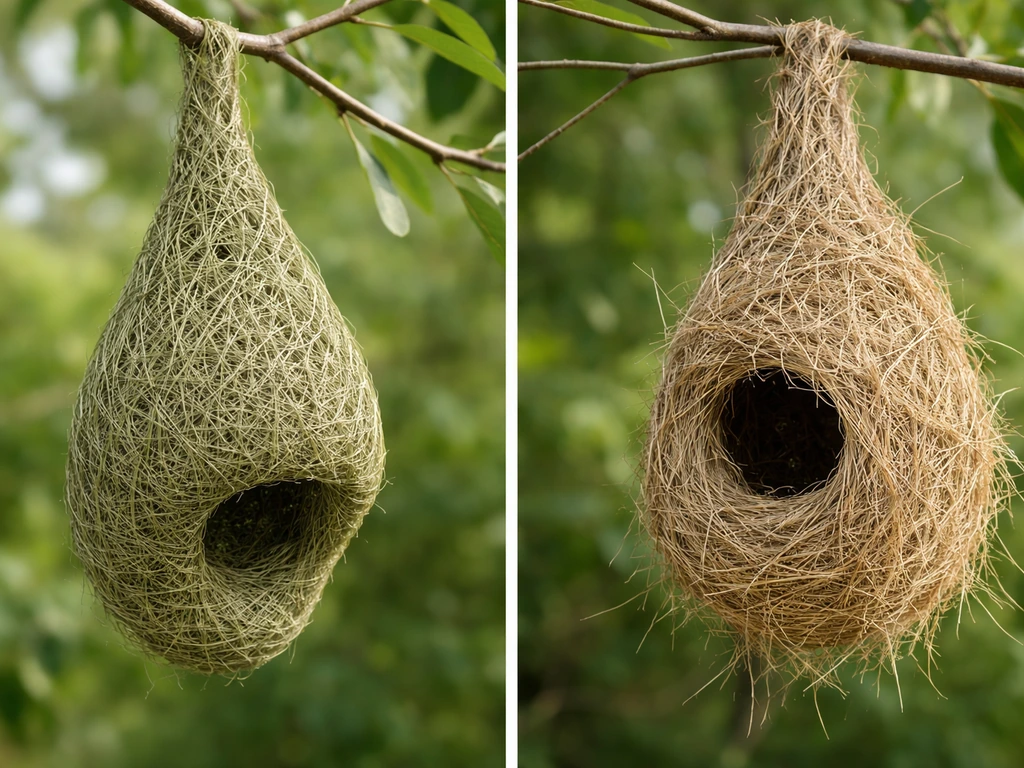
A weaver nest has a very specific combination of features that sets it apart from other suspended or woven nests. The common tailor bird nest is another example of a woven, structured shelter, and its appearance can also be identified by how the materials form a secure enclosure A weaver nest. Use these markers when you're trying to ID in the field:
- Tight, interlocked weave: Individual fibers loop and cross each other in a deliberate pattern. It doesn't look like a cup of loosely packed grass; it looks knitted or braided.
- Fully enclosed roof: Unlike an open cup nest (robins, most songbirds), a weaver nest is completely domed and has no open top. The only opening is the entrance hole.
- Downward or tube entrance: The entrance faces down, sideways-down, or extends into a dangling tube. No top-entry weaver nests exist among the species covered here.
- Suspended from a branch tip: The nest hangs free, attached at the top to a branch, often a thin or drooping one. It swings when touched.
- Approximate size: A typical southern masked weaver nest runs roughly 15 cm by 12 cm. Village weaver nests are larger and coarser. Baya weaver nests can look elongated due to the entrance tube.
- Green when fresh, straw-brown when old: A newly built or active nest is noticeably green. A dry, brown nest is likely old, rejected, or from a prior season.
- Colony context: Weavers are often colonial. Finding one nest in a tree usually means there are several more nearby.
The nests most likely to be confused with weavers are those of other highly skilled nest-builders. Tailor birds, for instance, sew leaves together with plant fibers to create a hidden cup, which is very different in technique and appearance despite also involving fiber manipulation. Sparrow nests are bulkier and messier, stuffed with feathers and debris rather than woven. Oriole nests are pendulous like some weavers but are usually deeper cups rather than enclosed globes. If the nest has a fully closed roof and a downward entrance, it's almost certainly a weaver.
Ethical guidance: observing nests, keeping distance, and legal/safety basics
Weaver nests are fascinating to watch up close, but how you observe matters. Here's what to keep in mind whether you're a birdwatcher, a homeowner with a weaver colony nearby, or someone who's just found a nest and isn't sure what to do.
How to observe without causing harm
- Keep your distance. Standard guidance from ornithological organizations is to stay well back from any active nest, nesting colony, or display area. Binoculars and a long camera lens let you observe without stress to the birds.
- Minimize approach frequency. If you're checking a nest over multiple days, fewer, briefer visits are better than frequent close checks. Each approach can stress adults into flushing and leaving eggs or chicks exposed.
- Don't touch the nest or surrounding branches. Even touching the branch a nest is attached to can disturb it. The idea that human scent causes birds to abandon nests is largely a myth, but physical disturbance is real and can dislodge eggs or weaken attachment.
- Photograph from a distance. A long zoom shot is more than enough to document nest stage and activity. There's no need to get close for a good record photo.
- Note what you see and move on. A quick note of the species (if known), nest location, approximate height, and date is useful for personal records or citizen science platforms. You don't need to inspect the interior to log a good observation.
What to do if a weaver nest is near your home
If a weaver or weaver colony has nested in a tree near your house, on a telephone line, or under an eave (baya weavers occasionally do this in parts of their range), the most important first step is to determine whether the nest is active. An active nest contains eggs or chicks or has adults visiting regularly. In the United States, active nests of native bird species are protected under the Migratory Bird Treaty Act, which makes it illegal to destroy, remove, or disturb a nest that has eggs or chicks, or where young are still dependent. Permits are only issued under limited circumstances. If you're outside the U.S., equivalent protections exist in most countries across the weavers' natural range.
If the nest is active, leave it alone and wait. Most weaver nests complete their breeding cycle in a matter of weeks. Once chicks have fledged and the adults have moved on, the nest is no longer legally protected and you can remove it if it's causing a genuine problem, such as blocking a drain or creating a fire hazard near electrical equipment.
If the nest appears to be in danger from predators, the best approach is passive protection rather than intervention. Weaver birds deliberately choose nest sites with natural predator barriers (height, water below, thin swinging branches). Introducing artificial barriers or attempting to relocate a nest is almost always more disruptive than helpful. If you're genuinely concerned about a nest at risk, contacting a licensed wildlife rehabilitator or your local bird conservation organization is the right next step rather than acting yourself.
Quick ethical checklist for any nest encounter
- Confirm whether the nest is active before doing anything.
- If active: observe only from a distance, do not touch or approach closely.
- If inactive and causing a practical problem: remove only after confirming no birds are dependent on it.
- If unsure about legality in your region: check with your national wildlife agency or a local birding organization before acting.
- If a nest is at genuine risk: contact a licensed rehabilitator rather than attempting a DIY relocation.
Weaver nests are one of the most impressive construction projects in the natural world, and watching the build process from a respectful distance is one of the genuine rewards of spending time near a colony. The more you know about how the nest is put together, the more remarkable each trip the male makes back to that branch tip becomes.
FAQ
How long does it usually take a male weaver bird to build a nest?
Timing varies by species and conditions, but in active colonies you can often see construction happen in bursts over several days to a couple of weeks. The strongest clue you can use in the field is the presence of adults steadily visiting and weaving, as opposed to brief, irregular trips seen when materials are scarce or the male is between rebuild attempts.
Do weaver birds reuse old nests, or do they build from scratch every time?
They typically build a fresh structure, but a male may dismantle and rebuild at the same site if the previous nest fails to attract a female or loses proper condition (for example, drying and losing that greener, more pliable weave). Instead of fully reusing the interior, the male usually removes strips and reweaves into a new working shell.
How can I tell whether the male is weaving the same nest or switching to a different one nearby?
Watch for where the male is gripping and anchoring the fibers. If the weaving is consistently centered around one attachment point and the shape is clearly progressing, it is the same nest. If you see the male tearing down and then the pattern of loops resets in a different chamber or doorway, he has likely shifted to another structure.
What makes weaver nests strong enough to hold shape?
A major factor is using fresh, pliable plant strips and then letting the woven material stiffen as it dries. If the strips are too dry at the time of weaving, they are less likely to form tight interlocked loops, which can explain why some males repeatedly dismantle and restart.
Are weaver nest materials always plants, or do they sometimes include other items?
They are overwhelmingly plant fiber weavers, using strips from grasses, reeds, palm fronds, or leaf blades. In some areas you might see bits of other debris mixed in, but the backbone of the nest is still woven plant ribbon that functions structurally, not loose stuffing.
Why do young male weaver nests look messy, and does that affect success?
First-year males tend to produce looser, uneven weaves because they have not yet mastered the precise sequence of threading and doubling-back that creates tight interlocking loops. This often reduces structural tightness and may lower female acceptance rates, which is one reason you may see males demolish incomplete nests more frequently early in the season.
Do females ever help build the nest?
In the typical pattern described for weaver birds, the male does the weaving while the female’s role is more centered on accepting or rejecting the finished structure. However, behavior can vary with species and circumstances, so the practical field check is whether you see one adult doing repeated material trips and weaving, while the other mainly remains off the active weaving work site.
How do weaver birds keep the nest from falling if it is hanging from branches?
They rely on firm anchoring and the geometry of the weave. The attachment fibers and how the strips are interlaced at the attachment point determine whether the outer shell can bear movement, wind, and repeated handling by adults. This is also why choosing suitable branches and building in specific microhabitats matters.
What’s the safest way to observe a weaver colony without stressing the birds?
Stay back far enough that adults keep normal visiting rates and do not repeatedly pause, fly off, or spend extra time scanning. Avoid coming between a nest and its likely entrance direction, since this can interfere with weaving and feeding trips. If activity clearly drops, increase distance immediately.
If I find a weaver nest, is it okay to move branches or secure it if it’s near a doorway or drain?
It is usually not a good idea to relocate or mechanically disturb nests while they are active. The safer approach is to check for eggs or chicks and then use non-invasive solutions, such as rerouting people away from the area. If it is actively breeding, contact a licensed wildlife professional for guidance rather than improvising fixes.
What should I do if a nest looks unfinished or is being torn down repeatedly?
Treat repeated teardown as part of the normal cycle. The male may be adjusting structure, responding to female acceptance timing, or dealing with drying or strength issues. Unless the nest is in immediate danger from people or vehicles, the best next step is usually monitoring from a distance rather than trying to intervene.
Can weaver nests be confused with tailorbird nests, and how can I tell the difference quickly?
Yes, confusion happens because both involve woven fiber work. A fast field distinction is the overall enclosure: weaver nests typically have a fully roofed, enclosed chamber with a downward entrance, while tailorbirds more often create hidden cups by stitching or binding leaves rather than making a globe-like enclosed body.
Next Articles

Who Builds the Bird Nest? How to Identify Active Nests
Learn who builds bird nests, how to spot active nests, and what to do safely and legally without disturbing birds.

Should I Let a Bird Build a Nest? What to Do Today
Decide if to let a bird nest, how to check activity, avoid disturbance, and handle conflicts safely and legally.
Can You Make a Nest for a Bird? Safe, Legal Steps
Learn safe, legal ways to help birds nest with proper materials and nest boxes, avoid active nests, and prevent harm.