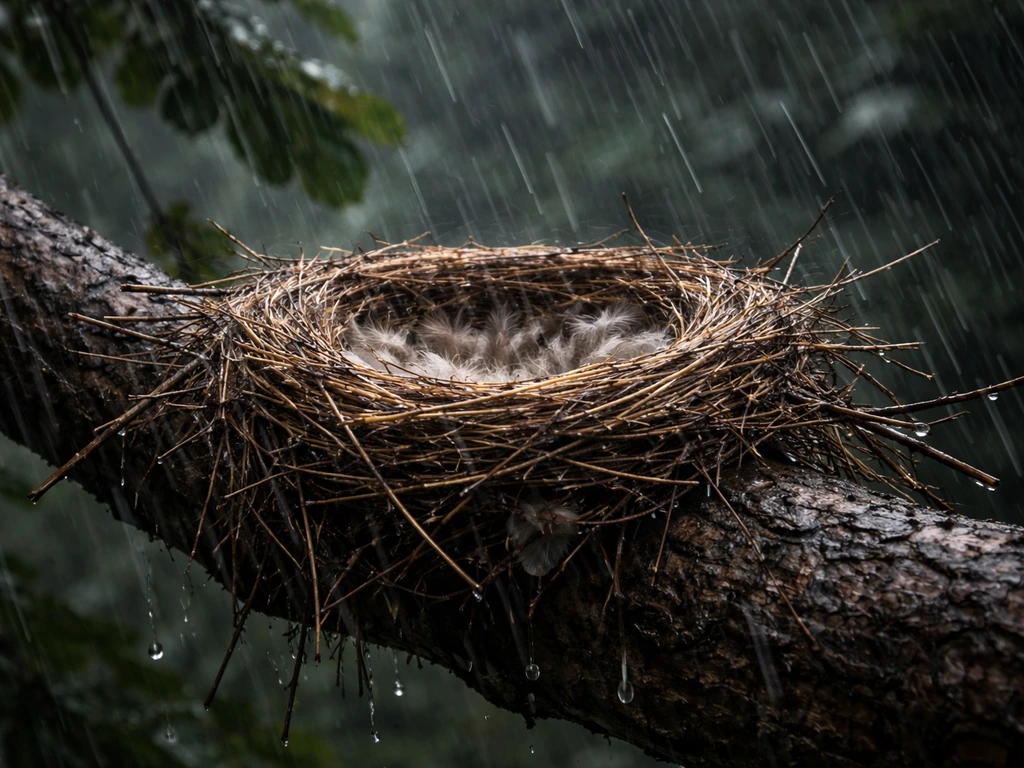
Yes, bird nests can get wet, and most of the time it is not an emergency. Healthy, well-built nests handle rain regularly, and parent birds are surprisingly good at managing moisture. The real risk kicks in when a nest gets soaked for an extended period, when drainage is blocked, when chicks are very young or newly hatched, or when a direct water source (like a sprinkler or roof runoff) is hitting the nest repeatedly. In those cases, you need to act quickly but carefully, because the law protects most active nests and the birds themselves do not benefit from well-meaning human interference.
Can Bird Nests Get Wet? What Happens and What to Do

Maya Bennett
15 May 2026
What actually happens when a nest gets wet
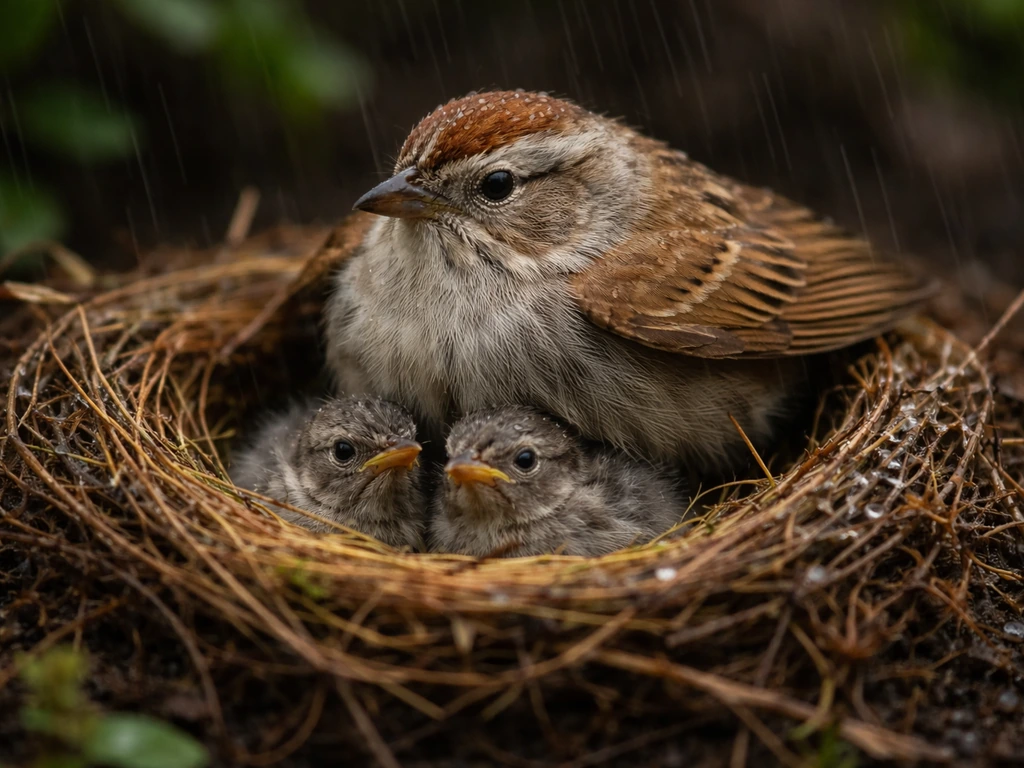
A brief rain shower rarely causes serious harm. Adult birds often shelter on the nest during rain, using their body as an umbrella and keeping eggs and chicks dry underneath. Once the rain passes, body heat and airflow dry the nest out within a few hours. Short, repeated wetting cycles are essentially normal for any nest built outdoors.
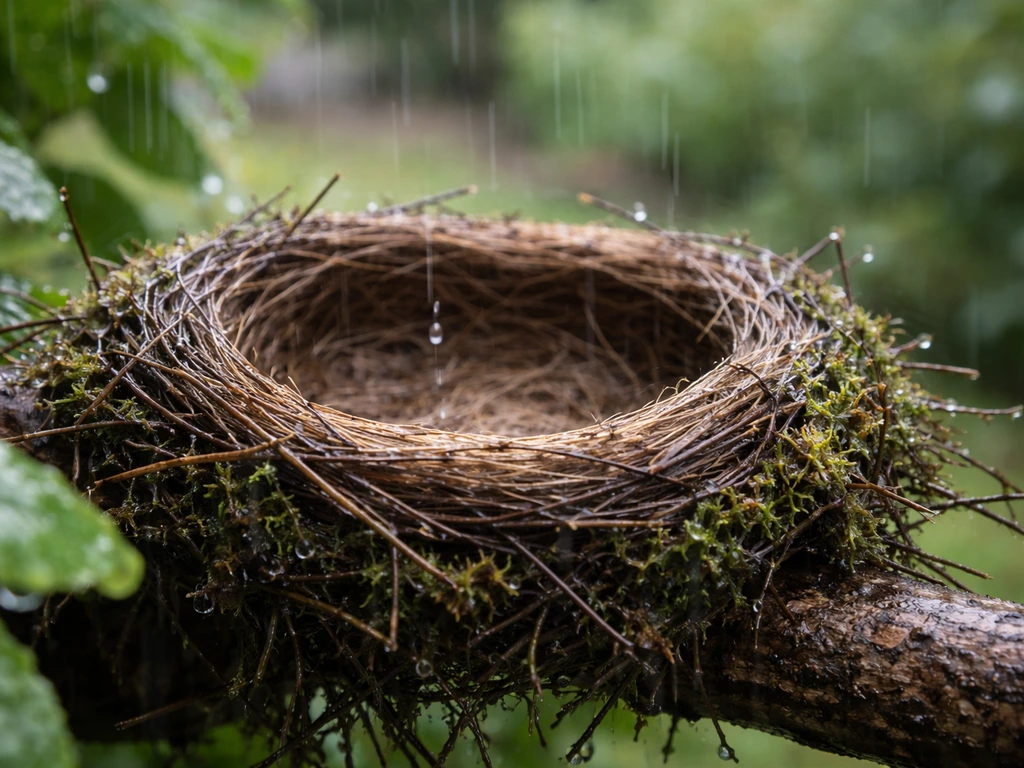
The problems start when the nest stays saturated. Prolonged wetness drops the internal nest temperature, which is lethal for eggs and very young chicks that cannot regulate their own body heat. Standing water inside a cup nest can literally drown hatchlings. Persistent moisture also accelerates mold and bacterial growth in organic nest materials, which can sicken or kill chicks even after the water drains. A waterlogged nest also loses structural integrity, increasing the risk of collapse, especially in platform or open-cup designs.
One thing worth knowing: some nests look wet on purpose. Swallows and robins use wet mud as a building material and actively add it during construction. Adult birds also sometimes carry water to the nest deliberately, either to cool eggs during a heat wave or to soften food for chicks. If you see a damp nest during dry weather, that is often normal nest-building or feeding behavior rather than a problem.
How nest design and materials change the risk
Not all nests respond to water the same way. The species, the materials used, and the location all determine how well a nest drains and how quickly it dries.
| Nest Type | Common Species | Water Resistance | Main Risk |
|---|---|---|---|
| Cup nest (open) | Robin, song sparrow, warbler | Moderate, drains if tilted | Pooling in base, chilling nestlings |
| Mud-lined cup | Barn swallow, cliff swallow | Good structural integrity when dry, brittle when saturated | Crack and collapse after heavy soaking |
| Platform/stick nest | Osprey, hawk, heron | Good drainage through gaps | Inner lining can trap water near eggs |
| Cavity/box nest | Bluebird, chickadee, wren | Protected from direct rain | Drainage holes blocked, flooding from runoff |
| Ground nest | Killdeer, meadowlark, junco | Exposed, relies on slope and soil drainage | Flash flooding, puddle submersion |
| Ledge/eave nest | House sparrow, pigeon | Sheltered overhead, but runoff risk | Roof gutter overflow, direct downspout spray |
Grassy and plant-fiber nests dry faster than nests with thick mud linings. Cavity nests are almost always fine in rain because the entrance hole blocks direct water, but if the drainage hole at the base of a nest box is clogged with debris, water can pool and drown chicks. Ledge and eave nests under overhangs are protected from rain but are often hit by concentrated roof runoff during heavy storms. Ground nests are the most vulnerable because even moderate rainfall can flood them if drainage is poor.
Quick triage: is this wet nest okay or in trouble?
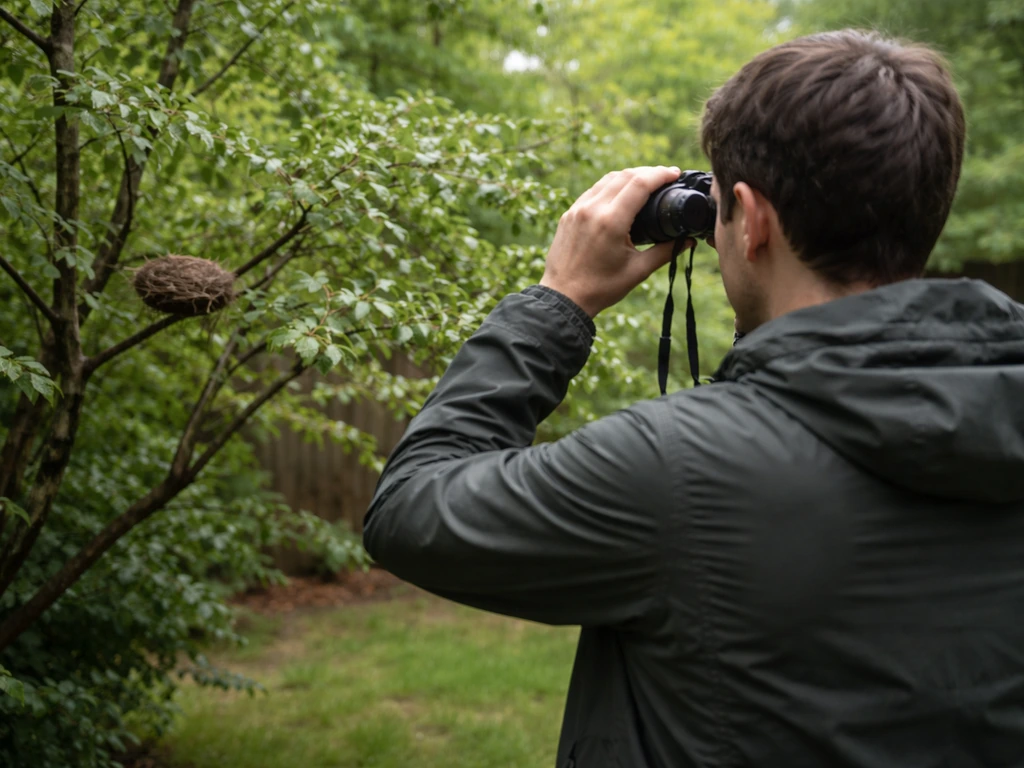
Before touching anything, observe from at least 10 feet away for a few minutes. Most of your assessment can be done visually without approaching the nest closely.
Signs the nest is probably fine
- Adult bird returned to the nest within 15 to 30 minutes of the rain stopping
- Chicks are moving, making sounds, or begging for food
- Nest is damp on the outside but not visibly pooling water
- Nest is in a sheltered spot (under an eave, in a dense shrub) with natural air circulation
- Weather has since warmed up and is drying out
Warning signs that need attention
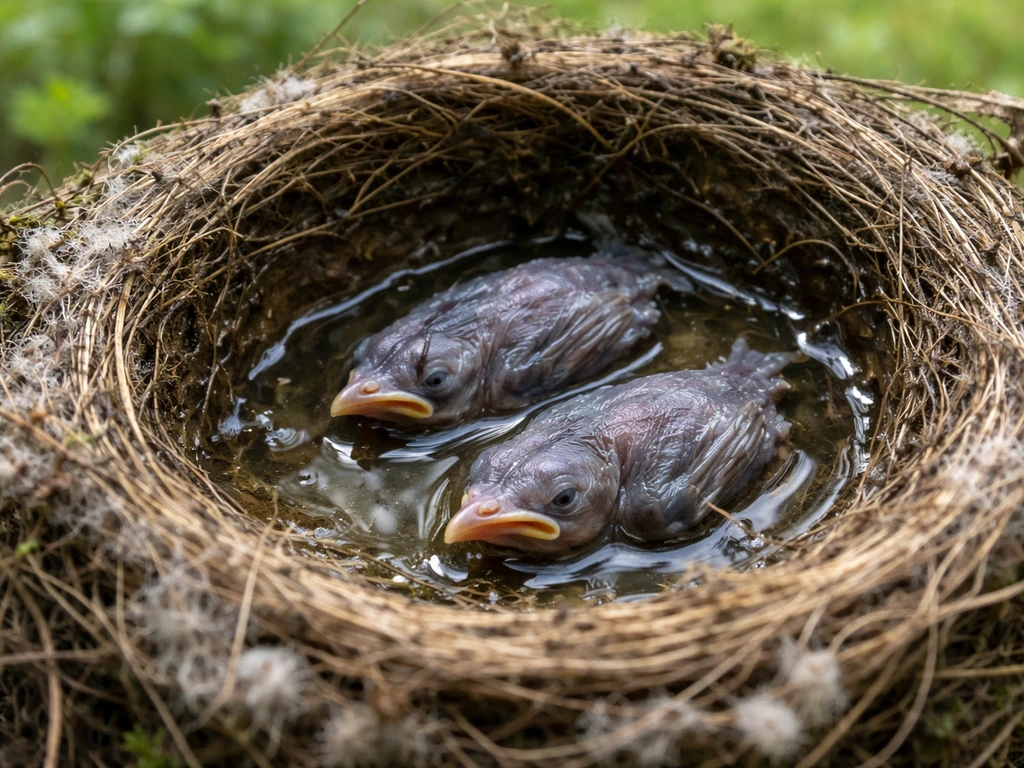
- Visible standing water inside the nest cup or cavity
- Chicks appear cold, lethargic, pale, or are silent when they should be active
- Chicks are spread flat on the nest floor instead of huddled together
- Adult has not returned after 45 to 60 minutes post-storm in clear conditions
- Nest has a distinctly sour or musty odor, which indicates mold or bacterial decay
- Nest structure is visibly collapsing, tilting, or pulling away from the branch or surface
- Ground around a ground nest is actively flooding with no sign of drainage
If you are seeing any warning signs, move to the next section. If everything looks okay, give the nest space and monitor it again in a few hours, especially if more rain is expected. Related to this topic, how bird nests survive storms and what happens to bird nests when it rains are worth understanding together, since some situations start as a rain event and escalate into storm damage. That includes questions like how do snakes find bird nests, since predators often target nests based on cues in the environment.
What to do today to protect an active nest
The guiding principle is: do as little as possible. Your goal is to remove the water source or deflect the water, not to handle the nest or chicks. Every time you approach, you stress the adults and risk them abandoning the nest, and in most cases, blank" rel="noopener noreferrer">moving an active nest is illegal under federal law.
Steps you can safely take right now
- Turn off any sprinklers or irrigation systems that are spraying near the nest. Keep them off until the birds have fledged.
- Redirect a hose or outdoor faucet drip that is running toward the nest location.
- Clear a blocked gutter or downspout that is channeling water onto a ledge or eave nest, as long as you can do it without disturbing the nest directly.
- Temporarily attach a small piece of clear plastic sheeting or a folded tarp above the nest as a rain shield, angling it so water runs away. Use tape or a bungee to a beam or branch, keeping the material well above and to the side of the nest so the adults can still access it freely.
- If a cavity nest box has a blocked drainage hole, carefully drill one or two small holes in the floor of the box from below, without opening the box or disturbing the interior.
- Take photos from a distance to document conditions before and after any steps you take.
What not to do
- Do not move the nest, even to a "better" nearby spot. Relocation almost always results in abandonment.
- Do not pick up or warm chicks with your hands unless a rehabilitator has specifically instructed you to do so.
- Do not add towels, rags, or absorbent material into a nest cup. This can trap moisture, introduce pathogens, and deter adult return.
- Do not stand near the nest repeatedly. Check once, take action from a distance if needed, and then step away.
- Do not use heat lamps or blow dryers near a nest. You can easily overheat eggs or chicks while trying to dry the nest.
- Do not remove the nest if eggs or live chicks are present, as this is a federal offense under the Migratory Bird Treaty Act.
Preventing water problems in the first place
If you have noticed birds building a nest in a spot that is going to have drainage or water exposure issues, acting before eggs are laid is far easier, legally cleaner, and better for the birds. Once there are eggs in the nest, your options shrink considerably.
Drainage and runoff fixes
- Clean gutters and downspouts in early spring before nesting season begins (late March to early April in most of North America). This removes the main cause of overflow onto eave and ledge nests.
- Add gutter extensions to carry water away from walls and surfaces where birds commonly nest.
- Grade soil away from areas below ground nests if you have killdeer or similar species using your property. Even a slight slope change prevents puddling.
- Check nest box drainage holes every spring before boxes are occupied. A 1/4-inch hole in each corner of the floor is sufficient.
Sprinklers and irrigation
Reprogram automatic irrigation zones to avoid spraying eaves, fence lines, dense shrubs, and other common nesting spots during nesting season, which typically runs from April through August in most of the U.S. A smart irrigation controller can let you temporarily pause zones near an active nest without dismantling your entire system. If manual adjustment is not possible, use a temporary physical deflector (a piece of cardboard or rigid plastic zip-tied to a stake) to redirect spray away from the nest.
Coverings and shelters
For nests on porches, under deck overhangs, or along fence rails, a lightweight clear polycarbonate panel installed at an angle above the nesting spot can provide season-long protection without blocking light or airflow. This works especially well for swallows and robins that return to the same site year after year. Install it before nesting season starts so the birds incorporate it into their site selection. For nest boxes, a roof overhang of at least 2 to 3 inches beyond the entrance hole keeps rain from blowing directly inside.
What the law says, and when to call for help
The Migratory Bird Treaty Act (MBTA) protects the vast majority of wild bird species in the United States, their eggs, and their active nests. Destroying, moving, or even significantly disturbing an in-use nest containing eggs or chicks requires a federal permit, and the penalties for violations are serious: up to $15,000 in fines and up to 6 months in prison for misdemeanor violations, with felony penalties possible for more egregious cases.
"I was trying to help" is not a legal defense. This means that even if a nest is in a genuinely bad spot, your options for intervention are legally constrained once eggs are present. CRS explains that MBTA violations can lead to felony or misdemeanor penalties, depending on the type of violation, and that criminal liability can attach for unlawful "take," including destruction of nests and eggs [felony or misdemeanor penalties for MBTA violations](https://www. congress.
gov/crs-product/R44694).
Canada has similar protections under the Migratory Birds Convention Act, and many states and provinces have additional protections on top of federal law. Before taking any action beyond passive shielding, check your state's wildlife agency guidelines.
Do's and don'ts at a glance
| Action | Legal/Ethical Status | Notes |
|---|---|---|
| Observe from a distance | Always okay | Use binoculars, not your phone camera up close |
| Turn off a sprinkler hitting the nest | Always okay | Do it immediately, no restrictions |
| Install a rain shield above (not touching) the nest | Generally okay | Keep it clear of the nest structure itself |
| Clear a blocked gutter nearby | Generally okay | Avoid direct nest contact |
| Move an active nest with eggs or chicks | Illegal without permit (MBTA) | Federal offense, up to $15,000 fine |
| Remove an empty, inactive nest | Legal once nest is confirmed inactive | Confirm no eggs or birds are present first |
| Handle chicks or eggs | Illegal without permit in most cases | Contact a licensed rehabilitator instead |
| Contact a licensed wildlife rehabilitator | Always the right call if chicks are in distress | They can act legally where you cannot |
When to call a wildlife rehabilitator
Contact a licensed wildlife rehabilitator if chicks are clearly hypothermic (cold, limp, unresponsive), if the nest has physically collapsed and chicks have fallen out, if the adult has not returned for more than an hour in post-storm clear conditions, or if you are seeing signs of mold or severe structural damage that you cannot address without touching the nest. In the U.S., you can find a licensed rehabilitator through the National Wildlife Rehabilitators Association directory or through your state's Fish and Wildlife agency website. Document everything with photos before you call because that information helps them advise you quickly.
The broader threat picture matters too. Wet nests are one category of nest stress, but predators like raccoons and crows often take advantage of nests weakened or exposed by storm damage. If raccoons raid bird nests, that can quickly turn a wet-storm situation into an urgent one, so watch for signs of predators raccoons and crows. If you are already watching a nest closely after a rain event, it is worth keeping that wider threat landscape in mind.
FAQ
How long can a bird nest be wet before it becomes dangerous?
A brief shower is usually fine, but sustained soaking is the problem. If the nest stays saturated overnight, or you see standing water inside the cup or near hatchlings, that is a sign the risk is escalating. Climate matters too, after cold or windy rain the drying time can be longer, increasing hypothermia risk for very young chicks.
What does standing water look like in a nest, and should I pour anything out?
Standing water often shows up as pooled liquid in a cup-shaped nest, slick mud layers, or damp bedding that never seems to dry. Do not pour water out or disturb the nest, even if you think it is safe. Instead, focus on removing the water source or deflecting runoff, then monitor from a distance.
If I cover a nest with a tarp, will that solve the moisture problem?
It can help only in the right scenario, but it also increases risk if it traps humidity, blocks airflow, or touches the birds. If you use any cover, it should be passive, positioned above the nest so air can circulate, and installed without contacting adults or nest materials. Never seal the area or create a “box” around the nest.
Can I move a bird nest to a drier location after a storm?
Usually no. Once eggs or chicks are present, moving or significantly disturbing an active nest is generally illegal under federal law and may also violate state rules. The safer approach is to deflect runoff and improve drainage around the nesting site without relocating the nest itself.
Is it safe to touch wet chicks or eggs to dry them off?
In most cases, no. Handling increases stress, can chill hatchlings further, and may cause abandonment. The correct decision aid is symptom-based: if chicks are cold, limp, unresponsive, or repeatedly ignored by adults after the weather clears, contact a licensed wildlife rehabilitator rather than attempting to dry them yourself.
How can I tell if the parents have abandoned the nest because of wet weather?
Look for adult return behavior after conditions stabilize. If it is bright and dry and you still do not see adults returning for more than an hour, especially for small ground or exposed nests, treat that as a concerning sign. Record times and weather conditions so a rehabilitator can assess whether abandonment, predation, or hypothermia is the likely cause.
What emergency signs mean I should call a wildlife rehabilitator immediately?
Call right away if you see mold spreading on nest materials, the nest has physically collapsed and chicks are on the ground, chicks are clearly hypothermic (cold, limp, unresponsive), or the adult bird has not returned after an appropriate post-storm period in clear conditions. Also call if you suspect a repeated direct water hit, like ongoing sprinkler flow, that you cannot stop without disturbing the nest.
Are bird nest types more vulnerable to rain, and how does that change what I should do?
Yes. Ground nests and nests that collect runoff are more vulnerable because drainage and pooling are more likely. For these, prioritize fixing the water source, creating a simple deflector above the site, and monitoring closely for signs of saturation, rather than waiting for the rain to stop on its own.
If there is wetness but no warning signs, should I intervene at all?
Typically, no. If the nest is intact, no standing water is present, and adults are actively caring for eggs or chicks, your best action is minimal intervention. Monitor again in a few hours when conditions improve, especially if additional storms are expected.
How can I prevent irrigation or runoff from wetting future nests without disturbing birds now?
Reprogram irrigation zones during nesting season to avoid spraying eaves, fence rails, dense shrubs, and likely nesting spots. If the system cannot be adjusted immediately, use a temporary redirect like a rigid zip-tied deflector that changes the spray direction away from the nesting area. Ideally, make these changes before nests are established to avoid legal and welfare complications.
Can I install a nest box roof overhang after a box already has active nesting?
You should avoid touching or modifying an active nest box during nesting unless you are doing only minor, non-disruptive shielding that does not disturb the entrance, the birds, or the box interior. If the box is actively used, the safer plan is to contact a wildlife rehabilitator for guidance or wait until the nesting attempt ends.
Next Article
How Do Bird Nests Survive Storms? Key Reasons and Tips
How bird nests resist storms: structure, placement, drainage and timing, plus risk triage and safe after-storm steps.