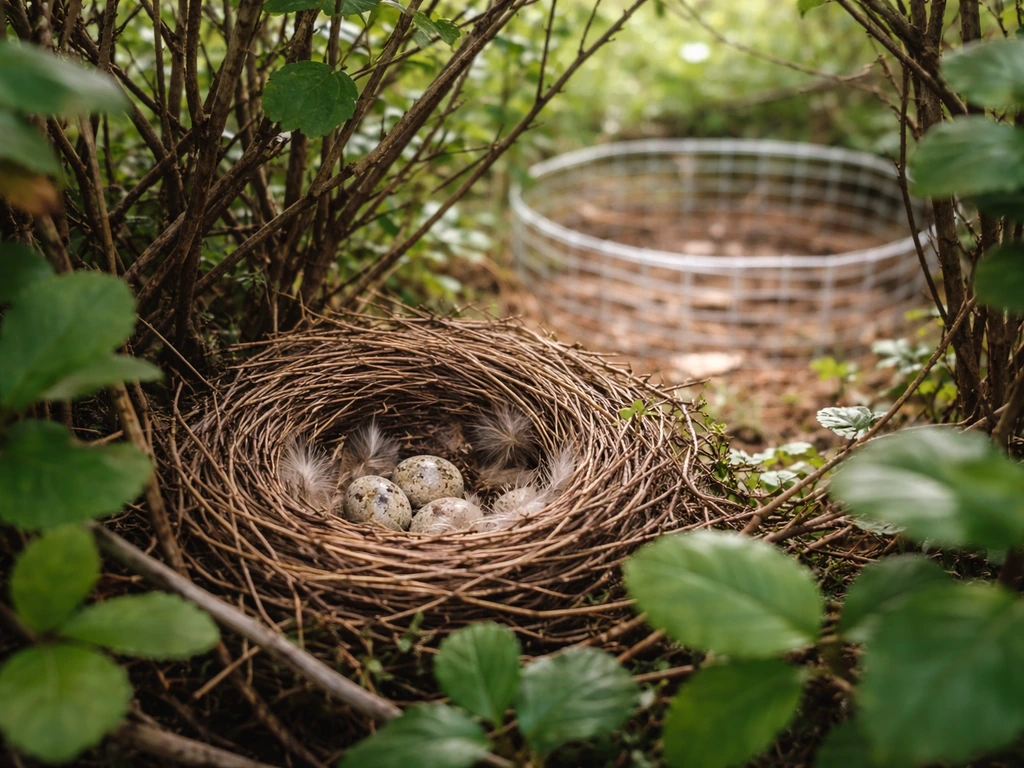
The most effective way to keep bird nests away from specific spots around your home is to act before nesting season begins, make those spots physically inaccessible, and remove whatever is attracting birds in the first place. Once eggs are in a nest, your options shrink dramatically, because disturbing or removing an active nest of a native migratory bird is illegal under federal law. So timing and prevention are everything here.
How to Keep Bird Nest Away From Your Home Safely

Maya Bennett
14 Apr 2026
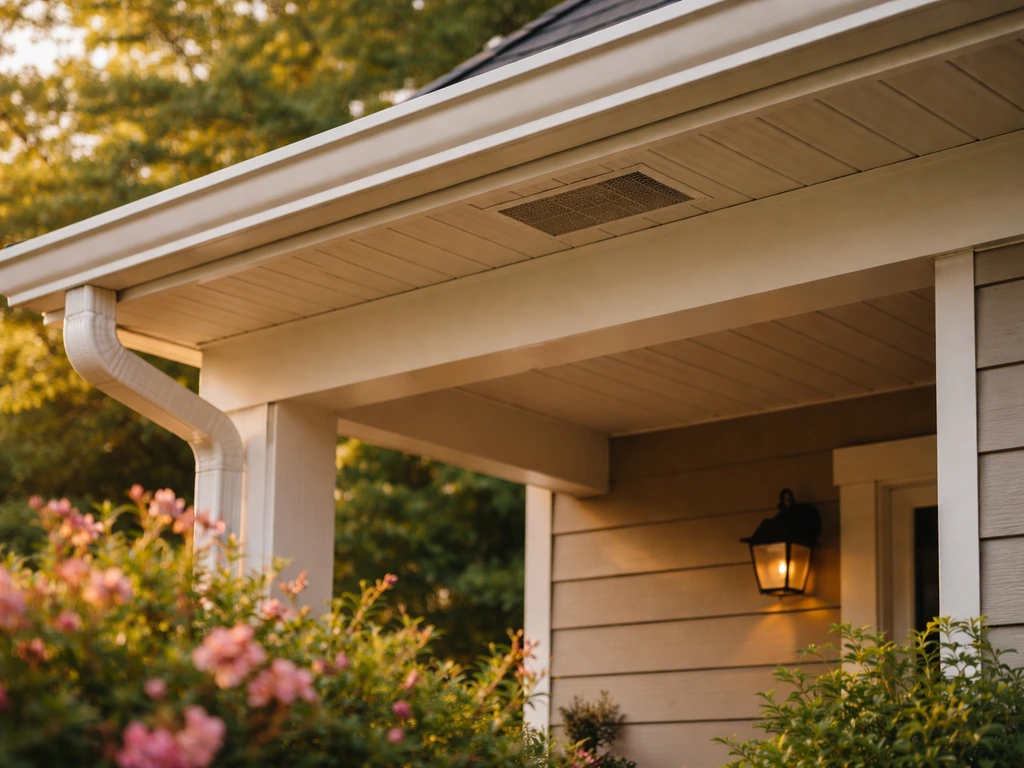
Why birds choose your property (and what "keeping nests away" really means)
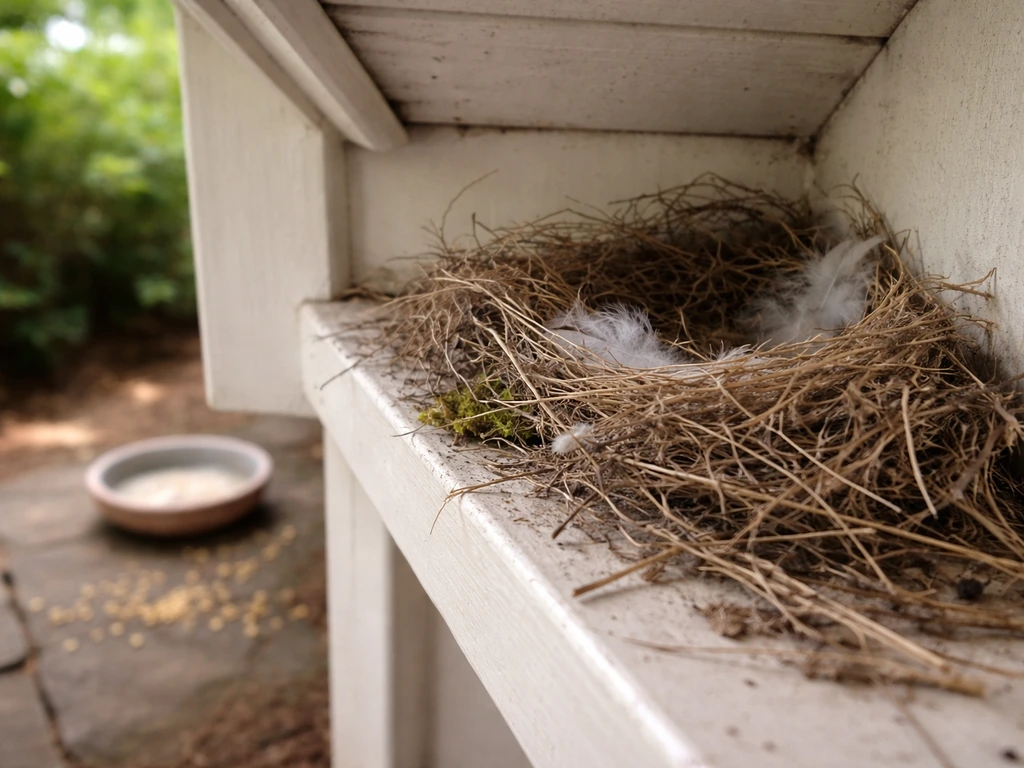
Birds are not random about where they nest. Every spot they choose meets a specific set of needs: shelter from weather, concealment from predators, proximity to food and water, and structural stability. Urban and suburban homes are genuinely attractive to many species because eaves, gutters, open pipes, vents, and porch overhangs mimic the natural features birds evolved to use. Cavity-nesting species, like house sparrows, starlings, and wrens, actively seek out dark, narrow openings that resemble natural tree holes. An uncapped dryer vent or an open pipe end is basically a billboard that says "perfect cavity here."
When you search for how to keep bird nests away, it is worth being clear about what you are actually trying to do. You almost certainly want to prevent birds from nesting in inconvenient or damaging spots: gutters, dryer vents, light fixtures, porch rafters, shed openings. You are not trying to eliminate birds from your yard, and you cannot legally interfere with a nest that already has eggs or chicks. The goal is smart, proactive exclusion, not eviction.
It also helps to understand that habitat conditions drive nesting choices. If your yard offers dense shrubs, open water, and abundant insects, you will attract more nesting birds in general. Some of those birds will look for spots on your structures. Change the conditions, and you change the pressure on your building.
Quick safety and legal checklist before touching anything
Before you move a single twig, run through this checklist. It will keep you on the right side of the law and protect you physically.
- Confirm the nest is NOT active. An active nest contains eggs, chicks, or is being regularly visited by adults. If any of those apply, leave it alone.
- Know your federal law. The Migratory Bird Treaty Act (MBTA) makes it unlawful to take, possess, or destroy migratory birds, their eggs, or their nests without a federal permit. This covers nearly all native songbirds, raptors, and waterfowl. The law is broad and enforcement is real.
- Check your state law. Many states add additional protections on top of federal rules. A quick call to your state fish and wildlife agency takes five minutes and can save you serious trouble.
- Identify the species before acting. A few birds, such as European starlings, house sparrows, and rock pigeons (all non-native, invasive species), are not protected under the MBTA, which changes your options slightly. But when in doubt, treat every nest as protected.
- Wear personal protective equipment during any cleanup. Bird droppings can harbor Histoplasma capsulatum, a fungal pathogen that causes histoplasmosis when disturbed. Use an N95 or better respirator, gloves, and eye protection. Wet the area lightly before cleanup to suppress dust.
- Do not use pesticides, poisons, or traps on birds. These are illegal and can harm protected species and other wildlife.
How to identify the species and whether the nest is active
Getting identification right is the hinge point for everything else. Take a few minutes to observe before you touch anything. Bring binoculars if you have them, and take photos with your phone. You want to document the nest's location, its construction materials, and whether birds are visiting.
Reading the nest itself
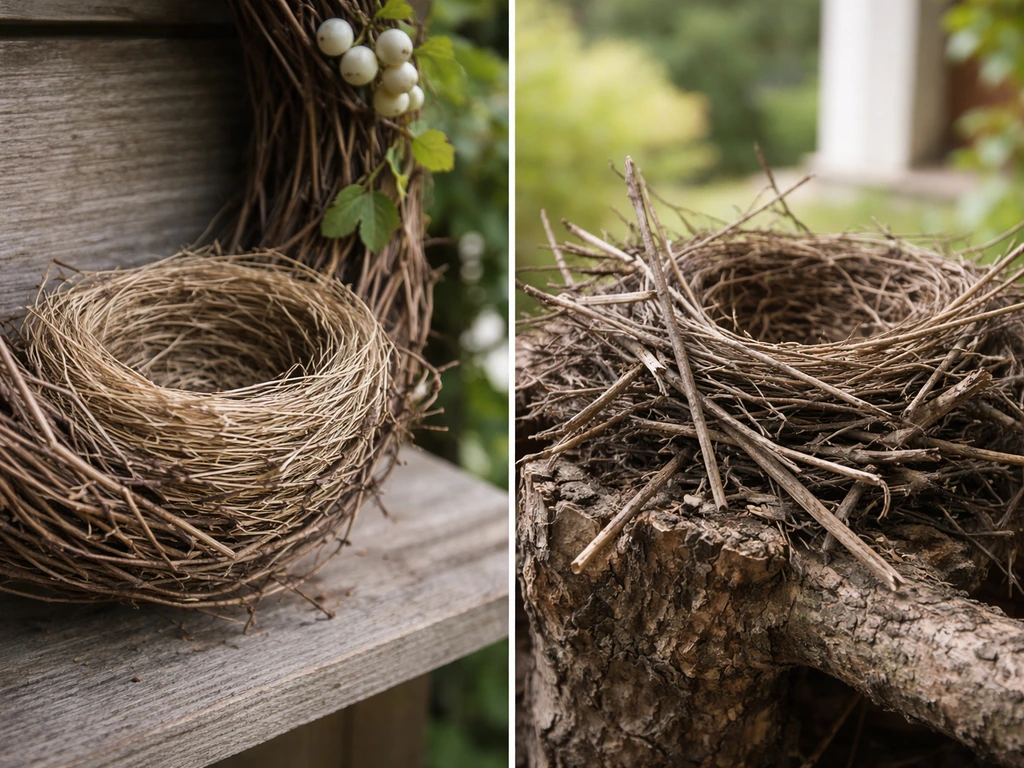
Different species build in very different ways. A cup of woven grasses tucked into a porch wreath is almost certainly a house finch or song sparrow nest. A messy pile of sticks shoved into a dryer vent is likely a European starling or house sparrow. A mud-plastered cup under your eaves belongs to a barn swallow or cliff swallow, both of which are fully protected. Robins build neat, deep mud-lined cups in sheltered spots. Understanding how bird nests stay together can actually help you ID the species, since construction technique is a strong clue: swallows use mud pellets, orioles weave hanging pouches, and cavity nesters pack in loose grasses and feathers.
Checking for activity
Watch the site for 20 to 30 minutes from a comfortable distance. If an adult bird returns even once, the nest is active. If a nest is empty, contains non-viable eggs, or is being built but does not yet have an egg, it is considered inactive under USFWS guidance. Do not assume a nest is abandoned just because you have not seen a bird in the last few hours. Adults leave to forage, and eggs can be left unattended for short periods, especially during the early incubation stage. NestWatch (Cornell Lab) documents multiple cases where people assumed nests were empty and acted, only to discover eggs were still present and being tended. A nest may also look "finished" or "empty" while a bird is still completing a clutch. If you are unsure, wait 48 to 72 hours and observe again.
Check whether the nest has been recently used: fresh droppings below the nest, green plant material woven in, or a clean interior all point to current use. A nest that is weathered gray, collapsed at the rim, and covered in spider webs has likely been inactive for a full season. Even then, some species re-use old nests or return to the same sites, so removal is still the right call before the next nesting season, not during it.
Humane prevention: make the area unattractive before birds settle in
The single most powerful thing you can do is act before birds start prospecting, which in most of the continental U.S. means late winter through early spring. February through March is your window for most songbirds; some species start earlier. Prevention is always easier, cheaper, and more legal than dealing with a nest once it is built.
Timing is everything
Install barriers, seal openings, and make habitat changes before February in warmer climates, before March in temperate zones. If you miss that window and birds are actively prospecting (carrying nesting material but no eggs yet), you can still legally discourage them by removing that material repeatedly, as long as no eggs have been laid. Once eggs appear, stop.
Habitat and landscape adjustments
Birds nest where habitat meets their needs. If you have dense, low shrubs directly against your house walls, you are creating sheltered nesting cover right next to your structure. Trim shrubs to at least 12 to 18 inches away from the building. Remove or relocate bird feeders and water sources that concentrate birds near problem areas during nesting season. Clean up accumulated leaf litter and debris piles that could serve as nesting material. None of this means making your yard inhospitable to wildlife in general; it just means creating a buffer between attractive habitat and the spots you want to protect.
Deterrents that work: visual, sound, scent, and physical barriers
Not all deterrents are created equal. Physical exclusion is by far the most reliable method. Sensory deterrents (visual, sound, and scent) can help, but birds habituate to most of them quickly if they are not rotated, moved, or combined with other methods. Here is an honest breakdown.
| Deterrent Type | Examples | Effectiveness | Key Limitation |
|---|---|---|---|
| Physical exclusion | Wire mesh over vents, bird netting, chimney caps, spikes on ledges | High, long-term | Requires correct installation and durable materials |
| Visual | Reflective tape, predator decoys (owls, hawks), flash tape, mylar balloons | Moderate short-term | Birds habituate within days to weeks if not moved |
| Sound/audio | Distress calls, ultrasonic devices, propane cannons | Low to moderate short-term | Rapid habituation; usually ineffective as a standalone |
| Scent/taste repellents | Methyl anthranilate sprays, bird gel on ledges | Moderate on landing surfaces | Requires reapplication; gel can trap small birds |
| Exclusion netting | Polypropylene or nylon netting stretched over eaves and rafters | High when properly installed | Must be taut and gap-free to prevent entanglement |
Physical barriers in detail
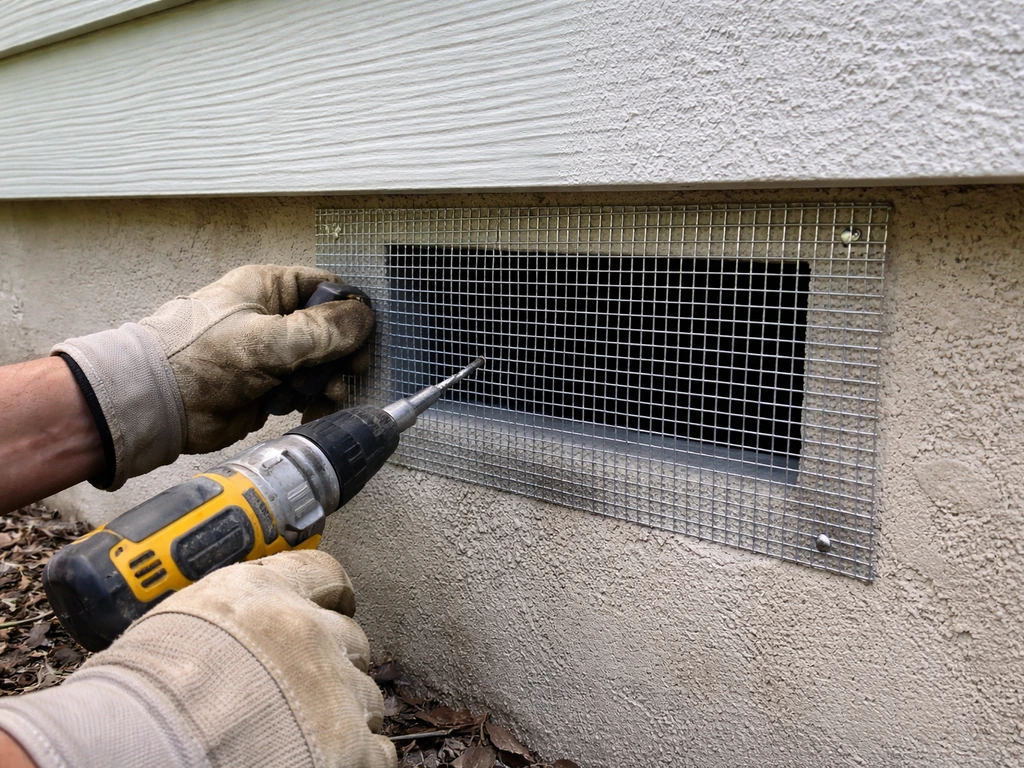
For vents and openings, install corrosion-resistant wire mesh screening with openings no larger than half an inch for small cavity nesters. The mesh must be mechanically fastened (not just pushed into place) so birds cannot dislodge it. Dryer vents need purpose-built vent covers with active dampers that open only when the dryer runs. Standard hardware cloth works well for larger openings like soffit gaps or eave ends; galvanized or stainless steel holds up far better than plastic in outdoor conditions.
Ledges, beams, and light fixtures are common problem spots. Anti-roosting spikes installed along ledges prevent birds from landing and prospecting. For porch light fixtures specifically, there is a whole category of targeted methods worth knowing: learning how to keep bird nests off light fixtures involves a combination of sloped surfaces, spike strips, and blocking the warm cavity space above the fixture housing.
Visual deterrents
Reflective ribbons and flash tape can interrupt a bird's approach to a nesting site, especially if you place them so they move in the breeze near the target area. Predator decoys (plastic owls, hawk silhouettes) work briefly but must be repositioned every few days or birds will simply ignore them. The USDA APHIS notes that these methods require active management rather than set-it-and-forget-it deployment. Use them as part of a layered approach, not as your only line of defense.
Sound deterrents
Broadcast distress call systems and ultrasonic devices are sold for this purpose, but the research on long-term effectiveness is not encouraging. Reviews from the Department of Energy (NREL) and the National Academies document consistent habituation: birds learn that the noise poses no real threat and stop responding, often within a week or two. These tools might help as a short-term bridge while you get physical barriers installed, but they should not be your primary strategy. Repeated loud harassment of actively nesting birds can also fall into legally regulated territory under MBTA frameworks.
What to avoid
- Sticky bird gels applied near nesting areas can trap small birds, causing injury or death. If you use gel repellents on ledges, apply them only on hard surfaces birds land on, never in areas where birds could become mired.
- Poisons and toxicants targeting birds are illegal without a specific federal permit and will kill non-target species.
- Destroying or disturbing an active nest is a federal offense regardless of how inconvenient the location is.
- Sealing a cavity while birds are inside (a real risk if you act too quickly) can trap and kill them.
Repair and maintenance: seal entry points and manage your landscape
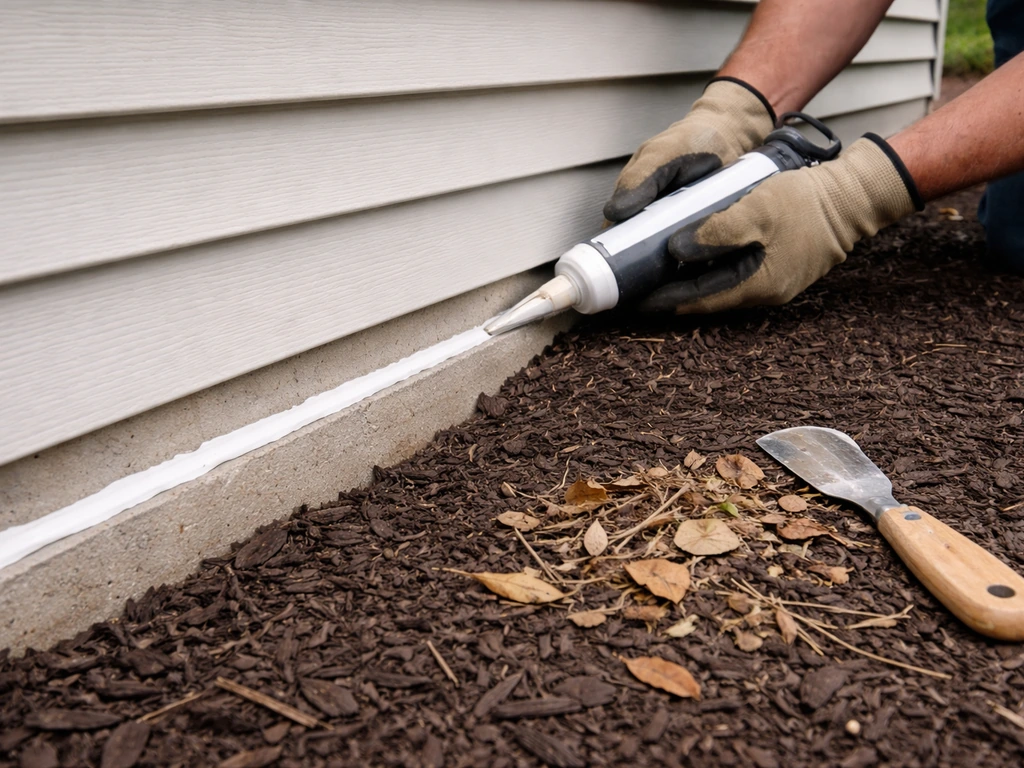
Prevention is a one-time installation effort followed by annual maintenance checks. Here is the practical sequence to follow each fall, well after nesting season ends and before the next one begins.
- Walk the perimeter of your home and look at all openings at eave height and above: soffit vents, gable vents, ridge vents, dryer exhaust vents, plumbing stacks, and chimney openings. Note any gaps larger than half an inch.
- Check that all vent screens are present, undamaged, and securely fastened. Replace any plastic screening with galvanized or stainless steel wire mesh.
- Cap the chimney with a purpose-built cap that includes mesh sides to block starlings and sparrows while still allowing ventilation.
- Inspect gutters. Remove any accumulated debris (leaves, twigs, and mud) that could serve as nesting material or attract insects that draw birds. Install gutter guards to prevent buildup.
- Look for gaps in fascia boards, damaged soffits, and loose trim. Repair these with weather-resistant caulk or appropriate patching before spring.
- Trim back tree branches that overhang or touch the roofline by at least 6 to 8 feet. Overhanging branches give birds a launch point onto your roof and provide cover for nest sites.
- Remove or relocate wood piles, debris piles, and outdoor clutter stored near the building. These attract insects and rodents that in turn attract nesting birds and, critically, the predators that follow bird nests.
Once you have sealed the structure, think about what you can change in the landscape. Dense ivy on walls is a classic nesting habitat; if it is causing you problems, consider replacing it with non-climbing ground cover. Ornamental grasses and dense foundation plantings directly against the house can be trimmed back or replaced with low-growing species that do not offer the same concealment. These are changes you make in fall and winter, not during the breeding season.
What to do if there's already a nest
If you discover a nest that is already built, the path forward depends entirely on whether it is active. Here is how to work through it.
Active nest: your options are limited, and that's okay
If the nest contains eggs or chicks, or if adults are visiting it, you must leave it alone. Full stop. Depending on the species, you may be waiting anywhere from 10 days (some small songbirds fledge quickly) to several weeks. Use this time productively: document the nest, enjoy watching the birds, and plan your exclusion strategy for after the season ends. Some species attempt two or even three broods in a single season, so the nest may be reused. Wait until there is clear evidence that the nest has been inactive for at least two weeks before acting.
If the active nest is in a spot that poses an immediate safety risk (a vent that is genuinely blocked, a structural issue), contact a licensed wildlife rehabilitator or your state wildlife agency. In rare cases, emergency relocation permits can be issued, but this is not a DIY process. A professional can also help you determine whether the species involved is protected under the MBTA or falls into the non-native, unprotected category.
Inactive nest: cleanup and removal
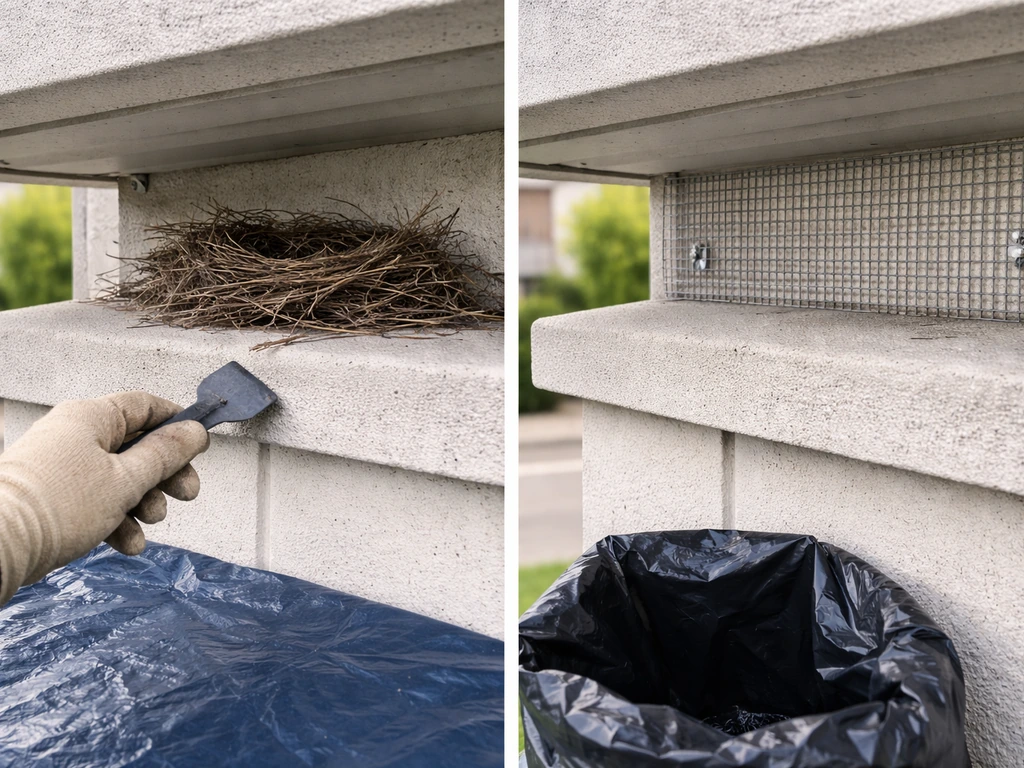
Once a nest is genuinely inactive (no eggs, no chicks, no adult visits for at least two weeks after the last fledgling has left), you can remove it. At that point, the nest itself is no longer legally protected, and removal is appropriate so the structure does not attract re-use or harbor parasites.
Cleanup safety matters here. Bird nests and the droppings around them can contain Histoplasma, mites, and other pathogens. Before you start, wet the area around the nest lightly to keep fungal spores from becoming airborne. Wear disposable gloves, an N95 respirator, and eye protection. Bag the nest material in a sealed plastic bag and dispose of it in the trash. Wipe down the surface with a disinfectant solution. Do not use a leaf blower or dry-brush technique on dried droppings, as aerosolizing the dust is exactly what creates histoplasmosis risk.
Protecting the space after removal
Once the nest is out, install your exclusion barrier immediately. Birds can begin prospecting for next season's nest site as early as late winter. If you leave the site open, there is a real chance the same pair or a new bird will claim it the following year. Knowing how to protect bird nests from predators is relevant here too, because the areas where birds nest most persistently tend to be the same spots predators learn to patrol. Sealing those spots removes the risk for both sides.
When to call a wildlife professional
Call a licensed wildlife professional or your state wildlife agency if: the nest is in a location that poses a structural or health emergency; you are unsure whether the species is protected; the nest belongs to a raptor (hawk, owl, falcon), colonial waterbird, or another species with special sensitivity; or you are seeing signs of significant infestation (large accumulations of droppings, parasites, or structural damage from repeated nesting). These professionals can assess the situation, advise on legal permits, and sometimes facilitate emergency relocation when necessary.
Managing the broader pest chain
Bird nests draw more than just birds. If you have nests in or near your structure, you should be aware that bird nests can attract snakes, which are drawn by the eggs and chicks inside. This is especially relevant for ground-level or low-structure nests in warmer climates. Understanding this connection matters for how you manage nest sites after the birds have gone. Specifically, if you have had snake activity near past nest sites, learning how to keep snakes away from bird nests can become part of your broader property management plan, particularly if you are trying to protect cavity nest boxes you have deliberately installed elsewhere on your property.
Protecting nests you want to keep
Most people reading this have one or two problem spots they want to block while being perfectly happy to have birds nesting elsewhere on their property. If that is you, consider installing purpose-built nest boxes in less problematic locations to give birds a legitimate alternative. And if weather is a concern in your area, reading up on how to protect a bird nest from rain can help you set up those alternative sites in ways that actually get used, keeping birds away from your gutters and toward a spot you have chosen for them.
Your action plan at a glance
If you are reading this in late winter or early spring, act now: inspect, seal, and install barriers before birds start building. If nesting season is already underway, observe carefully, confirm whether any nests are active, and plan your exclusion work for the fall. If there is already an active nest in a problematic spot, the ethical and legal move is to wait it out, then seal the site the moment it is clear. The whole process becomes straightforward once you internalize the central rule: physical exclusion done before nesting season is your best tool, and it works reliably. Everything else, from flash tape to distress calls, is a temporary supplement at best.
FAQ
Is it ever okay to remove a nest if it looks empty or abandoned?
Do not rely on appearance alone. Even if you have not seen birds recently, eggs can still be incubated or chicks can be left temporarily while adults forage. If you are unsure, wait 48 to 72 hours and re-check activity (bird returns, feeding, and any fresh droppings). Only remove after you have clear evidence it has been inactive for at least two weeks.
What if birds are already carrying nesting material but there are no eggs yet?
That is the one situation where you can discourage prospecting by repeatedly removing loose nesting material, as long as no eggs have been laid. The key is to act on the material quickly each time it appears, then install the permanent exclusion (screening, spikes, sealed access) before the nesting window fully closes.
How can I tell if the species is protected and I should call a professional?
If you cannot confidently identify the species from nest construction and location, or if you suspect it could be a raptor (owl, hawk, falcon) or a colonial waterbird, treat it as protected and stop. Also call if you see signs of heavy, repeated nesting or structural damage from the birds, because professionals can advise on permits and safe timing.
Can I use poison, sprays, or glue to stop birds from nesting?
Generally, avoid any method that harms birds or eggs, since the legal and ethical risks can be high for native migratory species. For practical control, stick to physical exclusion (mesh, vent covers, spikes, sealing) and habitat buffer changes. If you are considering any chemical or lethal method, contact your state wildlife agency first.
Do reflective tape, spikes, or decoys work long term by themselves?
Usually not. Birds habituate to many temporary deterrents, especially if they are not moved or combined with other controls. Use them only as a short-term supplement while you install permanent barriers, and expect to reposition items like decoys every few days if you use them at all.
Will ultrasonic or distress-call devices keep birds away permanently?
Most birds habituate quickly, often within a week or two, so results tend to fade fast. If you use these tools, treat them as a temporary bridge until you can do exclusion work, and avoid relying on them as your primary plan.
What is the safest way to clean up after a nest is removed?
Wet the area lightly first to reduce dust, wear disposable gloves, an N95 respirator, and eye protection, and bag debris in a sealed bag. Do not dry-brush or use a leaf blower on droppings, because aerosolizing dried material increases histoplasmosis risk. After disposal, wipe the surface with a disinfectant solution and let it dry before sealing the area.
When should I install barriers if I have birds nesting every year in the same spot?
Do the permanent exclusion before birds start prospecting, which is typically late winter to early spring depending on region and species. If you miss the window and birds are actively prospecting, you can still discourage them by removing loose material repeatedly, then install the barrier promptly. Do not seal an opening if there is an active nest with eggs or chicks.
What mesh size and materials should I look for on vents and openings?
Use corrosion-resistant screening and make sure the openings are small enough for the particular nesters you are excluding, commonly no larger than half an inch for small cavity nesters. The most important detail is mechanical fastening, the mesh must be secured so birds cannot dislodge it. For dryer vents, use purpose-built vent covers with dampers that only open during dryer operation.
What if I can’t seal something completely, like a vent cover I rent or a complex soffit?
Start by verifying you can access and secure the area safely without damaging building materials, then prioritize the most effective partial fixes, such as properly fitted mesh inserts or a vent cover designed for that specific appliance. If you rent, get landlord permission before modifying structures. When access is uncertain, calling a wildlife professional can prevent accidental disturbance of protected nests.
If I want birds elsewhere, will nest boxes help, or can they cause new problems?
Nest boxes can help, but place them in locations that are not near your nuisance zones and that match the species you are trying to attract (height, shade, cavity size, and predator protection matter). Avoid placing them where they could increase conflicts with people or attract pests. Set them up before the season starts so birds can use your chosen sites instead of your gutters and vents.
What should I do if there are health or safety risks, like a blocked vent or lots of droppings?
If the nesting area creates an immediate hazard (vent blocked, falling debris, major contamination) or you see heavy accumulations of droppings or parasite signs, contact a licensed wildlife professional or your state wildlife agency. They can assess the species, advise on legal handling, and help manage risks without forcing you into an illegal removal situation.
Next Article
How to Protect Bird Nest From Predators: Step-by-Step
Step-by-step ways to protect a bird nest from predators with safe barriers, deterrents, and legal, conservation-minded c