Cotton balls are not good for bird nests. They look soft and fluffy, which makes them seem like the perfect nest lining, but they pose real risks to birds and chicks: entanglement, ingestion, dampness, potential chemical contamination, and structural nest failure. Skip them entirely and offer natural alternatives instead. To figure out the best nesting choices to offer instead of cotton balls, review what to leave out for bird nests.
Are Cotton Balls Good for Bird Nests? Safety, Risks, Alternatives
Maya Bennett
4 May 2026
Why cotton balls seem helpful to birds (and why that's misleading)
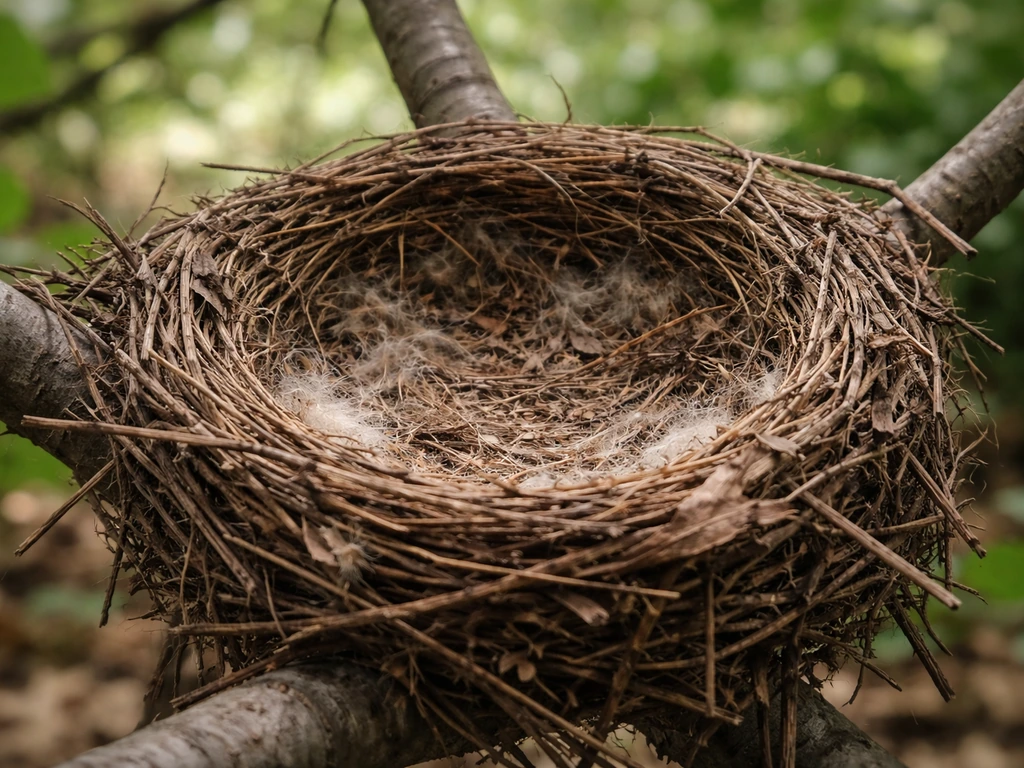
Birds build nests in two functional layers. The outer shell uses coarse, structural materials like twigs, bark strips, and dead leaves. The inner lining uses soft, insulating material: plant fluff, feathers, cattail down, moss. Cotton balls look and feel almost identical to that inner lining layer, which is exactly why so many people assume birds would love them.
The problem is that cotton balls imitate those natural materials in appearance only. Natural plant fibers like cottonwood down or cattail fluff are designed to handle weather, movement, and biological contact. Cotton balls, especially processed, bleached, or cosmetic-grade ones, are not. Birds will absolutely pick them up and use them if they are available, because birds, as Audubon puts it, 'construct their nests from just about any material they can get their claws on.' That opportunistic behavior is exactly why what you put out matters so much.
Risks of cotton balls in nests
There are several distinct ways cotton balls can harm birds, and they stack on each other in a single nest.
Entanglement
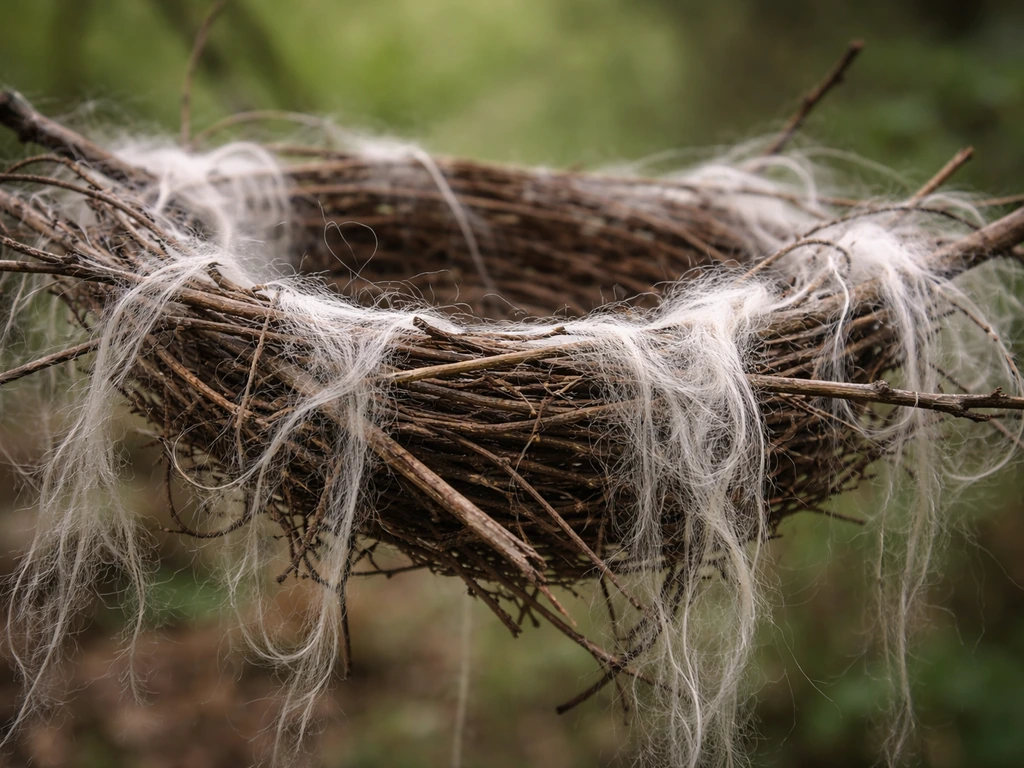
Cotton fibers pull apart into long, loose strands as a bird works them into a nest. Audubon specifically warns that long strands of stringy fiber, including yarn, can wrap around a bird's legs, toes, or wings. Hatchlings are especially vulnerable because their tiny feet can catch in even short fiber loops. An entangled leg on a nestling can cut off circulation within hours. Cotton balls are not yarn, but they behave similarly once teased apart by a beak.
Ingestion
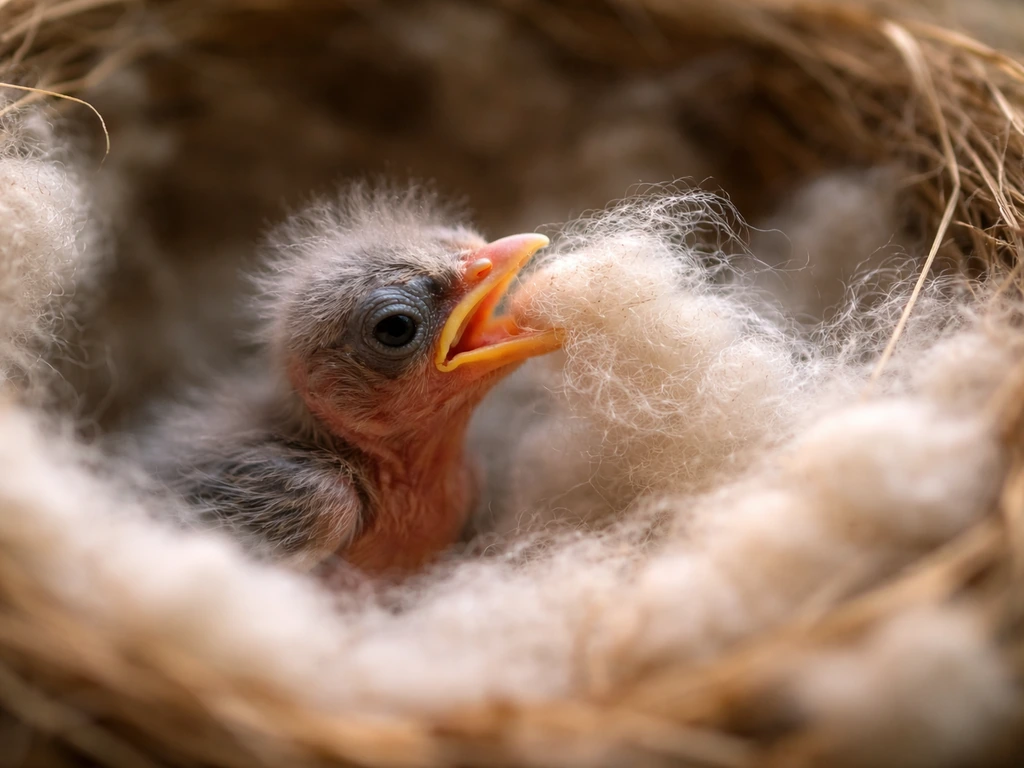
Parent birds sometimes feed nestlings bits of nest material by accident, especially during frantic feeding rounds. Chicks also mouth their surroundings. Cotton fibers are not digestible and can cause crop impaction or intestinal blockage in young birds. This is not a theoretical risk: it is the same reason you would not leave loose synthetic stuffing where chicks can access it.
Chemical contamination
Most cotton balls sold for cosmetic use are bleached with chlorine or hydrogen peroxide and may contain residual chemical processing agents. Dyed or scented cotton products add another layer of concern. These residues can irritate skin, eyes, and respiratory systems in nestlings, who spend weeks in close contact with lining material. Even 'natural' cotton is often treated during processing.
Dampness and nest failure
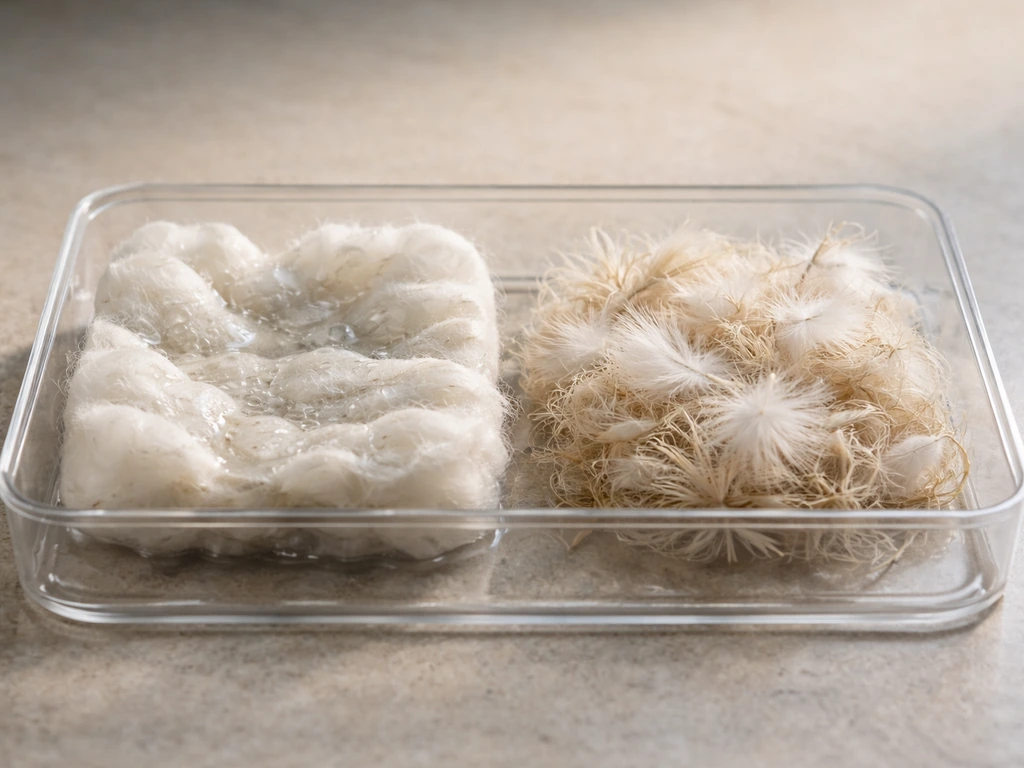
This one surprises people the most. Cotton absorbs water readily and dries slowly. When a nest gets rained on, cotton lining stays wet far longer than natural plant fluff or feathers would. A wet nest lining drops nest temperature rapidly, which is life-threatening to eggs and young chicks. All About Birds describes exactly this failure mode when discussing dryer lint: it 'loses fluff and structure when wet and becomes crumbly after rain,' leaving literal holes in an otherwise solid nest. Cotton balls behave the same way. What looks plush and insulating dry becomes a cold, matted, structurally compromised mess when wet.
Are there situations where cotton balls can be used or should be avoided?
There is no outdoor bird nesting scenario where cotton balls are the right choice. The risks above apply whether you are trying to help a wild nest, fill a nest box, or attract birds to your yard. The 'it's just a little bit' logic does not hold up when entanglement can injure a single nestling or dampness can chill an entire clutch overnight.
The one narrow context where soft cotton-like material occasionally comes up is in licensed wildlife rehabilitation, where trained rehabbers sometimes use medical-grade, unprocessed cotton or cotton gauze as temporary nest substrate for orphaned chicks in a controlled environment. That is a completely different scenario from anything a homeowner or birdwatcher should replicate. If you are rehabilitating a wild bird, you should already be working with a licensed rehabber who will tell you exactly what substrate to use. For everyone else: avoid cotton balls entirely.
Safer nest materials to offer instead
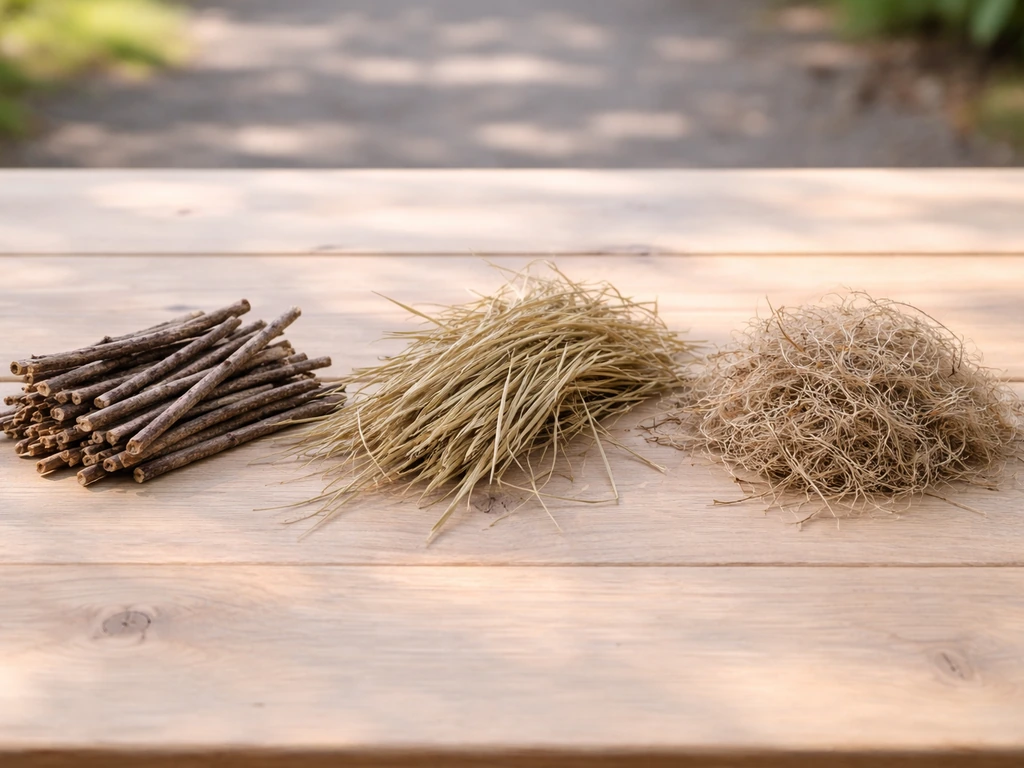
The good news is that bird-friendly nesting materials are easy to source and often free. Here is what actually works, based on what birds use naturally and what ornithologists recommend offering. If you want the best bird nesting material, focus on natural, weather-ready options that won’t shed long fibers or hold moisture.
| Material | Best for | Notes |
|---|---|---|
| Dead twigs (pencil-width or smaller) | Outer nest structure | Leave in a loose pile; avoid treated wood |
| Dry grass (untreated) | Both layers | Must be pesticide-free; cut and dry before offering |
| Dead leaves | Outer layer and cup base | Especially oak and beech; avoid moldy clumps |
| Bark strips | Outer structure | Cedar and grape bark are popular with many species |
| Moss (dried) | Inner lining | Collect from your yard only; do not over-harvest wild moss |
| Feathers | Inner lining insulation | Clean, naturally shed feathers; avoid feathers with blood or parasites |
| Plant fluff and down (cattail, cottonwood) | Inner lining insulation | Excellent natural substitute for what cotton balls mimic |
| Pine needles | Cup base and structure | Used by many ground-nesting and cup-nesting species |
| Animal hair (dog/horse fur, unbleached) | Inner lining | Keep strands under 4 inches to reduce entanglement risk |
A few practical rules apply across all of these: no pesticide or herbicide residue, no dyes, no synthetic coatings, and no strands longer than about 4 inches. All About Birds also notes that birds will forage through a compost pile for suitable material, which is a good reminder that the 'best' nesting station you can offer is often just a tidy pile of natural yard debris left somewhere accessible.
For how to present these materials, you have several good options: a clean wire-mesh suet cage, a mesh bag hung on a post or railing, materials tucked into tree bark crevices, or draped loosely over a shrub. Keep piles loose so birds can pull individual pieces without getting tangled. Refill and refresh weekly during peak nesting season, which runs roughly from March through July for most of North America.
What to do if you find cotton balls already in an active nest
First, take a breath. Do not immediately reach in to remove them. Disturbing an active nest, even with good intentions, can cause adults to abandon it, which is far worse than the cotton already present.
Here is how to think through this situation step by step.
- Observe from a distance (at least 10 feet) for 10 to 15 minutes. Are adults present or returning regularly? Is the nest being incubated or are chicks visible? If yes, the nest is active.
- If the nest is active with eggs or chicks, do not remove or adjust anything. The disturbance risk outweighs the material risk in most cases.
- If only a small amount of cotton is woven into the outer structure (not the inner lining), and adults and chicks appear healthy and active, monitor the nest without intervening.
- If you see a chick that appears entangled in fibers and is visibly in distress (not moving, leg caught), contact a licensed wildlife rehabilitator before attempting any intervention yourself.
- If the nest is empty and inactive (no eggs, no chicks, no adult activity for 48 hours or more), you can carefully remove cotton material with gloves and replace it with natural alternatives if you can do so without damaging the nest structure itself.
The 'do not disturb' default is not just ethical advice. It is legal protection for you as well, which the next section covers.
How to assess a nest and prevent problems without disturbing birds
Learning to read a nest from a respectful distance is one of the most useful skills for anyone who cares about birds. You do not need to touch anything to get good information.
- Use binoculars rather than approaching closely. A 8x42 pair gives you enough detail to see nest contents and adult behavior from 15 to 20 feet away.
- Look for regular adult returns (every 5 to 20 minutes during feeding), which confirm an active nest with chicks.
- Watch for incubation posture: an adult sitting low in the nest and barely moving for extended periods means eggs are present.
- A nest with no adult activity and no visible eggs or chicks for 48 to 72 hours after fledgling age (typically 10 to 21 days post-hatch depending on species) is likely inactive.
- Photograph the nest from a distance if you want a record of the materials used or to identify the species. This is useful for reporting concerns to a wildlife org or rehabber.
- To reduce future problems, keep cotton products, yarn scraps, and dryer lint away from outdoor areas where birds forage, and set up a dedicated material station with safe alternatives instead.
If the nest is in a nest box you maintain, a brief weekly check during the nesting season is acceptable and actually recommended by NestWatch. Keep checks to under 30 seconds, ideally when adults are away foraging, and avoid touching eggs or chicks directly.
Legal and ethical do's and don'ts for homeowners and birdwatchers
In the United States, most wild bird nests are protected under the Migratory Bird Treaty Act (MBTA). The U.S. Fish and Wildlife Service is clear: it is illegal to destroy a nest that contains eggs or dependent young. That protection covers the overwhelming majority of songbirds, raptors, and shorebirds. Removal permits are issued only in cases of direct human health or safety risk, and even then, the standard guidance is to wait until the nest becomes inactive.
The MBTA does allow destruction of an empty nest (no eggs, no birds) without a permit, as long as you do not possess or transfer the nest afterward. But check your local and state regulations too, because some states add additional protections beyond federal law.
| Situation | What you can do | What you cannot do |
|---|---|---|
| Active nest with eggs | Observe from a distance; contact a rehabber if injury is visible | Remove, relocate, or disturb the nest |
| Active nest with chicks | Monitor; remove hazardous materials only if chick is in immediate danger and with rehabber guidance | Remove the nest or interfere with adult access |
| Inactive nest (empty, no adults) | Remove nest; clean nest box; remove unsafe materials | Possess or transfer a migratory bird nest |
| Abandoned nest (verified) | Remove and replace with safe materials if in a nest box | Assume a nest is abandoned before 48 to 72 hours of no activity |
| Any nest | Photograph, document species, contact local Audubon or wildlife org with concerns | Handle nest, eggs, or chicks without a federal/state permit |
The ethical layer sits on top of the legal one. Even when you legally could remove an empty nest or adjust materials, ask whether doing so serves the birds or your own comfort. All About Birds makes a point worth keeping in mind: if your yard has safe nest sites and good natural materials available, birds will choose it without you needing to engineer their nests for them. Your job is to offer options, not to build nests on their behalf.
A quick seasonal checklist for responsible nesting material stations
If you want to attract nesting birds responsibly, here is a simple planning checklist you can use right now and revisit each spring. If you are also wondering how to encourage bird nesting beyond material choice, follow the same timing and placement principles so birds have the right opportunities to settle in.
- Late February to early March: Set out your first round of nesting materials. In most of North America, early migrants and year-round residents begin scouting nest sites in late winter.
- Clear your yard of cotton products, loose yarn, dryer lint, and synthetic stuffing that birds might pick up accidentally.
- Set up a wire-mesh suet cage or mesh bag filled with dry grass, small feathers, plant fluff, and short animal hair strands (under 4 inches).
- Keep a pile of small dead twigs and dry leaves in a corner of the yard where birds can access them.
- Refresh materials weekly; remove any that have gotten wet or moldy.
- April through July: Peak nesting season. Monitor your material station and note which species are visiting and taking what.
- After nesting season (August onward): Clean out nest boxes, remove old nests (once confirmed inactive), and note what worked for next year.
Timing and material selection go hand in hand. For most people, figuring out what to use for bird nesting starts with choosing natural, bird-safe materials that do not tangle, ingest, or trap moisture. Understanding when to put out nesting materials and what broader range of items you can safely leave out for birds are natural next steps once you have the cotton ball question settled. If you are wondering what can i put out for bird nesting material, focus on natural, untreated options that match what birds use in the wild nesting materials. The goal is the same across all of it: make your yard a genuinely useful resource for nesting birds, without creating hazards that undermine the very thing you are trying to support.
FAQ
What if I already put cotton balls outside and birds started using them?
Don’t pull them out while adults are still nesting. Wait until the nest is inactive, then remove remaining material and clean the area. If any fibers are visibly long and stringy, bag them for disposal so they do not get picked up again in the next attempt.
Are cotton balls safer if they are only used inside a birdhouse or nest box lining?
No. The same risks apply in nest boxes, especially entanglement and crop or intestinal blockage from ingesting fibers. Also, nest boxes often trap moisture, which makes the drying and wet-nest problems worse.
Can cotton balls cause problems for adult birds, not just chicks?
Yes. Adults can get fibers wrapped around toes or legs while building or feeding. Even if the adult survives, trapped circulation or wing/feather restriction can reduce mobility during critical nesting days.
What about using small pieces of cotton balls, or replacing them quickly after rain?
Smaller amounts still shed fibers, and timing is hard because rain events and nest-building happen faster than you can monitor. Also, once the birds incorporate the material into their structure, repeated handling increases abandonment risk.
Is “100% cotton” or “natural cotton” cotton balls different from cosmetic cotton balls?
Not reliably. Even when the product is cotton, processing during manufacturing can leave residues, and the main hazards in the article are still present: long fiber shedding and poor moisture behavior in nests. If you want something cotton-like, use materials birds already use outdoors, such as soft natural plant fluff.
Are dryer lint or wool dryer balls a better substitute than cotton balls?
Dryer lint is often safer than cotton balls only when it is plain and unscented, with no synthetic fibers and no dryer sheet residue. But many households produce lint that includes synthetic microfibers or chemical coatings, so it can still pose an entanglement or contamination risk if not verified.
Will birds ignore cotton balls if I provide safer materials too?
They might still incorporate cotton balls if they are easy to grab, especially when alternative lining materials are limited. Birds choose opportunistically, so the best strategy is to remove cotton balls entirely rather than rely on “they won’t use it.”
If I find a nest with cotton balls in it, what should I do right now?
Observe from a distance, avoid touching eggs or chicks, and do not disturb the nest to remove lining. If you must act for safety reasons, contact a licensed wildlife rehabilitator, since they can advise whether the nest is already at a stage where disturbance would matter.
Does the nesting-season timing (March through July) change my “when to put out materials” plan?
It can. In warm climates or early springs, birds may start earlier, and in cooler regions it can shift later. A practical approach is to offer materials from late winter onward if your area is experiencing nesting activity, then refresh weekly during the peak weeks.
What is the safest way to offer nesting material without creating hazards in my yard?
Use a loose presentation method (mesh bags, wire-mesh feeders, or small debris piles) so birds can pull short pieces, not tangled clumps. Avoid any dyed, scented, or treated items, and keep strands short, since long fibers are the main entanglement trigger.