You can identify a bird nest by combining four pieces of information: where it is, what it's made of, how it's shaped, and whether there are signs of active use. Get those four things right and you can usually narrow the nest down to a species group, if not a specific bird. This guide walks you through exactly how to do that, in the right order, without disturbing the nest or breaking any laws.
How to Identify a Bird Nest: Features, Species, and Next Steps

Maya Bennett
15 Apr 2026
Start with safe, ethical observation
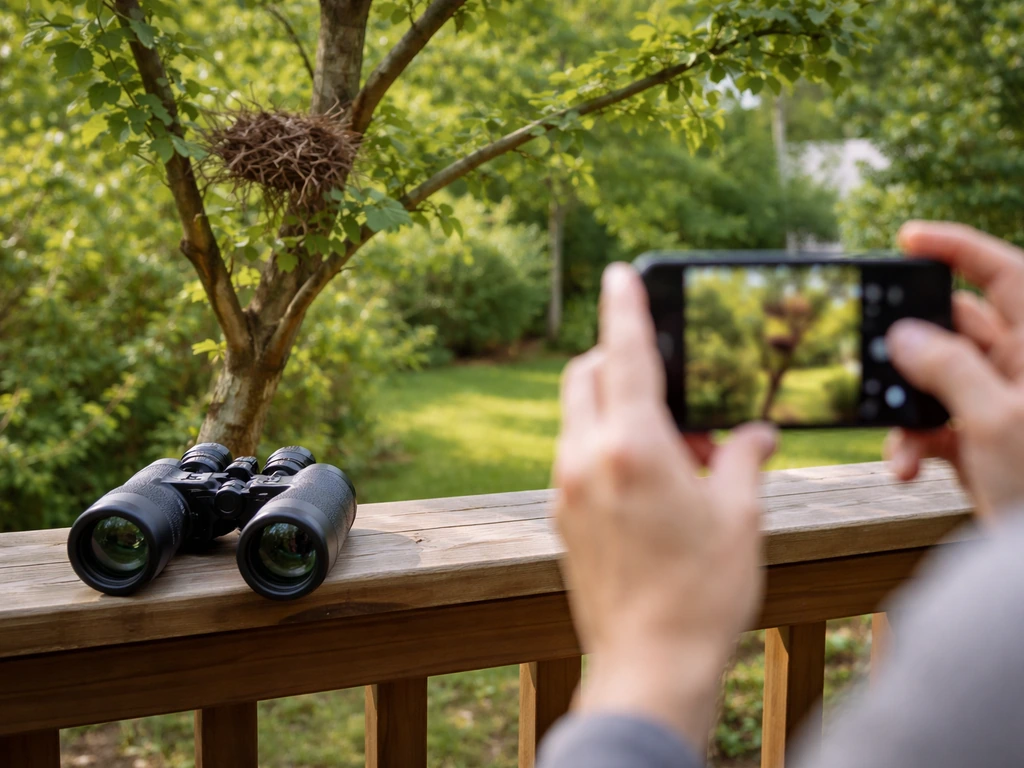
Before you do anything else, stop and watch from a distance. This is not a soft suggestion. If you walk straight up to a nest, you risk flushing an incubating adult, drawing predators to the location, or triggering abandonment. Audubon research confirms that nesting birds disturbed often enough will abandon eggs or chicks entirely, so the cost of a closer look can be the nest itself.
Use binoculars or your phone's zoom lens from at least 25 to 30 feet away for most songbirds and woodland nesters. For beach-nesting species like terns or plovers, Audubon recommends a minimum of 25 yards. A practical rule from WDFW: hold your thumb up at arm's length; if your thumb covers the bird, you are close enough and should not move closer. Never chase or corner a bird trying to return to its nest.
The clearest signal that you have gotten too close is a change in animal behavior. If the adult stops singing, freezes, or flushes repeatedly, back up. NOAA wildlife viewing guidelines state that disturbance begins the moment an animal changes its behavior in response to you. Keep pets on leashes and note that even a quiet dog sitting nearby can stress nesting adults enough to cause a failed attempt. Once you are settled at a respectful distance, take notes and photos. That documentation is what you will use to identify the nest.
If you are trying to locate a nest you have not yet found, you may find it helpful to read up on how to find a bird nest before starting your observation session, since knowing where to look first saves time and keeps disturbance low.
Identify nest type by structure and materials
Bird nests fall into a handful of structural categories, and knowing which type you are looking at cuts your identification work in half. Think of structure as the first filter.
The main nest structure types
| Nest Type | Description | Typical Builders |
|---|---|---|
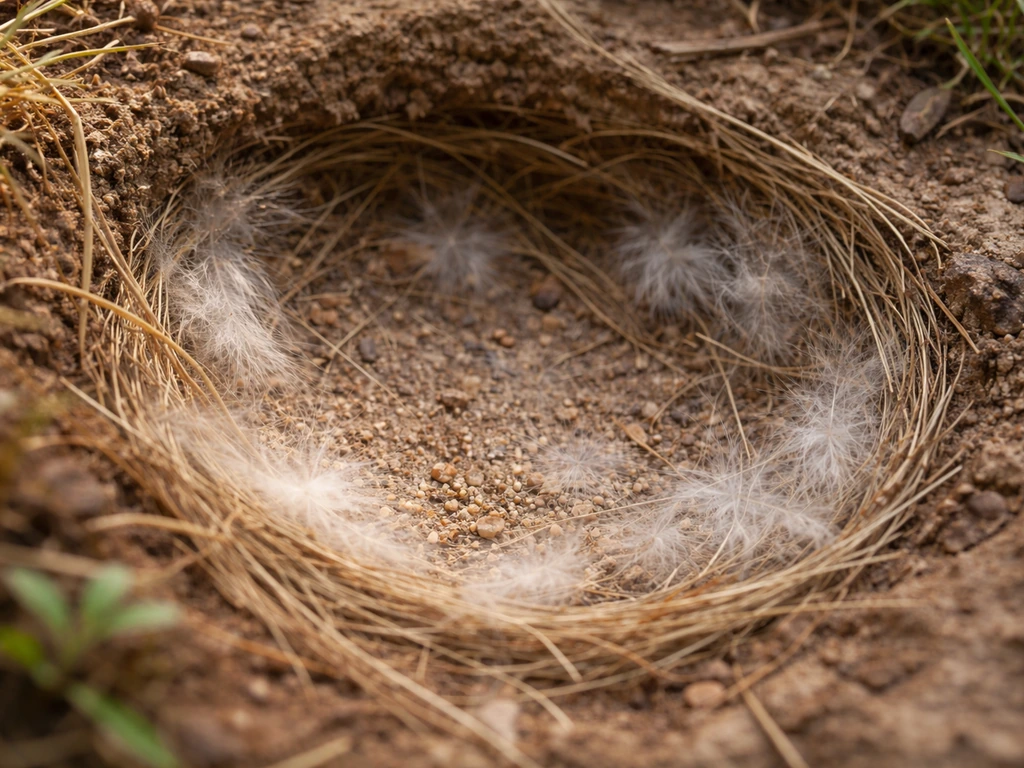
| Scrape | A shallow depression in bare ground or vegetation, sometimes lined with pebbles, grass, or feathers | Killdeer, plovers, terns, nightjars |
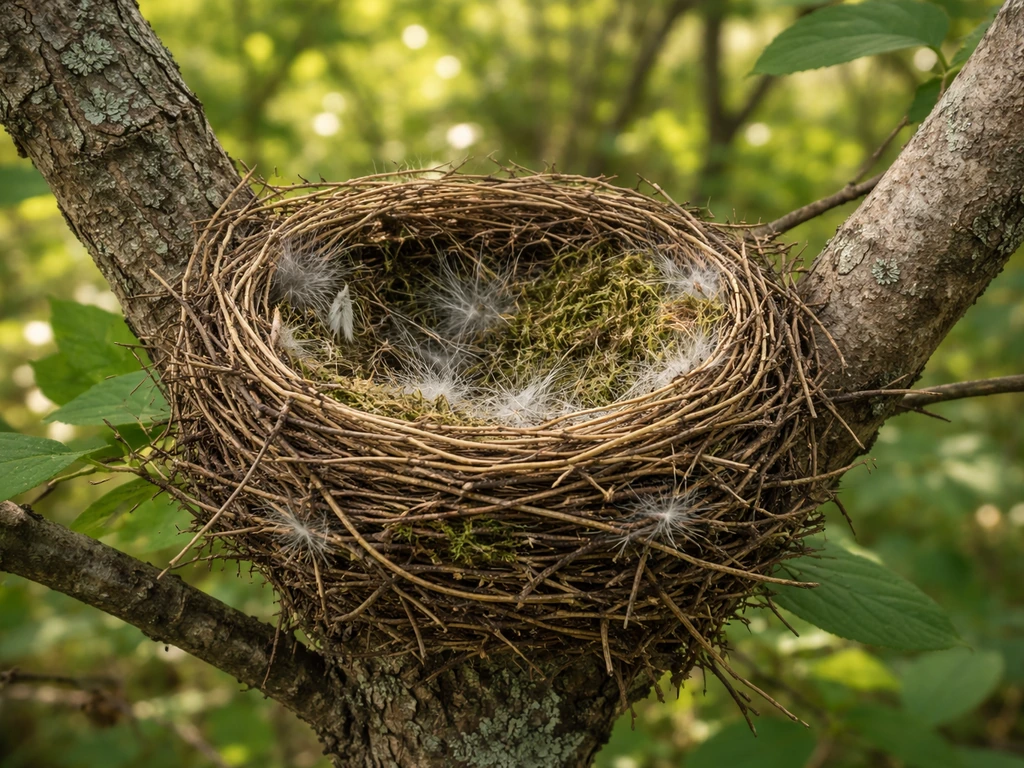
| Cup | A rounded bowl made from grasses, twigs, spider silk, mud, or plant fibers; the most common structure | Robins, warblers, finches, thrushes, sparrows |
| Platform | A large, flat pile of sticks placed in trees, on cliffs, or on man-made structures | Herons, ospreys, eagles, hawks |
| Pendant/Hanging | An elongated sac or pouch woven from plant fibers and suspended from a branch tip | Baltimore orioles, bushtits, vireos |
| Dome | An enclosed cup with a side or top entrance; sometimes includes a tunnel entrance | Ovenbirds, some wrens, dippers |
| Cavity | A chamber inside a tree trunk or nest box; may be excavated or natural | Woodpeckers (primary), bluebirds, chickadees, nuthatches, wrens (secondary) |
| Burrow | Tunneled into soil, a bank, or similar substrate | Kingfishers, bank swallows, burrowing owls |
| Adherent | A cupped nest whose sides are glued directly to a vertical surface using mud or saliva | Barn swallows, cliff swallows, chimney swifts |
Once you have identified the structure, look at materials more closely. Birds use a surprisingly specific palette. Mud-cup builders like phoebes press mud into a half-cup shape on ledges or bridges. Spider silk is a giveaway for hummingbirds and many small warblers, since they use it to bind plant fibers and stretch the nest as nestlings grow.
Lichens matted into the outer wall are a strong indicator of blue-gray gnatcatchers or wood-pewees. A nest lined with snake skin almost certainly belongs to a great crested flycatcher. Coarse bark strips on the outside with a fine grass interior points to yellow warblers. Hair or fur lining is common in chickadee and titmouse nests.
Mud reinforcement in the inner cup, combined with a grass exterior, is a classic American robin signature.
Measure what you can from a distance. A robin's cup is roughly 6 inches across and 3 to 4 inches deep. A hummingbird cup is barely 1.5 inches across. Platform nests from ospreys can span 4 to 5 feet across after years of reuse. Size alone will not clinch an ID, but a nest that is obviously small or obviously massive rules out a long list of candidates quickly.
Use location and placement clues to narrow species
Nest site and nest structure together form the most reliable identification system available to a field observer. A nest's placement in the landscape, at a specific height, on a particular substrate, is often more diagnostic than materials alone because many species are highly consistent about where they build.
Height above ground is the first placement clue. Ground-level scrapes or grass-hidden cups belong to a narrow set of species: meadowlarks, ovenbirds, various sparrows, killdeer, and most waterfowl. Nests from 1 to 5 feet off the ground in dense shrubs suggest cardinals, catbirds, towhees, or yellow warblers. Mid-canopy nests from 10 to 30 feet are typical of most thrushes, vireos, and tanagers. Very high canopy nests (40 feet and up) are often crow, raven, or large hawk territory. If the nest is inside a structure (barn, bridge, cliff face), think barn swallows, phoebes, or cliff swallows.
Substrate matters enormously. Cavity nesters require a hole, so if you see a nest inside a tree cavity or nest box, you have already eliminated the majority of North American species. Bank nesters drill horizontal tunnels into earthen banks, a behavior shared by only a handful of species. Platform nests built directly over water on cattails or reeds point to grebes or red-winged blackbirds. Nests built in the crooks of tree branches (the fork where two branches split) are the typical position for robins, blue jays, and mourning doves.
Habitat context is a layer that beginners often skip. A cup nest found in a dense spruce forest is probably not the same species as an identical-looking cup nest found in a suburban hedge. Knowing your local habitat, whether it is open grassland, wetland edge, mixed deciduous forest, or urban yard, dramatically shrinks the candidate list. If you are struggling to pinpoint a nest's location the next time around, reviewing guidance on where to find a bird nest can help you think through habitat systematically.
Decide if the nest is active or abandoned (and what to do next)
Knowing whether a nest is currently in use is as important as knowing who built it, because it determines every action you can legally and ethically take. An active nest with eggs or chicks is federally protected under the Migratory Bird Treaty Act. A clearly abandoned nest is not.
Signs a nest is active
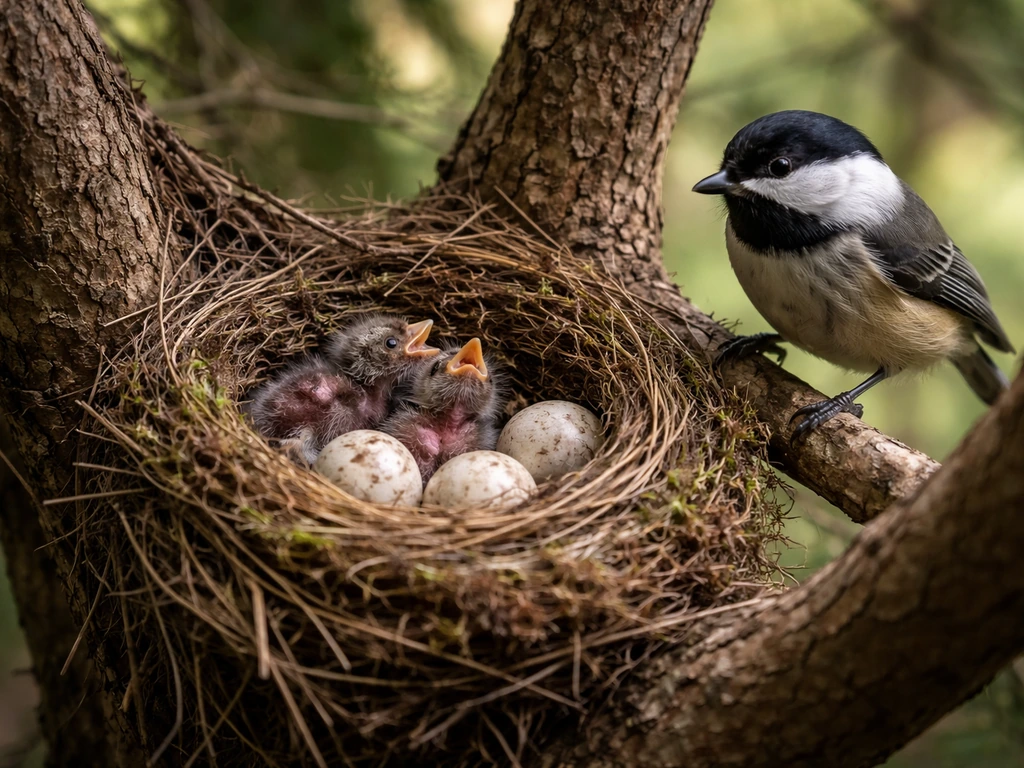
- You see an adult entering or leaving the nest on multiple occasions
- Eggs are visible, intact, and not cracked or shrunken
- Nestlings or downy chicks are present and moving
- Fecal sacs (small white membrane packages) are present near the nest or being carried away by adults, which is a reliable indicator for the first 10 days after hatching
- The nest cup looks clean and structurally intact, not flattened or weathered
- You hear begging calls from inside a cavity or dome nest
Signs a nest may be abandoned
- No adult visits after extended, patient observation across different times of day
- Eggs are cold, cracked, sunken, or have a foul odor
- The nest structure is flattened, wet through, or heavily weathered
- Obvious predator evidence: torn-open nest, eggshell fragments scattered on the ground, feathers, or claw marks nearby
- The nesting season for that species has clearly passed based on local seasonal timing
Use the Smithsonian's recommended practice of blank" rel="noopener noreferrer">making at least three separate observations before drawing a conclusion about nest fate. A single visit where you see nothing does not mean the nest is abandoned. Parent birds often leave nests for feeding bouts that can last 20 to 30 minutes. For a thorough breakdown of the behavioral and physical signals, see our guide on how to tell if a bird nest is active.
If you still cannot tell after multiple visits, the full assessment process is covered in our article on how to know if a bird nest is abandoned, which walks through each sign in more detail alongside seasonal context.
How to infer "which bird" from the nest: reliable vs uncertain matches
Some nests are highly diagnostic. Others are genuinely ambiguous. Knowing the difference saves you from overconfident misidentifications.
High-confidence nest-to-species matches
A pendant nest woven from plant fibers and hanging from the tip of a high branch is almost certainly a Baltimore oriole's. The bag-like shape and suspension point are distinctive enough that almost nothing else in North America produces this structure.
Similarly, an adherent mud cup stuck directly to a barn rafter or bridge beam that is made of mud pellets packed together is almost certainly a cliff swallow or barn swallow nest; the two differ mainly in shape (barn swallow nests are open half-cups; cliff swallow nests are enclosed gourds). A scrape on a gravel rooftop or gravel bar with no added material belongs to killdeer or a similar plover.
A small, lichen-coated cup barely wider than a quarter, bound with spider silk and sitting on top of a horizontal branch, is almost certainly a ruby-throated hummingbird nest.
Lower-confidence matches (use additional context)
Plain grass-and-mud cups in the 5 to 7 inch range are built by dozens of species including robins, thrushes, some sparrows, and a variety of warblers. You need habitat, height, lining material, and ideally a glimpse of the adult to make a confident call. Cavity nests are equally ambiguous without knowing the hole dimensions: chickadees, nuthatches, bluebirds, wrens, tree swallows, and small woodpeckers all use similar-sized openings, typically 1.25 to 1.5 inches in diameter for small songbirds. Large stick platforms are easier to attribute to a family (raptors, herons, corvids) but species-level ID often still requires seeing the adult. Some birds also reuse old nests or refurbish nests built by other species, which adds another layer of uncertainty.
If nestlings are present and visible, their physical features (down color, bill shape, skin color, size) can sharpen your identification considerably. Our guide on how to identify a nestling bird covers exactly what to look for at each developmental stage.
Responsible actions: protecting nests, monitoring, and legal considerations
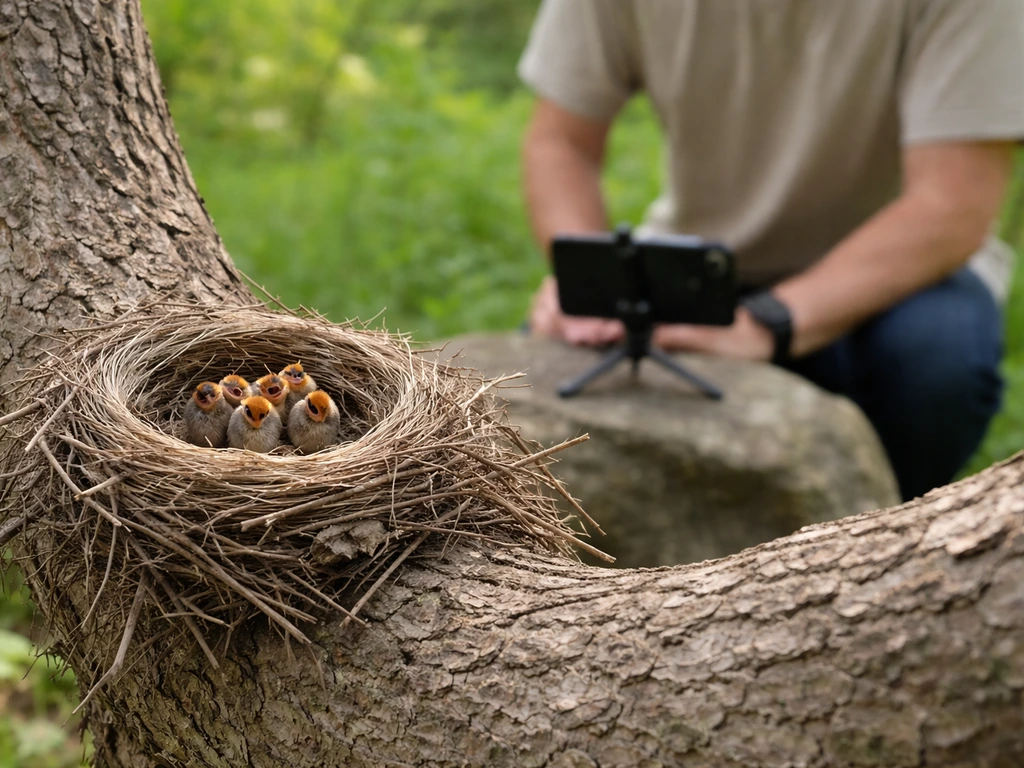
The Migratory Bird Treaty Act (MBTA) makes it illegal to destroy, move, or disturb a nest that contains eggs or live young, or to disturb the birds themselves. This applies to the vast majority of wild bird species in the United States. Violations can result in significant fines. The law does not apply to empty, inactive nests once the nesting season is over, but you need to be certain the nest is inactive before acting.
If you have an active nest in an inconvenient location, such as on a porch light, in a dryer vent, or in a security camera housing, you have limited legal options while eggs or chicks are present. You must wait. If the nest has eggs or nestlings and removal is genuinely necessary for safety reasons, federal regulation (50 CFR 21.12) requires that you contact a federally permitted migratory bird rehabilitator for assistance. Do not attempt to move eggs or chicks yourself. FWC recommends contacting the USFWS Migratory Bird Permit Office to determine what authorization is required for any removal involving active nests.
For monitoring purposes, use the NestWatch approach developed by the Cornell Lab of Ornithology: document the nest's location with a photo and GPS point, note the date of first observation, record the number of eggs or nestlings on each visit, and make at least three check-ins across the nesting attempt to determine whether the nest fledged young or failed. Do not check nests more than once every three to four days during incubation to minimize stress on the adults.
If a nest is active but appears threatened by a predator, the best intervention is usually indirect: a physical baffle on a nest box pole, or clearing brush that gives a cat a hiding spot. Never use poison, glue, or any substance near an active nest. If you are worried about an adult that has not returned, our article on what to do if mom bird abandons nest walks through the appropriate response depending on whether eggs or chicks are involved.
Once nesting is complete and the nest is confirmed empty and inactive, you have some options. Some people preserve or display interesting nests as natural history specimens. If that interests you, our piece on how to display bird nests covers ethical collection and presentation methods. If a fledgling is on the ground and you need to return it to the nest area, how to help a bird find its nest gives specific guidance on what to do without making the situation worse.
Quick troubleshooting checklist for hard-to-identify nests
If you have gone through the steps above and still cannot identify the nest or its status, work through this checklist before drawing any conclusions or taking any action.
- Photograph the nest from multiple angles without moving any material. Get a shot of the exterior, interior (if visible), and the surrounding habitat.
- Note the exact height above ground in feet, the substrate it is attached to (branch fork, trunk, ground, wall, box), and the compass direction it faces.
- Record the outer dimensions: approximate width across the top and depth of the cup.
- List every material you can see: grasses, mud, sticks, moss, lichen, spider silk, hair, feathers, bark strips, plant down, or man-made material.
- Watch for at least 20 to 30 minutes across two separate time periods (morning and mid-afternoon work well) before concluding no adults are present.
- Look for fecal sacs, eggshell fragments, or feathers on the ground directly beneath the nest as secondary evidence of recent activity.
- Check for predator sign: torn nest structure, scattered feathers, claw marks on bark, or crushed eggshells that show impact rather than hatching cracks.
- Cross-reference your notes with a regional field guide or the Cornell Lab's All About Birds species accounts, filtering by your nest type, habitat, and height range.
- If the nest is in a cavity and you cannot see inside safely, use a small mirror on a stick or a phone camera on selfie mode held at arm's length rather than inserting your hand.
- If you are still uncertain and the nest may be active, default to leaving it alone and contacting your state wildlife agency or a licensed wildlife rehabilitator for guidance.
The honest reality of nest identification is that ambiguity is normal. Even experienced naturalists cannot always confirm a species from nest evidence alone. What you can almost always determine is the nest type, a shortlist of likely builders, and whether the nest is worth protecting right now. That combination is enough to make the right decision in the field, which is the whole point.
FAQ
How can I identify a bird nest if I cannot see the adult bird at all?
Rely more heavily on nest placement and substrate than on materials alone. Use height category, whether it is a cavity or an exterior cup, what it is anchored to (tree fork, ledge, underside of eaves, bank tunnels), and the surrounding habitat type. If you can, capture a clear photo of the nest opening (for cavities) or the outer wall texture (for lichens, bark strips, mud pellets), then compare those features plus dimensions to narrow the shortlist.
What should I do if I find what looks like an abandoned nest but I am not sure?
Treat it as possibly active until you confirm it is inactive across multiple days. A single visit with no activity is not enough because adults can leave for long feeding intervals. Watch from a distance and look for fresh fecal material near the rim, recently added lining, or adult return behavior before deciding it is safe to touch or remove anything.
Can I move nearby branches or weeds to get a better view of a nest?
Avoid moving anything that increases access to the nest or causes the adult to change behavior. Even if you do not touch the nest itself, rearranging vegetation can expose or stress nesting birds and can be treated as disturbance. If the view is blocked, switch to longer-distance viewing (binoculars/zoom) or move your own position farther away rather than altering the nest site.
How often is it safe to check the same nest if I’m monitoring it?
Limit check-ins to avoid creating repeated stress. The article notes not checking more than once every 3 to 4 days during incubation, and you should also stop earlier if you see repeated freezing, flushing, or adults abandoning feeding trips. If you must document something urgent, prioritize staying still and recording from the same distance rather than circling closer.
What signs tell me the nest is not just active, but in danger right now?
Look for persistent adult agitation from a distance (alarm calls, repeated short trips that do not include normal feeding patterns), visible exposure of eggs or nestlings, or repeated predator activity near the site. Also consider the nest location, for example a nest on a high-traffic path where pets or people can repeatedly pass. If you can identify a nest box pole is accessible, a physical baffle or habitat change that blocks predator access (without poisoning) is usually the safest first step.
Are nest types always one-to-one with species, or can reuse and refurbishing confuse identification?
They can be confusing. Many birds reuse old nests or refurbish nests built by other species, which can blend materials and make the structure look “mixed.” That is why the best decision aids are not just structure and materials, but also consistent cues like entrance type for cavities, specific attachment points (barn rafter versus enclosed gourd underside), and nest site height within your local habitat.
How do I measure nest size without accidentally getting too close?
Use estimation from distance rather than approaching. For example, use a known reference like a nearby branch diameter or a measured object you can keep at your current viewing position, and use binoculars to approximate cup diameter or opening size. If you cannot document the scale reliably from where you are standing, note that you cannot confirm a dimension and use other cues like height, substrate, and lining type instead.
What should I do if a nest is located on a porch light, vent, or other human structure?
If eggs or chicks are present, the default action is to wait and avoid interference. The article covers contacting a federally permitted rehabilitator for removal that is genuinely necessary for safety. Before calling anyone, document the exact location (which fixture or housing), date first observed, and whether adults are currently returning, because that information helps determine the correct authorization and timing.
Is it okay to photograph a nest up close for a clear ID?
No, not if it causes behavioral change or requires you to move closer than recommended viewing distances. Use zoom from your initial respectful spot and keep your position steady. If you notice the adult stops singing, freezes, or repeatedly flushes, back up immediately and resume only when behavior normalizes.
If I find a nestling on the ground, how do I decide whether it needs help?
Treat most exposed nestlings as needing a return to the nest area, but avoid forcing it. Identify whether it is fully feathered or still downy and note whether adults are nearby and calling, because fledglings can appear “abandoned” temporarily. Use guidance from a nestling-specific resource and prioritize keeping people and pets away until you understand the developmental stage.