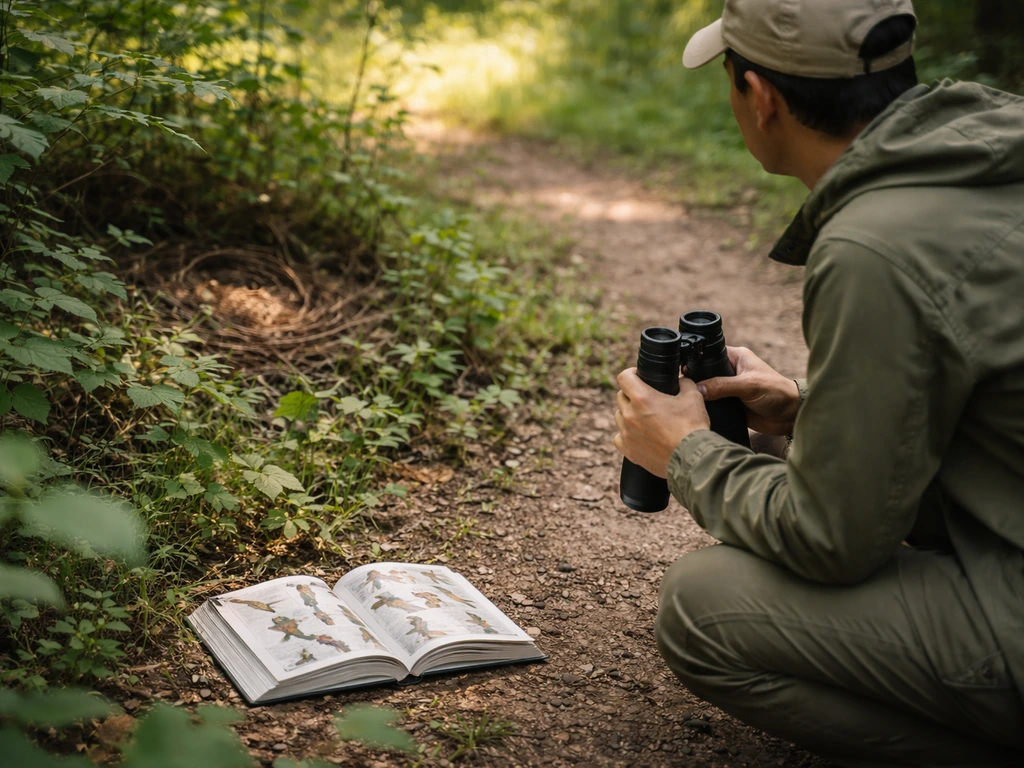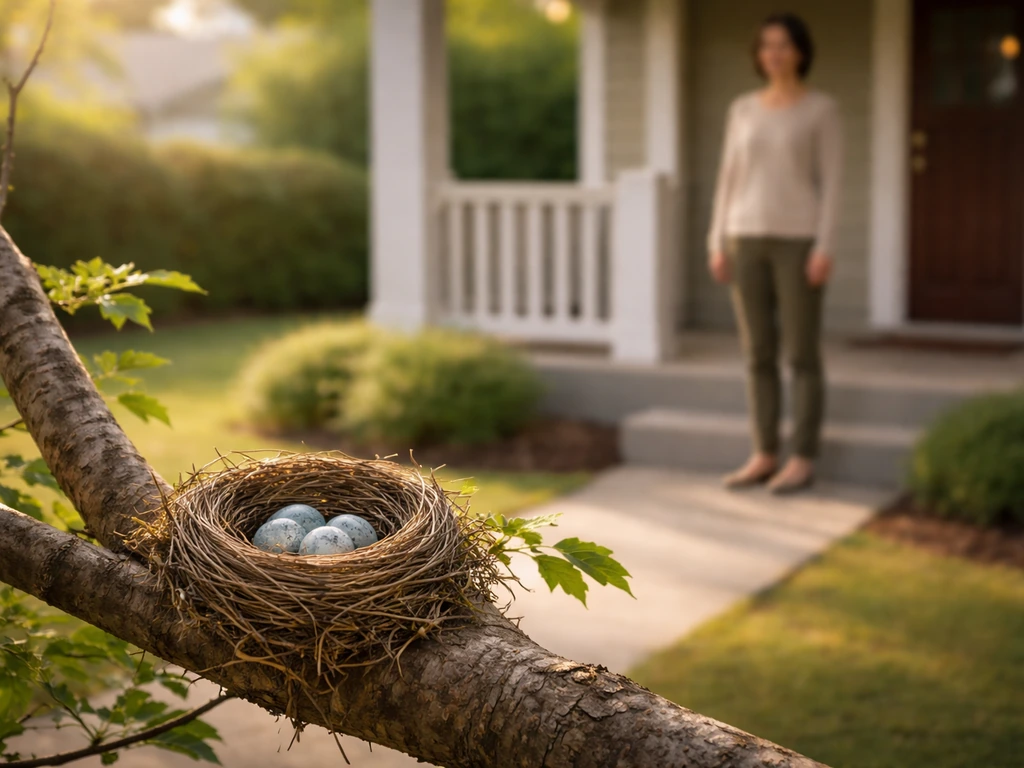
The Peterson Field Guide to North American Bird Nests is genuinely one of the best references you can have in the field or on your kitchen table when you're staring at a nest and wondering what built it. It covers breeding birds from the US-Mexico border north to the Arctic Circle, includes over 750 photographs, organizes species by nest design (not alphabetically, which is actually useful), and gives you a comprehensive identification key along with detailed species accounts. Each account tells you habitat, nest location, structure, materials, egg count, incubation period, nestling period, and even color and shape of the eggs, plus a small range map. That's a lot of information packed into one volume.
Peterson Field Guide to North American Bird Nests: How to Use It
Maya Bennett
14 Apr 2026
What the Peterson bird-nest guide is good for (and what it won't solve)
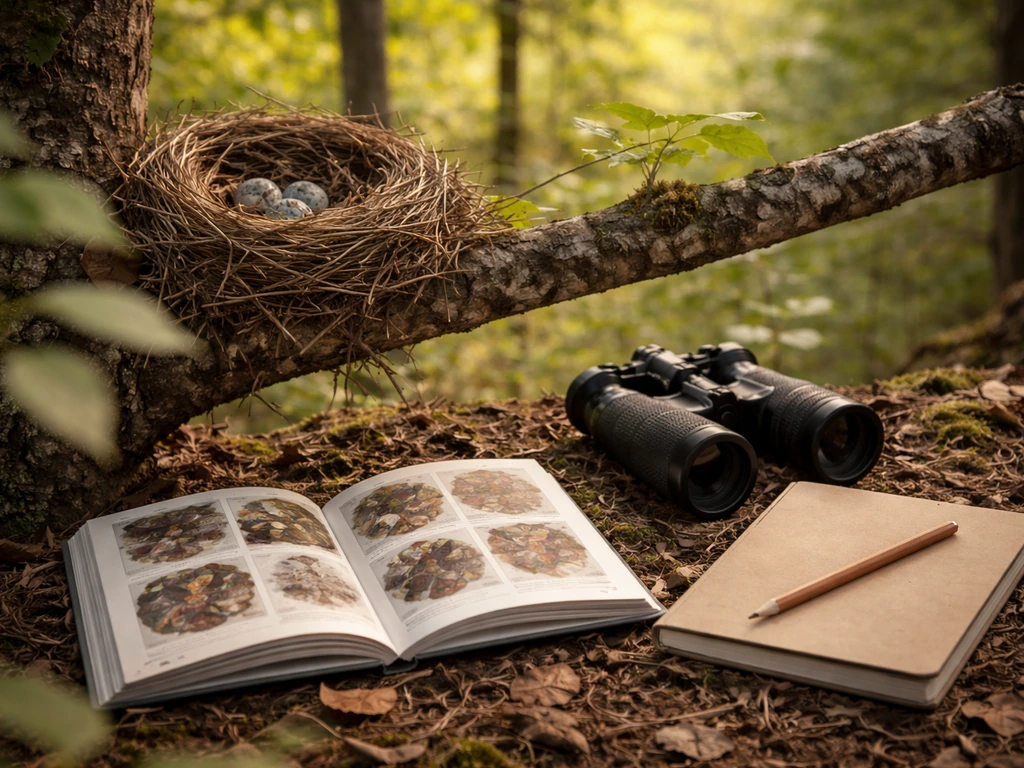
Where the guide excels: matching a nest you can observe closely (but not touch) to the right species when you have decent structural detail, placement information, and ideally some egg data. If you know the nest is in a shrub, woven from grasses, roughly the size of a coffee cup, and lined with fine plant fibers, the Peterson guide will walk you toward a sensible shortlist fast. The photo plates are high quality, and the organization by nest design means you're not flipping past cup nesters when you're looking at cavity nesters.
What it won't solve: a heavily degraded, weathered, or incomplete nest with no eggs and no active birds nearby. The guide is built around relatively complete nest records. If you've found a half-collapsed structure in a bare winter tree, you'll get a narrowed list at best. It also does not cover Hawaii, Mexico, or the Caribbean, so if you're working outside the continental US and Canada, you're outside its scope. And no field guide can tell you for certain what built a nest if the only evidence is a loose pile of twigs. That's not a criticism of the Peterson guide specifically; it's just the nature of nest ID.
On editions: the guide is available in both print and eBook formats, with ISBNs 9780544963382 and 9780358411468 corresponding to different versions. The eBook version (available through platforms like VitalSource) covers the same content, so if your copy has a different ISBN than a friend's, don't worry. The identification keys, photographs, and species accounts are consistent across formats. Use whichever version you have on hand.
Quick field workflow to identify a nest with minimal disturbance
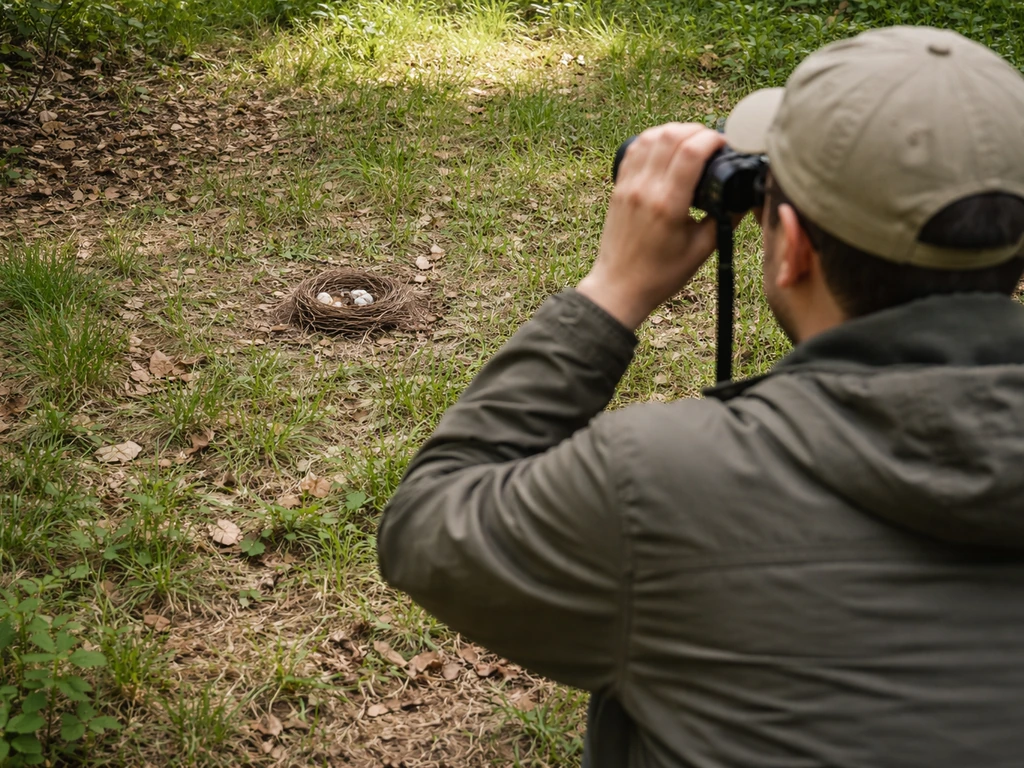
The goal here is to collect enough information to use the guide effectively without getting close enough to cause problems. Here's the sequence I follow:
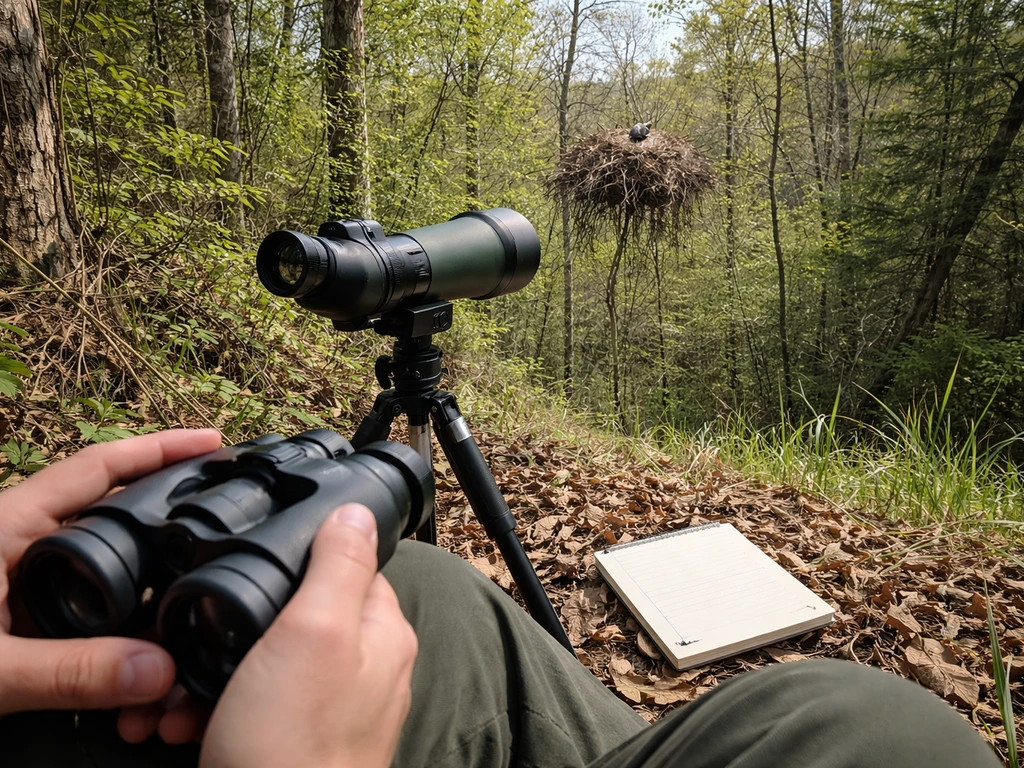
- Stop at least 10 to 15 feet away (more for ground nesters or colonial species) and observe for several minutes before moving closer.
- Note the exact placement: height off the ground, what it's attached to (fork of a branch, attached to a stem, inside a cavity, on a ledge), and the surrounding habitat type.
- Take photos from a distance first, then carefully move a step or two closer if the nest is clearly inactive (no adult on the nest, no alarm calls). Get photos from multiple angles.
- Record the date. Nest identification and activity status are both time-sensitive, and if you ever log this sighting with a monitoring program, the date is required data.
- Estimate the nest's outer diameter, cup depth, and overall shape (cup, sphere, platform, cavity, pendant). A rough comparison to common objects works: golf ball, tennis ball, softball, dinner plate.
- Describe the outer materials (twigs, mud, bark strips, grasses, moss, spider silk), the inner cup materials (fine grasses, feathers, hair, plant down), and any distinctive features like a mud rim or lichen decoration.
- Cross-reference what you've noted with the Peterson guide's nest-design organization and key, then check the species accounts for your region using the range map.
One underrated tip: the best time to find and study old nests is during leaf-off periods in late fall and winter. You can examine structure and materials in detail without any risk of disturbing active birds. NestWatch specifically recommends this approach for exactly that reason. Those off-season observations make you much sharper at in-season ID.
How to use nest features: placement, structure, materials, and lining
The Peterson guide organizes species by nest design, which reflects how nest identification actually works in practice. You're not starting with 'what species is this?' You're starting with 'what kind of nest is this?' and narrowing from there. Here's how to think through the four main diagnostic layers:
Placement
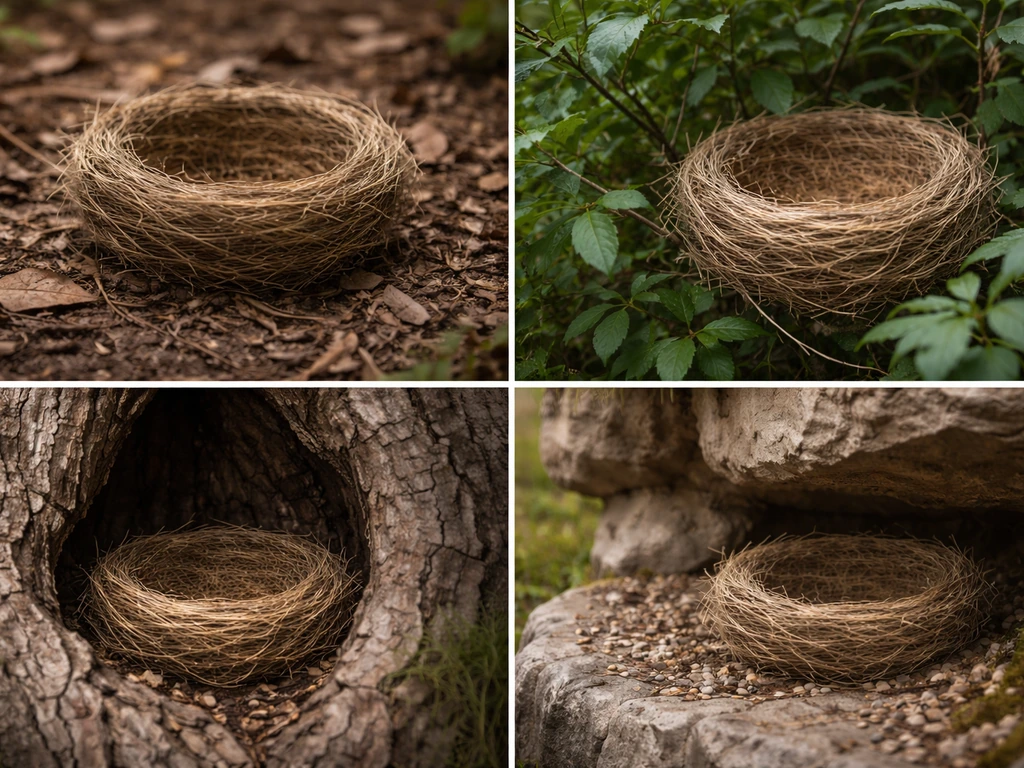
Where a nest sits is one of the strongest first filters. Ground nests, shrub nests, canopy nests, cavity nests, and platform nests on cliffs or ledges each narrow your candidate list dramatically before you've looked at a single material. Height matters too: NestWatch monitoring protocols record height precisely because it's a real diagnostic variable. A nest at 4 feet in a dense shrub is a very different situation from one at 40 feet in a canopy fork.
Structure and shape
Is it an open cup, a domed sphere, a pendant tube, a mud jug, a flat platform, or a cavity? These are the top-level categories the Peterson guide uses. Shape and overall structure are often visible from a distance and are the most reliable non-material clues you have. A pendulous woven nest hanging from a branch tip is going to narrow you to a very short list of species fast.
Outer materials
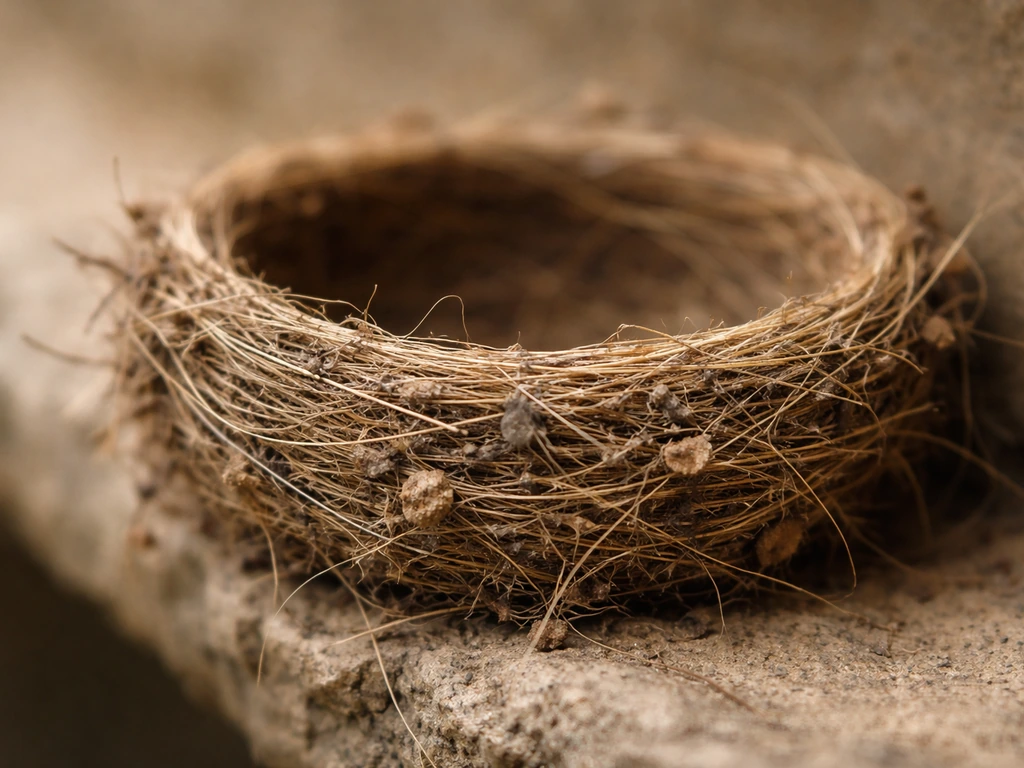
Materials and overall nest shape together are the two main diagnostic cues for identifying nest builders, according to NestWatch's identification guidance. The outer layer tells you a lot: mud indicates robins or swallows; spider silk (often holding the nest together or attached to a branch) suggests hummingbirds or gnatcatchers; strips of bark point to certain warblers; lichen on the exterior is a signature of Blue-gray Gnatcatcher nests. Note both what materials are present and how they're arranged.
Inner lining
The lining of the cup is often species-specific in ways the outer structure isn't. Fine rootlets, feathers, animal hair, plant down, or even bits of snake skin all point toward different builders. If you can photograph the interior without touching the nest, do it. That image paired with the Peterson guide's species accounts gives you strong confirmation or elimination material.
Dealing with uncertainty: narrowing ID and verifying without touching
Sometimes you just don't have enough information. The nest is degraded, or there are no eggs, or it's in an awkward position where you can't see the interior. Here's how to work with incomplete data rather than giving up or getting too close.
- Use what you have: even partial information (placement + one material) eliminates most candidates. Start eliminating, not just matching.
- Watch from a distance for 20 to 30 minutes. Parent behavior, alarm calls, and flight paths often confirm species before you ever look at the nest itself.
- Check the range maps in the Peterson guide. If a species doesn't breed in your area, rule it out even if the nest looks right.
- Use a camera with a zoom lens or even a smartphone camera's zoom function to photograph nest interior details without approaching.
- Cross-reference with egg information if eggs are present. Understanding how to identify bird eggs adds a powerful second layer of confirmation when the nest alone is ambiguous.
- For nests without eggs or active birds, consider whether the season makes activity plausible. An intact cup nest in April is probably active or recently active; the same nest in January, in a northern climate, is almost certainly last season's.
- If you're still stuck after working through the Peterson guide, the NestWatch online database lets you compare your notes against a large verified dataset of nest records.
One thing worth saying clearly: not every nest is identifiable to species, and that's fine. A partial ID (family level, or narrowed to two or three candidates) is still useful and still tells you how to respond to the nest ethically and legally.
Ethical + legal do's and don'ts when you find an active nest
The Migratory Bird Treaty Act of 1918 protects the vast majority of native North American birds, and that protection explicitly includes their nests and eggs. Under federal law (MBTA §703(a)), it is unlawful to take, possess, or destroy the nest or eggs of a migratory bird. Once eggs are present in a nest, you cannot legally move or remove it without a federal permit, full stop. This applies even if the nest is in a place that's genuinely inconvenient for you.
If you think a nest removal or relocation might be necessary and eggs or chicks are present, your first call should be to the USFWS Migratory Bird Permit Office to find out what federal authorization is required. The Florida FWC's guidance on this is clear: active nest removal permits for non-listed species are no longer issued at the state level, but a federal MBTA permit from USFWS may still be required. Don't assume removal is legal just because a state agency isn't involved.
| Situation | Legal Status | Recommended Action |
|---|---|---|
| Empty nest, nesting season over | Generally not protected | Can be removed; verify season is complete first |
| Active nest, no eggs yet | Protected (bird actively using it) | Leave it alone; do not disturb |
| Active nest with eggs | Fully protected under MBTA | Do not touch or move; contact USFWS if removal seems necessary |
| Active nest with chicks | Fully protected under MBTA | Do not touch or move; observe from distance only |
| Abandoned nest (eggs cold, no adult visits) | May no longer be actively protected, but verify | Wait several days to confirm abandonment before acting |
| Nest of a non-migratory invasive species (e.g., House Sparrow, European Starling) | Not protected under MBTA | May be legally removed; check local regulations |
Beyond the legal dimension, disturbance has real ecological costs. Repeated visits along the same path to a nest create a worn trail that predators can follow directly to the nest. NestWatch's code of conduct is explicit about this: avoid creating a dead-end trail, vary your approach, and observe from a distance whenever possible. Audubon echoes the same point: walking right up to a nest creates scent and visible pathways that predators use after you leave.
- Do: observe from at least 10 to 15 feet away for open-cup nests; maintain at least 25 yards from beach-nesting birds.
- Do: take photos with a zoom lens rather than approaching the nest.
- Do: vary your approach path on each visit to avoid creating a predator trail.
- Do: back away immediately if the adult bird is alarm-calling, wing-spreading, or showing distress.
- Don't: touch the nest, eggs, or chicks unless you're returning a fallen chick to its nest.
- Don't: remove or relocate an active nest without contacting USFWS first.
- Don't: share precise GPS coordinates of active nest locations on public platforms.
- Don't: assume a nest is abandoned after a single visit or brief period without adult sighting.
How to handle common real-life situations (porch/yard/pets/predators)
Finding a nest on your porch, in your garage, or near a door you use every day is one of the most common situations where people feel caught between protecting the birds and needing to use their own space. Here's practical guidance for the scenarios I hear about most often.
Nest on a porch or in a garage
If eggs or chicks are present, you're legally obligated to leave it alone. The timeline is manageable: most small songbirds take 10 to 14 days to incubate eggs and another 10 to 14 days for chicks to fledge. Temporary inconvenience is the right response. Use a different door if possible, move slowly when you must pass nearby, and keep the area as quiet as you can. Once the chicks have fledged and the nest is definitively empty, you can remove it and then use physical deterrents (like a fake owl, reflective tape, or blocking the specific spot) to discourage future nesting in that exact location.
Pets and kids near an active nest
Cats are the biggest threat here. Keep cats indoors during active nesting if the nest is in a low or reachable location. For dogs, keep them leashed or out of the area. For kids, explain what's happening and turn it into an observation opportunity from a safe distance. A bird nest in your yard is a genuinely rare chance to watch the whole nesting cycle. Set up a chair at a comfortable distance and watch. That's it.
Predator pressure on a yard nest
If you're watching a nest get hit by crows, jays, raccoons, or snakes, resist the urge to intervene directly. You can reduce indirect pressure: don't create trails to the nest, don't put out food near the nest that attracts corvids or mammals, and keep the area as low-traffic as possible. Audubon's guidance on avoiding dead-end predator trails applies here: your own repeated visits can be as dangerous to the nest as a nearby predator. The birds chose the location; they're making their own risk calculations.
Health and safety considerations
Old or abandoned nests can harbor mites, lice, and other parasites, and in rare cases fungal spores. If you're handling an old nest for educational purposes or removal after the season, wear gloves and a dust mask. Don't let kids handle nests directly. Wash hands thoroughly afterward. Active nests should not be handled at all, which makes the health question mostly moot for in-season situations.
If eggs or chicks are involved: safe observation, timing, and next steps
Finding eggs changes the situation in two important ways: it confirms the nest is active, and it adds a layer of legal protection. The Peterson guide's species accounts include egg information (likely number, incubation period, nestling period, color, and shape), which makes this a great moment to cross-reference. If you can photograph the eggs without approaching closely, you now have two ID data streams working together.
For anyone who wants to go deeper on egg identification as a companion to nest ID, our guide to bird eggs covers color, spotting patterns, size comparisons, and how to read those features alongside nest data. It pairs well with the Peterson guide's egg sections.
If you find eggs on the ground near a nest, that's a separate situation requiring quick thinking. What to do if bird eggs fell out of nest is worth reading before you do anything: in short, if the egg is intact and warm and the nest is reachable, placing it back is acceptable and legal. If the nest itself has been destroyed or the egg is cold and unresponsive, the options are more limited.
Chicks that have fallen from a nest are a common springtime emergency. Audubon confirms that returning a fallen chick to its nest is safe and the right call if the nest is intact and reachable. The parent will not reject the chick because of your scent. If you can't reach the nest, place the chick in a small box lined with tissues as high and close to the original nest location as you can manage, then back away and watch.
Timing matters when monitoring. If you approach a nest and the adult flushes, back off and wait. NestWatch notes that some birds may flush or react silently to perceived disturbance, so observe from a distance and be aware that disturbance can move birds away from the nest adult flushes. Audubon's guidance is clear: if an hour or two passes with no sign of a parent returning, move farther away and give it more time. Absence of the adult for a short window is not abandonment; it may simply be your presence keeping them away. The most useful thing you can do is leave.
If you're trying to figure out whether eggs in a nest are still viable (or whether a nest is genuinely abandoned), our article on how to check bird eggs covers the practical methods for assessing viability without cracking anything open. And if you're at the stage of wanting to find nests actively in your yard to watch from the start, how to find bird eggs in your backyard gives you the search strategy and timing guidance to locate them early in the season.
The Peterson Field Guide to North American Bird Nests gives you the reference structure to answer 'what built this?' The ethical and legal framework tells you what to do once you know. Put both together and you're not just a person who found a nest in their yard: you're someone who can observe, record, and protect it correctly, which is genuinely the best possible outcome for the birds and for you.
FAQ
Can I use the Peterson guide to identify a nest if I can only see it briefly, from a distance, without photos of the interior?
Yes, but only if the nest is clearly inactive and fully empty, then you can remove it later and deter future use. If there are any eggshells, recent fresh lining, or signs of active adults (carrying food, ongoing brooding), treat it as active and wait, because “abandoned” can be deceptive during late broods and renesting attempts.
What’s the best way to narrow to species when I cannot see the lining or eggs?
Start by prioritizing location, height, and the nest’s overall architecture, then use materials only where you can see them reliably (mud, plant strips, cobweb attachments, bark strips, or lichen). If you cannot assess lining or egg traits, expect a shortlist, not a single species, and record what you could see (approximate height, plant type, canopy versus ground) to refine later.
How do I avoid common mistakes when interpreting nest materials like spider silk, lichen, mud, or bark strips?
A key pitfall is reading “materials present” instead of “materials used structurally.” Look for what’s woven or bonded into the nest, for example spider silk that attaches to the substrate, not just loose silk in the area. Similarly, lichen matters when it’s consistently part of the exterior shell, not a few incidental flecks.
If I find a nest in winter, how can I tell whether it is truly inactive or just weathered and still being reused?
During leaf-off season you may find nests that look older but still show fresh structure in places, or nests that were reused. If you see fresh droppings near the entrance, intact eggshells, or recent repairs, don’t rely on weathering alone, take the conservative route, and wait for active/inactive confirmation.
Can two different species build very similar-looking nests, and how should I handle that with the guide?
Yes, and the guide’s nest-design organization is especially helpful for this. Focus on the nest type first (cavity versus open cup versus platform versus mud structure), then use materials and lining to separate likely candidates. If you cannot observe eggs, add behavioral cues you can watch safely, like what bird is transporting nesting material or feeding at the nest from a distance.
What should I do if my nest is damaged, missing its lining, or mostly collapsed, but I want to identify the builder?
If the nest is incomplete, use the guide for category-level identification (nest design and partial material cues) and stop there rather than forcing a species match. Take wide-context photos showing placement (substrate, height, orientation) because those are often more diagnostic than the missing portions.
If my Peterson guide has a different ISBN than a friend’s, will the identification keys still match the same way?
The eBook and print versions are consistent in content as described in your article, but edition differences can affect page layout and some ISBN tracking for sourcing. To avoid confusion, use your copy’s identification key and species accounts directly, and if you share findings with others, compare nest features rather than page numbers.
How should I record height and placement so the guide’s identification logic stays accurate?
Yes. Nest location and height are most useful when measured the same way every time. Use a reliable reference, for example from the ground to the rim or attachment point, and note uncertainty (for example “about 25 feet”). Height is a diagnostic variable in the same way across nest types, but estimates become misleading if you don’t record how you guessed.
If a nest is in a dangerous spot, can I relocate it myself once I identify the species?
Generally no for compliance and safety reasons, because you can’t legally move or destroy eggs or active nests without the right federal authorization. The practical approach is to avoid disturbance, document from a distance, then contact the USFWS Migratory Bird Permit Office if you believe relocation or removal is necessary due to safety or construction.
Are there safe ways to assess whether eggs are viable without increasing disturbance?
If eggs are present, treat viability questions as a “don’t disturb further” problem. You can often infer activity from parental behavior and timing, but any test that involves handling, opening, or prolonged checking can increase disturbance. If you need certainty, rely on a specialized method from a reputable guide and still keep your distance.
What’s the safest handling routine for an abandoned nest if I want to examine it briefly?
Don’t handle old nests bare-handed, even in the off-season. Wear gloves, and consider a mask when there’s dust or dry debris, then seal and bag any materials before disposal. Also wash hands thoroughly afterward, and keep pets away until you’ve finished.
What should I do immediately after finding an egg on the ground near a nest, and when should I stop trying to intervene?
For fallen eggs, the key decision depends on whether the egg is intact and warm versus cold and whether the nest is intact and reachable. Even if replacement might be legally acceptable in some cases, you should minimize time nearby, return promptly only if it’s clearly appropriate, and then step back to avoid turning the area into a predator trail.
What are practical deterrents and timing rules for preventing repeat nesting around a home entrance after the nesting cycle ends?
For backyard porch or garage nests, set up a “no-random-approach” rule: use a consistent alternate route, keep doors closed when feasible, and reduce vibration and lights at night near the nest. After chicks fledge and the nest is verified empty, physical deterrents should target the exact attachment spot, not a general area, otherwise birds may simply choose a new nearby ledge.
How long should I wait to confirm a nest is active or inactive before I do any recording or yard work near it?
Yes, and your best evidence is usually what you can document without touching: repeated carrying of nesting material, feeding visits, or adults incubating on schedule. If you cannot confirm activity, treat it as active until you have a clear window of inactivity, because “wait and watch” is more accurate than guessing from appearance alone.