
When birds are nesting on or near your welding setup, you need to stop work in that immediate zone, assess whether the nest is active (eggs or chicks present), and then reroute or reschedule any welding within about 25 feet of it. In most countries, destroying or disturbing an active nest of a migratory or protected bird is illegal, full stop. That means you can't just sweep it away or torch through it. But you can absolutely finish the job: the trick is working around the nest with some simple planning, timing adjustments, and a temporary safe zone while the birds complete their breeding cycle.
What Is Bird Nesting in Welding and What to Do

Maya Bennett
19 May 2026
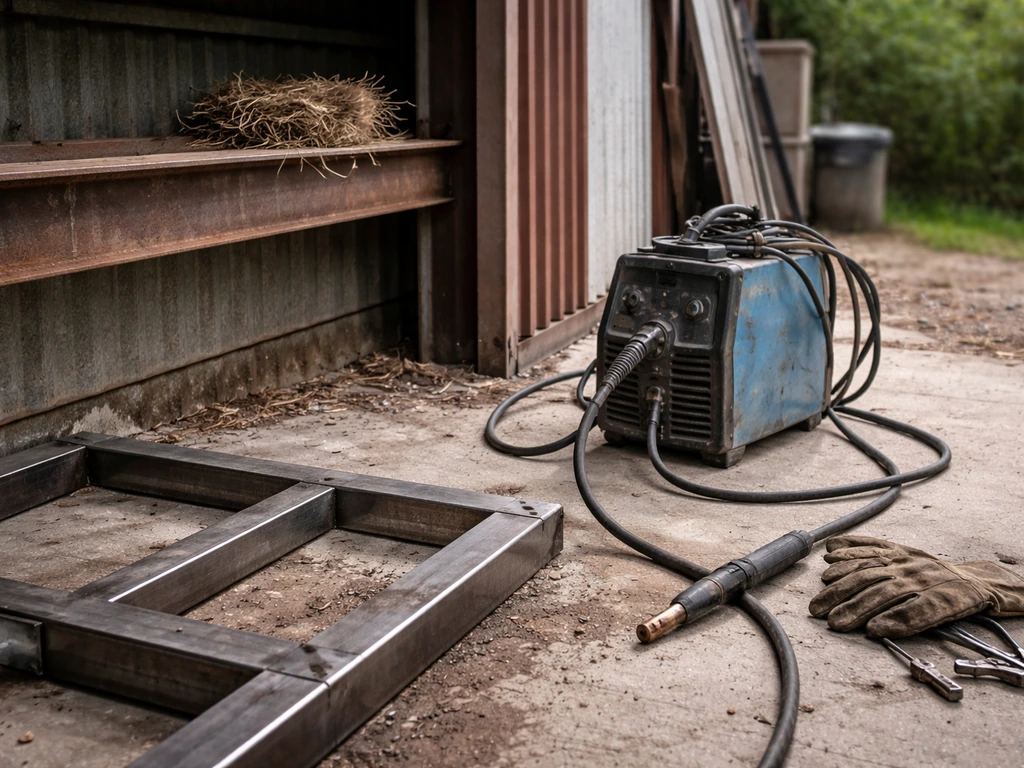
What 'bird nesting in welding' actually means on real job sites
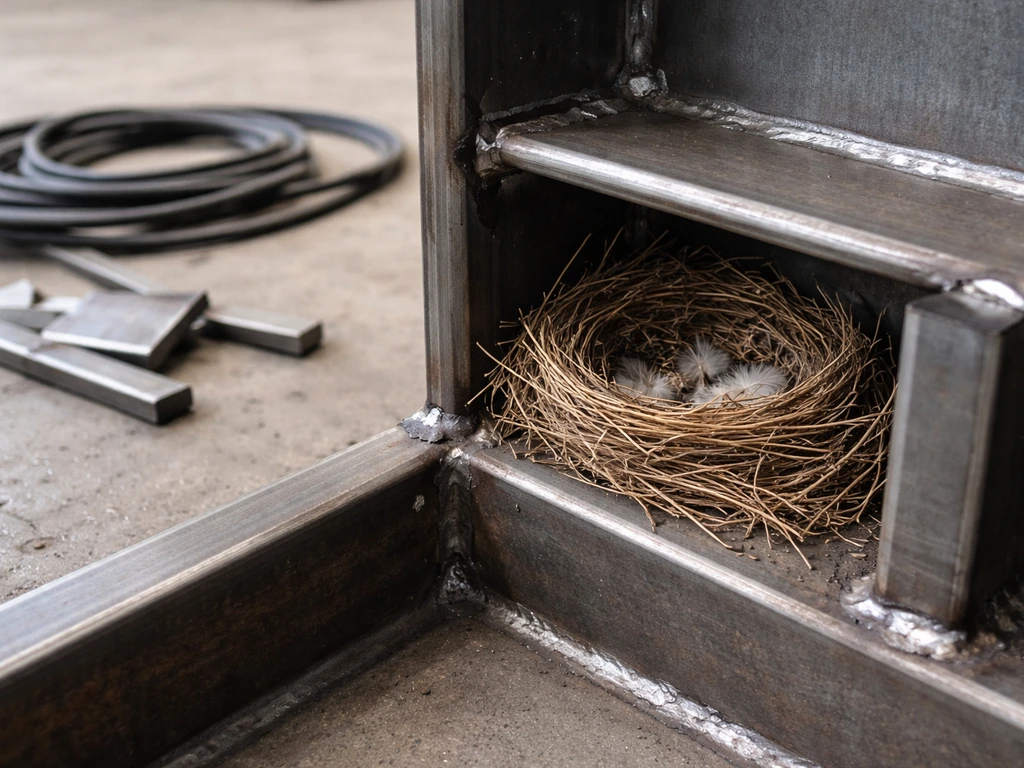
People searching this phrase are almost never asking about a welding wire tangle (though that's a thing too, worth noting if you landed here by accident). In the context of this site, bird nesting in welding refers to the situation where wild birds have built a nest on, inside, or directly adjacent to welding equipment, outdoor metal structures, fabrication shops, or construction frames. Bird nesting co parenting refers to the way some species share or split breeding duties, like incubation and feeding, among more than one parent. Bird nesting happens when wild birds build nests on, inside, or right next to places where welding or other metalwork is happening bird nesting in welding. Think: a robin building in the angle iron of a fence you're halfway through welding, a house sparrow tucked into the hollow end of scaffold tubing, or a barn swallow setting up on the ledge of your garage door frame right above your welding table.
It happens more than you'd expect. Welders and metal fabricators working outdoors or in semi-open shops pause jobs every season because of this. The question isn't rare, and the consequences of ignoring it aren't minor. Under the U.S. Migratory Bird Treaty Act and equivalent laws in Canada, the EU, and the UK, knowingly disturbing or destroying an active nest can result in fines and legal liability. So this is a practical and legal problem at the same time.
How to tell if a nest is active and where to look safely
An active nest, as defined by wildlife agencies including WSDOT's MBTA protocols, is one that contains eggs or chicks, or where breeding behavior is actively occurring in or near the nest. That definition matters because an empty, abandoned nest from last season doesn't carry the same legal weight as one with a clutch of eggs inside it. Before you do anything else, you need to figure out which situation you're dealing with.
Do a quick, non-invasive visual check from about 6 to 10 feet away. You're looking for fresh nesting material (green moss, soft grass, feathers, spiderwebs), adult birds flying in and out, sounds of chicks begging, or eggshell fragments nearby. If you see any of those, treat the nest as active until proven otherwise. Take a photo on your phone with a timestamp. That documentation can matter later.
Common welding-area locations to check include hollow tube ends on scaffolding or frames, sheltered ledges above shop doors, inside rolled metal stock stored outdoors, gaps in corrugated steel roofing, the underside of awnings over outdoor work areas, and even inside welding equipment carts left open in a garage. Species like house sparrows, European starlings, barn swallows, robins, and wrens are the most frequent offenders because they favor covered, structurally stable spots near human activity.
- Look for nest material in hollow tubing: grasses, feathers, moss, or synthetic fibers are common
- Check sheltered ledges above eye level, especially above doors, vents, or overhangs
- Listen for soft chick calls or adult alarm calls when you approach
- Watch for adults perching nearby or making short repeated flights to one spot
- Photograph any nest from a distance before touching or approaching closely
- Note the date, location, and what you observe: that record protects you legally
Why birds pick welding and metalwork areas in the first place
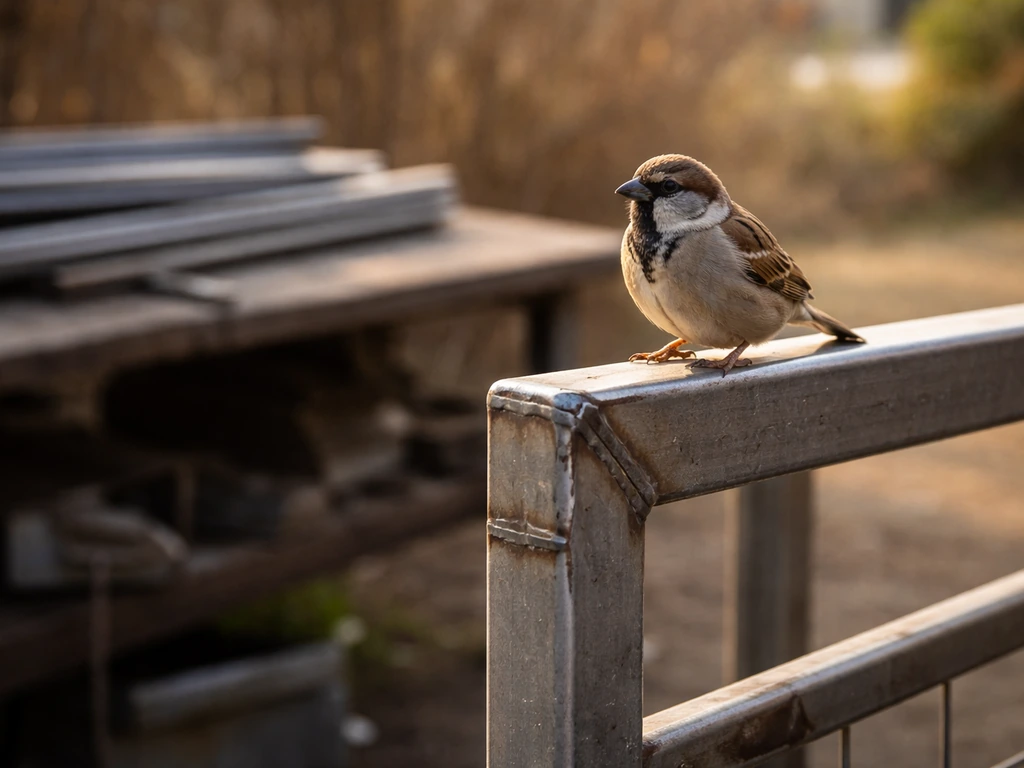
It's not random. Welding environments offer several things birds are actively seeking when they pick a nest site. First, residual warmth: metal structures that have been welded or are near heat sources retain warmth, and many cavity-nesting species gravitate toward slightly warmer microenvironments for their eggs. Second, structural stability: angle iron, scaffold frames, fabricated steel structures, and metal tool racks are solid, vibration-resistant, and well-anchored. Third, shelter: covered or semi-enclosed metal areas mimic natural cavities and protected ledges. And fourth, reduced predator pressure: active human work areas deter some predators like cats and raccoons, which actually makes a garage shop or outdoor fab yard feel safe to a bird.
Grills that sit unused for a few weeks, outdoor metal fence frames mid-project, freshly welded structural steel left over a weekend, and even open welding curtain frames have all been documented hosting nests. If you're working on any outdoor or semi-outdoor metal project between March and August in the northern hemisphere, the risk window is real.
Legal and ethical do's and don'ts before you weld or move anything
This is the section that matters most if you're standing in front of a nest right now wondering what you're allowed to do. The law varies by country, but the core principle is the same almost everywhere: you cannot deliberately destroy, damage, or remove an active nest of a protected species during breeding season. In the UK, the Wildlife and Countryside Act 1981 includes nest-protection rules that prohibit damaging or destroying a nest while it is in use or being built, which ties into the breeding “close season” concept The law varies by country, but the core principle is the same almost everywhere: you cannot deliberately destroy, damage, or remove an active nest of a protected species during breeding season..
| Jurisdiction | Key Law | What's Prohibited | Permit Option? |
|---|---|---|---|
| United States | Migratory Bird Treaty Act (MBTA) | Take, destroy, or disturb active nests of migratory birds | Yes, limited; interior building nests covered under 50 CFR §21.14; exterior nests require stronger justification |
| Canada | Migratory Birds Regulations 2022 | Disturb, destroy, or relocate occupied nests of Schedule 1 species | Yes, permits may be available if you cannot wait; unoccupied nests may be handled differently |
| European Union | Birds Directive 2009/147/EC | Deliberate destruction/damage/removal of nests or eggs; significant disturbance during breeding | Member-state level permits; rare and restricted |
| United Kingdom | Wildlife and Countryside Act 1981 | Damaging or destroying a nest in use or being built | Limited exceptions for incidental operations; consult NatureScot or Natural England |
The practical upshot: if the nest is active, you cannot remove it yourself in any of these jurisdictions without a permit. In the U.S., 50 CFR §21.14 does authorize some nest removal inside buildings under specific conditions, but it explicitly does not cover nests on the exterior of structures in the same way, and requires that you take steps to prevent birds from reentering (exclusion) where feasible. In Canada, ECCC guidance is clear that if occupied nests are in your work zone, activities that could disturb or destroy them must be avoided, adapted, rescheduled, or relocated to another part of the site. The RSPCA in the UK warns directly that moving a nest at the wrong time could break the law.
- DO document the nest with photos, species ID if possible, and date before doing anything
- DO contact your local wildlife agency or fish and wildlife office to ask about permits if the delay is genuinely unworkable
- DO check whether the species involved is a migratory or Schedule 1 protected species (most common songbirds are)
- DON'T remove, relocate, or cover over an active nest without professional guidance or a permit
- DON'T assume an unoccupied-looking nest is unprotected: birds may be incubating or absent temporarily
- DON'T use heat, smoke, or water to encourage birds to leave an active nest
Immediate action plan: pause, reroute, and create a safe work zone
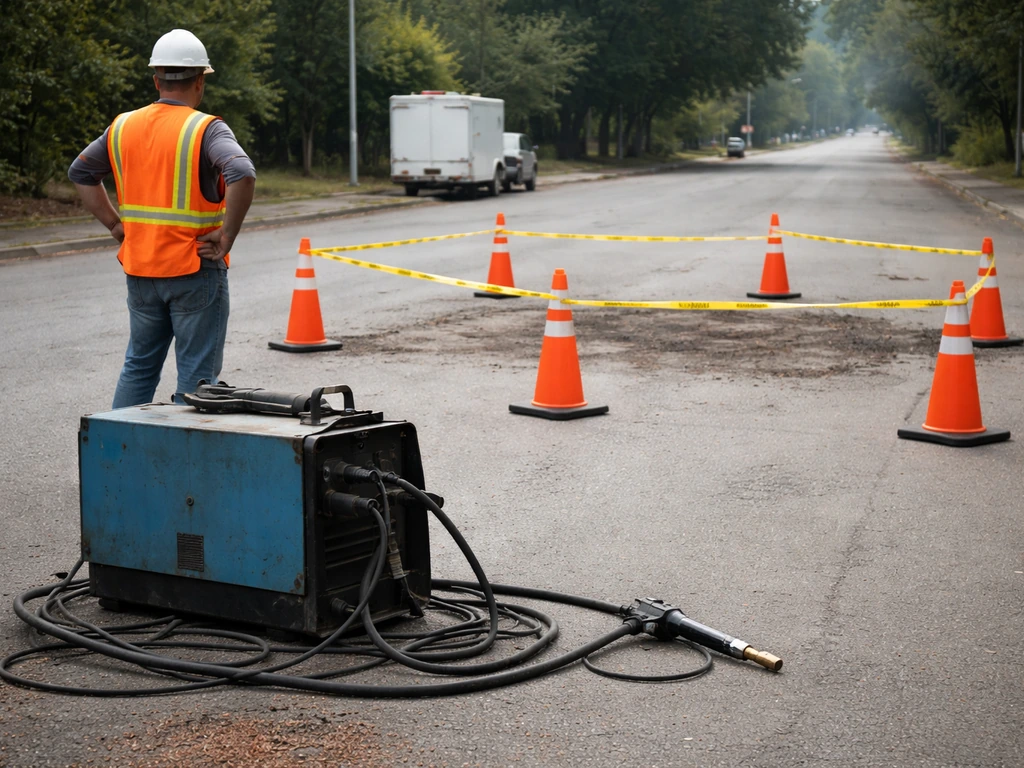
The moment you confirm or strongly suspect an active nest, stop welding within roughly 25 feet of it. WSDOT's bird protection protocols use 25 feet as the notification and avoidance threshold for work near active nests, and that's a solid practical rule even if you're not on a DOT project. The goal is to prevent heat, spark, smoke, vibration, and noise from stressing the incubating or brooding adult into abandoning the nest.
- Stop any welding, grinding, or cutting work within 25 feet of the suspected nest immediately
- Photograph the nest location, note the GPS or physical location, and log the date and time
- Identify which specific tasks absolutely require working near that zone versus which can be moved to another part of the project
- Mark the area with a physical barrier: safety tape, a cone, or a temporary fence works fine
- Notify anyone else working on the site so they don't unknowingly disturb the area
- Contact your local wildlife agency to confirm the species and get clarity on your legal obligations in your specific jurisdiction
- Plan your revised work sequence: what can be done at least 25 feet away? What can be deferred until the nest fledges?
Most common songbird nesting cycles run 4 to 6 weeks from egg-laying to fledging, sometimes less. If you catch the nest early in the process, you may only need to pause or reroute for 3 to 5 weeks. That's often genuinely manageable, especially for a backyard fence project or a garage build. For commercial jobs, that timeline matters more, which is exactly when you want a wildlife agency contact and possibly a licensed wildlife handler in your corner.
How to protect nests during welding (exclusion and predator deterrence)
If you're welding in the same general area as a nest but not within that critical 25-foot zone, you can take active steps to reduce risk to the nest without touching or disturbing it. The two priorities are: blocking sparks and heat from reaching the nest, and reducing predator pressure that your activity might inadvertently create.
For spark and heat protection, position welding blankets or fire-resistant curtains between your work area and the nest. Standard fiberglass welding blankets rated to 1000°F+ will intercept stray sparks effectively. Angle your welding gun or torch away from the nest zone and keep a co-worker posted to watch for any sparks drifting toward it. If you're grinding post-weld, use a physical shield. Don't use compressed air blowers near the nest area since the blast can displace nesting material or expose eggs.
For predator deterrence, be aware that your activity (and especially the presence of multiple workers, vehicles, and equipment) can displace adult birds temporarily, leaving eggs exposed to jays, crows, or snakes. If you're working close enough that adults are repeatedly flushing from the nest, you're too close. Step back, reassess the 25-foot boundary, and if necessary widen it. Putting up a simple visual barrier (a tarp or shade cloth hung between your work zone and the nest) can help adults feel more secure about returning quickly.
How to finish the welding job without harming birds
Timing your work around the nesting cycle
The cleanest solution, when the project allows it, is to schedule work in the nest zone after the chicks have fledged and the nest is confirmed empty. Most passerine (perching bird) species fledge within 10 to 17 days of hatching, and incubation typically takes 11 to 14 days. So from a freshly laid first egg to an empty nest is often only 3 to 5 weeks. Check daily from a respectful distance. When you stop seeing adults returning and the nest looks inactive for 48 to 72 hours, do a careful close inspection and confirm no eggs or chicks remain before resuming work.
Sequencing work to minimize disturbance
Break your project into zones. Complete all welding, grinding, and finishing work that isn't in the nest zone first. Save the sections directly adjacent to the nest for the end of the project, after fledging. This also keeps your timeline moving instead of putting the entire job on hold. For long structural projects like a fence line or outdoor frame, you can often complete 80 to 90 percent of the work and leave a short gap near the nest that gets filled in at the end.
Reducing fumes, heat, and noise near the nest
Welding fumes are a real risk to birds if you're working close. Avoid welding directly upwind of a nest. Use the lowest practical heat setting for work near the area, and if possible schedule close-proximity work during cooler parts of the day when thermal drafts carry fumes upward and away. After finishing, check that no post-weld scale, slag, or grinding debris has fallen into or near the nest. Both the physical debris and chemical residue (from coatings, galvanized metal, or flux) can be toxic to chicks.
After fledging: cleanup and preventing repeat nesting
Once the nest is fully vacated and confirmed empty, you can remove it. In the U.S. and most jurisdictions, an empty, inactive nest of a non-endangered species can generally be removed without a permit once the breeding season is over, though it's worth a quick check with your state or provincial wildlife agency since rules vary by species. After removing it, do a thorough cleanup: nesting material is dry, flammable, and a fire hazard in a welding environment. Dispose of it away from the work area.
To ethically deter repeat nesting in the same spot, close off the access point before the next nesting season begins (typically before late February to early March in most of North America). Seal hollow tube ends with caps, install hardware cloth over gaps in roofing or frames, and consider moving stored metal stock indoors during peak nesting months. This is far less disruptive for both you and the birds than dealing with an active nest mid-project.
Who to call and what to document
Your first call should be to your state or provincial wildlife agency, not a pest control company. In the U.S., contact your state's Fish and Wildlife office or the USFWS regional office. In Canada, contact Environment and Climate Change Canada. In the UK, consult Natural England, NatureScot, or Natural Resources Wales depending on your location. These agencies can confirm the species, clarify whether a permit is needed, and connect you with a licensed wildlife rehabilitator or handler if relocation is genuinely necessary under emergency circumstances.
Keep a simple written log: date of discovery, location of nest (with a photo), species if known, what work was paused and when, any contacts you made with wildlife agencies, and the date the nest was vacated. That documentation is your protection if anyone questions why work was delayed, and it demonstrates good faith compliance with migratory bird laws.
One more note worth flagging: the phrase 'bird nesting in welding' occasionally refers to a wire feed problem in MIG welding where the wire tangles in the drive system, sometimes called a 'bird's nest.' That's a purely mechanical issue with nothing to do with actual birds. If you landed here looking for that fix, you're in the wrong place, but know that the two topics share a name and nothing else. This site focuses entirely on real birds and their nests. If you mean this idea in a relationship context, see also the related topic of what bird nesting in marriage involves bird nesting in welding.
FAQ
How can I tell if a nest is truly active if I cannot see eggs or chicks?
If you cannot confirm eggs directly, treat the nest as active when you observe adult birds repeatedly landing, entering, or leaving, fresh nesting material being added, or any chick-begging sounds. Also check nearby for recent eggshell fragments or fecal material, and take a time-stamped photo from a respectful distance so you can document what you observed before work resumes.
Do I have to stop welding if the nest is slightly farther than 25 feet?
The 25-foot distance is a practical avoidance threshold, but risk can increase with wind direction, vibration, and how exposed the nest site is (for example, an open tube end versus a sheltered ledge). If sparks, grinding noise, fumes, or repeated flushing could reach the nest area, expand your buffer and pause until you can control exposure (or reschedule).
What should I do if I discover a nest in the middle of a live welding job and I already started cutting or welding?
Stop work immediately in the immediate zone, secure the area to prevent further heat or sparks, and contact the appropriate wildlife agency as soon as possible. Use photos and a short written timeline (what was done and when you discovered the nest) because the sequence matters for compliance decisions, especially if any eggs or chicks might have been harmed.
Can I move an active nest if I relocate the birds too?
In most jurisdictions, moving an active nest during breeding is not allowed, even if you intend to help the birds. Legal relief usually requires a permit and a qualified handler, and timing mistakes can cause nest failure. If the nest is active, focus on avoidance, barriers, and rescheduling rather than relocation.
Are there any parts of welding work that are safer than others near a nest?
Welding heat and sparks are the primary risks, but grinding and chipping can also expose nests through falling debris and vibration. If you must work nearby, prioritize non-invasive tasks away from the cavity or ledge, keep torch angles away from the nest line of sight, and shield against scale and slag before resuming any hot work.
Is it safe to use an air blower or compressed air to clean up near a nest?
No, you should avoid compressed air or strong blowers close to an active nest. The blast can displace nesting material, expose eggs, and trigger adult birds to leave. Use hand tools, controlled brushing, or wait until the nest is confirmed vacated.
Can I cover the nest with a tarp to protect it while I work?
Only do this if it does not physically contact the nest, block access the adults need, or trap heat and fumes. In practice, it is safer to use spark and heat barriers that sit between your work and the nest rather than covering the nest itself. If you are unsure, pause and consult your wildlife agency.
How long should I wait after the birds stop showing up before I resume welding?
Aim to confirm inactivity for at least 48 to 72 hours before resuming close work, then perform a careful inspection from a distance to verify there are no eggs or chicks. Fledge timelines vary by species, so if you cannot identify the species or the nest is in a hidden cavity, extend the wait and document your checks.
What documentation is most useful if there is ever a compliance question or complaint?
Keep a written log with discovery date, exact location, time-stamped photos, species if known, what work you paused and for how long, and who you contacted (wildlife agency details). If you applied barriers or adjusted the welding schedule, note those actions too, because they show reasonable steps taken to avoid harm.
If the nest is empty, can I remove it immediately, or do I need to wait for a specific season?
Even if a nest looks empty, rules can depend on the species and whether it is considered abandoned versus simply temporarily unoccupied. A common safe approach is to remove only after breeding is clearly over, then confirm with your state or provincial wildlife agency, especially for protected species or if you are unsure whether young may still be present.
What prevention steps can I take to keep birds from nesting in the same welding area next year?
Close off access points before the next nesting season, typically before late winter in North America. Seal hollow tube ends with caps, install hardware cloth over openings in frames or roofing, and store metal stock indoors during peak months. Prevention should be done when there is no active nesting, because exclusion timing is critical.
How do I distinguish real bird-related 'bird nesting' from MIG wire feed 'bird’s nest' problems?
If your issue is MIG wire tangling in the drive system, it is a mechanical feed problem and unrelated to wildlife. Real bird nesting involves nests built on or near outdoor metal structures, equipment, or open cavities. If you found actual nesting material or adult birds entering and leaving, treat it as wildlife, not a welding defect.
Next Articles
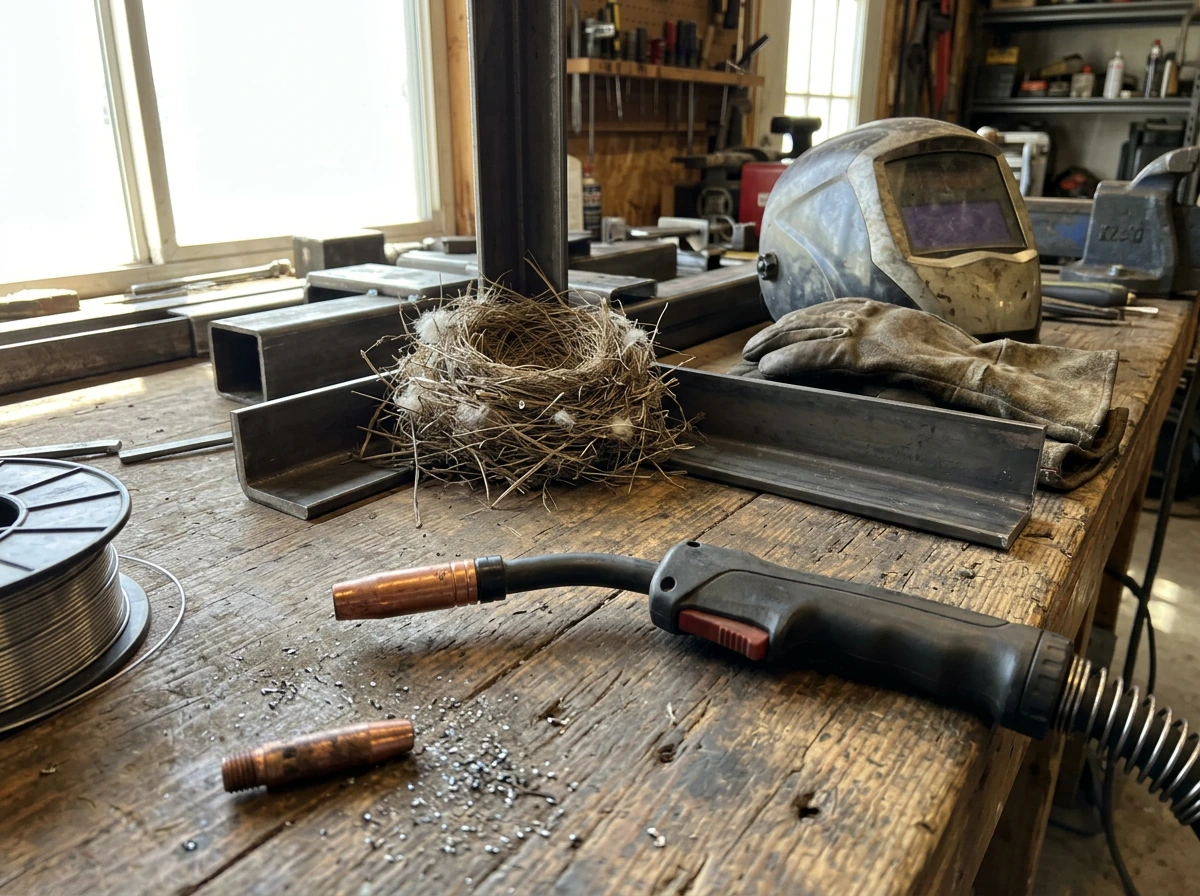
Bird Nesting Welding Definition: Meaning, Safety, and Next Steps
Clarifies bird nesting welding confusion, explains what to look for, and gives safe, legal, conservation steps for confl
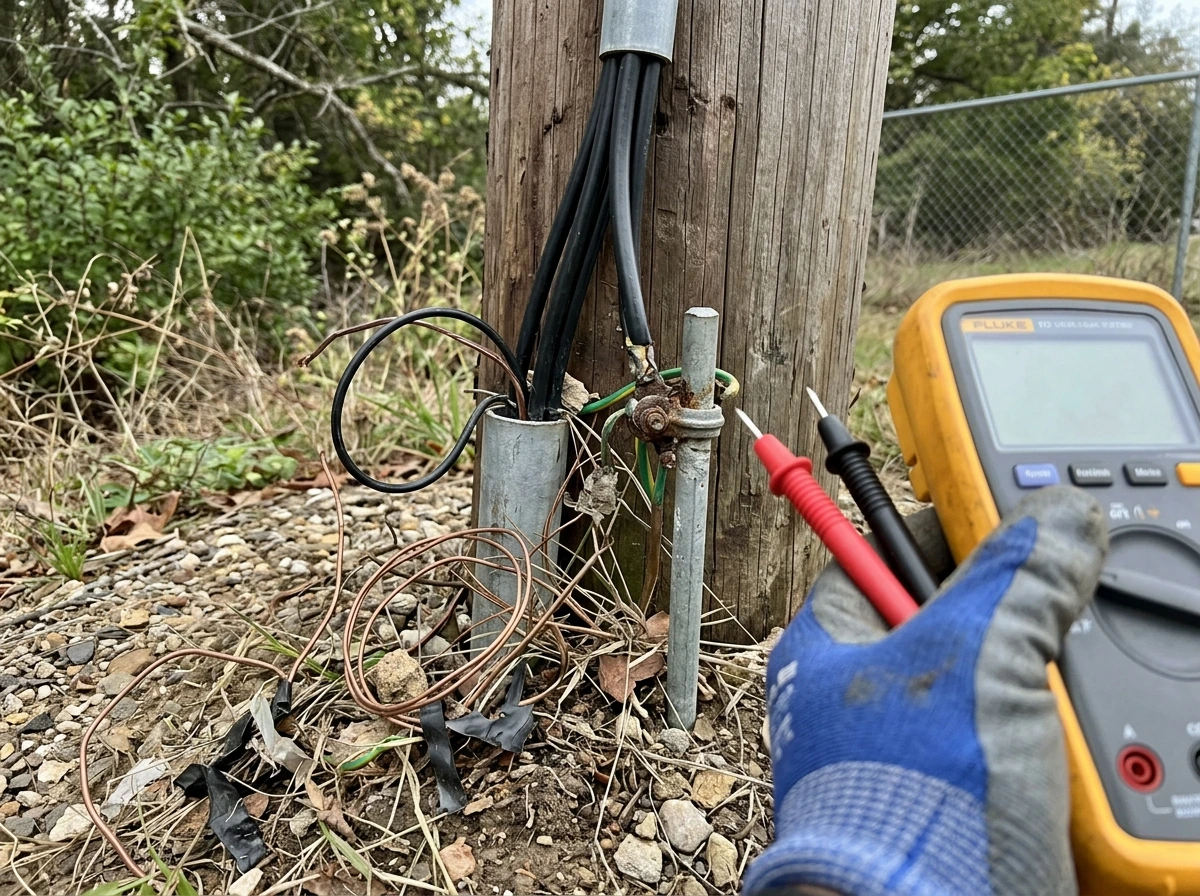
What Causes the Electrode to Bird-Nest and How to Fix It
Learn what causes electrode bird nesting, from loose wiring and arcing to actual bird nests, plus fixes and safe prevent
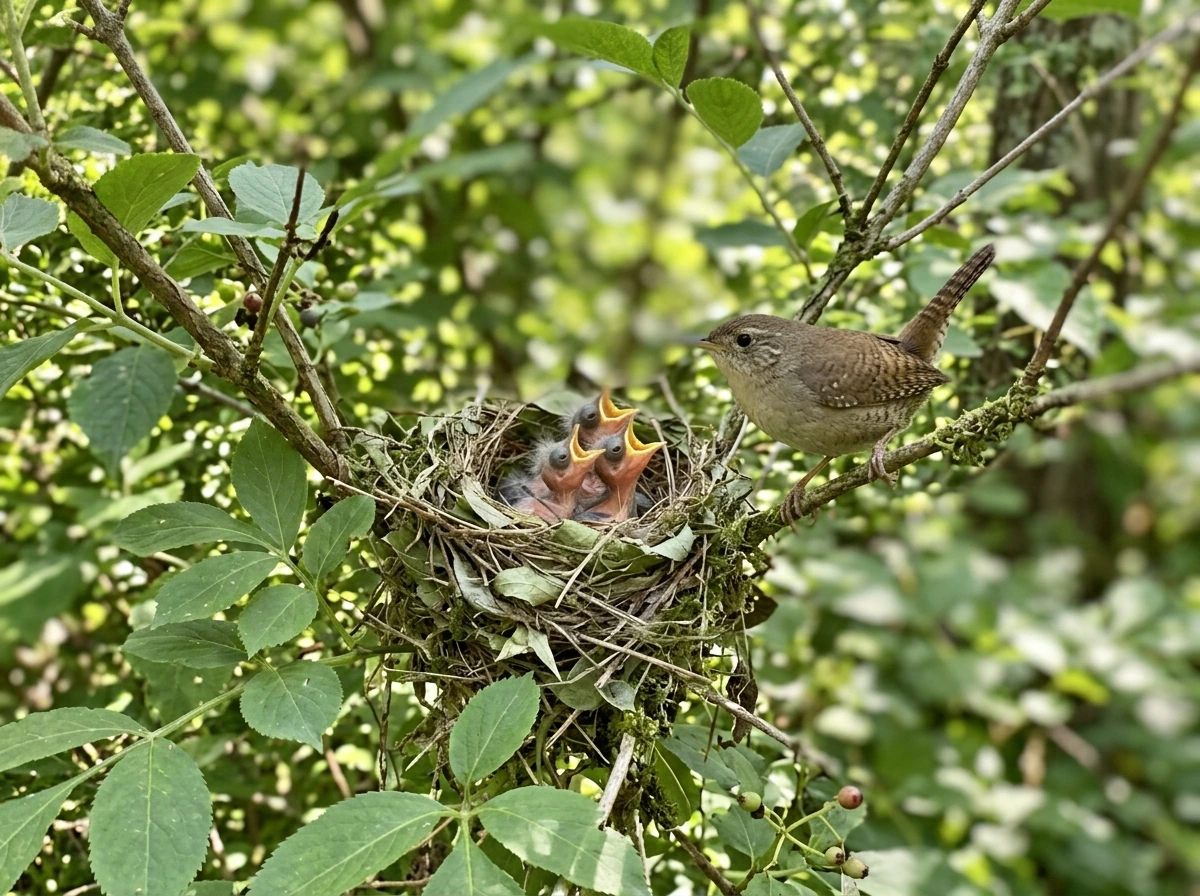
What Is Bird Nesting? Stages, Signs, Types, and Help
Understand what bird nesting is, spot active nests, identify common types and stages, and handle nests safely and legall