Bird nests are made from a surprisingly wide range of materials, but the core answer is this: most nests combine a rigid outer frame (twigs, roots, or stems), a softer middle layer (grasses, bark strips, leaves, or moss), and a warm inner lining (feathers, fur, plant down, or spider silk).
What Is a Bird Nest Made Of? Materials by Species
Maya Bennett
10 Apr 2026
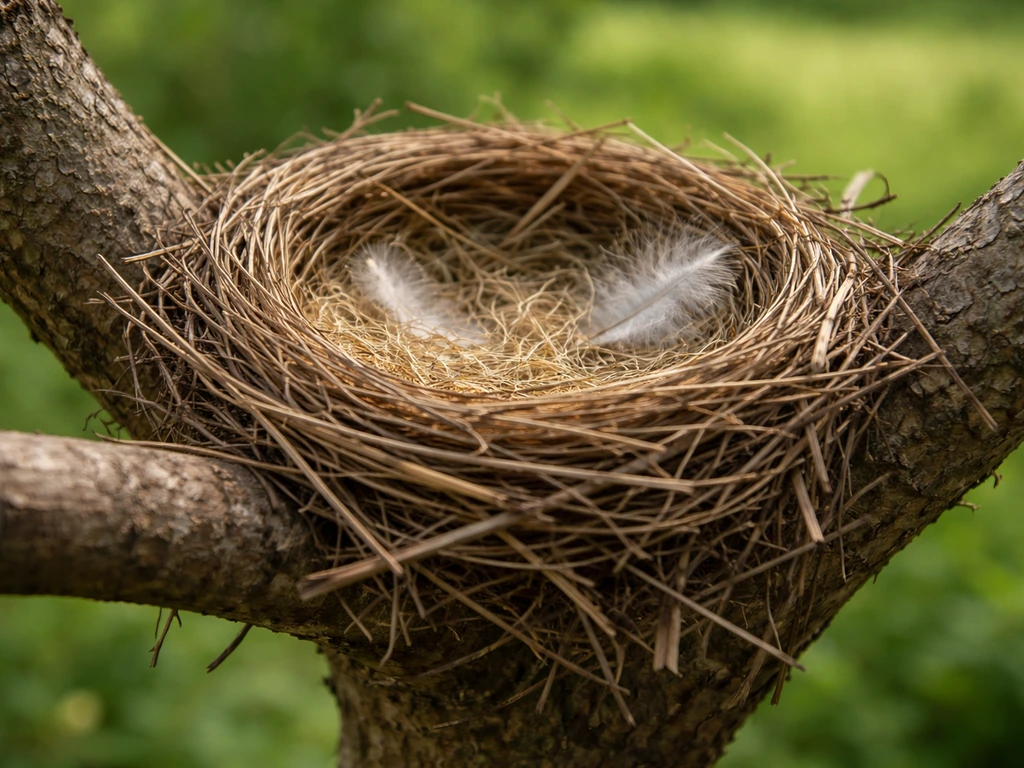
In its overview of bird nests, Wikipedia notes that many species line nests with softer materials such as grass, moss, lichen, feathers, and fur, and it highlights the use of spider silk in nest construction by multiple passerine families softer materials such as grass, moss, lichen, feathers, fur. Which materials a bird chooses depends on its species, where it nests, the local climate, and what's available within a reasonable foraging radius.
Once you know what you're looking at, you can identify the likely builder and make smart decisions about whether to leave it alone, monitor it from a distance, or call in a professional.
Common nesting materials birds use
Walk slowly around any yard in spring and you'll spot birds carrying material in their bills. The list of what they collect is longer than most people expect. Here are the main categories you'll encounter:
- Twigs and rootlets: the workhorse of outer-frame construction, used by robins, crows, and most songbirds. Thicker twigs form the skeleton; fine rootlets weave through to knit it together.
- Dry grasses and sedges: flexible, lightweight, and abundant. Sparrows and warblers pack these in tightly, creating a dense cup interior.
- Leaves and bark strips: dead leaves add insulation and camouflage. Bark strips (especially cedar or grapevine) give flexible structural reinforcement.
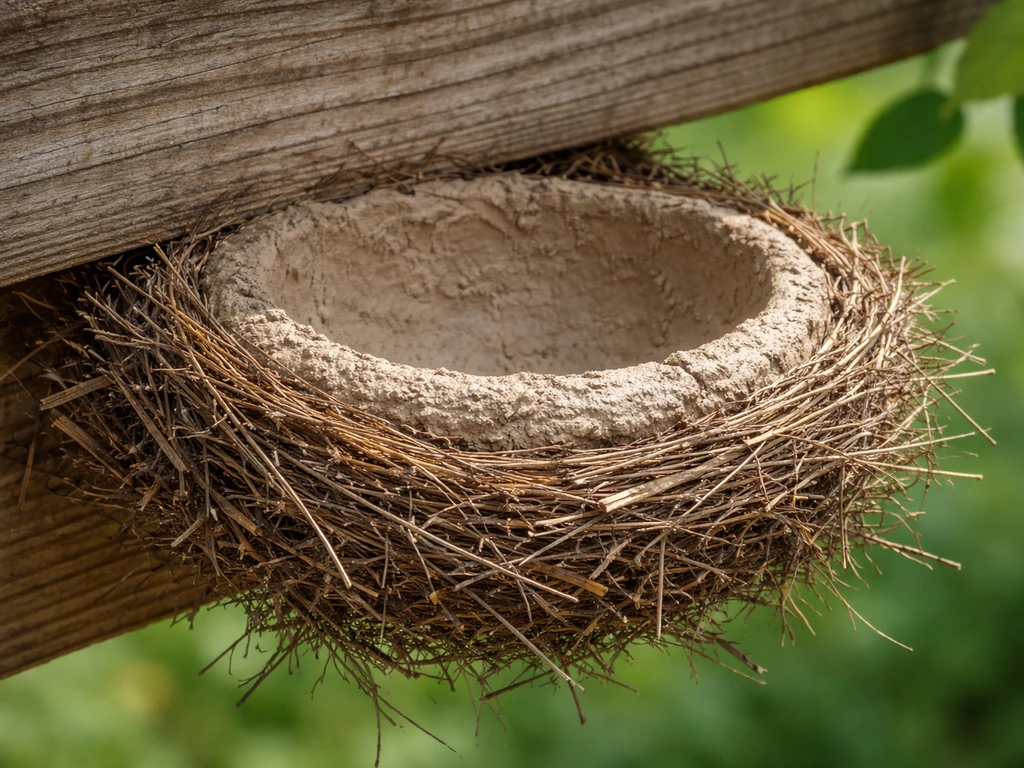
- Mud and clay: robins and cliff swallows are famous mud users. Robins plaster a mud cup inside their twig frame; cliff swallows construct entire gourd-shaped structures from mud pellets.
- Moss and lichen: warblers (especially vireos and hummingbirds) use lichen flakes on the outside of the nest as camouflage. Mosses bulk up the insulating layer.
- Spider silk: one of the most underappreciated materials. Hummingbirds and gnatcatchers wrap silk around the entire structure, making it elastic and binding everything together.
- Feathers, fur, and plant down (cottonwood fluff, thistle, cattail): these dominate the inner lining and are the primary insulation for eggs and nestlings.
- Man-made items: string, yarn, strips of plastic, dryer lint, pet hair, and even cigarette filters all show up. Some urban birds rely heavily on synthetic fibers when natural materials are scarce.
The presence or absence of specific materials is often your first clue to who built the nest. A nest that feels almost rubbery and stretches slightly when you gently press a finger against the outside has spider silk in it. A nest that is perfectly smooth and gray-brown inside has a mud cup. A nest with a thick white or pale exterior coating is almost certainly a hummingbird or blue-gray gnatcatcher nest covered in lichen.
How nest composition varies by species and habitat
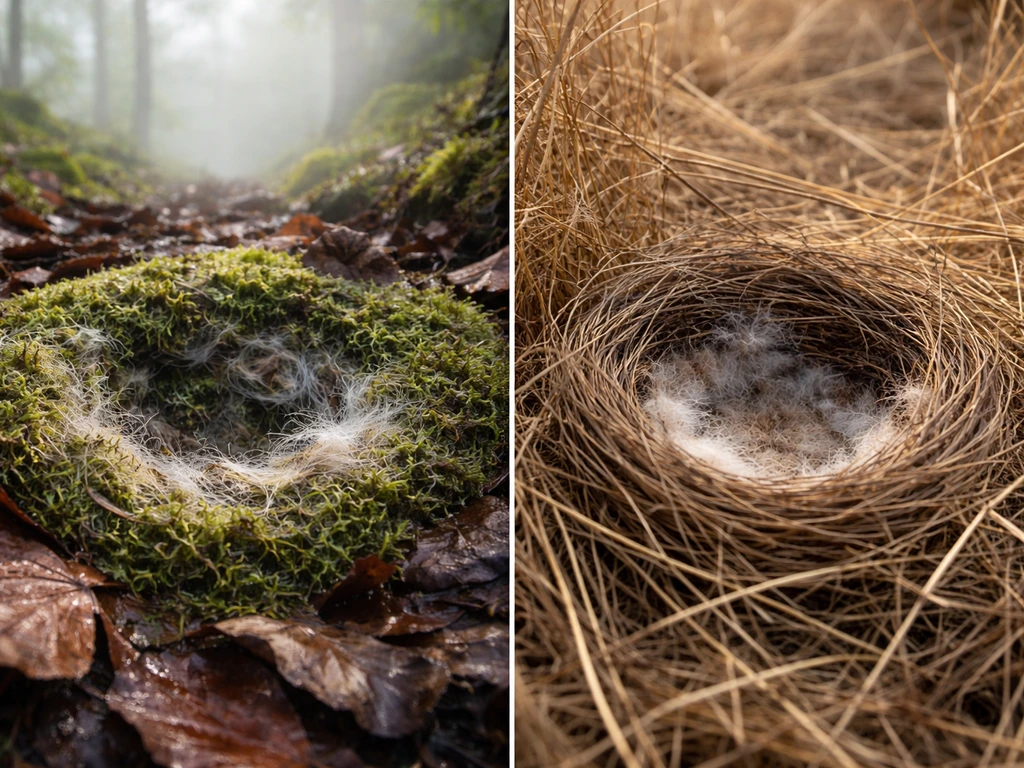
Species and habitat shape nest materials just as much as instinct does. A bird building in a cold, wet Pacific Northwest forest is going to load up on insulating moss and feathers in a way that a desert-nesting cactus wren simply does not need to. Similarly, cavity nesters like chickadees and woodpeckers work inside a protected space, so their nest only needs a soft inner pad: wood chips, moss, animal fur, and feathers, with no rigid outer frame required at all.
Ground nesters (killdeer, some sparrows, ovenbirds) often skip construction almost entirely, using a shallow scrape lined with a handful of grasses or pebbles. Their camouflage comes from choosing a site that looks like the nest material rather than from building an elaborate structure. Cavity nesters and ground nesters represent two extremes of the spectrum, and not every bird species even builds a nest in the conventional sense, which is worth keeping in mind if you're trying to figure out what you've found.
Open-cup nesters in shrubs and trees (the most common type you'll find in a backyard) cover the full range: robins build a thick mud-reinforced cup; orioles weave a deep hanging pouch from plant fibers and bark strips; hummingbirds build a walnut-sized cup bound entirely in spider silk and lichen. Ledge and platform nesters like pigeons, ospreys, and herons tend to use bulkier, rougher material: large sticks, seaweed, pine needles, or even fish bones, because their nests are built to last multiple seasons and endure open exposure.
Climate matters too. Birds in colder or higher-elevation habitats consistently use more feathers and plant down in the lining, and they tend to build deeper cups to retain heat. Tropical and subtropical nesters sometimes incorporate green plant material that can last through a breeding season without drying out.
Nest structure: the outer frame, middle layer, and inner lining
Most cup nests are built in three recognizable layers, and once you see this pattern, identification gets much easier. Think of it as a bird's version of insulated construction: structural shell on the outside, weatherproofing in the middle, warm interior on the inside.
- Outer frame: coarser, more rigid materials like twigs, bark strips, weed stalks, or even mud pellets. This layer gives the nest its shape and anchors it to the branch or ledge. In species like robins, the outer layer is also the mud layer, which hardens into a dense cup.
- Middle layer: grasses, fine rootlets, pine needles, leaves, and moss fill this zone. It smooths out the rough interior of the outer frame and adds the bulk of the nest's thermal insulation.
- Inner lining: the softest materials available: feathers (often oriented with the quill toward the center so the barbs face inward), mammal fur, plant down, fine grasses, and in some cases spider silk or even human hair. This is what eggs and nestlings rest on.
The binding agents deserve their own mention because they're what hold the whole structure together. Spider silk is the most remarkable: it's strong, flexible, and waterproof, and hummingbirds in particular collect silk from spider webs and use it almost like tape, wrapping it repeatedly around the outside of the nest. Mud and saliva are the other common binders.
Robins deliberately build up a mud layer and then shape it by sitting in the cup and rotating, which is why a robin's nest interior is so perfectly smooth. Cliff swallows and barn swallows rely on mud exclusively for structural integrity, pressing hundreds of small pellets together to form chambers or open cups attached directly to rock faces or building eaves.
If you're curious about the step-by-step process behind all this, how a bird makes a nest covers the full construction sequence in detail.
What you can observe to identify materials in the field
You don't need to touch a nest to learn a lot about it. Good observation from 2 to 3 feet away (or with binoculars from farther back) gives you most of what you need. NestWatch recommends watching from a distance with binoculars and listening for behavior like territory or calls to help locate likely nest areas without disturbing active nests. Here's what to look for:
- Texture: smooth and plastered (mud cup, likely a robin or swallow), rough and fibrous (grasses and twigs, most sparrows and finches), or papery (yellowjacket nests are sometimes mistaken for bird nests; bird nests don't have hexagonal cells).
- Thickness: a thin, fragile cup with walls under 5mm is typical of warblers or vireos. A nest with walls 15mm or thicker, reinforced with mud, is likely a robin or thrush.
- Color and coating: gray-green lichen on the exterior almost always means hummingbird or gnatcatcher. White or pale material woven into the outside could be spider egg cases or plant down.
- Smell: a faint musky or ammonia smell coming from a nest suggests it has been used recently and may still contain droppings or old food. A completely odorless nest is more likely inactive.
- Feathers or down visible in the lining: large feathers curled upward around the rim suggest a waterfowl-style nest or a larger songbird that collects feathers from the ground.
- Attachment point: nests saddle-mounted directly on a branch have a different builder profile than nests suspended from a fork, nests glued to a flat surface, or nests wedged into a cavity.
- Presence of string or synthetic fiber: a strong indicator that the nest is in or near a suburban or urban area, and often a sign of a house finch, house sparrow, or American robin.
- Egg or nestling evidence: even without directly looking inside, a parent bird repeatedly returning to a spot, or alarm-calling when you approach, tells you the nest is active.
If you want to document what you're seeing, take a photo from where you're standing rather than moving in close. Note the height, substrate (branch, ledge, ground, fence post), and the rough diameter of the cup opening. These details, combined with the material profile above, will usually narrow the builder down to two or three species. Understanding the full range of techniques birds use is also helpful context, and how bird nests are made goes deeper on construction methods if you want to cross-reference what you're seeing.
When it's unsafe or illegal to touch a nest
This is where most homeowners run into trouble, so let's be direct about the rules. In the United States, migratory bird nests that are active (meaning they contain eggs or live birds) are protected under the Migratory Bird Treaty Act (MBTA). Disturbing, destroying, or relocating an active nest without a federal permit can constitute illegal "take" under the MBTA. The critical distinction in the law, clarified in a 2018 U.
S. Fish and Wildlife Service memorandum, is between active (viable eggs or live birds present) and inactive nests. An empty nest that has not been used this season sits in a legal gray zone: the MBTA does not explicitly prohibit its destruction if no possession occurs, but local and state laws may add protections, and many species have additional state-level coverage regardless.
NestWatch, the Cornell Lab-affiliated nest monitoring program, states clearly that it is generally illegal to touch or physically disturb an active nest or its contents, and that you should observe from a distance, approaching only when the female has left the nest, and keeping any visit under a minute or two. Excessive disturbance is a real risk: parents will abandon a nest if they feel unsafe, especially early in the incubation period.
What should you do if a nest is in a genuinely dangerous location, like directly in the path of a scheduled tree removal, a mowing operation, or a renovation project? The safest approach is to pause the work, verify whether the nest is active, and if it is, contact your state wildlife agency or a licensed wildlife rehabilitator before proceeding. They can advise whether a relocation permit is available and, if so, who is authorized to perform the relocation.
DIY relocation of an active nest, even with good intentions, can cause abandonment and may expose you to legal liability. The situation gets more nuanced when a nest ends up somewhere unexpected, like on your own home, so reading up on what to do when a bird builds a nest on your porch will give you a solid, step-by-step framework for that specific scenario.
If you find a fallen nestling on the ground, the most important thing to know is that returning it to the nest (if the nest is intact and reachable) is both legal and recommended. The myth that parent birds will reject a chick that has been touched by humans is false. However, if the nest is destroyed or inaccessible, contact a licensed wildlife rehabilitator rather than attempting to raise the bird yourself, which is also illegal for most migratory species without a federal permit.
Viewing, photographing, and ethical monitoring
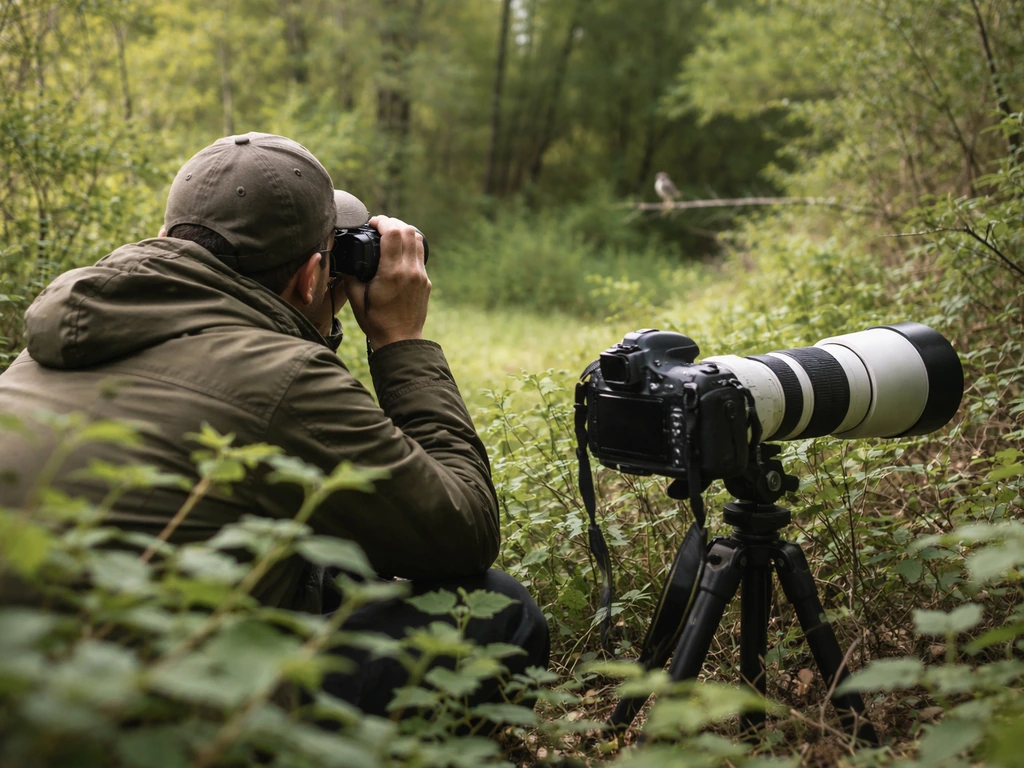
Watching a nest is one of the most rewarding things you can do as a naturalist, and it causes zero harm when done correctly. The basic principle is distance-first: use binoculars and keep at least 10 to 15 feet back from the nest when possible. If the parent bird stops moving toward the nest, freezes, or begins giving alarm calls while you're approaching, you've crossed their comfort threshold. Stop, back up slowly, and resume observation from farther away.
For photography, a telephoto lens in the 200 to 400mm range lets you get usable images without getting close enough to flush the bird. Avoid using flash near a nest, especially at night, as it can disorient nocturnal species. If you're using a smartphone, the best strategy is to set up a small trail camera aimed at the nest from a stable position, check it once a day by swapping the SD card rather than approaching repeatedly, and avoid any direct interaction with the nest during your setup. Keeping a simple log of what you observe (date, time, which adult was at the nest, approximate nestling size, whether food was delivered) gives you a useful record and lets you track development without disturbing anything.
Understanding who actually does the building can also change what you observe. In many species both parents contribute, but the division of labor varies a lot by species. Whether the mom or dad bird builds the nest is often the first question people ask when they're watching construction, and the answer is genuinely species-dependent. Watching which bird collects material and which bird shapes the cup is one of the more fascinating things you can document from a respectful distance.
From a behavioral perspective, nest building is a great example of instinctive but learned behavior, and it's worth appreciating the complexity of what you're watching. A bird building a nest is an example of a behavior that blends fixed instinct with real-time problem-solving, which is part of why it's so compelling to observe.
Seasonal differences and what to look for by time of year
Nest-building activity in North America follows a rough seasonal arc, though the exact timing varies by latitude, elevation, and species. Knowing where you are in that arc tells you what stage of construction or occupancy you're likely to find, and what materials are likely to be in play. If you're unsure what time of year your species typically starts, when birds make nests breaks down the seasonal calendar in more detail.
| Season / Period | What you'll typically see | Materials most visible | What to watch for |
|---|---|---|---|
| Late winter (Feb–Mar) | Early nest prospecting by resident species; American robins, house finches, and mourning doves may start in late February in southern states | Dry grasses, pine needles, early mud collection near puddles | Male singing near prospective sites; female visiting without carrying material (site evaluation) |
| Spring (Apr–May) | Peak construction for most North American songbirds; multiple species building simultaneously | Full range: twigs, mud, spider silk, fresh moss, feathers collected from the ground | Rapid construction (some nests built in 3–5 days); look for birds carrying material in the early morning |
| Early summer (Jun–Jul) | Active incubation and nestling care; second broods starting for many species | Nests are fully formed; new lining material may be added between broods | Parent birds entering and exiting nest with food; fecal sacs being removed from nest |
| Late summer (Aug–Sep) | Most nesting complete; some late breeders (goldfinches, cedar waxwings) still active | Thistle and milkweed down visible in goldfinch nests; late-season feathers | Juvenile birds near nests; nests beginning to weather and loosen from attachment points |
| Fall and winter (Oct–Jan) | Nests are inactive; best time for safe close-up study of construction | Dried grasses, exposed mud cups, visible feather lining | Nests often more visible after leaf drop; safe to examine closely without disturbing any birds |
One important seasonal note: just because a nest looks empty in fall or winter does not mean it's permanently abandoned. Some species, including house sparrows and European starlings, will roost in or near old nests in winter and return to refurbish them the following spring. If you're planning to remove an old nest from your property, the safest window is mid-fall after confirmed abandonment and before any birds begin prospecting again in late winter.
Comparing nest materials at a glance
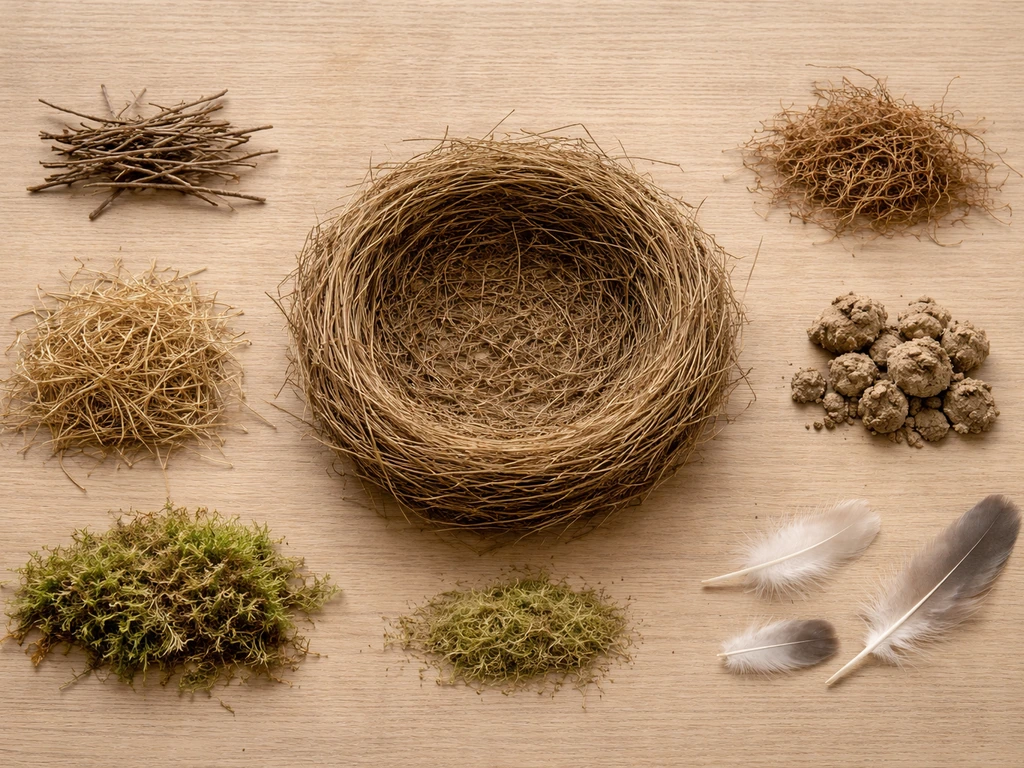
| Material | Where it's typically used in the nest | Which birds use it most | How to identify it on sight |
|---|---|---|---|
| Twigs and coarse rootlets | Outer frame | Robins, crows, magpies, thrushes | Stiff, interlocked, often bark-covered; visible from outside |
| Dry grasses and sedges | Middle layer and cup interior | Sparrows, finches, meadowlarks | Pale tan or straw-colored; woven tightly or loosely depending on species |
| Mud or clay | Structural cup or outer plaster | Robins, cliff swallows, barn swallows | Dark brown, smooth when fresh; pale and cracked when old |
| Moss | Insulating middle layer or exterior covering | Wood warblers, wrens, some thrushes | Green or gray-green; spongy texture |
| Lichen flakes | Exterior camouflage coating | Ruby-throated hummingbirds, blue-gray gnatcatchers | Flat gray-green or white patches glued to exterior |
| Spider silk | Binding agent, exterior wrap | Hummingbirds, gnatcatchers, kinglets | Nest feels slightly elastic; fine white threads visible under magnification |
| Feathers and fur | Inner lining | Bluebirds, tree swallows, many finches | Soft, visible at the rim; often oriented with barbs facing inward |
| Plant down (milkweed, thistle, cottonwood) | Inner lining | American goldfinch, chickadees | White or cream, fluffy, very lightweight |
| Synthetic fibers and string | Any layer, often mixed with natural material | House finches, house sparrows, urban robins | Unnatural colors (blue, red, orange); plastic sheen or rigid texture |
What to do right now if you've found a nest
If you're reading this because you've just found a nest and need to make a decision today, here's the short version of what to do:
- Observe from a distance first. Spend 5 to 10 minutes watching from at least 10 feet away. Do adult birds return to the nest? Is there movement inside? If yes, the nest is almost certainly active. Do not touch it.
- Take a photo without approaching. A photo from where you stand, combined with the material ID guide above, will tell you a lot about the builder and the nest's age.
- Check the material profile. Use the table above to match what you see to a likely species. Note the outer-frame texture, the presence or absence of mud, lichen, or silk, and what the lining looks like at the rim.
- If the nest is in a dangerous location (in the path of mowing, construction, or predator activity), do not move it yourself. Pause the activity, confirm whether it's active, and contact your state wildlife agency or a licensed wildlife rehabilitator.
- If you find a fallen nestling, check whether the nest is intact and reachable. If it is, place the bird back gently. If the nest is destroyed, call a rehabilitator immediately rather than attempting to care for the bird yourself.
- If the nest is empty and clearly inactive (dry, weathered, no bird activity for several days), you can safely study it up close. This is the best opportunity to identify materials, measure the cup diameter, and practice your ID skills without any risk to birds.
The more familiar you get with what different nests look like at each stage of construction, the faster your identification will become. It's also worth knowing that while birds are the best-known nest builders, they aren't the only animals that construct elaborate structures. Comparing notes between species groups, like checking out which fish builds a nest like a bird, is a surprisingly useful way to sharpen your understanding of what makes avian nest construction distinctive. The combination of materials, layered structure, and binding agents that birds use is genuinely remarkable, and once you start looking, you'll notice nests everywhere.
FAQ
What is a bird nest made of if it looks “spotless” and uniform inside?
A smooth, gray-brown interior often points to a mud cup construction, typically from species that shape a wet mud layer and then refine the surface as it dries. If you also notice a harder, rigid outer rim, the nest is likely built more like a cup with structural twigs or stems rather than a simple lining.
How can I tell whether a nest uses spider silk versus just grasses and feathers?
Look for stretch and stickiness when the nest is intact and undisturbed. Spider-silk nests often feel slightly tacky or rubbery and can look unusually “tight-woven” compared with loosely layered grasses. Because testing requires physical contact, rely on texture and overall cohesion from a distance rather than touching it.
Are bird nests always made with three layers, or can they be simpler?
The three-layer pattern (outer framework, middle weatherproofing, warm lining) is common for open-cup nesters, but cavity nesters and some platform or ground nesters can use a much simpler structure. In cavities, the “outer shell” may be provided by the tree or building opening, so the bird may only add a soft interior pad.
What is a bird nest made of when it’s a cavity in a tree or wall?
In cavities, the nest is often mostly an interior lining, like wood chips, moss, animal fur, and feathers, with little or no twig framework. The cavity itself acts as the structural boundary and protection, so the material question becomes more about what covers the floor and forms a nest cup inside.
What is a bird nest made of if it looks like it’s held together with “glue” or a paste?
Mud and saliva are frequent natural binders, especially in species that build carefully shaped cups or attach structures to eaves or rock faces. If the outer surface looks neatly coated and the interior is very smooth, mud-based construction is a strong possibility.
Why would a nest in a cold area look bulkier or deeper than one nearby?
Birds in colder or higher-elevation habitats often add more insulating material in the lining, such as feathers and plant down, and they may build a deeper cup to reduce heat loss. You may also see thicker, denser middle layers that function as insulation against wind and moisture.
What should I do if a nest looks “active” but I cannot see eggs or birds clearly?
Treat it as active until proven otherwise. Indicators can include fresh material added recently, adults repeatedly entering and leaving, or bird alert behavior when you pass nearby. If you need to do work in the area, pause and check with your state wildlife agency or a permitted wildlife professional.
Can I remove or relocate an old nest if there are no birds present?
Even if a nest appears unused, it may still be protected by federal or state rules depending on the species and timing. The safest approach is to wait until after confirmed abandonment and check local requirements, because “empty nest” protections can vary and some species will refurbish old nests.
What is the safest way to document what a nest is made of without causing abandonment?
Use binoculars or a telephoto lens from a fixed spot, and keep your movement slow. Avoid repeated approaches and any flash, and consider a non-intrusive setup like a stationary trail camera. The key is minimizing time near the nest and watching for alarm calls or freezing behavior from the adults.
Next Articles
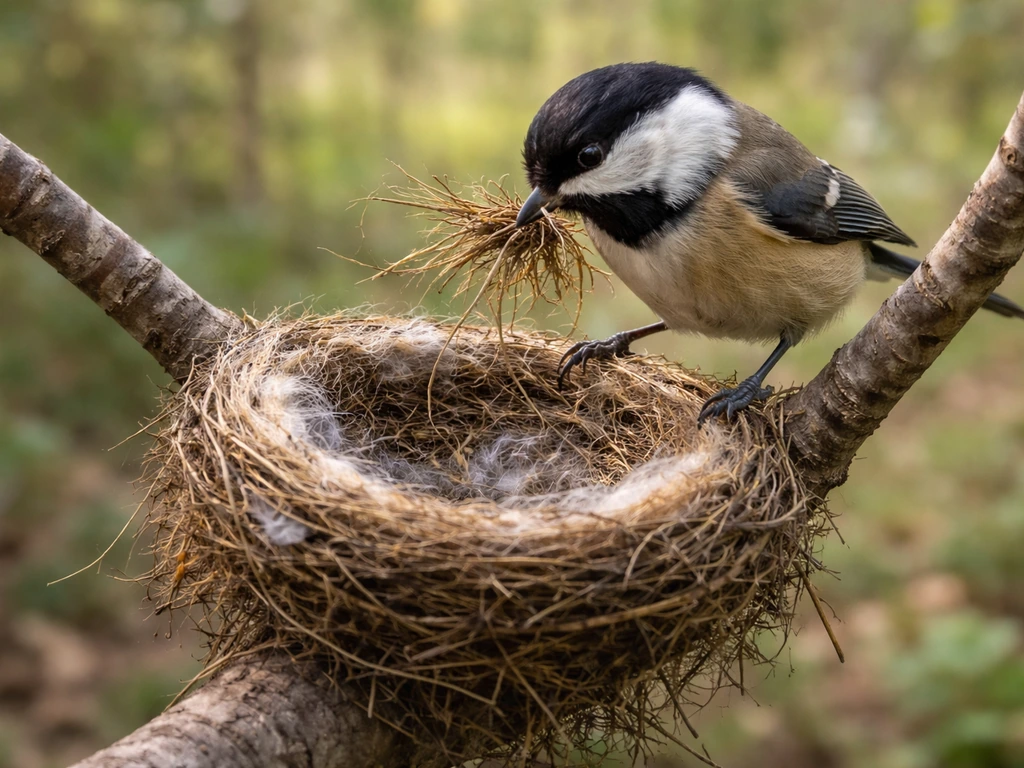
How Does a Bird Make a Nest Step by Step and Why
See how birds build nests step by step, what they need, how they know, and how to watch safely and ethically.
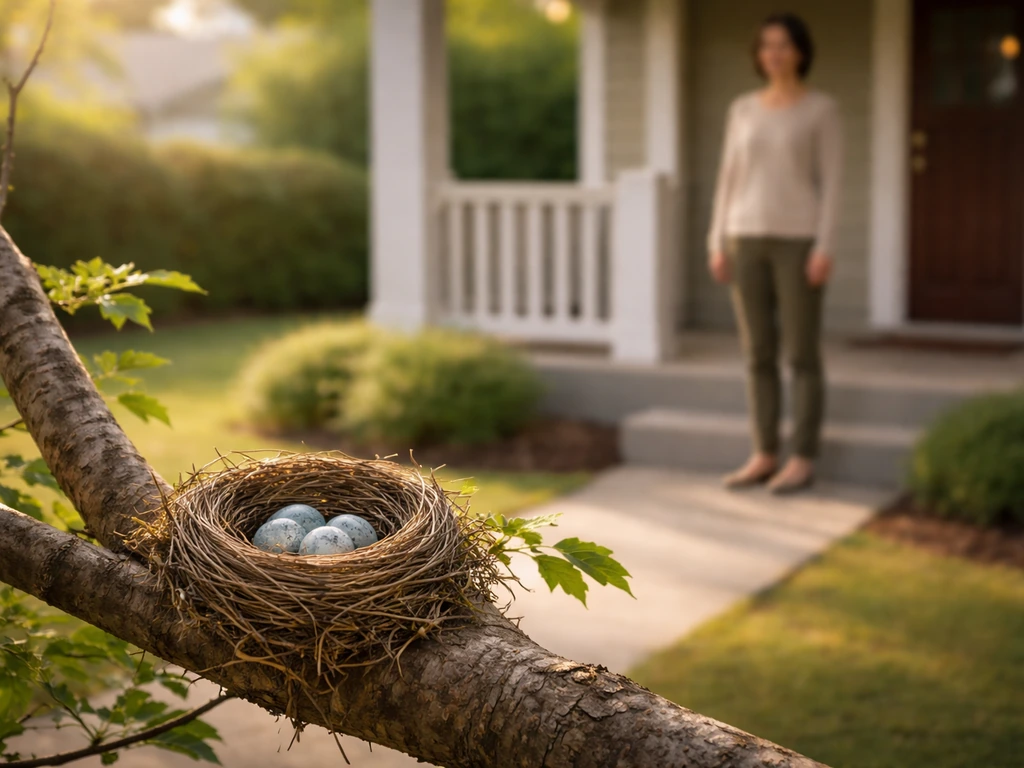
Should I Let a Bird Build a Nest? What to Do Today
Decide if to let a bird nest, how to check activity, avoid disturbance, and handle conflicts safely and legally.
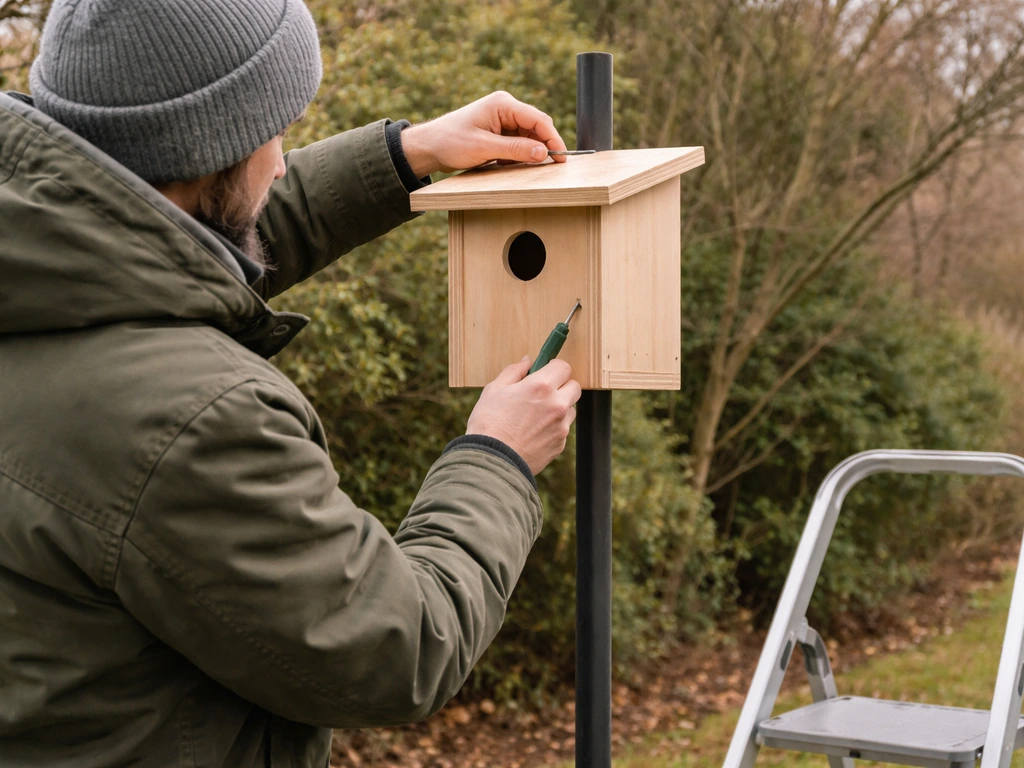
Can You Make a Nest for a Bird? Safe, Legal Steps
Learn safe, legal ways to help birds nest with proper materials and nest boxes, avoid active nests, and prevent harm.