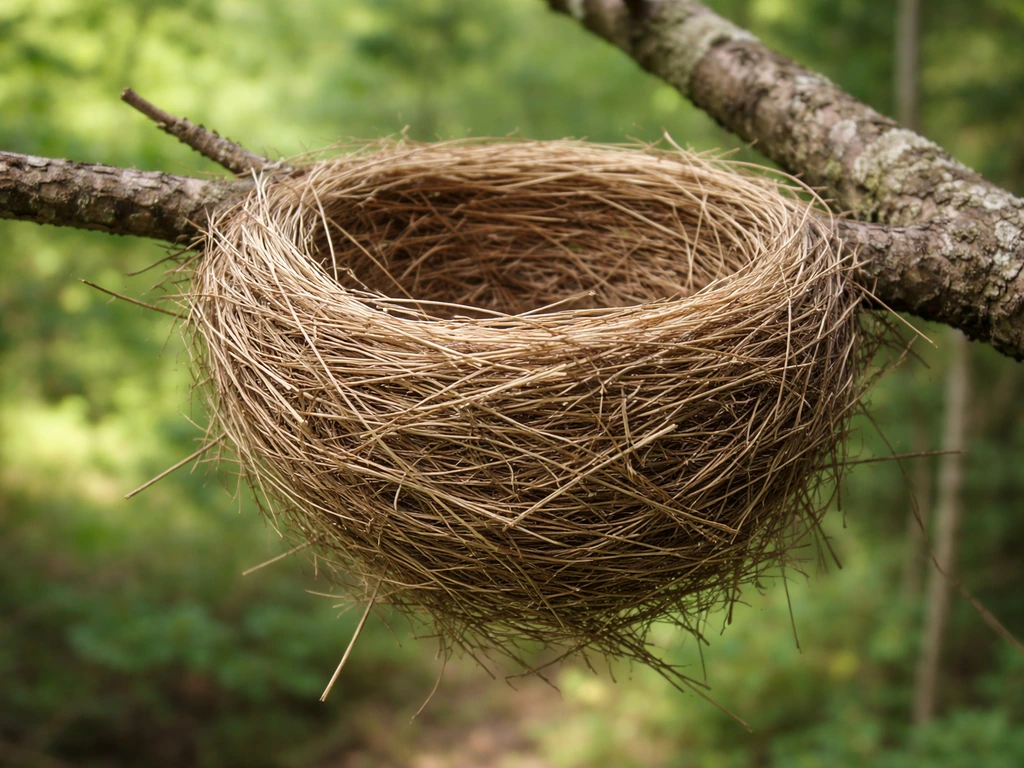
When a wild bird needs a place to spend the night, it is almost never looking for a nest. It is looking for a roost: a sheltered spot to hunker down, conserve heat, and stay hidden from predators until morning. If you want to help a bird make a home for the night the way a bird actually would, the right move is to protect or provide a roosting spot, not build or touch a nest.
Make a Home for the Night as a Bird Might: Safe, Ethical Help
Maya Bennett
1 May 2026
If you are wondering should i let a bird build a nest on your property, the safest approach is usually to avoid disturbing the site and focus on protecting roosting options nearby. The exception is if the bird in front of you is injured, a nestling, or genuinely stuck somewhere dangerous, in which case the rules change fast.
What 'home for the night' usually means for wild birds
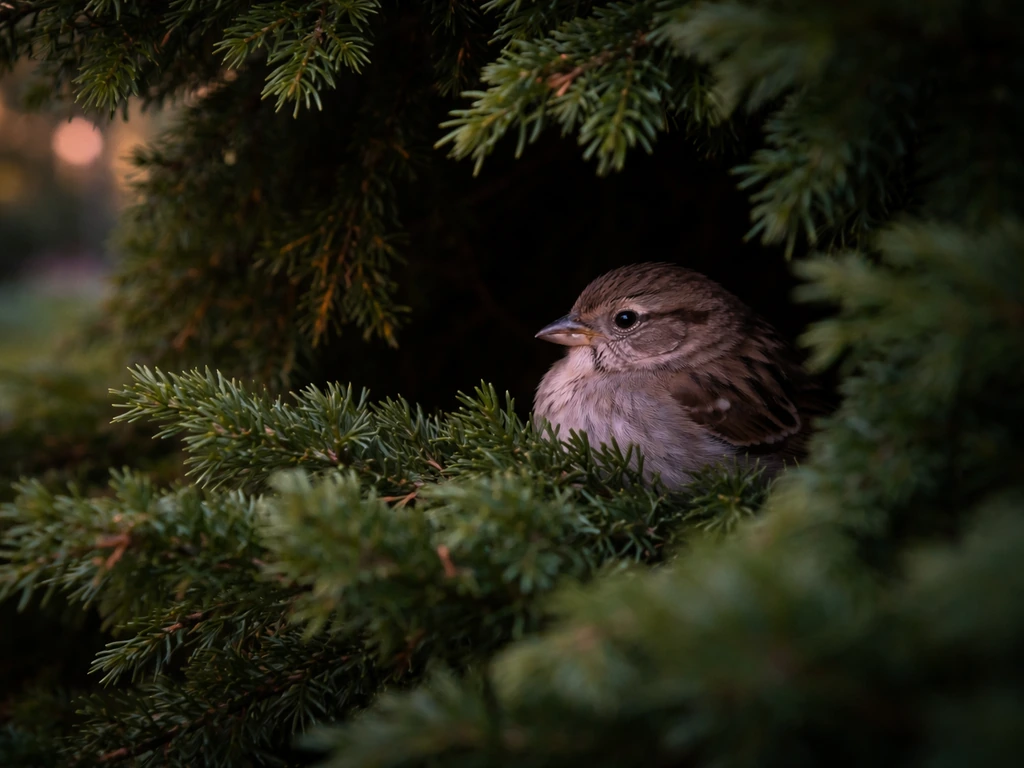
Birds do not sleep in their nests the way we sleep in beds. A nest is a temporary breeding structure, used for laying eggs and raising chicks, then mostly abandoned. Most adult birds roost instead, choosing a sheltered perch, a dense shrub, a tree cavity, or even a purpose-built roost box to ride out the dark hours.
Audubon's BirdNote research confirms that small forest birds like nuthatches and chickadees often spend cold nights huddled together in tree cavities, returning to the exact same roost site night after night. Dead standing trees (called snags) and cavity trees (den trees with natural openings large enough for a bird to enter) are among the most valuable overnight real estate in any yard or woodland edge.
That distinction matters a lot before you act: if you see a bird settling into a dense holly hedge at dusk, it is probably roosting. If you see a cup of woven grass with eggs or chicks inside, that is a nest, and the rules around it are completely different.
Quick triage tonight: roosting vs nesting vs injured bird
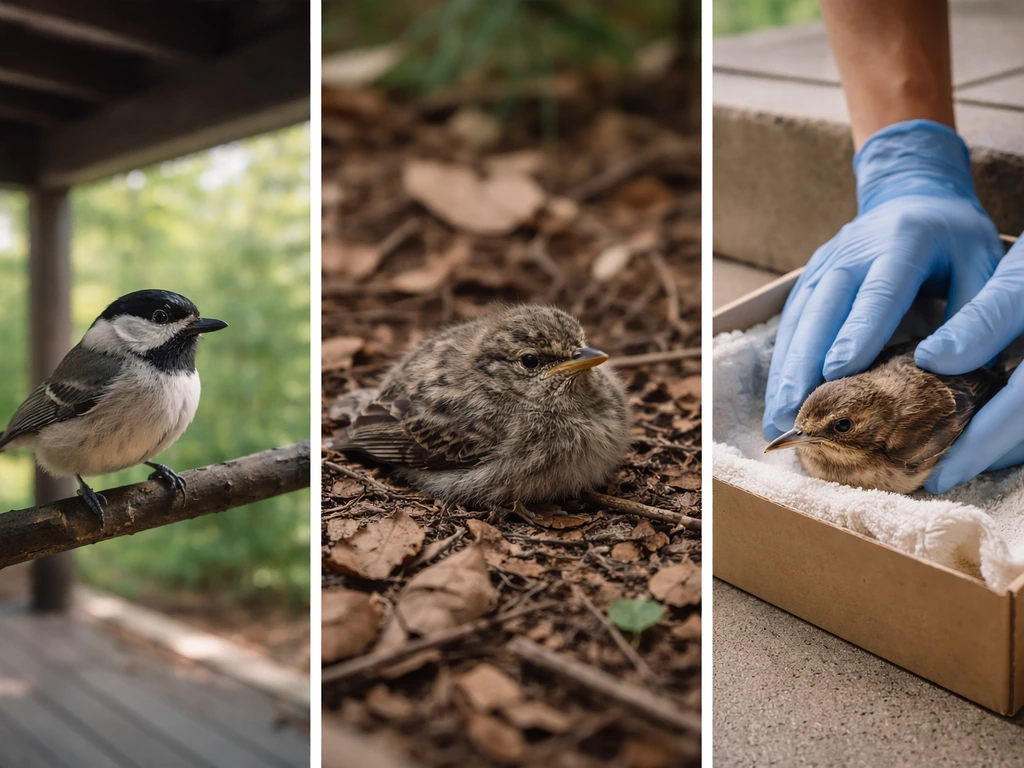
Before you do anything else, figure out which situation you are actually in. The three scenarios call for completely different responses, and mixing them up can cause real harm.
| Situation | What you see | What to do |
|---|---|---|
| Roosting bird | Healthy adult perched quietly at dusk or night, feathers fluffed, eyes open or half-closed, no obvious wound | Leave it alone. It is doing exactly what it should. Reduce nearby light, keep cats in. |
| Active nest | Cup or cavity with eggs, chicks, or a brooding adult returning repeatedly during the day | Do not touch, move, or disturb. It is almost certainly federally protected. |
| Injured or grounded bird | Bird on the ground during daylight, unable to fly, drooping wing, bleeding, shivering, or attacked by a cat or dog | Contain safely, keep warm/dark/quiet, call a wildlife rehabilitator immediately. |
| Nestling out of nest | Tiny, mostly featherless bird on the ground with no feather quills visible | Look for the nest above and replace if reachable. If not, call a rehabilitator. |
| Fledgling on the ground | Fully or mostly feathered young bird hopping on the ground, parents nearby | Leave it alone. This is normal. Keep cats and dogs away. |
The key signs that a bird genuinely needs intervention, according to Virginia DWR and Washington DFW, are physical injury (bleeding, a visibly broken wing or leg, lacerations), lethargy or shivering on a warm day, inability to move away from you when approached, or a confirmed cat or dog attack. A bird that hops away or flies a short distance when you get close is almost certainly fine.
How to spot the likely species and choose the right shelter features
You do not need to identify a bird to species before helping, but a few quick observations will tell you what kind of shelter actually suits it. Size is your fastest clue: a sparrow-sized bird and a crow-sized bird need very different roost setups. Look at where the bird is trying to shelter right now, because birds are usually already heading toward something appropriate. A bird pressing into a dense evergreen is looking for wind protection and visual cover. A bird circling a fence post hole or garage eave is looking for a cavity. A bird on a flat ledge near a building may have been stunned by a window collision.
- Small songbirds (sparrows, wrens, chickadees): prefer dense shrubs, vine tangles, or small cavity openings of about 1 to 1.5 inches in diameter
- Medium cavity users (bluebirds, small woodpeckers, nuthatches): look for openings of 1.5 to 2 inches, dead snag trees, or wooden roost boxes
- Larger birds (mourning doves, robins): roost on sheltered branches or building ledges with overhead cover from rain
- Waterfowl and ground birds: look for dense low vegetation, reed beds, or sheltered ground-level spots near water
- Swifts and swallows: roost communally in chimneys or hollow trees; an individual on the ground during the day is almost certainly injured
Note the season too. In late spring and summer (right now, in early May), many of the birds you encounter near buildings are actively nesting, which means that mysterious cavity or ledge might already have eggs in it. Check carefully with a flashlight before assuming a spot is just a roost.
DIY overnight shelter options that don't disturb nests
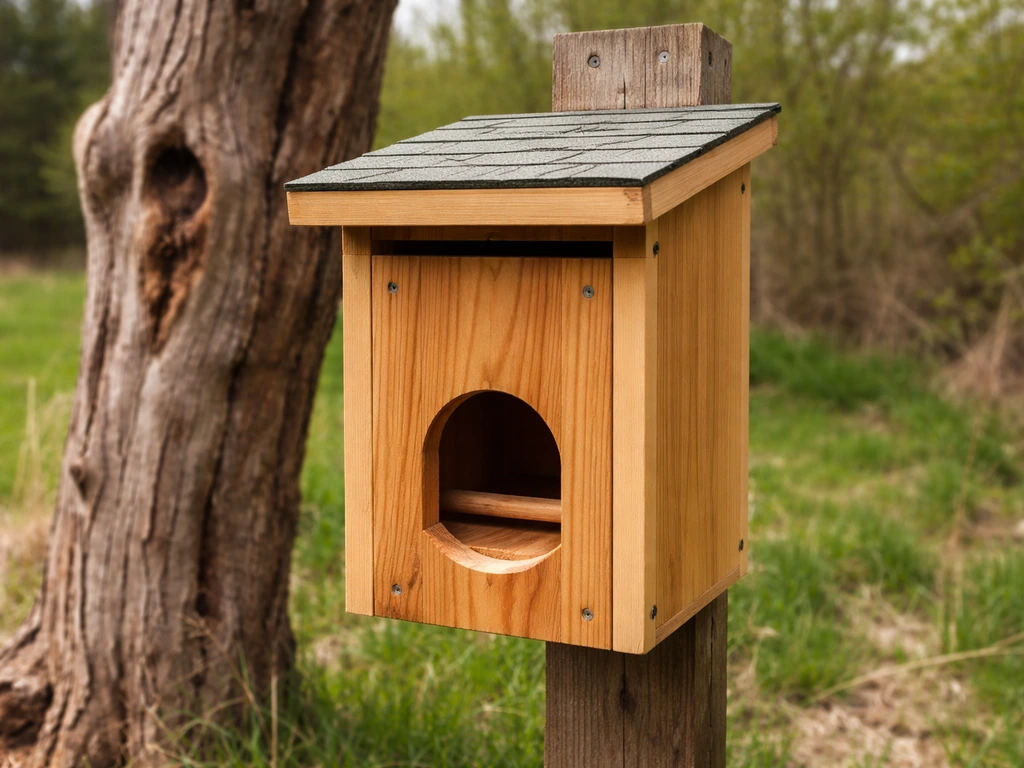
The simplest and most effective thing you can do for roosting birds is improve the existing habitat in your yard. Dead standing trees (snags) are the gold standard: the Connecticut DEEP and Audubon both confirm that snags provide cavity roosting spots used by woodpeckers, nuthatches, and dozens of other species. If you have a dead tree that is not a safety hazard, leave it standing. If you do not, a wooden roost box works well for small to medium cavity users.
Setting up a roost box or safe overnight spot
- Choose a roost box rather than a standard nest box if possible. Roost boxes have the entry hole near the bottom (so rising warm air stays inside) and interior perch dowels for multiple birds to share on cold nights.
- Mount it on a pole or tree at least 6 to 8 feet off the ground, facing away from prevailing cold winds (typically south or east in North America).
- Place it near dense native shrubs or a hedgerow so birds have a short, safe flight path to cover.
- If you only have a standard nest box available, face it south and make sure it is clean and dry inside.
- For a bird already sheltering in a problematic spot tonight (a garage, an open shed), leave a small opening and let it leave at dawn rather than chasing or trapping it. Chasing a stressed bird can cause fatal injury.
Using natural vegetation as overnight cover
Dense evergreen shrubs like hollies, junipers, and arborvitae provide immediate roosting cover with no installation required. Allowing native vines like Virginia creeper to grow along a fence or wall creates layered shelter that many songbirds actively seek at dusk. Even a brush pile of stacked branches in a corner of your yard gives ground-roosting species like white-throated sparrows a place to tuck in safely. These habitat features do double duty: they support roosting tonight and nesting later in the season.
Predator, weather, and human-safety measures
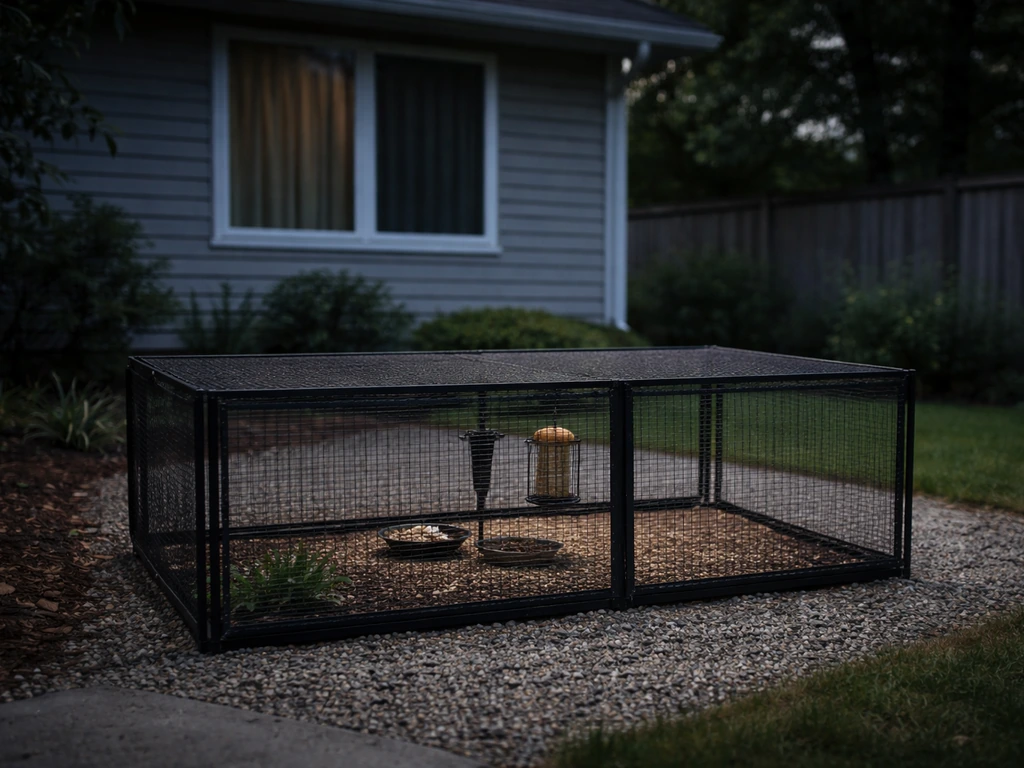
The biggest overnight threats to roosting birds in a residential yard are domestic cats, window collisions from night lighting, and exposure to wind and rain. All three are genuinely manageable.
Cats indoors, full stop
Both Audubon and the American Bird Conservancy are direct on this: keeping cats indoors overnight is the single most impactful thing a homeowner can do for bird survival. Cats that roam at night are not just catching birds by accident; they actively target roosting birds that are sitting still and vulnerable. If you have outdoor cats, bringing them in from dusk to dawn is not optional if you are serious about helping birds overnight.
Window and light hazards
Audubon identifies window strikes as one of the leading direct human causes of bird mortality in the U.S., and residential buildings are a major part of that problem. If a bird has hit your window tonight and is stunned, that is an injury situation (covered below). To prevent future strikes, turn off or dim interior lights visible through large windows after dark during migration season (spring and fall), apply window collision deterrent film or tape in vertical strips no more than 2 inches apart on the outside of glass, and avoid placing bird feeders or roost boxes directly adjacent to large windows.
Weather protection and entrapment hazards
If you are setting up any kind of enclosure or covered shelter, avoid bird netting entirely. The U.S. Fish and Wildlife Service specifically warns that netting marketed for birds can entrap and kill them. For chimney protection, use steel mesh with openings no larger than 3/4 inch to prevent birds from entering and becoming trapped inside. Garage doors and garden sheds should have a clear exit point if a bird has wandered in, and you should never seal an opening at night before checking that no bird is inside.
What NOT to do: relocation rules, disturbance limits, legal basics
This is where most well-meaning people get into trouble. If you are wondering who teaches a bird to make a nest, the answer is usually a professional wildlife rehabilitator or trained bird specialist, not a casual DIY approach. The Migratory Bird Treaty Act (16 U.S.C. § 703) makes it unlawful to take, capture, kill, or possess any migratory bird, or any part, nest, or egg of such a bird, without a federal permit. That covers the vast majority of wild birds you will encounter in North America: sparrows, warblers, robins, swallows, hawks, owls, and hundreds more. The practical consequences for homeowners are straightforward.
- Do not move, relocate, or destroy an active nest that contains eggs or chicks. It is federally illegal, and it will almost certainly result in the death of the eggs or young.
- Do not handle a migratory bird unless it is a genuine emergency (injured, in immediate danger), and even then, minimize contact and transfer it to a rehabilitator as quickly as possible.
- Do not attempt to raise or keep a wild bird yourself, even temporarily. Feeding an incorrect diet can cause injury or death, and the bird needs professional care.
- Do not use glue traps, sticky pads, or any device that could entangle a bird.
- Do not assume a nest is abandoned just because you have not seen the adult for a few hours. Many species leave the nest for extended periods and return.
Whether a nest is a true 'home' for a bird in the long-term sense is actually a more nuanced question than most people realize. Nests are breeding structures, not permanent dwellings. That distinction is worth keeping in mind when you are deciding whether what you are looking at requires protection or just thoughtful observation.
When to call a wildlife rehabilitator and how to help safely until then
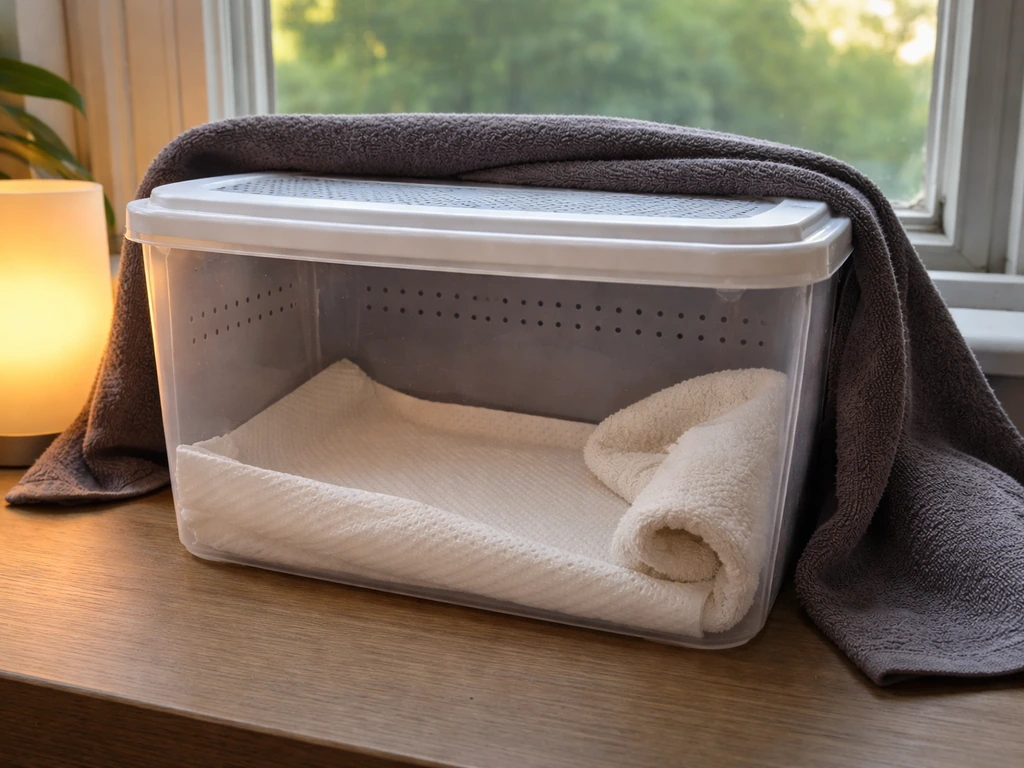
If you have ruled out a healthy roosting bird and a normal fledgling on the ground, and you are looking at a bird that is genuinely injured or in distress, your job is to stabilize and hand off, not to treat. Audubon advises placing the injured or orphaned bird in a box or bag outside, keeping it warm and quiet, and calling a wildlife rehabilitator if it does not fly away keep it warm and quiet. Here is the sequence that aligns with guidance from Tufts Wildlife Clinic, the American Bird Conservancy, and the U.S. Fish and Wildlife Service.
- Do not chase the bird. Chasing a stressed or injured bird can cause fatal heart failure or compound an existing injury. Approach slowly and calmly.
- Gently cover the bird with a lightweight cloth or towel and pick it up with both hands, holding the wings against the body. Wear gloves if you have them, especially with larger birds like herons or hawks that can cause injury.
- Place the bird in a cardboard box with a few small air holes. Line the bottom with a paper towel. Do not use a wire cage or open container.
- Keep the box in a warm, dark, quiet room. Do not give the bird food or water, do not talk to it, and do not let children or pets near it. Human noise, touch, and eye contact are genuinely stressful to wild animals.
- Find a wildlife rehabilitator immediately. Search the NWRA directory (nwrawildlife.org) or call your state wildlife agency's 24-hour line. The Cornell Lab's All About Birds also recommends contacting a local veterinarian if no rehabilitator is reachable tonight.
- Note where and when you found the bird, what it was doing, and whether there is a likely cause (window strike, cat attack, collision with a vehicle). Rehabilitators use this information to guide treatment.
A bird that looks like it might be okay, perhaps just sitting quietly after a window strike, still warrants a call. The American Bird Conservancy points out that injuries from collisions and cat attacks are often internal and not visible on the surface. A bird that seems to recover and fly off after a strike can still die hours later from internal bleeding or brain injury. If there is any doubt, make the call.
The honest bottom line: the best home for the night you can give a wild bird is a safe, undisturbed piece of habitat. Dense shrubs, a roost box on a predator-baffled pole, cats kept indoors, lights dimmed, and windows marked to prevent strikes. That combination does more lasting good than any single overnight intervention. When a bird genuinely needs more than that, it needs a rehabilitator, not a well-intentioned improvisation.
FAQ
I found a bird on the ground at dusk, but it looks alert. Should I still help it make a home for the night?
If it can hop away or fly a short distance when you approach, treat it as a roosting bird that is already choosing cover. Give it space, keep pets inside, and avoid moving it. Only switch to “intervention” if you see shivering, bleeding, inability to get away, or signs it cannot reach shelter.
How can I tell the difference between a bird roosting and a nest with eggs or chicks when it’s dark?
Do a careful, flashlight check from a distance and only long enough to confirm what is there. A roost is usually a bird in a sheltered spot with no eggs, while a nest involves a structured cup or woven area containing eggs or downy young. If you suspect nesting in spring or summer, back off and focus on protecting nearby roost cover.
Is it okay to place a small box, towel, or blanket near the bird so it has somewhere to sleep tonight?
Usually no for healthy wild birds. Directly moving or containing a wild bird can turn a safe roosting situation into an injury or disorientation risk. Instead, improve the environment (dense shrub cover, roost box, reduced lights, keep cats in) and let the bird settle where it is already headed.
What should I do if a bird keeps landing on my porch or window ledges instead of finding cover?
Try reducing what is drawing it to the area. Turn off or dim visible interior lights, add window collision deterrents, and avoid placing feeders or roost boxes directly next to large windows. If the bird repeatedly behaves like it is trying to enter a specific spot, treat it like a window-strike risk and contact a local wildlife rehabilitator for advice.
If I temporarily pick up a stunned bird to move it away from a window, is that safe?
Only do the minimum needed and avoid holding it for long. Use gloves or a box to reduce stress and prevent escape, then keep it in a quiet, dark, ventilated container while you contact a rehabilitator. Don’t feed it, give water by hand, or attempt home treatment, internal injuries can be missed at the surface.
Do window deterrents work immediately, and do I need to mark every window?
Marking the windows that birds are actively striking is the quickest win, but deterrents are most effective when applied broadly across the routes the birds use during migration. If you only change one window, keep an eye on whether strikes shift to another nearby pane, then expand coverage if they do.
Are bird netting and mesh ever safe to use around yards to protect birds or nests?
Avoid bird netting entirely. Even “bird-safe” netting products can entangle and kill birds. If you need exclusion for chimneys or openings, use the specific steel-mesh approach described in your plan, and check for birds before sealing or installing anything at night.
Can I offer a roost box if I’m not sure which species will use it?
Yes, but choose design features that match likely cavity sizes and place it with predator avoidance in mind. A roost box is not the same as a nest box with the same entrance size and placement goals, and the wrong design can discourage use or increase vulnerability. If you are unsure, use general habitat cover improvements first, then tailor a box after observing which bird sizes are present.
What if I have no snags or dead trees, can I still help birds roost tonight?
Yes. Dense evergreen shrubs, layered native vine cover on a fence or wall, and a brush pile in a yard corner can provide immediate shelter without waiting for trees to age or rot. If you want something more structured, a roost box on a predator-baffled setup can work for small to medium cavity users.
I don’t have outdoor cats, but I have a dog that stays in the yard. Is that an issue for roosting birds at night?
Dogs can be a problem if they roam at dusk and dawn, even if they are not “cat-style hunters.” The key step is keeping pets from roaming during the hours birds are sitting still and conserving heat. If your dog is outdoors overnight, supervise or bring it in during peak roosting periods.
Do I need to call someone if the bird seems fine after a collision?
If there is any doubt, call a rehabilitator. Collision injuries can be delayed, a bird that flies away can still decline hours later due to internal bleeding or brain injury. When in doubt, treat the situation as “needs assessment,” especially during cold nights or if the bird appears uncoordinated.
Next Article
Which Bird Makes the Most Beautiful Nest? Find the Top Candidates
Compare top nest builders and learn how to identify the most beautiful bird nest by design, materials, placement, and se