
Dozens of bird species build their nests directly on the ground, and the most likely candidate in your yard, field, or beach depends on three things: where you found it, what it looks like, and what time of year it is. The most common ground-nesting birds people encounter in North America are killdeer, piping plovers, western meadowlarks, lark buntings, and lark sparrows. Once you match your nest to a habitat and nest type, narrowing it down to one or two species takes only a few minutes.
What Bird Builds a Nest on the Ground? Identify Fast

Maya Bennett
10 Apr 2026
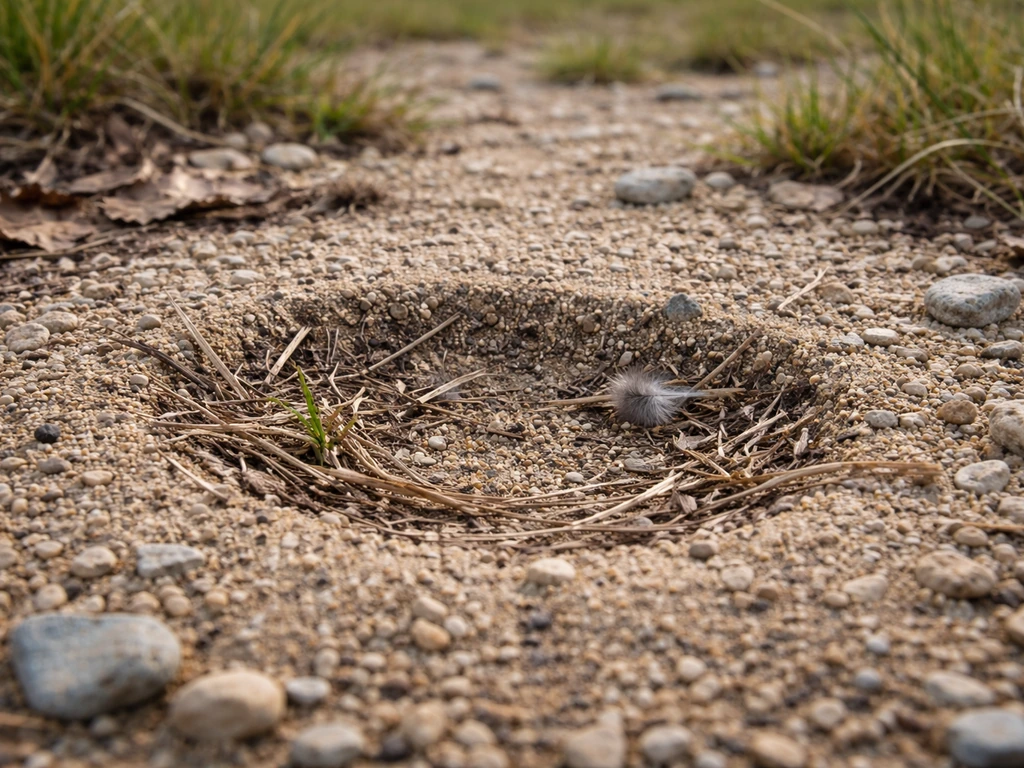
Common ground-nesting birds to know
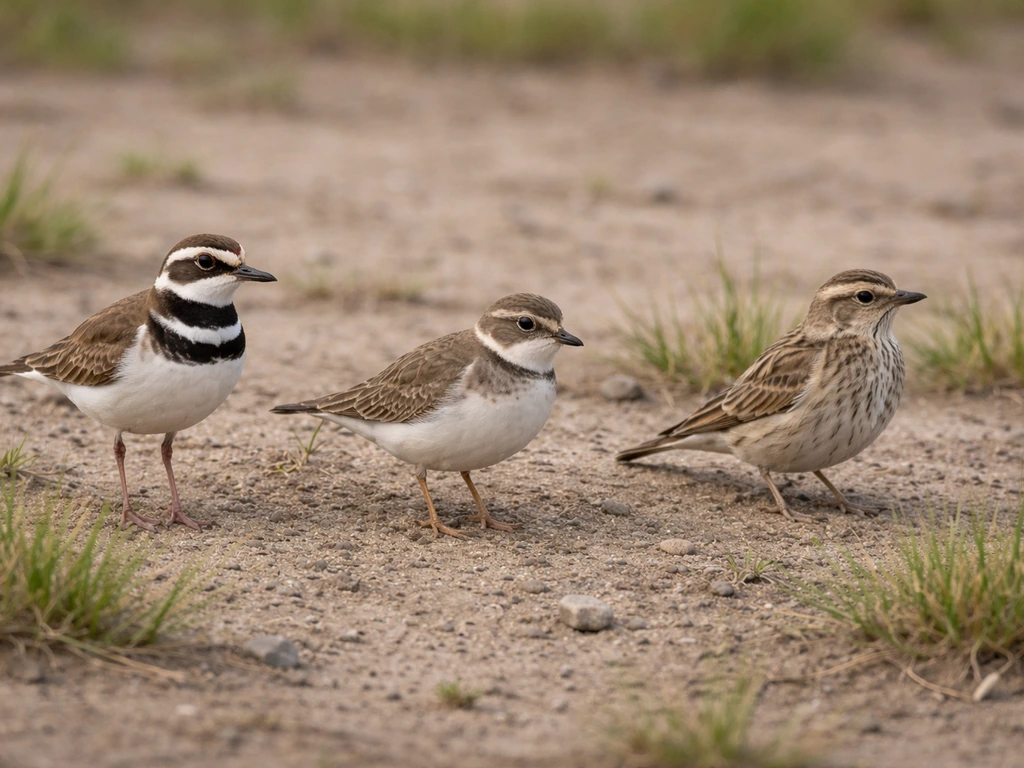
These are the species you are most likely to find nesting on the ground across North America. Each has a distinct nest style, preferred habitat, and behavioral tell that helps with identification.
- Killdeer: The most widespread ground nester in suburban and agricultural North America. They use open areas, gravel, lawns, and even parking lots. Famous for their dramatic broken-wing distraction display when you get too close.
- Piping plover: A small shorebird that nests in a shallow cup depression on sandy beaches and shorelines. Clutch size is typically 4 eggs. Critically important from a conservation standpoint and legally protected.
- Western meadowlark: A grassland songbird whose female selects a concealed ground site and builds a grass cup nest, typically taking 6 to 8 days to complete. Found in open fields and prairies, mainly west of the Mississippi.
- Lark bunting: Nests on the Great Plains in a grass-and-root cup placed in a shallow scrape under a shrub, forb, cactus, or tall grass clump. The female builds the nest, which is lined with fine grass blades or hair.
- Lark sparrow: Uses a grass cup nest sheltered by a grass clump or low vegetation, laying 3 to 6 eggs. Found in open woodland edges, scrubby grasslands, and roadsides across central and western North America.
- Collared plover and white-fronted plover: Coastal and riverside nesters that create bare-ground scrapes well above the tide line, sometimes lined with shell fragments, pebbles, or seaweed.
Understanding why a bird builds a nest on the ground in the first place can help you interpret what you're seeing. Ground nesting is not a sign of laziness or a lack of options. For many species it is the evolutionary strategy that gives eggs and chicks the best survival odds in their specific environment.
How to identify ground nests
Ground nests come in three basic forms: the scrape, the cup, and the mound. Most of the species you'll encounter in temperate North America use either a scrape or a cup. Knowing which type you're looking at immediately narrows the list.
The scrape nest
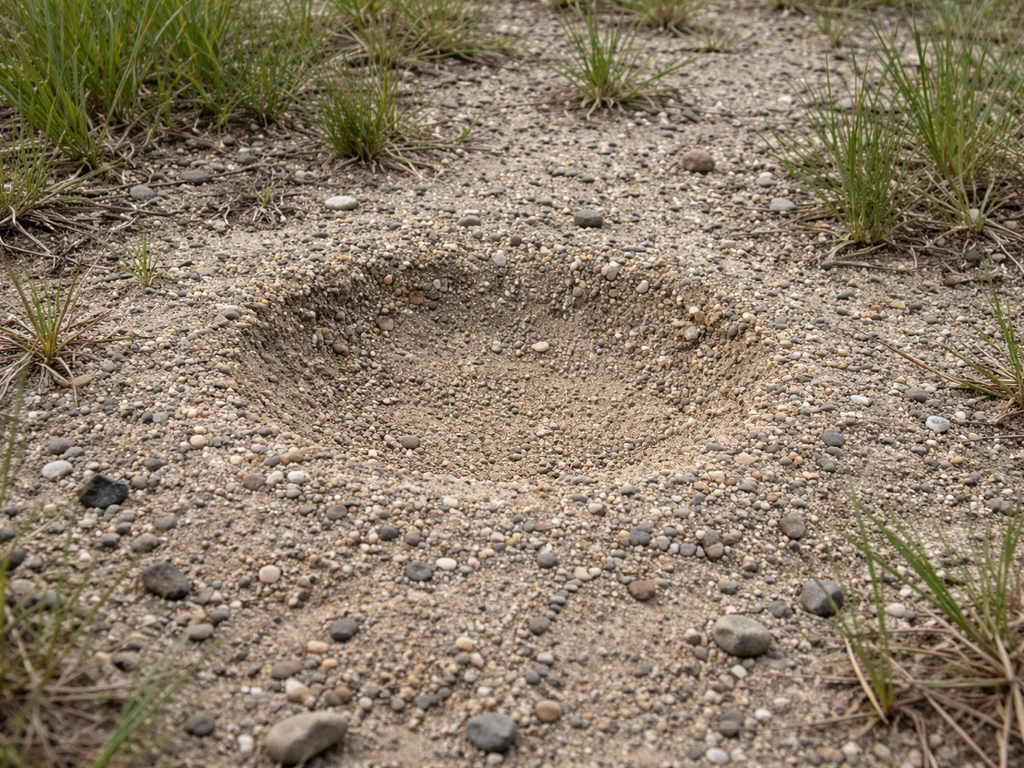
A scrape is exactly what it sounds like: a shallow depression pressed or scratched into bare soil, gravel, sand, or short vegetation. Killdeer nests are the classic example. The depression is typically just a few centimeters deep and may start out completely unlined. After egg-laying begins, the adults often add pebbles, shell bits, sticks, grass stems, limestone chips, or even wood chips and trash from nearby. The result is a nest that looks almost accidental, which is partly the point. Piping plovers also use a shallow cup-like scrape on sandy shorelines, while collared and white-fronted plovers create similar bare-ground scrapes above the flood or tide line, often just next to a small tuft of grass or a stone.
The cup nest on the ground
Cup nests built at ground level are more structured than scrapes. Western meadowlarks weave a cup of grasses and conceal it so well it is often impossible to spot from more than a meter away. Lark buntings build a loose cup of grass stalks, fine roots, leaves, and stems, lined with fine-blade grasses or hair, and place it in a shallow depression under or next to a grass clump, tall forb, or shrub. Lark sparrows do something similar, sheltering their grass cup against dense vegetation. If you find a tidy, woven cup sitting in or beside a clump of grass in a field, you are almost certainly looking at a grassland songbird.
Physical signs to look for

- A slight rise or exposed patch of gravel/bare soil with a shallow depression: likely killdeer or plover.
- Eggs that are speckled, blotched, or cryptically patterned to match the substrate: a near-universal feature of ground nests.
- Pebbles, shell fragments, or debris ringing the eggs: strongly suggests killdeer or plover.
- A woven grass cup hidden under vegetation in a field or grassland: points to meadowlark, lark bunting, or lark sparrow.
- A trail worn into the grass or soil leading to a concealed spot: can indicate repeated adult approaches, though be careful not to add to it yourself.
- An adult performing a dragging, flopping broken-wing display near an open area: the bird is almost certainly killdeer or a plover, and the nest is within 10 to 20 meters of where the display begins.
Which bird builds on the ground by habitat and season
Habitat is your fastest filter. The table below maps the most common ground-nesting species to their typical environment and primary nesting season in North America. Use this as your first decision point before looking closely at the nest itself.
| Species | Typical habitat | Nest type | Primary nesting season |
|---|---|---|---|
| Killdeer | Gravel, lawns, fields, rooftops, parking areas | Bare scrape, later lined with pebbles/debris | March to July |
| Piping plover | Sandy ocean/lake beaches and shorelines | Shallow cup scrape in sand | April to August |
| Western meadowlark | Open grasslands, prairies, farm fields | Concealed grass cup | April to July |
| Lark bunting | Short-grass and mixed-grass prairie (Great Plains) | Grass cup under shrub or tall forb | May to July |
| Lark sparrow | Open woodlands, scrubby grasslands, roadsides | Grass cup beside vegetation clump | April to August |
| Collared/white-fronted plover | Coastal beaches, river shores, bare inland flats | Bare scrape, sometimes lined with shells/pebbles | Year-round in warm climates |
Season matters a lot. If you find a ground nest in late April in a gravel driveway in the Midwest, killdeer is overwhelmingly likely. The same scrape-style nest on a Lake Michigan beach in May is almost certainly piping plover, which is a federally threatened species and changes your legal obligations significantly. A cup nest tucked under prairie grass in June in Kansas points directly to lark bunting or meadowlark.
It is also worth knowing who built what you're looking at. Whether it's the male or female bird that builds the nest varies by species, and for ground nesters the pattern is revealing. In lark buntings, the female does the building. In killdeer, both sexes participate in scrape-making during courtship. In western meadowlarks, the female selects the site and does the construction. Knowing this can help you interpret the behavior you see near the nest.
Ethical nest observation and what not to do
Ground nests are far more vulnerable to human disturbance than elevated nests. The eggs and chicks are exposed, the adults must leave the nest to perform distraction displays, and every time you approach, you risk creating or deepening a trail that predators can follow directly to the nest. One of the most important rules from NestWatch (Cornell Lab of Ornithology) is to avoid walking to a nest and back repeatedly, because a worn path functions as a predator roadmap. In most circumstances, it is also illegal to physically touch or disturb an active nest.
If you want to observe, use binoculars or a zoom lens from at least 100 meters away during the core nesting season (roughly March through August). The RSPB recommends this as a minimum standoff distance. If you are walking through an area where ground nests are likely, stay on marked paths and keep dogs on a short lead. Dogs do not have to step on a nest to cause abandonment. Scent alone can attract predators after you leave.
Watch for behavioral signals that you are already too close. A killdeer or plover performing the blank" rel="noopener noreferrer">broken-wing display, dragging a wing and calling loudly, is telling you that the nest is nearby and you need to back up, not move closer. Audubon describes this blank" rel="noopener noreferrer">exaggerated distraction display as a clear sign that a shorebird considers you a threat to its nest or chicks. The right response is to retreat slowly in the direction you came from, wait for the bird to settle, and observe only from a distance. Even short repeated disturbances can cause breeding failure.
Never mark a nest location with flagging tape or stakes. This draws attention to it. If you need to document the location for monitoring purposes, use GPS coordinates noted privately. Avoid disturbing the surrounding vegetation, and do not cut grass or clear brush within several meters of an active nest without checking first.
People sometimes wonder whether nest-building in birds is instinct or something more. The short answer is that it is deeply instinctive, which is part of why disturbance is so disruptive. Birds cannot easily pivot to a backup plan the way a mammal might. Once a ground-nesting bird has committed to a scrape or cup, disrupting that site often means losing the entire clutch.
Safety and predator protection for homeowners
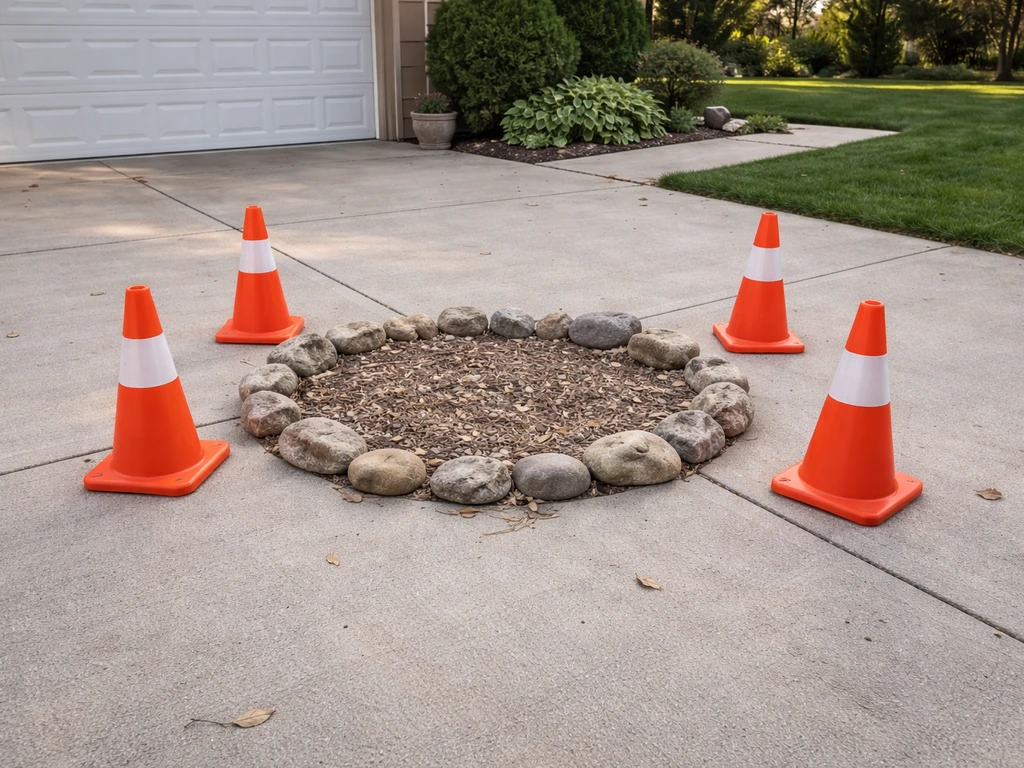
If a killdeer or other ground-nesting bird has set up in a high-traffic area of your yard, driveway, or property, you have a few practical options that do not harm the bird or break the law.
- Temporary barriers: Place orange construction cones, a ring of large rocks, or a low temporary fence around the nest perimeter to alert people and redirect foot traffic. Keep the barrier at least 1 to 2 meters from the actual nest so adults can approach freely.
- Redirect traffic: If the nest is in a driveway or path, mark alternate routes for vehicles and foot traffic for the 3 to 4 weeks until the chicks hatch and leave. Killdeer chicks are precocial and mobile within hours of hatching, so the nest is not occupied long.
- Protect against predators: Feral cats, crows, and raccoons are the main threats. Keeping cats indoors during nesting season is the single most effective measure. Motion-activated lights or sprinklers near the nest perimeter can deter nocturnal mammals without harming nesting birds.
- Avoid chemical treatments: Do not apply pesticides, herbicides, or lawn chemicals anywhere near an active ground nest. The USFWS has noted that spraying and vehicle traffic are specific vulnerability factors for killdeer in modified environments.
- Leave the grass alone: If the nest is in a lawn or field area, stop mowing within at least 3 to 4 meters of it until the chicks have left. Contact a local Audubon chapter or wildlife officer if the mowing schedule is out of your control, such as on a shared or municipal property.
One thing that surprises many homeowners is how quickly ground-nest construction happens. How fast a bird can build a nest depends on the species, but a killdeer scrape takes almost no time at all since it is just a depression in existing substrate. A meadowlark cup takes longer because it involves weaving. Knowing this helps you assess whether a nest is newly established or already well along in incubation, which affects how you plan any property work around it.
If you are planning landscaping, construction, or vegetation clearing and suspect ground-nesting birds may be present, survey the area before work begins. Walking the site once carefully in the early morning before nesting season (late February to early March) is far better than discovering an active nest after machinery has already started. How long it takes to build a bird nest varies, but by early April in most of North America, many ground-nesters are already laying eggs.
When to get help: legal issues, rescue, and relocation rules
In the United States, nearly all migratory bird species are protected under the Migratory Bird Treaty Act (MBTA), administered by the US Fish and Wildlife Service. This means you need a federal permit to touch, move, or disturb an active nest. Heavy fines can result from moving or disturbing a nest without authorization. This is not a gray area. Killdeer, meadowlarks, lark buntings, piping plovers, and lark sparrows are all covered. If you are in the UK, the Wildlife and Countryside Act 1981 makes it an offence to intentionally take, damage, or destroy a wild bird's nest while it is being used or built, and the same applies to eggs.
Here is the practical hierarchy for what to do when a ground nest creates a conflict:
- Do nothing if possible: Most ground nests in yards and fields are active for only 3 to 5 weeks from laying to chick departure. Delaying work or adjusting your routine for that window is almost always the simplest legal solution.
- Reschedule or reroute activities: Canada's federal guidance recommends adapting or rescheduling activities that could disturb or destroy occupied migratory bird nests. Move construction timelines or mowing schedules if the nest is in the way.
- Contact your regional wildlife authority before touching anything: In the US, reach out to your USFWS Regional Migratory Bird Permit Office (Region 4 for the Southeast, via FWC for Florida-specific questions, etc.). In Canada, contact Environment and Climate Change Canada. In the UK, contact Natural England, NatureScot, or Natural Resources Wales depending on your location.
- For injured birds or abandoned chicks: Call a licensed wildlife rehabilitator, not a general pest control company. Wildlife rehabbers have the legal authority and skills to handle protected species. Your state wildlife agency website will have a directory.
- For nests in genuinely dangerous locations (active construction zones, road surfaces): Only a permitted wildlife professional can legally relocate an active nest. Do not attempt this yourself. Contact your regional USFWS office and explain the safety situation.
Inactive nests (no eggs, no chicks, clearly abandoned after the breeding season) are generally treated differently from active ones under US law, but confirm this with your regional office before removing anything. An empty scrape in September is not the same legal situation as an occupied cup in May.
If you are curious about the deeper behavioral side of what you're witnessing, whether bird nest-building is a learned behavior is a genuinely interesting question. The research suggests it is a mix of hard-wired instinct and experience, which is exactly what you see when you watch a killdeer methodically line a scrape with pebbles or a meadowlark weave a tight grass cup. These birds are not improvising. They are executing a program refined over thousands of generations, and your job as an observer or homeowner is simply to give them the space to finish it.
FAQ
How can I tell whether a ground nest is active or abandoned? Still, I don’t see a bird sitting on it.
Ground-nesting birds can leave little to no sign besides the nest itself, so the safest way to confirm is by observing consistent incubation behavior (adult returns to the scrape or cup) and looking for context cues like season, habitat, and nest type (scrape versus cup or mound). If you can only see the nest and no adult activity, treat it as active until proven otherwise, especially during March through August.
Is there a quick way to distinguish a scrape nest from a cup nest from a distance?
If it’s a scrape, check whether the depression is bare and lightly lined at first, then later augmented with pebbles or shell bits. That “bare first, then decorated” pattern fits killdeer and some shorebird scrapes. For a cup, the woven structure and concealed placement in vegetation (grass clump, forb, shrub) points more toward grassland species like meadowlarks, lark buntings, or lark sparrows.
What should I do if the nest looks like more than one species? How do I avoid misidentifying it?
Yes. Some common ground nesters use very similar scrape-like depressions, so the deciding factors are habitat and time. For example, sandy shoreline near the tide or flood line in late spring strongly favors plovers, while gravel driveways and open fields in the Midwest in spring strongly favor killdeer. If habitat and season don’t match cleanly, rely on behavioral cues (such as distraction displays) and avoid approaching for closer inspection.
If I back away, but people keep walking nearby, is the nest still at risk?
Stepping back only solves part of the problem. If dogs or people keep patrolling the same route, predators may learn the corridor you create, and adults may abandon after repeated disturbance. Use a single observation window (one approach, then back away), keep to marked paths, and avoid letting anyone linger near the area once you’ve identified the nest.
How can I document the nest location for myself or a wildlife agency without attracting attention to it?
For documentation, don’t stake or flag the site. Instead, record private GPS coordinates from a safe, non-nesting side and note distance to landmarks (for example, “10 meters from the gravel edge, north side of clump”). This lets you report or monitor later without drawing attention from visitors or predators.
What if I need to mow or clear the area because it’s part of regular landscaping? Can I move the vegetation after finding a ground nest?
During active nesting, the safest “maintenance” is no maintenance. Avoid mowing, edging, raking, or clearing within several meters of the nest, and don’t assume it’s safe because the adult is out of sight. If the property work is essential, contact a local wildlife agency or nest monitoring organization first so they can advise on timing or whether relocation is even legal or appropriate in your region.
What are the most common mistakes people make after they find a ground nest?
A key mistake is approaching to get a better look at the nest contents. Another is assuming “touching the nest lightly” is harmless. Many ground nesters can detect disturbance through scent and changes in the immediate area, and laws often restrict touching or disturbing active nests. The best alternative is to use binoculars or a zoom lens and stay put after you see any stress behavior like distraction displays.
Can the same nest look different over time, making identification harder?
Sometimes the “right bird” is not the bird you first suspect because nest stage changes visibility. A scrape might start nearly bare, then become lined with new materials after eggs are laid. A cup might be well hidden early in construction, then easier to see once vegetation settles. Re-check habitat and nest form, not just the current appearance.
What should I do if a killdeer or plover shows a broken-wing display?
If you’re seeing broken-wing or dragging-wing behavior, the bird is usually close and actively trying to move you away. Retreat slowly in the direction you came from, stop once you’re farther away, and wait for the bird to resume normal behavior before continuing any activity. Don’t “test” how close you can get, because even short repeated disturbances can reduce breeding success.
If I’m worried about legality, who should I contact, and can I ever relocate an active ground nest?
In the US, you should assume the nest is protected if it is active, and you generally should not move it without the proper authorization. The legal and practical path is to contact the appropriate regional office or a local wildlife rehabilitator, especially for federally threatened species like piping plovers. If you are outside the US, check your local wildlife law, since penalties and permitted actions differ.
If the nest is in a high-traffic part of my property, what’s the best compromise between safety and letting the birds breed?
Not always. Many ground nesters build in open, high-visibility areas because those spots improve predator detection or habitat suitability, but “high traffic” can still lead to abandonment if disturbance is frequent. The practical decision is to minimize human and dog activity around the site, reroute foot traffic, and avoid creating new trails. If the site is unavoidable, seek guidance early rather than waiting until eggs are present.
If I find a “fresh” scrape or cup, how likely is it that eggs are already on the way?
Ground-nest species vary in how fast they can begin construction, but the time window from “nest found” to “eggs laid” can be short in spring. The safer assumption is that any newly scraped area in late winter or early spring could become an active nest quickly. If construction or clearing is scheduled, do a pre-work survey before work starts, and treat any fresh scrape or cup as potentially active until confirmed during observation.
Next Articles
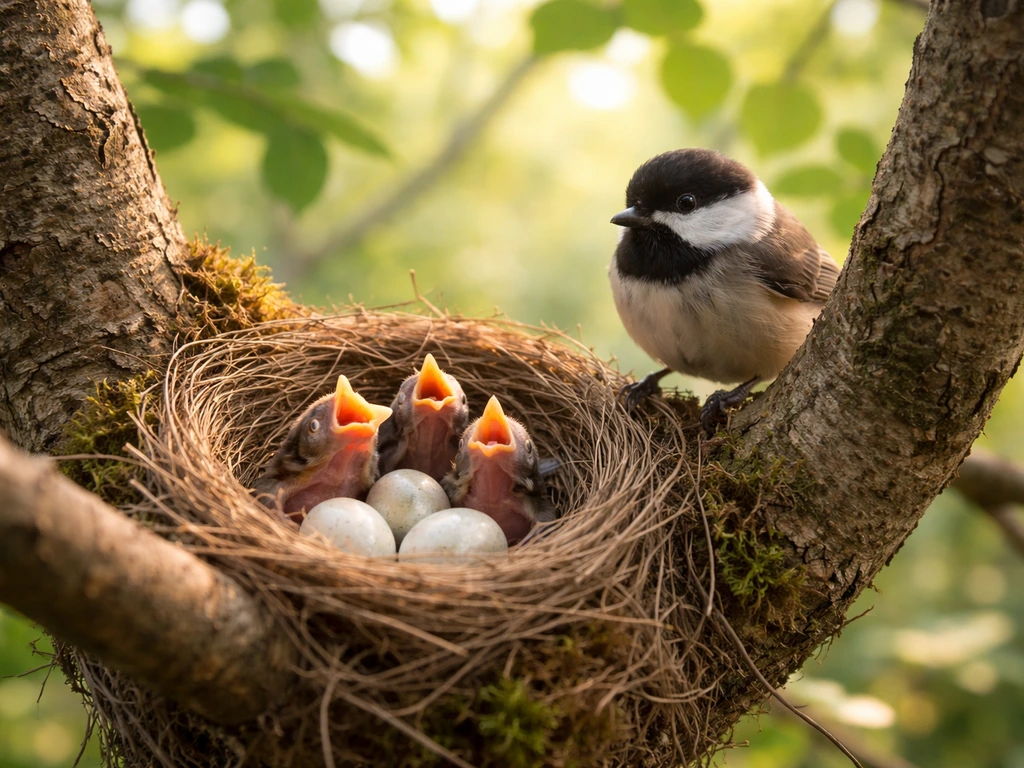
Why Does a Bird Build a Nest? Reasons and What to Do
Learn why birds build nests for mating, eggs, safety from weather and predators, and how to respond ethically.

Should I Let a Bird Build a Nest? What to Do Today
Decide if to let a bird nest, how to check activity, avoid disturbance, and handle conflicts safely and legally.
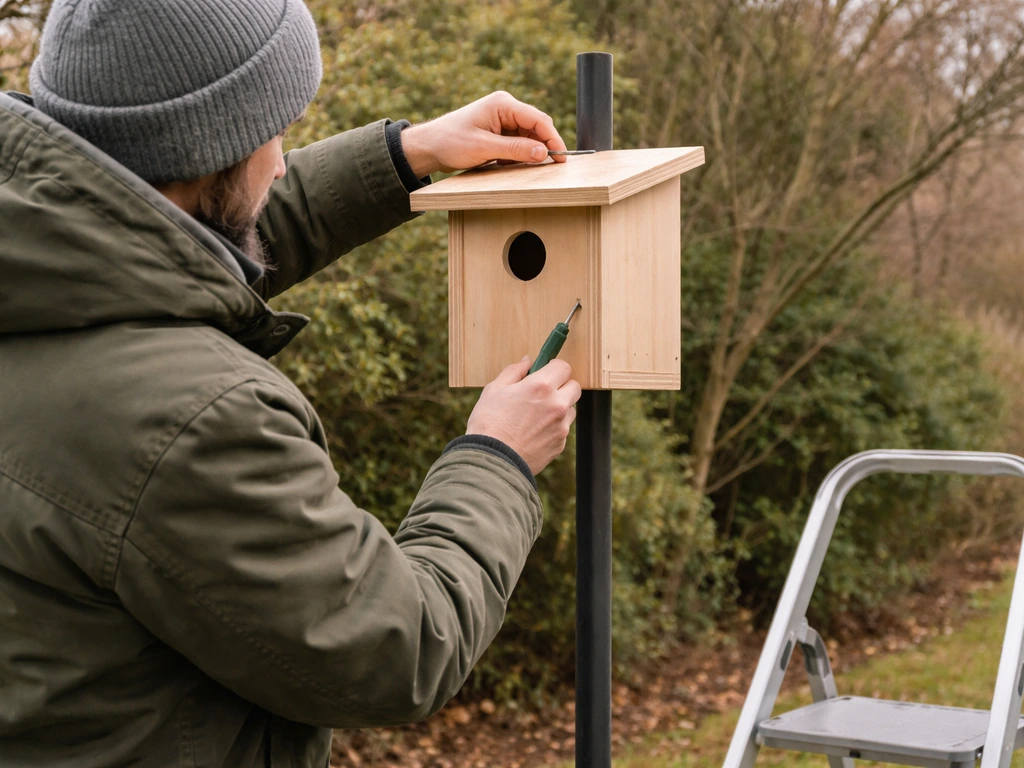
Can You Make a Nest for a Bird? Safe, Legal Steps
Learn safe, legal ways to help birds nest with proper materials and nest boxes, avoid active nests, and prevent harm.