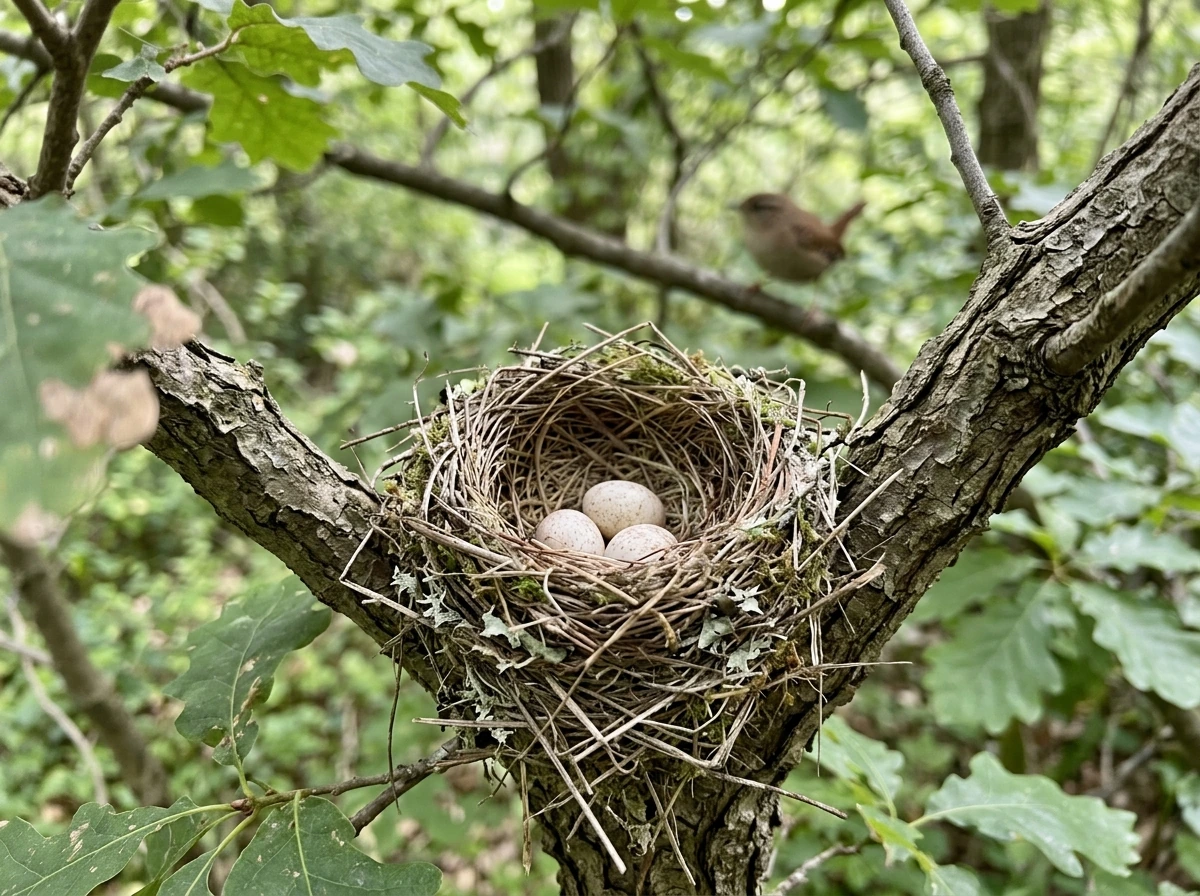
Birds build nests primarily to give their eggs and chicks the best possible chance of surviving. That is the short answer. But the full picture is more interesting and more useful, especially if you have just found a nest on your property or you are trying to understand what a bird in your yard is actually doing right now. A nest is a breeding platform, a microclimate regulator, a predator buffer, and in some species a mate-attraction display, all rolled into one structure. Understanding those functions helps you read what you are seeing, respond safely, and stay on the right side of the law.
Why Does a Bird Build a Nest? Reasons and What to Do

Maya Bennett
10 Apr 2026
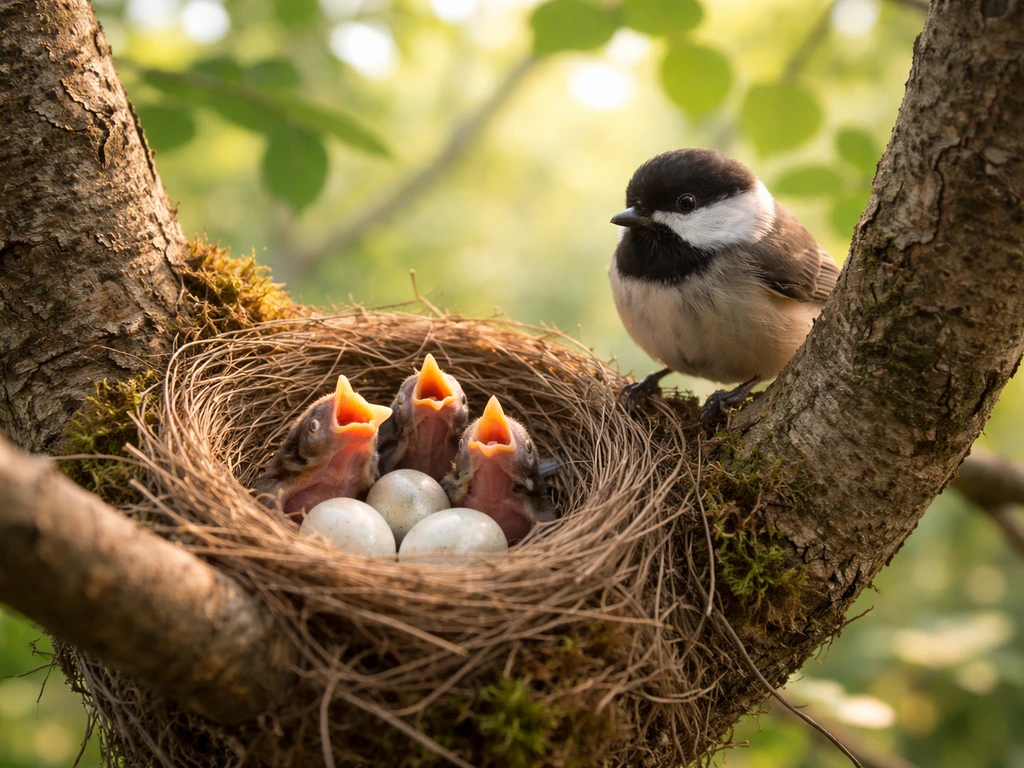
The core reasons birds build nests
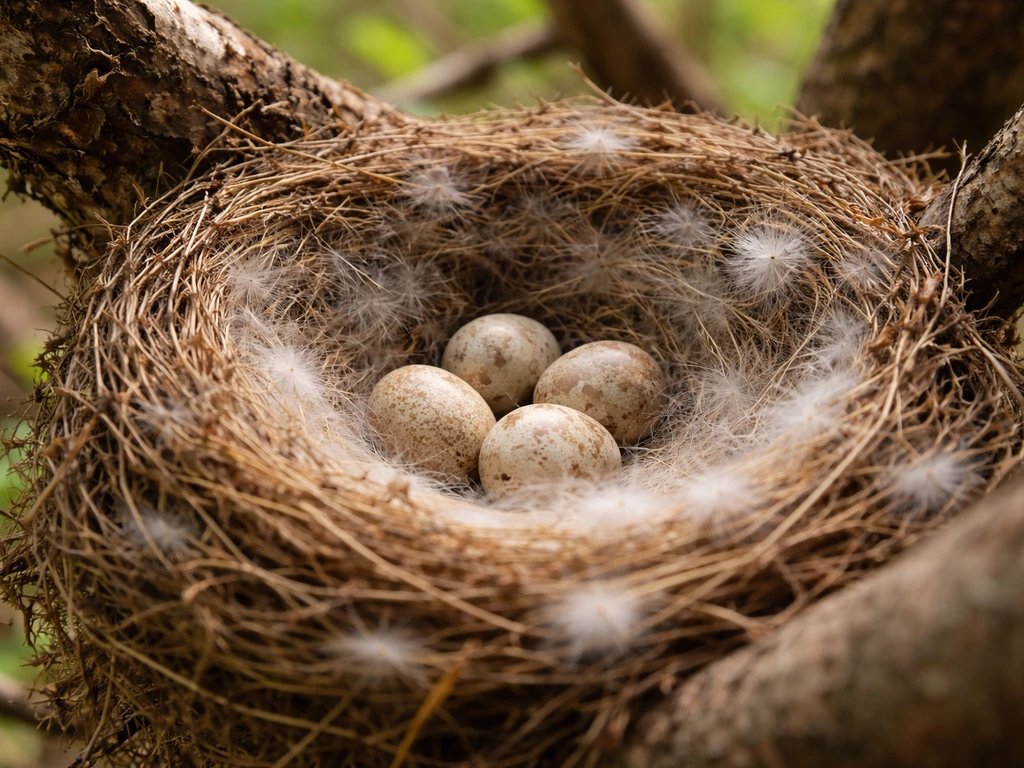
The most fundamental reason is reproduction. A nest gives a bird a defined, stable place to lay eggs, incubate them, and raise nestlings until they are capable of surviving independently. Without a structure that keeps eggs from rolling away, losing heat, or being exposed to rain, most species could not reproduce successfully at all.
Thermal insulation is a bigger deal than most people realize. Nest lining materials, including fine grasses, animal hair, down feathers, and even spider silk, reduce the rate at which eggs lose heat when a parent steps off to feed. Experimental work using artificial nests has confirmed that differences in nesting material measurably change how quickly eggs cool, which directly affects embryo survival. A well-lined cup nest can maintain a significantly warmer microenvironment than an unlined scrape in the same conditions.
Nests also serve as a physical shield against weather. Open-cup nesters in exposed locations use the nest wall to block wind and rain. Cavity nesters get even more protection, since the wood or earthen walls buffer temperature swings and block precipitation almost entirely. For chicks that cannot yet thermoregulate, this matters enormously.
Predator deterrence is another function. Elevated or concealed nests reduce the chance a ground predator will find eggs or helpless nestlings. Some birds add aromatic or green plant material during incubation and chick-rearing, and there is a well-supported hypothesis that these materials deter nest parasites and pathogens, giving chicks a cleaner environment to develop in.
Finally, nest-building itself plays a role in pair bonding. In many species, a male begins constructing a nest (or multiple nest starts) as part of courtship. The quality and location of the structure can signal fitness to a potential mate. Whether the male or female bird takes the lead in building the nest varies considerably by species, but the behavior is always tied to the same underlying goal: maximizing breeding success.
What the nest itself tells you about the species
Once you know what to look for, a nest's structure, location, and materials can tell you a lot about who built it and what stage they are at. Researchers classify nests into a handful of broad structural types, and these map pretty reliably onto groups of birds.
| Nest type | Structure | Typical location | Example species |
|---|---|---|---|
| Scrape | Shallow ground depression, minimal added material | Open ground, beaches, grassland | Killdeer, gulls, many shorebirds |
| Cup | Rounded bowl with woven walls and lined interior | Tree branches, shrubs, ledges | Robins, sparrows, warblers |
| Platform | Loose pile of sticks, flat or slightly hollowed | Tall trees, cliffs, water margins | Ospreys, herons, eagles |
| Primary cavity | Excavated hole in wood or earth | Dead trees, earthen banks | Woodpeckers, kingfishers |
| Secondary cavity | Pre-existing hole used without excavation | Tree holes, nest boxes | Chickadees, bluebirds, kestrels |
Location is an equally strong clue. If you find a nest tucked into a grass tussock or a shallow scrape in open dirt with two or three large speckled eggs, you are almost certainly looking at a ground-nesting species. If you want to narrow it down further, learning which birds build nests on the ground will help you identify what you have found and how much space to give it.
Materials are the third layer of evidence. Grasses, mud, mosses, lichens, plant seeds, bark strips, spider webbing, hair, fur, snake skins, and feathers are all commonly recorded nest materials. A nest bound together with spider silk and decorated with lichen on the outside is a classic hummingbird or gnatcatcher cup. A mud-reinforced cup in a garden shrub is most likely a robin or thrush. A cavity filled with soft plant fibers, fur, and feathers points toward a small secondary-cavity nester like a chickadee or titmouse. You can often track down the builder just by following an adult carrying material, keeping enough distance that you are not creating a path that leads predators straight to the nest.
Old nest contents can also reveal prior history. Feces, eggshell fragments, down, and prey remains inside a cavity tell you it has been used before. Some secondary cavity nesters, like European Kestrels, actively use evidence of previous successful breeding as a cue when choosing nest sites, so an older-looking cavity nest may be in year two or three of use by the same pair.
How different birds actually use their nests
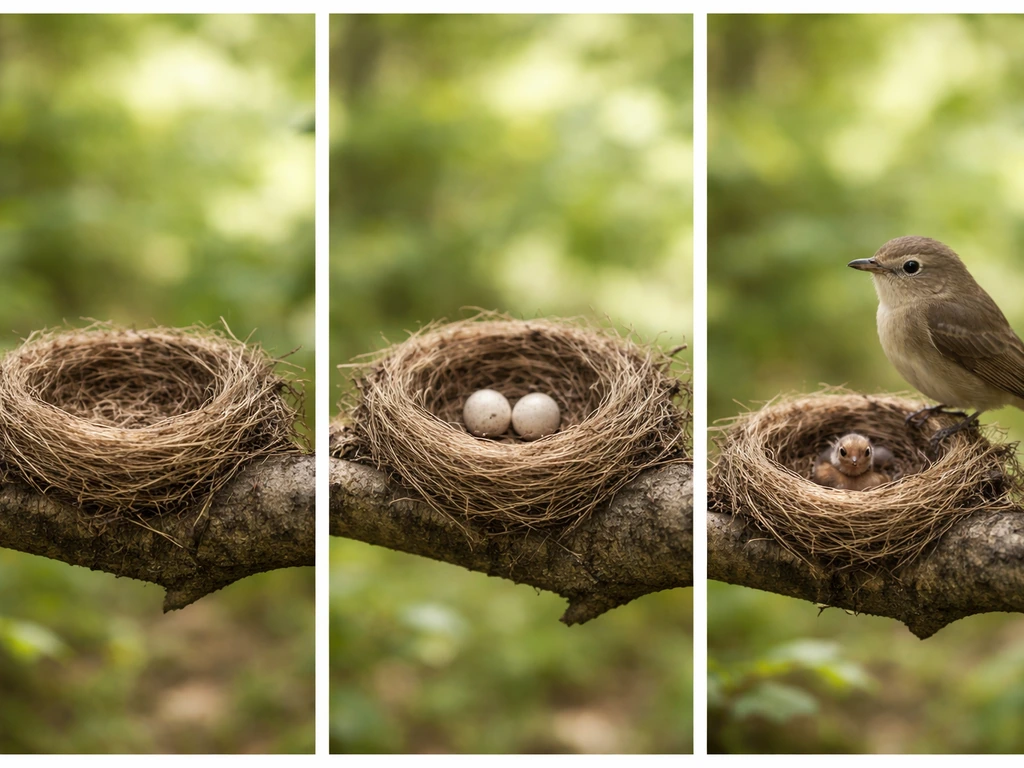
Not every bird uses a nest the same way, and understanding the stages helps you interpret what you see. The Smithsonian National Zoo frames nest monitoring around five stages: building, laying, incubating, nestling, and fledgling. Each stage has distinct behavioral signatures.
During egg-laying, the female is present briefly but frequently. Most songbirds lay one egg per day in the early morning. A useful behavioral breakpoint: the day before the last egg is laid, most songbirds begin incubating in earnest. Once full incubation begins, you will see one or both parents spending long stretches on the nest, leaving only to feed. Nest attendance during incubation varies by species and sex. In some species only the female incubates; in others, both sexes trade off in defined shifts.
Once eggs hatch, the focus shifts to feeding and brooding. Parent visitation frequency increases dramatically as nestlings demand food, but brooding (physically covering chicks with the body) decreases as chicks develop feathers. In open-cup nesters, parents also shield chicks with their wings in hot or wet weather, physically protecting them from conditions the nest walls alone cannot handle. As chicks approach fledging, parental nest attendance drops, and adults may begin calling to encourage chicks to leave.
Cavity nesters show similar stage-based patterns. Studies tracking nest-box use show that in-nest stay and sentinel behaviors peak around the time chicks are developing feathers, then decline sharply as fledging approaches. If you watch a nest box and the adults seem to be spending less time at the entrance hole than they were a week ago, fledging may be imminent.
For large raptors like bald eagles, the timeline is much longer. Nesting activity begins months before egg-laying, and young may remain near or on the nest for weeks after fledging. This is a useful reminder that the presence of large young on a platform nest does not mean the nest is done being used.
When to expect nesting: seasonal timing and behavior signals
In the Northern Hemisphere, most passerines (perching/songbirds) begin nesting between late February and April, with peak activity typically running from April through July. In the UK, the British Trust for Ornithology notes that resident songbirds start nesting as early as February or March, with most activity peaking through summer. In North America, the first nesters can begin as early as February in southern states, while species at higher latitudes or elevations may not start until May or June.
The behavioral signals of early nesting season are pretty obvious once you know what to look for. Increased singing and territorial defense, males following females closely, and birds carrying nesting material in their beaks are all strong indicators. The U.S. Fish and Wildlife Service specifically points to spring as the time when birds may be building nests, arriving to find mates, or beginning nesting preparations, so if you notice a bird making repeated trips to the same shrub or eave with grass in its beak, there is a very good chance a nest is underway.
The question of whether nest-building is a fixed drive or something modified by experience is worth raising here. Whether nest-building is purely an instinct or involves learned refinement is something researchers continue to study, but the practical takeaway is that the behavior is strongly seasonal and largely predictable for any given species in any given region. Once you know your local birds' typical nesting window, you can anticipate it and prepare accordingly, whether that means putting up nest boxes in February or planning tree trimming to avoid conflict.
Some species squeeze in two or even three clutches per season. After a successful first brood fledges, the same pair may begin a second nest nearby, sometimes within days. Keep this in mind if you are managing a site or planning any outdoor work: just because one clutch has fledged does not mean the season is over.
What to do when you find a nest
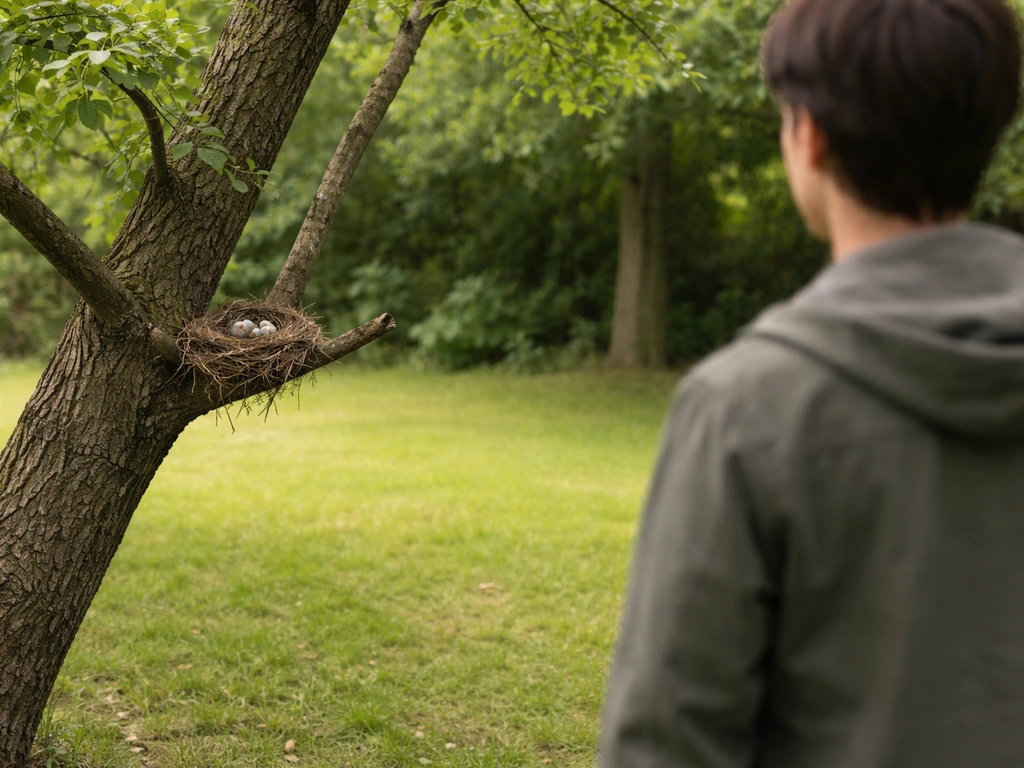
The best default action when you find an active nest is to do nothing except observe from a distance. That sounds simple, but it covers most situations well. The moment you walk up to a nest, you risk two things: disturbing the adults enough to cause temporary or permanent abandonment, and creating a visible trail that draws the attention of predators.
- Note the nest's location and height from a distance. Avoid walking directly toward it.
- Photograph it with a zoom lens or phone camera from at least 3 to 5 meters away if possible.
- Identify the nest type (scrape, cup, platform, cavity) and note materials, size, and any visible eggs or activity.
- Watch quietly for 10 to 20 minutes without approaching. Note how often adults return.
- Record your observations: date, species suspected, stage suspected (building, incubating, feeding chicks), and any behavioral signals.
- Return at the same time on subsequent days to track progress without repeated disturbance.
If parents do not return for an hour or two after you have retreated completely, that can indicate your presence has caused disturbance. Move further away and give it more time before concluding a nest is abandoned. NOAA guidance makes it clear that the best help in ambiguous situations is to keep your distance and leave difficult cases to wildlife rehabilitators or local wildlife agencies.
Do not share the nest's precise location publicly, whether on social media or birding apps, without considering whether that will attract additional foot traffic. Indiana DNR explicitly recommends against making nest locations public because that kind of attention, even well-meaning, can cause exactly the kind of repeated disturbance that leads to nest failure.
The legal picture: what you cannot do
In the United States, the Migratory Bird Treaty Act (MBTA) protects most native wild bird species along with their nests and eggs. The practical consequence for homeowners is that it is generally illegal to destroy a nest that contains eggs or live chicks. The U.S. Fish and Wildlife Service is explicit on this point: once a nest is occupied by eggs or dependent young, it is protected regardless of where it is located, including on private property.
There is an important nuance here. The MBTA does not prohibit destroying an empty nest, one with no eggs or chicks in it, provided no illegal possession or transport occurs. So if a bird built a nest in an inconvenient location and has not yet laid eggs, or if the season is completely over and the nest is cold and empty, removal is generally permitted. But the moment eggs appear, your options narrow significantly. South Dakota Game, Fish and Parks summarizes the logic clearly: unoccupied nests receive less legal protection than occupied ones.
In the UK, the Wildlife and Countryside Act protects nests while they are in use or being built. As the RSPCA notes, moving a nest at the wrong time could break the law and cause parents to abandon it. The EU Birds Directive similarly prohibits deliberate significant disturbance during breeding or rearing, as well as destroying nests or eggs. GOV.UK guidance adds that disturbance can include not just physical interference but also noise, lighting, and vibration near an active nest.
The key legal rule across most jurisdictions: if there are eggs or live chicks in the nest, leave it alone and contact a licensed wildlife rehabilitator or your local wildlife agency if there is a genuine safety problem. Audubon reinforces this point directly, advising people to contact the appropriate help rather than attempt to relocate nests themselves. Permits are required for most exceptions, and possession or transport of nest material and eggs also falls under MBTA regulation.
Deterring nest-building before it starts, and protecting nests that should stay
Deterrence: stopping nest construction early
If a bird keeps trying to build in a location that genuinely creates a problem (a dryer vent, a building entrance, equipment that will be needed during nesting season), the only legal and practical window to deter it is before the nest is built or before eggs are laid. Once eggs appear, you are in protected territory and deterrence becomes legally risky.
- Block the entry point: use hardware cloth, vent covers, or netting to physically deny access to cavities and ledges before the season begins.
- Remove early nest starts: if a bird has placed only a few twigs or grass stems and no eggs have been laid, you can legally remove the material and block the site. Repeat as needed, but do this promptly.
- Use visual deterrents: reflective tape, predator decoys (owls, hawks), or motion-activated sprinklers can discourage birds from settling in specific locations.
- Time any vegetation management to avoid active nests: tree trimming and shrub cutting should be done before February or after late summer in most regions, since any modification during nesting season risks disturbing active nests and potentially violating the MBTA or equivalent law.
The general principle from pest-management guidance is consistent: deterrence must be timed to non-breeding periods. Trying to remove or block after a nest is active is both legally problematic and practically counterproductive because the birds will simply find another nearby spot.
Protecting a vulnerable nest that should stay
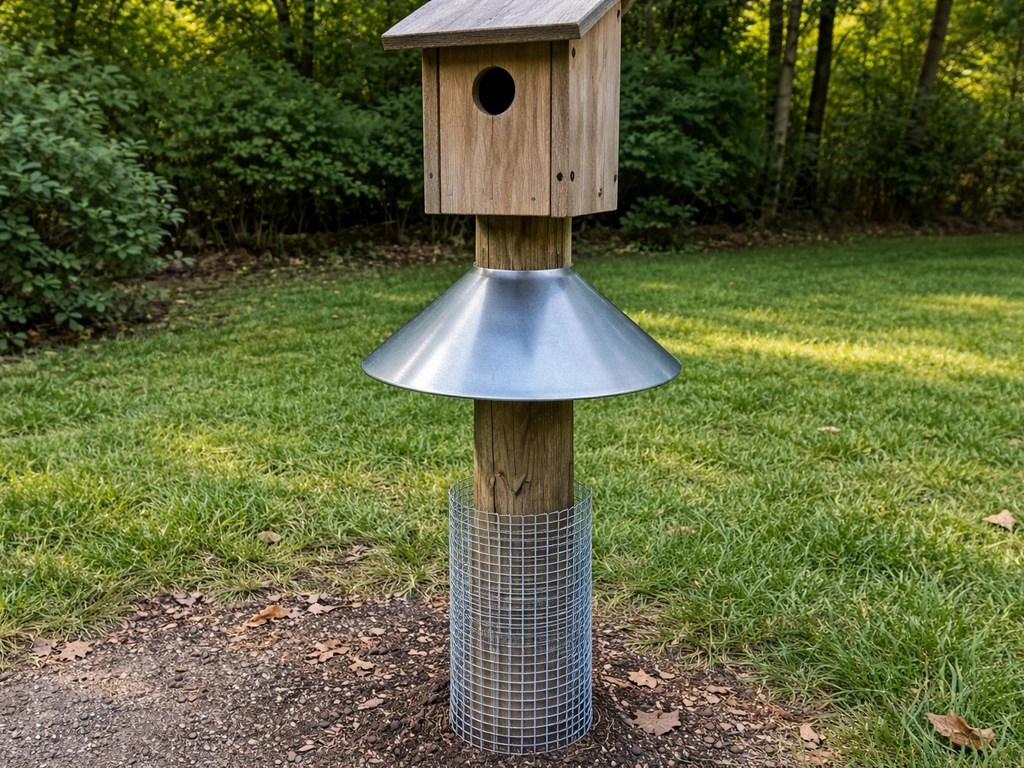
Sometimes the goal is the opposite: you have found a nest you want to help survive. Here your main tools are predator exclusion and minimizing human disturbance.
- Install a baffle on any pole or post supporting a nest box to prevent climbing predators from reaching the entrance.
- For ground nests discovered in mowed areas, mark a 2 to 3 meter buffer with visible stakes so the area is not accidentally disturbed.
- Avoid using the same approach path repeatedly. Always vary your route when checking a nest so you do not create a worn trail that predators can follow.
- Keep cats and dogs away from the area for the duration of the breeding attempt.
- Do not trim, spray, or disturb vegetation within several meters of an active nest.
NestWatch's code of conduct puts it simply: never jeopardize the birds' well-being for the sake of observation or photography. Observe from a distance, minimize the number of visits, and keep your time near the nest as short as possible.
After fledging: cleanup, reuse, and what to expect
Once all chicks have fledged and you are confident the nest is no longer active, you can assess it for cleanup or leave it in place. The decision depends partly on species behavior and partly on your goals.
Many species do not reuse the same nest in subsequent years, and an old nest can harbor mites, lice, and other parasites that would affect the next breeding attempt. For nest boxes in particular, cleaning out old material after the breeding season ends (typically in late summer or early autumn) and again before the next spring is strongly recommended. This also gives you a chance to inspect the box for damage.
Some species do reuse nests. Cooper's Hawks, for example, are documented returning to the same nest for two to three consecutive seasons in some cases. Large raptors like ospreys and eagles famously add to platform nests each year, and these structures can become massive over time. Cavity nesters may also reuse the same hole or box, though they often build a fresh lining on top of old material.
Understanding the pace of nest construction helps you judge how quickly a new attempt might follow cleanup or deterrence. How long it takes a bird to build a nest varies enormously by species, from a single day for a minimal scrape to two weeks or more for a complex woven cup, so timing your response matters. If you have removed an empty nest from a problem location and want to prevent rebuilding, block the site promptly.
There are also records of remarkably rapid construction when birds are motivated. How fast a bird can build a nest under pressure is a good reminder that a deterred bird can establish a new nest elsewhere very quickly if an alternative site is available, which is why site-blocking rather than just material removal is usually the more durable solution.
Under the MBTA, even an old empty nest technically falls under regulated possession and transport provisions, so you should not keep, sell, or ship collected nests without a permit. In most cases, simply disposing of old nest material in a compost pile or yard waste bag is fine. Check your state or local guidance if you are unsure.
Finally, if you enjoy following nest outcomes and want to contribute to science, consider logging your observations through a citizen science platform like NestWatch. Your notes on timing, species, clutch size, and fledging success are genuinely useful data, and the structured monitoring guidelines those programs provide will help you observe responsibly without causing harm.
One broader question worth sitting with: whether bird nest-building is a learned behavior has real implications for how we think about helping or interfering with nesting birds. If some aspects of nest construction improve with experience, then a nest you find this spring might represent a bird getting better at something over time, which is one more reason to give it the space to succeed.
FAQ
How can I tell if a nest is active versus just abandoned?
Look for fresh activity signals, not just eggshells or old materials. Active nests usually have nearby adults carrying food or nest material, droppings on nearby perches, or regular parent visits to entrances (cavity nesters) and clear agitation when you pass. If you see no adult return after you leave the area for several hours on a mild day, it still might be active, but it becomes more likely it is inactive. For raptors, activity can persist longer than you expect, so “big nest present” does not always mean “active right now.”
What should I do if a nest is in a place I must access, like near a door or driveway?
Prioritize timing over force. The safest approach is to keep human traffic away and wait until the nesting stage is over. If you must use the area during the breeding period, contact a local wildlife agency or licensed wildlife rehabilitator for a species-specific plan, because even “temporary” disturbance can trigger abandonment. Once you are sure no eggs or live chicks remain, you can then modify the area or exclude access to prevent immediate rebuilding.
Is it okay to remove leaves, sticks, or nesting material around the nest?
Generally, do not remove material while eggs or chicks are present, because that counts as tampering and can expose eggs or trap adults. Even clearing “just the surrounding debris” can change concealment and airflow enough to reduce survival. If the nest is truly empty and unoccupied, removal is often permissible, but confirm local rules first because some jurisdictions treat certain nests differently.
Can I move a nest if I do it very carefully?
Most of the time, relocating an active nest is legally risky and practically harmful. Parents can abandon after changes in scent or placement, and it can also spread parasites. If there is a safety issue, the right path is to contact a licensed wildlife rehabilitator or local wildlife authority to discuss an approved alternative, such as exclusion after the breeding stage ends.
If I want to deter birds from nesting in a specific spot, when is the safest time to start?
Before eggs are laid, typically during the pre-breeding or non-breeding window for that species and region. Once you observe eggs or live chicks, blocking or removal becomes far more likely to violate wildlife protections and can lead to birds relocating nearby into the same conflict zone. A practical tactic is to prepare exclusions, visual barriers, or access blocks when the area is clearly not in breeding use.
Will putting up a nest box or changing habitat during spring affect nearby nesting birds?
It can, especially if you add or alter structures while birds are already breeding. New boxes can attract cavity nesters quickly, and changes to vegetation can shift feeding and visibility. If you are managing for wildlife, place or adjust boxes when nesting pressure is low, and avoid disturbing active nests during placement. If you already have an active nesting pair in the area, wait for that season to finish or get guidance from a local expert.
How long should I wait before concluding parents have abandoned the nest?
After you retreat fully, monitor from a distance for at least 1 to 2 hours, and longer if the weather is changing (parents may make longer feeding trips in storms). If adults never return across multiple observation windows, abandonment becomes more likely, but do not assume it is safe to intervene immediately because some species show longer off-bouts. For high-risk areas, consult wildlife professionals rather than acting on a single observation.
What if I accidentally disturbed the nest while landscaping, mowing, or trimming?
Stop the work immediately and back away, then give the parents time to resume from a distance. Avoid repeated visits to check status, because repeated disturbance can be worse than the first event. If the nest is exposed due to equipment damage, contact a local wildlife rehabilitator, since “fixing” the nest yourself can cause additional injury or legal trouble.
Can birds reuse the same nest, and does that change what I should do later?
Yes, some species reuse structures, while others build fresh each cycle. Platform nesters, like many large raptors, can add material and keep using the broader site for multiple years, while many songbirds and smaller cavity users may reuse the location but not the same lining. That means cleanup timing matters: if you remove material too early, you might disrupt a later-season attempt in species that can renest or extend use.
Is it safe to clean out a nest box or remove nests right after the last chick fledges?
Only after you are reasonably sure the breeding attempt is complete. Chicks can remain dependent nearby for some species, and some cavity nesters may linger while adults prepare for a new cycle. A good rule is to confirm no adults are carrying food to the entrance and that entrance activity has dropped for several days. If in doubt, wait and check with local guidance.
What is the best way to watch a nest without harming it?
Keep distance, reduce visits, and avoid using loud cues, flash photography, or sustained hovering near the site. If you need to pass by, do it smoothly and quickly, and do not stand between the bird and its typical route in and out. Also avoid posting the nest location publicly, because extra foot traffic can increase disturbance even if you do everything “right.”
Are nests fully protected everywhere, even if the nest looks old and empty?
Rules vary, but protections commonly extend to nests even when they look unoccupied, especially regarding possession and transport. In many places, destroying an empty nest may be treated differently than removing an occupied nest, yet keeping or selling collected nests can still be regulated. If you want to remove or keep anything, confirm local and national rules, and when uncertain, do not collect it.
Is it okay to dispose of old nest material in a compost pile or trash?
In most routine homeowner scenarios, discarding old nest debris as yard waste is acceptable after the breeding season is clearly over, but the safest approach is to verify you are not removing material from an active or recently active nest. If there is any chance chicks are still dependent nearby, wait. If you find feathers or remains and there is concern about disease or heavy parasite load, contact local wildlife authorities for recommended handling.
Next Article
Is It Illegal to Move a Bird Nest With Eggs?
Find out if moving a nest with eggs is illegal where you live, why it’s restricted, and safest legal alternatives today.