Several common backyard birds build cup-shaped nests in bushes, so you can't pin it to one species from shape alone. The most likely candidates in a typical North American yard are the American robin, song sparrow, gray catbird, northern cardinal, and yellow warbler. Which one you're looking at depends on a handful of quick clues: how high the nest sits, what it's made of, how big the cup is, and how the inside is lined. Once you know what to look for, you can usually narrow it down in about five minutes without getting close enough to disturb anything.
Which Bird Makes a Cup Shaped Nest in Bushes? Identify

Maya Bennett
3 May 2026
Why cup-shaped nests in bushes are hard to pin to one species
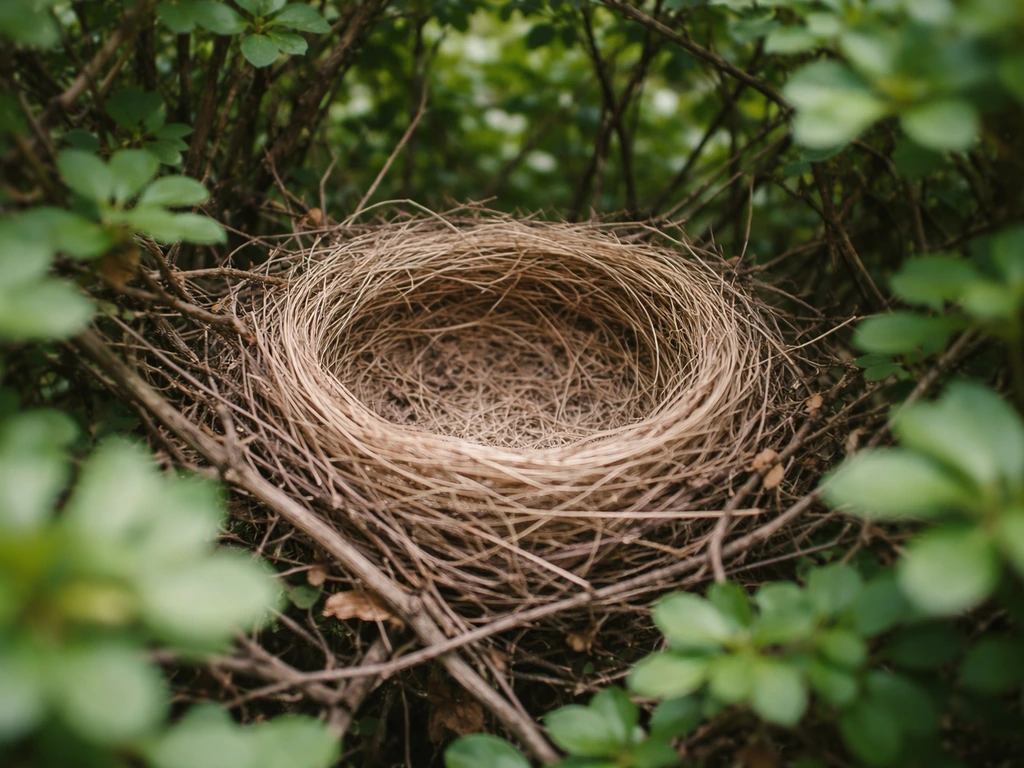
The cup shape is essentially the default nest architecture for songbirds. Dozens of North American species use it, which makes it the least diagnostic feature you can observe. Think of it like saying a car is sedan-shaped: technically useful, but it doesn't tell you the make or model. The open cup in a bush tells you the bird is almost certainly a passerine (perching bird), that it prefers concealed nest sites over open cavities, and that it's likely mid-spring to midsummer. Beyond that, you need more data.
One quick thing to rule out: house wrens, though they love shrubby areas, are cavity nesters. If you're looking at a true open cup sitting in foliage rather than wedged inside a hole or nest box, a house wren almost certainly didn't build it. That's a useful early filter. Cup nests in open foliage point you straight toward robins, sparrows, cardinals, catbirds, and warblers. From there, size and materials do the heavy lifting.
Quick identification checklist: location, size, materials, and lining clues
Before you get any closer than you need to, take a few photos and answer these questions from a comfortable distance. You don't need to touch anything, and in many cases you shouldn't.
- Height: Is the nest low (under 3 feet), mid-shrub (3–6 feet), or higher up in a bush or small tree? Song sparrows tend to nest very low, sometimes at or near ground level. Cardinals and catbirds usually sit 3–10 feet up. Robins often go higher, including into the branches of larger shrubs and small trees.
- Outer structure: Does the nest look rough and chunky with protruding twigs and grasses on the outside, or is it neat and compact? A robin nest has a noticeably thick, messy exterior before a smooth mud layer.
- Mud layer: Is there a visible dried mud or clay layer in the wall of the cup? That's a strong robin indicator. Most other small cup-nesters skip the mud entirely.
- Cup size: Estimate the inner diameter. A song sparrow nest has an interior of roughly 2 to 2.5 inches across and sits in a nest 4–8 inches wide overall. A robin's cup interior is about 3.5–4 inches across, making it noticeably larger. Cardinal and catbird nests fall somewhere in the middle.
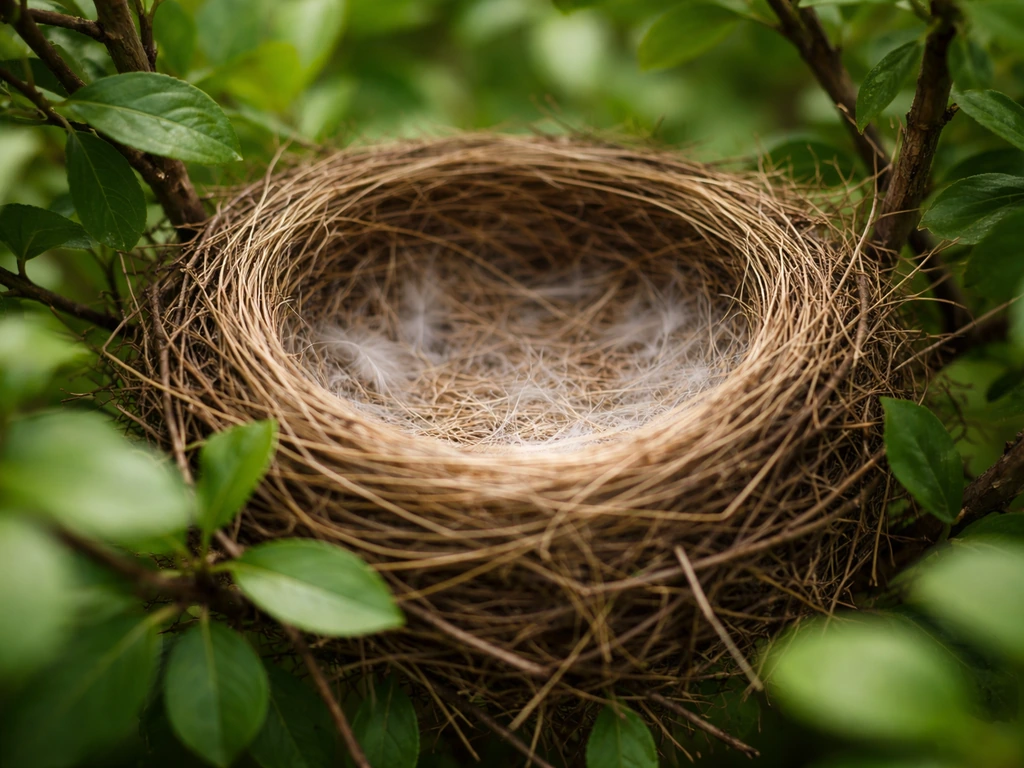
- Lining: Peer in if you can without disturbing it. Fine grass, rootlets, or animal hair as the inner lining suggests a song sparrow or cardinal. A clean grass lining over a mud base points to robin. Spider silk woven into the structure often indicates a warbler or hummingbird.
- Surrounding habitat: Dense ornamental shrubs and hedges in a suburban yard are classic song sparrow and catbird territory. Open garden shrubs near water favor robins. Thick thorny bushes like hawthorn or rose often host cardinals.
Most likely backyard bush nesters: candidate species and when they build
Here's a comparison of the species you're most likely dealing with in a typical North American backyard or garden setting.
| Species | Typical nest height | Outer materials | Inner lining | Nest interior size | Peak nesting window |
|---|---|---|---|---|---|
| American Robin | 5–15 ft (shrubs/trees) | Twigs, grass, mud layer | Fine dry grass over mud | ~3.5–4 inches across | March–July, 2–3 broods |
| Song Sparrow | Ground to 4 ft | Grass, weeds, bark strips | Fine grass, rootlets, animal hair | ~2–2.5 inches across | April–August, multiple broods |
| Gray Catbird | 3–10 ft in dense shrubs | Twigs, bark, leaves, rootlets | Fine grasses, rootlets, pine needles | ~2.5–3 inches across | May–August |
| Northern Cardinal | 3–10 ft in thick shrubs | Twigs, bark strips, vines | Fine grasses, plant fibers, hair | ~2.5–3 inches across | March–August, 2–4 broods |
| Yellow Warbler | 3–8 ft in willows/shrubs | Plant fibers, grass, spider silk | Plant down, fine fibers, hair | ~1.5–2 inches across | May–July |
| Common Yellowthroat | 1–3 ft in dense shrubs/reeds | Grass, leaves, bark | Fine grasses, hair | ~1.5–2 inches across | May–July |
If you're in the UK or Europe, the equivalent bush cup-nesters include blackbird (close analog to the robin, with a mud-lined cup), dunnock, chaffinch, and whitethroat. Their nests follow similar logic: mud layer means blackbird, spider silk and lichen suggest chaffinch or long-tailed tit (though the long-tailed tit builds a domed rather than open cup).
How to confirm safely without disturbing
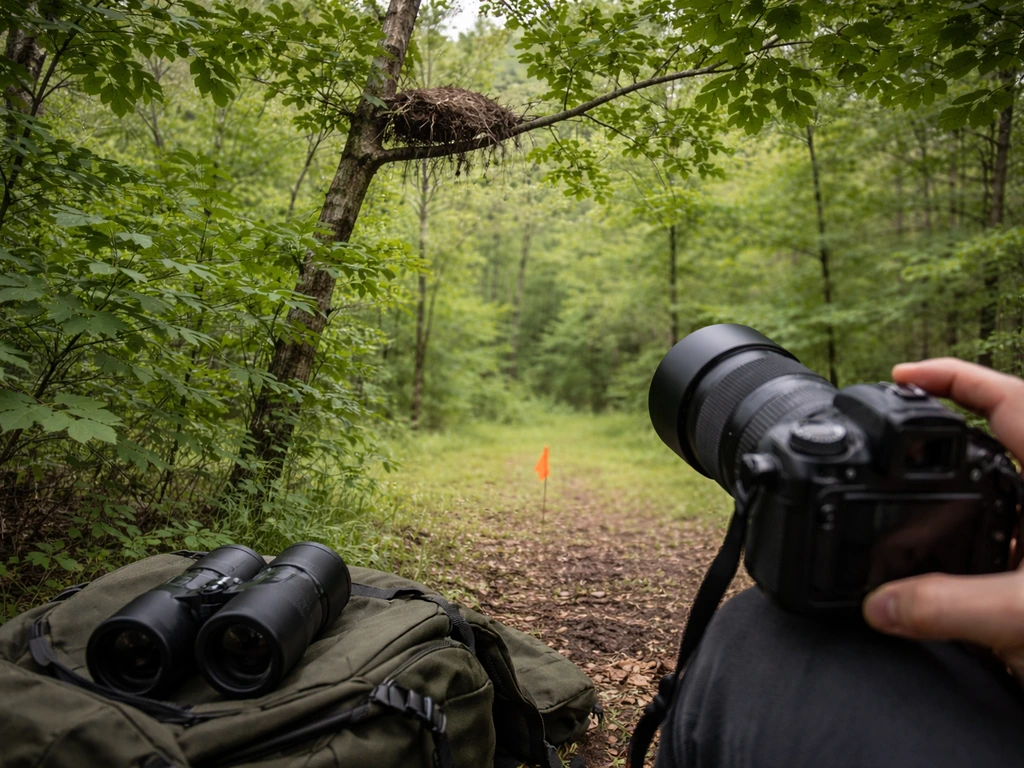
Once you've spotted the nest, the best thing you can do is back up and watch. Set up at least 10–15 feet away, ideally with binoculars, and give it 20–30 minutes. The adult bird will return, and a brief look at the adult is usually all you need to confirm the ID. Robins are unmistakable with their orange-red chest. Cardinals are bright red (male) or warm brown-red (female). Catbirds are slate gray with a rusty undertail patch. Song sparrows have a prominent central breast spot and heavy brown streaking.
Take photos from that same distance. A zoom shot of the nest exterior and a photo of the adult approaching are worth far more than a close-up that sends the bird flushing. NestWatch, the Cornell Lab's citizen science monitoring program, is explicit that physically disturbing an active nest or its contents is both harmful and illegal under federal law in the U.S. and under equivalent regulations in Canada and the UK. You do not need to touch it to identify it.
- Stay at least 10–15 feet away from the nest during observation.
- Use binoculars or a camera with a zoom lens rather than approaching.
- Watch quietly for 20–30 minutes during morning hours when adult activity is highest.
- Photograph the nest exterior and any adults arriving or departing.
- Note the time of day and frequency of visits: frequent short visits suggest nestlings being fed; longer sits suggest incubation is still underway.
- If you must walk near the nest (say, on a path you regularly use), walk steadily without pausing or staring at the nest. Hesitating and hovering near a nest causes more stress than a calm, direct pass.
What to do if the nest is active or in your way
This is where a lot of homeowners get stuck. The honest answer is: blank" rel="noopener noreferrer">if there are eggs or chicks in it, you're legally required to leave the nest alone in the U.S., Canada, and the UK. In the U.S., the Migratory Bird Treaty Act prohibits taking, possessing, or disturbing the nests, eggs, or young of migratory birds. In Canada, the Migratory Birds Regulations offer similar protection, and blank" rel="noopener noreferrer">a permit or authorization from Environment and Climate Change Canada is required before any relocation or destruction of an active nest. In the UK, the Wildlife and Countryside Act 1981 makes it an offence to intentionally or recklessly disturb any wild bird at an active nest or to disturb dependent young.
The good news: most songbird nests are done within about a month once incubation starts. A robin incubates for 12–14 days, and nestlings fledge in roughly 13 more days after hatching. That's under four weeks from the first egg to an empty nest. A song sparrow follows a similar timeline. A bottle-shaped nest is most often associated with a hummingbird, which uses a more enclosed, dangling nest design. Practically speaking, if you found the nest while eggs are already present, you're often looking at just two to three weeks before the nest is naturally vacated. Scheduling any trimming or construction work around that window is almost always the simpler path.
- Do not trim or prune the bush containing an active nest until it is confirmed empty and the nesting season is clearly over.
- Do not relocate an active nest without checking your local regulations first. In most North American and UK jurisdictions, moving an occupied nest requires a permit.
- If the nest is in a genuinely hazardous spot (a frequently used gate, a doorway), contact your local wildlife agency or a licensed wildlife rehabilitator before doing anything.
- If the nest is in a low-traffic shrub that's simply inconvenient, adjust your activity rather than the nest. Temporarily reroute foot traffic, delay scheduled yardwork, and mark the area so others in your household know to stay clear.
- If you accidentally touched or moved nest materials before realizing eggs were present, stop immediately. The myth that birds abandon nests touched by humans is largely false, but continued disturbance will cause abandonment.
- Wash your hands after any accidental contact with nest materials. Wild bird nests can harbor mites, bacteria, and other organisms.
Basic nest protection and predator-reducing tips for homeowners
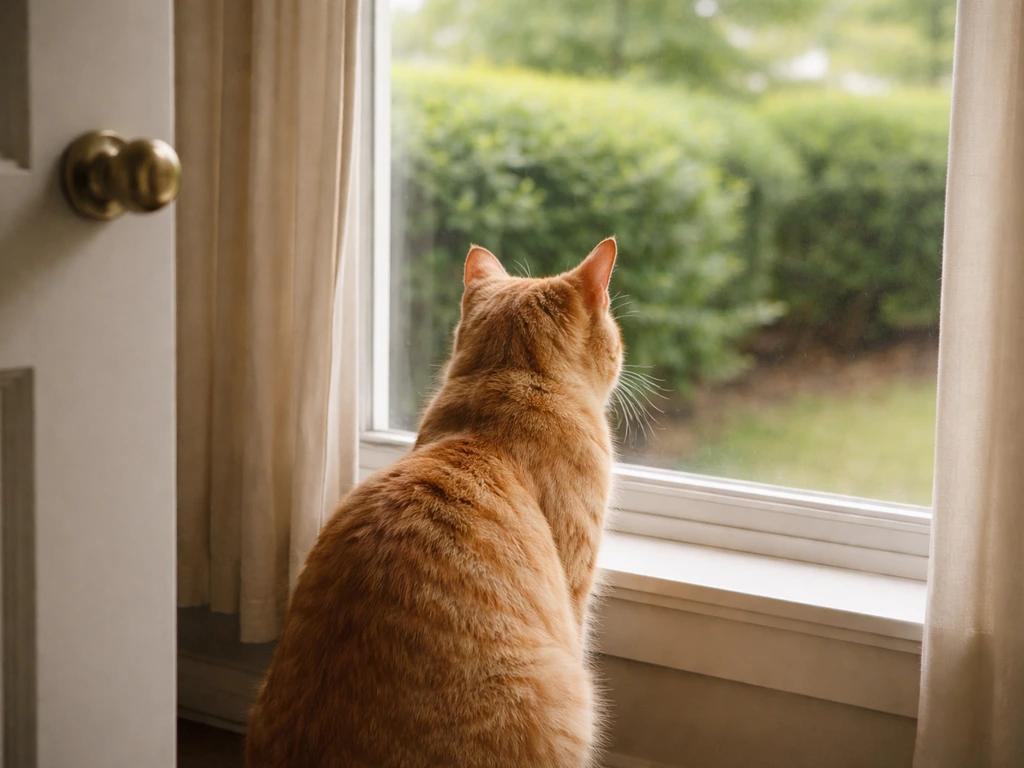
You can meaningfully improve the odds of a successful nesting attempt without touching a thing. The biggest threats to cup nests in bushes are cats, corvids (jays and crows), and squirrels. A few targeted changes around your yard can make a real difference.
- Keep cats indoors during active nesting, especially from late April through July. Even a well-fed domestic cat will raid a low nest given the chance.
- Avoid placing bird feeders directly next to nesting shrubs during the nesting season. Feeders concentrate corvids and squirrels, which then explore the surrounding vegetation.
- Don't trim surrounding shrubs or remove adjacent cover while a nest is active. The denser the surrounding foliage, the harder it is for aerial predators to spot or access the cup.
- If you have motion-sensitive sprinklers or lights in the yard, position them to cover approaches to known nesting shrubs during the nesting period.
- Avoid using pesticides on or near the nesting shrub. Many cup-nesting birds feed caterpillars and insects to their chicks, so insecticide use in the immediate area directly reduces the food supply.
- If corvids are a persistent problem, a simple visual deterrent like reflective tape hung in nearby trees (not on the nesting shrub itself) can reduce their confidence in the area.
Seasonal timing and troubleshooting: judging nesting stage and common look-alikes
Timing matters both for identification and for knowing how long you'll need to work around the nest. In North America, cup-nesting in shrubs peaks between late March and late July, with the heaviest activity in May and June. If you're finding a cup nest in a bush right now in early May, you're right in the middle of prime nesting season for robins, cardinals, catbirds, and song sparrows. A nest found in August or September may be a second or third brood, or it may already be abandoned.
To judge what stage the nest is at, watch the adult behavior. A bird sitting motionless in the cup for long stretches with minimal movement is almost certainly incubating eggs. A bird making rapid, repeated trips to and from the nest with food in its beak means chicks have hatched and are being fed. If you see no adult activity at all for a full day or two, the nest may be abandoned, but don't assume that after only a few hours: incubating adults do leave the nest periodically to feed.
Watch out for these common look-alikes that aren't active nests. Old nests from previous seasons can persist in shrubs for months or even years, and they often look like active cup nests until you notice no bird activity at all. A fresh nest under construction will look slightly rough and incomplete, with loose strands trailing from the rim. A "false cup" made from wind-blown debris caught in branch forks is usually asymmetrical, shallower than a real nest, and shows no organized weaving or lining. If you're unsure whether a nest is real and active, the 30-minute watch test almost always gives you your answer.
Cup-shaped nests also come in many other configurations beyond bushes. Some species build them at ground level, others in the vertical forks of tree trunks, and others weave them into reeds or grass. If what you're looking at doesn't quite match the bush-nesting species above, it's worth considering whether the bird might be building a cone-shaped, bottle-shaped, or small round nest instead, as those shapes point to entirely different groups of species with their own placement and material preferences. If you think you might be looking at a cone shaped nest, start by looking for those distinctive woven, pointed structures and then compare the bird type to typical cone nest builders.
FAQ
If I see an open cup in bushes, is it always a songbird (passerine)?
Almost always, but not always. Cup-like structures can be formed by debris or by certain non-bird activity that mimics a nest, so the real check is bird behavior (adult returning to the cup) and whether the rim shows purposeful weaving or lining rather than random twigs caught in a branch fork.
What if the nest looks like a cup but is very low to the ground, or partly covered by leaves?
Low placement and heavy concealment can still fit several common cup-nesters, especially sparrows and robins, but height and concealment together help. A cup sitting very close to the ground (or with the entrance obscured by foliage) increases the odds of a sparrow-like builder rather than a taller, more openly placed robin-type nest.
How can I estimate the cup size without getting closer?
Use object scale from photos taken at the same distance. For example, compare the cup rim to nearby twigs of known thickness, or use the adult bird for scale by photographing an approach and then measuring the relative proportions in the image. Size ranges are less reliable than lining and materials, but they still narrow candidates.
Do both the male and female birds build the cup, or does one do it?
In many of the likely species (like robins, cardinals, and song sparrows), nest construction is often driven by the female, but the adult sex roles can vary by species and season. The practical takeaway is that construction can look rough and incomplete at first, and incubation and feeding behavior matter more than who does the building.
What materials should I look for inside the cup to narrow the ID?
Pay attention to lining texture. Soft plant fibers and grasses suggest sparrow or robin-type lining, while some species incorporate distinctive items such as fine spider silk or other thin materials. Also note whether the cup is mostly woven with twigs, or whether the outer rim is mostly mud or strongly cemented materials.
How do I tell an active nest from an old cup if I cannot watch for long?
If you cannot watch for 20 to 30 minutes, take a photo from your normal safe distance and check for clear signs of freshness. Active nests usually look slightly messy but organized (not just a dry pile), and you will see either an adult attending (even briefly) or a pattern of regular return. If there is absolutely no bird activity over multiple visits across a day, treat it as inactive and observe from farther away anyway.
Is it safe to mow or trim around the bush if the nest might be active?
Not if eggs or chicks are present. The safest approach is to avoid the area until you confirm it is inactive (via watching for adult attendance) or you can wait until after the nesting window. If you must do yard work, schedule it when the nest is confirmed abandoned or removed naturally, rather than assuming based on appearance.
Can I move the nest if it is in the way of construction or landscaping?
Generally no for active nests. The article explains that active nests are protected and relocation typically requires appropriate authorization in the U.S., Canada, and the UK. For inactive nests, rules may still apply depending on local wildlife protections, so confirm status and check local guidance before any movement.
What should I do if a cat, squirrel, or corvid is repeatedly approaching the nest?
Reduce access without touching the nest. Use practical barriers (for example, block ground access near the bush), supervise pets indoors, and secure trash or feeders to reduce corvid attraction. If predation is persistent, consider temporary deterrents that do not require disturbing the nest or the surrounding branch structure.
How long can I assume a cup nest stays active after I first notice it?
The timing depends on incubation and chick stage, but for many common species it is roughly under a month from first egg to fledging. If you find the nest when eggs are already present, you may only have a couple of weeks before it is naturally vacated, but you should still verify stage by watching for incubation behavior versus frequent feeding trips.
What if I never see the adult bird return, even after watching for a while?
Sometimes adults are quiet or reduce visits when they sense disturbance, and sometimes they switch nest attendance patterns. Try multiple short sessions at different times of day from the same safe distance. If there is still no activity after repeated checks, the most likely explanation is that it is inactive, but avoid assuming after only a brief observation.
I found a cup-shaped nest at ground level. Does that change the likely bird?
Yes, it can. Ground-level cup nests often point toward different species than shrub cup-nesters, even though the cup architecture is similar. If your nest location does not match the typical bush-nesting patterns described, broaden the search to include ground cup nesters and also consider whether it might be a different nest shape type.
Could it be a hummingbird nest instead, even if it looks open?
A hummingbird nest is typically more enclosed and more distinctive than a simple open cup, often described as bottle-shaped or otherwise enclosed. If the structure looks like a true open bowl, hummingbird is less likely. Comparing how enclosed the nest is, and how it hangs or sits, usually clears this up quickly.
Next Articles
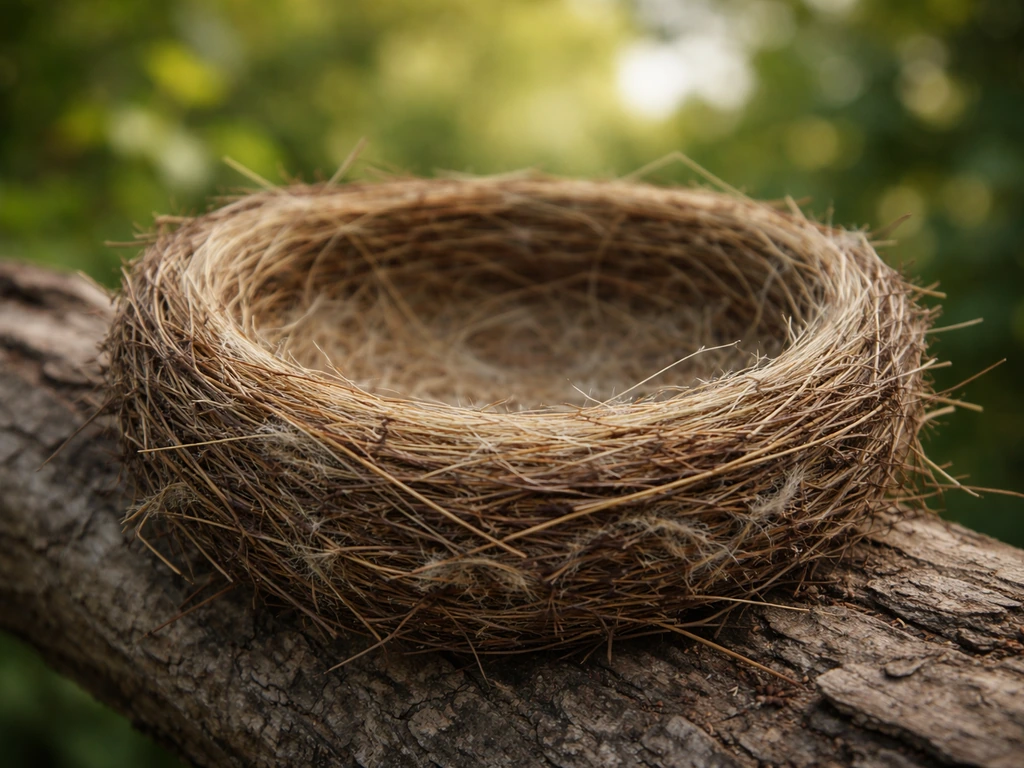
Which Bird Makes a Cup Shaped Nest? How to Identify
Identify cup-shaped nests by structure and materials, then learn which North American birds build them and what to do sa
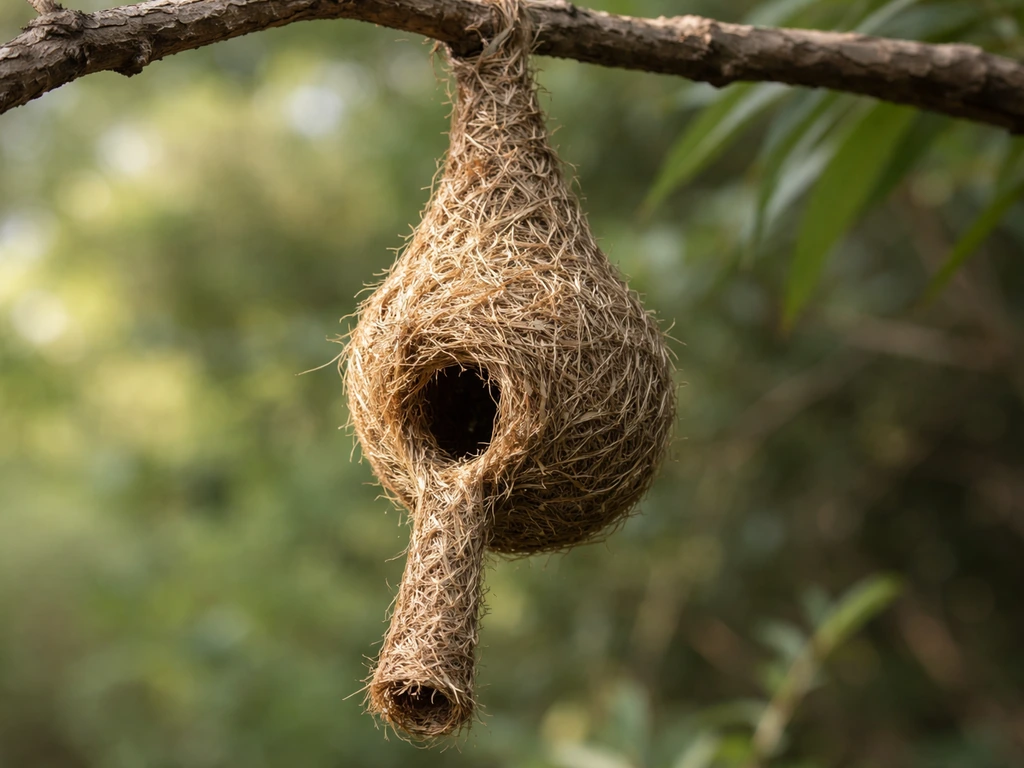
Which Bird Makes a Bottle-Shaped Nest? How to Identify It
Identify which bird makes bottle-shaped nests by region, then confirm traits and rule out lookalikes safely.
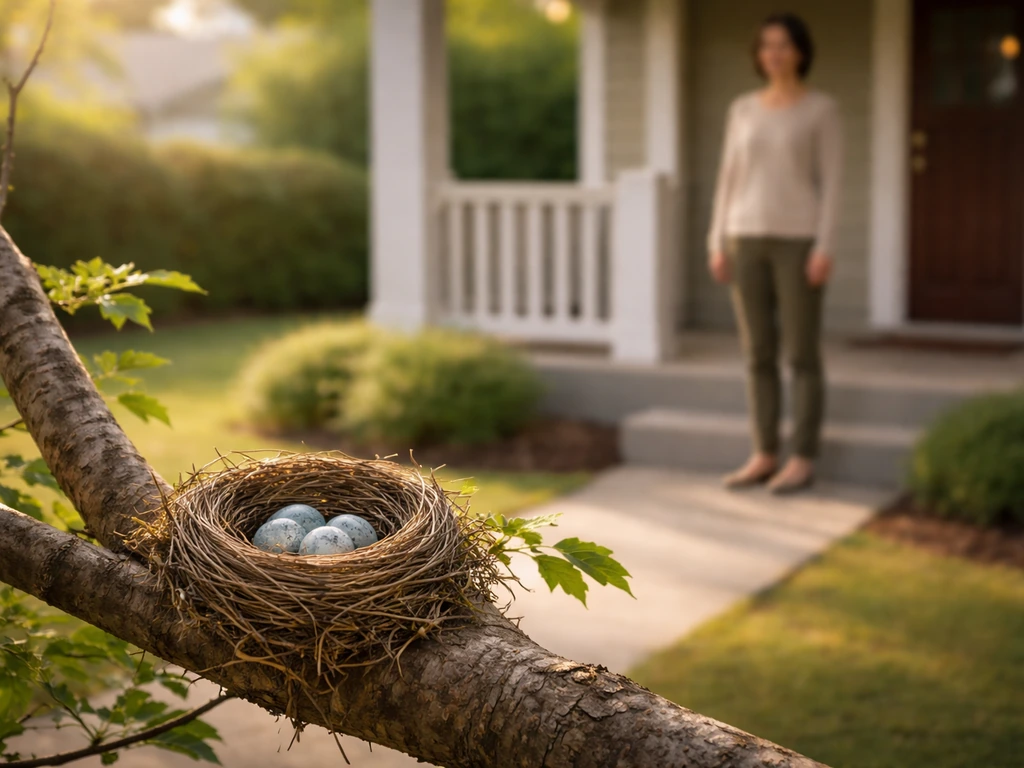
Should I Let a Bird Build a Nest? What to Do Today
Decide if to let a bird nest, how to check activity, avoid disturbance, and handle conflicts safely and legally.