Snakes find bird nests primarily through scent (chemical cues picked up by tongue-flicking into the Jacobson's organ), heat detection (pit organs in vipers that sense infrared radiation from warm bodies), substrate vibrations from nestling movement and parent bird activity, and visual tracking of parent birds entering and leaving a nest site. If it rains, bird nests can get wet and become heavier, and the adults may shift how they incubate and protect the eggs or nestlings what happens to bird nests when it rains. Once a snake locates a promising area, it uses climbing ability, existing vegetation routes like vines, and sheer persistence to reach the nest. If you have a bird nest in your yard and you're worried about snakes, the most effective things you can do right now are remove climbing routes to the nest, eliminate nearby snake shelter like wood piles and dense ground cover, and reduce the rodent activity that draws snakes into your yard in the first place.
How Do Snakes Find Bird Nests? Prevention Steps Today

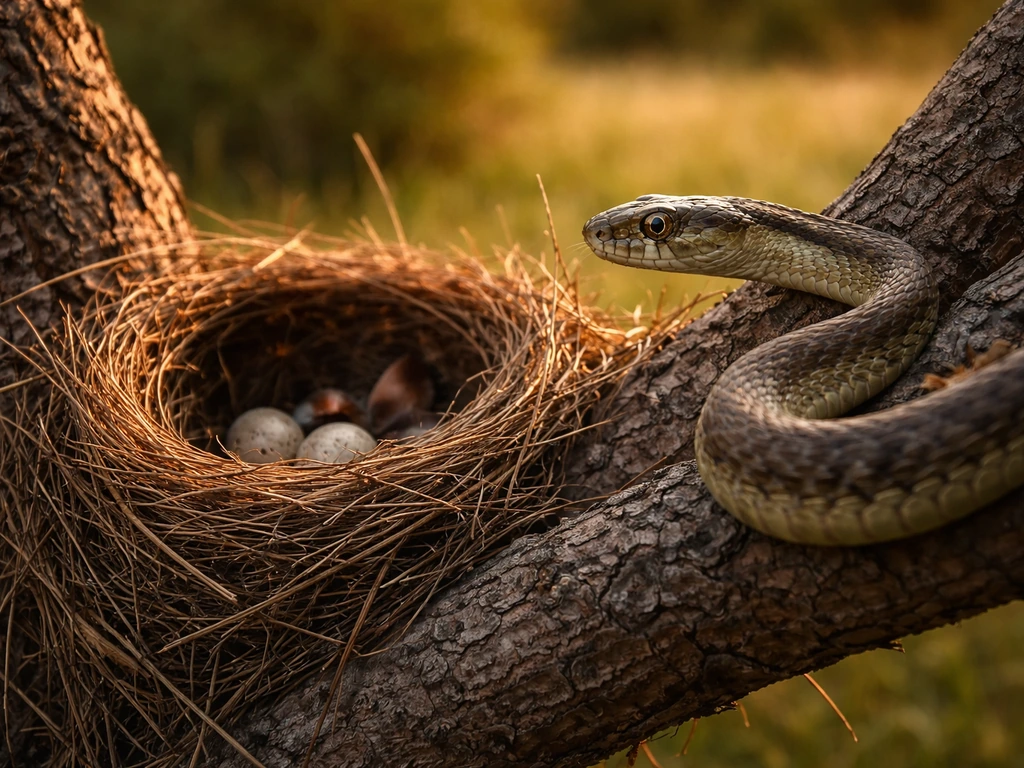
How snakes actually find bird nests
Chemical scent: the tongue-flick system
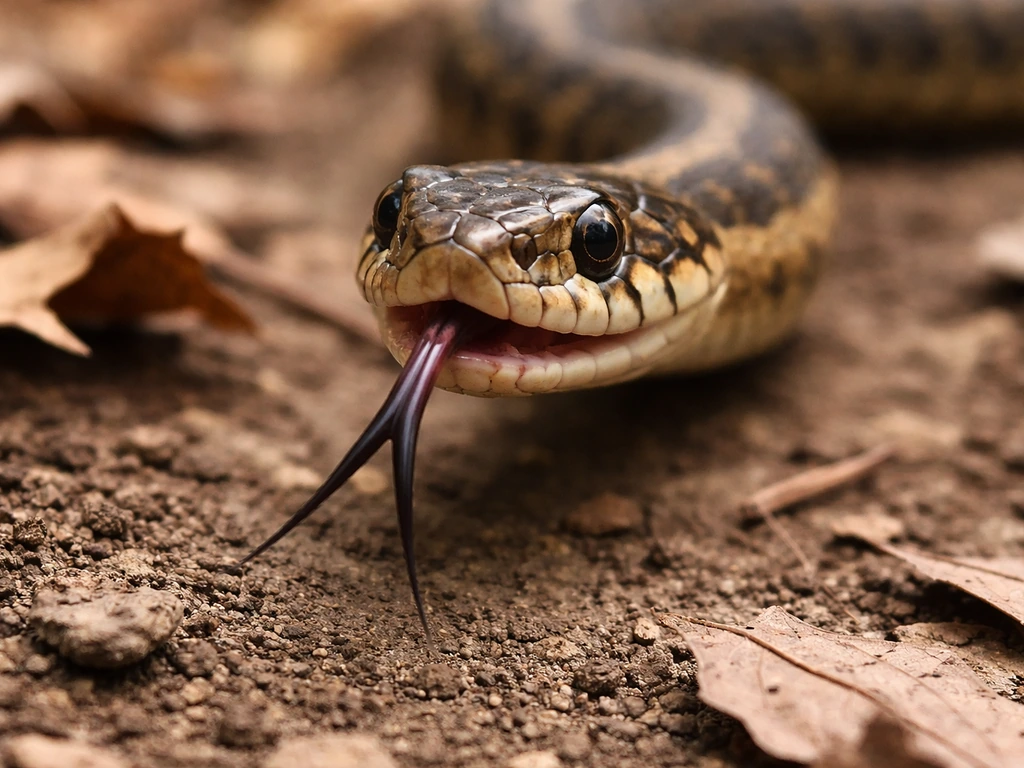
The snake's forked tongue is not just decorative. Every time a snake flicks its tongue, it collects chemical particles from the air and substrate and delivers them to the Jacobson's organ (also called the vomeronasal organ) in the roof of its mouth. Electrophysiological studies on garter snakes confirm that tongue-flicking directly activates this chemosensory system. This means snakes are essentially smelling in stereo, using the two tips of the fork to get directional information about where a scent is coming from. Parent birds, eggs, and nestlings all emit detectable odors. A snake cruising along a fence line or through dense shrubs is running a continuous chemical scan. Once it picks up bird scent, it can follow that trail to the source.
Heat sensing: how pit vipers zero in
Pit vipers (copperheads, cottonmouths, rattlesnakes) have a pair of heat-sensing pit organs located between the eye and nostril on each side of the face. These organs detect infrared radiation, meaning they can sense the heat radiating from a brooding parent bird or a cluster of nestlings, even in total darkness. Research confirms the pit organ responds to thermal gradients rather than light, giving the snake directional and distance information about a warm-bodied target. This is why nocturnal predation events are well documented on nest cameras: a brooding female sitting on eggs at night is a thermal beacon to a pit viper moving through the yard.
Vibration and sound detection
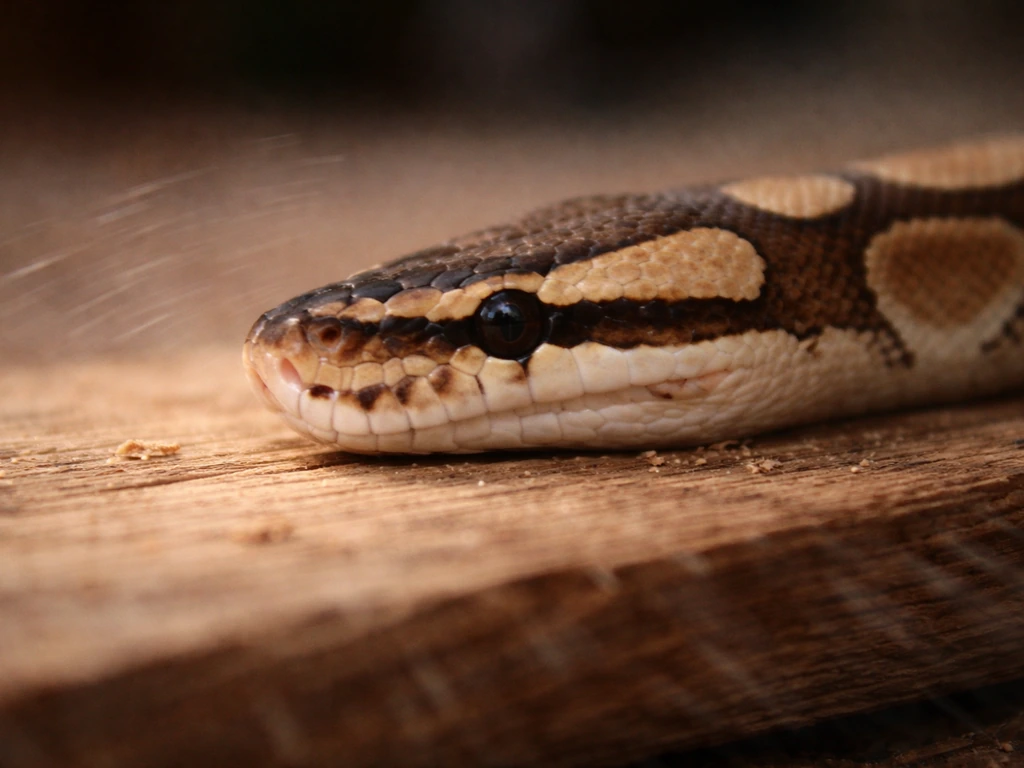
Snakes lack external ears, but they are not deaf to the world. Biomechanical research shows snakes can detect substrate-borne vibrations through specialized jaw mechanisms when the head is in contact with the ground. Studies also show sensitivity to specific low-frequency ranges that correspond to the kind of movement produced by animals nearby. Studies in PLOS ONE also report that snakes can show sound and vibration sensitivity across specific low-frequency ranges, supporting vibration/sound cues in prey detection sensitivity to specific low-frequency ranges. Nestlings begging loudly, parent birds landing and departing repeatedly, and the general activity of an active nest all create vibration signatures. A snake investigating the base of a shrub or tree trunk is picking up those signals through the ground.
Visual tracking of parent birds
Snakes are also capable of visual tracking, and an active nest is a busy place. Parent birds make dozens of feeding trips per day, often following the same flight path to the same landing spot. A snake that watches a bird repeatedly disappear into the same dense shrub has learned something useful. Nest camera data from a study of corn snakes shows that snakes sometimes push sleeping adult birds off nests before accessing nestlings, which means they located the exact nest position first. Visual cues from bird behavior almost certainly contribute to that initial location process.
Why some nests are much more vulnerable than others
Nest height alone does not protect birds. Rat snakes, which are the dominant nest predators across much of the eastern United States, are skilled tree climbers. Research on rat snake climbing performance found that predation risk decreases significantly for birds nesting in trees with smooth bark and no vines, while rough-barked trees draped with vines are much easier to climb. A Forest Service study on parrot nests identified vines and canopy contact as primary access routes for snake predation and recommended isolating nest trees by removing those routes.
Habitat edge matters too. A peer-reviewed study tracking seasonal activity of rat snakes and black racers found that predator activity at forest-field edges was a reliable predictor of avian nest predation risk. Yards that back onto woodlands or have mixed cover of lawn, shrubs, and trees are essentially prime edge habitat. The more complex and layered the cover, the more opportunities snakes have to hunt unseen.
When predation risk peaks: a seasonal calendar
| Season / Period | Risk Level | Key Factors |
|---|---|---|
| Late April to June (peak nesting) | Very High | Most nests active; snakes fully active after winter; nestlings and eggs abundant; high parent bird activity signals nest locations |
| July to August (late broods, fledglings) | High | Second broods underway; juvenile snakes emerging; fledglings on ground are easy targets |
| September (fall migration pre-departure) | Moderate | Some late nests; snakes feeding heavily before winter; cooler nights reduce but do not eliminate activity |
| October to March (winter) | Low | Most snakes inactive or dormant in cold climates; some activity during warm spells in southern states |
| Nights with warm temperatures (any season) | Elevated | Nocturnal predation events are well documented; pit vipers especially active at night hunting by heat |
How snakes actually get into nests
Access behavior varies by snake species and nest location. Rat snakes and corn snakes are arboreal climbers that can ascend rough tree bark, vines, fence posts, and even brick walls. Corn snakes documented in nest camera studies were observed pushing brooding adult birds aside to reach eggs and nestlings underneath, a behavior that shows they locate the exact nest position before committing to the final approach. Rat snakes hunting nests in forest-edge habitats tend to be active at dusk and after dark, timing that overlaps with when parent birds have settled in for the night.
Ground-nesting birds face a different threat profile. Non-climbing species like some water snakes can access low shrub nests or nests in tall grass without needing to climb at all. Birdhouse predation typically involves a snake ascending the post, entering the hole, and consuming eggs or nestlings. Research from a golden-cheeked warbler nest camera study found that female birds were present during 75% of nocturnal predation events by snakes, meaning the snake found the nest while the bird was on it and proceeded anyway.
Signs of snake activity near nesting sites
You rarely catch a snake in the act, so knowing what signs to look for makes a big difference. Here is what to check around any active nest site:
- Shed skins (sloughs): A shed skin near a nest, birdhouse post, shrub base, or fence line is strong evidence a snake is using that area. Snakes shed by rubbing their head against something rough and then crawling out of the old skin, leaving it intact or in pieces. Photograph it before disturbing it; the scale pattern can help with identification.
- Disturbed nest contents: Eggs or nestlings missing without shell fragments, or a completely empty nest with no signs of a predator fight, often indicates snake predation. Mammal predators like raccoons typically leave more physical evidence of a struggle.
- Pressed-down vegetation: A snake moving through tall grass or low ground cover leaves a visible trail of flattened stems, especially visible in dewy morning light.
- Unusual parent bird behavior: Birds alarm-calling repeatedly from the same spot, dive-bombing the ground or a shrub, or refusing to return to the nest may indicate a snake is nearby.
- Disappearing rodents: A sudden drop in visible rodent activity can mean a snake has moved in and is hunting the area. Rodent activity is a strong attractant, so its presence also raises risk.
- Snake feces or odor: Near a birdhouse or dense shrub, a musky or faintly sour smell can indicate snake presence.
Practical, ethical ways to protect nests from snakes
The goal here is to make the nest harder to reach without harming the snake or disrupting the birds. After rain, many bird species will still return to their nests, but repeated soaking can affect nest structure and insulation depending on materials and location can bird nests get wet. Relocation of snakes is generally not recommended as a solution: research and wildlife agencies including the Humane Society note that trapping and relocating wildlife is often not humane or effective, and the snake is likely to return or another will take its place if the habitat remains attractive. Focus on exclusion and access reduction instead.
For birdhouse nests
- Install a metal baffle on the mounting pole, at least 18 inches long and positioned so the bottom is roughly 5 feet off the ground. Cone-shaped baffles work well for snakes because they cannot grip the slick metal surface.
- Use a smooth metal or PVC pole rather than a wooden post. Rough wood is far easier for a climbing snake to grip.
- Make sure no branches, vines, or fences are within striking distance of the birdhouse. A snake that cannot climb the pole directly will look for an overhead route.
- Keep the pole free of vegetation all the way up. Even a few weeds growing against the base give a snake a purchase point.
For tree and shrub nests
- Remove all vines from the trunk of a nest tree. Vines are the primary climbing route for rat snakes and were identified by Forest Service research as the main access pathway for snake predation in tree nests.
- Trim branches that touch fences, other trees, or structures to eliminate canopy bridges.
- A sheet metal wrap (about 24 inches wide) secured loosely around the trunk below the nest can deter climbing. The loose edge creates an overhang that most snakes cannot get past. Secure it so it does not damage the bark.
- If a nest is in a low shrub, there is limited intervention you can do without disturbing the birds. Focus instead on reducing snake presence in the surrounding area.
A note on chemical repellents
Skip the commercially sold snake repellents. UC IPM's guidance is straightforward on this: chemical repellents are available but have not been proven to work well enough to recommend. Some people try placing shed snake skins in or near nests, based on the idea that nest predation by mammals might be deterred by predator scent. Research on this shows mixed results that vary by habitat, and it would have no effect on snake predators themselves. Save your time and money for physical exclusion.
Yard inspection: reduce what draws snakes in
A snake does not appear in your yard by accident. It is there because the yard offers food, shelter, or both. Walk your property with this checklist in mind, ideally before nesting season begins in April:
- Wood piles, rock piles, and brush piles: These are prime snake shelter. Move them away from nest areas, or eliminate them entirely during nesting season. Washington DFW and Montana State University Extension both list these as the first things to address.
- Tall grass and weedy borders: Snakes use dense low vegetation as cover while hunting. Keep grass trimmed, especially within 20 feet of any birdhouse or known nesting shrub.
- Rodent activity: Bird feeders that spill seed onto the ground attract mice and voles, which attract snakes. Use feeders with seed catchers, clean up spilled seed daily, and store seed in sealed containers. Reducing rodents reduces the single biggest draw for snakes.
- Dense ground cover and mulch beds near nesting areas: Deep mulch and ground-cover plantings like ivy are ideal snake habitat. Thin them out or use gravel mulch instead near birdhouses.
- Gaps and entry points in structures: Snakes shelter in cool, dark spaces under decks, in gaps in foundations, and under outbuildings. Seal cracks during summer when snakes are active outdoors. Minnesota DNR recommends sealing when snakes are not likely to be inside.
- Water features: Birdbaths and ponds attract frogs and other prey species that bring snakes closer. Keep these away from nesting sites where possible.
- Compost bins: Open compost attracts rodents and insects, which attract snakes. Use a sealed bin.
Safety, legality, and when to call for help
Most snakes visiting bird nests in residential yards are non-venomous species like rat snakes, corn snakes, and garter snakes. They are not dangerous to people who leave them alone. The rule from virtually every state wildlife agency is the same: do not attempt to pick up, kill, or relocate a snake yourself. South Carolina DNR also advises not to attempt to pick up, kill, or relocate a snake yourself and instead use safer, appropriate steps for dealing with snakes near people do not attempt to pick up, kill, or relocate a snake yourself. South Carolina DNR, Washington DFW, and others all emphasize this, and it applies especially to any snake you cannot positively identify as non-venomous. Many species that look similar have very different threat profiles.
Beyond personal safety, there are legal considerations. Many snake species are protected under state law, and killing a protected species can carry significant fines. Even non-protected species generally should not be harmed. If you have a venomous snake (rattlesnake, copperhead, cottonmouth) near an active nesting area and cannot address it through habitat modification alone, contact your state wildlife agency or a licensed wildlife removal professional. Some states, like Minnesota, have specific programs (the Timber Rattlesnake Responder Program uses trained local volunteers) to help with exactly this situation. Do not try to handle venomous snakes yourself under any circumstances.
If you find a snake inside a birdhouse or actively predating a nest, the most you should do is make noise to startle it away and then immediately address the access point (the pole, the vine, the branch) so it cannot return easily. Attempting to grab or block a snake with your hands is how bites happen, including from non-venomous species that bite defensively when grabbed.
When to contact wildlife authorities
- Any time you have a venomous snake in a high-traffic area of your yard and habitat modification has not resolved it.
- If a snake appears injured or trapped in a structure.
- If you need help identifying a snake from a photograph and your local extension office or nature center cannot assist.
- If predation is ongoing and you suspect it may be affecting a species of conservation concern in your area.
Snakes are an important part of the ecosystem and are not something to eliminate wholesale from your yard. The goal is coexistence managed through smart exclusion and habitat design, not eradication. A yard with fewer rodents, less dense cover, and well-baffled birdhouses can support both nesting birds and a healthy local snake population without the two constantly intersecting. How do bird nests survive storms? Their survival depends on nest structure, material choices, and sheltered placement that help them resist strong winds and heavy rain nesting birds. Other predators like raccoons and crows present similar challenges to nesting birds, and the same principle applies: physical exclusion and habitat management are more effective and more ethical than reactive removal. You can also protect bird nests from crows by using physical barriers and removing easy perching spots near the nest site. Raccoons can also be serious nest raiders, sometimes probing or digging to reach eggs and nestlings do raccoons raid bird nests.
FAQ
Do snakes use bird nests specifically, or do they mostly follow birds’ scent and activity?
Most nest targeting starts with general cues that birds provide, such as odor from eggs and brooding adults, and heat or movement signals. A snake then confirms the nest location by correlating those cues with where parent birds repeatedly land, disappear, or feed.
Can a snake find a nest if the birds are not brooding or it is out of season?
It is less likely but not impossible. Non-brooding birds still give off odors and leave activity patterns, and some snakes will investigate likely structures like dense shrubs or tree cavities. If there is no active nest activity, snakes are more likely to switch to other prey sources nearby.
Why do snakes sometimes approach at night, even if the nest looks hidden?
Many nest predators time activity to coincide with reduced bird defenses, such as when parents settle in. Pit vipers can home in on warm bodies in darkness, and other species may use cover and low-visibility routes like fence lines and shrub bases.
If I see a snake near a birdhouse once, does that mean it will come back to the same nest?
Often yes, because the snake may have already mapped the access route to the exact opening. The higher-risk part is not the single visit, it is leaving the same climb path, shelter nearby, or a reachable entry point that makes repeating the attempt easy.
Will moving an active bird nest or relocating it stop snake predation?
Relocating nests is usually a bad plan. It can stress birds, disrupt incubation, and often does not remove the underlying snake attractants. If you need help, use exclusion methods like baffling and access blocking designed to protect the birds rather than moving the nesting structure.
Do predator decoys, ultrasonic devices, or shed snake skins actually deter snakes from bird nests?
Shed-skin approaches have mixed outcomes and do not directly target the cues snakes use for finding nests. Ultrasonic devices and most commercial “snake repellents” are generally unreliable, so the most effective strategy is making routes physically harder and reducing food and cover that bring snakes to your yard.
What is the safest way to check suspected snake access points around a nest without getting bitten?
Stay back and inspect from a distance, look for climb routes and gaps, and avoid reaching into vegetation or holes. If a snake is present, use noise from far away only to encourage it to leave, then focus immediately on the accessible structure points like the pole, vine attachment, or low branch that can be modified.
If a snake is in my yard but I cannot find the nest, how do I know where it is likely to be?
Look for repeated bird behavior and consistent landing zones, such as the same flight path to a dense shrub, tree cavity area, or specific birdhouse opening. Also scan for “busy” nest-adjacent signs like frequent parent visits to the same spot, rather than relying on seeing the snake.
Are all birdhouses equally vulnerable to snakes, or can design changes help?
Design matters. Birdhouse openings, proximity to perching points, and the presence of climbing routes determine risk. Add baffling where possible, reduce nearby vines or branches that touch the housing, and choose mounting methods that prevent easy ascent.
Should I remove vines and dense ground cover even if my yard also supports rabbits or other wildlife?
Yes, if your goal is reducing snake access to nesting areas. You can still maintain habitat, but aim for “baffled” separation by clearing vines from structures, thinning overly dense ground cover near bird nesting sites, and removing shelter features like wood piles close to the yard edge.
What should I do if the snake is venomous and near an active nesting area?
Do not attempt to handle or trap it yourself. Contact your state wildlife agency or a licensed wildlife removal professional and focus on non-contact prevention like keeping people and pets away until the access point or the situation is handled safely.
Does rainfall change snake activity around nests, and will the same prevention steps still work?
Rain can make nests heavier and alter nest conditions, but snakes still locate using scent, heat, and vibration cues. The prevention steps you use should focus on removing the access path and reducing nearby shelter and prey attractants, not on assuming snakes will avoid the area after wet weather.
How quickly after changing the yard should I expect reduced snake visits to bird nesting spots?
You may see improvement quickly if you remove the immediate access route to the nest site, but snakes can remain in the area while food and cover are still available. The biggest impact usually comes from combining exclusion (baffling, blocking routes, clearing vines) with longer-term reduction of rodent attractants and dense shelter.