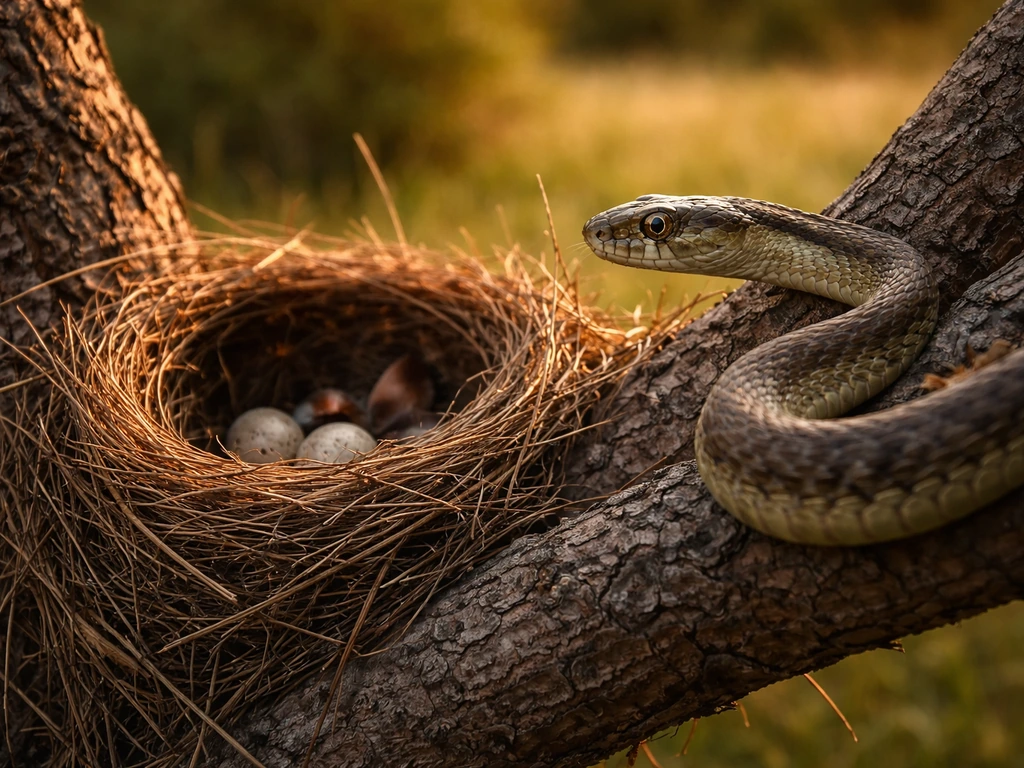
The most effective way to protect a bird nest from crows is to place a physical barrier around the nest that blocks crow access while still letting the parent birds come and go freely. A wire cage or framed netting structure around an above-ground nest, paired with a few smart deterrents nearby, gives you the best odds. But the right approach depends on the nest type, the species involved, and where the nest is located, so a few minutes of observation before you act will save you a lot of frustration later.
How to Protect Bird Nests From Crows: Safe Steps

Maya Bennett
17 May 2026
Why crows go after nests in the first place
American crows are opportunistic omnivores and well-documented nest predators. They eat the eggs and nestlings of many other species, and they are smart enough to learn where reliable food sources are. Once a crow identifies a nest as a target, it will revisit that site repeatedly. Research on crow nest-defense behavior confirms just how persistent and responsive they are to breeding territory cues, which is the same intelligence that makes them so good at finding and returning to other birds' nests.
Crows locate nests largely by watching parental activity. Every time a parent bird flies to or from a nest, it is potentially advertising the nest's location. Noise from nestlings also draws attention. Fish crow research on sensory cues shows that the combination of visual and sound signals near a nest significantly increases predation risk. This means your protection strategy needs to account not just for the nest itself but for the cues that lead crows to it.
Crows are also highly social. If one bird in a group finds a productive nest, others follow. Their intelligence means they habituate quickly to static deterrents, so a single scarecrow or reflective tape left in the same spot for weeks will eventually stop working. Any effective plan has to include variation and persistence, not just a one-time fix.
Identify the nest and species before you do anything

Before you install any protection, take five minutes to observe and document. What you do next depends heavily on what bird is using the nest. A ground-nesting killdeer needs a completely different approach than a robin nesting in a shrub or a wren using a nest box. Getting this right also keeps you on the right side of wildlife laws.
Classify the nest shape and location
Start by identifying the nest's basic architecture. The five most common types you'll encounter are an open cup (robins, thrushes, finches), a platform or stick mound (doves, herons), a cavity (woodpeckers, tree swallows, nest-box users), a hanging pouch or pendant (orioles), and a ground scrape (killdeer, many shorebirds). Note the height above ground, the materials used, and whether it has any roof or enclosure. An open cup nest in a shrub at 3 to 6 feet off the ground is the most common scenario for crow predation and also the most straightforward to protect with a barrier.
Confirm the nest is active before intervening
This step is not optional. Under the US Migratory Bird Treaty Act, it is illegal to remove or disturb an active nest that contains eggs or dependent young. Canada's Migratory Birds Regulations and the UK's Wildlife and Countryside Act 1981 have equivalent protections. An active nest is one that contains eggs, nestlings, or recently fledged young that are still dependent on the site. Do not assume a nest is abandoned just because you haven't seen the adults recently. During incubation, females may visit only once a day, often in early morning, to lay or tend eggs. NestWatch recommends waiting about four weeks after the last confirmed adult visit before treating a songbird nest as truly abandoned.
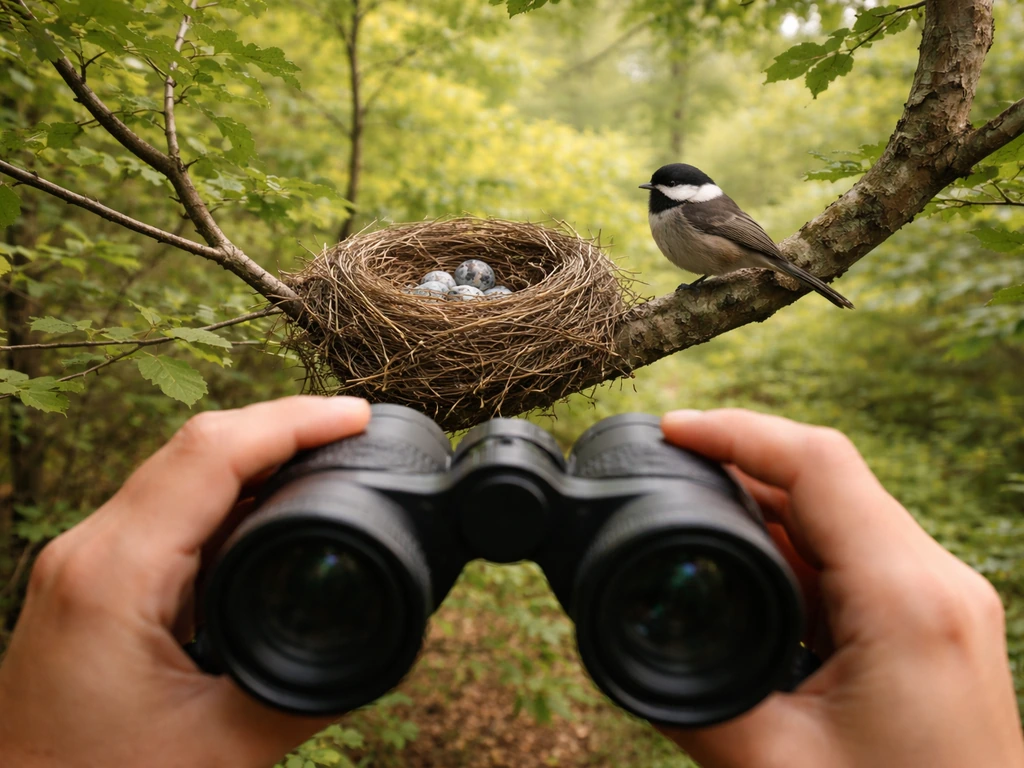
To confirm species, use binoculars from at least 10 to 15 feet away and observe without approaching the nest. Cornell's Merlin Bird ID app is genuinely useful here: you can identify species by sound using your phone, which avoids the need to get close. Take a photo from a distance if you can do so without disturbing the birds. Record what you see: nest height, nest materials, egg color if visible, number and size of adults, and any behaviors you notice.
Physical barriers and deterrents that actually work
Physical exclusion is the most reliable protection method. The goal is to create a barrier that a crow cannot reach through or land inside, while leaving openings small enough for the parent birds to enter. Here is how to do this safely and effectively.
Wire cage or hardware cloth enclosure
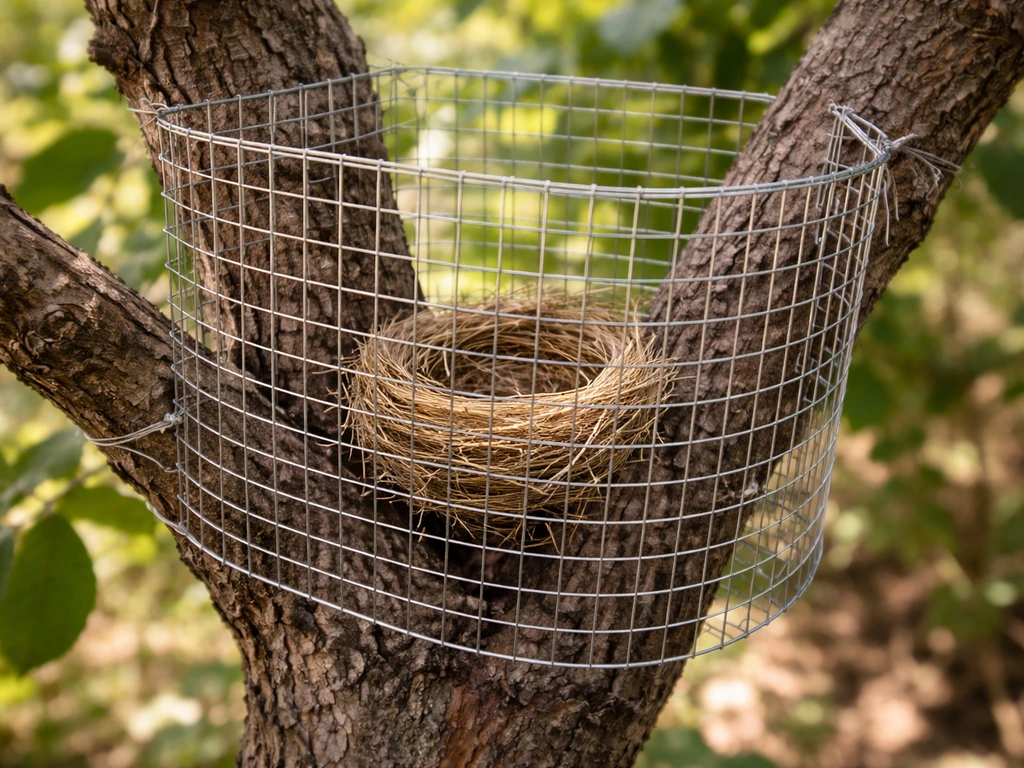
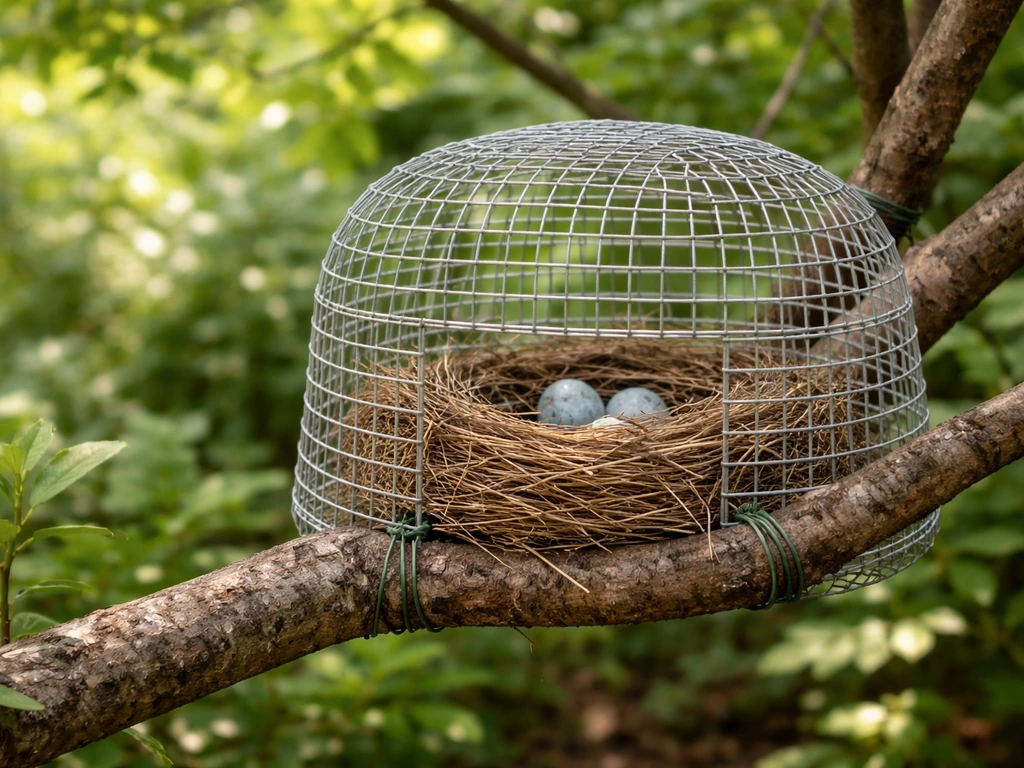
For an open-cup nest in a shrub or tree fork, a wire cage built around the nest branch is your best option. Use hardware cloth or welded wire with a mesh opening of 1 to 2 inches. This is large enough for a small or medium songbird to pass through easily but too small for a crow, whose bill alone is over an inch long. Bend the wire into a loose dome or box shape around the nesting branch, leaving at least 6 to 8 inches of clearance on all sides of the nest itself. Secure it to surrounding branches with twist ties or soft wire so it stays in place in wind. The cage should not press against the nest or restrict the parents' flight path in and out.
Avoid bird netting unless you can confirm it is wildlife-safe. USFWS has explicitly cautioned that many products marketed as bird netting create serious entanglement and entrapment hazards for the very birds you are trying to protect. If you do use netting, Wildlife Victoria's guidance recommends mesh smaller than 2 mm for general wildlife safety, which is fine for exclusion around vegetation but not practical as a cage material through which parent birds need to pass. For crow exclusion around a nest, rigid wire mesh is far safer than soft netting.
Nest box protection
If the active nest is in a nest box, your job is easier. Make sure the entry hole diameter matches the target species and is no larger (a 1.5-inch hole excludes most crows but admits bluebirds or wrens). Add a predator guard baffle on the pole below the box and consider a hole guard plate around the entry to prevent crows from enlarging the opening or reaching inside. Move the box away from overhanging branches if possible, since crows use them as perches to investigate.
Deterrents to use alongside barriers
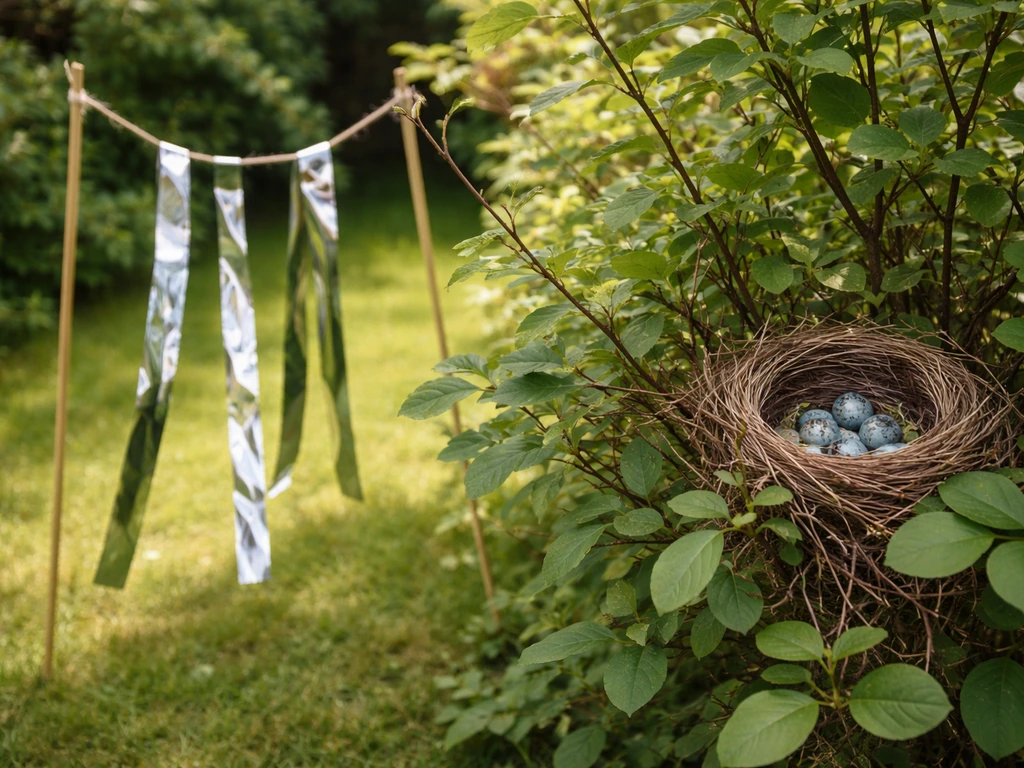
Deterrents work best as a secondary layer alongside a physical barrier. On their own, they rarely provide reliable long-term protection because crows habituate quickly to any repeated, static stimulus. The Minnesota DNR specifically notes that crows are smarter than the average bird and will stop responding to deterrents that never change. To slow habituation, rotate deterrents every few days and combine different types.
- Reflective tape or Mylar strips hung within 3 to 4 feet of the nest, moved to a new position every 3 to 5 days
- Predator decoys such as a realistic owl or hawk silhouette, repositioned regularly (a decoy that never moves will be ignored within a week)
- Motion-activated sprinklers positioned to cover approach routes to the nest tree, not aimed at the nest itself
- Wind-activated visual deterrents like pinwheels or flash tape streamers near crow perch points
- Crow distress or alarm call recordings played at irregular intervals during peak crow activity (early morning), used sparingly to avoid disturbing nesting birds
Yard layout and habitat changes that reduce crow pressure
Individual nest protection is reactive. Reducing what draws crows to your yard in the first place is the proactive layer that makes everything else easier. Crows are attracted to food sources, perching opportunities, and open foraging areas. A study in residential neighborhoods found that crows' and cowbirds' relative abundances were positively related to the number of bird feeders, which supports breeding-season feeder-management as a conflict-reduction step. Adjusting your yard with these in mind can meaningfully reduce crow visits during the nesting season.
- Secure trash cans and compost bins with locking lids. Research linking crow abundance to proximity to waste disposal sites confirms that accessible food waste is a major attractant.
- Remove bird feeders during the breeding season (roughly April through July in most of North America). A study in residential neighborhoods found that the number of bird feeders was positively associated with crow and cowbird abundance, and removing feeders during nesting season reduced nest predation pressure.
- Keep crow perching spots away from nest trees. Trim overhanging branches that give crows a direct line of sight or a landing platform near the nest. Crows like tall, open perches to surveil an area before descending.
- Avoid leaving pet food outside, especially in early morning when crows are most active.
- Reduce open lawn area immediately around nesting shrubs. Crows prefer open ground for approaching and retreating. Dense understory plantings make them less comfortable.
- Do not leave carrion, roadkill, or fish waste accessible near the yard.
These habitat changes are not just good crow management; they also reduce pressure from raccoons and other nest predators. Raccoons also prey on eggs and nestlings, so reducing access to the yard and protecting the nest can help alongside your barrier strategy. If you are dealing with multiple predator types simultaneously, these same steps help across the board.
Timing, seasonal planning, and when to call for help
Crow predation of nests is most intense during spring and early summer, which is exactly when most songbird species are breeding. In most of the US and Canada, the highest-risk window runs from late April through late July. Crows are actively breeding themselves during this period, which means they are ranging widely to find food for their own nestlings. This is not the time to be passive about nest protection.
A practical monitoring schedule
Check the nest once or twice a week from a safe observation distance using binoculars. NestWatch recommends this frequency precisely because more frequent visits increase disturbance and can themselves draw predator attention through the trails of human scent and activity. Avoid checking in the early morning during egg-laying, since many females lay then and may flush from the nest if disturbed. Record what you observe each visit: whether adults are present, signs of eggs or nestlings, and any crow activity nearby. A simple notebook or phone note works fine.
Install physical barriers as early as possible once you confirm the nest is active. Getting the cage in place before the eggs hatch is much easier than doing it during the nestling stage when parent birds are making constant feeding trips and are more reactive to disturbance.
When to escalate
If a nest has been predated and nestlings or eggs have been lost, or if parent birds have been injured, contact your state or provincial wildlife agency or a licensed wildlife rehabilitator. Do not attempt to move an active nest to a new location. Relocation of active nests by homeowners is not a legal DIY option under the MBTA in the US, and it rarely succeeds even when permitted because parent birds often abandon a moved nest. If a nest is in an immediate safety hazard (for example, inside machinery that must be operated), that is a scenario that requires professional guidance and potentially a federal depredation or nest removal permit. Your state wildlife agency or USFWS regional office can advise on the specific process.
Legal and ethical boundaries every homeowner should know
In the US, the Migratory Bird Treaty Act protects the vast majority of native wild bird species, covering their nests, eggs, and the birds themselves. It is illegal to destroy, take, or disturb an active nest (one with eggs or dependent young) without a federal permit, regardless of where the nest is located, including your own property. This applies to almost every songbird, shorebird, raptor, and waterfowl species you are likely to encounter. Crows themselves are also protected under the MBTA, which means you cannot harm, trap, or kill crows to protect another bird's nest without authorization.
What you are legally permitted to do is install protective structures around a nest that do not disturb the birds or damage the nest, manage your habitat to reduce attractants, and use non-lethal deterrents. You are not permitted to remove nesting material, relocate the nest, handle eggs or nestlings, or destroy the nest even if you believe it has been abandoned, until you are genuinely certain it is inactive. In Canada, the Migratory Birds Regulations 2022 provide equivalent protection for any nest containing a live bird or viable egg. In the UK, the Wildlife and Countryside Act 1981 prohibits intentionally damaging or destroying any wild bird's nest while it is in use or being built.
Ethically, the goal is to protect the nest with the minimum disturbance necessary. Every time you approach the nest, you risk flushing the incubating adult, exposing the nest location to nearby predators (including crows watching from above), and adding stress to birds at a critical life stage. Less is more when it comes to hands-on intervention.
Troubleshooting when your protection isn't working
Even a well-designed plan can hit snags. Here are the most common failure modes and how to fix them.
Crows are still getting to the nest despite a barrier
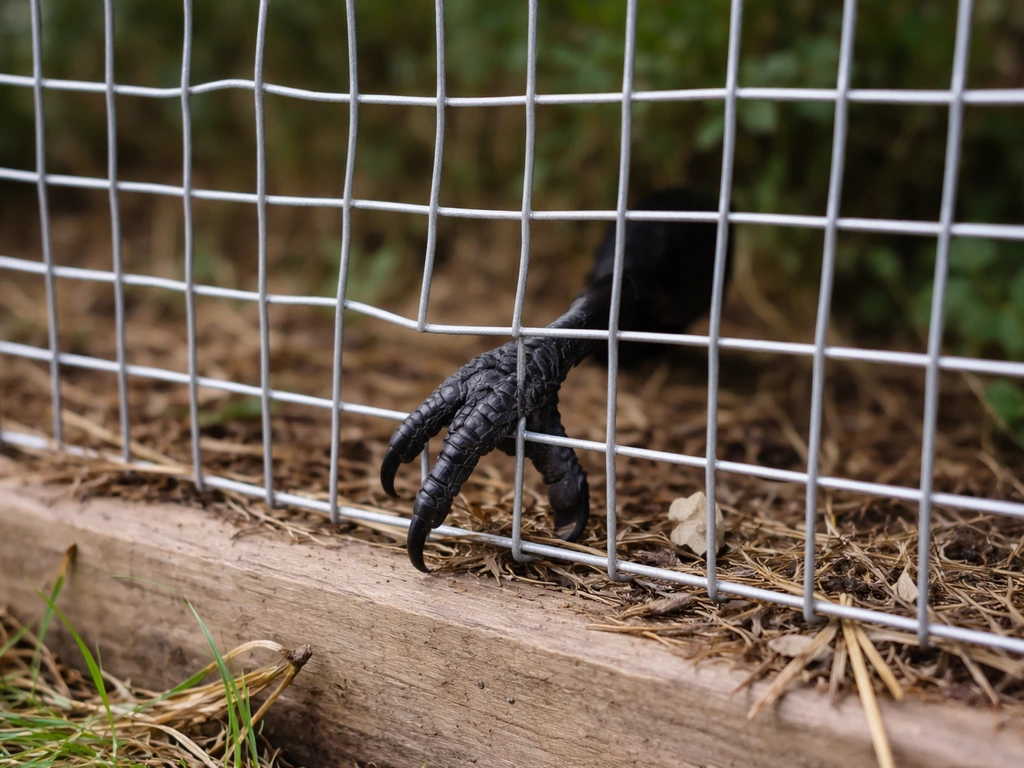
Check your mesh size first. If crows can reach a bill or claw through the wire, they can still damage eggs or pull out nestlings. Hardware cloth with openings larger than 1 inch may not be enough if the nest is positioned close to the cage wall. Rebuild the cage with tighter mesh or add a second layer, and make sure the clearance between the nest and the cage walls is at least 6 inches on all sides. Also check whether crows are landing on top of the cage and reaching down. A domed or peaked top, rather than a flat horizontal surface, discourages perching.
Parent birds won't use the nest after you installed protection
This usually happens when the barrier was installed too aggressively, too close to the nest, or during a sensitive phase like early incubation. If adult birds have stopped visiting after you made changes, step back completely for 24 to 48 hours and observe from a distance. Many birds return once the disturbance stops. If the adults haven't returned after a full day using your binoculars and quiet observation, make your barrier less intrusive: move it further from the nest, create a clearer, wider entry path, or reduce the visual bulk of the structure. Do not remove the barrier entirely if crows are still active in the area.
Deterrents stopped working
Habituation is predictable with crows. If a deterrent has been in the same position for more than five to seven days, move it. Rotate between two or three different deterrent types on a schedule so crows never get fully comfortable. Combine visual deterrents with occasional unpredictable disturbances (like stepping outside and shooing them loudly when you catch crows near the nest) to reinforce that the area is genuinely risky. This kind of variable reinforcement is far more effective than any static device.
The nest was predated before you could act
If eggs or nestlings are missing and the nest looks disturbed, first confirm whether the adults are still visiting. Sometimes what looks like a predation event was actually successful fledging, especially if the nestlings were near fledging age. If predation genuinely occurred, leave the nest in place and undisturbed. Some species will re-nest in the same location or nearby in the same season. Note the timing and location and prepare your barrier setup earlier for any second nesting attempt. Many songbirds make two or three nesting attempts per season.
You're not sure if the nest is still active
Remember the NestWatch guideline: wait about four weeks after the last confirmed adult visit to a songbird nest before treating it as abandoned. A nest that looks still and quiet on a Tuesday morning may be actively incubated. Rain can affect nests too, but the key is to keep monitoring from a distance so you can confirm whether the nest is still active A nest that looks still and quiet. Watch from a distance, particularly in the first hour after sunrise, which is when most nest activity occurs. If the nest contains weathered, deteriorating eggs with no adult visits over several weeks, or if the nest structure itself has been destroyed, it is likely inactive. When in doubt, leave it alone and keep watching. Nests that look abandoned also provide important habitat context; they aren't hurting anything by staying in place.
One final note: crow predation is a natural behavior, and some nest losses are part of the normal cycle of breeding bird populations. Your goal as a homeowner or birdwatcher is to give nesting birds a fair chance without creating hazards for the birds themselves through well-intentioned but poorly executed interventions. Assess the nest type and stage, install a safe physical barrier early, manage attractants in your yard, rotate deterrents, monitor quietly and infrequently, and call in professional help for anything that goes beyond passive protection. A practical way to choose crow-proofing is to blank" rel="noopener noreferrer">classify the nest shape first and then refine your plan using factors like size, materials, and location. Storm-proofing matters too, because durable shelter and safe barriers help nests withstand heavy wind and rain. If you’re wondering whether rain can affect the nest, note that many bird nests can get wet, so barrier design and monitoring should account for weather exposure can bird nests get wet. You may also wonder how snakes find bird nests in the first place, since their approach can differ from crow hunting tactics how do snakes find bird nests. That is the plan, and it works.
FAQ
Can I move the nest or remove eggs if I think it’s abandoned?
If the nest is still active, any attempt to remove debris, “check inside,” or reposition materials can count as disturbing under wildlife laws. The safer option is to confirm activity from a distance (binoculars), then install or adjust an exclusion barrier that blocks crow access without compressing the nest or restricting parent entry.
What’s the difference between a safe barrier and one that accidentally harms the parents?
Yes, you can usually protect the site without harming the nest, but the barrier must allow normal entry and exit paths. Avoid wrapping the nest tightly or placing mesh too close, because crows can reach through gaps and parents can be forced into awkward landing angles that increase disturbance.
What should I do if the birds seem to stop using the nest after I install a cage?
If parents stop visiting right after installation, pause and observe quietly for 24 to 48 hours from the same safe distance you used for the initial check. If adults do not resume visits, scale back intrusion by moving the cage farther from the nest, increasing clearance, or reducing the structure’s visibility, rather than removing it immediately.
How can crows defeat a wire cage even when the mesh looks too small?
Even if the right mesh size is used, crows may still succeed by perching on the barrier and reaching down. Use a domed or peaked top, keep the cage surface from being a flat landing ledge, and verify there are no gaps larger than your target-species clearance needs on all sides.
Is there a best time of day to install protection so I do not flush the incubating bird?
Avoid placing barriers or deterrents right after sunrise or during times you suspect courtship and egg-laying. Instead, handle installation earlier in the day if needed, then monitor later from a fixed spot, so you do not repeatedly flush incubating adults during their most sensitive periods.
Will reflective tape or a scarecrow alone stop crows from taking a nest?
Do not use deterrents as your only method if a crow is already targeting a nest. For long-term results, use deterrents as a secondary layer that you rotate frequently and vary in position, while keeping the primary barrier consistent and correctly fitted.
How do I protect a nest when the nest is in a nest box rather than a shrub or tree?
Yes, but it needs to match the nest type and target species access needs. For nest boxes, ensure the entry hole size fits the desired species and add a baffle so crows cannot climb from the pole, plus a hole guard to prevent enlarging or reaching into the cavity.
How can I tell whether a “quiet” nest is truly abandoned?
If you are unsure whether adults are still visiting, do not treat the nest as abandoned. Track adult presence at the same distance at least once over a couple of days, and for songbird nests follow the waiting guidance from your observation history before concluding it is inactive.
Why is netting riskier than wire mesh for crow protection?
Avoid soft, flexible netting unless you can confirm it is designed to prevent entanglement for wildlife in your exact setup. For crow exclusion, rigid wire mesh or hardware cloth is preferred because it blocks access without creating snare-like hazards for adults returning to feed.
What if crow visits increase after I start deterrents or build the barrier?
If crow activity increases after a change, it may be because the barrier creates a predictable new perch or because the deterrent is now part of the crow’s learned routine. Adjust quickly by changing barrier layout to remove perching surfaces and rotate deterrents rather than leaving the same item in the same place for a week or more.
How often should I check the nest without making the problem worse?
Monitoring frequency is about reducing disturbance, not about speed. Check once or twice per week from a fixed distance using binoculars, and only increase attention if you see signs of predation or if you need to confirm whether the nest is still active after major weather events.
What should I do after I find eggs or nestlings missing?
If a nest has been predated, leaving the nest undisturbed matters because some species will re-nest locally in the same season. Document timing and exact location, then prepare the barrier earlier for the next attempt rather than waiting until eggs or nestlings are already present.
What if the nest is in a spot that is unsafe for me to leave alone, like near active equipment?
If the nest is in an immediate hazard location, such as within machinery that must be operated, it is not a DIY relocation situation. Contact your local wildlife agency or a licensed rehabilitator to discuss options that might involve permits or temporary exclusion methods that do not harm the birds.
Next Article
How Do Snakes Find Bird Nests? Prevention Steps Today
How snakes locate bird nests using heat, scent, sound and movement, plus practical, humane prevention steps.