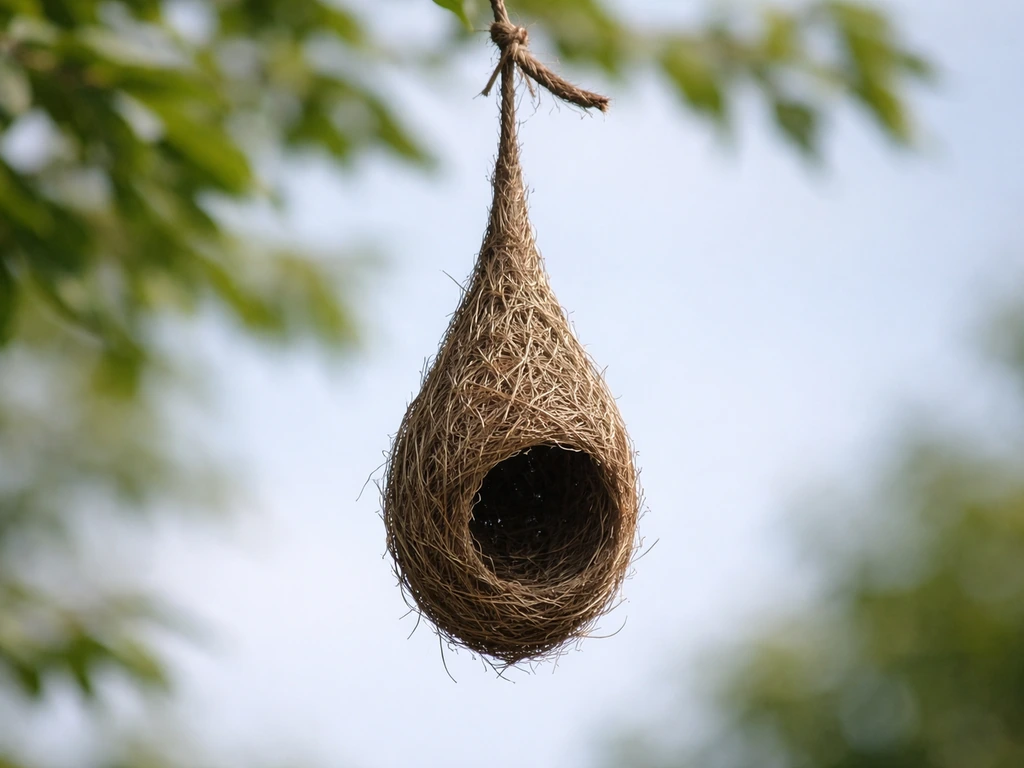
Here is the short answer: if the nest is active (has eggs or live chicks in it), leave it alone. If a chick has fallen out, you can safely return it without worrying about the parents rejecting it. If the nest is empty or clearly abandoned, you have more options, but federal law still governs what you can legally do with it. The rest of this guide walks you through every scenario you might be facing right now, step by step.
What to Do With a Bird Nest: Safe Steps Today

Maya Bennett
14 Apr 2026
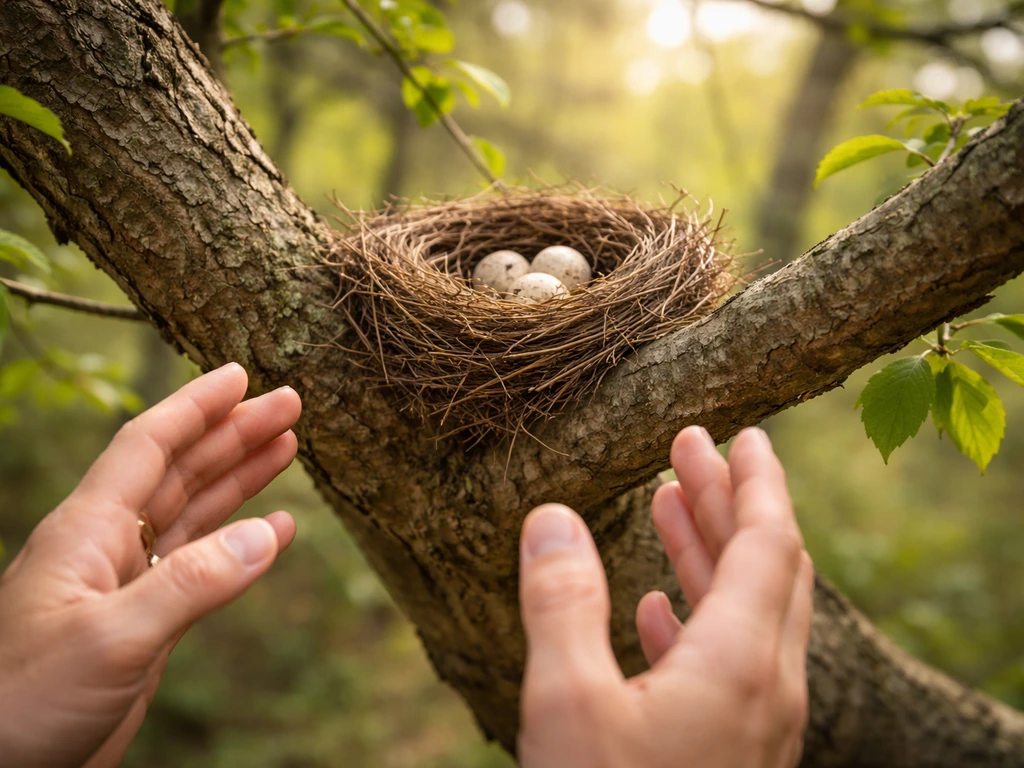
Quick first look: is the nest active, empty, or abandoned?
Before you do anything else, take 60 seconds to assess what you are actually looking at. This single step shapes every decision that follows.
- Active nest: contains eggs, nestlings (featherless or downy chicks), or fledglings (feathered, mobile juveniles) and/or has a parent bird returning regularly.
- Temporarily unattended nest: looks empty right now, but shows fresh material, clean eggs, or a parent circling nearby. Parents routinely leave for up to about an hour while foraging, so do not assume abandonment after a brief absence.
- Abandoned nest: no adult activity for more than two hours (closer to 48 hours for eggs in cool weather), no sound from inside, and eggs that appear dull, cracked, or cold to the touch through the shell.
- Empty/used nest: the season is over, chicks have fledged, and the structure is just sitting there with no occupants or activity.
Snap a quick photo from a few feet away before doing anything else. Note the time. Then back off at least 10 to 15 feet and watch quietly for 30 to 60 minutes. You will learn more from observation than from handling.
What to do right now if the nest fell
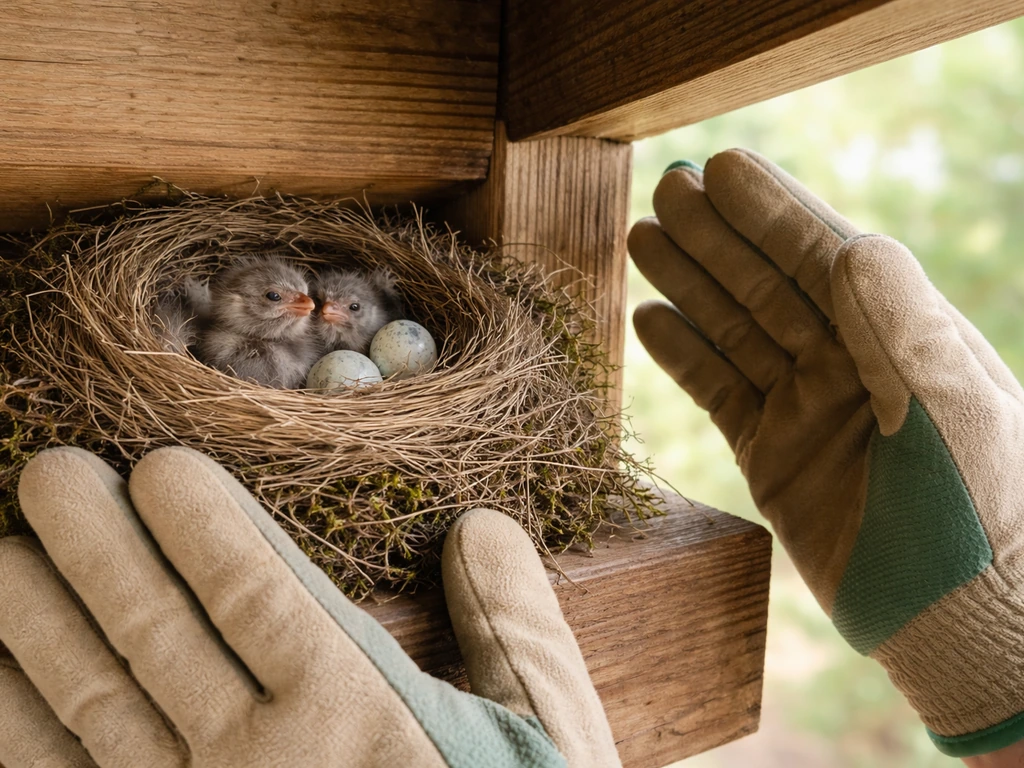
A fallen nest is one of the most urgent situations, but the fix is often simpler than people expect. The first thing to do is check whether the nest has eggs or chicks in it. If it does, here is your action sequence:
- Do not carry the nest or chicks indoors. Keep everything outside and close to where the nest came from.
- Gently scoop any fallen chicks with cupped hands (body heat from a few seconds of handling will not cause rejection). Place them back in the nest if the nest itself is intact.
- If the nest is destroyed or too damaged to hold chicks safely, create a substitute: a small plastic container or wicker basket lined with dry grass or paper towels will work. Punch a few drainage holes in the bottom.
- Wedge the original nest (or substitute) back into the tree or shrub as close to the original location as possible, ideally within a foot or two. Use zip ties or wire if needed.
- Back away at least 15 feet and watch from inside your house or from a hidden position for one to two hours to confirm the parents return.
- If the nest fell because of a cat, dog, or predator attack, see the section below on protecting the nest area before you walk away.
If you have a situation where eggs or chicks fell into a gutter or drainage channel, the logistics get trickier. The article on what to do with a bird nest in a gutter covers that specific scenario in detail, including how to safely clear the area without violating the Migratory Bird Treaty Act.
One thing you absolutely should not do: give the chicks food or water. It seems kind, but it can cause aspiration, crop impaction, or introduce pathogens. Leave feeding entirely to the parents.
What to do if birds are out of the nest (fledglings vs chicks)
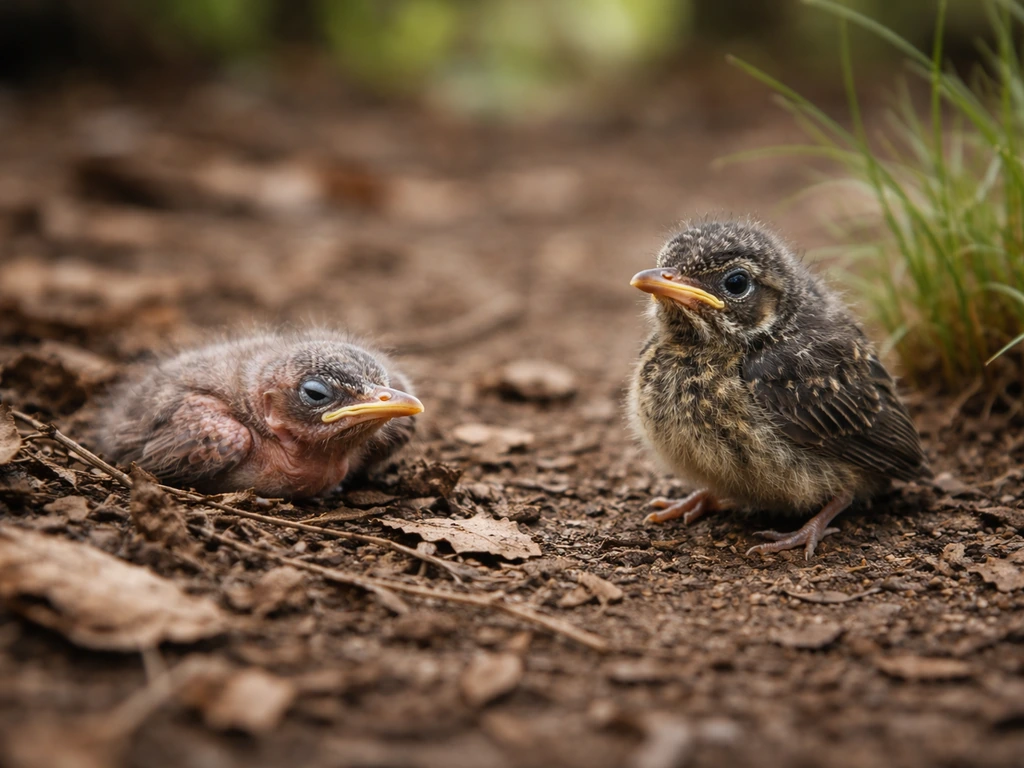
Finding a bird on the ground outside a nest is the situation most likely to send people into a panic. The key is knowing whether you are looking at a nestling or a fledgling, because the right response is almost opposite for each.
Nestlings (no or sparse feathers, eyes often still closed)
A nestling on the ground needs help. It is not supposed to be there. Look for the nest within a 10-foot radius, above and around you. If you find it and can safely reach it, place the chick back inside by tucking its feet underneath its body before setting it down. If you cannot find or reach the nest, place the chick somewhere elevated (a low branch, a ledge, or a box attached to the tree) where parents can locate it but where it is off the ground and safer from cats. Then leave the area completely.
Fledglings (feathered, hopping, short flights)
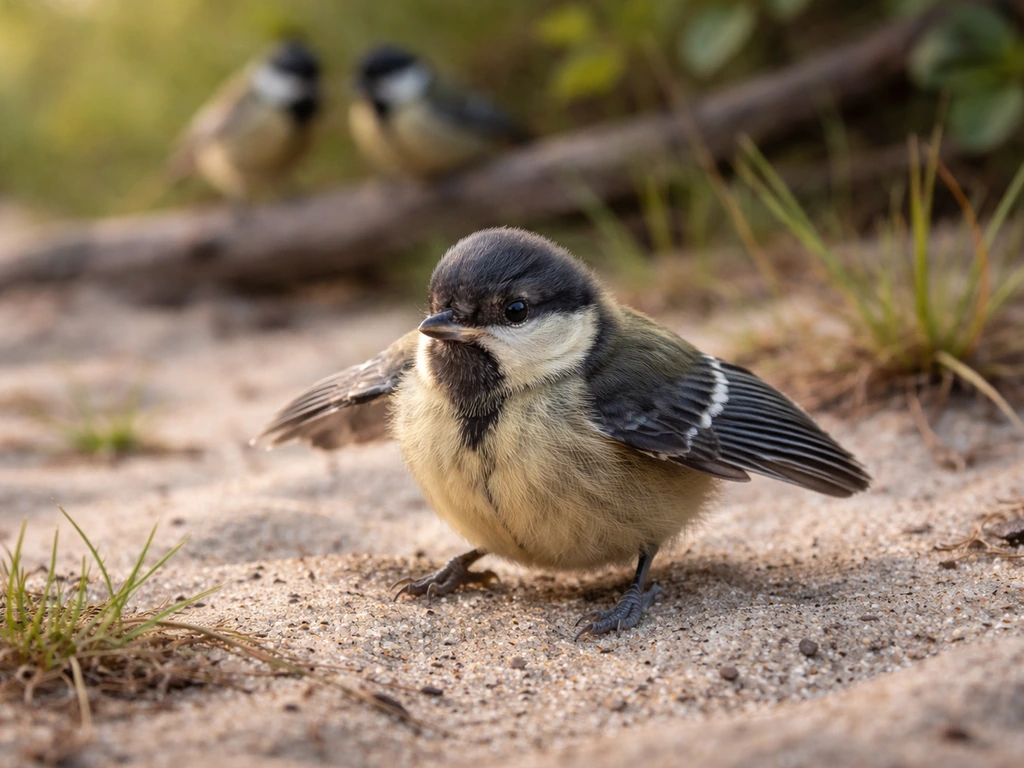
A fledgling hopping around on the ground with full or near-full feathers is almost always exactly where it is supposed to be. This is a normal life stage. The parents are nearby and still feeding it. The single best thing you can do is walk away. Keep pets indoors for a day or two while the fledgling completes this phase. Do not pick it up, bring it inside, or assume it is orphaned. Intervention at this stage can do more harm than good.
The hard part is telling the difference between a healthy fledgling and an injured or truly orphaned bird. Here is a quick triage checklist:
| What you see | What it likely means | What to do |
|---|---|---|
| Fully feathered, hopping, alert, no visible wounds | Healthy fledgling in a normal phase | Walk away, keep pets inside |
| Featherless or partly feathered, on the ground | Nestling that fell or was pushed out | Return to nest or substitute nest |
| Any bird with a drooping wing, bleeding, or shivering | Injured or in distress | Call a wildlife rehabilitator immediately |
| Bird is lethargic, not moving when approached | Sick or severely stressed | Call a rehabilitator; do not attempt to feed |
| Parent bird found dead nearby | Possible orphan | Call for professional assessment right away |
How to protect the nest area and prevent further harm
Once you have assessed the situation and (if needed) returned any chicks, your next job is reducing threats to the nest. Here are the practical steps that make the biggest difference:
- Keep cats and dogs indoors or supervised on a leash for the duration of the nesting period. A single cat attack is one of the most common reasons chicks end up on the ground and needing a rehabilitator.
- Mark the area with a gentle visual cue (a few sticks placed in a loose circle at a distance, or a light ribbon tied to a nearby branch a few feet away) so that people mowing, gardening, or walking through the yard avoid the spot.
- Do not use pesticides or rodenticides within 20 to 30 feet of an active nest. Parent birds that eat poisoned insects can transfer toxins to chicks.
- If the nest is in a low shrub and predator pressure is high, you can loosely drape bird-safe netting around the outer edge of the shrub, leaving clear flight paths for the parents. Do not wrap netting directly around the nest.
- Avoid trimming hedges, shrubs, or tree branches in the immediate area until the nest is clearly inactive. Many local ordinances and federal law back this up.
Parents are also easily spooked during the approach phase. Give the nest area a buffer of at least 10 to 15 feet of undisturbed space. If people or animals are too close, parents will not return. Once you back off and give them room, they usually resume normal behavior within minutes.
Empty vs abandoned: timelines and ethical choices
This is where a lot of people get confused, and where the ethical and legal stakes are higher than most people realize. An empty-looking nest is not necessarily an abandoned one.
Use this timeline as your guide. If no adult has returned to a nest with eggs after two hours of quiet observation, start the clock for a more extended watch. For a nest with no eggs and no chicks, check whether the nesting season for your local species is over. Most songbirds in North America nest between April and August, with some species running as late as October. Outside of that window, an empty nest is much more likely to be truly finished.
If you confirm a nest is genuinely abandoned (no activity across two full days of passive observation), the question becomes what to do with it. The full guide on what to do with old bird nests goes deep on this, but the short version is: empty, inactive nests of migratory species can be removed without a permit under the MBTA, but you should still confirm the nest is not active first. If you are unsure, leave it alone until the season ends.
Some people want to keep or display an old nest, which is understandable. A well-made nest is a remarkable piece of natural engineering. You can preserve a clean, empty nest by gently spraying it with a light clear fixative, placing it in a shadow box, or incorporating it into a seasonal display. Just make sure it is genuinely empty, legally removed, and properly cleaned first (see the safety notes in the section below).
One scenario that deserves its own attention: the nest that fell with eggs still inside. That situation involves a faster-moving set of decisions, and the article on what to do with a fallen bird nest with eggs covers exactly that.
When and how to get help from wildlife experts
Most people wait too long to call for help, or they call and then try to handle the situation themselves while waiting. Here is a clear threshold: if any of the following are true, call a licensed wildlife rehabilitator or your state wildlife agency today, not tomorrow.
- The bird has a visibly broken limb, bleeding wound, or is shivering.
- The bird was caught or attacked by a cat or dog, even if it looks fine externally (cat bacteria cause serious internal infections).
- A nestling is on the ground and you cannot locate or safely access the nest.
- Two or more hours have passed with no adult bird returning to a nest with eggs or chicks.
- A parent bird is dead nearby.
- The chick is limp, lethargic, or unresponsive.
To find a licensed rehabber near you, contact your state's fish and wildlife agency, call the National Wildlife Rehabilitators Association hotline, or use the USFWS directory. When you call, describe exactly what you are seeing: species if you can identify it, age (nestling vs fledgling), visible injuries, and how long you have been observing. This lets the rehabber give you accurate triage guidance over the phone before you touch anything.
Do not attempt to care for a wild bird at home unless you are specifically directed to do so by a licensed professional. Keeping a wild bird without a federal or state permit is illegal, and the good intentions behind improvised home care often make the outcome worse, not better.
Legal and safety do's and don'ts for homeowners and birdwatchers
The Migratory Bird Treaty Act (MBTA) is the federal law that governs almost everything in this article. It makes it unlawful to pursue, take, capture, kill, possess, or disturb migratory birds, including their nests and eggs, without a permit. Penalties can reach up to six months in jail and fines as high as $15,000. This is not a technicality; it is actively enforced.
However, the MBTA does give homeowners room to act when a nest is genuinely inactive. A 2025 USFWS guidance memo (MBPM-2) clarifies that destroying or removing a nest is lawful if no migratory birds, viable eggs, or chicks are present at the time. The central question is always whether the nest is active. When in doubt, the legal default is to leave it alone.
| Action | Legal if nest is inactive/empty | Legal if nest is active |
|---|---|---|
| Observing the nest from a distance | Yes | Yes |
| Returning a fallen chick to the nest | N/A | Yes (encouraged) |
| Removing or relocating the nest | Generally yes, without a permit | No, permit required |
| Trimming branches/shrubs near a nest | Yes, after season ends | No, constitutes disturbance |
| Keeping the nest in your home | No (possession still restricted for MBTA species) | No |
| Rehabilitating an injured bird | Only with a state/federal rehabilitation permit | Only with a state/federal rehabilitation permit |
On the safety side, old nests and accumulated droppings present a real health concern. Disturbing dried bird droppings can release fungal spores associated with histoplasmosis. When cleaning up after a nest is removed, wear an N95 or better respirator, disposable gloves, and avoid dry-sweeping or blowing the material. Wet it lightly before removal and bag it in sealed plastic before disposal. Do not compost old nesting material with a heavy buildup of droppings.
A few other legal notes worth knowing: some states have additional protections beyond the MBTA, particularly for raptors, colonial waterbirds, and certain endangered species. Always check your state wildlife agency's guidance in addition to federal rules. And if you need to take any action that might disturb an active nest for construction or landscaping reasons, you may qualify for a special-purpose permit through the USFWS Migratory Bird Permits program, which covers activities from rehabilitation to specific land management situations.
For readers who arrived here from a gaming context, it is worth noting briefly that bird nests also appear as collectible items in certain games. If you are actually looking for gaming guidance, the articles on what to do with a bird nest in OSRS, what bird nests are used for in OSRS, why bird nests are expensive in OSRS, and whether bird nests respawn in 7 Days to Die cover those topics separately. The guidance above applies strictly to real-world nests and the real birds in them.
Your next steps right now
If you are reading this because you are standing next to a bird nest situation right now, here is your rapid-action summary. Observe first, hands off until you know what you are dealing with. If there are eggs or chicks, protect the nest from predators and back away to let parents return. If a chick is on the ground, try to return it before calling for help. If the bird is injured, shivering, bleeding, or the parent is dead, call a wildlife rehabilitator immediately and follow their guidance. If the nest is empty and the season is over, you have more flexibility, but still handle cleanup safely and check the relevant legal rules for your state before removing anything.
FAQ
If I think the nest is empty, how can I tell whether it is truly inactive?
Watch from a distance for at least 2 hours for eggs-and-adults scenarios, and longer if you see any intermittent adult behavior. Also check for fresh signs like new droppings, feathers, or lingering nest material movement, which can indicate recent activity even if you do not see birds at the moment.
What should I do if a cat or squirrel keeps returning to the nest area?
Do not handle the nest or birds to solve the problem. Instead, temporarily increase the safe buffer by blocking access points (for example, close off the yard gate, bring pets indoors, or use barriers like closed-screen enclosures around the area) so parents can resume normal returns without interference.
Can I move the nest to a safer spot on the same property?
In general, relocating an active nest is a legal and welfare risk because it is treated as disturbing migratory birds, nests, or eggs. Even for inactive nests, removal rules can vary by species and state, so confirm inactivity and check state wildlife guidance before any move.
Should I cover the nest with something to keep debris or rain out?
Avoid covering or enclosing any nest while eggs or chicks are present. For active nests, even small disturbances can prevent adult return. If you need to reduce hazards like construction debris, use passive exclusion (temporary fencing or relocation of foot traffic) rather than placing objects over the nest.
If I find a nestling and put it back, do I need to wash my hands or worry about scent?
It is a good idea to wash hands after you are finished handling a chick, but scent is not typically the main issue in parent rejection. The bigger factors are repeated disturbance, leaving the nest area unattended, and improper handling that injures the chick.
What if the chick I returned seems lethargic after I place it in the nest?
Do not immediately try to re-retrieve the chick. Step back and observe quietly to see whether parents approach and whether the chick shows normal responsiveness within a reasonable period. If the chick appears injured (bleeding, severe weakness, or obvious trauma), contact a wildlife rehabilitator for triage advice.
Is it okay to put a fallen chick in a shoe box or paper container?
Only as a short-term placement tool if you cannot immediately return it to the nest, and keep it off the ground and away from pets and predators. Avoid covering it in a way that traps heat, and do not feed or give water. If you cannot get it back quickly, contact a rehabilitator.
What should I do if the nest is in a place that will be disturbed soon, like near mowing or construction?
Create a no-activity buffer and postpone the disturbance if possible until you confirm whether it is active. If work cannot be delayed, call your state wildlife agency or a licensed rehabilitator for guidance, because you may need a special-purpose permit or a species-specific plan.
Can I relocate the tree branch or shrub that holds the nest?
Do not cut or move anything while the nest is active. Even if you plan to put the nest back, that still counts as disturbing nests and can be illegal. Use a professional-guided approach, and postpone or redesign the landscaping work when possible.
How do I handle cleaning if the nest was removed and there are lots of droppings?
Wet the material before removal, bag it sealed, and avoid dry sweeping or blowing to prevent spore release. If the buildup is heavy, consider extending respiratory protection beyond an N95, and take extra care to keep people and pets away during cleanup.
What if I accidentally touched an active nest while trying to help?
Back away and give the adults time to resume normal behavior, typically minutes to longer depending on the species. Avoid further handling and do not attempt to correct the situation by adding food, water, or extra nesting material. If the situation worsens or the chick is injured, contact a rehabilitator.
Are raptors treated differently under the law?
Yes, raptors often have additional protections beyond general nest rules, and some are subject to stricter state and federal requirements. Treat any raptor nest as high priority, contact the state wildlife agency for guidance, and avoid DIY removal or relocation.
When should I call for help even if the bird looks fine?
Call a rehabilitator or state agency if you cannot confidently determine nest activity status, if the bird is on the ground in an area with high risk (roadway, heavy foot traffic, or predators), or if you notice repeated adult absence after your observation window.
If I want to keep an old nest for display, what cleaning steps are safest?
Only handle nests that are confirmed empty and properly removed. Clean thoroughly to reduce biological hazards, wear protective equipment like gloves and respiratory protection, and do not treat the material as compost or place it where people and pets can contact leftover droppings.
Next Article
What Bird Makes a Hanging Nest? Identify the Culprit Fast
Learn which bird makes a hanging nest and how to ID it fast by shape, placement, materials, and safe next steps.