If you've found an old bird nest outside and you're wondering what to do with it right now, here's the short answer: before you touch anything, confirm it's truly inactive, then decide whether to leave it, remove it, or clean up safely. The steps below walk you through exactly that, in order, with the legal and safety details you actually need.
What to Do With Old Bird Nests Outside: Safe Steps

Maya Bennett
15 Apr 2026
Step 1: Figure out what you're looking at and whether it's really abandoned
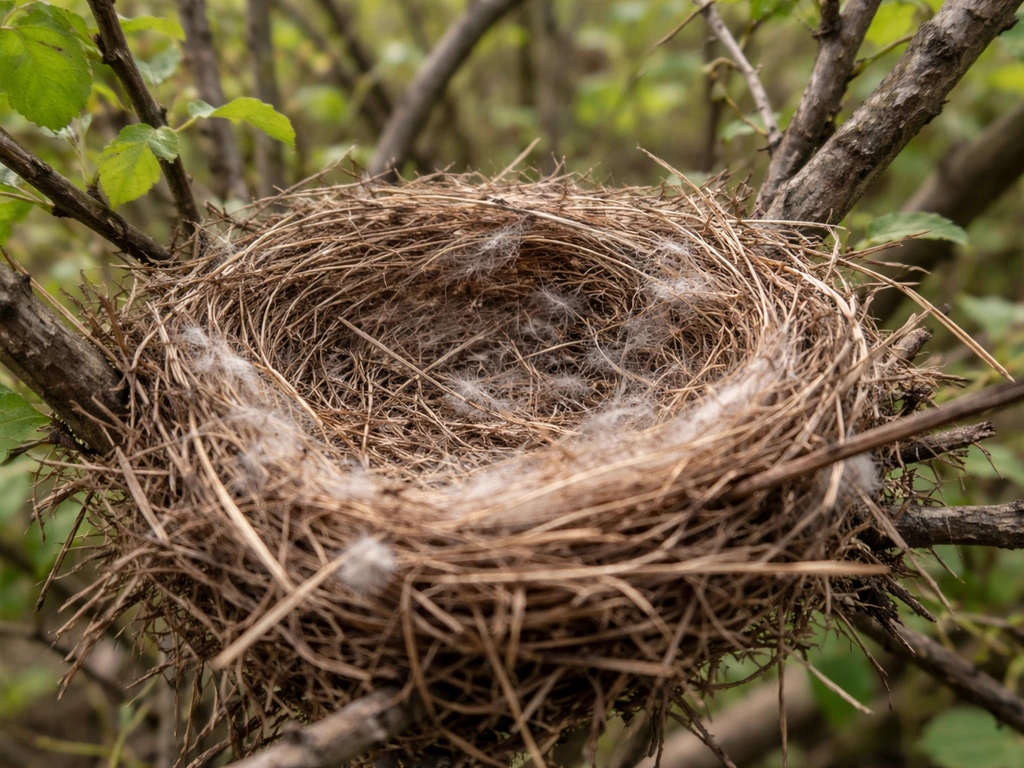
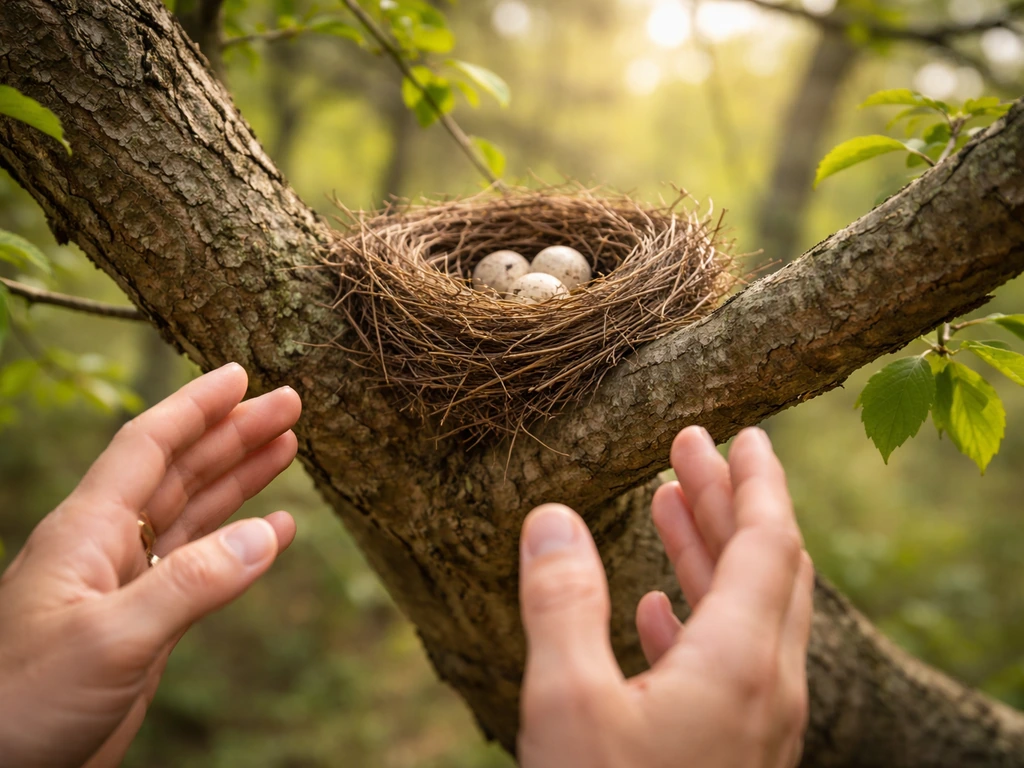
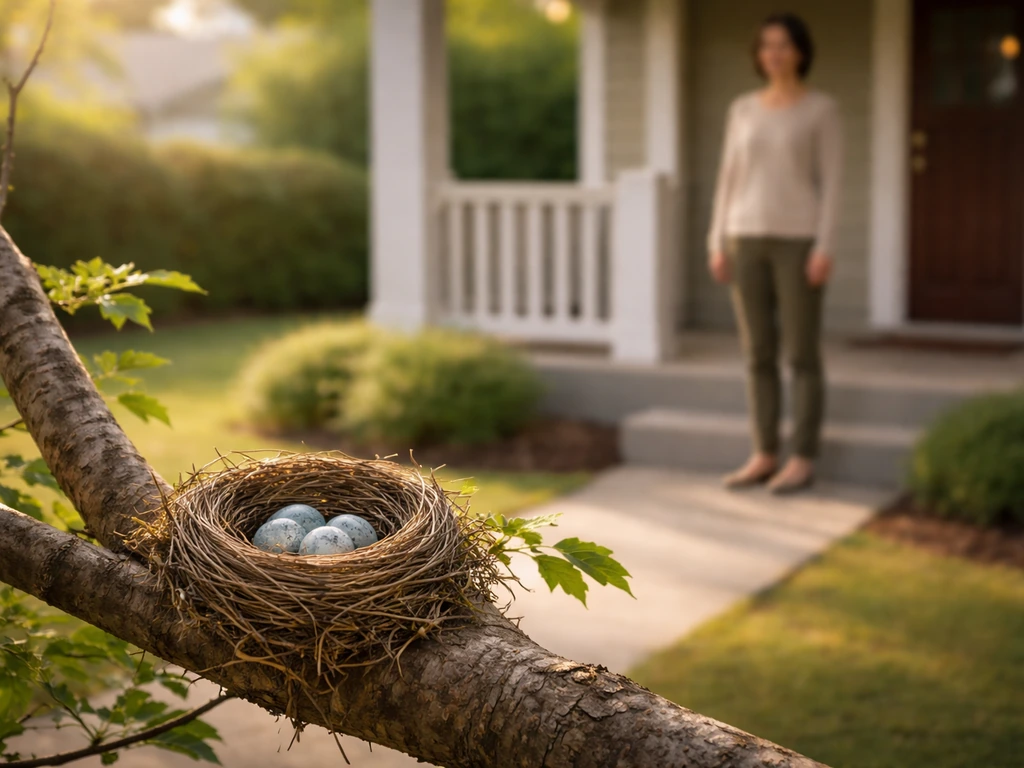
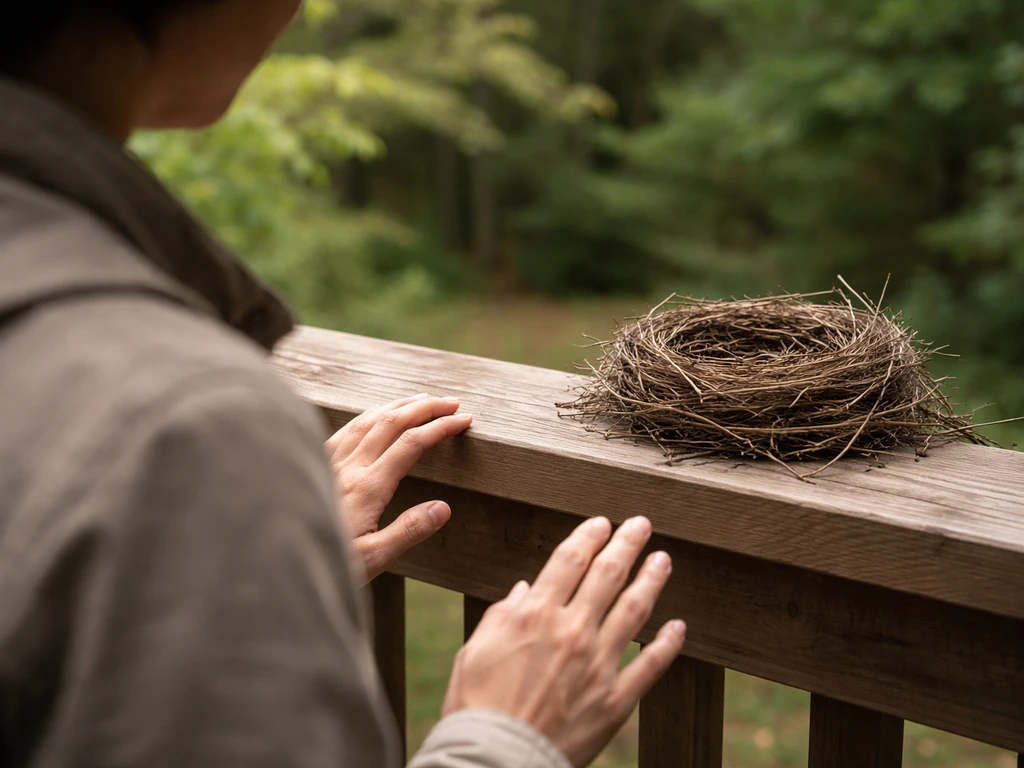
The first thing to do is slow down and observe. A nest that looks empty may not be. Cornell Lab's NestWatch program is clear on this: adults routinely leave a nest during incubation to feed, so the absence of a bird at one specific moment is not the same as abandonment. If you watched the nest for ten minutes and saw nothing, that doesn't mean it's done. You need a longer track record before you act.
NestWatch recommends waiting about four weeks after the last confirmed adult visit before concluding that eggs or young have truly been abandoned. Their 'one-month rule' exists because eggs can remain viable longer than most people expect, and incubation timing varies considerably between species. If you find eggs with no parents visible, you should wait at least one month past the expected hatch date before concluding the nest is done. Removing a nest even a few days too early can kill viable eggs, which is both an ethical problem and potentially a legal one.
While you're observing, take a photo and note the nest's location, height, and construction. Ask yourself: Are there eggshell fragments on the ground (a sign of successful hatching)? Is the nest structurally collapsed or heavily weathered? Has plant growth partially covered it? Is it mid-winter in a species that only nests in spring? All of these point toward genuine inactivity. If any of these checks raise doubt, give it more time. The guidance on what to do with a bird nest when you're unsure of its status is equally relevant here.
Quick safety checks before you get close
Even a confirmed inactive nest can pose real health and physical risks. Run through this checklist before you touch anything:
- Mites and parasites: Old nests commonly harbor bird mites, blowfly larvae, and other ectoparasites that will happily move onto you or into your home if disturbed without precaution.
- Histoplasmosis: The CDC warns that disturbing dried bird droppings can release fungal spores (Histoplasma capsulatum) that cause histoplasmosis when inhaled. This is a real respiratory risk, not a theoretical one.
- Psittacosis: Exposure to contaminated droppings or nest debris is also associated with psittacosis (parrot fever). Thorough handwashing after any contact is non-negotiable.
- Avian influenza: OSHA guidance on avian influenza cleanup stresses avoiding aerosolization of droppings and nest debris, along with strict hand hygiene after handling contaminated materials.
- Structural hazards: Check the branch, ledge, or surface supporting the nest before leaning in. Old nests in gutters or on branches can be heavy with dried debris, and the supporting structure may be weaker than it looks.
The minimum PPE for handling any old nest is nitrile or rubber gloves and a properly fitted N95-class particulate respirator. WorkSafe occupational health guidance recommends lightly misting dried droppings with water or soapy water before disturbing them, which keeps dust and spores from becoming airborne. Do this before you pick the nest up, not after. For larger accumulations of droppings (think a long-established colony or roost site), the CDC's NIOSH division recommends bringing in professional hazard-waste cleanup rather than DIYing it.
Leave it or remove it: the ethical and legal decision
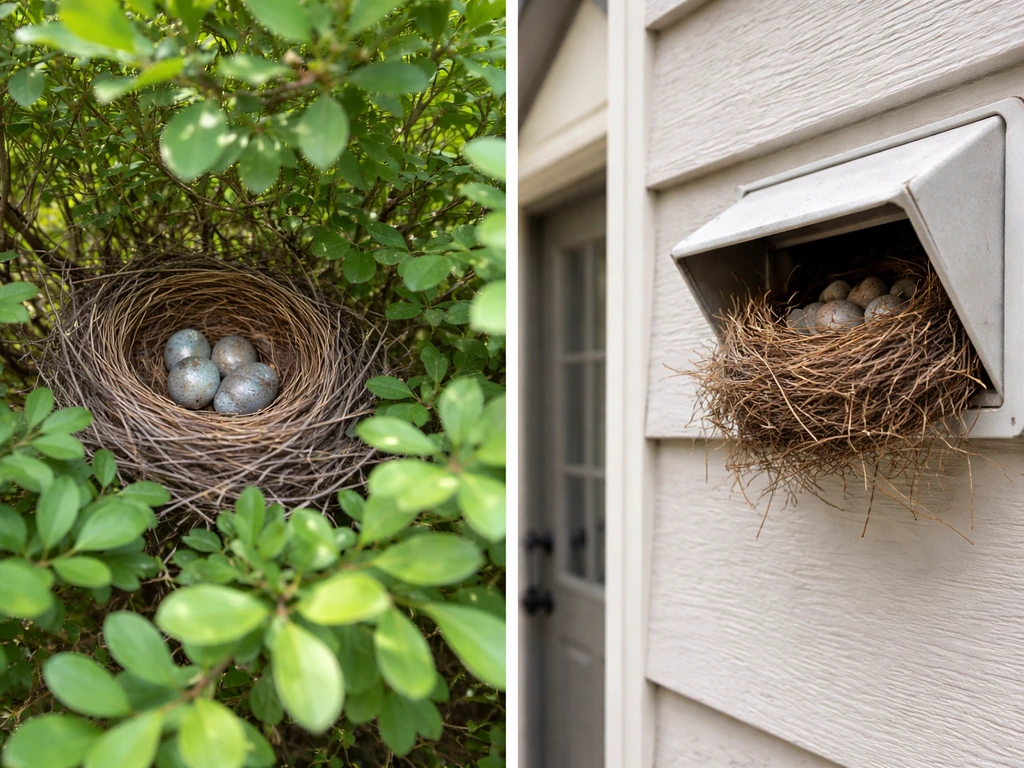
Once you've confirmed inactivity and you're properly geared up, you still need to decide whether removal is actually appropriate. Here's the clearest framework I can give you.
When leaving the nest alone is the right call
If the nest is in a shrub, tree, or brush pile that doesn't cause you any practical problem, the conservation-minded choice is to leave it. Old nests provide material that other birds strip for their own builds. They offer microhabitat for insects. Some species (like house wrens) deliberately inspect old nests when scouting territory. There's no ecological downside to leaving an inactive nest where it is. If you're in any doubt about whether the nest might still be in use, leave it and revisit in a few weeks.
When removal is legally allowed and practically necessary
The U.S. Fish and Wildlife Service is clear on this: the Migratory Bird Treaty Act does not prohibit the destruction of an inactive migratory bird nest, as long as no birds or eggs are involved. A nest is considered active from the moment the first egg is laid until fledged young are no longer dependent on it. Once that lifecycle is complete, the nest is fair game under federal law. That said, a handful of species have stricter protections. Bald and golden eagles, for example, fall under additional statutes with their own definition of nest disturbance, and that definition is narrower and more protective than the MBTA framework. If you're dealing with a large raptor nest, get region-specific guidance from your local USFWS field office before doing anything.
Practical reasons to remove an old nest include: it's blocking a gutter or drainage system, it's in a dryer vent or other structural opening, there's a significant accumulation of droppings creating a sanitation problem, or the nest material has gotten wet and is rotting against a surface. For a deeper look at the gutter-specific scenario, the article on what to do with bird nest in gutter covers that situation in detail.
| Situation | Recommended Action | Legal Status |
|---|---|---|
| Nest in tree or shrub, no practical problem | Leave it in place | Always fine |
| Nest inactive, blocking gutter or vent | Remove after confirming inactivity | Fine under MBTA if truly inactive |
| Nest appears empty but you're not sure | Wait four weeks from last adult visit | Do not remove yet |
| Nest with eggs or active adults | Do not touch; observe only | Removal prohibited under MBTA |
| Eagle or raptor nest, any status | Contact local USFWS field office | Stricter protections apply |
| Large droppings accumulation | Consider professional cleanup | Health risk, assess before acting |
How to safely remove and clean up an old outdoor nest
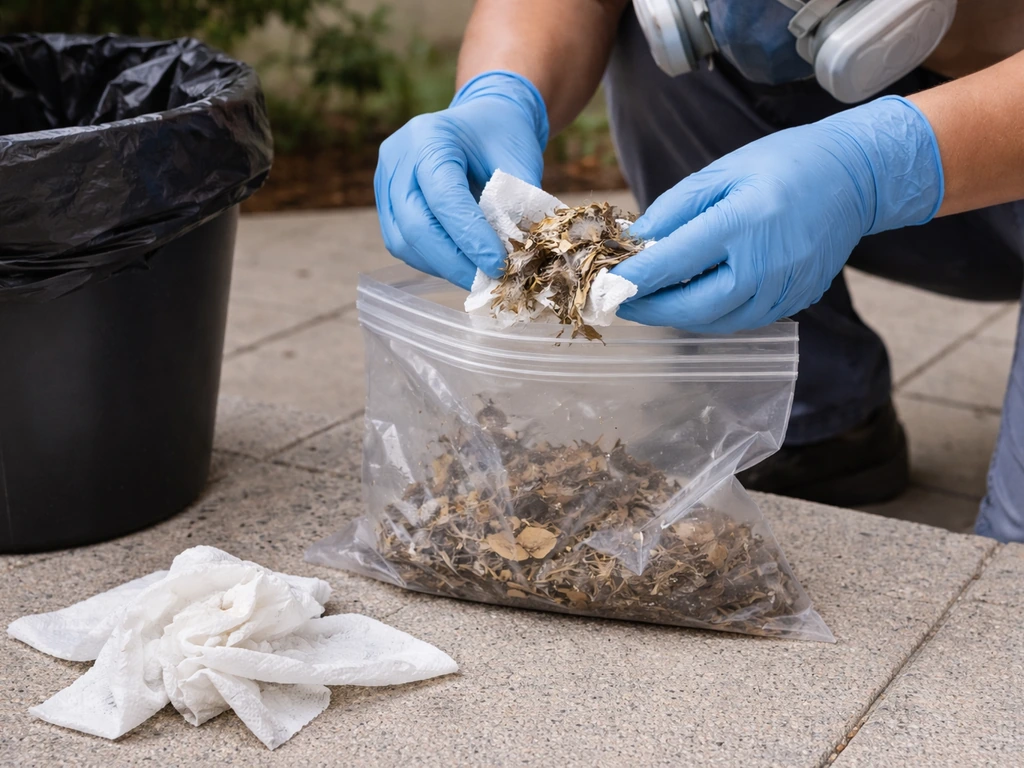
Once you've confirmed the nest is inactive and removal is appropriate, here's how to do it cleanly and safely.
- Gear up first: Put on nitrile gloves, an N95 or better particulate respirator, and clothes you can wash immediately afterward (or disposable coveralls for heavily contaminated situations).
- Mist the nest and any droppings lightly with water or a dilute soapy water solution. This suppresses dust and reduces the risk of inhaling fungal spores or particulates as you work.
- Carefully lift the nest as a single unit rather than breaking it apart. Place it directly into a heavy-duty plastic garbage bag. Seal the bag before walking away from the area.
- Use a stiff brush or scraper to remove any residual debris, droppings, or nesting material from the surface the nest was resting on. Mist that area before you brush.
- Bag all debris, disposable gloves, and any disposable covering separately, seal tightly, and dispose of in your outdoor waste bin.
- Wash the surface with a disinfectant solution (a 10% bleach solution or an enzyme-based cleaner works well for wood, concrete, or metal).
- Wash your hands thoroughly with soap and water immediately after removing gloves and before touching anything else. This is not optional.
If you encountered eggs in a nest you weren't expecting to be active, stop and reassess. The article on what to do with fallen bird nest with eggs covers that specific situation with the care it deserves.
Stop birds from nesting in the same spot again
Timing is everything here. The best moment to install deterrents or make repairs is immediately after you've removed the nest and cleaned the area, before the next nesting season begins. Most migratory birds in North America start nesting in earnest between mid-May and mid-July, with many species beginning earlier in southern states. If you're reading this in April, you're in an ideal window to act: right before the peak season starts.
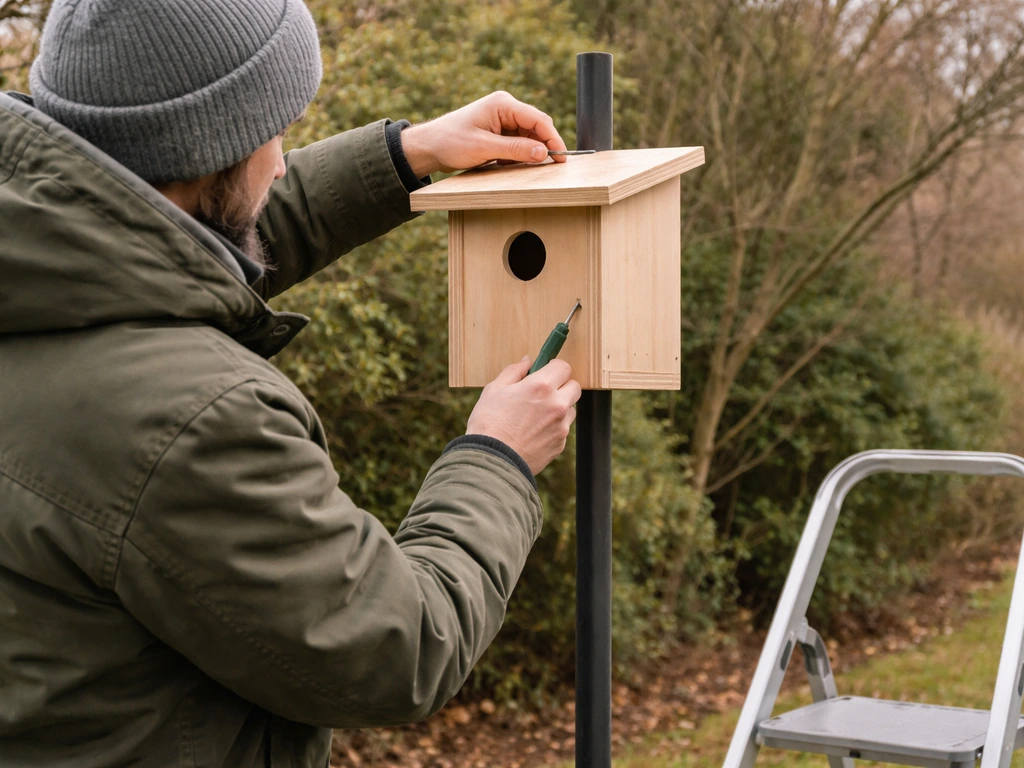
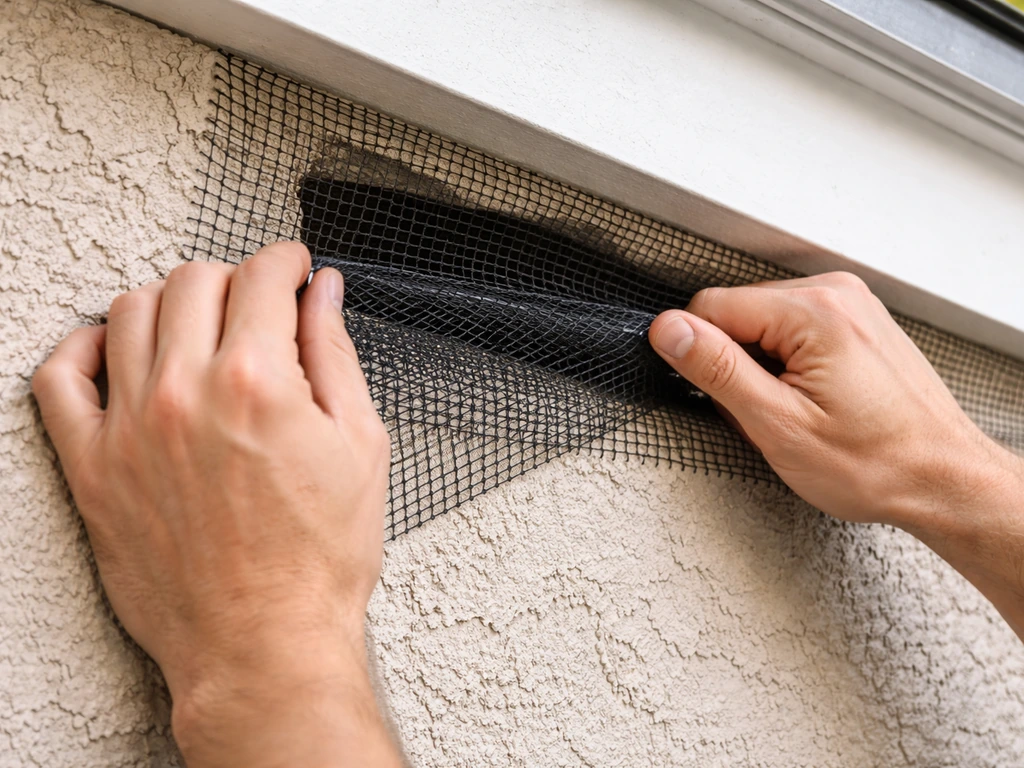
For structural openings like vents, dryer exhausts, and eaves, install hardware cloth (half-inch galvanized mesh) or purpose-built vent covers with bird-proof flaps. Seal gaps larger than half an inch. For ledges and flat surfaces where swallows or pigeons like to build, bird spikes or angled ledge covers work well without harming birds. Avoid gel repellents on surfaces where songbirds perch, as they can trap smaller birds.
If you're dealing with a shrub or tree location where nesting causes no real problem but you'd prefer birds move elsewhere, habitat modification is more effective than harassment. Thin the canopy slightly to reduce the sheltered microclimate that made the spot attractive. Moving a nearby feeder or water source can also redirect bird activity to a more welcome area of your yard. Do not use bird netting during active nesting season as birds can become fatally entangled.
How nest material and species affect what you do
Not all nests handle the same way, and knowing what you're dealing with changes your cleanup approach.
Grass and plant-fiber cup nests
These are the most common nests you'll encounter: small, tidy cups woven from dry grass, plant fibers, and sometimes hair or string. They're built by sparrows, finches, robins, and similar songbirds. Old grass nests dry out completely and tend to crumble, which means they generate a lot of fine dust and debris when disturbed. University of Maryland Extension notes that bird mites are typically associated with birds nesting, and problems often arise when nestlings leave and mites seek new hosts These nests usually carry mites even when visually clean, so don't skip the gloves.. The mist-before-you-move approach is especially important here. These nests usually carry mites even when visually clean, so don't skip the gloves.
Mud nests
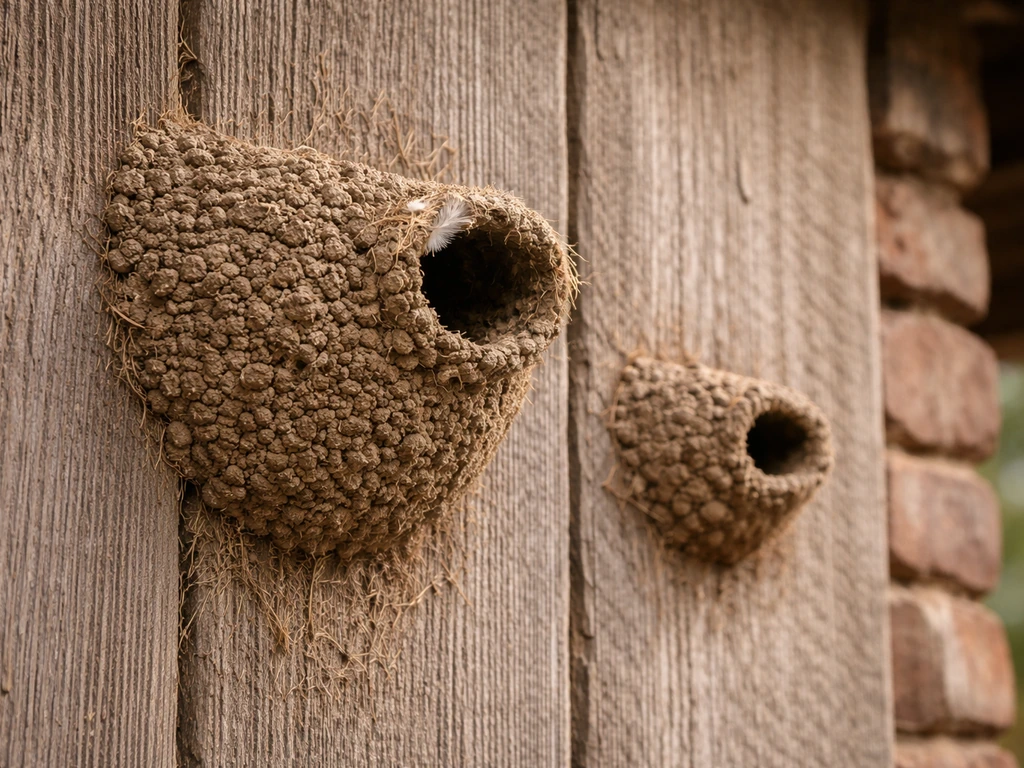
Cliff swallows and barn swallows cement their nests to vertical surfaces using mud pellets reinforced with grass. Old mud nests bond hard to siding, brick, and timber, and you may need a stiff putty knife or scraper to remove them cleanly. Wet the surface first to soften the bond and reduce dust. Mud nests frequently attract a second generation of occupants the following season, so removing them promptly after the season ends (and then blocking the attachment points) is the most effective long-term deterrent.
Large stick platform nests (raptors, corvids, herons)
Osprey, red-tailed hawks, great blue herons, and crows build large, heavy stick platforms that can weigh several pounds after years of reuse. These nests accumulate significant droppings and fish or prey remains, creating a genuine sanitation and odor issue. They also place real structural load on the surface they're built on. If you're dealing with a raptor nest on a utility structure or your roof, contact your local USFWS field office before touching anything, because active-season definitions and re-nesting cycles for raptors are more complex than for songbirds. Osprey in particular return to the same nest annually and have legal protections during that return period.
Woven and suspended nests
Baltimore orioles and some vireos build deep, bag-shaped nests suspended from branch forks. These are structurally more stable than cup nests and usually remain intact through winter. They're interesting enough that some people keep them as natural display objects, which is legal as long as no feathers, eggs, or protected parts are attached. If you want to preserve one, let it dry fully in a warm, ventilated space and consider sealing it lightly with a matte fixative spray to stabilize the fibers.
Seasonal timing and local legal guidance for right now
Today is April 15, 2026. You are at one of the most important decision points in the bird nesting calendar. Early nesters like American robins, mourning doves, and house finches may already be on first clutches in warm parts of the country. Species at higher elevations or latitudes are just beginning to arrive. If you have an old nest that survived the winter and you want to remove it, now is the moment, but only if you can confirm it's still inactive. Check it carefully in the morning, since dawn is when adults return first if they're scouting or re-nesting.
BLM guidance notes that most migratory bird nesting activity peaks between May 15 and July 15, with adjustments by species and local conditions. If you remove the nest today after confirming inactivity, install your deterrents before May 1 to be ahead of that curve. If you're unsure whether it's active or not, wait until after July 15 and re-evaluate in August, which is typically the cleanest window to act across most of North America.
Federal law under the MBTA gives you a clear baseline: inactive nests of most migratory species can be removed without a permit. But state and local laws sometimes go further. Some states add protections for specific species not covered by the MBTA, and some municipalities have ordinances around disturbing nests in parks or protected areas. Always check your state wildlife agency's website or call your local wildlife office before removing anything if you have any doubt. The USFWS regional offices are also a good direct contact for borderline cases involving raptors or colonial waterbirds.
If your interest in nests goes beyond the practical and you're curious about their value in other contexts, it's worth knowing that bird nests have cultural and even game-based significance in ways that might surprise you. For example, players who've wondered what are bird nests used for in OSRS are engaging with a completely different kind of nest economy, and understanding why bird nests are expensive in OSRS reflects how rare and desirable nest-derived materials can be even in a virtual world. On a lighter note, if you play survival games and you've been asking whether bird nests respawn in 7 Days to Die, the answer has its own logic, while the real-world equivalent is that birds absolutely will rebuild in the same spot if the conditions remain attractive. And if you're wondering more broadly about what to do with a bird nest in OSRS, that's a separate game mechanic entirely from what you're managing in your yard today.
The bottom line: confirm inactivity before you touch anything, gear up properly, remove cleanly, sanitize the surface, and install deterrents before the nesting season peaks. If you're not sure about any step, wait. The nest isn't going anywhere, and acting a few weeks later is always better than acting a few weeks too early.
FAQ
Can I relocate an old bird nest instead of removing it?
Usually, no. Even if the nest looks inactive, moving it can disturb eggs or late-feeding birds, and it can also violate local rules in parks or protected areas. If the goal is to stop nesting, it is safer to remove it (when confirmed inactive) and then block or cover the exact attachment points.
What should I do if I find a nest with feathers but no visible eggs?
Feathers suggest prior activity, but they do not confirm the nest is fully inactive. Wait using the same timeline approach (about one month after the last confirmed adult visit, or after the expected hatch window if eggs were present). If you cannot confirm hatch timing, err on leaving it alone.
Is it okay to throw an old nest in the trash right after removing it?
Only if it is dry and contained. Bag the nest promptly before it dries further and sheds dust, seal the bag, then place it in an outdoor trash bin with the lid closed. Avoid shaking the nest or letting it shed debris on the ground, especially for cup nests that crumble.
Do I need to clean the surface after removing an inactive nest?
Yes, especially if droppings were present. After removal, damp-wipe the area and dispose of cleaning materials in a bag. If the nesting area includes roosting buildup (large colonies, long-used ledges), consider professional cleanup due to higher dust and possible contamination.
How do I know if the “old nest” is actually from a protected raptor?
Look for large stick platforms, heavy structure loading, and signs of repeated use (fresh green material mixed with older sticks, frequent pellets, prey remains). If it is sized like a platform or you are in a region with raptors, stop and contact your local USFWS field office before removing it.
Can I remove a nest if I see no birds but it is warm and recently built-looking?
Do not assume it is inactive just because you do not see birds at the moment. Warmth or “new-looking” materials can mean nesting is ongoing. Increase your observation window, ideally longer than ten minutes, and follow the waiting rule before acting.
What’s the best way to keep swallows or pigeons from rebuilding after I remove an old nest?
Use exclusion, not sprays. Install vent covers with flaps or hardware cloth for openings, and for ledges use angled covers or bird spikes designed for the specific surface type. Make sure you seal gaps larger than half an inch and handle only after confirming inactivity.
Can I use bird netting to prevent birds from nesting on a ledge?
Avoid netting during active nesting season because entanglement risk is real, including fatal injuries to smaller birds. If you must use netting, install it only during a safe window when nesting is not occurring, and still pair it with cleaning and exclusion of the exact build points.
My neighbor wants to remove the nest immediately. Is that acceptable if the nest was abandoned yesterday?
“Yesterday” is not enough. If the nest is potentially viable, removing it early can harm eggs or young. Recommend a longer confirmation period (track adult visits, then wait about a month past the last confirmed adult visit) unless it is clearly and conclusively inactive and not protected by species-specific rules.
What if the nest is inside an appliance like a dryer vent or utility opening?
Treat it as a structure problem plus a wildlife problem. Confirm inactivity, then remove the nest and immediately install the correct vent cover or hardware-cloth barrier. Do not leave the opening exposed even briefly, because birds can re-nest quickly if access remains.
Can I keep a nest as decoration?
Only in limited circumstances. If you preserve one, ensure it is from an inactive build with no feathers still attached from protected species and no eggs or eggshells present. Dry it fully in a warm, ventilated space and seal lightly to stabilize fibers, but do not collect nests from protected raptors or unknown species.
If I remove an inactive nest, when is it safe to start deterrents like spikes or covers?
Install deterrents right after cleanup, before the next nesting season ramps up. The goal is to block reattachment immediately, since birds will investigate restored access. Also, avoid changing anything during the active window you are unsure about, use the wait-and-recheck approach instead.
Are there cases where I should skip DIY entirely even if the nest looks inactive?
Yes. Use professional help if you are dealing with extensive droppings buildup, large raptor nests on utility structures or roofs, or any situation where access requires risky heights. In those cases, professional hazard cleanup and local wildlife guidance reduce both health risk and legal risk.