
If you find a bird nest in your gutter, stop what you're doing before reaching for a ladder or hose. The single most important thing you need to know is whether that nest is active right now, meaning it contains eggs, chicks, or a sitting adult. If it does, you are almost certainly looking at a legally protected nest, and removing or disturbing it without authorization can carry serious penalties in the US, Canada, and the UK.
What to Do With a Bird Nest in a Gutter Step by Step

Maya Bennett
28 Apr 2026
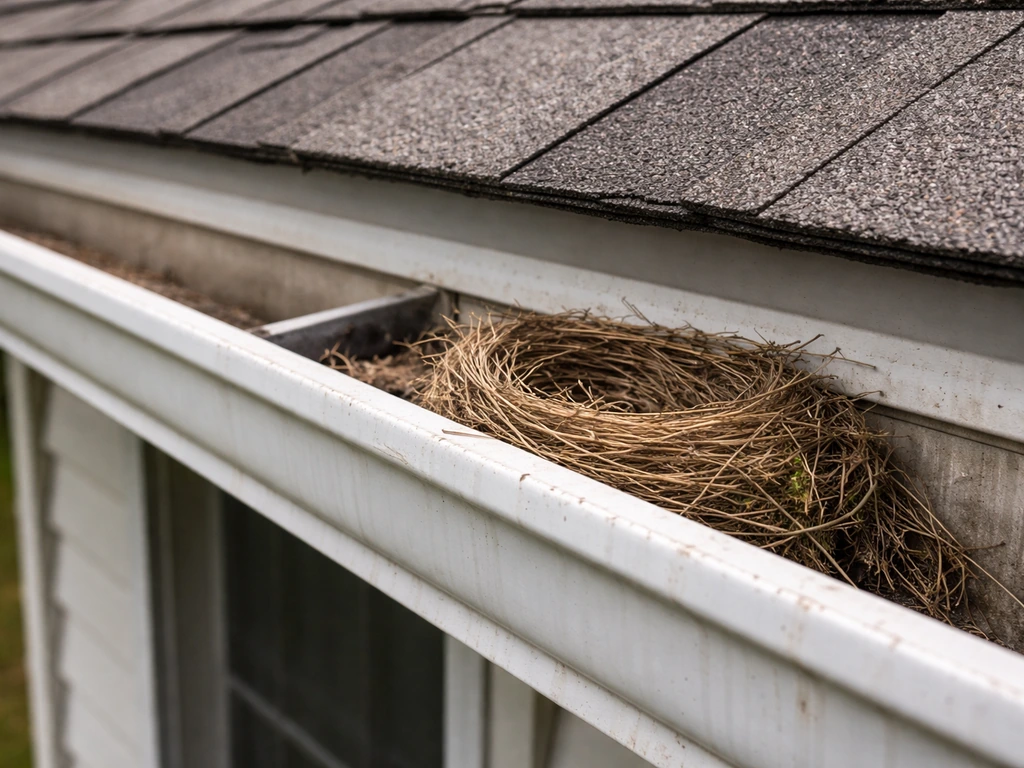
Your immediate job is to observe carefully, protect the drainage situation as best you can without touching the nest, and wait. This guide will walk you through exactly what to check, what you can and cannot do legally, and how to handle the gutter problem in the meantime.
First check: is the nest active or abandoned?
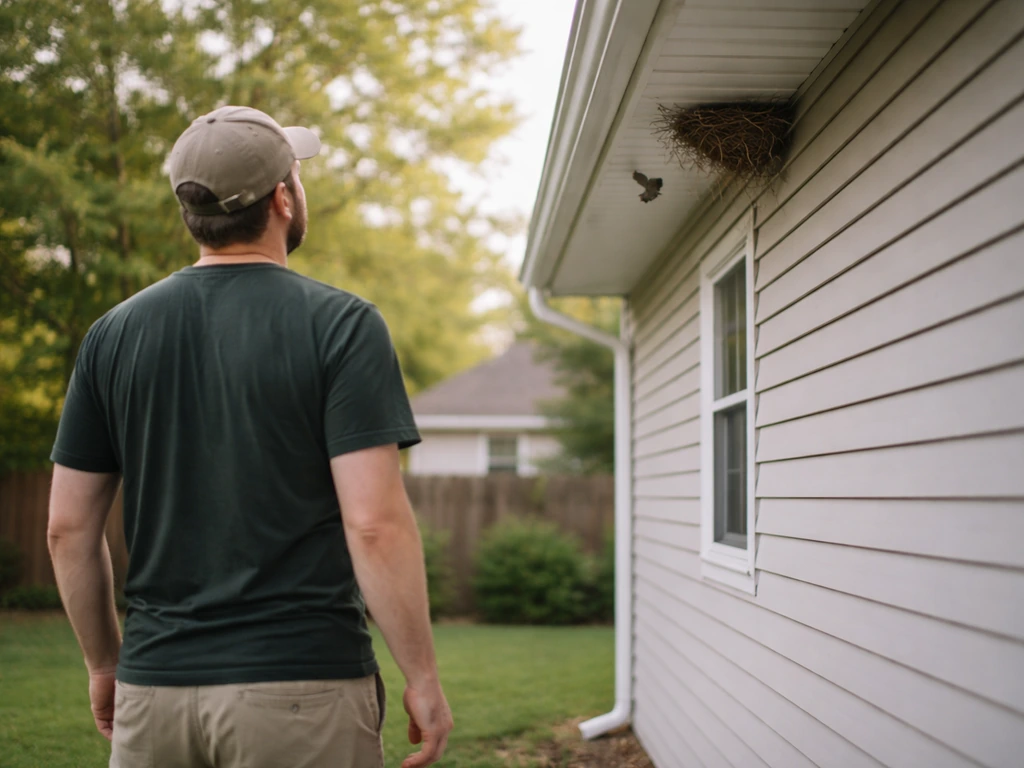
This is the most urgent question, and you need to answer it before anything else. An active nest, one that contains a live bird, eggs, or nestlings, is the legal trigger that determines what you're allowed to do. A nest that's been empty for weeks is a completely different situation.
The safest way to assess is to step back and watch from a respectful distance for at least 20 to 30 minutes. Parents frequently leave nests to feed, especially during incubation, and an adult songbird may be gone for up to 15 minutes without the nest being abandoned. Do not assume it's empty just because you don't see or hear a bird in the moment you walk outside. What you're watching for: adults returning to the nest site, scolding or alarm calls directed at you, adults hovering anxiously near the gutter line, or visible movement inside the nest (chicks shifting or begging).
If you need a closer look, do it quickly and with as little disturbance as possible. Use a phone camera on a selfie stick or extend a small mirror on a pole so you can see into the gutter channel without putting your face near the nest. What you're looking for: eggs (any color, size varies by species), small featherless or downy chicks, or a compact, well-formed cup of nesting material that looks freshly built and intact. Take a photo if you can. That documentation helps you track progress and gives you a record if you ever need to consult a wildlife professional.
Signs that a nest is genuinely abandoned or finished: no adult activity after multiple observation windows spread over two or more days, chicks that have clearly fledged (nest is empty but was occupied previously), eggs that are cold, cracked, or discolored with no adults returning over several days, or a nest that is structurally collapsed and obviously old. Even then, err on the side of waiting if you're in peak nesting season (roughly March through August in most of North America and the UK).
Quick ID: what kind of nest is this, and who built it?
Knowing the likely species helps you estimate how long you'll need to wait and what the nest is structurally like. Gutter nests are most commonly built by house sparrows, American robins, European starlings, barn swallows, and in some regions, chimney swifts. Here's how to tell them apart quickly:
| Species | Nest material and structure | Typical nest period | Notes |
|---|---|---|---|
| House sparrow | Loose, messy pile of grass, feathers, string, paper, plastic; fills cavities and corners | March to August; multiple broods | Very common in gutters, downspout openings, and eaves; not protected under the MBTA in the US |
| American robin | Mud cup reinforced with grass; smooth inner lining; roughly 6 inches across | March to July; 2 broods | Prefers ledges and horizontal surfaces; mud construction is distinctive |
| European starling | Loose grass, leaves, feathers, sometimes trash; in a cavity or enclosed space | March to July | Not protected under the MBTA in the US; often uses downspout openings |
| Barn swallow | Mud and grass cup, sometimes with feathers; attached to vertical surfaces near overhangs | May to August | Protected under MBTA; will reuse nest sites year after year |
| Chimney swift | Small platform of tiny twigs glued with saliva; attached to vertical surfaces | May to August | Protected under MBTA; extremely sensitive to disturbance during nesting |
The material and construction style are your fastest clues. A muddy cup with a grassy lining points to a robin. A messy pile stuffed into a corner or cavity is almost always a house sparrow or starling. A tiny twig platform glued to a vertical surface with what looks like dried saliva is a chimney swift. This distinction matters practically because house sparrows and European starlings are non-native, invasive species in North America and are not protected under the Migratory Bird Treaty Act, which gives you more flexibility if the nest is active. Every other common gutter-nesting species is protected.
The legal reality: what you can and can't do
In the United States, the Migratory Bird Treaty Act (50 CFR § 10.13) makes it unlawful to take, possess, or destroy migratory birds, their nests, or their eggs without authorization. "Take" is interpreted broadly and does not always require intent. An active nest, one containing eggs or live nestlings, is the specific legal trigger. Removing or destroying an active nest of a protected species without a permit can result in significant fines. To get an idea of scale: penalties can be substantial, and USFWS has the authority to pursue them even for accidental take.
In Canada, the Migratory Birds Regulations 2022 (effective July 30, 2022) prohibit damaging, destroying, disturbing, or removing a migratory bird nest when it contains a live bird or viable egg. Species listed on Schedule 1 receive additional protection and their nests cannot be disturbed or destroyed even when unoccupied, except under specific regulatory conditions. If you cannot wait and avoidance isn't possible, Environment and Climate Change Canada (ECCC) notes that a permit may be available as a last resort after mitigation has been attempted.
In the UK, the Wildlife and Countryside Act 1981 protects all wild birds, their eggs, and their nests. It is an offence to intentionally take or destroy eggs, or to damage or destroy a nest in use or being built. Schedule 1 species have additional protection against intentional or reckless disturbance even near the nest. Penalties can include unlimited fines and up to six months' imprisonment for unlicensed take or disturbance.
The practical summary: if the nest is active and belongs to a protected species, you cannot remove it, relocate it, or deliberately destroy it. You need to wait. If you genuinely cannot wait because of a structural emergency, contact your regional wildlife authority (USFWS, ECCC, or Natural England depending on your country) before touching anything. NestWatch and the Cornell Lab also echo this clearly: active nests should never be moved, period.
The one significant exception in North America: house sparrows and European starlings are not protected under the MBTA. Homeowners in the US and Canada have more legal latitude to remove active nests of these species, though local ordinances can vary. Even so, checking with your state or provincial wildlife agency first is always the safer move.
Immediate actions: protect the birds and limit damage right now
Once you've confirmed an active nest of a protected species, your immediate priorities are keeping the birds safe and managing any urgent gutter drainage issues without disturbing the nest. Here's what to do right now:
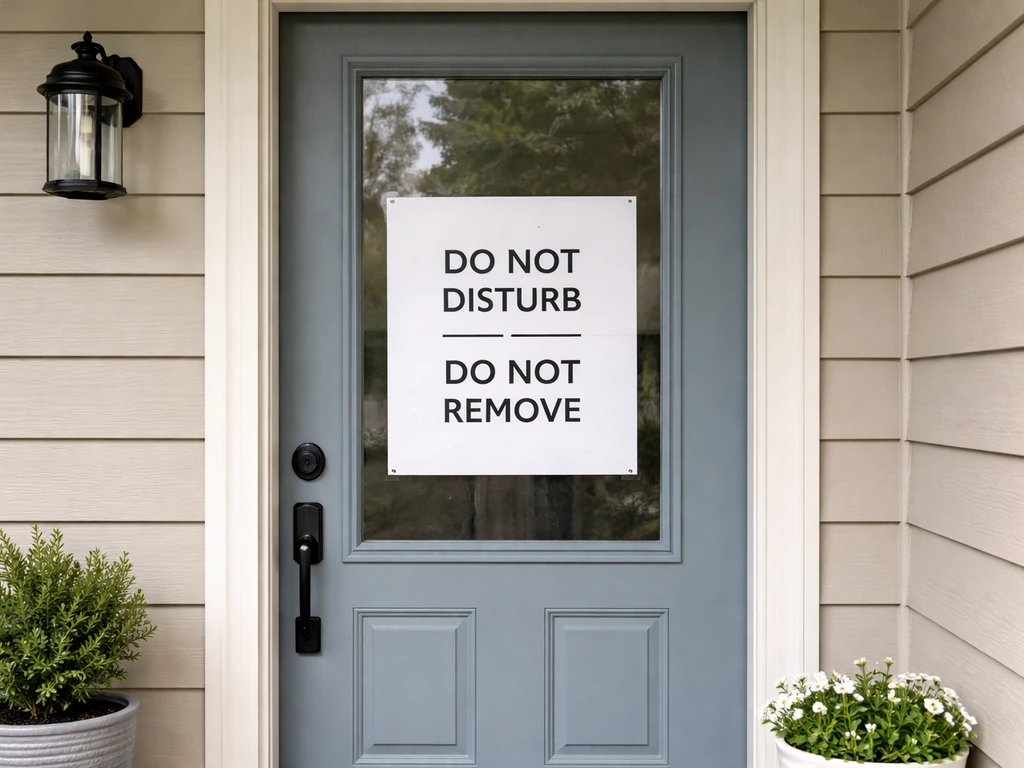
- Mark the area clearly. Tape a visible note to the ladder storage area or the downspout itself so no one in your household accidentally cleans or works on that section of gutter. A simple "active bird nest, do not disturb" note works fine.
- Keep pets and children away from the area directly below and around the gutter section. Predators, even domestic cats, stress nesting birds significantly and can cause abandonment.
- Observe from a distance only. If you need to check nest progress, use a camera pole or mirror rather than climbing up repeatedly. Each approach is a stressor for the nesting adults.
- Document with photos and a simple log. Note the date you first found the nest, whether eggs or chicks are present, and any adult activity you observe. This timeline helps you track the likely fledging window.
- If you have loose debris accumulating near the nest from leaf fall or wind, do not attempt to clear it by hand near the nest. Leave it unless it is actively blocking the nest entry or threatening to collapse onto the nest.
Handling the gutter problem without touching the nest
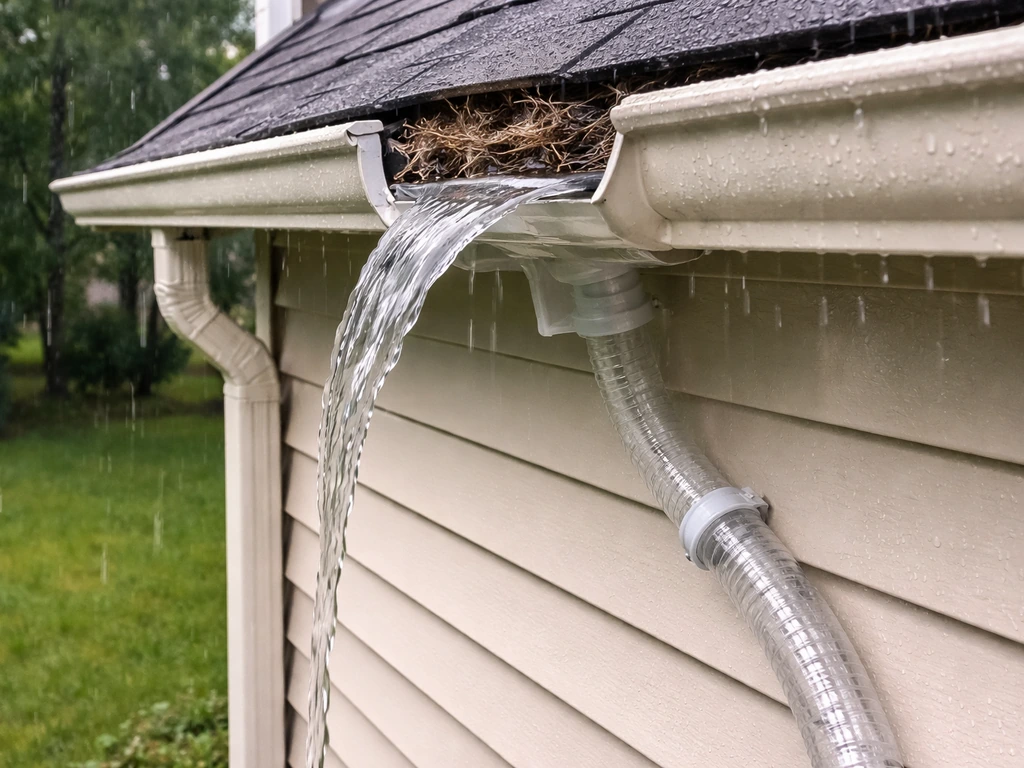
A blocked gutter is a real problem, especially during a rainy spring. The good news is that you have options for managing water overflow temporarily without disturbing the nest.
Redirecting water temporarily
If the nest is blocking a section of the gutter channel, water will overflow at that point. The simplest temporary fix is to attach a flexible downspout extender or a short length of corrugated drainage pipe to the nearest functional downspout and direct it away from your foundation. This diverts runoff that would normally flow along the blocked section. You can also attach a gutter diverter or splash guard at the blocked section to push overflowing water outward and away from the fascia board and siding. Neither of these approaches requires you to touch the section where the nest is located.
Protecting your fascia and siding
Persistent overflow at one point will eventually damage your fascia board, soffit, and the exterior wall below. If you're getting heavy rain and the overflow is consistent, place a water-diverting roof patch or a self-adhesive flashing strip along the top of the fascia board at that section to keep water from running behind it. You can do this from the roofline without going near the gutter channel itself. Check the area after rain events to make sure overflow isn't pooling against your foundation.
If there's a true emergency (flooding or structural risk)
If a single heavy storm is causing serious flooding risk to your home's foundation or interior, that changes the calculus. Contact your regional wildlife authority immediately. Explain the situation, describe the species if you can, and ask about emergency options. In the US, USFWS can advise on whether an emergency permit applies. In Canada, ECCC's FAQ acknowledges that when avoidance is not possible, mitigation and permits are options. Do not just remove the nest unilaterally and hope for the best: get that guidance on record first.
When is it actually safe to clean and repair?
The nesting cycle is your guide. For most songbirds, incubation takes roughly 10 to 14 days after the last egg is laid, and nestlings fledge about 10 to 16 days after hatching. So from the time you first notice eggs, you're typically looking at three to four weeks until the nest is empty.
If you are trying to figure out timing like “7 days to die do bird nests respawn,” treat this same nesting-cycle idea as your baseline for when a nest is likely to be active versus ready to be cleared. Once chicks have fledged (left the nest on their own), the nest is no longer active and you are generally free to remove it and proceed with cleaning and repairs.
Here's a practical seasonal framework for gutter maintenance timing:
| Time of year | Typical nesting status | Recommended action |
|---|---|---|
| Late winter (January to mid-February) | Most nests inactive in temperate regions | Safe window for gutter cleaning and repairs in most areas |
| Early spring (March to April) | Nest building begins; some early nesters already incubating | Inspect before cleaning; postpone any section with an active nest |
| Peak nesting (May to July) | Highest likelihood of active nests | Avoid all gutter disturbance; manage drainage temporarily if needed |
| Late summer (August) | Late broods possible; some nests finishing up | Check carefully before any work; fledgling activity may still be present |
| Fall (September to November) | Most nesting finished in temperate regions | Good window for full gutter cleaning and repairs |
| Early winter (December) | Nesting generally inactive | Ideal time for full inspection, cleaning, and prevention measures |
Missouri's MDC makes this point specifically for chimney swifts: if you discover an active swift nest during a scheduled cleaning, postpone the job until between mid-September and mid-March. The same logic applies to gutter nests. Mark the section, protect your drainage as best you can, and schedule the cleaning for the appropriate window.
Once the nest is confirmed empty and the nesting season is over, removing it is straightforward and legal. Scoop out nest material with gloved hands or a small trowel, place it in a bag, and dispose of it. Then flush the gutter section with a hose to clear remaining debris, check for any damage to the gutter channel or fascia, and make any needed repairs before the next season. Old nests removed during the off-season won't affect the birds' ability to nest again the following spring.
Stopping repeat nesting in the same spot
Some species, particularly house sparrows and barn swallows, will return to the exact same nesting location year after year. If you've just cleared a nest and want to prevent a repeat in your gutter, you have a good-sized window in fall and early winter to make changes before the next breeding season. The key is to remove the attractiveness of that specific spot.
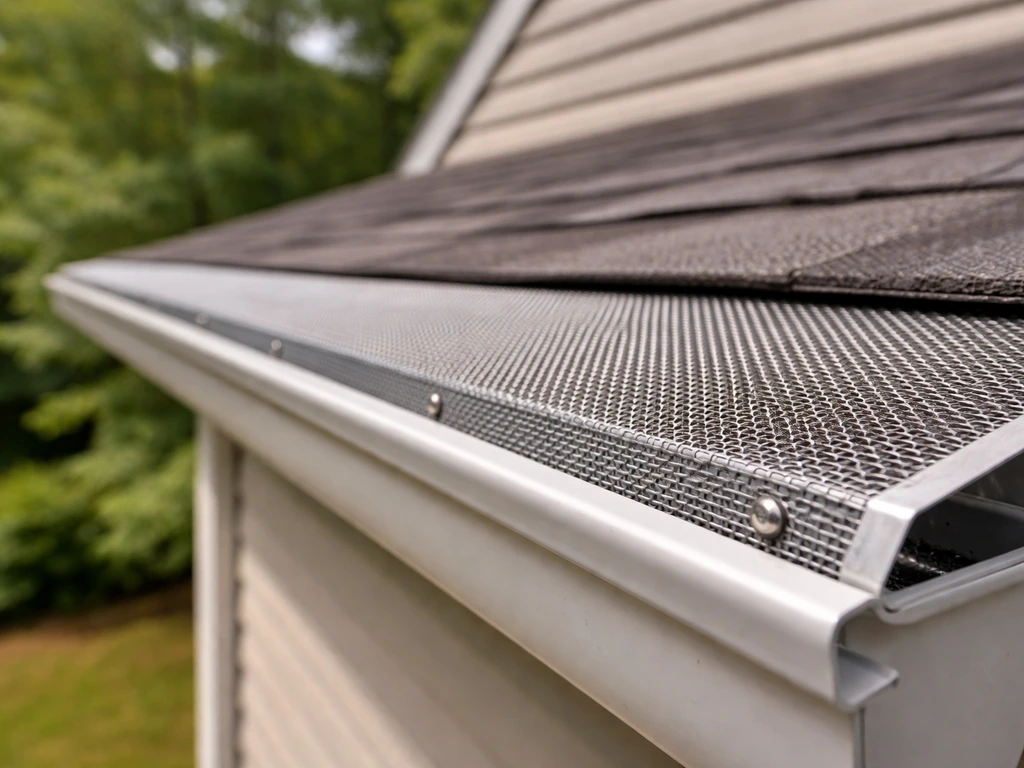
Physical exclusion is the most reliable method. Gutter guards with fine mesh (1/4 inch or smaller) block nest material from accumulating and prevent birds from accessing the gutter channel. Foam gutter inserts can also work for small birds. For downspout openings specifically, attach a wire mesh cage or downspout strainer to block cavity access. These are all passive, non-harmful deterrents and they're most effective when installed in fall or early winter before birds start scouting for nest sites.
For ledges and gutter lips where birds like to perch and build, physical deterrents like bird slope strips (angled plastic panels that prevent landing) or stainless steel spikes installed along the gutter edge can reduce suitability. These need to be installed outside of nesting season so you're not disturbing active nesters. Never apply these while birds are nesting or building: installation counts as disturbance.
If you're seeing repeat nesting by barn swallows or other protected migratory species and want a longer-term solution, consider providing an alternative. A purpose-built barn swallow nesting shelf mounted under your eaves at a spot less problematic for drainage gives the birds a preferred spot that doesn't block your gutters. Swallows are highly beneficial insect eaters and worth accommodating if you can.
In OSRS, bird nests are used as a key item for constructing and training certain tasks, similar to how they play a practical role in real-life nesting bird nests used for osrs. If you are curious about the game side of things, the OSRS angle on why bird nests cost so much is covered in more detail in the linked section on osrs why are bird nests expensive.
Chimney swifts similarly benefit from dedicated swift towers, which USFWS actively encourages as a way to support swifts while reducing conflicts around chimneys and rooflines.
Finally, keep gutters clean and free of accumulated leaf debris through fall and winter. Debris buildup is what makes gutters attractive nesting habitat in the first place. A clean, open gutter channel with no accumulated organic material is a much less appealing nesting site. Schedule a thorough clean in late fall after leaf drop and again in late winter before nesting season begins, and you'll significantly reduce the chance of a repeat situation.
If you're dealing with a nest that's already been removed and want to understand what to do with the actual nest material itself, or if you found a nest on the ground rather than in your gutter, those scenarios have their own specific guidance worth reviewing separately. If you’re dealing with bird nests in OSRS specifically, the safest approach is to follow the game’s interaction steps for nests and avoid taking actions that your account cannot support what to do with the actual nest material itself. If you're wondering what to do with old bird nests after the nesting season, you can follow the off-season cleaning and disposal steps in the guide actual nest material itself. If you are dealing with a fallen bird nest with eggs, the priority is to confirm whether it is active, then avoid disturbing it without wildlife authorization old bird nests.
FAQ
What should I do right away if I see birds actively entering the gutter but the nest looks hidden or I cannot see inside?
Treat it as active and legally sensitive until you can confirm otherwise. Use a longer observation from a distance (at least 20 to 30 minutes) and, if needed, take a quick camera peek from the side with a phone or extended mirror, avoiding direct proximity. Do not start clearing debris around the suspected entry point while you are still unsure.
Is it okay to spray water to dislodge the nest or clear the gutter while the nest might be occupied?
No. Spraying or blasting water is a disturbance that can injure birds or cause nest failure, even if you never touch the nest directly. Use non-contact overflow routing options instead, like diverting flow to another downspout with an extender or using a splash guard to push overflow outward.
How can I tell the difference between “nest active” and “season over” when I only checked once?
One visit is often misleading because adults may be away to forage. Re-check in multiple windows over at least 2 days, and look for adult return behavior, alarm calls, and signs of movement. If you find eggs that are cracked, cold, or discolored and no adults return after several days, it is more likely inactive, but still confirm before removing if it could be a protected species.
Can I remove just the leaves or debris around the nest but leave the nest itself in place?
Usually avoid any work that changes the nest site environment while birds could be nesting. Even “nearby” cleaning can be interpreted as disturbance, especially if it requires reaching into the gutter area. If you must address drainage, focus on diverting water away from the blocked section without contacting the nest area.
What if overflow is causing water intrusion inside the house, but I cannot wait for a wildlife authority to respond?
Prioritize immediate water control that does not require touching the nest. Divert runoff to another downspout using extenders or temporarily redirect with splash guards, and consider roofline water-diverting flashing from where you can work without accessing the gutter channel. Document the situation and contact the wildlife authority as soon as you can for guidance, especially if the nest could be protected.
Are house sparrow and European starling nests the only ones I can remove if they are active?
In North America, those two non-native species are the main common exceptions under the MBTA framework discussed in the guide. However, local rules, city ordinances, and the specific country or state/province can add restrictions. If you cannot confidently identify the species, default to “do not remove” until you get confirmation.
What if the nest is in a downspout, a small cavity, or a tight corner and I need access for repairs?
Do not attempt to widen the access or cut into the gutter system while the nest might be occupied. If repairs are urgent, route water around the blockage using the nearest functional downspout and postpone invasive work until the nest is confirmed empty. For ongoing conflicts, ask a wildlife professional or your local agency about permitted mitigation options.
Do I need to wait for fledglings to fully leave before cleaning the gutter?
Yes. Even if you see chicks present, assume the nest is still in use until they have clearly fledged and adults stop returning. After fledging, you generally have a cleanup window, but re-check for a final adult return and nest activity before removing material and restarting gutter repairs.
How should I dispose of the nest material once it is confirmed inactive?
Bag the material directly where it is removed to minimize spread and debris, then dispose of it as regular waste unless local guidance says otherwise. After removal, flush the gutter section and inspect for damage to fascia and soffits. Avoid leaving nest material sitting out, as it can attract repeat nesting.
Can I install gutter guards or spikes immediately after the nest is gone, but while nesting season is still ongoing?
You should wait until you are confident the nest is finished and no active nesting is occurring on nearby sections. If the area is still within a high activity period, install deterrents only on confirmed-empty stretches and consider doing the rest during the fall/early winter window mentioned in the guide to reduce the chance of disturbing a new nest.
What documentation should I keep if I contact wildlife authorities or might need a permit?
Take dated photos or short videos showing adult behavior and any visible eggs or chicks, note the first day you noticed activity, and record when you observed adults returning. Include a rough nest location (specific gutter section or downspout) and what drainage problem exists (overflow point, signs of fascia damage). This helps agencies advise on emergency options and permit needs faster.
Next Article
What to Do With Bird Nest OSRS: Full Guide
Step-by-step OSRS guide on what to do with bird nests, including opening, rewards, goals, and common issues.
