
If you've found a fallen bird nest with eggs, the most important thing you can do right now is slow down and assess before you touch anything. In most cases, the best action is also the simplest one: don't move the nest, don't handle the eggs, and give the parent birds time to return. But if the nest is genuinely at risk from weather, predators, or a bad location, there are a few careful, legal steps you can take while you wait for professional help. Here's exactly how to work through it.
What to Do With a Fallen Bird Nest With Eggs: Steps
Maya Bennett
16 Apr 2026
First: Is the nest actually abandoned, or just fallen?
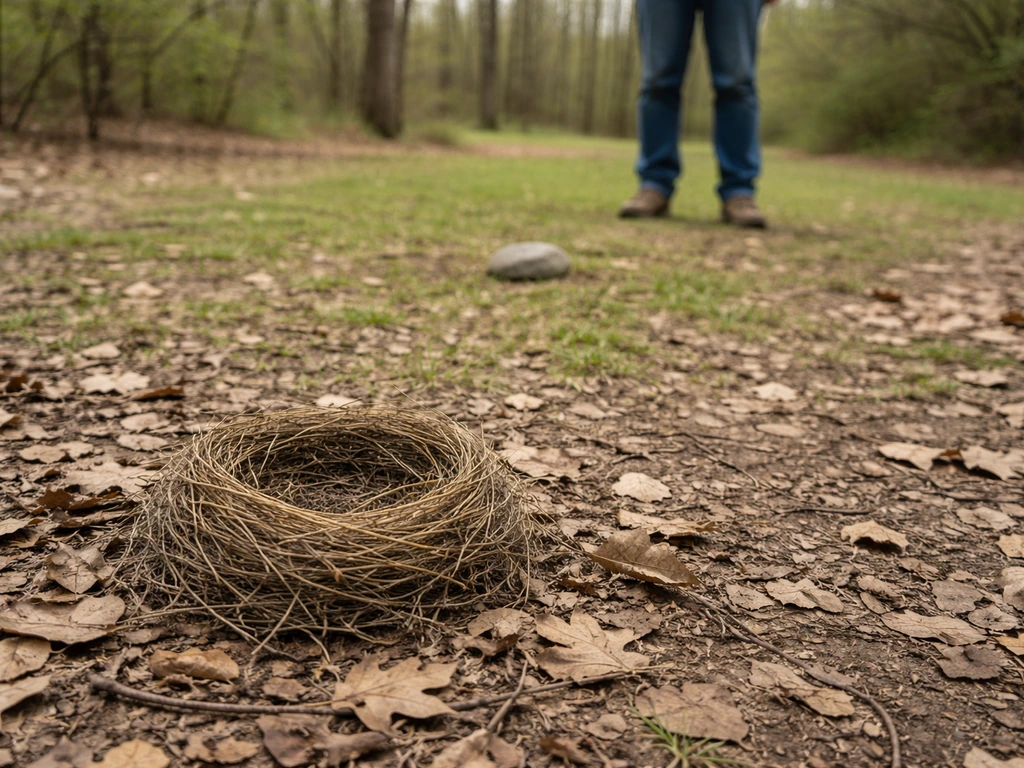
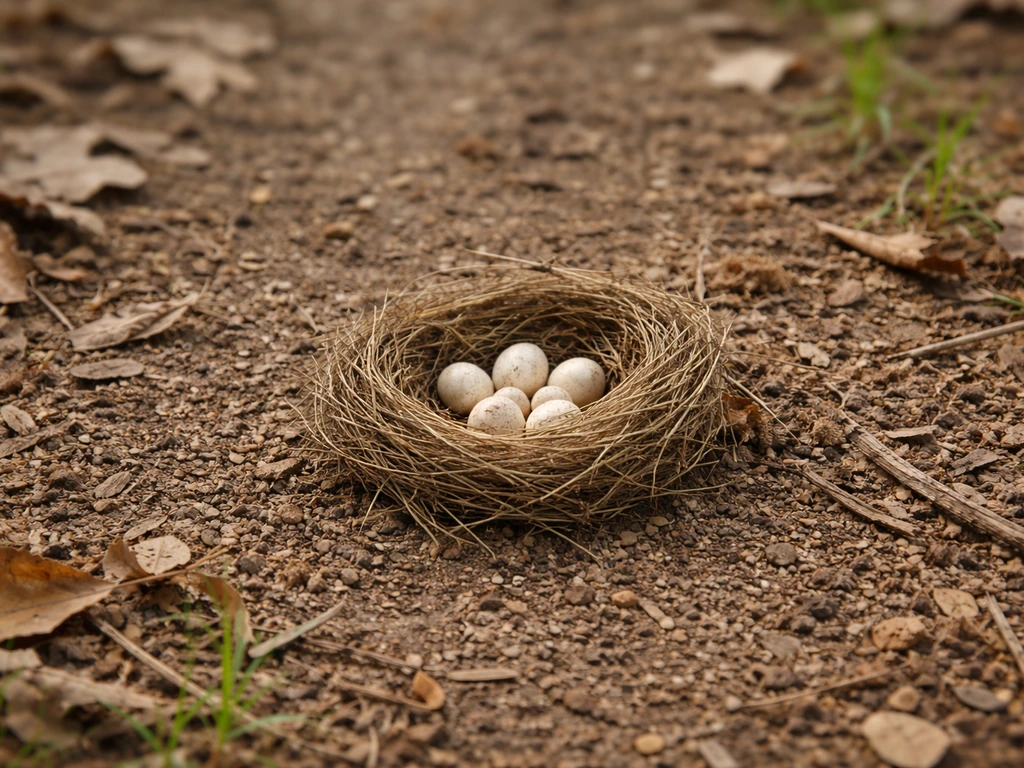
This is the single most important question. A nest on the ground doesn't mean the parents are gone. Wind, rain, or a branch failure can drop a nest without harming the adults, and parent birds often return to a displaced nest surprisingly quickly. The Cornell Lab's NestWatch program warns that eggs may still hatch even when people assume a nest is abandoned, which is exactly why a hasty decision to intervene can do more harm than doing nothing.
The standard field test: back away at least 10 to 15 feet (3 to 5 meters) from the nest and watch from that distance for about an hour. Audubon North Carolina recommends this observation window as a practical minimum before concluding that parents are truly absent. If you're standing right next to the nest, the adults will almost certainly stay away until you leave. Get out of sight if you can.
While you're watching, look for a few clues. Are adult birds flying nearby, calling, or landing on nearby branches with food? Are the eggs still warm to the side of your wrist (not your palm, which runs hotter) if you briefly brush one without picking it up? Is the nest structurally intact, just displaced from its original spot? These are all positive signs. A genuinely abandoned nest typically has cold eggs, no adult activity after an extended watch, and sometimes signs of partial predation or nest damage. Indiana DNR advises not hovering around the nest area during this wait, since your presence is the most common reason parents appear absent.
Quick ID: nest type, egg appearance, and likely species
You don't need to identify the exact species to make the right call here, but a rough read of the nest and eggs helps you understand what you're dealing with and what the eggs need. NestWatch is clear that egg color and pattern are "highly variable, even within a clutch" and should be treated as supporting evidence rather than a definitive ID. Still, a few broad cues go a long way.
Nest structure and materials
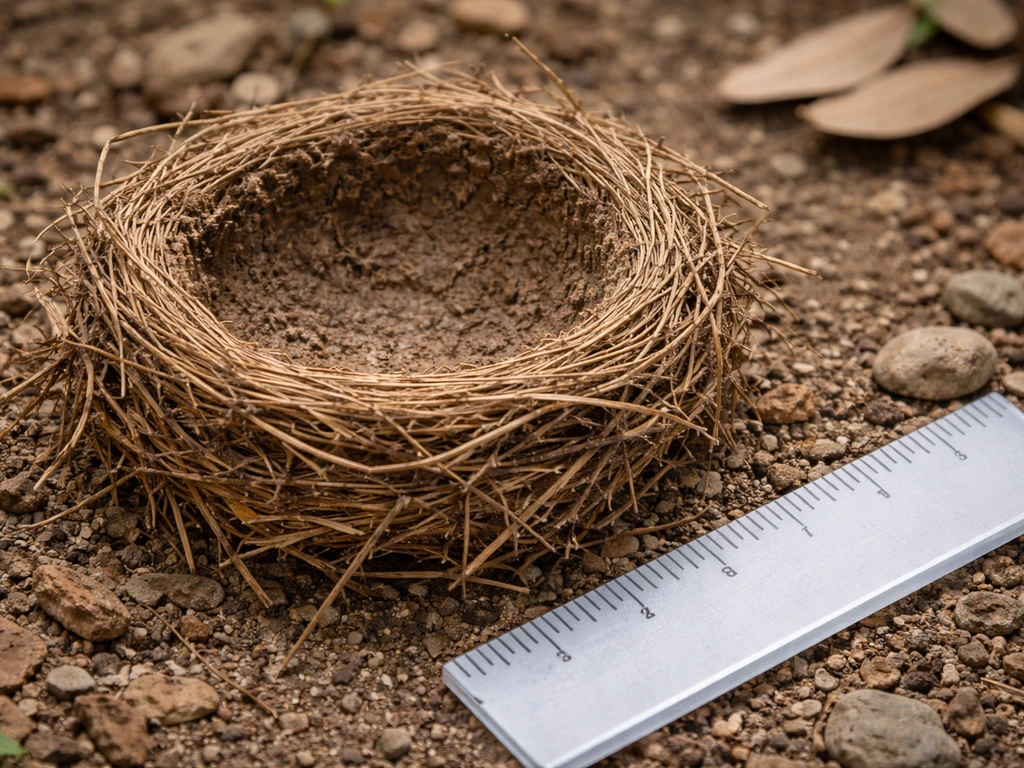
- Cup nest made of grasses, twigs, and mud lining: probably a robin, thrush, or similar songbird. Robins lay 3 to 5 bright blue-green eggs roughly 1.1 inches (28 mm) long.
- Small cup nest of plant fibers, spider silk, and lichen, often the size of a golf ball or walnut half: hummingbird. Eggs are white, about 0.5 inches (13 mm) long, and tiny.
- Loosely woven cup of grass and plant stems with little mud: sparrows, finches, or warblers. Eggs are often speckled brown or white, under 1 inch (about 20 mm).
- Open platform nest of sticks, often large (12 to 24 inches / 30 to 60 cm) with a shallow cup: dove or mourning dove. Eggs are plain white, about 1.1 inches (28 mm) long.
- Cavity nest contents (found if a nest box fell): bluebirds lay pale blue eggs; chickadees lay white eggs with fine brown speckles; both are roughly 0.7 inches (18 mm).
- Woven pouch or sock-shaped nest: oriole. Eggs are pale with dark streaks and scrawls, about 1 inch (25 mm).
NestWatch recommends taking photos from multiple angles and comparing against a field guide. Note the nest's outer diameter, dominant materials (mud, grass, bark strips, feathers), and where you found it (shrub, tree fork, ground). These structural cues narrow down the species group far more reliably than egg color alone. If you're curious about the broader world of nest construction and what different birds use, what to do with a bird nest covers nest types and materials in more detail.
The legal reality: what you can and can't do
In the United States, most wild bird nests and eggs are protected under the Migratory Bird Treaty Act (MBTA). The U.S. Fish and Wildlife Service defines an "active" nest as one containing viable eggs or live chicks, and that status holds until fledged young are no longer dependent on the nest. Under USFWS guidance, disturbing, relocating, or destroying the contents of an active nest can constitute a "take" under the MBTA, which requires federal authorization or a permit. This isn't a technicality to ignore: handling or moving a nest with viable eggs without authorization is a federal violation. You should not assume you can legally relocate any active migratory bird nest without checking with authorities or going through a licensed rehabilitator.
In Canada, the Migratory Birds Regulations (updated 2022) similarly protect nests containing a live bird or viable egg, and relocation or destruction may require permits if you can't simply wait for the nest to become inactive. The short version for both countries: an active nest with eggs is protected, and your legal safe harbor is to either leave it alone, stabilize it minimally in place, or contact a licensed wildlife rehabilitator who is authorized to handle it.
| Situation | Legal status (US/Canada) | What you can do |
|---|---|---|
| Fallen nest with viable eggs, parents nearby | Active/protected | Stabilize in place, keep pets away, watch from distance |
| Fallen nest with viable eggs, parents absent after 1+ hour watch | Active/protected | Contact licensed wildlife rehabilitator before handling |
| Fallen nest with no eggs or clearly non-viable eggs (cold, cracked, decomposing) | Inactive/unprotected (USFWS definition) | Remove or leave; no permit needed |
| Nest in a dangerous location (street, active gutter) with viable eggs | Active/protected | Contact wildlife rehabilitator; do not self-relocate without guidance |
| Nest belonging to a non-native species (house sparrow, European starling, rock pigeon) | Not protected under MBTA | More flexibility, but check local regulations |
One common situation that changes the calculus is a nest built in a bird nest in a gutter, which poses both a drainage hazard and a legal puzzle. That guide walks through the specific approach for active nests in problematic built structures.
If the nest is abandoned: leave it or stabilize it?
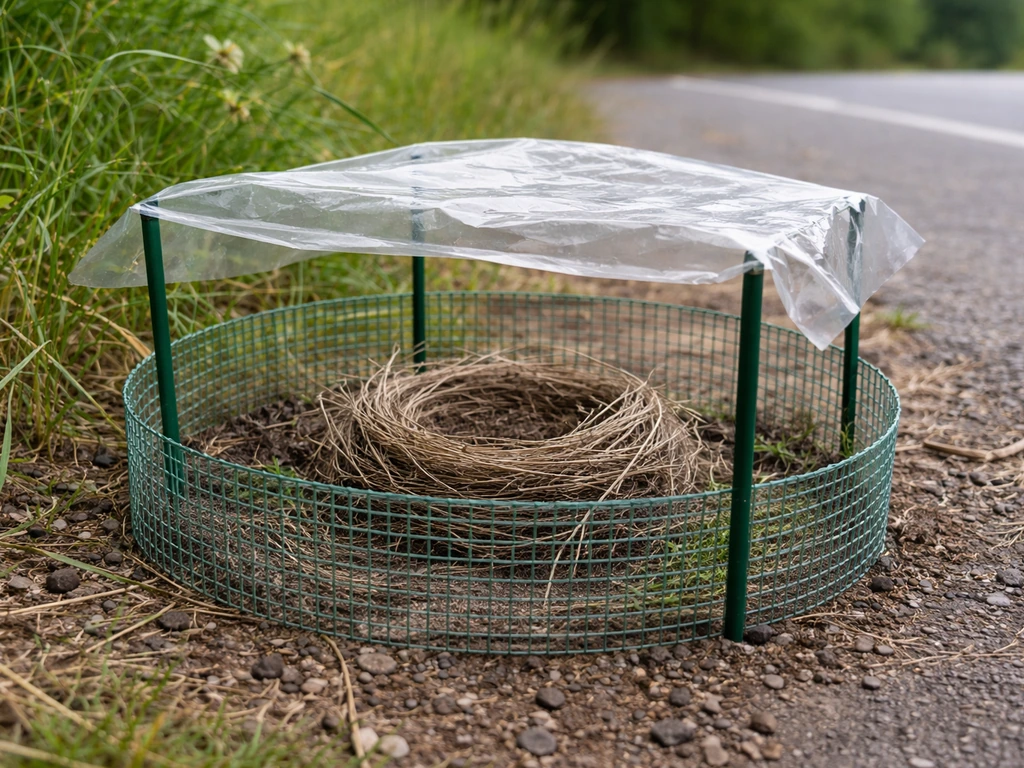
If you've watched for an hour, seen no adult activity, the eggs are cold, and you're confident the nest is genuinely abandoned, the ethical calculus is simpler. An abandoned nest in a safe location can simply be left alone. Eggs that are truly abandoned won't hatch regardless of what you do, and moving them introduces additional disturbance risk. Curious about what generally happens to old nests across seasons? The article on what to do with old bird nests covers that territory well.
If the nest is in an immediately dangerous spot (on a road, in standing water, directly exposed to a cat's reach) and you are confident it's abandoned, you can remove it. Under USFWS definitions, a nest with no viable eggs or live chicks is inactive and not protected. That said, if there's any doubt, leave it and call for help.
When and how to move a nest (only if it's truly necessary)
Here's the honest reality: in most cases, you should not move the nest yourself. Active nests with viable eggs are legally protected, and even a well-intentioned relocation can cause parents to abandon the eggs entirely. That said, there are narrow situations where minimal stabilization is appropriate: the nest has fallen a short distance from a secure location, the original site is visible and accessible, the eggs appear viable, and a licensed rehabilitator or wildlife officer has advised you to proceed.
If you've confirmed that a short reposition is safe and appropriate, Wildlife Welfare advises securing the nest as close to its original location as possible, keeping it out of direct sun, and placing it where predators can't easily access it. Use clean gloves. Do not cup the nest in your bare hands for extended periods. Place the nest in a shallow container (a small basket, a repurposed berry container) wedged securely into a branch fork or tied with natural-fiber twine so it won't fall again. Keep the cup level so the eggs don't roll. Then immediately back away and watch.
Do not attempt to incubate eggs yourself. Bird eggs have precise humidity and temperature requirements (most passerine eggs need 99 to 100°F / 37 to 38°C with specific humidity levels) that are nearly impossible to replicate without licensed equipment and expertise. A cardboard box with a lamp is not an incubator. Attempting this without a permit also puts you in legal jeopardy.
Emergency steps when eggs are at immediate risk
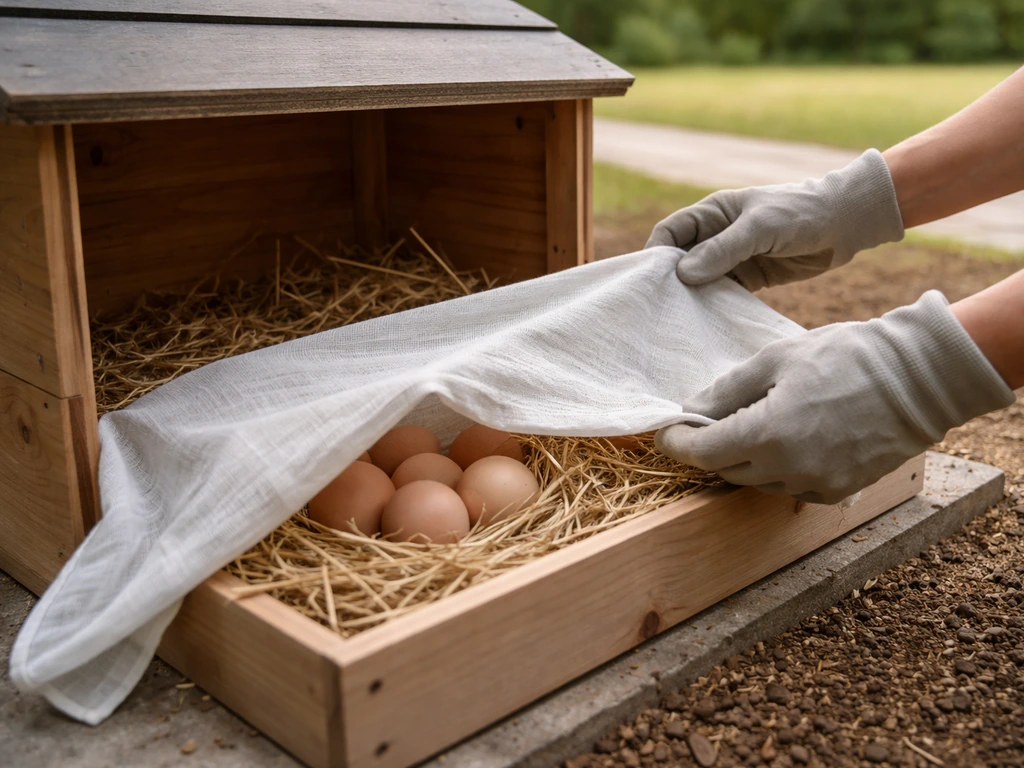
If eggs are exposed to cold rain, direct summer sun above 90°F (32°C), or an active predator threat, you have a short window to reduce harm while you get help on the phone. The Wild Bird Care Centre's emergency guidance emphasizes keeping nestlings and eggs away from drafts, loud noises, and pets, and prioritizing a stable, sheltered environment while you wait for a rehabilitator. Here's a practical sequence:
- Keep people and pets away from the nest immediately. Every minute of disturbance reduces the chance of parents returning.
- If the nest is soaked or in standing water, gently move it the minimum distance necessary to a dry, shaded surface. A nearby low branch, a fence post, or a sheltered ledge all work. Keep the cup level.
- In cold or wet conditions, place a loose dry cover (a shallow inverted box with a ventilation gap, not an airtight lid) nearby to break wind and rain without trapping heat.
- In direct hot sun, rig a temporary shade using a piece of cardboard propped a few inches above the nest. Do not place anything over the nest that traps heat.
- Do not add artificial heat sources (heating pads, lamps) to an outdoor nest you cannot monitor continuously.
- Call a licensed wildlife rehabilitator right now, while you are doing the above steps. Don't wait until the situation worsens.
How to contact wildlife rehab and what to say
Your state or provincial wildlife agency is the fastest route to a licensed rehabilitator. North Carolina Wildlife Resources Commission, for example, directs people to a rehabilitator contact app and a helpline specifically for this purpose. Most state wildlife agencies maintain similar resources. You can also search the National Wildlife Rehabilitators Association (NWRA) or Wildlife Rehabilitators directory by zip code. Oregon ODFW advises contacting your local wildlife office or a licensed rehabilitator before handling any wildlife when possible, which is the right sequence here too.
Florida FWC advises leaving a detailed voicemail if you can't reach someone immediately, because rehabilitators are often in the field. When you call or leave a message, have the following ready:
- Your exact location, including address and any landmarks
- When you found the nest and what you observed (any adult bird activity, approximate egg temperature, how far the nest fell)
- A description of the nest (size, materials, number and color of eggs)
- Current weather conditions and any immediate threats (cat, heavy rain, sun exposure)
- Whether you've touched or moved anything, and if so, what
- Your phone number and when you'll be available
Washington Department of Fish and Wildlife specifically advises that when you cannot locate the original nest, placing eggs where the parents are most likely to find them is sometimes the best interim option, but this should be done only under rehabilitator guidance, not as a first instinct. Washington Department of Fish and Wildlife advises that the only time you should consider intervening is if an animal is clearly sick or injured, or if for baby animals you are certain the parent is dead; otherwise, contact or route to proper help. While you wait for a callback, stay away from the nest, keep pets indoors, and check back quietly every 15 to 20 minutes without getting close enough to deter returning adults.
What not to do (and why it matters)
- Do not handle the eggs more than absolutely necessary. The myth that birds reject eggs touched by humans is mostly false, but rough handling can crack fragile shells or displace the developing embryo.
- Do not attempt to incubate eggs at home without a permit and proper equipment.
- Do not move a nest to a completely new location unless a licensed professional advises it. Parents navigate by memory and proximity; relocating a nest more than a few feet often causes abandonment.
- Do not post the nest location publicly on social media if there's any predator risk from human foot traffic.
- Do not assume a nest is abandoned just because you haven't seen adults in 15 minutes. Some species feed infrequently and spend most of the day off the nest during warm weather.
- Do not give eggs any food or water. Unhatched eggs don't eat, and attempting to add moisture to a cracked egg without expertise causes more harm.
Quick decision checklist
- Step back immediately. Move at least 10 to 15 feet away and stop all activity near the nest.
- Watch quietly for at least one hour. Note any adult bird sightings, calls, or flyovers.
- Photograph the nest and eggs from above and the side without touching them. Note the number of eggs, their color and size, and the nest materials.
- Assess the immediate risk. Is the nest in standing water? Exposed to rain, extreme heat, or an active predator? If yes, proceed to minimal stabilization (see emergency steps above) while calling for help.
- If parents have not returned after one hour and conditions are stable, call a licensed wildlife rehabilitator. Do not move the nest while waiting unless there is an immediate physical threat.
- If parents have returned, back off completely. Check again from a distance in two to three hours. If the nest is on the ground, note that many birds will continue to incubate there successfully if the site is protected.
- Follow the rehabilitator's specific instructions once you reach them. Their guidance overrides any general advice.
One thing worth knowing is that the rules and ethics shift significantly once a nest is inactive. If you're dealing with an old, clearly empty nest after the season is over, the considerations are very different from an active one. The question of what to do with old bird nests is worth reading once this immediate situation is resolved.
If you play Old School RuneScape, you may have encountered a completely different context: the game uses bird nests as a gathering mechanic, and players often wonder what to do with bird nests in OSRS for crafting and skilling purposes. That's a very different world from the real-life situation you're navigating right now, but it's a fun rabbit hole once the eggs in your yard are safe.
Similarly, if you're a gamer wondering whether bird nests respawn in 7 Days to Die, that's a separate game-mechanics question we also cover. And for those curious about the in-game economy, there's a deeper look at why bird nests are expensive in OSRS and what drives their market value. But back to the real world: the bird in your yard needs your attention first.
For OSRS players also curious about the functional uses within the game, what bird nests are used for in OSRS covers the crafting and prayer applications in detail.
The bottom line is this: most fallen nests are not lost causes. Parent birds are resilient and motivated, and your restraint is often the most powerful tool you have. Watch first, intervene minimally, stay legal, and get a licensed rehabilitator on the phone as soon as you have any doubt. That sequence covers the vast majority of situations you'll encounter.
FAQ
If I don’t see adult birds right away, does that mean the nest is abandoned?
No. In almost every case you should treat a fallen nest with eggs as potentially active, back away and observe first, then contact a wildlife rehabilitator if you cannot confirm abandonment. A nest can look “abandoned” while adults are still incubating intermittently or are temporarily displaced.
How reliable is the “eggs feel warm” test for deciding what to do next?
Warmth is a useful clue, but don’t rely on it alone. If eggs were recently dropped, they can cool faster on the ground than in a shrub, so combine temperature checks with at least an hour of watching for adult activity and calls. When unsure, default to leaving the nest alone.
Is it okay to use gloves and move the eggs to “help” them stay safe?
Gloves reduce scent transfer, but they do not remove the main risks, which are disturbing incubating adults and moving eggs that should remain in place. Also, keep handling time extremely short, and only consider minimal stabilization after a rehabilitator or wildlife officer advises you.
Can I relocate the nest to a higher spot in my yard right away?
Put that urge on hold. Even when the nest is on the ground, try to stabilize it in place or re-secure it only with guidance, because moving can make adults stop recognizing the site. If you can see the original area and predators are the main threat, call a rehabilitator before you relocate.
What should I do if the eggs are in heavy rain or intense heat?
Yes, and it is often safer to act conservatively. If the eggs are exposed to rain, direct scorching sun, or immediate predation risk, limit exposure by providing a sheltered, quiet waiting area while you arrange help, but avoid taking eggs out of the nest or moving them repeatedly.
What if the nest is too damaged or far from its original spot to put back?
If you only find the nest and eggs and you cannot locate the original placement, do not guess at where to put them. Waiting, keeping pets away, and contacting a licensed rehabilitator is usually the best first step, because they can advise on whether “best chance placement” is appropriate for that species.
When can I safely remove the fallen nest after I’m sure it’s no longer active?
If you’re confident there are no viable eggs or live young, the nest is typically considered inactive. But “looks empty” is not always proof. If you suspect incubation was recent, follow the same wait-and-observe approach or call for advice rather than removing the structure immediately.
Should I feed the parent birds or offer water to help the eggs hatch?
Feeding is not recommended and can worsen outcomes. Adults may be discouraged by interference, and human-provided food can attract predators and create dependency. Your most helpful actions are distance, quiet observation, and contacting a rehabilitator if there is any doubt.
Why can’t I incubate the eggs at home with a lamp or incubator I buy?
Don’t. Most passerine eggs cannot be successfully incubated at home, and attempting it can also create legal problems if the nest is protected. Even if you plan to “practice” with an incubator, the correct approach is to let professionals handle care and permits.
How often should I check on the nest while I’m waiting for a wildlife rehabilitator?
Keep pets indoors and block access to the area, then check from a distance. Frequent close checks are the most common reason parents stay away longer. Quiet monitoring every 15 to 20 minutes can be reasonable while you wait for a response.
Does the guidance change if the nest is in a gutter or other built structure?
If the nest is in a gutter, window box, or similar structure, treat it as an immediate “call first” situation. The safest plan often involves securing around the site without removing eggs or encouraging abandonment, and the approach can vary by species and location risks.
What if I’m not in the U.S. or Canada, do I still need to worry about legal protection?
Because rules vary by country, and sometimes by local jurisdiction, you should contact your state or provincial wildlife agency or a licensed rehabilitator when there is any uncertainty about activity status. If you are outside the U.S. or Canada, the same principle applies, protected species protections often exist, so prioritize getting local guidance.
Next Articles
What to Do With Old Bird Nests Outside: Safe Steps
Step-by-step what to do with old outdoor bird nests safely: confirm abandoned, clean hazards, decide keep or remove, det
What to Do With a Bird Nest: Safe Steps Today
What to do with a bird nest today: check active vs abandoned, protect safely, handle fallen nests, and call a pro if nee
Should I Let a Bird Build a Nest? What to Do Today
Decide if to let a bird nest, how to check activity, avoid disturbance, and handle conflicts safely and legally.