Several bird species use moss to build their nests, but the most likely culprits depending on where you live are the Eastern Phoebe, American Dipper, Winter Wren, and members of the titmouse and chickadee family (Paridae). Each uses moss differently: the Eastern Phoebe builds an open cup with a visible green moss exterior over a mud base; the American Dipper constructs a dramatic domed ball of moss right next to fast-moving streams; the Winter Wren tucks a round, moss-and-leaf nest into crevices and root tangles; and titmice/chickadees incorporate moss into the cup lining inside a cavity. If you're standing in front of a nest right now trying to figure out who built it, the combination of nest shape, location, and moss type will get you to an answer fast. If you want to narrow it down fast, use the nest shape, location, and moss type to determine what bird made this nest.
What Bird Uses Moss to Build a Nest? Identify It Safely


Which birds commonly use moss for nests
Moss is one of the most versatile nesting materials in the bird world. It insulates, holds moisture, and provides a soft, pliable base that birds can mold easily. That said, different species use it in very different ways, so knowing the bird's general nesting style narrows things down quickly.
Eastern Phoebe

The Eastern Phoebe (Sayornis phoebe) is probably the most commonly encountered moss-nest builder in eastern North America. It builds an open cup nest with a distinctive structure: a mud base is packed onto a ledge or beam, then built up with layers of moss, leaves, and grass stems, and finally lined inside with fine grass and animal hair. The outside of the nest is visibly green with moss when fresh, which makes it easy to spot on a barn rafter, bridge underside, or rocky ledge. Phoebes return to the same sites year after year, so a moss-covered cup nest in one of those spots almost certainly belongs to one.
American Dipper
The American Dipper (Cinclus mexicanus) takes moss use to an extreme. It builds blank" rel="noopener noreferrer">a large, domed or ball-shaped nest made almost entirely of mosses, often with twigs and rootlets woven through. The nest has a side entrance and is always placed near, on, or directly over fast-moving water like a mountain stream or waterfall. One of the most remarkable details: the constant spray from the stream keeps the moss alive, so an active Dipper nest can literally be a living green structure. If you find a large moss dome next to a rushing creek, the Dipper is your answer.
Winter Wren

The Winter Wren (Troglodytes hiemalis) builds a round or oval nest using a combination of grass, moss, lichens, and leaves, tucked tightly into a cavity, root tangle, fallen log, or rocky crevice in dense forest. The male often builds multiple incomplete or 'dummy' nests, and the nest tends to be very well hidden. The moss blends in so well with the surrounding forest floor debris that these nests are easy to walk right past.
Titmice and Chickadees (Paridae)
Research on titmice and chickadees shows they are surprisingly selective about which moss species they use when lining their nests. In cavity nesters like the Black-capped Chickadee or Tufted Titmouse, you will often find bryophyte moss as a key component of the nest cup foundation inside a tree hole or nest box. These nests are not dramatically mossy on the outside, but crack one open (after it is long abandoned) and you will find a dense, carefully selected moss layer. Scientists studying Paridae in primeval forests have documented that individual birds show strong preferences for specific bryophyte species, which suggests this is a deliberate, learned behavior rather than opportunistic material gathering.
A bonus: hummingbirds with living nests
Some hummingbird species, including the Juan Fernandez Firecrown documented by National Geographic researchers, incorporate living moss and fern fragments into their tiny cup nests. The plant material can stay alive after being woven in, creating what is genuinely described as a 'living nest.' While this is more of a global and specialist-level curiosity than something most North American backyard watchers will encounter, it is worth knowing that moss-using nesters span a huge range of bird families and habitats.
How moss nests look and where they're found

A moss nest does not look the same across all species, but there are some consistent visual cues that tell you moss is present even from a few feet away. Fresh moss gives a nest a vivid green color that stands out against bark, stone, or timber. As the nest ages and dries out, that green fades to gray-brown and the texture becomes more compact. Structurally, moss nests tend to have a slightly fuzzy or irregular outer surface because the individual moss clumps and fronds create texture rather than a smooth wall.
Open cup nests with visible green moss on the exterior and a mud base (like the Eastern Phoebe's) are typically found on horizontal surfaces protected from rain: bridge undersides, barn beams, rocky overhangs, and porch ledges. Domed moss nests (like the Dipper's) are large, sometimes softball-to-grapefruit sized, and positioned near water at or above eye level on a mossy rock face or log. Cavity nests with moss lining are hidden inside holes and boxes and require the bird to be seen entering and exiting before you know the moss is there.
Quick identification checklist
Use this checklist when you find a suspected moss nest. Work through each point and you will narrow down the species quickly. Take a photo at each step if you can.
- Nest shape: Is it an open cup, a closed dome with a side entrance, or hidden inside a cavity/box?
- Moss coverage: Is the entire exterior covered in moss, or is moss just one visible layer among mud/sticks/grass?
- Base material: Is there a hard mud base beneath the moss? (Phoebe) Or is it moss all the way through? (Dipper, Wren)
- Location: Is it over or next to moving water? On a sheltered ledge or beam? Inside a tree hole or nest box? Tucked into a root tangle on a forest floor?
- Nest size: Roughly matchbox to fist size (Wren or titmouse) or softball to grapefruit size (Dipper)?
- Side entrance: Does the nest have a visible side opening rather than an open top?
- Nearby activity: Have you seen a small gray-brown bird (Phoebe: tail-pumping; Dipper: bobbing near water; Wren: quick movements in dense cover) close by?
- Is the moss still green/living, or dried and gray-brown?
Habitat, regions, and seasonal timing
Geography and timing are the fastest shortcuts for narrowing down your moss-nest bird. The Eastern Phoebe breeds across most of eastern North America, arriving at nesting sites as early as late February or March and laying eggs from April onward. It is one of the first flycatchers back in spring, so a fresh green moss cup on a bridge beam in March almost always means Phoebe. The American Dipper is a year-round resident of the Rocky Mountains, Sierra Nevada, Pacific Ranges, and other western mountain ranges wherever fast, clear streams run. It nests from late winter through summer, sometimes starting nest construction in February. Winter Wrens breed in dense, moist coniferous and mixed forests across Canada, the northeastern U.S., and the Pacific Coast; they typically nest April through June. Titmice and chickadees are year-round residents throughout most of North America and begin nest building in early spring, often April to May depending on latitude.
| Bird | Region | Nest season | Habitat clue |
|---|---|---|---|
| Eastern Phoebe | Eastern North America | March to July | Sheltered ledges, bridges, barns near water |
| American Dipper | Western North America (mountains) | February to July | On or beside fast mountain streams |
| Winter Wren | Canada, NE U.S., Pacific Coast | April to June | Dense forest floor, root tangles, logs |
| Titmice/Chickadees | Most of North America | April to June | Tree cavities, nest boxes in woodland edges |
How to observe ethically and safely
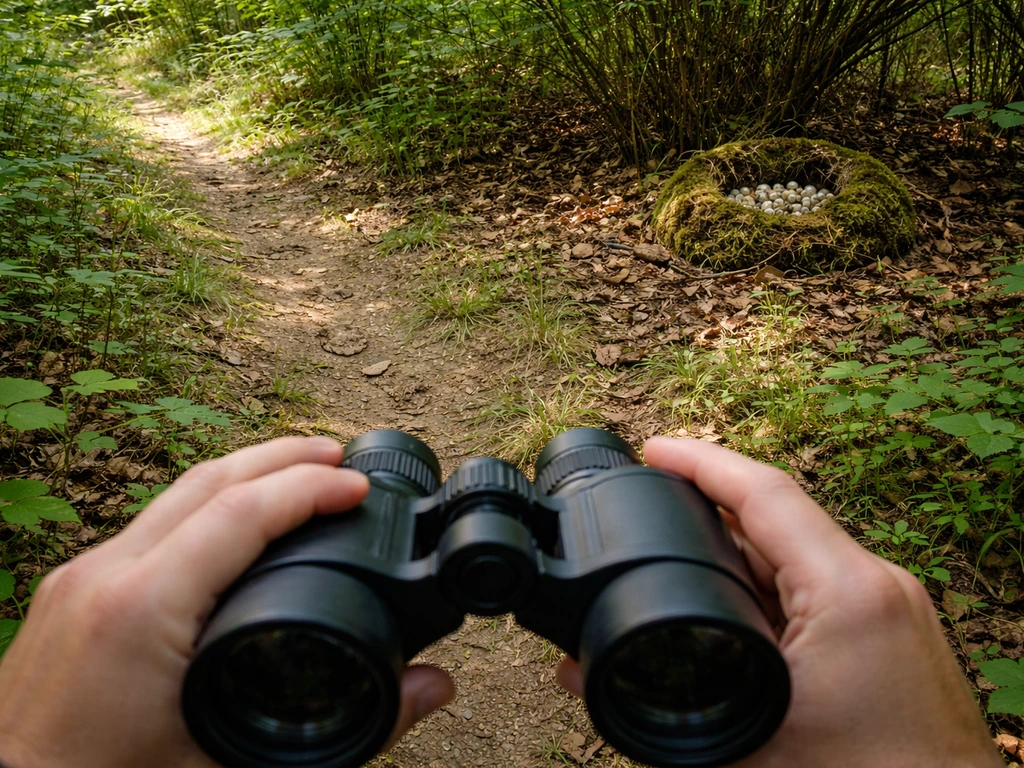
Once you have found what looks like a moss nest, the most important rule is: do not approach it closely or touch it. In the U.S., all native wild bird nests, eggs, and adults are protected under the Migratory Bird Treaty Act. Disturbing an active nest, damaging it, or removing it while birds are using it is a federal offense and can result in significant fines. This applies even if the nest is in an inconvenient spot on your property. Canada, the UK, and most of Europe have equivalent protections.
For identification purposes, you do not need to get close. A pair of binoculars and patience are your best tools. Observe from at least 10 to 15 feet away without moving toward the nest. Watch for adults returning with food or nesting material, which confirms an active nest. Keep visits brief and space them out: visiting the same nest multiple times in a day can cause stress and even abandonment, especially early in the breeding cycle.
- Do use binoculars and a long-lens camera to observe and document from a distance.
- Do take photos of the nest exterior, placement, and any adults you see nearby for later identification.
- Do contact your state/provincial wildlife agency or a licensed wildlife rehabilitator if the nest appears to have fallen, been damaged, or contains orphaned nestlings.
- Do not touch, move, or handle an active nest under any circumstances.
- Do not remove or collect moss nests even after you think they are abandoned (wait until well after the breeding season, typically after October in most regions, and confirm no second clutch is in progress).
- Do not use flash photography near a nest, and keep pets and children back from the area.
- Do not clear vegetation, trim branches, or do construction work adjacent to an active nest.
If a moss nest is in a genuinely problematic location, such as inside active machinery or in a spot that poses a real safety hazard, contact your local wildlife agency before doing anything. In many cases they can advise on legal options or exceptions. Acting without guidance first puts you at legal risk and puts the birds at unnecessary risk.
Troubleshooting: moss nearby vs. moss actually in the nest
This is a genuinely common source of confusion, and it is worth spending a moment on. If you find a nest sitting on a mossy log, mossy rock, or in a mossy crevice, that does not automatically mean the bird used moss as a building material. Some birds choose mossy locations precisely because the moss provides camouflage and insulation for the surrounding area, but the nest itself might be built from entirely different materials like bark strips, grass, or spider silk. Some birds also use spider silk in and around the nest structure, so spider webs do not automatically mean the nest is abandoned spider silk or spider silk nests. The distinction matters for identification.
To tell the difference, look at the nest wall itself rather than what surrounds it. If you can see distinct green moss clumps or fronds woven into the structure, or forming the outer wall or lining, moss is a genuine building material. If the nest is made of dry grass, bark, or leaves and simply rests on top of a patch of moss, the moss is just scenery. A close-up photo in good light makes this call much easier. This is also relevant when comparing moss-using nests to other distinctive nest types: birds that use mud as a primary material (like some swallows or robins) may incorporate moss as a secondary element, while birds known for using spider silk or leaves as structural components (worth looking up if your nest has unusual woven or sewn-looking elements) might have only incidental moss present. If you are trying to figure out which bird sews a nest out of leaves, focus on those unusual woven and sewn details rather than just the presence of moss sewn-looking elements. If you are wondering what bird builds a nest with sticks, check which species’ nesting materials are primarily twigs and grasses rather than moss. Birds that make mud nests often use mud as a primary building material, so it helps to compare the nest wall materials when you are unsure.
Another common backyard scenario: you see a bird carrying a clump of moss toward a nest box or tree cavity, but the nest inside looks like mostly soft plant fiber or fur. In that case, the moss may be a foundation layer buried under other materials, which is typical Paridae behavior. The bird is still a moss user, but you would not know it from a visual inspection of the finished nest surface alone.
What to do after you've made the ID
Once you have a confident ID, the best thing you can do is document it and leave the birds alone to do their thing. Log the date, location, nest description, and any adult behavior you observed. Apps like eBird (Cornell Lab) let you submit nest records that contribute to real scientific tracking, and April through June is prime time for those submissions across North America. If the nest is on your property, mark the area to prevent accidental disturbance and enjoy the privilege of having a front-row seat to one of nature's most skilled building projects. A moss nest, especially a living Dipper dome or a precisely engineered Phoebe cup, is worth the patience it takes to watch from a respectful distance. If you ever find a bird nest made mostly of pebbles, that’s a helpful clue for identifying which bird makes a nest of pebbles which bird make nest of pebbles.
FAQ
How can I tell quickly between a Phoebe nest and a Dipper nest when both have moss?
The Eastern Phoebe is the clearest match when you see a mud-based open cup with a visibly green moss exterior (often under bridges or on beams). If the nest is instead a domed moss mass right beside moving water, that points to the American Dipper.
My nest is near mossy material, how do I know the bird actually used moss in the nest?
Look for moss in the nest wall itself, not just on the ground, log, or rock around it. If the green clumps or fronds are woven into or lining the structure, it is likely nest material; if the moss is only adjacent or the nest wall is clearly grass, bark, or hair, the bird may have chosen a mossy hiding spot.
Can a moss-using bird build a nest that does not look mossy from the outside?
Not always, and timing can mislead you. Winter Wrens often hide nests in cavities and may use moss blended with surrounding debris, while chickadees and titmice can use moss mainly as an internal cup foundation that looks plain from outside. If you cannot see active entry and exit, you may miss the moss-using species entirely.
I see a bird carrying moss, but the nest inside looks like fur or plant fiber. What does that mean?
If a bird is bringing moss but the nest interior ends up looking mostly like fiber or fur, that usually means moss is buried or forms the foundation layer. In cavity nesters such as chickadees and titmice, the finished exterior can look less “mossy” than the material used inside.
What is the safest way to confirm a moss nest is active?
Try to confirm activity without lingering. Watch from a distance (binoculars work best), record what you see (arrival and departure, food delivery, or repeated nest-building visits), then step away. Revisiting too frequently, especially early in breeding, can increase stress and abandonment risk.
Can I use a close-up photo to identify the bird, or do I need to get closer?
Move the identification effort to tools and photos rather than proximity. Use a zoom camera or take a high-resolution image from your safe viewing spot to check for moss clumps, fronds, or a fuzzy texture on the nest wall. Avoid handling or leaning in to get “one better look.”
What if the nest used to be green moss but now looks gray-brown?
Moss can fade quickly as it dries, turning from vivid green to gray-brown and becoming more compact. If your “moss” looks dull or brown, still check texture and whether moss is woven into the nest structure, since age can make a nest look less obviously green.
What should I do if a moss nest is in a dangerous spot on my property?
If a nest is in machinery, an area you must keep clear for safety, or a spot where you cannot maintain a safe buffer, contact your local wildlife agency before taking action. Rules and permitted options vary, and even “relocation” attempts can violate protections or harm the breeding birds.
Does finding a nest on a mossy log mean it must be a moss nest?
Not necessarily. Some birds use other materials but may incorporate small bits of moss, or use mossy locations for insulation and camouflage while building the nest from grass, bark, spider silk, or other fibers. The key decision point is whether moss clumps or fronds are part of the nest wall or lining.
When is the moss-nest identification most reliable in terms of season and location?
Spring and geography matter. If you see an open green-moss cup on a beam in early spring in the east, Phoebe is highly likely. In contrast, a large domed moss nest near fast streams in the mountains points strongly to Dipper, while hidden moss-and-leaf nests in dense forest cavities suggest Winter Wren.

Identify birds that make mud nests, confirm the species safely, and handle active nests without disturbing.
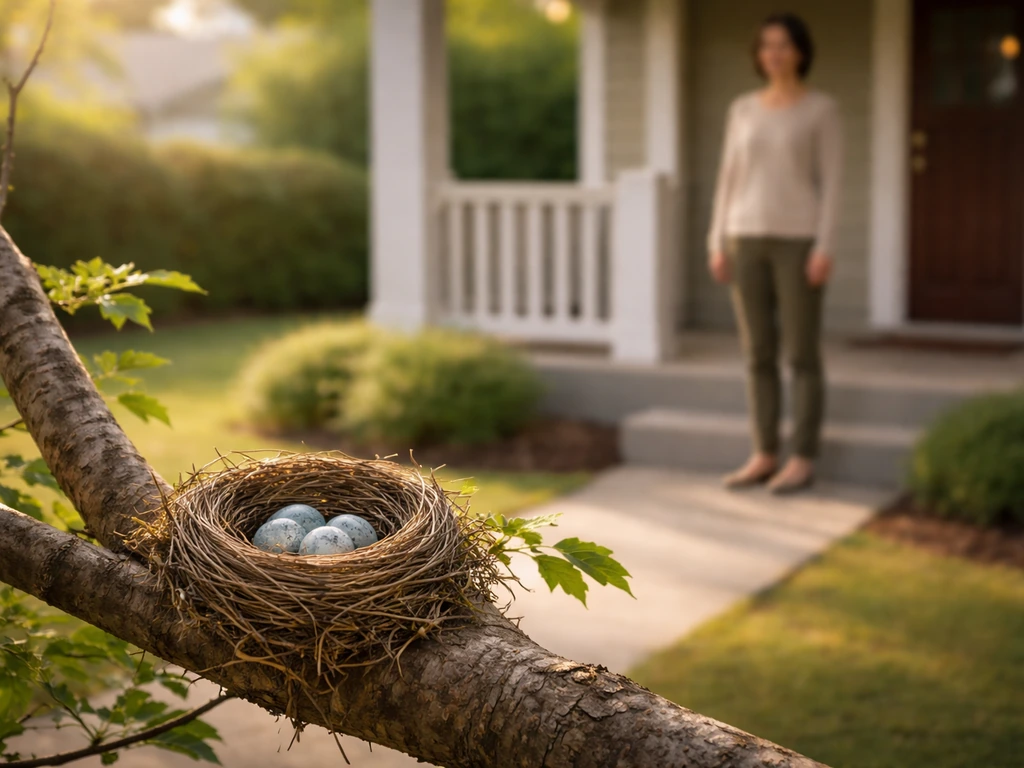
Decide if to let a bird nest, how to check activity, avoid disturbance, and handle conflicts safely and legally.
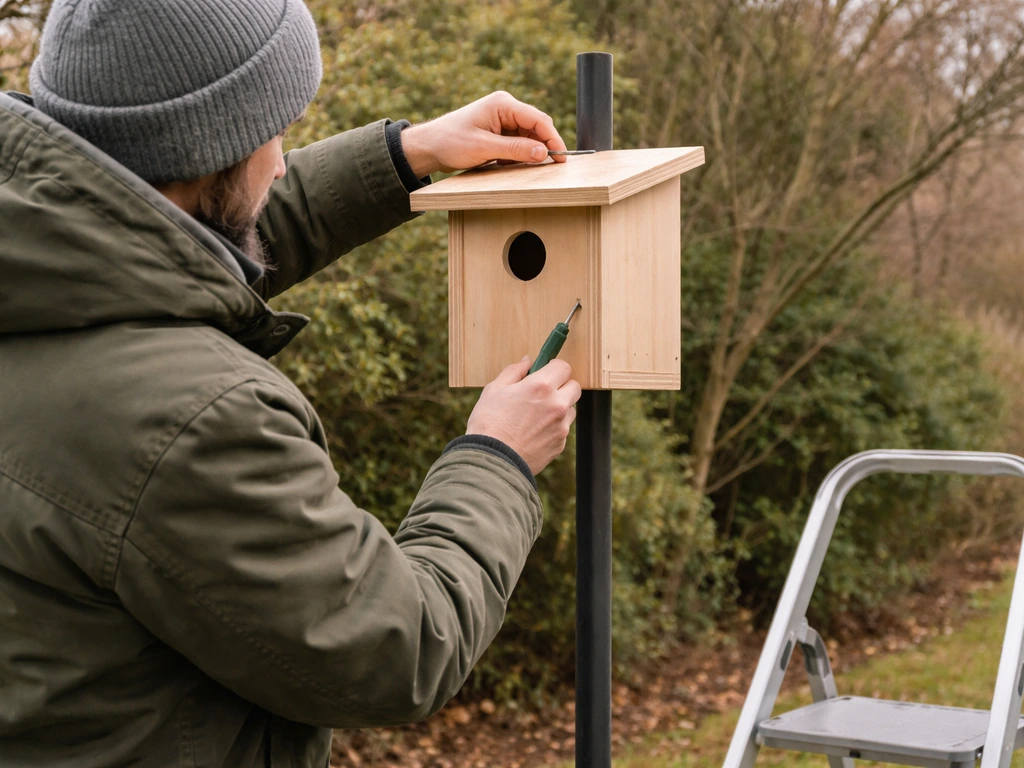
Learn safe, legal ways to help birds nest with proper materials and nest boxes, avoid active nests, and prevent harm.