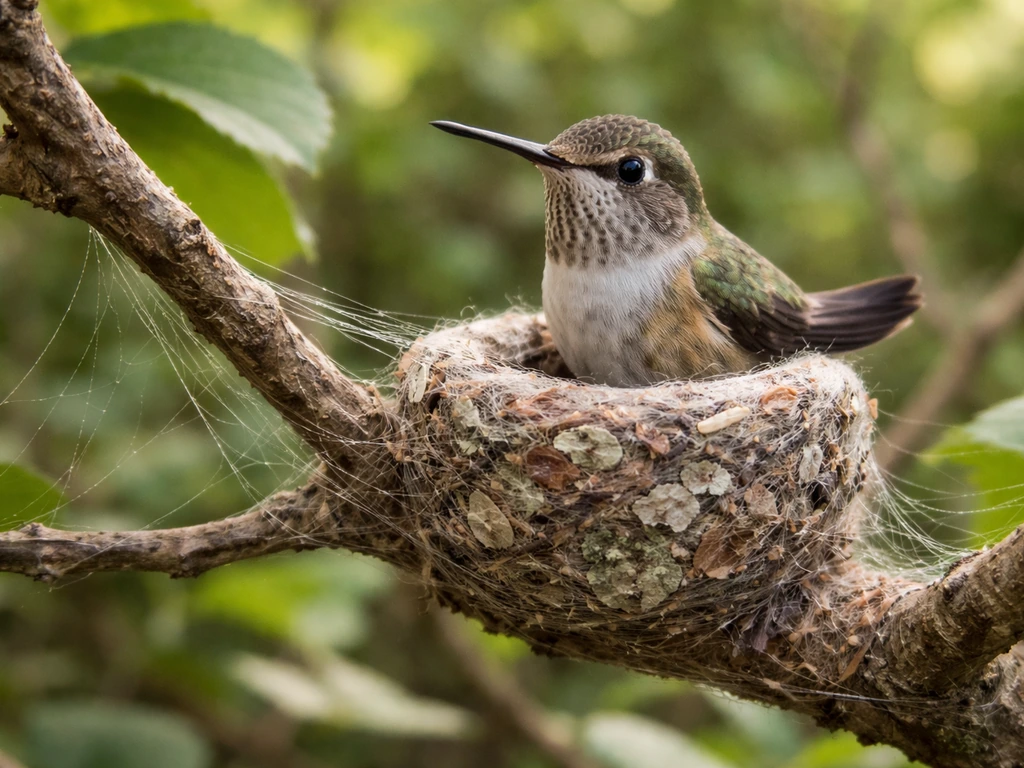
Several bird species deliberately weave spider silk and cobwebs into their nests, but hummingbirds are the standout champions of this behavior. Ruby-throated and Anna's hummingbirds, for example, build their tiny cup nests almost entirely held together with spider silk, which acts like a natural elastic binding that stretches as the chicks grow. These birds may appear in your area because some species build nests that are stitched together with spider silk, which can look like they are stitching leaves or other materials for support. Beyond hummingbirds, Blue-gray Gnatcatchers, Ruby-crowned and Golden-crowned Kinglets, and several vireo species all collect spider silk as a structural material. House Wrens add a different twist: they pack spider egg cases into their nests, seemingly on purpose. Some birds even use pebbles or stones in their nests, which can help them create sturdier structures and better camouflage which bird make nest of pebbles. If you've found a nest matted with webbing or decorated with silky threads, one of these birds almost certainly built it.
Which Bird Makes Its Nest With Spiders’ Cobwebs

Which birds actually build with cobwebs
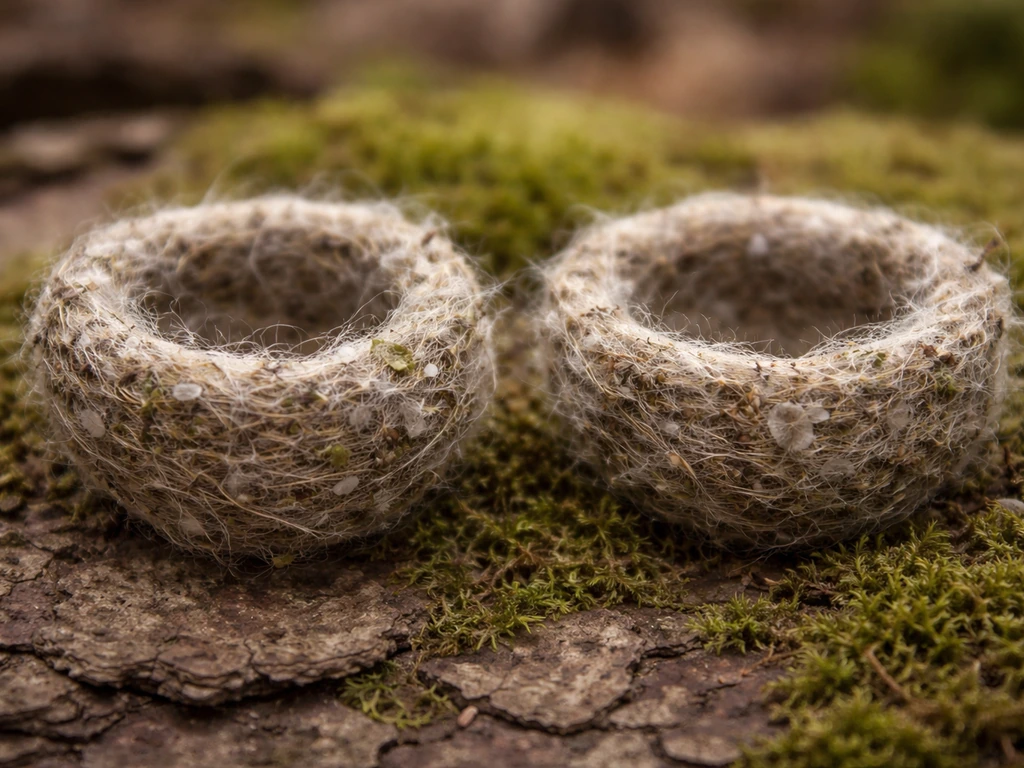
Spider silk is one of the most useful building materials in the bird world, and a surprising number of species have figured that out. Here are the main culprits you're likely to encounter:
- Hummingbirds (Ruby-throated, Anna's, Rufous, and others): Build walnut-sized cup nests on horizontal branches or ledges, binding lichen and plant down together with spider silk. The silk allows the nest to expand as the nestlings grow, which is a genuinely remarkable piece of bioengineering.
- Blue-gray Gnatcatcher: Constructs a compact, lichen-covered cup nest, roughly 2 inches across, held together and plastered with spider silk and plant fibers. The silk gives the outside a smooth, almost silvery look.
- Ruby-crowned and Golden-crowned Kinglets: Tiny birds that build deep, pouch-like cup nests using moss, lichen, and spider silk, often in conifer trees.
- Yellow Warbler and other wood warblers: Use spider silk to anchor and bind cup nests in shrubs and small trees, typically 3 to 10 feet off the ground.
- Several vireo species (Red-eyed, Blue-headed, Warbling): Hang beautifully woven cup nests from forked branches, using spider silk as the primary binding agent that suspends the nest like a hammock.
- House Wren: Doesn't rely on silk as a structural material the way hummingbirds do, but routinely stuffs spider egg cases into the nest lining. Researchers have proposed this may help control mites and other parasites inside the nest cavity.
If you're also curious about birds that use other unusual materials, mud nesters and leaf-stitchers are a fascinating comparison to the silk-weavers above. Mud nesters are a different group of birds, and many people ask what bird makes a mud nest when they see this kind of nesting. But when it comes to cobwebs as an intentional building material, hummingbirds and gnatcatchers are the most likely candidates in most North American backyards.
Why birds use spider silk (and a few reasons it can backfire)
The real benefits
Spider silk is extraordinarily strong for its weight and, crucially, it's elastic. For a hummingbird building a nest the size of a large thimble, that elasticity means the nest can expand from roughly 1.5 inches wide when the eggs are laid to nearly 3 inches as two rapidly growing chicks fill it out. Without spider silk, the nest would crack apart or eject the chicks as they grew. It's not decorative; it's structural in the most critical sense.
- Structural elasticity: Silk stretches as chicks grow, preventing nest collapse or premature fledging.
- Adhesive binding: Silk holds together loose materials like lichen, plant down, and moss into a cohesive structure that resists wind and rain.
- Camouflage anchor: Birds like the Blue-gray Gnatcatcher press lichen flakes onto the outer silk layer, which helps the nest disappear against bark.
- Parasite suppression (House Wrens): Spider egg cases may release chemicals or hatchling spiders that suppress mite populations inside the nest cavity, though research is still working this out.
The downsides worth knowing
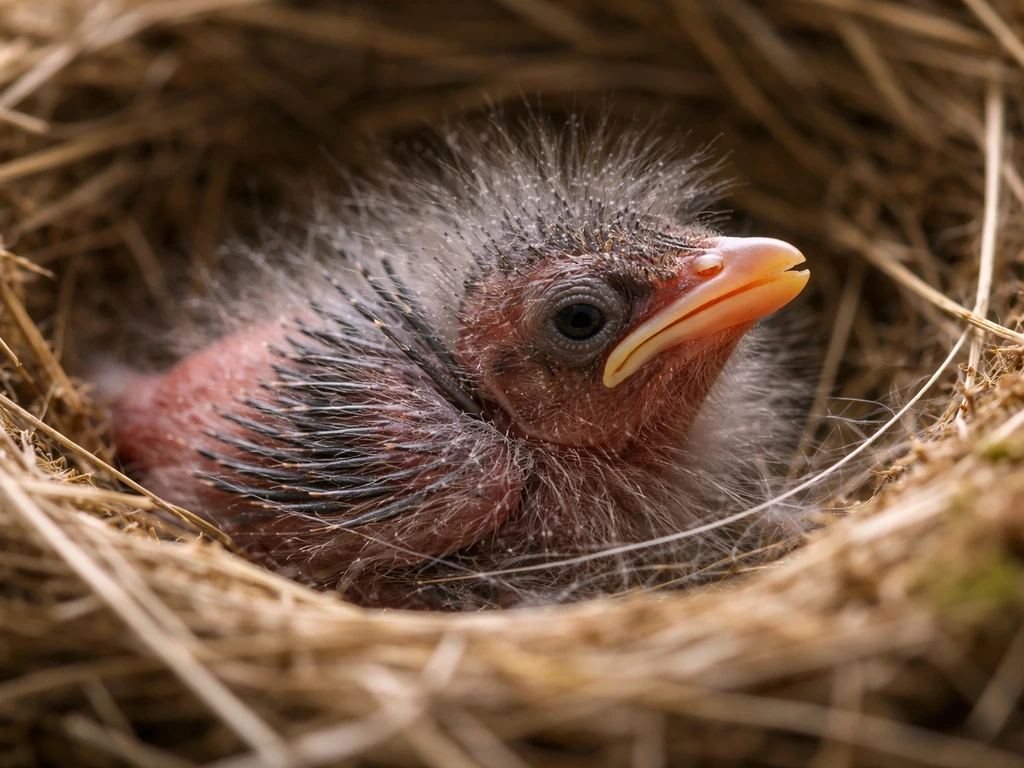
Spider silk is sticky, and that stickiness doesn't always work in the bird's favor. Nestlings with developing pin feathers can become lightly entangled in silk strands as the nest ages and dries out, though this is relatively rare in nests where the silk was properly worked into the structure. A bigger concern is loose, ambient cobwebs that drift onto or around an existing nest: these are passive accumulations, not intentional construction, and they can trap small invertebrates near the nest or, in rare cases, create sticky mats that could snag a fledgling's foot. Spider silk also attracts insects, which can occasionally bring unwanted predator attention to nest sites.
How to identify the nest and who made it
When you find a nest with visible spider silk or cobwebs, there are a handful of reliable ID markers. Take a few photos from different angles before you do anything else. That photo record will help you identify the species, track the nest's progress, and serve as documentation if you need to report it to a wildlife agency.
| Species | Nest Size | Location | Key Materials | Silk Use |
|---|---|---|---|---|
| Hummingbird | 1.5–2 inches wide | Horizontal branch, 5–20 ft up | Plant down, lichen, feathers | Primary structural binding |
| Blue-gray Gnatcatcher | ~2 inches wide | Tree fork or branch, 3–70 ft up | Plant fibers, lichen, bark | Outer coating, holds lichen |
| Ruby-crowned Kinglet | 2–3 inches wide | Conifer branches, high up | Moss, lichen, feathers | Binds the deep cup walls |
| Yellow Warbler | 2–3 inches wide | Shrub fork, 2–12 ft up | Plant fibers, cottony material | Anchors nest to branch |
| Vireo (various) | 2–3 inches wide | Forked branch tip, 3–30 ft up | Grass, bark strips, plant fiber | Suspends nest from fork |
| House Wren | Fills cavity | Tree cavity, nest box | Sticks, plant material | Spider egg cases in lining |
Size is your fastest filter. A nest smaller than a tennis ball with visible silvery or sticky threads worked into the cup is almost certainly a hummingbird or gnatcatcher nest. If you are wondering what bird builds a nest with sticks, the answer is different and depends on the specific stick-weaver species in your area hummingbird or gnatcatcher nest. If the nest is suspended like a tiny hammock from a forked branch tip, think vireo. If it's inside a birdhouse or tree cavity and you spot small, cream-colored silk sacs tucked into the lining, a House Wren likely built it.
Cobwebs as part of the plan vs. cobwebs that just drifted in
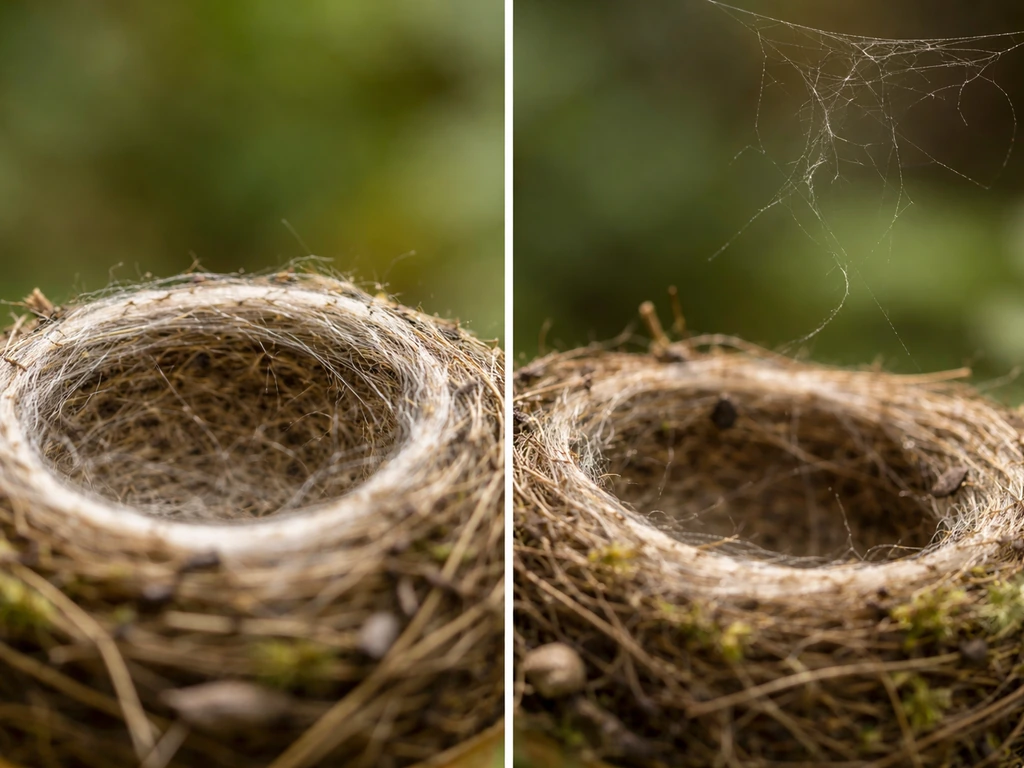
This is a genuinely important distinction. Not every web you see near a nest means the bird used it intentionally. Here's how to tell the difference:
- Intentional use: Spider silk is woven into or pressed onto the nest cup itself. You'll see it integrated with other materials, running along the rim, or forming a smooth outer coating. The silk looks worked in, not just sitting on top.
- Accidental accumulation: Loose, droopy cobwebs hanging over or around the nest, catching debris and insects. These are typically the irregular, older webs of house spiders, cellar spiders, or orb weavers that built nearby. They haven't been shaped or incorporated.
- Active spider co-habitation: An actual spider and a fresh, geometric orb web next to or on the nest structure. This is a spider doing its own thing near a convenient anchor point. It's common in eaves and corners, and the bird almost certainly didn't invite it.
- Egg sac presence (House Wren): Small, papery, spherical or disc-shaped sacs, usually cream or tan, tucked into nest material. These are spider egg cases the wren deliberately collected, not random webs.
The shortcut: if the webbing looks like it's holding the nest together or is pressed flat against the cup wall, it's intentional. If it looks like a messy curtain draped over the structure, it drifted in on its own.
What to do when you find a cobweb nest
The most important rule first: in the United States, nearly all native bird nests with eggs or active chicks are protected under the Migratory Bird Treaty Act. A CRS report on the Migratory Bird Treaty Act explains that the law prohibits actions that result in the illegal destruction or take of migratory birds, including nests and eggs, especially when impacts occur during nesting season blank" rel="noopener noreferrer">protected under the Migratory Bird Treaty Act. In the United States, the U.S. blank" rel="noopener noreferrer">Migratory Bird Treaty Act (MBTA) protects most native bird nests, making it illegal to destroy a nest that has eggs or chicks (or when young birds remain dependent on the nest) except as permitted by a valid permit. You cannot legally move, disturb, or destroy them without a federal permit. That's not a technicality; violations carry real fines. So your first move is to observe, not touch.
- Photograph the nest from a safe distance. Get the location, the surrounding vegetation, the nest materials, and if possible a glimpse of the eggs or adults. A few clear photos will help you ID the species and document the nest's condition.
- Note the date and check back in 24 to 48 hours to confirm it's active. An active nest has a sitting adult, eggs, or chicks. An old abandoned nest from a previous season is legally fair game to remove (outside nesting season).
- Keep the area quiet. If the nest is on your property, ask family members to give the area a wide berth. Reduce lawn mowing or trimming within 10 to 15 feet if possible.
- Do not remove ambient cobwebs by hand. If loose cobwebs are near the nest, leave them. Disturbing the immediate area can spook the brooding adult off the nest, exposing eggs to temperature stress.
- If a predator (cat, crow, squirrel) is actively threatening the nest, you can place a physical barrier like a hardware cloth cone around the base of the supporting shrub or tree. Do not handle the nest itself.
- If the nest has fallen due to storm damage and contains live chicks, place it back in the nearest sheltered spot in the same tree or shrub. The myth that parent birds abandon chick-touched nests is false. Parents respond to chick calls, not scent.
- If you find a fledgling (feathered, hopping) on the ground near the nest, leave it alone. Fledglings are supposed to be out of the nest and the parents are almost always nearby.
Seasonal timing: when to expect these nests
Most silk-using birds in North America nest between late April and early August, but timing varies by species and region. Here's a rough calendar to set expectations:
| Species | Nest Building Starts | Eggs/Incubation | Fledging | Second Brood? |
|---|---|---|---|---|
| Ruby-throated Hummingbird | Late April (South), late May (North) | May to July | June to August | Often yes |
| Anna's Hummingbird (West Coast) | December to January | February to May | March to June | Often yes |
| Blue-gray Gnatcatcher | Late March to May | April to June | May to July | Sometimes |
| Yellow Warbler | May to June | Late May to July | June to August | Rarely |
| Red-eyed Vireo | Late May to June | June to July | July to August | No |
| House Wren | Late April to May | May to July | June to August | Often yes |
If you're finding a nest with spider silk in late summer or fall, it's almost certainly inactive and from the previous breeding season. Some birds also use moss, which can serve as a natural lining or binding when building a nest spider silk. Empty nests outside of nesting season can be legally removed and preserved as natural curiosities, which some birdwatchers do carefully with gloves and a sealed container. That said, leaving old nests in place does little harm and sometimes gives you an early heads-up that a bird might return near the same spot next spring.
Hummingbirds in particular are creatures of habit and will often build within a few feet of the previous year's nest site. If you find an old hummingbird nest on a branch this fall, mark the location and watch that area closely starting in late April next year.
When to call in a professional
Most cobweb nest situations are straightforward: find it, observe it, leave it alone. But a few scenarios genuinely warrant a call to a licensed wildlife rehabilitator or your state's fish and wildlife agency:
- The nest is in an active construction zone and cannot safely remain where it is. A wildlife rehabilitator or a federally permitted biologist can advise on legal relocation options, which are narrow but do exist.
- You find a chick that appears injured, not just grounded. A fledgling hopping around is normal; a chick that is bleeding, has a visibly broken wing, or is completely motionless is not.
- The nest is inside your HVAC system, dryer vent, or any location where it poses a fire risk. In these cases, contact a licensed wildlife professional before touching anything, as active nests are still protected even inside structures.
- You're unsure of local regulations. Canada's Migratory Birds Convention Act and state-level laws in the US add layers of protection beyond the federal baseline. Your state wildlife agency website or a quick call to a local Audubon chapter can clarify what's allowed in your specific situation.
- A protected or uncommon species is involved. If you think you're looking at a hummingbird nest and aren't sure, treat it as protected until proven otherwise.
The bottom line is that spider silk in a bird nest is a sign of a skilled, healthy builder doing exactly what evolution shaped it to do. The nest is doing its job. Your job is mostly to watch, appreciate, and stay out of the way until the season is over.
FAQ
How can I tell if the spider web I see is decorative or actually used to build the nest?
Yes, passive cobwebs can gather around a nest, especially after windy periods or near indoor-like corners of trees and shrubs. Intentional silk tends to be pressed into, woven through, or visibly binding nest materials (for example, holding the cup together), while incidental cobwebs usually look loose and draped, not structurally integrated.
Can I remove spider silk or cobwebs from a bird nest if it looks abandoned?
In most cases, you should not remove the webbing. Even if the nest is old or inactive, live nearby nests and eggs can be overlooked, and in the US many active nests are protected. If you want to clean the area for safety reasons, wait until you are sure it is inactive and follow local wildlife guidance.
What details should I capture to confirm the bird species, besides taking a few pictures?
Photographing is useful, but also record the nest location and substrate (hummingbird nest on a branch, wren in a cavity, vireo suspended, etc.) and note approximate dimensions by comparison (for example, smaller than a tennis ball). This prevents misidentification when spider silk is present but the bird’s nest style is what actually confirms the species.
What if I cannot watch the nest closely, how can I identify the builder?
If you cannot observe from a distance, use non-intrusive cues instead, like nest placement height, nest shape (cup, hammock-like, cavity lining), and whether you see silk sacs or cream-colored linings. Avoid repeated checking, because frequent disturbance can cause nest abandonment even when you are careful.
Does the amount of spider silk change as the nesting progresses?
Hummingbirds often start tiny cups and then expand them as chicks grow, so the amount of visible silk can increase or look more “worked in” over time. Gnatcatchers and some other silk-using birds also use silk structurally, but their nest shapes and placements differ, so track changes across days rather than judging from a single snapshot.
What are common mistakes people make when identifying silk-using birds?
A nest with silk threads does not automatically mean the bird is hummingbird-like. Some birds may reuse a prior nest site or add different materials in later stages, so confirm with structural cues (silk binding the cup, hammock suspension, cavity lining with silk sacs) rather than only the presence of cobweb texture.
If I find silk in late fall or winter, does that mean the bird is still nesting?
For North American backyards, the most likely active silk-weavers are typically building in late April through early August, but timing depends on region and species. If you find one outside that window, treat it as possibly inactive and use careful observation to ensure there are no active eggs or nestlings before taking any action.
Could a House Wren be the culprit even if I do not see obvious cobwebbing?
Yes. House Wrens often incorporate unusual items, including spider egg cases, into their nests, and sometimes the overall look can be “spidery” even if there is not much webbing on the exterior. The key is the nest context, such as a cavity or birdhouse lining, plus whether you see compact, case-like items rather than just floating cobweb strands.
What should I do if the nest is in danger from people, pets, or yard work?
If a nest is very exposed (for example, in a high-traffic area or where cats or lawn equipment reach it), the safest step is usually to adjust the human or pet situation, not to touch the nest. Keep pets inside, reduce traffic around the nest, and contact a licensed rehabilitator or wildlife agency if there is active danger you cannot mitigate.
What if I suspect a chick is stuck or harmed by spider silk?
If nestlings are entangled in silk, there is a higher risk of injury when you try to handle the situation yourself. In those rare cases, call a licensed wildlife rehabilitator promptly and keep the area quiet until help arrives, since repeated disturbances can worsen entanglement or cause abandonment.