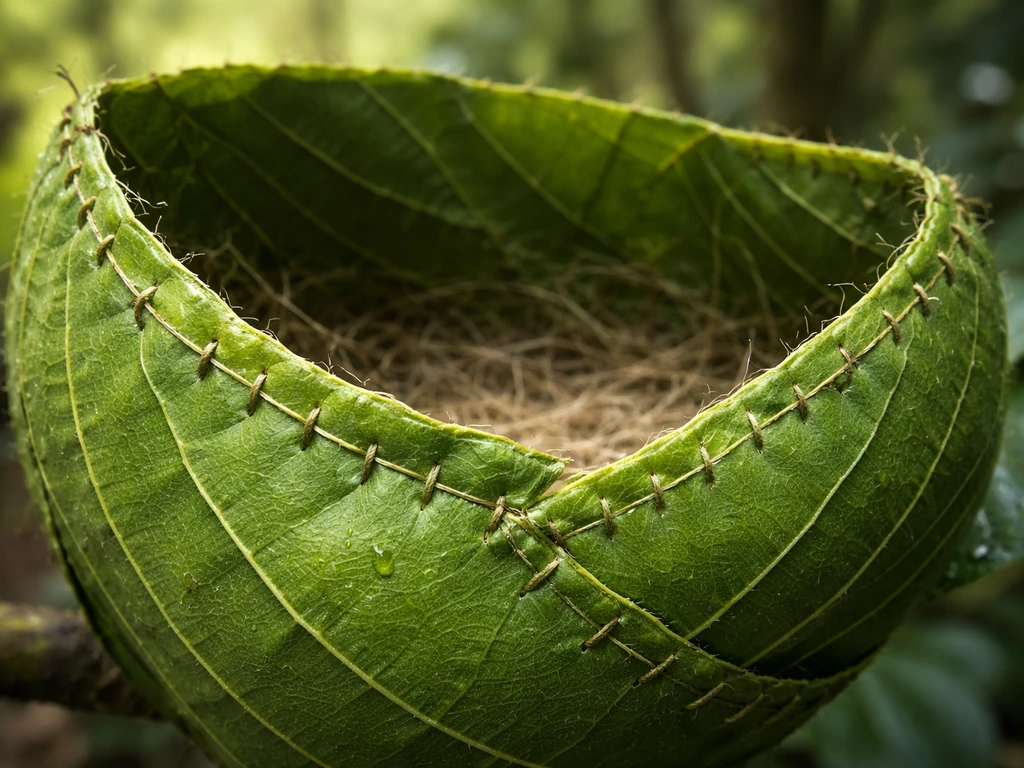
The tailorbird is the bird that stitches leaves to make its nest. Specifically, birds in the genus Orthotomus (most famously the common tailorbird, Orthotomus sutorius) pierce the edges of one or two living leaves with their beaks, then thread plant fibers or spider silk through the holes to literally sew the leaf edges together into a cradle. The real nest cup sits inside that stitched leaf pocket. No other bird group performs this behavior as precisely or as consistently.
Which Bird Stitches Leaves to Make Its Nest? Identify It

Maya Bennett
7 May 2026
Birds known for stitching leaves into their nests
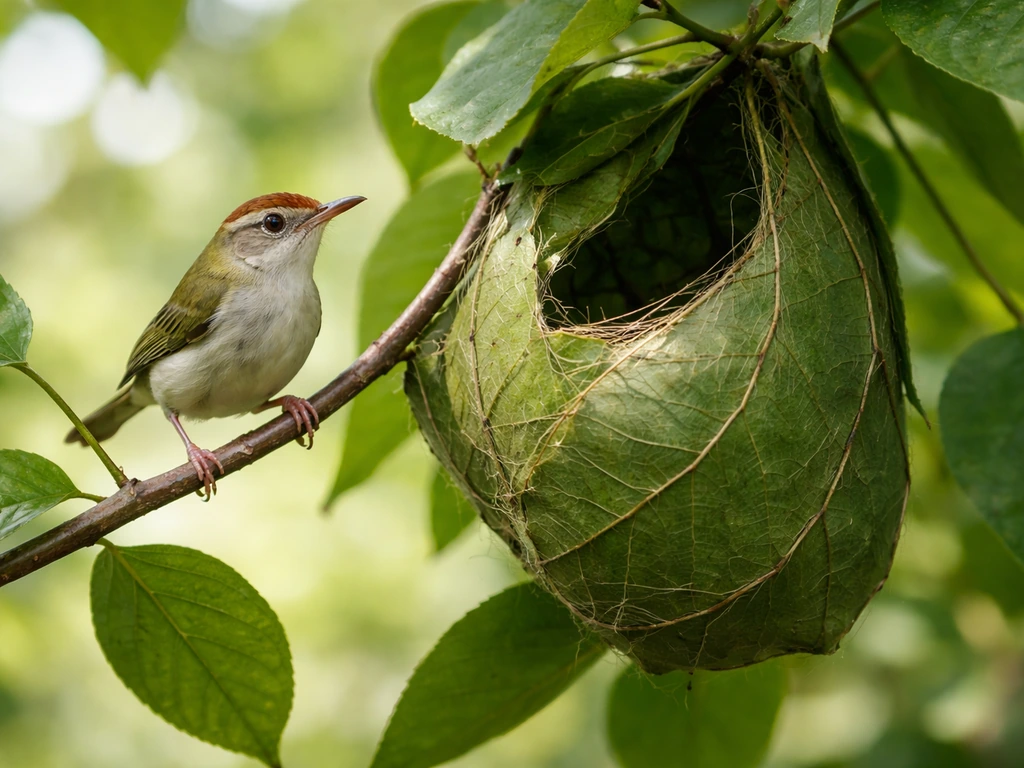
The tailorbird family contains about 15 species, all in the genus Orthotomus, distributed across South and Southeast Asia. The common tailorbird (Orthotomus sutorius) is the most studied and the most likely species someone encounters in urban or suburban settings across India, Sri Lanka, China (including Hong Kong), and Southeast Asia. Its scientific name literally nods to its craft: sutorius means 'cobbler' or 'tailor' in Latin.
Other tailorbird species, including the dark-necked tailorbird (Orthotomus atrogularis), the rufous-tailed tailorbird (Orthotomus sericeus), and the ashy tailorbird (Orthotomus ruficeps), perform the same leaf-sewing behavior. The exact number of leaves used and the leaf species chosen vary by region and what is available, but the stitching mechanism is consistent across the genus.
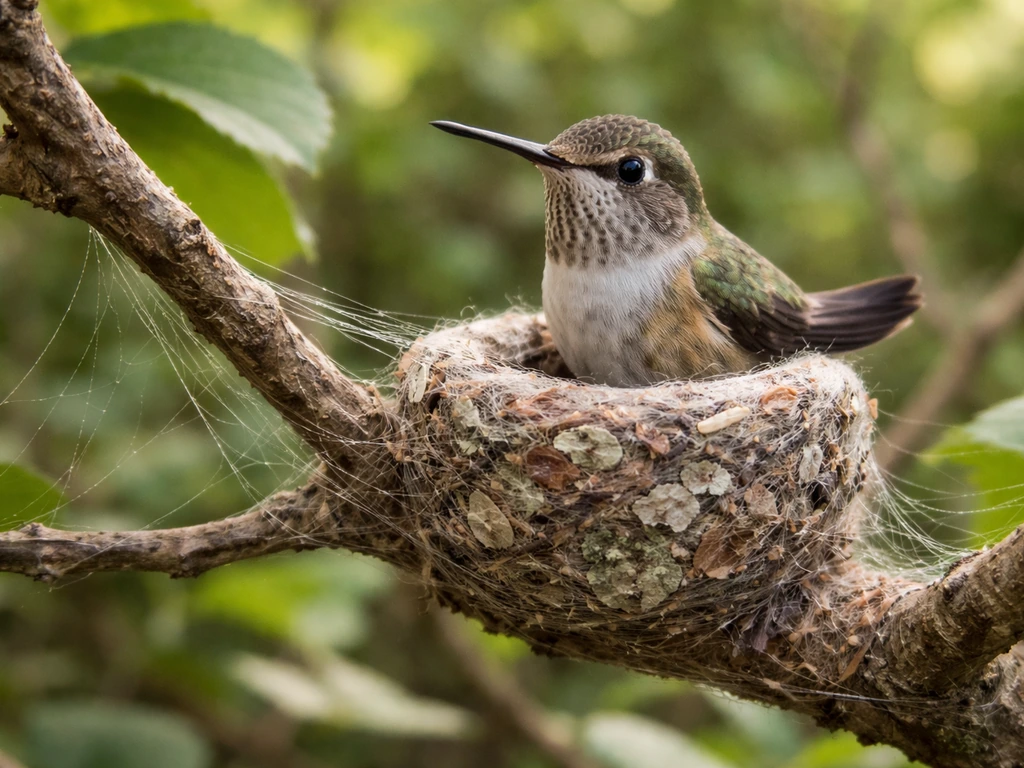
There is a related concept worth knowing. Some people describe hummingbird nests as 'stitched together' because spider silk binds plant fibers, lichen, moss, and bits of leaves into a compact, elastic cup. Ruby-throated hummingbirds collect spider silk strands by dragging their beak and breast across webs, then use the silk as structural binding. The result is a tightly bound, flexible structure, but it is not leaf-stitching in the tailorbird sense. Kinglets and vireos use spider silk similarly. If you are in North America and wonder which bird uses spider silk in its nest this way, hummingbirds and long-tailed tits (in Europe) are the closest analogs, but none of them pierce and thread leaves the way tailorbirds do.
What a stitched-leaf nest actually looks like
The outer structure is the giveaway. A tailorbird nest looks like a small, living (green) or partially green leaf that has been curled or pinched into a cone or pocket shape and appears to be held closed by fine thread. Look closely and you will see blank" rel="noopener noreferrer">pairs of tiny puncture holes along the leaf edges, with plant fiber or spider silk looped through them. The fiber ends are often frayed or fluffed outward to form small knots that prevent the thread from pulling back through, exactly like a sewn seam. The leaf itself must be living and supple because a dry or dead leaf would crack under the stress of stitching and the weight of the chick.
Inside the leaf cradle sits the actual nest cup, a soft ball of plant down, cotton fibers, and fine grasses roughly 5 to 7 centimeters in internal diameter. The whole assembly hangs or sits low in dense vegetation, often at knee to chest height, and is surprisingly well camouflaged because the outer leaf remains green and attached to the plant or appears attached.
- Green or still-living leaf folded or stitched into a cone or tube shape
- Visible puncture holes along the leaf margins, spaced roughly 3 to 8 millimeters apart
- Fine thread-like material (plant fiber, cotton, or spider silk) looped through the holes with frayed or knotted ends on the outside
- Soft, fluffy inner cup made of plant down or cotton
- Total outer structure typically 6 to 12 centimeters tall, narrow enough to fit in one cupped hand
- Nest suspended or propped low in a leafy shrub, rarely more than 1 to 2 meters off the ground
Where to find these nests and when to look
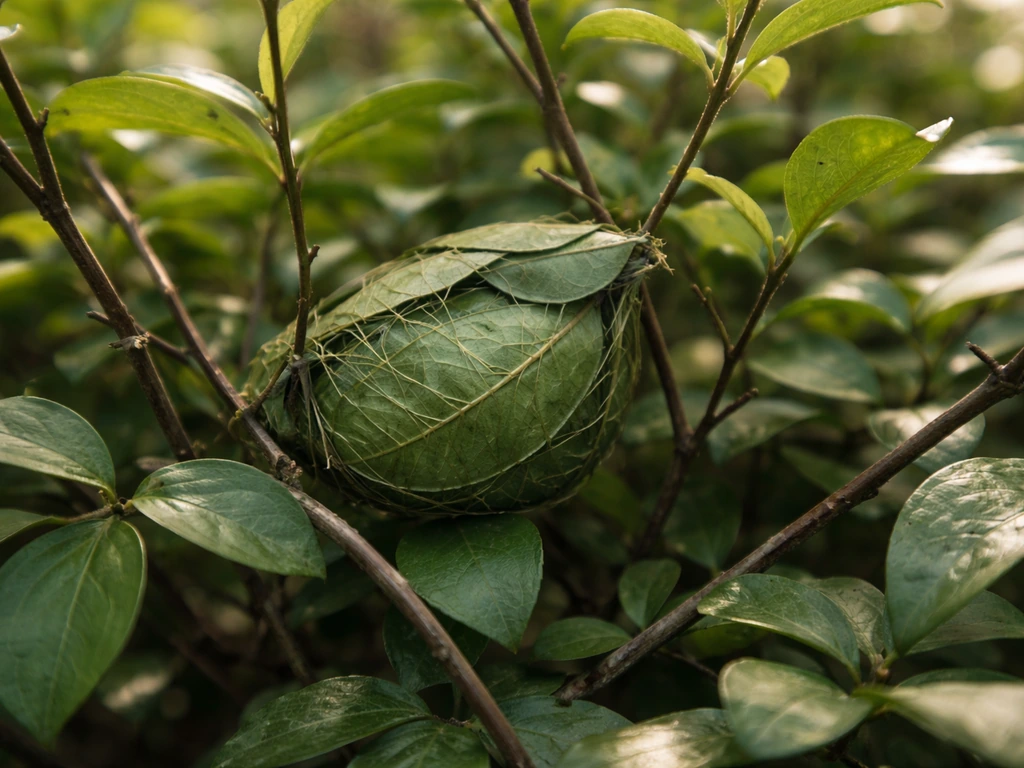
Common tailorbirds are year-round residents throughout their range, but nesting peaks from April through August in most of South and Southeast Asia. In Hong Kong, for example, the breeding season runs April to August. If you are reading this in May 2026, you are right in the middle of active nesting season for most tailorbird populations.
Habitat-wise, tailorbirds are generalists that thrive in gardens, urban parks, forest edges, scrubby vegetation, and plantations anywhere with dense low shrubs. They actively prefer human-modified landscapes, so do not be surprised to find a stitched nest in a hedgerow beside a busy road, in a garden hibiscus, or tucked into a large-leafed ornamental plant on a balcony. The nest is almost always within 1 to 2 meters of the ground, concealed by surrounding foliage.
The best detection strategy is to follow the sound first. Common tailorbirds produce a loud, repetitive 'tow-wee, tow-wee, tow-wee' call that is disproportionately loud for a bird roughly 10 to 14 centimeters long. Once you locate the calling bird, watch where it carries nesting material or disappears into vegetation repeatedly. That spot is almost certainly within a meter of the nest.
Telling stitched-leaf nests apart from similar nests
Several other nests can look superficially similar, especially when viewed from a distance or in dim light. Here is how to separate them.
| Nest type | Outer material | Leaf involvement | Thread/silk visible? | Typical height |
|---|---|---|---|---|
| Tailorbird (stitched) | Living leaf(ves) sewn into a pocket | Pierced, stitched edges, leaf remains intact | Yes, clearly visible | 0.5 to 2 m |
| Hummingbird (silk-bound cup) | Lichen, moss, plant fibers bound with spider silk | Leaf bits mixed in but not stitched | Spider silk visible as sheen | 1 to 6 m |
| Woven cup nest (warblers, weaver birds) | Woven grasses or plant strips | No leaf stitching | No visible thread | 0.5 to 5 m |
| Spider-silk nest (kinglets, vireos) | Plant down, feathers, bound with spider silk | No leaf involvement | Spider silk visible | 1 to 10 m |
| Leaf-rolled caterpillar/insect shelter | Leaf rolled or folded, held with silk | Leaf rolled without internal cup | Insect silk visible | Any height |
The single clearest difference between a tailorbird nest and everything else is the puncture-and-stitch pattern on an otherwise intact, living leaf. Other birds that use spider silk (hummingbirds, long-tailed tits, kinglets) bind materials together on the outside of a cup or ball structure, but they do not pierce a leaf and thread fiber through it in a seam. Insect shelters made from rolled or folded leaves also look similar at a glance, but they have no internal cup and the binding is pure insect silk with no plant fiber threading. If you see holes in the leaf margin with looped fiber ends, you are looking at a tailorbird nest.
It is also worth distinguishing this from mud nests (think cliff swallows and flamingos) and stick platform nests, which are entirely different construction strategies. Similarly, nests built primarily with moss, pebbles, or spider-silk-only bindings each belong to distinct species groups with their own identification markers. Those mixes can appear in other nest styles too, so the best way to confirm which bird makes a nest of pebbles is to compare the full materials and structure closely moss, pebbles, or spider-silk-only bindings. Some species build nests primarily with moss, pebbles, or other non-leaf materials, but they do not make the distinctive stitched-leaf cradle.
Confirming your ID: practical observation steps
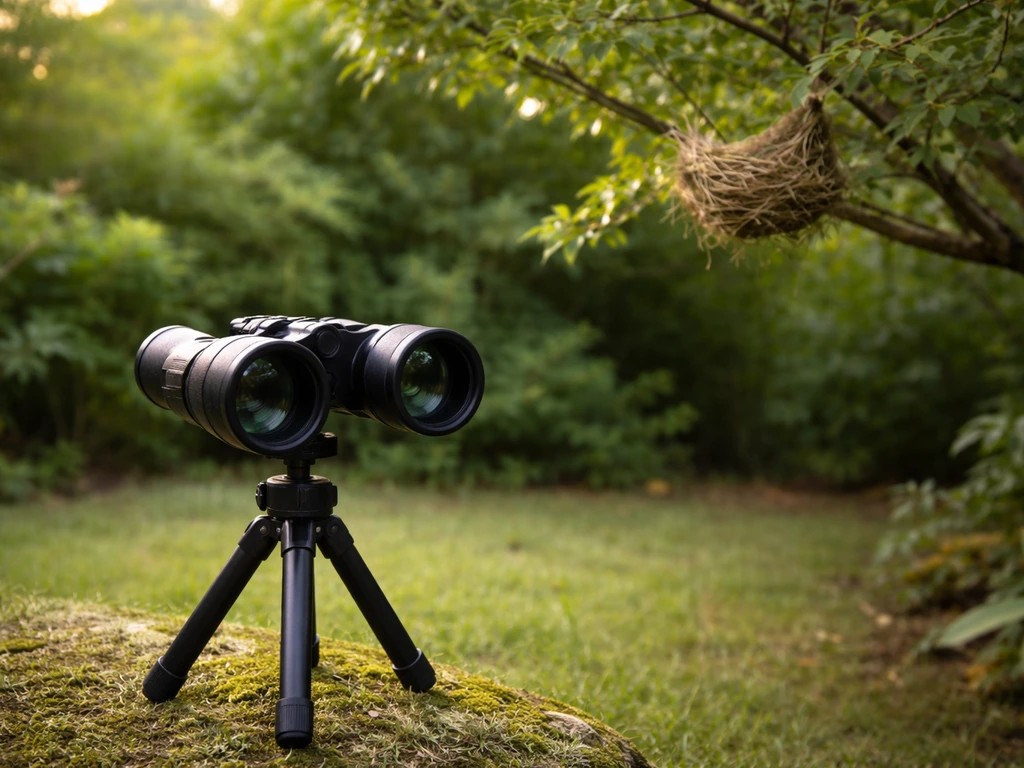
Do not rush to the nest. The best confirmations come from patient, low-impact observation. Here is a simple field process that works for homeowners and birdwatchers alike.
- Stay at least 5 to 10 meters away and use binoculars or a camera with a zoom lens. Moving too close, especially repeatedly along the same path, creates a visible trail that predators can follow directly to the nest.
- Photograph the outer leaf structure from multiple angles without disturbing surrounding vegetation. Close-up shots of the margin holes and threading material are the most diagnostically useful images.
- Note the bird entering or leaving the nest. Tailorbirds are small (roughly sparrow-sized or smaller), olive-green above with a rusty-orange cap and pale underparts. The tail is often cocked upward, which is a reliable field mark.
- Listen for the loud repetitive call and watch which direction the bird flies when it leaves. Tailorbirds typically stay within a very small territory during nesting.
- Check the leaf condition. A stitched nest leaf should be green and pliable, not brown or brittle. If the leaf is dead or dried, the bird either abandoned the nest or you may be looking at an insect shelter.
- Record date, GPS location or address, height above ground, plant species (if known), and a brief description of the threading material color (white, cream, brownish). This data is useful if you later need expert help.
Ethical and legal rules for active nests
In most countries, disturbing, damaging, or removing an active bird nest (one containing eggs or chicks, or one being actively used for nesting) is illegal under wildlife protection laws. In North America, the Migratory Bird Treaty Act covers most wild birds and prohibits disturbing or destroying active nests. The Maryland DNR summarizes the Migratory Bird Treaty Act of 1918 as making it illegal to disturb a nest without a permit for protected migratory birds blank" rel="noopener noreferrer">Migratory Bird Treaty Act covers most wild birds and prohibits disturbing or destroying active nests.. Canada's migratory bird guidelines require that any activity that could affect an occupied nest be avoided, adapted, rescheduled, or relocated. Even in countries where tailorbirds are common, local wildlife protection ordinances typically apply. The safest legal stance is: if the nest is active, leave it alone.
If you are a homeowner and the nest is in a shrub you need to trim, or in vegetation near a construction or landscaping project, stop work immediately and assess. If there are eggs or chicks present, work must pause until the nest is no longer active (chicks have fledged and parents have stopped returning). If you accidentally disturb a nest, stop, mark the area clearly, avoid returning, and report to your local wildlife authority.
- Do watch from a distance of at least 5 to 10 meters using binoculars or a telephoto lens
- Do photograph the nest for ID purposes without touching the plant it is attached to
- Do report the nest location to a local birding group or nature record database (eBird, iNaturalist)
- Do stop any trimming, pruning, or construction near an active nest immediately
- Don't touch, move, or handle the nest, eggs, or chicks under any circumstances
- Don't repeatedly approach along the same path, which creates a predator trail
- Don't attempt to add nesting material or 'improve' the nest
- Don't allow pets near the nesting area during the active season
- Don't use pesticides on the plant hosting the nest or nearby plants the birds use for foraging
If you want to protect the nest from predators without touching it, focus on the surrounding environment rather than the nest itself. Keeping cats indoors is the single highest-impact action. If a specific predator (crow, snake, squirrel) is actively targeting the nest, consult a local wildlife rehabilitator before attempting any deterrent, because many deterrent methods can themselves stress the nesting birds.
What to do if you still can't confirm the species
If your photographs and notes do not give you a confident ID, you have several good options. The Cornell Lab of Ornithology's eBird and Merlin apps are free and actively used by serious birders. Upload your photos to iNaturalist and the community will typically provide a species suggestion within 24 to 48 hours. Local birding clubs or Audubon Society chapters are also excellent resources because members often have direct regional experience and can narrow down which tailorbird species is present in your specific location.
For homeowners dealing with a nest near a planned activity, contact your national or regional wildlife agency directly. In the US, that is the US Fish and Wildlife Service. In Canada, Environment and Climate Change Canada handles migratory bird inquiries. In India and South Asia, the State Forest Department or Bombay Natural History Society can provide guidance. Have your photos and location details ready before you call or email.
When documenting an unconfirmed nest, use this quick note template at the time of observation: date and time, exact location (address or GPS), height of nest above ground, plant species (or description), outer nest material and color, any thread or silk visible (yes/no, color), leaf condition (green/dry/brown), bird seen at nest (yes/no, description), and any audible calls. This structured record gives an expert everything they need to confirm the ID remotely from your photos and notes, without anyone needing to approach the nest.
If your observation ultimately suggests a nest built with mud, moss, sticks, pebbles, or spider silk used in a different way than described here, those are separate identification challenges, each tied to their own distinct set of species and behaviors. Narrowing down the construction material is always the fastest first step toward a confident nest ID, and stitched leaf edges remain the single most distinctive feature in the bird-nest world. If your observations point to a nest made mainly from sticks rather than stitched leaves, you can compare it with what bird builds a nest with sticks for a quick ID check.
FAQ
Can a tailorbird nest look different each year or be rebuilt in the same spot?
Yes. Tailorbirds can reuse a site or build more than one nest in a season, so you might see multiple stitched-leaf pockets in the same shrub. If any nest shows fresh leaf stitching, a warm leaf cradle, or nearby adults carrying fiber, treat it as active and avoid repeat visits.
How can I tell a tailorbird nest from an insect shelter that also uses leaves?
Usually, you can tell the difference by whether the outer leaf is punctured and threaded. Rolled leaf insect shelters tend to show intact, folded leaf edges without paired stitch holes and frayed knot-like ends. Also, insect shelters generally lack an enclosed internal nest cup.
What if the leaf cradle is brown or dead, does that mean it is no longer active?
If the leaf has turned brown and brittle, the stitching may have been from an earlier attempt. Tailorbird stitching relies on living, supple leaf tissue, so brown or cracked leaf margins plus an empty pocket often indicate an inactive nest. Still, verify visually before assuming it is safe to touch.
What specific “stitching clues” confirm it is leaf-stitching and not just spider silk binding?
Look for the puncture-and-looped-fiber seam along the leaf edge. The thread ends often form tiny knots or a fluffed bit where the fiber cannot pull back through. If you only see spider-silk strands across an open cup, you are likely looking at a hummingbird or another spider-silk binder rather than a tailorbird.
Do all tailorbird species build the exact same type of stitched leaf pocket?
Yes, tailorbirds use the leaf-sewing technique, but the outer leaf shape and number of stitched leaves can vary by species and local plant options. The reliable constant is the seam pattern, puncture holes at the margin, and the way the leaf pocket contains the real nest cup.
What should I do if I cannot hear tailorbird calls but want to find the nest?
Tailorbird calls are the fastest locator cue, but you can still confirm without sound by watching for repeated carrying trips of plant fibers into the same dense shrub patch. Adults often disappear into cover at consistent points, and the nest usually sits low, typically within about chest height.
Is it safe to gently touch or open the stitched leaf pocket to confirm what is inside?
Do not handle or pull the leaf pocket to “check” for the nest cup. Even when the exterior leaf looks thin, the stitching is under tension and pulling can damage the leaf and the birds' structure. For identification, rely on distance viewing, binoculars, and photographs taken from the ground or a safe angle.
What is the safest way to handle a stitched-leaf nest near landscaping or construction?
If you cannot confirm activity, assume it is occupied during peak season, or when you see adults repeatedly entering and leaving. The safest approach for lawns, trimming, and construction is to pause work around the shrub until nesting activity clearly ends (adults stop returning and young have fledged).
If I see a leaf-shaped nest but no obvious holes, does that rule out tailorbirds completely?
If you see puncture holes and a stitched leaf cradle, that is strong evidence for tailorbirds in the leaf-stitching sense. If you do not, treat it as a different nest type and compare construction materials first, for example mud or spider-silk-only binding, before trying to guess the species from shape alone.
What photos should I take to get a confident ID from others?
For remote ID, a close and steady set of photos helps more than one “hero” shot. Aim for (1) the outer stitched leaf margin showing holes, (2) the full nest shape in context of the plant, and (3) any visible knots or frayed thread ends. Include a photo that shows nest height above ground.
Next Article
Which Bird Makes Its Nest With Spiders’ Cobwebs
Learn which birds use spider silk or tolerate cobwebs in nests, how to identify it, and what to do safely.