
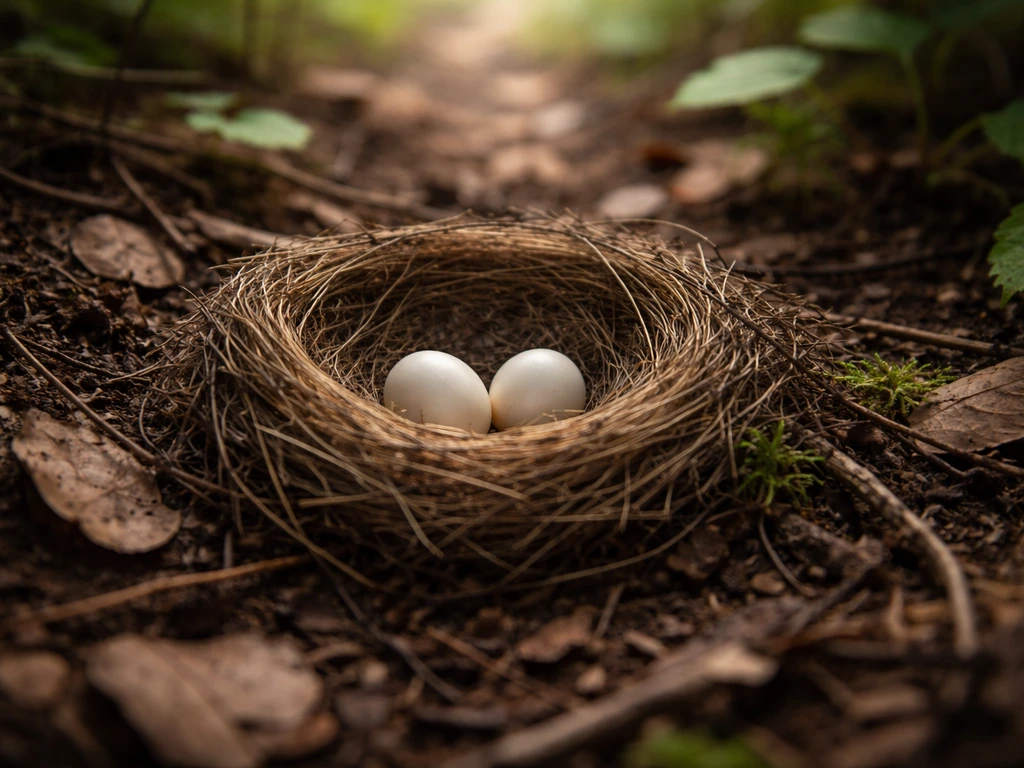
For most homeowners and backyard birdwatchers, the safest and most legal way to check bird eggs is a visual inspection from a distance without touching, moving, or disturbing anything. Stand back a few feet, use binoculars if you have them, look at the eggs' color, size, condition, and count, and then leave quickly. That's genuinely the full extent of what you should do in most situations, and it's usually enough to tell you what you need to know.
How to Check Bird Eggs Safely Without Disturbing Nests

Maya Bennett
3 May 2026
When and why checking eggs is actually warranted
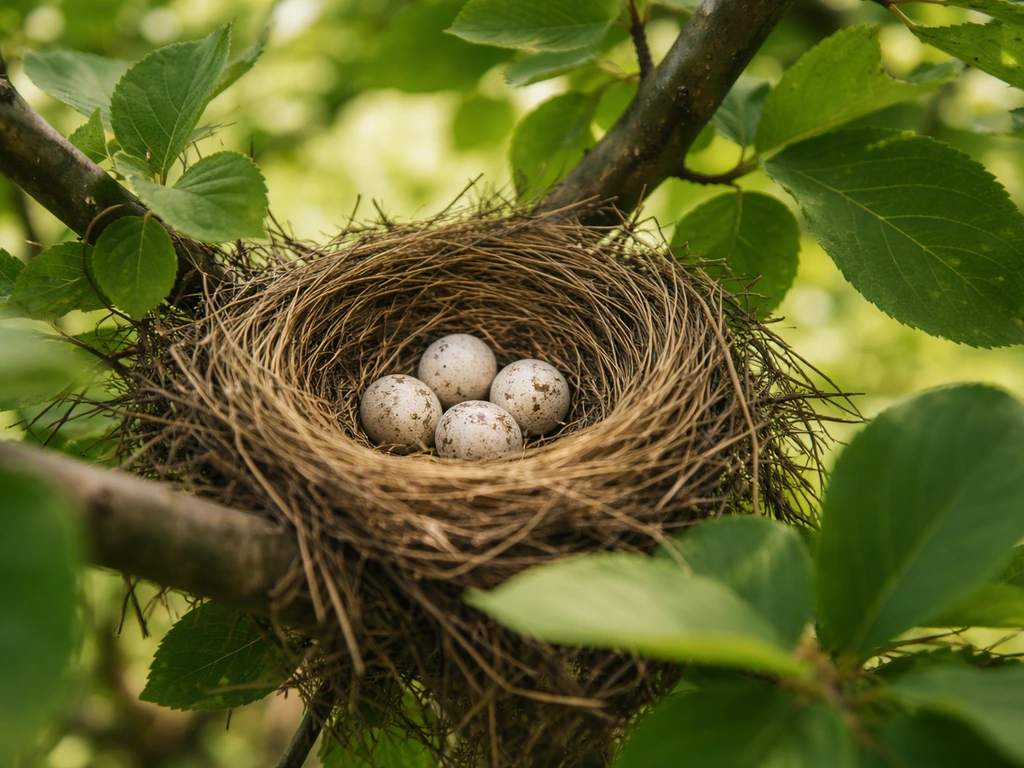
Most of the time, the right answer is to leave the nest alone. Audubon's guidance is blunt: eggs and chicks should not be touched or disturbed in any manner, and young birds typically fledge within about a month of eggs being laid. But there are real situations where a quick, careful check makes sense: you want to track a nesting attempt for citizen science (NestWatch recommends checking every three to four days), you've noticed the adults haven't returned in an unusual amount of time, there's an immediate physical threat like flooding or construction equipment, or you want to confirm whether a nest is active before doing yard work.
The key distinction is urgency and purpose. Curiosity alone isn't a good reason to approach a nest. But if a predator has been raiding the area, water is rising around a ground nest, or you genuinely can't tell whether the nest is active or abandoned, a brief, careful observation is reasonable and responsible. Just know that even well-intentioned checking can cause adults to flush, expose eggs to temperature swings, or tip off predators to the nest's location. Every visit has a cost, so make it count.
Legal and safety basics you need to know first
Before you get any closer to a nest, understand the legal baseline in the United States: most wild bird nests are protected under the Migratory Bird Treaty Act (16 U.S.C. § 703). That law makes it illegal, without a federal permit, to take, possess, or destroy migratory bird eggs, nests with eggs in them, or birds dependent on those nests. The U.S. Fish and Wildlife Service is clear that destroying a nest containing eggs or chicks is prosecutable. Bald and golden eagles get an extra layer of protection under the Bald and Golden Eagle Protection Act, covering their nests, eggs, and parts. A 2018 Department of Interior memo clarifies that empty nests, nests under construction with no eggs yet, or nests with confirmed non-viable eggs are considered inactive and fall outside those protections, but if there's any doubt, treat the nest as active.
On the safety side, nests can carry mites, lice, and other parasites. NestWatch specifically flags that nests and nest boxes can harbor both parasitic and beneficial mites, which is a good reason to avoid handling nest material unnecessarily. In any situation involving sick birds or a flock with suspected avian influenza, the CDC recommends gloves and avoiding stirring up dust, feathers, or droppings. Wash your hands thoroughly after any nest check, even a hands-off one where you brushed vegetation aside to get a look.
One reassuring fact: if you accidentally touch an egg, the scent alone won't cause parents to abandon the nest. Alaska Department of Fish and Game confirms this directly. The bigger risk is the disturbance itself, not your scent. So if you brush an egg while peering in, don't panic, just leave quickly and quietly.
Identify the nest and likely species before you do anything else
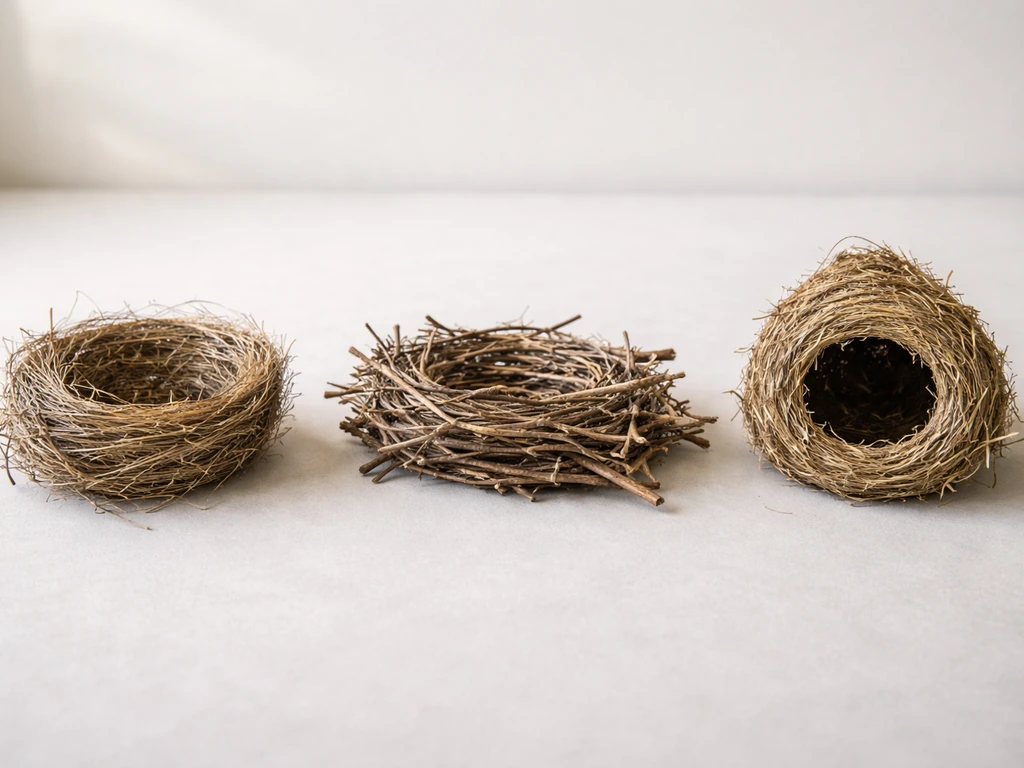
Before looking at the eggs themselves, spend a minute reading the nest from the outside. Nest design varies enormously, and knowing what you're dealing with tells you a lot about what to expect inside and how cautious to be. Cornell's Bird Academy describes six broad nest types: scrapes (shallow ground depressions), platforms (flat stick structures), cups (the classic bowl shape woven into branches), cavities (holes in trees or nest boxes), burrows (underground tunnels), and spheres (fully enclosed balls of grass). Each design reflects a different strategy for protecting eggs from weather and predators.
Look at these four things to narrow down the species before ever glancing at the eggs:
- Location: Is the nest on the ground, in a shrub, high in a tree canopy, on a building ledge, or inside a cavity? Ground nests in grass are often killdeer or sparrows. Cup nests tucked in dense shrubs at 3 to 6 feet are commonly robins, cardinals, or catbirds.
- Materials: Mud-lined cups suggest American robin. Loose twigs on a platform suggest mourning dove. Intricate grass weavings with spider silk often indicate warblers or vireos. Bark strips and plant down suggest chickadees or titmice in cavities.
- Size: A nest the size of a golf ball is likely a hummingbird nest. A platform the size of a dinner plate could be a mourning dove or small hawk.
- Surrounding habitat: A nest in a brushy hedgerow near a garden pond is a very different situation than one under a porch light or in a nest box you installed.
Once you have a good guess at the species, look up typical egg appearance and clutch size so you know what normal looks like. Knowing that American crows lay 3 to 6 pale bluish-green to olive eggs with brown blotches, for instance, means you won't mistake a healthy crow egg for something unusual. A field guide focused on North American bird nests is invaluable here, as it covers both nest construction details and egg descriptions together. A Peterson field guide to North American bird nests can help you interpret egg and nest descriptions accurately for many common species.
How to visually inspect eggs safely
The safest method is a quick look from the closest natural vantage point without leaning over, reaching in, or moving eggs. If the nest is at eye level or slightly below, you can often see everything you need in three to five seconds. Smithsonian recommends binoculars from a distance, and Audubon photographers are advised to use at least a 400mm telephoto lens as a reference for respectful distance. For a nest box, a quick lift of the lid counts as your check and nothing more.
Here's what to look for and record during your visual check: If you want a deeper guide to bird eggs, use a field guide focused on your region and learn the typical colors and patterns for common local species.
- Egg count: How many eggs are in the nest? Compare to typical clutch size for the suspected species.
- Color and pattern: Do the colors and markings match what you'd expect? Unexpected coloration (very pale, washed out, or stained dark) can indicate a problem.
- Shell condition: Look for cracks, punctures, or collapsed shells. Intact, slightly glossy shells are normal. A cracked shell that isn't from hatching is a bad sign.
- Cleanliness: A small amount of nest debris is normal. Dark liquid residue, a strong odor, or film on the egg surface can suggest a failed egg starting to decompose.
- Positioning: Healthy eggs typically sit in a natural cluster. If an egg is pushed to the rim or is sitting half out of the nest, that's worth noting.
- Nest condition: Is the nest cup still intact? Has it been disturbed, flattened, or partially torn apart?
Write down or photograph everything you observe. NestWatch's monitoring protocol asks for the date, time, number of eggs, number of hatched young, number of dead young, and any notable activity codes. Even a simple phone snapshot from above the nest (without touching anything) gives you a reference point for the next check. Consistency matters more than detail: the same information recorded every three to four days tells a meaningful story.
Reading the signs: development, abandonment, and what you can and can't conclude
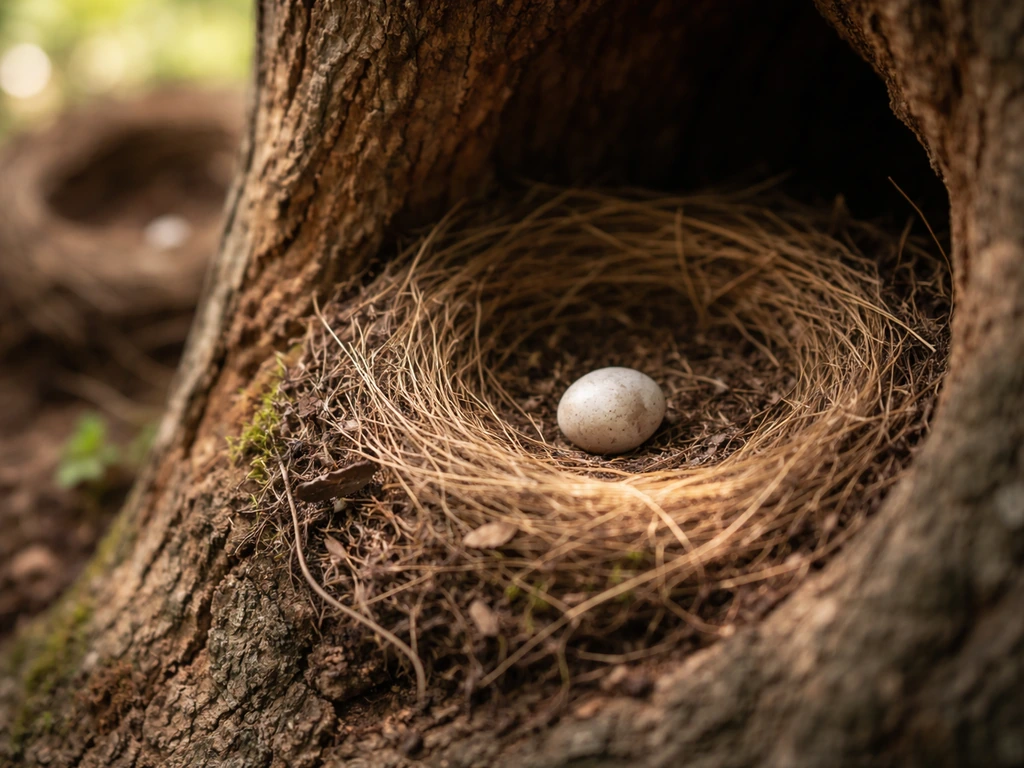
Egg appearance can give you clues, but it has real limits. Small songbirds typically hatch in 10 to 14 days, and the incubation clock doesn't always start when you think. NestWatch explains that many female songbirds don't begin true incubation until the last egg is laid, so all eggs hatch at roughly the same time. Some species, particularly raptors and owls, start incubating with the first egg, so you may see eggs at different stages of development in the same nest. Knowing which pattern applies to your suspected species changes how you interpret what you're seeing.
What you can reasonably observe from visual inspection alone:
- Whether eggs are present, cracked, or missing
- Whether a shell fragment is present, suggesting a recent hatch (clean, thin-edged fragments usually mean successful hatching; thick, ragged shell pieces can mean predation)
- Whether the nest has been physically disturbed or attacked
- Whether the egg count has changed between visits
What you cannot reliably determine from visual inspection alone:
- Whether a visually normal egg is fertile or infertile
- Whether a developing embryo is alive or has died mid-incubation
- Whether parents have permanently abandoned the nest based on a single absence
- The exact stage of incubation without a known start date
The abandonment question deserves special attention. NestWatch is explicit: do not assume a nest is abandoned just because you don't see adults on or near it during your visit. Adults leave the nest regularly to feed, and incubation breaks are normal. A better test is consistent monitoring over several days. If you observe zero adult activity over 48 to 72 hours across multiple time-of-day checks (morning and afternoon), and the eggs appear cold to the touch when briefly assessed, abandonment becomes more plausible, but it's still not certain. When in doubt, contact a licensed wildlife rehabilitator before drawing any conclusions.
What not to do, even with good intentions
These are the actions that cause the most harm, often from people trying to help:
- Candling eggs: Candling (holding an egg up to a light source to see inside) requires physically removing the egg from the nest, exposing it to temperature changes, and handling it directly. Even if you're trying to confirm whether an egg is viable, this is not appropriate for wild bird eggs. It risks chilling or damaging the egg, and you almost certainly can't interpret what you see accurately without training. Leave candling to permitted wildlife professionals.
- Moving eggs: Do not relocate eggs to another nest, a box, or indoors, even if the nest appears threatened. Moving eggs is illegal for most migratory species without a federal permit, and it rarely achieves what people hope. Michigan DNR specifically notes that moving baby birds can prevent parents from finding them, and the same logic applies to eggs.
- Washing eggs: Egg shells have a natural coating called the bloom that protects developing embryos from bacteria. Washing an egg strips this coating and dramatically increases the risk of infection. Never rinse or clean a wild bird egg.
- Checking too frequently: Each visit is a disturbance. Adults may flush, exposing eggs to temperature swings and predator attention. NestWatch recommends checking every three to four days as a maximum frequency for active monitoring, not daily.
- Handling eggs with bare hands repeatedly: Even though scent alone won't cause abandonment, repeated physical handling increases the risk of dropping, cracking, or chilling an egg, and it exposes you to parasites.
- Assuming the worst too quickly: A parent off the nest for 20 minutes is not a crisis. Resist the urge to intervene before you've observed the nest consistently over time.
When there actually is a problem: what to do
Some situations do require action beyond passive observation. Here's how to handle the most common ones:
Predator pressure
If you're seeing evidence of predator visits (scattered feathers, shells with jagged edges, scratch marks around a nest box), the response is habitat modification, not egg handling. Add a predator baffle to a nest box pole. Trim branches that give squirrels or raccoons easy access. Place a hardware cloth cage around a ground nest area if flooding or cats are the threat, but leave enough clearance that adults can still enter and exit freely. You do not need to touch the eggs to address predator pressure.
Flooding or construction risk
If a nest is about to be submerged by rising water or is directly in the path of machinery, this is one of the few situations where intervention may be justified. Even then, your first call should be to your local USFWS regional office or a licensed wildlife rehabilitator. They can advise whether relocation is permitted, and in some emergency situations they can handle the relocation themselves legally. Don't move a nest on your own without that authorization.
Suspected abandonment
If you've monitored for 48 to 72 hours and seen no adult activity whatsoever, and the eggs appear to have been cold for an extended period, contact a licensed wildlife rehabilitator. Audubon advises reaching out to local Audubon chapters or state wildlife authorities. The rehabilitator can assess whether the eggs are viable and, if permitted, arrange proper care. Do not attempt to incubate wild bird eggs at home: doing so requires a permit, precise temperature control, and species-specific expertise.
Eggs that fell from the nest
If you find eggs on the ground below an intact nest, you can gently replace them in the nest if you can reach it safely, the nest is still structurally sound, and you can do so without further damaging the nest. This is one of the few hands-on interventions that is broadly recommended because the eggs' only alternative is certain death on the ground. Work quickly, disturb the nest as little as possible, and leave the area immediately afterward. Detailed guidance on this specific scenario is worth reading before you act.
Nest in a genuinely problematic location
A nest on your porch, in a dryer vent, or inside a garage where you need to work is frustrating, but once eggs are present, your legal options are very limited. Audubon's guidance for bad-location nests is straightforward: wait it out. Most songbird nests wrap up in four to six weeks from first egg to fledging. Temporarily close off the area if you can. If the location poses a genuine safety risk (like a gas vent), contact USFWS for guidance on permitted options.
After your check: monitoring, documentation, and knowing when to call for help
The most useful thing you can do after a nest check is set a schedule and stick to it. Every three to four days is the NestWatch standard. Each time you visit, record the same basic data: date and time, egg count, any changes in nest condition, adult behavior (whether you saw adults nearby, heard alarm calls, or observed feeding activity), and anything unusual. A simple notes app on your phone works fine. If you want to contribute your observations to science, NestWatch's free citizen science program accepts nest monitoring data from anyone.
Photography is your best tool for tracking changes without repeated physical inspection. A quick overhead shot with your phone, taken without leaning into the nest, gives you a visual record you can compare across visits. Audubon recommends telephoto lenses for bird photography near nests; for nest monitoring (not photography), a wide-angle phone shot from a standing position above the nest is usually sufficient and far less intrusive.
Know when to make the call for professional help. Contact a licensed wildlife rehabilitator if: adults have been confirmed absent for more than 48 to 72 hours, an egg or chick appears injured or sick, the nest has been destroyed and you can't rebuild it, or you're facing a permitted-intervention situation like an emergency relocation. Audubon advises contacting local animal services if you can't reach a rehabber directly. USFWS regional offices are the right point of contact for any situation where you're uncertain about legal permissions.
Finally, use the nest cycle as a learning opportunity. Tracking a nesting attempt from first egg to fledging, even passively from a distance, gives you a much better feel for what normal looks like for the species in your yard. That baseline makes the next nesting season much easier to read, and it's genuinely one of the more rewarding things you can do as a backyard naturalist.
FAQ
How can I check eggs if the nest is in a spot I cannot safely reach or see from far away?
A good rule is, if you cannot see the eggs clearly from a stable spot without leaning, reaching, or putting your face over the nest, you are too close. If needed, use binoculars or zoom in from the outside of the yard (including from a window or across a path) and do a short check, then leave.
Can I tell how long the eggs have been incubating just by looking at them?
Not reliably. Many incubation timelines vary by species and even within the same species (some start with the first egg, others begin only after the clutch is complete), so egg appearance alone can mislead you about “how old” an egg is.
What counts as evidence that eggs are truly abandoned or no longer viable?
Cold is a clue, but it is not proof. Weather, nest shading, and the time of day can make eggs cool during natural incubation breaks, so “cold eggs” should be paired with repeated observations of adult absence over multiple checks.
Is it okay to take photos of eggs to monitor them, and does flash matter?
Yes, but keep it minimal and indirect. The safest photography is an overhead shot from where you can stand without leaning in, and avoid using flash or crowding the nest so you do not cause adults to flush.
What should I do if I find eggs on the ground below a nest, but the nest is hard to reach safely?
If you see eggs on the ground, the key decision is whether you can put them back without damaging the nest and without making the problem worse. If the nest is unstable, too far up to reach safely, or the area is unsafe, skip replacement and contact a licensed wildlife rehabilitator instead.
Is checking more often better, or could it harm the birds?
Close proximity can be more risky than handling eggs. Even repeated “quick peeks” can increase how often adults flush, and flushing can also draw predators. If you need to monitor, follow a consistent schedule (for example every three to four days) and keep the visit brief.
If eggs look dirty or misplaced, can I gently move or clean them?
You typically should not. Turning eggs, moving them to “reposition” them, or brushing them clean is a hands-on change that can increase abandonment risk and exposes eggs to additional disturbance. Use passive observation and note-taking instead, unless you are in the specific circumstance of replacing eggs that are on the ground below an intact nest you can safely reach.
What if I need to do landscaping or repairs near a nest during nesting season?
In many cases, nests are easiest to monitor by limiting your presence and changing behavior, not touching the nest. For yard work, the practical approach is to wait until the nesting period ends (or until chicks have fledged) and, if you must do work sooner, contact a wildlife professional to confirm what is legally and ethically acceptable for that nest.
I accidentally touched an egg while looking. Will the parents abandon the nest?
If you only brush an egg while peering and you then leave quickly, the bigger concern is the disturbance you caused, not your scent. Still, do not return immediately, and watch later from a distance to see if adults resume normal behavior.
What records should I keep if I suspect something is wrong but I want to avoid further disturbance?
Use documentation that does not require approaching again, such as a dated photo from a safe vantage point and written notes (egg count, visible activity like feeding or alarm calls). If you can confirm adults are absent over several days, that is more useful for deciding next steps than inspecting more closely.
Do I need gloves to check a nest safely?
Most of the time, gloves are for hygiene when disease risk is possible, not to “make handling safe.” If you are not handling birds or nest material, you can still reduce risk by avoiding contact with feathers or droppings and washing hands after any yard cleanup or vegetation brushing near the nest.
How should I decide whether a nest is inactive if I only see it once?
Assume the nest is active if you have any uncertainty. A nest under construction or one that looks empty from a distance can still become active or may be incubating without obvious activity at the moment you visit, so repeated checks over time matter more than one visit.