You can find a bird nest today without breaking any laws or disturbing wildlife, but the key is knowing how to look without interfering. The whole process comes down to reading behavioral cues, interpreting habitat, and observing from a safe distance rather than poking around in bushes. Whether you want to find a nest with eggs for a school project, monitor one in your backyard, or just satisfy your curiosity, this guide gives you the exact steps to do it right.
How to Find a Bird Nest With Eggs Without Disturbing It

Maya Bennett
16 Apr 2026
Legal and ethical basics before you start looking
Before you take a single step toward a hedgerow or tree line, you need to understand what the law actually says. In the United States, the Migratory Bird Treaty Act (16 U. S. C.
§ 703(a)) makes it unlawful to take, possess, or transfer a migratory bird, its nest, or its eggs without a federal permit. The U.
S. Fish and Wildlife Service reinforces this by noting that the risk level rises significantly when a nest is active or contains eggs or chicks. Destroying an active nest with eggs or chicks can be treated as an illegal 'take' depending on the circumstances. In Canada, nest protections apply for as long as the nest existed, for any listed migratory bird, anywhere the nest was found.
In England, the Wildlife and Countryside Act 1981 makes it an offence to take, damage, or destroy a nest in use or being built, and Schedule 1 species get even stronger protections. The bottom line across all jurisdictions: look, photograph, and enjoy. Do not touch, move, or disturb.
The ethical standard matches the legal one. Audubon's guidance is blunt: never move or remove anything around a nest, and never touch eggs, chicks, or nest structures because disturbance can cause abandonment. Cornell Lab's NestWatch Code of Conduct adds that you should not handle birds or eggs without proper permits and should never jeopardize the well-being of the nest's contents. If you find a nest, your job is to observe it from a distance, record its location, and take a photo of its surroundings so you can find it again without conducting a long search that risks repeated disturbance.
How to identify likely nesting areas by reading habitat cues
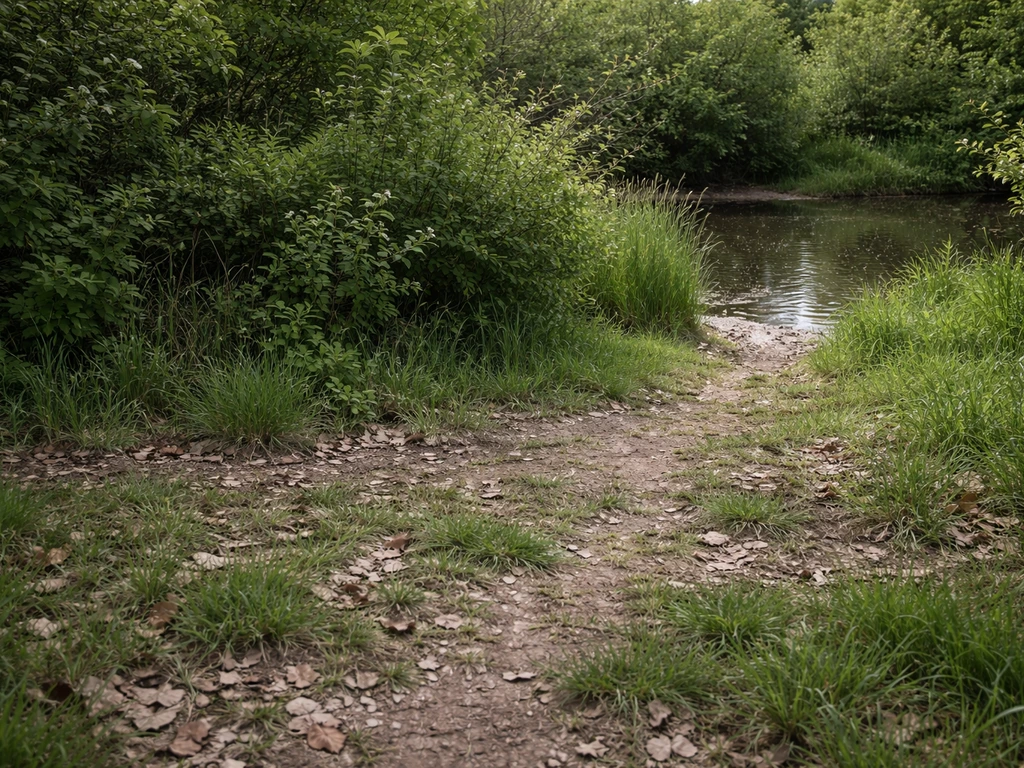
Birds are not random about where they nest. Each species has strong preferences for structure, height, concealment, and proximity to food and water. If you understand those preferences, you can walk into a patch of habitat and immediately narrow your search to a handful of likely spots rather than scanning every square inch.
Start by thinking in layers. Ground-level nesters like killdeer, ovenbirds, and many sparrows use low vegetation, leaf litter, or open scrapes in gravel or sand. Shrub-level birds like cardinals, catbirds, and yellow warblers prefer dense thickets between roughly 3 and 10 feet off the ground. Mid-canopy birds like robins and Baltimore orioles work the 10- to 30-foot zone in deciduous trees. High canopy and cavity nesters like woodpeckers, chickadees, and great horned owls favor tall trees, dead snags, and existing holes. Edge habitat is especially productive: the transition zone between forest and open meadow, or between a manicured lawn and an overgrown fence line, tends to concentrate nesting activity far above what either habitat type alone would support.
Human structures are also worth checking. Robins, phoebes, barn swallows, and house sparrows regularly use window ledges, porch beams, drainage pipes, and the tops of outdoor light fixtures. Cliff swallows plaster mud nests under bridge overhangs. Chimney swifts use, predictably, chimneys. If you have a structure with a sheltered overhang or cavity, check it. For a deeper breakdown of which species nest where, the guide on where to find a bird nest goes into habitat-specific detail that's worth reading alongside this one.
Spotting nests safely: behavioral signs vs. direct searching
The most reliable way to find a nest is to watch the birds, not the vegetation. Direct searching, meaning physically parting branches and peering into shrubs, is invasive, stressful for breeding birds, and largely unnecessary once you know what behavioral signals to follow. Behavioral cues will get you 90% of the way there.
The behavioral signs that point directly to a nest
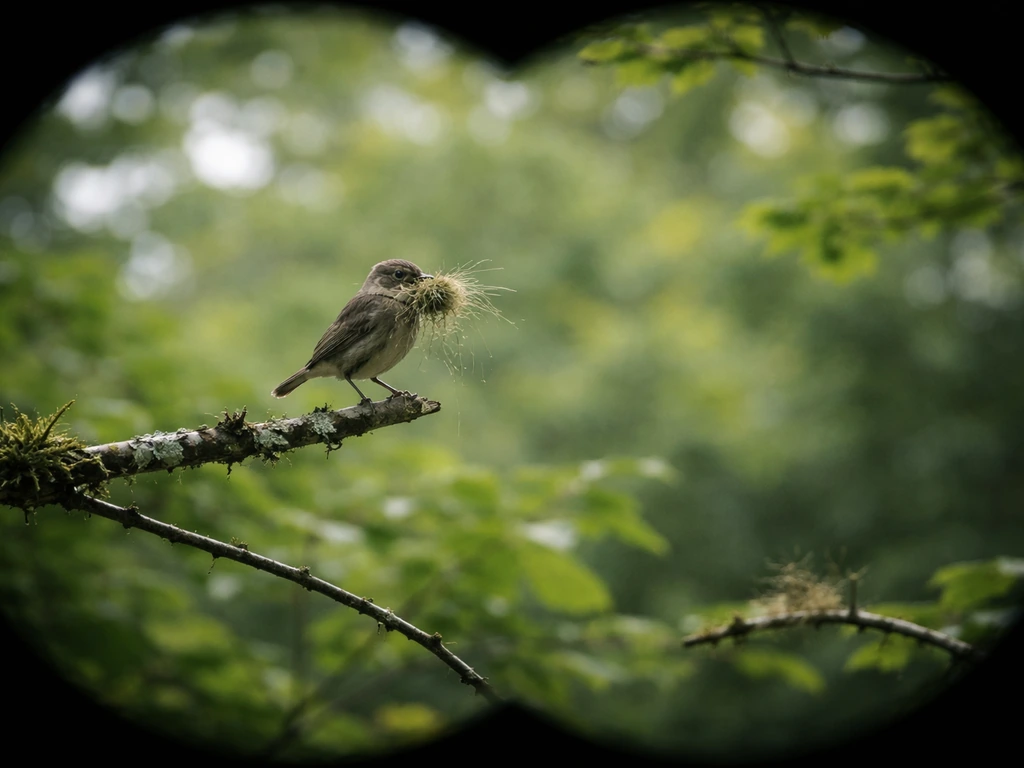
- Nest material carrying: A bird repeatedly flying in with grass, moss, plant down, strips of bark, spiderweb, or feathers is actively building. Watch where it lands and exits.
- Repeated directional flights: A bird making multiple short trips to the same spot in a shrub or tree is almost certainly visiting a nest. Note the compass bearing and the height of the entry point.
- Alarm calls and scolding: Sharp, repeated chip notes or aggressive mobbing behavior directed at you or a passing crow often means a nest is close. Birds issue these calls when a perceived predator is within their 'threat zone.'
- Silent flushing with a distraction display: Some ground-nesting birds, like killdeer, will run away from the nest silently before flushing, then perform a broken-wing display to lure you away. The nest is behind you, not in front of you.
- Nestling begging calls: A thin, rapid, high-pitched call coming from dense vegetation usually means chicks are already in the nest. These calls are often audible even when the nest is completely hidden from view.
- Adults entering tight spots: A bird repeatedly disappearing into the same cavity, dense shrub interior, or gap in a structure almost always has a nest there.
- White droppings below a specific branch or ledge: Accumulated fecal sacs dropped by parents from a fixed exit point often mark an active nest overhead.
Use binoculars to watch from a distance rather than closing in. NestWatch recommends watching from far enough away that the bird behaves normally, then following its line of travel. Early in the breeding season is the easiest time to find nests because leaves have not fully opened and you can catch birds in the act of building. During incubation, a female may sit very still and silently on the nest, making it harder to locate by movement alone. If a bird leaves on your approach, back away immediately. It will return quickly once you're far enough away.
If you've been watching from a distance and are confident the parents are temporarily away, you can move slightly closer for a quick visual confirmation, but keep it brief. NestWatch's Code of Conduct says visits should last no more than a minute or two, and you should wait until you're well away from the nest before recording your notes. If a sitting bird does not leave on its own, do not force it off. Just back up, note the location, and return another day.
How to identify nests and confirm whether they're active
Once you have a visual on a potential nest, your next job is to identify what you're looking at and confirm whether it's currently in use. Both tasks can be done with binoculars from a respectful distance without ever touching anything. For a thorough breakdown of nest structures by species, the article on how to identify a bird nest covers materials, shapes, and construction details in depth.
Common nest types and what they tell you
| Nest Type | Structure | Typical Placement | Example Species |
|---|---|---|---|
| Scrape | Shallow depression in soil, sand, or gravel; minimal or no added material | Open ground, beaches, gravel rooftops | Killdeer, piping plover, nighthawks |
| Cup | Rounded, deep bowl of plant fibers, grass, moss, mud, or spider silk | Shrub forks, tree branches, ledges, 3–30 ft up | American robin, song sparrow, Baltimore oriole |
| Platform / raft | Large, flat pile of sticks, reeds, or debris; often bulky | Treetops, marshes, cliff ledges, utility poles | Osprey, great blue heron, bald eagle |
| Primary cavity | Hole excavated in dead or living wood by the bird itself | Tree trunks and thick branches, usually 5–30 ft up | Downy woodpecker, pileated woodpecker |
| Secondary cavity | Pre-existing hole or crevice reused; may be lined with soft material | Tree snags, nest boxes, building gaps | Eastern bluebird, chickadee, house sparrow |
| Pendant / woven | Deeply woven sock or pendant hanging from branch tips | Outer canopy branch tips, 15–50 ft | Baltimore oriole, bushtit |
To confirm activity, look for these signs without approaching: fresh, clean nest material versus weathered and dry; an adult sitting on or entering the nest; movement inside the cup when a parent lands; or visible egg colors through binoculars if the nest is shallow and the angle allows it. For ground scrapes, eggs are often cryptically colored (tan with dark blotches) and blend with surrounding substrate almost perfectly. Knowing how to tell if a bird nest is active can save you a lot of guesswork. Droppings below the nest, fecal sacs being carried away by adults, and the sound of begging chicks are all strong confirmation that the nest is occupied and in use right now.
Do not assume a nest is abandoned just because you don't see the parents for a stretch of time. NestWatch specifically warns against this: eggs can hatch later than expected, and parents often leave the nest during incubation to feed, drink, or chase off predators. The guide on how to know if a bird nest is abandoned gives you the specific time thresholds and visual cues to use before drawing any conclusions.
What to do immediately after finding an active nest with eggs

Finding a nest with eggs is genuinely exciting, and the right response is also the simplest one: back off, record the location, and leave the birds alone. Here is the practical sequence.
- Step back slowly to at least 25 yards (roughly 75 feet) for most backyard and woodland species; for beach-nesting shorebirds, Audubon recommends a minimum of 25 yards but FWC suggests 500 feet for concentrated waterbird colonies. When in doubt, go farther.
- Take a photo of the nest's location from that distance, not a close-up of the eggs. You want a reference shot showing which branch fork, which section of hedge, or which structural feature holds the nest so you can relocate it without searching next time.
- Note the date, time, GPS coordinates or a simple landmark description, and species if you can identify it. This information is useful if you decide to report to NestWatch or contact a wildlife professional later.
- Do not clear vegetation around the nest, move debris nearby, or cut branches to improve your view. Any change to the surrounding cover can expose the nest to predators or direct sun.
- Manage what you can control in the immediate area. Keep pets indoors or on leash. Redirect foot traffic along paths away from the nest site. Do not share the exact location on public social media platforms where it could attract crowds.
- If you need to pass near the nest regularly, for example because it's near your front door, minimize your pace and do not linger. Most birds adapt to predictable human movement once they assess it as non-threatening.
Audubon warns that prolonged human presence keeps parents from returning to feed or protect young, and that frightened adults leaving eggs or chicks exposed even briefly creates real vulnerability to predation and temperature extremes. If an hour or two passes with no sign of a parent returning after you've spotted the nest, the instruction is to retreat further, not to move closer to investigate. The parent may be waiting for you to leave.
Under no circumstances should you attempt to move or relocate an active nest. It is illegal in most jurisdictions when eggs or chicks are present, and it rarely achieves what people hope. If you are concerned about a nest in a dangerous position, such as one sitting directly in a construction zone or in a spot where it will be hit by a sprinkler daily, contact a licensed wildlife rehabilitator before touching anything. For situations where a parent appears to be missing entirely, the article on what to do if mom bird abandons nest walks you through the decision tree.
Seasonal timing and where common species nest
The timing of your search matters a lot. In North America, most songbird breeding activity begins in April and runs through July, with peak nest-building in April and May across most of the continent. Right now, in mid-April, many species are either still building or have just laid their first clutch of eggs, which means behavioral cues like material carrying are highly visible and leaves have not yet fully blocked sight lines in deciduous trees. This is genuinely the best window to find nests.
| Species | Nest Type | Typical Location | Peak Nesting (N. America) |
|---|---|---|---|
| American robin | Mud-reinforced cup | Horizontal branch fork or ledge, 5–20 ft | April–July |
| Black-capped chickadee | Secondary cavity, moss-lined | Tree snag or nest box, 5–10 ft | April–June |
| Baltimore oriole | Woven pendant | Outer branch tip, elm or cottonwood, 20–45 ft | May–July |
| Killdeer | Bare scrape | Open gravel, short grass, flat rooftops, ground level | March–July |
| Barn swallow | Mud cup on beam or ledge | Under bridge, barn eave, porch beam | April–August |
| Eastern bluebird | Loose cup in cavity | Nest box or tree cavity, 3–15 ft | March–July |
| Song sparrow | Grass cup | Dense low shrub or grass clump, 1–4 ft | April–August |
| Great blue heron | Large stick platform | Tall tree near water, often in colony, 50–100 ft | February–July |
By late June and into July, many pairs are on their second clutch and the foliage makes visual searching much harder. Ground-nesting species like killdeer and sparrows can nest into August. By September, the vast majority of native songbird nesting is finished, and old nests become much easier to spot once leaves drop in fall.
Those empty autumn nests are safe to examine closely (and even collect in some jurisdictions for non-commercial personal use, though check local regulations), and they are a good way to train your eye for identifying nest types and construction materials. If you want to do something creative with found nests from that off-season period, the article on how to display bird nests covers ethical display and preservation methods.
Safety steps for the person doing the searching
Most people focus entirely on the birds' safety and forget about their own. A few practical precautions will keep your nest-searching experience from turning into an unpleasant one.
Physical and terrain hazards
Nesting habitat often means dense vegetation, uneven ground, and poor visibility underfoot. Wear long sleeves and pants when moving through brush to avoid contact with poison ivy, stinging nettles, or thorny shrubs. Sturdy footwear matters in any terrain with roots, rocks, or soft soil near water edges. If you're checking structures like barn rafters or bridge undersides for swallow nests, watch for slippery surfaces and unstable footing.
Allergies and disease risks

Do not handle old nests, droppings, or dried nest material without protection. The CDC notes that workers with exposure to bird droppings and dried organic material face risks from airborne pathogens including histoplasmosis, a fungal respiratory infection. If you're clearing out an old nest from a building interior or enclosed space, wear an N95 mask and disposable gloves. In open outdoor settings this risk is minimal, but enclosed attics and barn lofts with heavy accumulations are a genuine concern.
Defensive bird behavior
Some species will actively dive-bomb or strike intruders who come too close to a nest. Red-winged blackbirds, northern mockingbirds, and terns are particularly aggressive defenders. If a bird is flying directly at you repeatedly, you are too close. Back away steadily without turning and running, which can intensify the response. Covering your head with a hat or raising an arm provides some protection from contact. This behavior is a hard signal to move away, not a cue to press forward and find the nest.
Unknown wildlife in the area
Nesting birds attract predators, and those predators may be present near the nest site. Snakes, raccoons, and raptors all concentrate around active nests. In areas with venomous snakes, watch where you step and where you put your hands. Do not reach blindly into tree cavities or dense brush. If you encounter a large predator like a coyote or fox near a nest site, it is almost certainly already aware of the nest and your approach will do little to improve the situation for the birds. Leave the area and give both the predator and the nesting birds space.
When you can't confirm the nest or need professional help
Sometimes you'll find clear signs of a nest but can't locate the actual structure. You might hear begging chicks, see adults making repeated short flights, and watch droppings appear below a hedge without ever getting a visual on the cup. In that case, the best move is to stop searching and let the birds show you over time. Park yourself 30 to 50 feet away with binoculars and wait quietly for 15 to 20 minutes. Patient watching almost always yields a confirmed location without any physical disturbance.
If you've found a nest and are seeing a baby bird on the ground nearby, assess whether it's a nestling (naked or with pin feathers, eyes possibly closed) or a fledgling (fully feathered, alert, capable of short hops). Learning how to identify a nestling bird is genuinely useful here because the right response differs significantly between the two. A nestling on the ground can often be returned to its nest if you can locate it, which is covered in the article on how to help a bird find its nest. A fledgling on the ground is usually normal, and the correct action is typically to leave it alone while the parents continue to feed it nearby.
For any situation involving an injured bird, a nest in immediate physical danger, or a parent that has genuinely not returned for several hours to a full day, contact a licensed wildlife rehabilitator. The U. S. Fish and Wildlife Service recommends contacting local veterinarians, humane societies, or county wildlife agencies to find a qualified rehabilitator near you.
The Oregon Department of Fish and Wildlife, Minnesota DNR, and most state agencies offer the same referral pathway. NestWatch is equally direct: do not try to care for eggs or young yourself. The next step is always a federally certified wildlife rehabilitator or wildlife veterinarian. These professionals know the legal boundaries, have the permits to handle protected species, and have the tools and knowledge to give a bird its best chance of survival.
FAQ
If I keep seeing birds but cannot locate the nest, what should I do differently?
Try a “no-approach” method: watch adults carrying nesting material or food from a distance, note the direction of travel, then follow the flight path with binoculars instead of stepping closer to the vegetation. This reduces the chance that you reveal or cool the nest contents, which can happen when adults abandon briefly.
How can I tell whether a nest is truly active if the parents are not visible?
Do not rely on a single absence window. Use multiple cues, like repeated short feeding flights, fecal sacs being carried away, and begging calls, before you decide the nest is not active. Even then, treat it as active until you confirm it again from afar later that day or another day.
What should I do if the birds leave when I get near the nest?
If you are already too close and the adults leave, back away immediately and give the area space, then only re-check from the same farther distance after 20 to 30 minutes. Avoid circling back repeatedly, since repeated approaches can keep parents from returning even when they would otherwise settle.
What is the safest way to document the nest location for a school project or monitoring?
Use a recording plan that does not require lingering near the nest, for example, take one wide photo that includes landmarks (tree line edge, trail corner, unique branch) plus one close photo from binocular range, then move away. Note coordinates or a nearby feature so you can find it again without returning repeatedly.
Is it safe to touch old nests or droppings if the nesting birds are gone?
Avoid handling anything that might expose you to pathogens, including dried nest material and droppings. In open air it is typically lower risk, but if material is dusty, wear an N95 mask and use eye protection when you are photographing only, not cleaning or disturbing.
Can I reuse or examine a nest from a previous season to find the same birds again?
Yes, because many nests are reused, repaired, or used for the next clutch. In practice, treat any active-looking structure as protected, especially if you see fresh material, adult activity, or eggshell fragments nearby. If you must check, do it only off-season after local rules allow it.
How do I find a nest when it’s inside a hole, snag, chimney, or wall cavity?
For many cavity nesters, the correct next step is to stop direct searching when you cannot see the entrance clearly. Look for behavioral confirmation instead, such as adults entering and exiting on a schedule, rather than reaching into holes, snags, or under-roof cavities.
What if the nest is in a risky spot like a walkway, playground, or construction area?
If a nest is in an area where it will be hit by people, pets, or routine maintenance, prioritize relocation of access, not of the nest. Barricade the area, keep pets inside, and contact a licensed wildlife rehabilitator or local wildlife agency for options and permits.
Should I intervene if I find eggs or a baby bird that seems abandoned?
Do not try to “rescue” or move eggs or nestlings unless you are directed by a licensed wildlife rehabilitator. The wrong timing is common, for example returning too late or placing a baby in the nest incorrectly, which can cause abandonment or injury.
What’s the decision rule for nestling versus fledgling if one is on the ground?
If you see a baby on the ground, first classify it quickly as nestling (still mostly down, weak or unsteady, eyes not fully open) or fledgling (fully feathered, alert, hopping). In either case, keep distance and watch for parents from afar before deciding, because some fledglings are intentionally left while parents feed nearby.
Does frequent checking from the same distance matter if I never touch the nest?
Yes, you can accidentally increase risk by repeatedly visiting the same spot, even if you never touch anything. Space out visits, keep the time short, and avoid returning during peak sensitivity (early incubation and early chick stage) when adults are less able to leave for extended feeding.