
If you're staring at a nest and the mom bird hasn't shown up in a while, the most important thing to do right now is slow down before you do anything else. True nest abandonment is far less common than it looks. In most cases, the parent is nearby foraging, deliberately staying away because you're too close, or performing a distraction display to lure you away from the nest.
What to Do If Mom Bird Abandons the Nest: Triage and Steps

Maya Bennett
20 Apr 2026
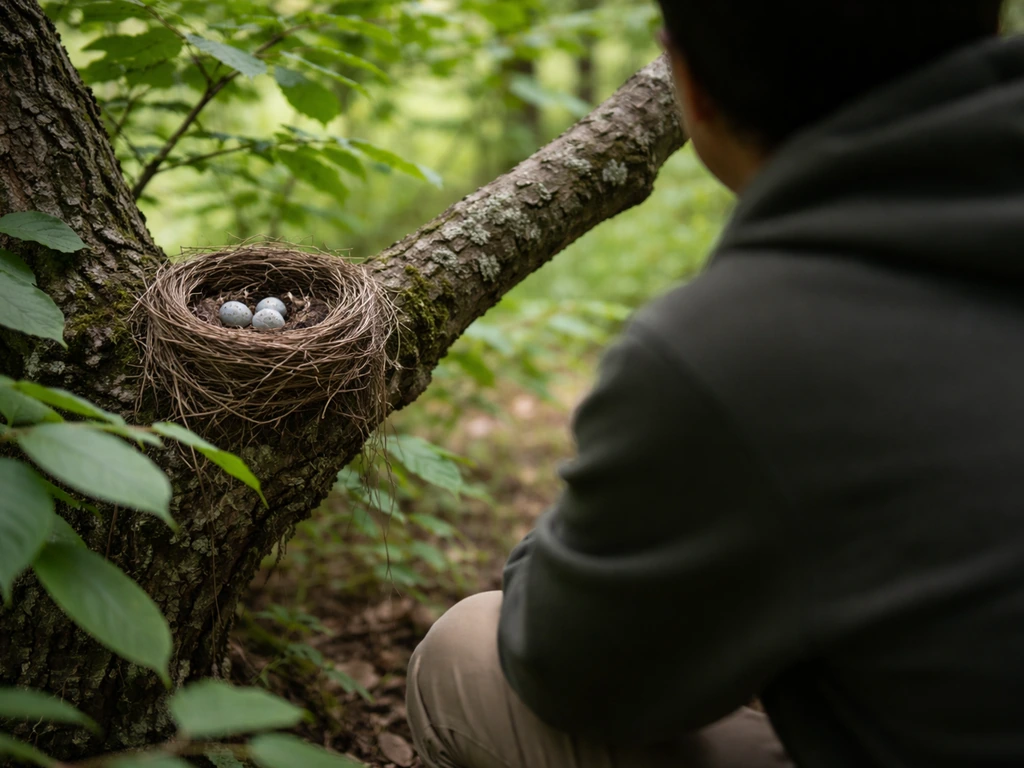
Your first job is to figure out which situation you're actually dealing with, because the right action depends entirely on the answer. If you still feel unsure, a quick guide on where to find a bird nest can help you compare what you're seeing with a normal, undisturbed setup. That means learning how to identify a bird nest as active or abandoned before you take any steps which situation you're actually dealing with.
Step one: triage before you touch anything
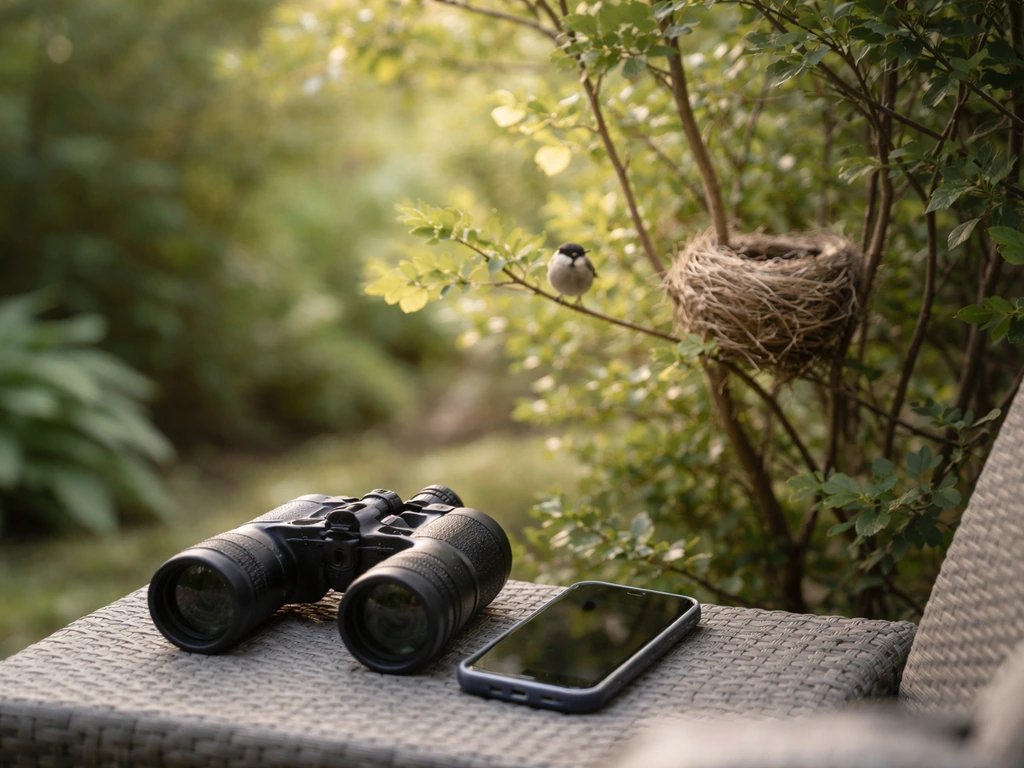
NestWatch, which runs one of the largest citizen-science nest monitoring programs in North America, is direct about this: people routinely misclassify nests as abandoned. Eggs hatch and young fledge on a normal schedule even when observers never see an adult during their check-in. The adults are often watching you from a branch thirty feet away, waiting for you to leave.
Before concluding the nest is abandoned, run through this quick checklist. If you want a reliable way to assess whether a nest is active, use the steps in this checklist to start run through this quick checklist. If you are unsure, use a short, evidence-based checklist to determine whether the nest is truly abandoned or just temporarily unattended how to know if a bird nest is abandoned. Take photos from a distance rather than crowding the nest, and step well back before you even write down your notes.
- How long have you actually been watching? If it's been less than two hours, keep waiting from a distance of at least 20 to 30 feet.
- Is the nest in direct sun or wind? Adults may leave briefly to let eggs breathe in heat, or they may be sheltering nearby during a storm.
- Are you standing close to the nest? Parents almost always fly off when a person approaches. Your presence is probably the reason you don't see them.
- Have you heard alarm calls, chip notes, or seen a bird hopping around on the ground making exaggerated movements? That's a distraction display, a deliberate behavior to pull your attention away from the nest.
- What's the time of day? Early morning is the riskiest time for eggs and nestlings to get cold if genuinely left alone, but adults often forage at first light and return quickly.
If you've watched patiently from a real distance and seen zero adult activity over several hours, that's a more serious signal. NestWatch recommends waiting up to four weeks from the last confirmed adult sighting before treating a nest as definitively abandoned, because incubation alone takes two to three weeks for most songbirds. That said, if nestlings or fledglings are involved and they look distressed, cold, or injured, the timeline shortens dramatically and you need to act sooner.
Knowing whether a nest is truly active versus abandoned is its own skill, and it can be genuinely tricky. If you're still unsure whether you're dealing with true abandonment or temporary absence, use this related checklist to confirm whether a nest is active or abandoned how to know if a bird nest is abandoned. Signs like egg color changes, nest condition, and the presence of fecal sacs can all help you read the situation more accurately.
The legal and ethical lines you need to know
In the United States, the Migratory Bird Treaty Act protects the vast majority of wild bird species, their eggs, and their nests. The U.S. Fish and Wildlife Service is explicit: nests and eggs are included in the prohibited 'parts,' and violations carry significant penalties. It is illegal to handle, move, or possess any part of an active nest or its eggs without a federal permit. Multiple state laws mirror or extend this, and the Michigan DNR, for example, is unambiguous that touching, moving, or possessing a nest or eggs without a proper permit is illegal. In the UK, the Wildlife and Countryside Act 1981 provides equivalent protections across all wild bird species.
What does 'active' mean in practice? A nest is considered active if it contains eggs or young, or if adults are attending it, even if you don't see them at that exact moment. This matters because a nest that looks empty or abandoned may still be legally protected. The Florida Fish and Wildlife Conservation Commission is straightforward: do not pick up baby animals or remove them from their natural environment unless you have the proper rehabilitation permit.
The ethical rule is simpler: when in doubt, leave it alone and call a professional. Wildlife rehabilitators are licensed specifically for this. Refuge staff, veterinarians without wildlife permits, and well-meaning homeowners are not. Your job is triage and transport, not raising or incubating.
When the nest has eggs and you think she's not coming back
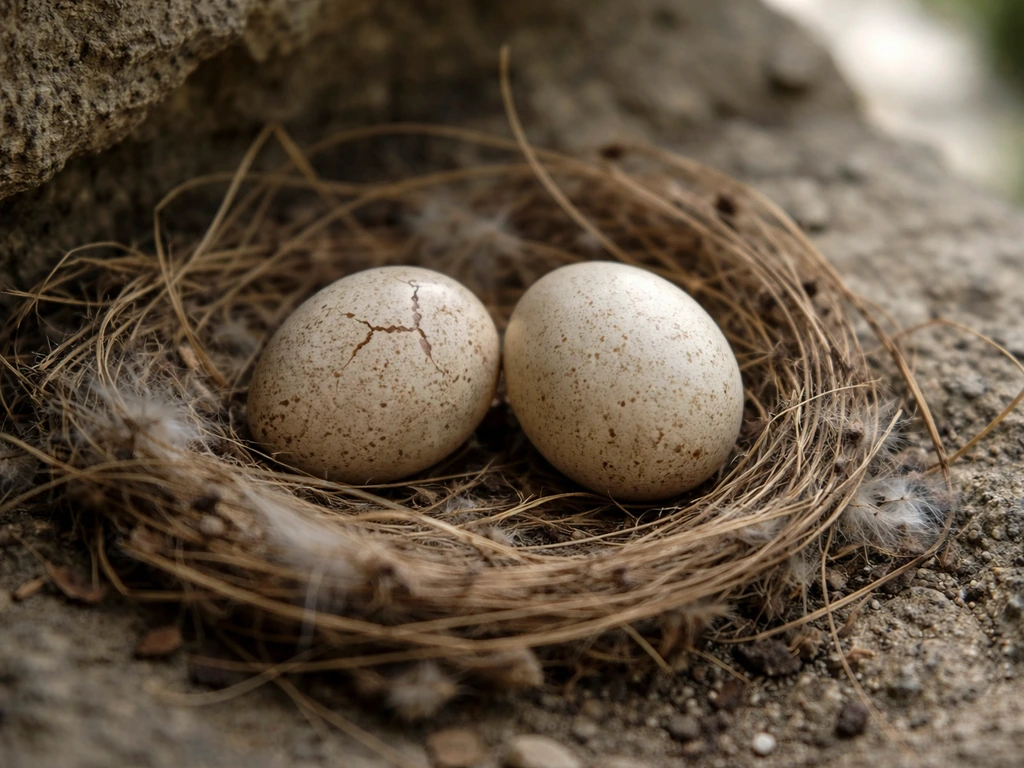
Abandoned eggs are genuinely hard to save, and it's important to be honest about that up front. Eggs need precise temperature and humidity control to remain viable, conditions that are nearly impossible to replicate at home without incubation equipment and expertise. All About Birds notes that most wildlife rehabilitation centers are not set up to incubate eggs, partly due to staffing demands and partly because eggs found in the field may no longer be viable. They also point out that if an improperly handled egg does hatch, the chick can suffer serious developmental deformities.
So what should you actually do? Here's the practical path:
- Photograph the nest, the eggs, and the surrounding area from a distance without disturbing anything. Note the date, time, and how long you observed with no adult activity.
- Do not remove the eggs from the nest unless they are in immediate physical danger (a nest that has completely fallen, for example). Even then, handle as minimally as possible.
- Do not attempt to incubate eggs at home using a lamp or heating pad. Precise temperature control (around 99 to 102 degrees Fahrenheit depending on species) and humidity management are required, and improvised setups almost always fail or harm development.
- Call a licensed wildlife rehabilitator today. Search your state's fish and wildlife agency website or use the National Wildlife Rehabilitators Association's directory to find your nearest permitted center. When you call, have your photos ready and be prepared to describe the nest type, location, number of eggs, and egg appearance.
- Ask the rehabilitator directly whether they can accept eggs and what they advise. If they cannot, follow their guidance on whether to leave the nest in place or what alternatives exist.
The honest reality is that abandoned eggs have a low survival probability regardless of intervention. Calling a rehabber gives them the best possible chance and keeps you on the right side of the law.
When there are nestlings or fledglings in the nest
Baby birds at different stages need very different responses, so the first thing to do is figure out what you're looking at. The U.S. Fish and Wildlife Service gives a useful rule of thumb: a baby bird likely needs help if it is featherless or has its eyes closed. If it has feathers and is hopping around on the ground, it is almost certainly a fledgling doing exactly what it's supposed to do, and the parents are nearby even if you can't see them.
| Stage | What it looks like | What to do |
|---|---|---|
| Hatchling (0 to 3 days) | Naked, eyes closed, completely helpless | Place back in nest immediately if nest is intact. Call rehab today. |
| Nestling (3 to 13 days) | Pin feathers or partial feathers, eyes may be open, can't thermoregulate | Return to nest if possible. Call rehab if nest is gone or parents don't return. |
| Fledgling (13+ days) | Mostly feathered, can hop and flutter, may be on the ground | Leave alone unless injured. Parents are usually nearby feeding it. |
Washington Crossing Audubon makes an important point that trips up a lot of people: mother birds do not abandon their babies because a human touched them. That's a persistent myth. If you've picked up a nestling to examine it, you have not doomed it. Put it back in the nest.
Warmth is the first priority for nestlings
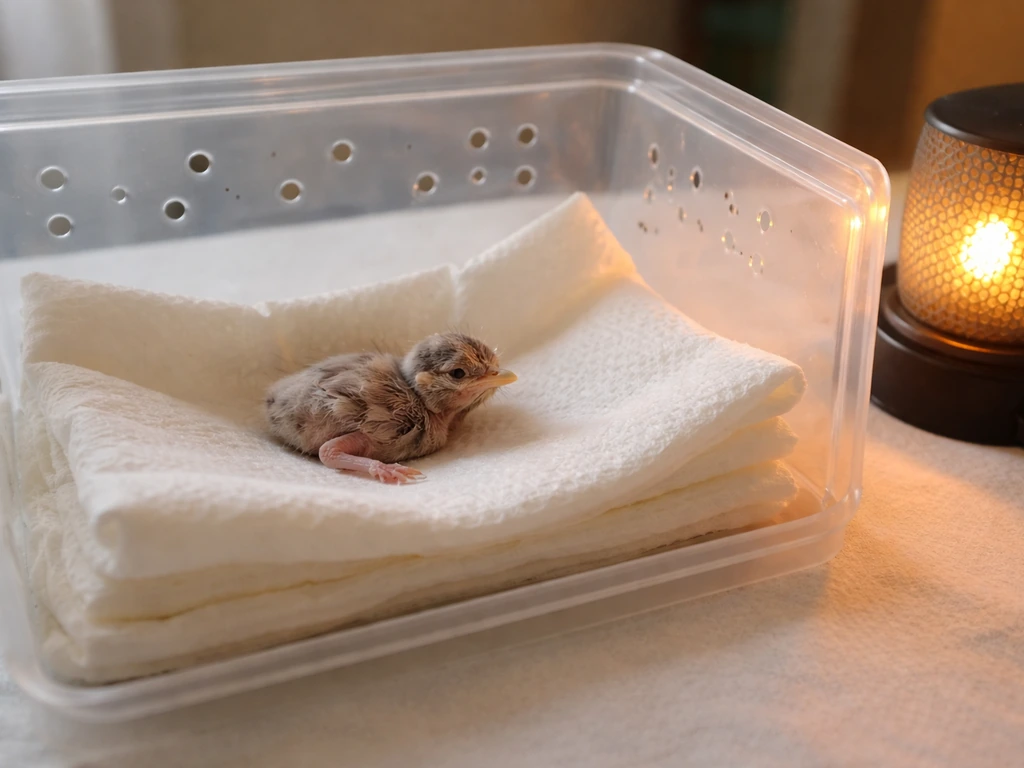
Nestlings cannot regulate their own body temperature. If a nestling feels cold to the touch, warming it gently is the single most important thing you can do before anything else, including attempting to reunite it with the nest. The Wildlife Center of Virginia specifically warns that returning a cold nestling to a nest can cause the parent bird to push the baby out in an attempt to protect its other warm eggs or chicks. The Bi-State Wildlife Hotline says it plainly: always make sure babies are warm to the touch before attempting reunification.
To warm a nestling safely, place it in a small box lined with paper towels (not cotton, which can snag tiny feet and toes), then set the box on top of a heating pad on its lowest setting with half the box off the pad so the bird can move away from heat if needed. HSVMA's wildlife care guidance recommends warming the animal as interim care before a rehabilitator arrives. Do this in a quiet, dark environment so the bird stays calm.
Do not feed or give water
This one is critical. Wild Nest Bird Rehab is unequivocal: no water or anything liquid from a dropper or syringe. Audubon echoes this, warning against incorrect feeding and emphasizing that calling for help is the right move when you're uncertain. Nestlings have specific dietary needs that vary by species, and incorrect feeding (bread, milk, sugar water, worms from your yard) can cause immediate harm or longer-term developmental problems. Keep the bird warm, keep it quiet, and get it to a rehabber as quickly as possible.
Trying to return a nestling to the nest
If the nest is intact and within reach, and the nestling is warm, putting it back is the right first move. WildCare notes that when returning a baby bird, it must go back to the original nest with its siblings, not placed in a nearby substitute location. If the nest has been completely destroyed or blown down, you can fashion a substitute nest from a small berry basket or margarine container with holes poked in the bottom for drainage, lined with dry grass or leaves, and placed as close as possible to the original nest location. Watch from a distance for at least an hour to see if the parents return.
What nest type and location tell you about the species
If you're not sure what species you're dealing with, the nest itself gives you solid clues. If you want a quick, practical method, start by figuring out how to find a bird nest without disturbing it. This matters because parental behavior varies, and some species that look absent are behaving completely normally. Knowing the species also helps you communicate accurately with a wildlife rehabilitator. If you think the nest may be empty or abandoned, you can also use the steps in how to help a bird find its nest to guide what you do next.
| Nest type/location | Likely species | Behavior notes |
|---|---|---|
| Cup nest in shrub or tree, mud reinforced, blue eggs | American Robin | Female incubates; male stays nearby. Robins return even after disturbance. |
| Mud nest on barn or house eaves, small opening | Barn Swallow or Cliff Swallow | Both parents feed; absence during rain is common. Very site-faithful. |
| Cavity in tree or nest box | Bluebird, Chickadee, Wren, or similar | Adults enter and exit quickly. Cavity hides activity from view; don't assume absence. |
| Ground nest in grass or gravel, speckled eggs | Killdeer, Meadowlark, or ground sparrow | Killdeer will perform dramatic broken-wing display. Nest may look empty for hours. |
| Open cup in grass, no obvious structure | Many sparrow species | Parents flush off nest easily and may not return while you're close. |
| Platform or loose basket in tree or on structure | Mourning Dove | Doves sit tightly but leave suddenly. Both parents share incubation in shifts. |
Ground nests deserve special mention because they're the ones most often misread. Killdeer, for example, nest directly on gravel or bare ground and will perform an exaggerated broken-wing display, dragging a wing and calling loudly to pull you away from the eggs. If you see this behavior, back away immediately. The parent isn't injured and the nest is very much active. Similarly, cavity nesters like bluebirds enter and exit nest boxes so quickly that you can watch for twenty minutes and miss every visit. The Wildlife Center of Virginia notes that correct species identification is one of the most useful tools for locating the nest and understanding what's normal behavior for that bird.
If you need help narrowing down the species from the nest's physical characteristics, the shape, materials, and placement can all point you in the right direction. The same goes for identifying nestlings and fledglings if they're out of the nest.
When to call wildlife rehab right now
Some situations don't require extended observation. Call a licensed wildlife rehabilitator immediately if any of the following are true:
- A hatchling or nestling is on the ground and you cannot locate or access the original nest.
- The nestling or egg is cold and the nest has been destroyed with no possibility of substitute placement.
- You see blood, wounds, flies or fly eggs on the bird, or signs of a cat or other predator attack (even a 'rescued' bird that looks fine after a cat grab needs antibiotics within hours).
- A fledgling has been on the ground in the same spot for more than 24 hours with no sign of parental feeding.
- You've observed from a real distance for several hours over multiple days and see zero adult activity at a nest with eggs.
- The bird is lethargic, holding its wings oddly, or not responsive to your approach.
Indiana DNR puts it well: adult birds rarely abandon their young, and most young animals that appear abandoned do not need help. But when an animal is injured or genuinely orphaned, a permitted rehabilitator is the only correct answer. The U.S. Fish and Wildlife Service is clear that refuge staff are not licensed rehabbers and that truly injured or abandoned animals must go to a licensed center.
What to prepare before you call
Wildlife rehabilitators are usually busy and sometimes working with limited staff. Being organized when you call means the bird gets help faster. Have the following ready:
- Photos of the nest, the eggs or bird, and the surrounding area (taken from a distance to minimize disturbance)
- The exact location of the nest: tree species, height from the ground, building surface, or ground cover
- The date and time you first noticed the problem and how long you observed with no adult activity
- A description of the eggs (color, number, approximate size) or the nestling/fledgling (feather stage, eye condition, any visible injuries)
- Any clues about the species: nest materials, structure, nearby habitat
- Whether any predator contact occurred (especially cats)
To find a licensed rehabilitator near you, contact your state fish and wildlife agency, call the National Wildlife Rehabilitators Association, or search the Wildlife Rehabilitator directory at the Humane Society's website. Many areas also have local Audubon chapters that maintain a current list of contacts. Don't wait until tomorrow: rehabilitators can advise you by phone on exactly what interim steps to take while you arrange transport, and for hatchlings and nestlings, hours matter.
The bottom line is this: your instinct to help is the right instinct, but the best help you can offer is usually patience, careful observation, and a phone call to someone with the permits and training to do what you legally and practically cannot. Most of the time, the mom is coming back. When she isn't, a licensed rehabber is the bird's real best chance.
FAQ
How can I tell if mom bird is temporarily away versus truly abandoning the nest?
Before you do anything else, confirm you are not seeing normal parental “absence.” Look from a distance for adults returning to feed or tend foraging behavior, then re-check after you have stayed away (about an hour at minimum, longer if you can). If adults return to the nest, stop any further “help” actions and keep people and pets away.
What if I only checked the nest once and mom didn’t show up?
Do not rely on a single visit or a quick glance. Many species attend briefly, then disappear while they forage. If you only checked once, your best next step is to wait and monitor without approaching, and if you still see no adult activity for a prolonged period, call a licensed rehabilitator for guidance on whether to treat it as abandonment.
Is it okay to move eggs to a safer spot if the nest seems abandoned?
Eggs and most nest material are protected under federal and often state law, even if the nest seems inactive. The safe rule is, do not move eggs, do not carry them for “fewer predators,” and do not transport them to your home or car. Call a licensed rehabilitator to determine what is legal and whether any intervention is possible.
Can I bring the nestling inside if mom hasn’t returned?
Yes, but only in a very limited “triage” way. If the nestling is cold, you can warm it using a small lined box and a low heating pad setup, keep it in a quiet dark area, then contact a licensed rehabilitator. Do not feed, do not give water, and do not attempt long-term keeping.
What should I do if the baby bird is out of the nest and looks ready to fly?
If the baby is fully feathered and acting mobile (standing, hopping, or calling on the ground), it is often a fledgling that parents are still feeding nearby. In that case, the best action is to keep pets and people back, observe from a distance, and only intervene if it is injured, in immediate danger, or you cannot tell how to get it safely out of harm’s way.
If I found a nestling after the nest was knocked down, where should I put it?
Yes. If the nest is intact and the baby is warm, put the nestling back exactly where it was, with its siblings when possible. If the nest is destroyed, use a substitute container lined with natural dry material and place it as close as possible to the original site, then watch to see if adults return.
How warm does a cold nestling need to be before reunification?
Warm does not mean “hot.” The goal is normal body warmth, so use gentle heat with the lowest setting and keep part of the container off the heat source so the bird can move away if needed. If you are unsure, stop warming and call a rehabilitator for step-by-step interim instructions.
Should I reunite the nestling first, or warm it first?
If the bird is cold, prioritize warming first. Do not attempt to reunite a chilled nestling because coldness can worsen stress and may trigger defensive behavior by the parents, reducing the chance of successful return.
What do I feed a nestling if I’m afraid it will starve?
No. Avoid giving any liquid with a dropper or syringe, and do not feed “easy” foods like milk, sugar water, bread, or worms from your yard. Improper feeding can cause immediate injury or longer-term developmental problems. Keep the baby warm and quiet and contact a rehabber right away.
What if the baby bird looks injured or sick, not abandoned?
If the bird is already hurt, bleeding, tangled, or has visible injury, treat it as an urgent call to a licensed wildlife rehabilitator rather than a nest issue. Refuge staff or veterinarians without wildlife permits typically cannot legally rehabilitate wild birds, so ask who to contact and follow their interim care instructions.
What if the adult is acting injured to lure me away?
Yes, especially for ground-nesting species. If you see alarm displays such as wing-dragging or intense distraction behavior, back away immediately. That behavior usually means the nest is still active, and your presence is what needs to change, not the nest.
How should I document what I’m seeing when I call for help?
Species matter for what you do next, but you can still communicate effectively. Take clear photos of the nest location, nest materials, and the baby’s size and feather state, then describe what you observed (timing since last adult sighting, behaviors you saw). Those details help a rehabilitator determine whether it is a nestling, fledgling, or a protected egg situation.
How long should I wait before calling a rehabilitator if I’m not seeing adults?
If you can safely watch without approaching, waiting while keeping distance is usually the best move. If the baby is cold, visibly injured, exposed to weather, or in immediate danger (traffic, pets, ongoing predators), shorten the wait and act right away on warming and contacting a rehabber.