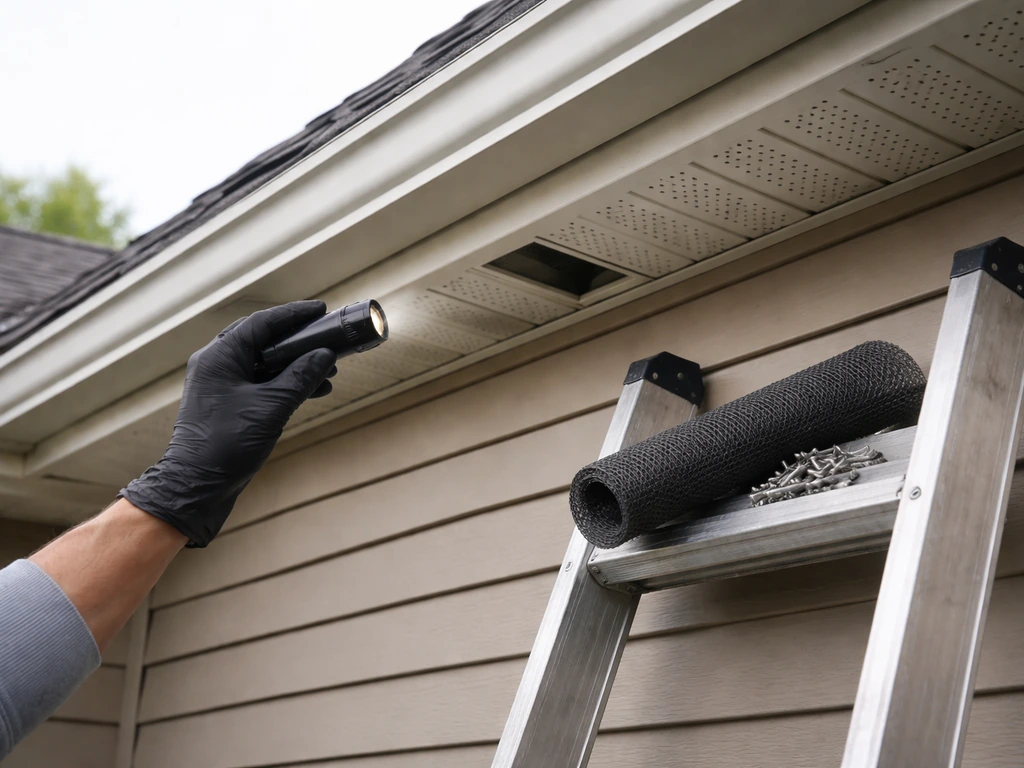
Under federal law, specifically the Migratory Bird Treaty Act (MBTA), you cannot destroy, move, or disturb an active bird nest that contains eggs or dependent young. You have to wait. Once the nest is truly inactive (no eggs, no chicks, no birds still depending on it for survival), you can remove it without a federal permit. That one rule covers the vast majority of situations homeowners run into.
Federal Law Bird Nests: What You Can and Can’t Do

Maya Bennett
23 May 2026
What federal law actually says about bird nests

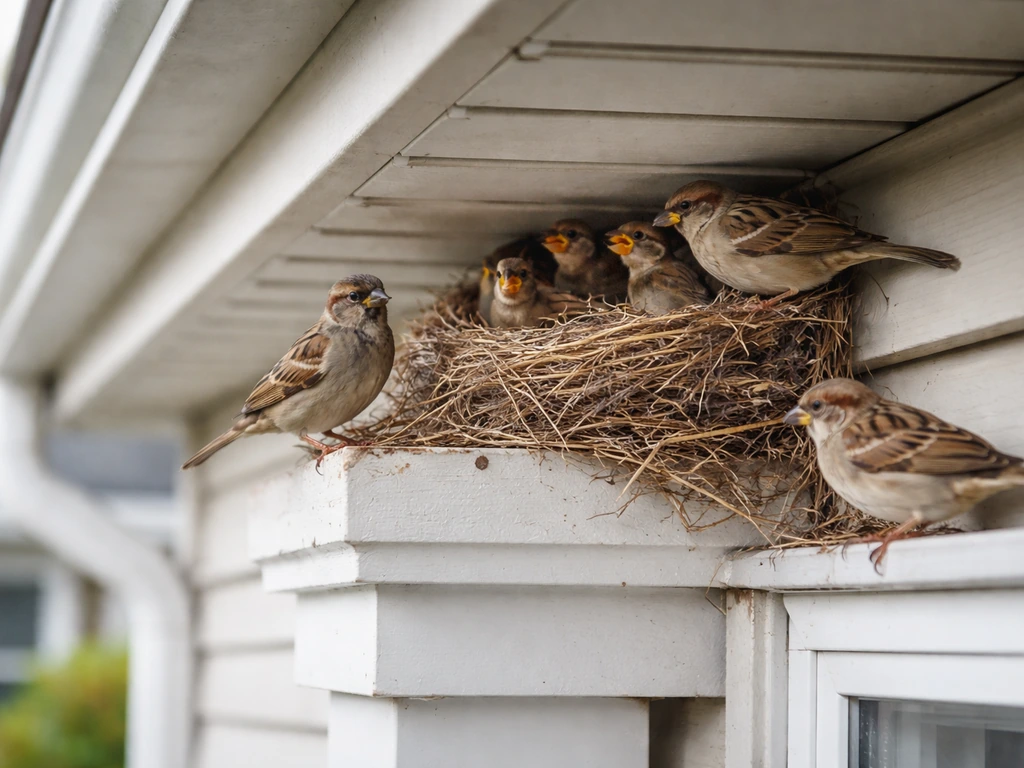
The Migratory Bird Treaty Act, originally passed in 1918 and still the backbone of federal bird protection today, makes it illegal to "take" migratory birds. Under 50 CFR § 10.12, "take" means to pursue, hunt, shoot, wound, kill, trap, capture, or collect, and that includes attempts. “Take” is defined in 50 CFR § 10.12 as to pursue, hunt, shoot, wound, kill, trap, capture, or collect, and it includes attempts take means to pursue, hunt, shoot, wound, kill, trap, capture, or collect, and that includes attempts.. USFWS policy extends this to nests: destroying an active nest with eggs or dependent chicks is treated as taking those birds. You do not need to physically touch a bird to violate the MBTA. Destroying the nest they depend on is enough.
The MBTA covers nearly all native North American bird species that migrate, which is a much longer list than most people expect. Robins, sparrows, swallows, wrens, warblers, doves, hawks, owls, hummingbirds, and hundreds more are all protected. The main birds not covered federally are non-native, invasive species: European starlings, house sparrows, and rock pigeons (common city pigeons). Those three species are not protected under the MBTA, which gives you more flexibility if you are dealing with one of them.
What counts as a protected nest
A nest becomes active under federal law the moment the first egg is laid. It stays active until the fledged young are no longer dependent on that nest for survival. That window can feel surprisingly long from a homeowner's perspective, especially with species that raise multiple broods per season or whose fledglings return to roost for several weeks after leaving.
An empty nest structure with no eggs and no birds actively using it for breeding is considered inactive. An inactive nest has no federal protection under the MBTA, and you can remove it. The confusion usually comes from nests in transitional states, so here is how to read the situation:
- Nest with eggs present: active, fully protected, do not touch.
- Nest with nestlings (small, featherless or partly feathered young): active, fully protected.
- Nest with fledglings that are still returning to roost or being fed by parents: still active, still protected.
- Empty nest that was used this season but fledglings have dispersed and parents are not returning: inactive, can be removed.
- Old nest from a prior season with no current use: inactive, can be removed.
- Nest under construction but no eggs yet: this is a gray area. Technically no eggs means no federal trigger yet, but USFWS guidance strongly recommends against disturbing it, and some state laws do cover nests at this stage.
Real-life situations and what you can and can't do
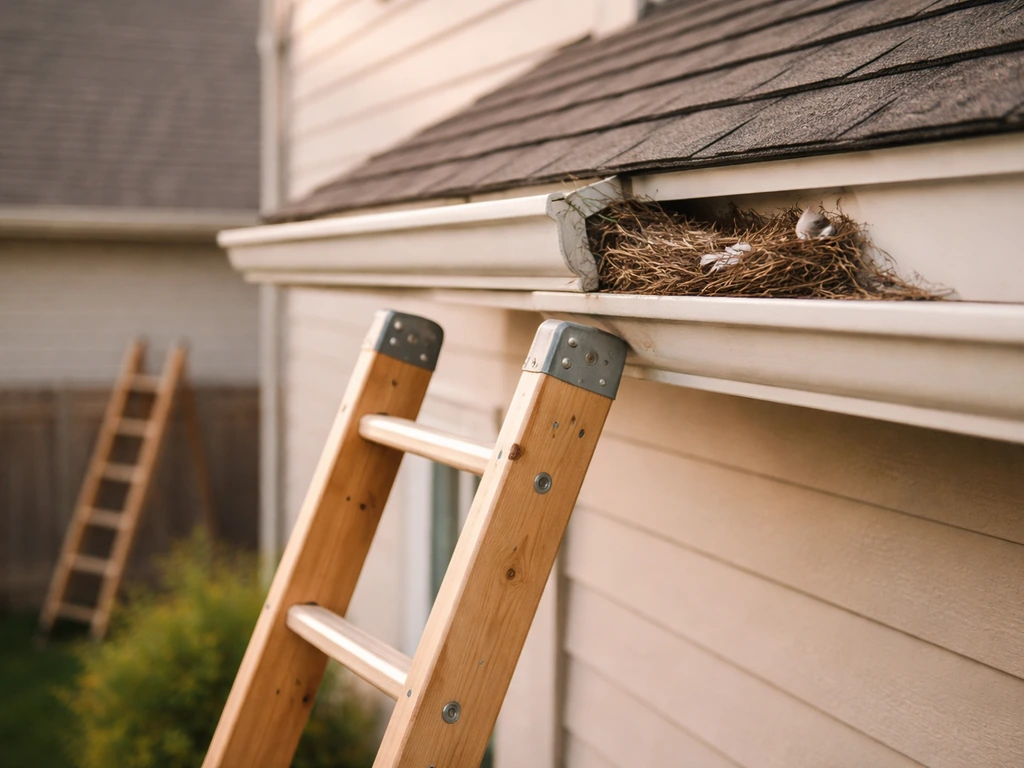
Most homeowner questions fall into a handful of recurring scenarios. Here is honest, practical guidance for each one.
| Situation | Active nest present? | What federal law allows |
|---|---|---|
| Roof or gutter repair, nest tucked in eave | Yes (eggs/chicks) | Wait until nest is inactive before doing repair work in that area. |
| Tree trimming or landscaping, nest found mid-job | Yes | Stop work immediately. Resume after nest is inactive. |
| Chimney sweep or cap installation | Yes (swallows, swifts) | Wait. Chimney swifts are federally protected and commonly nest in chimneys. |
| Attic work, nest found in insulation | Yes | Pause work in that zone. Seal other entry points, but leave nest area accessible to birds. |
| Porch or deck renovation, nest on rafter | Yes | Delay work on that section. Other sections away from the nest can often proceed. |
| Mowing lawn, nest found in grass | Yes (ground nesters) | Leave a buffer around the nest. Mark it if needed. Resume mowing after fledging. |
| Nuisance birds nesting repeatedly in same spot | Inactive (off-season) | Remove old nest. Then install exclusion measures before birds return next season. |
| Bird nest on HVAC unit or equipment needed for safety | Yes | Contact a licensed wildlife control operator or USFWS for guidance. Safety emergencies can involve permit pathways. |
| Non-native species (starling, house sparrow, pigeon) nest | Any stage | No MBTA protection. You may remove it, though local ordinances may vary. |
One situation worth calling out specifically: accidentally disturbing a nest during normal yard work. If you were mowing or trimming and unknowingly displaced eggs or chicks, the key thing is to stop, assess, and if possible gently return displaced eggs or chicks to the nest without prolonged handling. The "birds reject young touched by humans" idea is largely a myth. Parent birds rely on sight and sound to locate their young, not smell, and most will return to a restored nest. Document what happened with photos if eggs or chicks were displaced.
Step-by-step: how to handle it today
Walk through these steps in order before making any decision about the nest.
- Confirm nest presence. Before any work near a structure, physically check for nests. Look in eaves, gutters, on rafters, inside vents, in shrubs or dense vegetation, in corners of porches and garages.
- Take photos immediately. Document the nest location, any eggs or chicks visible, and the surrounding area. You want this record if you need to consult a professional or agency later.
- Identify the species if you can. Even a rough ID helps. Look at bird size, coloring, and nest materials. Apps like Merlin Bird ID can help. Knowing whether you are dealing with a protected migratory species or a non-native invasive bird changes your options.
- Determine nest status. Active (eggs or young present) or inactive (empty, no current use)? If active, stop any work near the nest and move to step 5. If inactive, you can remove it and proceed.
- If active, pause work in that area. Identify the smallest possible work zone you need to delay. You may be able to continue other parts of a project away from the nest.
- Estimate the timeline. Most songbird nests are active for 4 to 6 weeks total (incubation plus fledging). Many common backyard species fledge in as little as 10 to 14 days from hatching. Monitor the nest every few days from a distance of at least 10 to 15 feet.
- Once nest is inactive, verify no birds are returning. Watch the nest from a distance for two to three days before removal to confirm it is truly abandoned.
- Remove nest and clean the area. Wear gloves and a mask (nests can carry mites or other parasites). Bag and dispose of the nest material.
- Install exclusion measures immediately after removal to prevent the same situation next season.
Permits, exemptions, and when to call in help
For most homeowner situations, no permit is needed, because the correct action is simply to wait. Permits become relevant when waiting is genuinely not possible, such as when a nest poses a direct health or safety risk or when ongoing commercial activity is affected. In those cases, a Depredation Permit from USFWS allows otherwise-prohibited actions, but they are not handed out casually. You need to demonstrate that the situation causes significant harm and that non-lethal alternatives are not workable.
Two other federal exemption categories apply in limited situations: the Migratory Bird Depredation Order covers certain agricultural species, and federal agencies and utilities operating under specific incidental take frameworks have different rules. Neither of those applies to a typical homeowner.
Call a licensed wildlife control operator (look for NWCO certification) or contact your nearest USFWS regional office when: a genuinely urgent safety hazard exists involving an active nest, you cannot identify the species and are unsure of protection status, the nest involves a threatened or endangered species (which triggers additional protections under the Endangered Species Act beyond the MBTA), or you have already accidentally disturbed or removed an active nest and need guidance on next steps. USFWS regional offices can advise you without automatically treating your call as a violation report. It is almost always better to ask than to guess.
Keep in mind that professional bird nest removal services exist specifically for situations where removal timing and legal compliance need to be handled carefully. Orkin’s approach to nest removal depends on whether the nest is active, the species involved, and whether permits or exemptions are required. If you need bird nest removal law guidance, the timing, species ID, and exemption rules matter just as much as the physical removal itself. For many homeowners, understanding how much bird nest removal costs helps you budget and choose between waiting, DIY prevention, or hiring a professional how much does bird nest removal cost. Understanding the associated costs and professional options can help you plan if you are dealing with a recurring or large-scale problem.
Protecting nests ethically and excluding birds safely
Good nest protection during the active period is mostly about keeping your distance and reducing disturbance. The main threats to nesting success are predators and human interruption. Here is what actually helps:
- Stay at least 10 to 15 feet from an active nest. Repeated close approaches stress parent birds and can cause nest abandonment.
- Keep pets indoors or leashed and away from the nest area during the active period.
- Install a physical predator guard around ground-level or low nests if you can do so without getting close to the nest itself. A simple ring of wire fencing a few feet out from the nest helps deter cats.
- Do not add food or water directly next to the nest. It attracts both prey and predators.
- Avoid playing recordings of bird calls or distress calls near an active nest.
- If the nest is in a high-traffic area, temporarily reroute foot traffic or mark the zone with a simple sign for family members.
For exclusion (preventing birds from nesting in a specific spot next season), timing is everything. The moment a nest is removed and confirmed inactive, that is your window to act. Common exclusion approaches include: installing bird netting over eaves or rafters, adding physical deterrents like angled ledge strips or bird spikes to narrow ledges, sealing entry points into attics or vents with hardware cloth (make sure all birds have exited before sealing), and applying visual deterrents like reflective tape or decoy predators in areas with repeat nesting. None of these harm birds, and all are legal when applied to inactive nest sites outside the active breeding season.
Edge cases worth knowing about
Reused nests
Some species, including house wrens, bluebirds, and certain swallows, return to the same nest site year after year, and some will reuse the actual nest structure. If a nest was inactive all winter and a bird is now building on top of it or laying fresh eggs, treat it as a newly active nest with full federal protection. The age of the base structure does not matter. What matters is whether eggs or dependent young are present right now.
Multiple species using one structure
In rare cases, especially in large structures like barn eaves or old trees, you may find a protected migratory species nesting very close to or even in the same general area as a non-native, unprotected species like a house sparrow. The practical rule is: handle each nest individually based on the species using it. The presence of an unprotected sparrow nest nearby does not give you permission to disturb the protected wren nest six inches away.
State and local rules add another layer
Federal law is the floor, not the ceiling. Many states have their own bird protection statutes that equal or exceed MBTA protections, and some extend protection to nest structures even before eggs are present. California, for example, has the Fish and Game Code which protects nests and eggs of virtually all wild birds. Local ordinances sometimes add further restrictions, particularly in municipalities with urban wildlife programs. Always check your state wildlife agency website and your local code in addition to federal rules. A migratory bird nest removal permit under federal rules, for example, does not automatically satisfy state-level requirements.
Window, utility, and porch conflicts
Nests built on or against utility equipment, in meter boxes, or on window sills create recurring conflicts because the location itself is often a permanent problem. The right sequence is still the same: wait out the active season, remove the nest once it is inactive, then install deterrents immediately. For utility equipment specifically, contact your utility provider. Many electric and cable companies have their own protocols for bird nest conflicts on their equipment, and some have agreements with wildlife agencies for handling these situations legally.
The bottom line across all these edge cases is that federal law gives you one consistent answer: if there are eggs or dependent young, stop and wait. When in doubt about species identity, state rules, or true nest status, a quick call to your USFWS regional office or a certified wildlife professional is always the safest move. Getting the facts right from the start takes far less time than dealing with the alternative.
FAQ
What if I only scrape off debris around the nest but do not touch the eggs or chicks?
Under the MBTA, actions that disturb an active nest can still count as illegal taking, even if you never touch eggs. If your work moves nest material, changes the nest location, or causes adults to abandon the brood, stop and treat it as a disturbance, then only resume after the nest is confirmed inactive.
Does the law apply if the nest is on my own property but the bird is nesting on utility equipment or a transformer?
Yes. Federal protection attaches to the nest based on the species and whether it is active, not based on who owns the equipment. For utility-owned installations, you should contact the utility provider because their bird conflict protocols and coordination with wildlife authorities can be required, and they can also handle the legal timing more safely.
How can I tell whether fledglings are still dependent if they look “almost grown”?
A nest is still considered active until dependent young are no longer using it for survival. Signs include begging calls from the adults, frequent return trips by the parents, and juveniles using the same nest cup or nearby nest area for shelter. If you see juveniles still relying on the nest site, treat it as active and wait.
Can I remove an empty nest immediately, or do I need to confirm it has been empty for a certain time?
Federal law hinges on whether eggs or dependent young are present, not on how long the nest has been empty. Practically, you still need to verify there are no active uses, so do a brief observation period and look for adult return behavior before removal.
What if I accidentally break an egg or injure a nestling while moving a branch or trimming a hedge?
Stop right away and do not attempt further “fixes” to the nest. This is a common homeowner mistake, and the safest next step is to contact a USFWS regional office or a licensed wildlife control operator promptly for guidance on what occurred and what to do immediately, especially if the species is unknown.
If a nest is active, can I relocate the nest to another spot on my property?
Relocation generally is not allowed for active nests with eggs or dependent young because it is treated as disturbing or taking. The article’s general rule still applies: if it is active, you wait for confirmed inactivity, then consider exclusion measures to redirect future nesting.
Are nests protected even if the species is a rare or threatened migratory bird?
Yes, and the risk increases because you may also trigger additional protections under the Endangered Species Act. The article notes to contact USFWS when the nest involves a threatened or endangered species, because the permitted pathway and reporting expectations can differ from a standard MBTA scenario.
Does “federal law bird nests” also cover nests that were started but no eggs were laid yet?
For MBTA purposes, a nest becomes active the moment the first egg is laid. However, some states go beyond federal law and can protect nests and eggs earlier than you might expect, so you should still check your state and local rules before acting if eggs are not present but birds are actively building.
What should I do if I cannot identify the bird species and I’m not sure whether it is migratory?
When species identity is uncertain, the safer approach is to assume it may be protected and delay removal until you can confirm inactivity. The article recommends contacting your USFWS regional office or a certified wildlife professional, which is especially useful when identification drives whether additional exemptions apply.
Can I use deterrents like reflective tape or spikes while a nest is active to get the birds to leave faster?
Often you should not apply exclusion directly to an active nest because attempting to make the birds abandon active breeding can be viewed as disturbing. The safer sequence is to wait until inactive, then install deterrents immediately after removal and confirmation.
If I hire a wildlife control operator, how do I make sure they are following the law?
Ask whether the operator can confirm the nest status (active versus inactive), identify the species, and explain what they will do if a protected species is involved. The article also suggests using an NWCO-certified operator, and it is reasonable to request documentation of their process for timing and legal compliance.
Do state rules ever make removal illegal even after the nest is inactive under federal law?
Yes. Federal MBTA rules can be the baseline, and some states or localities protect nest structures more broadly, including during parts of the breeding cycle. The practical step is to check your state wildlife agency and local ordinances even if you believe the nest is inactive federally.
What if multiple nests are on the same structure, and one is active but another looks abandoned?
Handle each nest individually based on what is active right now. The article’s rule about treating a protected nest separately from nearby unprotected ones applies similarly within the same structure, so you should not remove the “abandoned-looking” one if there is any active nest in the same immediate area that could be disturbed.
Next Article
Does Orkin Remove Bird Nests? What to Expect and Ask
Find out if Orkin removes bird nests, what’s allowed by law, and what to ask for safe, exclusion-based fixes.