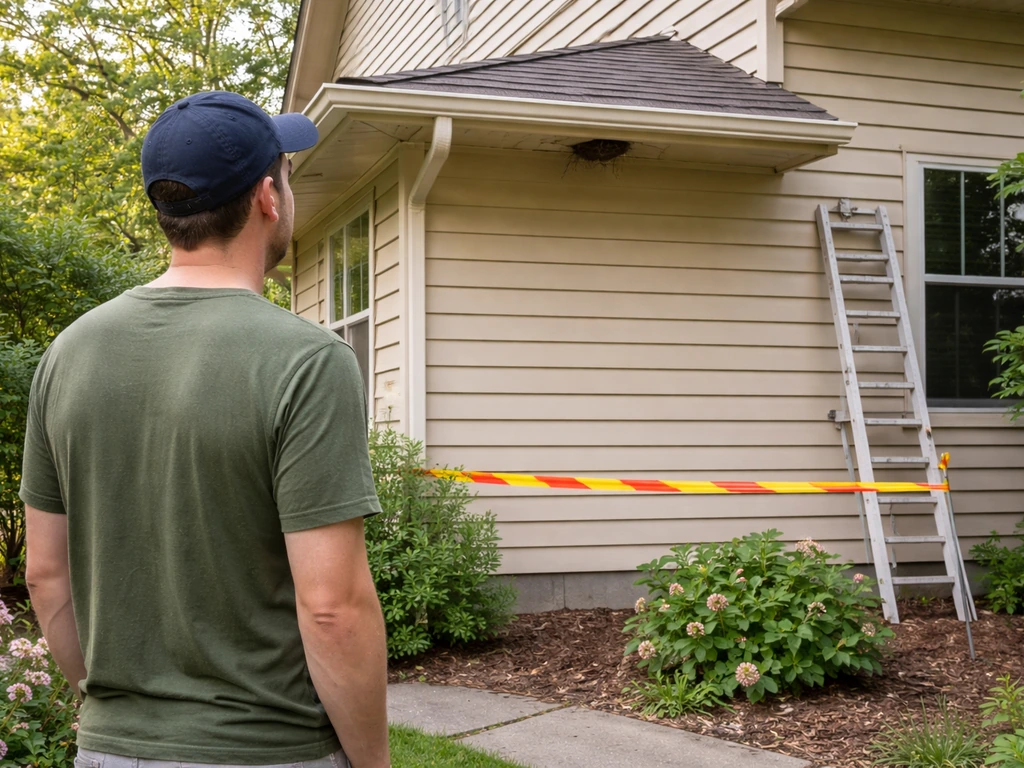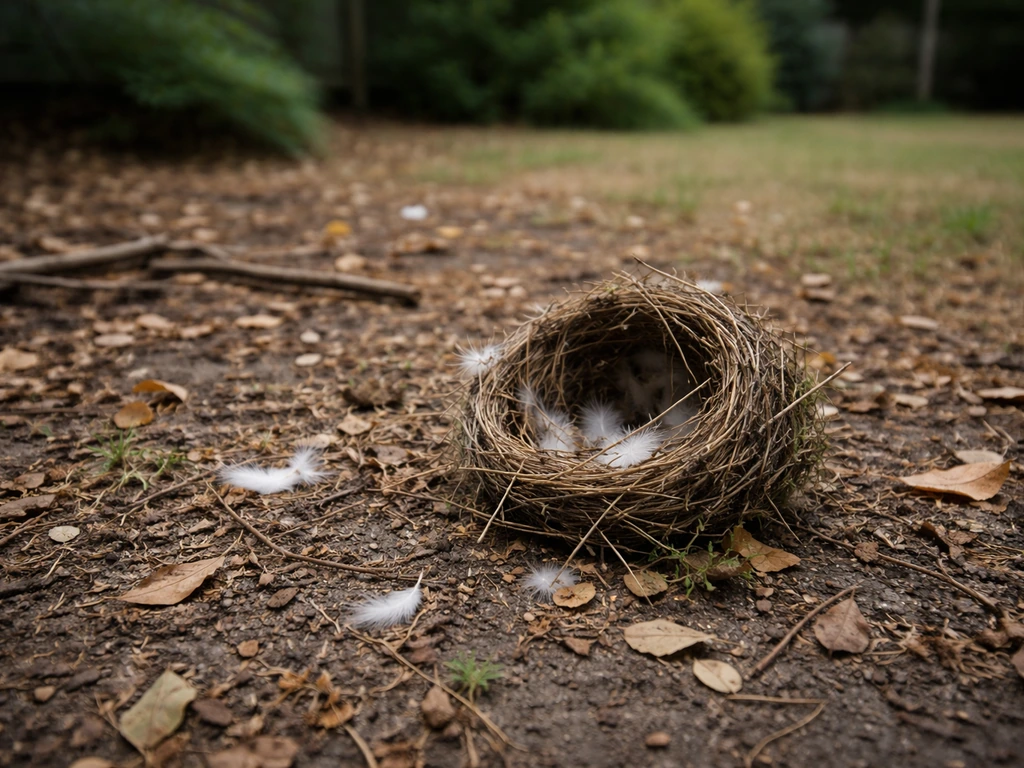
Bird nests get destroyed by a surprisingly short list of repeat culprits: cats, raccoons, snakes, squirrels, crows, jays, and other birds of prey account for the majority of predation events, while storms, flooding, and extreme heat or cold handle most of the weather-related failures. Human activity rounds out the top three, covering everything from mowing over ground nests to trimming shrubs during active nesting season. Figuring out which of these hit your nest is usually possible just by reading the evidence left behind, and once you know the cause, you can take targeted steps to protect what's there now and prevent the same loss next season. If you need to remove or clean a bird nest from a chimney, the safest approach is to identify whether it is active and then use exclusion and professional help when required.
What Destroys Bird Nests: Causes and How to Protect Them

What actually destroys bird nests: the full threat list
Predators
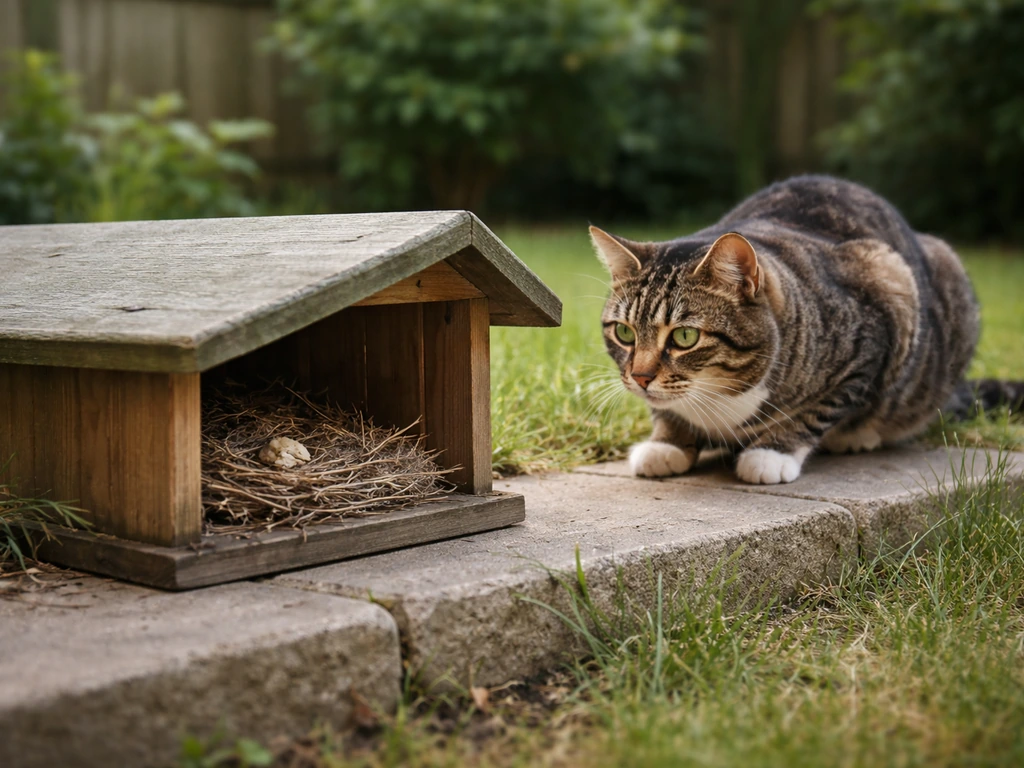
Predation is the single biggest cause of nest failure in most yard settings. Domestic and feral cats are particularly devastating because they are patient, low-profile hunters that can return to the same nest repeatedly. Raccoons are strong climbers and will physically dismantle cup and platform nests to reach eggs or nestlings. Snakes (particularly rat snakes and black racers in North America) are adept climbers and can clean out a cavity nest or nest box without leaving obvious structural damage. Squirrels and chipmunks raid nests opportunistically, especially when food is scarce. Corvids like crows and blue jays are intelligent, bold nest predators that will watch a nesting site from a distance and strike when the parent is away. Hawks and owls tend to take nestlings or fledglings rather than destroying the physical nest structure.
Weather and environmental stress
Severe weather is the second major threat category. High winds can knock loosely attached cup nests out of forks or off ledges, and sustained rain can saturate a nest, causing it to collapse or triggering hypothermia in young nestlings. Flooding destroys ground nests almost instantly. Heat waves are dangerous during the narrow window between hatch and fledging, when nestlings cannot thermoregulate and can overheat rapidly. Cold snaps during that same window are equally lethal. Cornell Lab research via NestWatch data confirmed that temperature variability tied to climate change is increasing the rate of nest failures for songbirds, and that extreme events in that brief post-hatch window are especially deadly. Prolonged drought also plays an indirect role by reducing food availability, causing parents to spend more time off the nest foraging and leaving eggs and chicks exposed.
Human activity and habitat disturbance
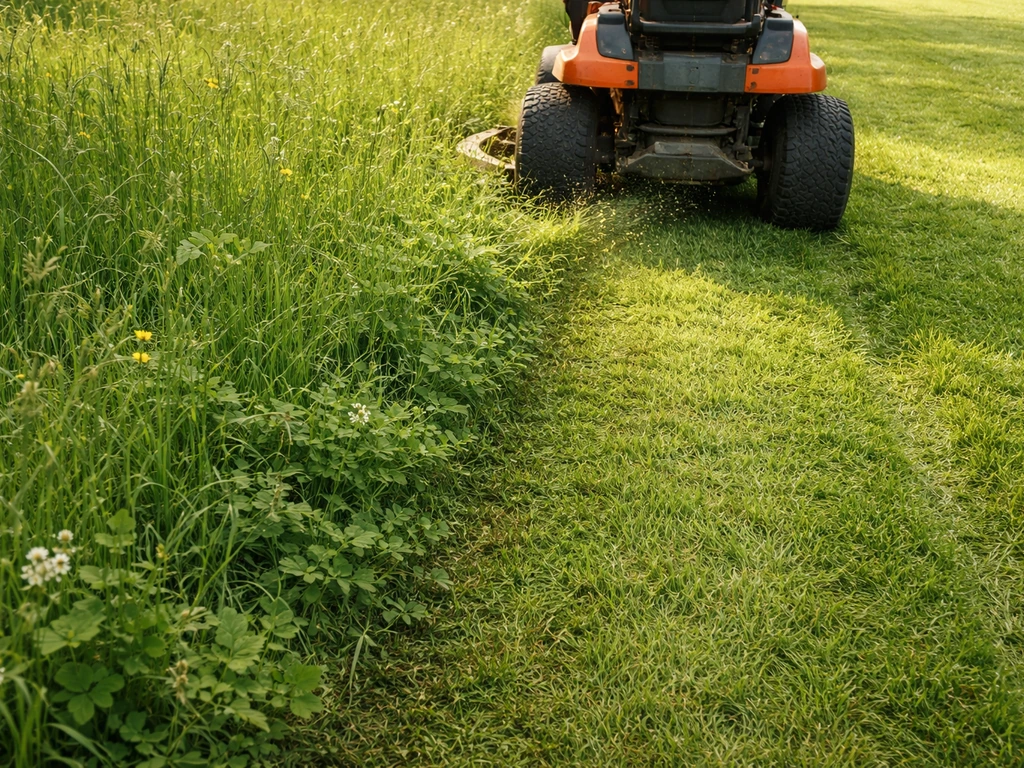
People destroy far more nests than they realize, mostly by accident. Mowing over ground nests is one of the most common causes of nest loss in grassy yards and meadows, particularly in May and June when many ground-nesting species are actively breeding. Ohio DNR guidance for grasslands notes that mowing during the nesting season can harm wildlife and can lead to loss of eggs or nestlings, and some federal programs restrict mowing from March 1 to July 15 Mowing over ground nests is one of the most common causes of nest loss. Trimming hedges and shrubs during nesting season dislodges cup nests. Construction and heavy landscaping can demolish stick nests or cavity nests in trees slated for removal. Pesticide and herbicide use near nesting sites kills the insect prey that parent birds rely on to feed nestlings, which can cause indirect starvation. Repeated human visits to photograph or observe a nest can stress adults into abandoning it, or can create a scent trail that leads predators directly to the site. Yard chemicals that pool near ground nests can contaminate them as well.
Disease, infestation, and parasites
Heavy parasitic loads, particularly from blowfly larvae, mites, or lice, can weaken nestlings to the point of death and sometimes cause parents to abandon a nest. Mold and bacterial growth in a waterlogged nest can kill eggs and chicks quickly. Ants, wasps, and bees occasionally colonize nest boxes or platform nests, driving parents away. These threats are less common than predation or weather, but they are worth checking for, especially if the nest appears undisturbed but the outcome is still poor.
Reading the scene: how to identify why a nest was destroyed
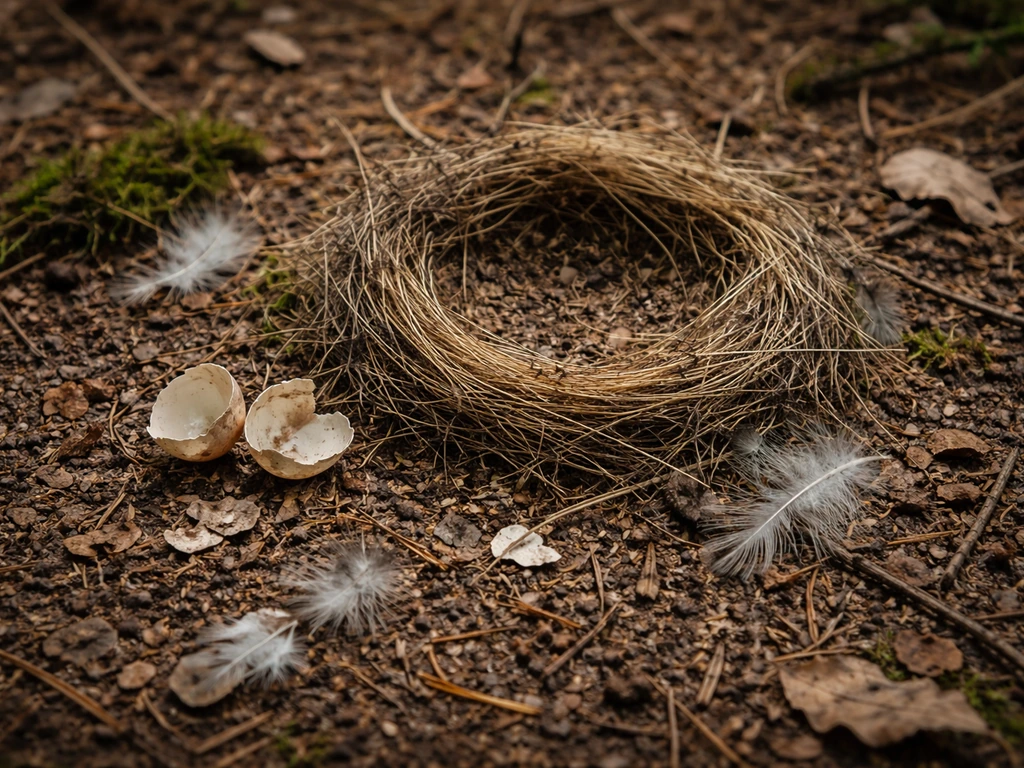
Before you do anything, take a few photos of the nest and the surrounding area. You want a record, and the details you see in the first few minutes are often the most diagnostic. Here is what to look for based on cause.
| What you find | Most likely cause |
|---|---|
| Eggs cracked or missing, feathers or blood nearby, claw or bite marks on nest rim | Mammalian predator (raccoon, cat, opossum) |
| Eggs gone without structural damage, possibly a shell fragment nearby, cavity nest cleaned out | Snake predation |
| Eggshells pecked open with rough, jagged holes, fragments scattered nearby | Avian predator (crow, jay, magpie) |
| Nest knocked to the ground intact or partially intact | Wind, branch failure, or physical disturbance (squirrel, large bird landing) |
| Nest saturated and collapsed, cup shape destroyed, eggs buried in debris | Heavy rain, flooding, or branch overload from storm |
| Nest in place but eggs or chicks cold and dead, no structural damage | Cold snap, heat wave, or abandonment due to disturbance |
| Nest intact, larvae or maggots visible, chicks weak or dead | Blowfly or parasite infestation |
| Nest flattened or shredded, no eggs or birds, mow lines visible | Mowing or mechanical landscaping |
| Nest in place, adults gone, no clear trauma | Human or pet disturbance causing abandonment; also check NestWatch guidance because parents may still be returning during early incubation |
One important caution: a nest that looks abandoned often is not. NestWatch points out that parent birds visit much less frequently during the laying and early incubation stage, and only ramp up visits once eggs hatch and nestlings need constant feeding. Do not assume the nest is dead just because you have not seen an adult in a few hours. Watch quietly from a distance for at least 30 to 60 minutes before drawing any conclusions.
Immediate steps to protect an active nest right now
What to do
- Keep cats and dogs inside or on a leash away from the nesting area. Cornell Lab identifies this as one of the most effective single actions you can take for bird safety.
- Restrict human foot traffic within 10 to 15 feet of the nest if possible. Mark the zone with a small stake or garden flag so family members know to go around.
- Reduce your own visits to the area. Brief, infrequent checks (once every few days from a distance) are far less disruptive than daily close-up checks.
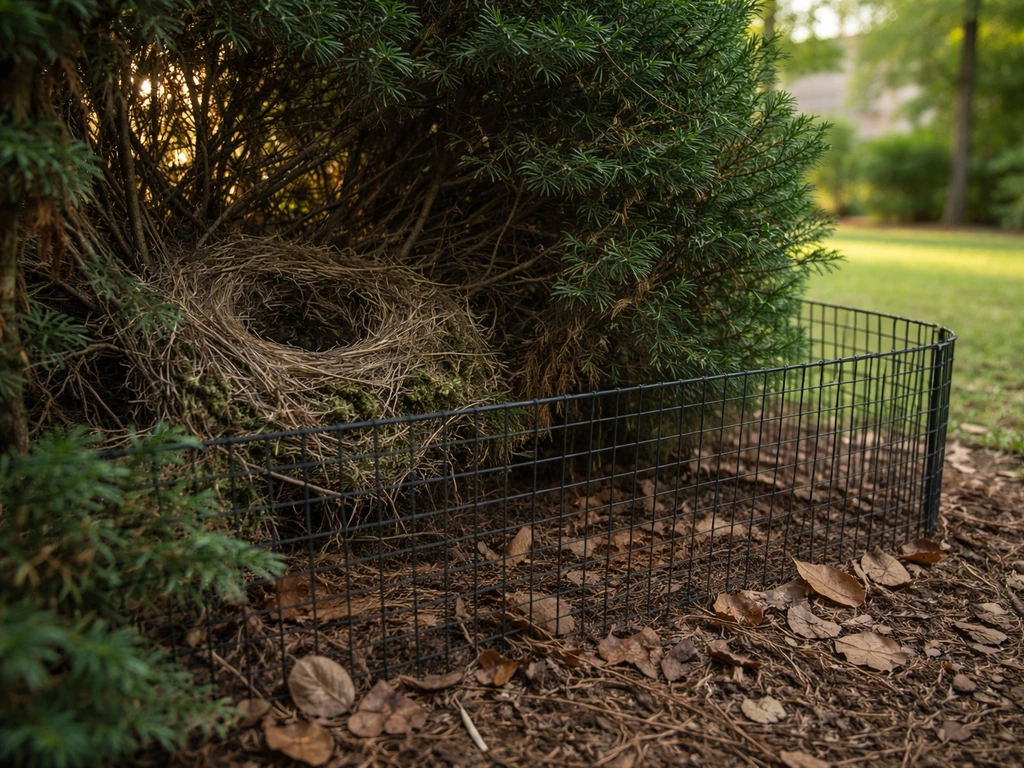
- If the nest is in a low shrub or on a ledge exposed to a known cat route, loosely drape hardware cloth or a section of chicken wire into a cylinder around the plant or ledge base. Keep it wide enough that the parent can fly in and out freely.
- If a nest box is being raided by raccoons or squirrels, add a stovepipe or cone baffle to the pole below the box immediately.
- Document everything with photos rather than physical handling. This protects you legally and gives you useful data.
What not to do
- Do not handle eggs, nestlings, or the nest structure itself unless guided by a licensed wildlife rehabilitator. Handling an active nest is illegal under federal law for most native species.
- Do not try to relocate a nest on your own, even with good intentions. Moving an active nest almost always results in abandonment.
- Do not set traps for predators without checking local regulations. Trapping raccoons, squirrels, or other mammals is regulated in most states and may require a permit.
- Do not spray pesticides, repellents, or chemical deterrents directly on or near an active nest.
- Do not repeatedly photograph or share exact nest location publicly. This attracts more human traffic, which increases disturbance and can create a predator trail.
Ethical options when a nest is failing or dangerously placed
Sometimes a nest is in a genuinely unsafe location: on the ground in a high-traffic area, inside a piece of equipment that needs to run, on a structure that has to be worked on, or in a spot being hit repeatedly by a predator. Your options depend on whether the nest is active (eggs laid or chicks present) or inactive.
Exclusion and modification (the first tool to reach for)
Exclusion means making the area less accessible to the threat without touching the nest. For predator problems, this could mean adding a baffle to a nest-box pole, pruning back a branch that gives a cat or raccoon a direct route to the nest, or placing a physical barrier around the base of a shrub. For human disturbance, this means marking the zone, adjusting your mowing schedule, or temporarily rerouting foot traffic. Audubon specifically recommends contacting a wildlife rehabilitator rather than attempting DIY interference when a nest is in a building or structure, because they can advise on species-specific timing and legal options.
Waiting it out
Many nesting cycles are shorter than people expect. Most songbird nests go from egg laying to fledging in 25 to 35 days. If the nest is in a mildly inconvenient but not dangerous location, the most ethical and practical move is often to work around it for a few weeks. Adjust your mowing schedule, delay trimming that hedge, or cover that piece of outdoor equipment temporarily. This is especially true in April and May when nest density in most North American yards is at its highest. If you are dealing with a Days Gone situation, you may need to manage or destroy bird nests by targeting the specific locations birds use before they become a problem days gone how to destroy bird nests.
When relocation or removal must happen
If a nest genuinely must be moved because of construction, safety, or health concerns, the legal path involves contacting a licensed wildlife rehabilitator or your state wildlife agency. If you end up needing to remove a bird nest because it must be handled for safety or health, contact a licensed wildlife rehabilitator first to stay legal and species-appropriate. Under the Migratory Bird Treaty Act, moving or disturbing an active nest without a federal permit is illegal for most native species. USFWS guidance defines an active nest as one in which the first egg has been laid and which remains active until fledged young are no longer dependent on it. A nest under construction with no eggs yet, or one that has been confirmed empty and abandoned, falls outside that protection. Even then, documenting the situation and making a call to your local wildlife agency before acting is the safest approach. If the nest falls during a storm or is knocked loose accidentally, that is a different situation covered further in related guidance on what to do when a nest falls from a tree. If you are dealing with a nest that is stuck overhead or needs to be taken down safely, review guidance on how to get a bird nest down before taking any action. If a nest falls from a tree, you can usually focus on stabilizing the situation and preventing repeat disturbance while you determine whether the birds are still present and dependent. If you knock down a bird nest, the next steps depend on whether it was active and on your local wildlife laws knocked loose accidentally.
Preventing repeat nest loss in your yard
Predator-proofing without trapping
- Mount nest boxes on smooth metal poles with a cone or stovepipe baffle at least 4 to 5 feet off the ground, and position them away from fence lines, branches, or structures that provide a climbing route.
- Keep cats indoors full-time, or build a catio that prevents yard roaming. This single step has an outsized impact on predation rates.
- Use motion-activated lights or sprinklers near ground-level nest sites to deter nocturnal mammals like raccoons and opossums.
- Remove or secure outdoor food sources (pet food, compost, birdseed spillage on the ground) that attract nest predators to your yard in the first place.
- Plant dense, thorny shrubs like hawthorn or pyracantha near nest sites to make mammalian predator access harder.
Habitat and yard changes that reduce loss
- Let a section of your lawn or meadow area go unmowed through July. Ground-nesting species like killdeer, meadowlarks, and various sparrows rely on tall grass cover.
- Delay hedge and shrub trimming until after mid-July in most of North America to avoid dislodging active cup nests.
- Reduce pesticide use, especially insecticides, within 50 feet of active nest sites. Most songbird parents feed nestlings almost exclusively on insects, and a chemical reduction in prey can cause slow starvation.
- Add native plantings that offer both nesting structure and food. Dense native shrubs serve double duty as nest sites and food sources.
- Install nest boxes designed for your local cavity-nesting species with the correct entrance hole diameter to exclude larger, competing species.
Seasonal timing calendar
Peak nesting season in most of North America runs from late March through late July, with the densest overlap of active nests in May and June. Schedule any major yard work (mowing, trimming, construction, tree removal) for late summer or fall when possible. If you must do work during nesting season, do a slow visual sweep of the area first, checking low shrubs, dense ground cover, and cavities before starting. Even a two-week delay on a hedge trim can be the difference between a successful brood and a failed nest.
Different nests, different vulnerabilities
Not all nests fail for the same reasons. The type of nest and the materials used tell you a lot about what threats to prioritize.
| Nest type | Common builders | Primary vulnerabilities | Key protection step |
|---|---|---|---|
| Ground nest (scrape or cup) | Killdeer, meadowlarks, towhees, many sparrows | Mowing, foot/pet traffic, flooding, mammalian predators | Mark with visible stakes; adjust mowing schedule; keep pets away |
| Shrub/cup nest | Robins, cardinals, catbirds, warblers | Trimming, corvid predation, wind exposure, cat access | Delay trimming; add loose wire barrier at shrub base if cat-active yard |
| Cavity nest (tree hole or nest box) | Bluebirds, wrens, chickadees, woodpeckers | Snake predation, squirrel raids, raccoon raids, parasites | Baffled mounting pole; correct entrance hole size; monitor for mites |
| Platform or open-cup nest on ledge | Robins, mourning doves, phoebes | Wind, rain, cat access, repeated human disturbance | Reduce foot traffic; consider weather shielding above if accessible |
| Large stick nest (tree canopy) | Raptors, herons, crows, magpies | Branch failure, wind, human tree removal | Avoid tree work near active nests; check for MBTA/eagle permit requirements before any work |
| Mud or cliff nest | Barn swallows, cliff swallows | Water damage, parasites, human removal from structures | Leave in place through season; address legally after nest is confirmed inactive |
Material composition matters too. Some birds incorporate snakeskin into their nests, and Cornell Lab research has found this may deter certain predators in cavity-nesting contexts, though the effect varies by predator type and environment. Mud-based nests like those of barn swallows become structurally fragile when repeatedly wetted and dried. Loosely woven nests in open, exposed locations are far more vulnerable to wind than tightly bound nests in sheltered forks. Knowing your nest type helps you focus protection where it actually counts.
Legal protections and when to call for expert help
In the United States, most native bird species and their active nests are protected under the Migratory Bird Treaty Act. The MBTA makes it unlawful to take, possess, or destroy a migratory bird or its nest or eggs without a federal permit. This covers the vast majority of songbirds, shorebirds, waterfowl, and raptors you will encounter in a typical yard or neighborhood. The key legal threshold is whether the nest is active: USFWS defines an active nest as one in which the first egg has been laid and that remains active until fledged young no longer depend on it. A nest under construction with no eggs, or one that is confirmed empty and abandoned, is not covered under the same protections, though you should still document before acting. Bald and golden eagle nests carry additional, stricter protections under the Bald and Golden Eagle Protection Act and cannot be disturbed, removed, or obstructed in any way without a specific federal permit, regardless of activity status.
For readers outside the US, similar protections exist in many countries. In the UK, the Wildlife and Countryside Act (1981) makes it illegal to intentionally damage, destroy, or remove any wild bird's nest that is in use or being built. Know your local law before taking any action beyond passive protection.
When to call a wildlife rehabilitator or agency
- You find injured or orphaned nestlings after a nest has been destroyed and cannot safely return them to the original nest site.
- A nest is in a location that poses a genuine health or safety hazard (inside a functioning HVAC system, above a doorway with heavy traffic, or inside equipment that must be used) and you need advice on legal removal options.
- You suspect a nest belongs to a raptor or eagle, which carry the strictest federal protections.
- A nest has been destroyed and you are unsure whether the cause was a reportable act (intentional vandalism or illegal activity) that should be reported to USFWS or your state wildlife agency.
- You have a repeat predation problem in a nest box and need site-specific advice on deterrents or monitoring.
Wildlife rehabilitators are licensed to handle situations that are illegal for members of the public, and most can advise by phone without requiring you to bring any birds or nests to them. Your state wildlife agency is the right call for any question involving legal compliance, permits, or reportable violations. When in doubt, make the call before you act, not after. The most common regret people have in these situations is acting quickly with good intentions and realizing later they crossed a legal or conservation line that a single phone call would have prevented.
FAQ
If I have not seen the parents in a few hours, does that mean the nest is abandoned?
Not necessarily. Adults often reduce attendance during laying and early incubation, so you can be fooled by long gaps in sightings. Look for indirect signs instead, such as eggshell fragments, fecal streaks on nearby surfaces, fresh lining material, or repeated visits at dawn and dusk, then wait quietly for longer before concluding the nest is abandoned.
What should I do if a nest appears empty but I cannot confirm eggs or chicks?
Yes. Even when a nest looks “empty” or neglected, it may still be active, especially if eggs are newly laid or the nestling stage has not started. Treat any nest with intact structure and protective lining as potentially active, document with photos, and check local guidance or call your state wildlife agency before you mow, trim, or remove anything.
How do I protect a nest from cats and raccoons without touching the nest?
Focus on reducing access, not handling. If you have cat predation risk, consider a safe feeding setup indoors or in a contained area, and use physical measures like cat-proofing steps and barriers that remove direct pathways to the nest. Avoid chasing, spraying, or directly disturbing the nest, because those actions can increase stress and draw more attention from predators.
After a storm or heat wave, when is it safe or helpful to check a nest?
Weather-related failures can happen even if you cannot predict them day-to-day. After a major storm or heat wave, check from a distance for signs of collapse, soaked materials, or unusually silent nestlings (only if you can observe without lingering). If the nest seems compromised, contact a wildlife rehabilitator for advice on whether stabilization is possible and legal in your area.
If the nest is inconvenient for yard work, is it better to wait or to use a workaround?
Schedule changes can be enough when the nest is in a low-traffic location. If the nest is active, delay hedge trimming and mowing, reduce foot traffic around the area, and switch to quiet, targeted work in other sections. Many nests fledge quickly, so a short delay (often days to a couple of weeks) can prevent total loss.
How can I prevent future nest failures in a birdhouse or nest box?
It depends on what the parents are using and whether the nest is physically vulnerable. For nest boxes, use proper box placement and predator guards designed for your local predators, check that the entrance is not oversized or easily reached, and keep the box clean only outside nesting season. Do not add sticky deterrents or poisons near the box, they can harm adults and nestlings.
How do I tell if parasites or mold are the cause of nest failure, and what should I do?
Some infestations are quick to miss. If you see parents acting erratically, nestlings looking unusually weak, or visible crawling mites and larvae, take photos and pause further disturbance. Contact a wildlife rehabilitator for next steps, because “cleaning” while active can worsen stress and can be illegal depending on species and nest status.
What if the same predator keeps returning to the nest location?
Yes, but you want to manage the cause and the pathway. If lighting attracts predators or humans, reduce direct illumination near the nest and keep trash and pet food secured. If a predator is repeatedly hitting the same spot, adding a barrier, rerouting access, and removing attractants (like accessible feeders) can reduce repeated strikes.
If construction work will proceed where a nest is located, what is the safest plan?
Do passive protection first. Mark the boundary, keep people and pets away, and avoid construction impacts like vibration and debris fall. If the nest sits in an area that cannot be left alone (ongoing demolition, overhead equipment, or active traffic), call a licensed wildlife rehabilitator or your state wildlife agency before any work resumes.
What should I do if a nest is knocked loose accidentally during yard work?
If the nest is active, the practical next step is to contact a wildlife rehabilitator and avoid DIY removal or relocation. If the nest knocked loose due to accidental damage, what you can do depends on whether eggs or nestlings are still present and whether local laws apply. Document exactly what happened, take photos, and let the rehabilitator advise whether temporary stabilization is appropriate.
After one nest fails, should I assume more nests will not use the area again?
It is generally too early to use a “don’t come back” approach. Many species can attempt another brood after a successful fledging, but repeated disturbances during active stages reduce the odds of success. If you want to prevent repeats, change the environment during the off-season (late summer to fall), such as adjusting mowing height, repositioning nest boxes, and removing convenient predator pathways.