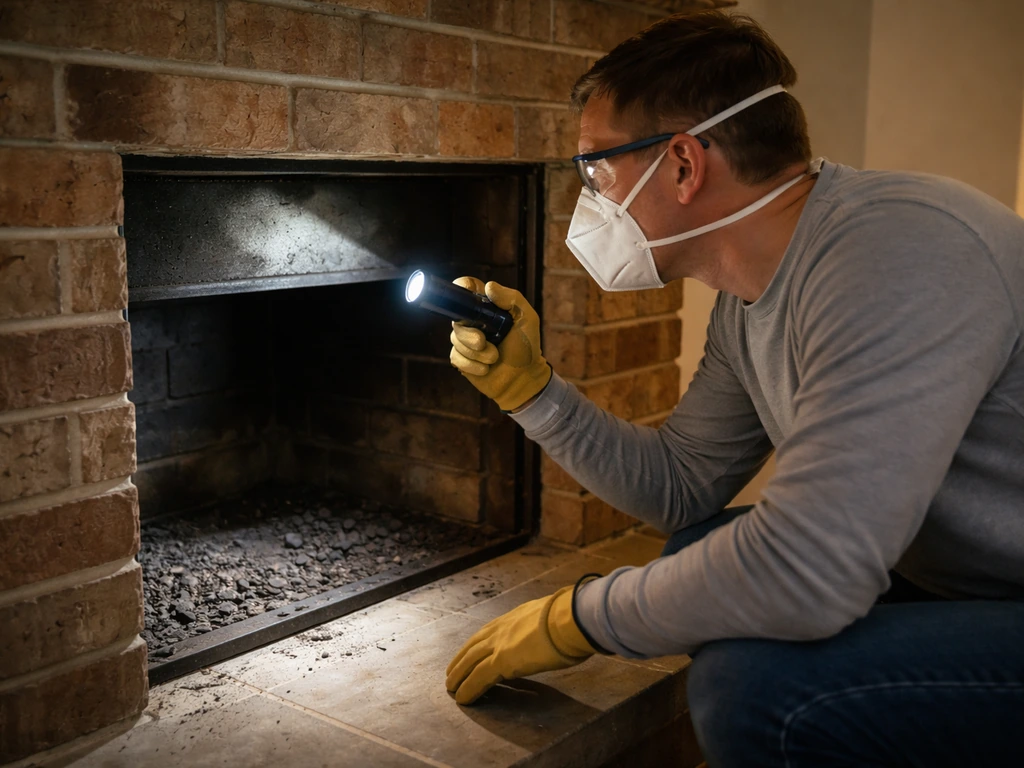
If you just knocked down a bird nest, stop what you are doing and do not touch anything yet. What happens next depends on whether the nest was active (eggs or chicks inside), where it landed, and how quickly you act. If there are eggs or live chicks on the ground, you have a narrow window to either safely return them or get professional help.
What Happens If You Knock Down a Bird Nest and What to Do Next

Maya Bennett
23 Apr 2026
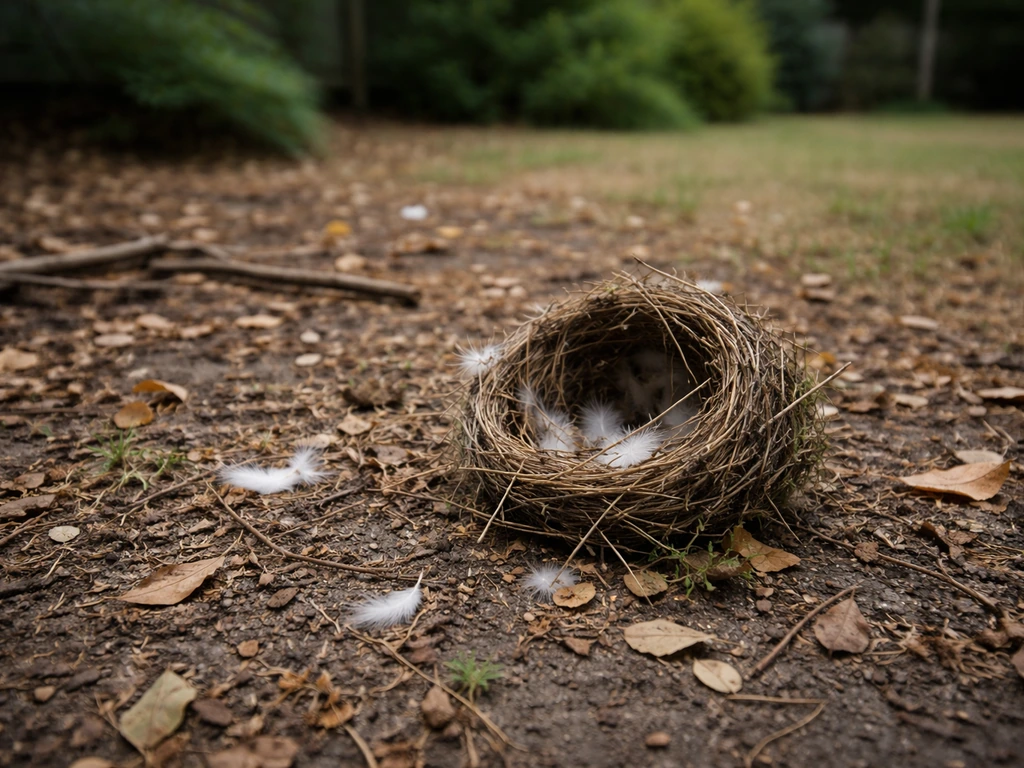
If you need step-by-step guidance on the rescue-or-leave-it decision, review what to do if a bird nest fell out of a tree safely return them or get professional help. Parent birds are almost certainly nearby, watching and waiting for you to leave. The biggest threats right now are cold exposure, predators, and human handling that makes things worse, not the act of touching the nest itself.
If you are wondering what destroys bird nests, remember the biggest threats are often predators, cold exposure, and human handling that makes things worse cold exposure, predators, and human handling.
What happens to eggs, chicks, and parent birds right now
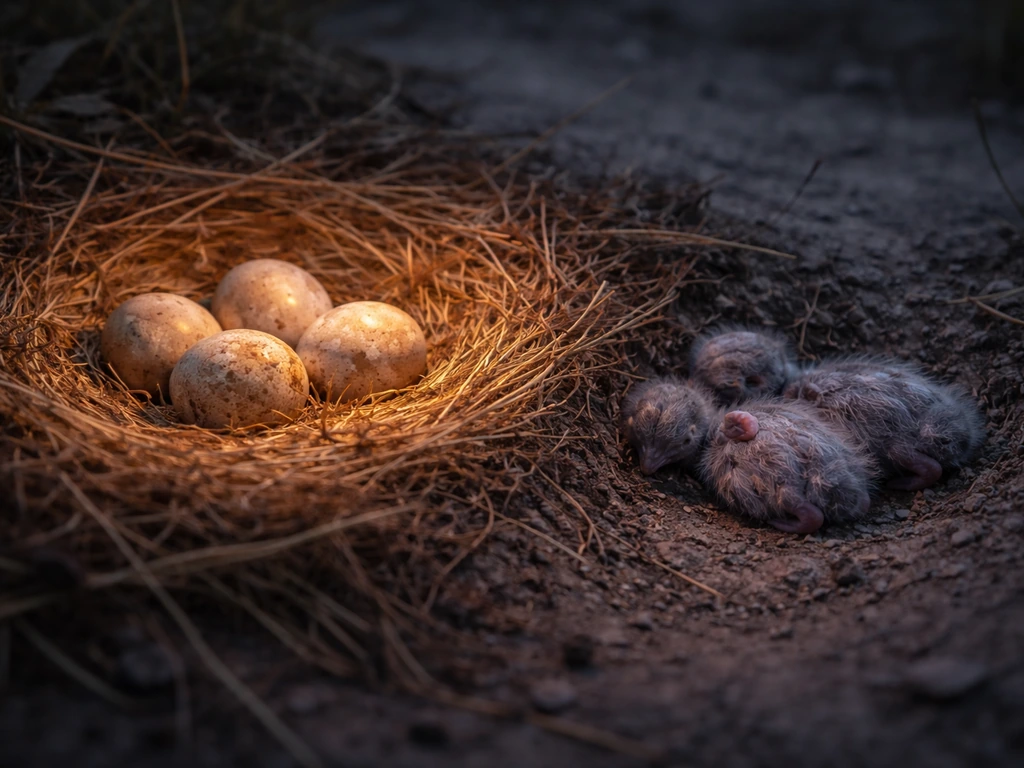
The moment a nest hits the ground, the clock starts on a few simultaneous problems. Eggs and nestlings (featherless or barely feathered chicks) lose body heat fast, especially in the early morning. Even a 15-to-20-minute cold spell can be fatal for very young nestlings. On top of that, a nest on the ground is immediately visible to cats, crows, raccoons, and other predators that were not a threat when it was elevated.
The parent birds almost certainly have not abandoned the situation. Birds are hard-wired to continue caring for their young, and most adults temporarily retreat when a human is present, then return once the disturbance stops. Touching the nest or eggs does not cause parents to abandon by scent alone. That is a persistent myth. What does cause true abandonment is repeated, prolonged disturbance that leaves adults unable to return safely. If you back off quickly, the parents are very likely to come back.
If the nest contained older chicks that are already feathered and hopping around, those are fledglings, not nestlings. Fledglings intentionally leave the nest and spend several days on or near the ground while their parents continue feeding them. They usually do not need intervention beyond keeping pets and curious kids away.
Is the nest active? Here is how to check safely
Before you decide on any course of action, you need to know what you are dealing with. Look carefully without picking anything up. An active nest will have at least one of the following: intact, uncracked eggs; live nestlings (warm, moving, or gaping for food); or visible signs of recent adult visits like fresh droppings on the rim or nearby perches. An inactive or abandoned nest typically looks flattened, weathered, or deteriorated, contains no eggs or chicks, and has debris inside from weather exposure.
If you are unsure whether a nest still in place is active, the guidance from NestWatch is worth knowing: many species visit only once per day to lay or incubate, so a couple of hours without seeing an adult means very little. You should wait and observe from at least 20 to 30 feet away for at least an hour before concluding the nest is abandoned.
NestWatch recommends waiting at least 20 to 30 feet away before concluding a nest is abandoned use monitoring at a distance where possible. NestWatch recommends waiting about four weeks from the last adult visit before officially calling a nest abandoned, though for a knocked-down nest the urgency of the situation usually shortens that window considerably.
- Active nest indicators: intact eggs (no cracks, not cold to touch after a few minutes), live nestlings that are warm and responsive, fresh droppings on or near the nest
- Inactive nest indicators: no eggs or chicks, nest structure flattened or moldy, interior filled with debris or dried leaves, no adult activity after extended observation
- Fledgling (not nestling): fully or mostly feathered, alert, capable of hopping or short flight, found away from the nest on purpose
What to do right now: the rescue-or-leave-it decision
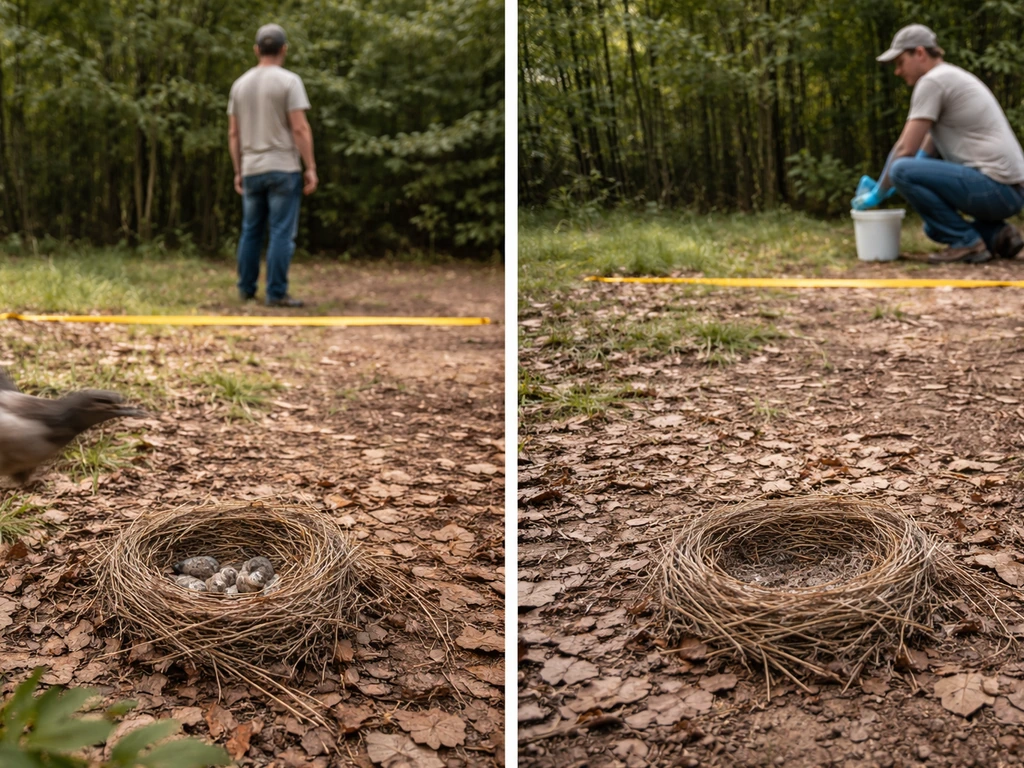
Walk through this in order. First, move away from the nest immediately and stay at least 20 to 30 feet back. If the nest is still in place and you are deciding whether to disturb it, also review this related checklist on how to remove a bird nest safely. Then assess what you can see without picking anything up. If you are dealing with a nest already knocked down in a tree, follow the safety and timing steps to minimize disturbance until the parents are likely to return how to get rid of bird nest in tree.
- If the nest is empty and clearly inactive, you can remove it. An inactive nest with no eggs or chicks is not protected in the same active-use sense, and once confirmed abandoned, it is generally safe to remove without legal risk. See the sibling guide on how to remove a bird nest for step-by-step detail.
- If the nest has eggs or live nestlings and the nest structure is intact, carefully place the nest back in the original location or as close to it as possible. Use gloves if you have them, but bare hands are not going to make parents reject the nest. Secure it with a small basket, hardware cloth, or string if the original support is gone. Back off and observe.
- If the nest is destroyed but eggs or chicks survived the fall, place them gently into a small container lined with dry grass, paper towels, or leaves (approximate the original nest shape) and attach it near where the original nest was. Do not use a sealed container and do not add water or food.
- If a chick is featherless (eyes closed, no feathers), it is a nestling and needs warmth immediately. Warm your hands and cup the bird gently; do not leave it on cold ground. Contact a licensed wildlife rehabilitator right away.
- If a chick is feathered and alert (a fledgling), place it on a nearby branch or shrub out of reach of ground predators and leave it alone. Watch from a distance to confirm parents return within an hour.
- If parents do not return within about one hour of you fully removing yourself from the area, contact a licensed wildlife rehabilitator.
The most important thing you can do for survival odds is minimize your own presence. Every minute you spend hovering reduces the chance that parents will return quickly.
The legal picture: what you can and cannot do
In the United States, the Migratory Bird Treaty Act (MBTA) makes it unlawful to take, kill, capture, or possess any migratory bird, or their parts, nests, or eggs, unless you have a federal permit. The vast majority of common backyard birds, including robins, sparrows, swallows, wrens, finches, and warblers, are protected under this law.
Destroying or relocating an active nest of a protected species without authorization is a federal violation, even if you did it accidentally during construction or yard work. If your goal is to handle it quickly, note that destroying or relocating an active nest is not the safe option, and you should instead look at days gone how to destroy bird nests as a contrast only, because the same legal and survival risks apply to real-world situations.
A 2025 USFWS memorandum specifically addresses the application of the MBTA to nest destruction and reinforces that active nest disturbance can constitute unlawful take.
In Canada, the Migratory Birds Convention Act, 1994 provides equivalent protections, with enforcement that recognizes nest disturbance as a sanctionable offence. The framework in both countries is designed to protect nesting birds at the species and individual nest level.
What this means practically: you cannot legally relocate an active nest yourself, keep eggs as specimens, or destroy an active nest to get work done faster. If you are a homeowner or contractor who needs to remove an active nest for construction or safety reasons, you need to contact the USFWS (in the U.S.) or Environment and Climate Change Canada before proceeding, or hire a licensed wildlife professional who can do so under permit authority. The safest legal path when you have already accidentally knocked one down is to attempt the renesting steps above, document everything, and contact a rehabilitator immediately.
Two categories of birds are not covered by the MBTA: European Starlings and House Sparrows. These non-native invasive species have no federal nest protections in the U.S., so active nest removal for those species is legally permitted. Rock Pigeons (feral pigeons) also lack MBTA protection. If you are certain of the species and it falls into one of these categories, you have more flexibility, but when in doubt, treat the nest as protected.
Who to call and what to document
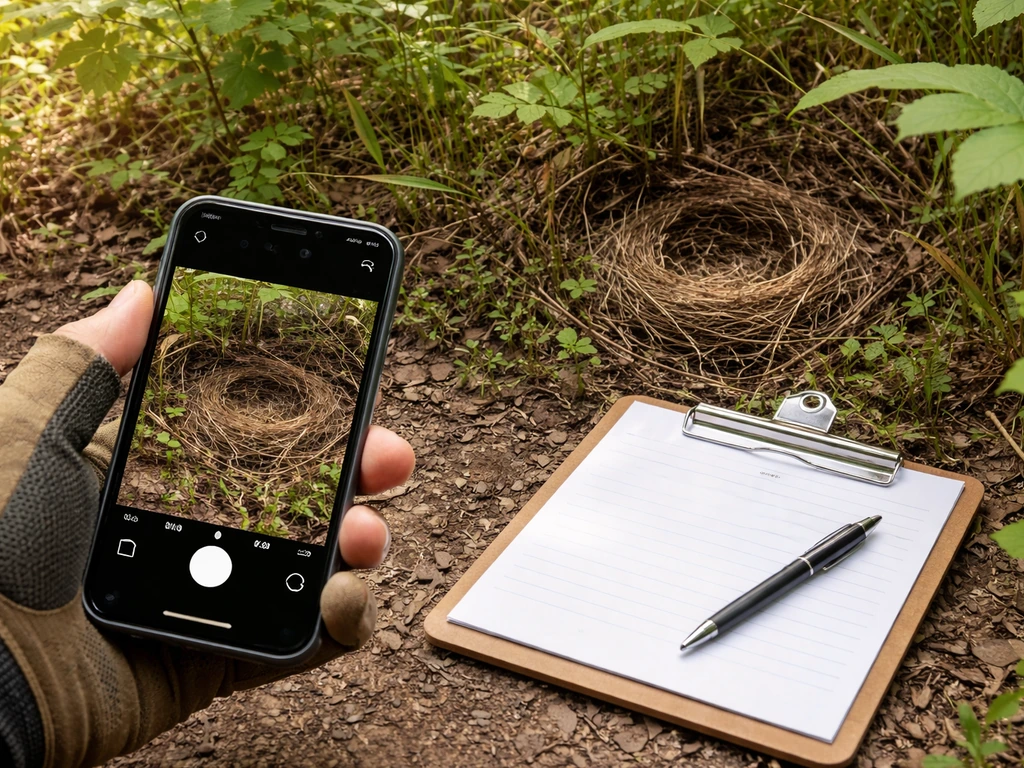
If there are injured birds, orphaned nestlings, or you are unsure about next steps, contact a licensed wildlife rehabilitator. In the U.S., you can find your nearest licensed rehabilitator through the USFWS website or through the National Wildlife Rehabilitators Association (NWRA) or International Wildlife Rehabilitation Council (IWRC) directories. Many states also have local Audubon chapters with hotline contacts. In Canada, contact your provincial wildlife agency or a licensed wildlife care facility.
While you are waiting or observing, take photos. Document the nest location (GPS coordinates or a photo showing context), the nest contents (eggs visible, number of chicks, approximate age or feather development), and the time of the incident. Note whether you can see or hear adult birds nearby. This documentation helps a rehabilitator give you accurate guidance over the phone and can be useful if there are any legal questions about what happened and when.
A good rule of thumb from Audubon: if parents have not returned after one hour of you staying completely out of the area, call a rehabilitator. Do not leave nestlings unattended overnight without making that call first.
What not to do: the most common mistakes
- Do not keep eggs or chicks. Possessing a migratory bird or its eggs without a permit is a federal offense in the U.S., even if your intention is to help.
- Do not try to raise a nestling yourself. Young birds imprint on whoever feeds them, which permanently reduces their ability to survive in the wild. This is exactly the problem licensed rehabilitators are trained to prevent.
- Do not relocate an active nest to a completely different spot in the yard. Moving it more than a few feet from the original location means parents may not find it.
- Do not assume the parents are gone because you have not seen them for 20 minutes. Adults stay away while humans are present and may be watching from cover.
- Do not put the bird in a sealed box or add food and water without guidance from a rehabilitator. Incorrect feeding (especially bread, worms, or water given the wrong way) can kill a nestling faster than the fall did.
- Do not delay. Cold exposure kills nestlings quickly. If you are going to act, act within minutes, not hours.
- Do not call Animal Control for a bird nest situation in most cases. AC is not equipped for wildlife rehab and may not respond usefully. Go directly to a wildlife rehabilitator.
What to expect by species and nest location
Where the nest was and what built it changes the situation meaningfully. Here is what to expect across the most common scenarios.
Tree and shrub nests
These are the most common nests homeowners encounter, built by robins, cardinals, Blue Jays, mockingbirds, sparrows, and dozens of other species. If the branch it was attached to is still accessible, wire or zip-tie the nest back to it. Parents are very likely to return, especially if the nest still contains chicks or eggs. Robins, for example, are persistent renesters and will often continue incubating even after significant disturbance as long as the nest is replaced nearby.
Eave, attic, and building nests
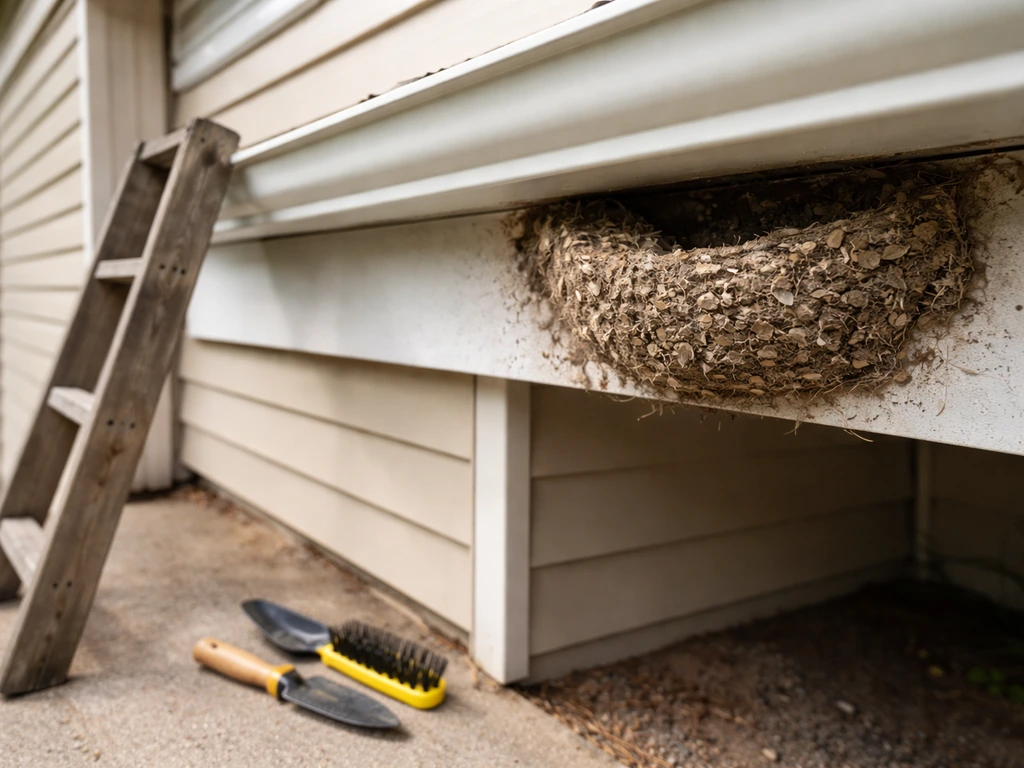
Swallows (Barn Swallows and Cliff Swallows in particular) are federally protected and frequently nest on buildings. Knocking down an active swallow nest is a textbook MBTA violation. Do not remove active swallow nests without a permit. If a nest has fallen accidentally, replace it immediately using a small cup or basket in the original spot. House Sparrows and European Starlings nesting in eaves are the exception and are not federally protected, though local ordinances may still apply.
Ground nests
Killdeer, Meadowlarks, Towhees, and many sparrow species nest on the ground. If you disturbed a ground nest while mowing or doing yard work, stop immediately. Mark the area with stakes or flags at a 6-to-10-foot radius to prevent re-disturbance. Ground-nesting species are especially vulnerable to pets and disturbance, and parent birds will often feign injury to draw predators away from the nest. Leave a clearly disturbed ground nest and its contents in place unless the eggs or chicks are physically displaced; then place them back in the depression.
Chimney nests
Chimney Swifts are the primary species that nest inside chimneys, and they are federally protected. If a Chimney Swift nest falls inside your chimney, it is a more complex rescue situation involving ladder access, limited visibility, and timing around whether the young can fly yet. This scenario is covered in detail separately in the guide on how to get bird nest out of chimney.
If you specifically need help dealing with a nest in or around a chimney, the next section walks you through safe steps how to get bird nest out of chimney. This chimney-specific guide will walk you through safe steps and what to do if the birds are still inside the guide on how to get bird nest out of chimney.
| Nest location | Common species | Parents likely to return? | Immediate priority |
|---|---|---|---|
| Tree or shrub | Robin, Cardinal, Sparrow, Jay | Yes, very likely if replaced nearby | Reattach nest to original branch or nearby fork |
| Building eave | Swallow, House Sparrow, Starling | Yes if replaced in same spot (protected species); discretionary for unprotected | Replace immediately; check species before removing |
| Ground | Killdeer, Meadowlark, Towhee | Yes, if humans stay away | Mark area, replace displaced eggs/chicks in depression, keep pets away |
| Chimney | Chimney Swift | Yes, but access is difficult | Contact wildlife rehabilitator or chimney specialist immediately |
| Hanging (pendulous) | Baltimore Oriole, Vireo | Yes if nest is rehung in same tree | Rehang nest from same branch with wire or string |
How to prevent this from happening again
Most accidental nest disturbances happen during predictable activities: pruning, mowing, roofing, gutter cleaning, and construction. The simplest prevention is a quick visual inspection before you start any outdoor work between late March and mid-August, which covers the peak nesting window for most North American species. Check shrubs, eaves, ledges, gutters, and low tree branches before you fire up the hedge trimmer or set up scaffolding.
USFWS guidance on land disturbance and vegetation clearing specifically recommends scheduling clearing and construction work outside of peak nesting season when possible. If you have a project that cannot wait, walk the work area at least 48 hours before starting and flag any active nests you find. That gives you time to contact the appropriate authority, adjust your work plan, or get guidance on a permit if removal is genuinely necessary.
If a specific spot on your property keeps attracting nesting attempts you cannot accommodate (like a security camera mount or gutter corner), install physical deterrents such as bird spikes or visual deterrents in the off-season, before birds begin scouting locations in late winter. Deterrents placed while a nest is active are not a solution and may create legal issues. Installing them in January or February for a March nesting season is the right approach.
If you want to encourage nesting in a better location, put up appropriate nest boxes for your local species. Species like bluebirds, chickadees, wrens, and tree swallows readily adopt nest boxes, which gives you much more control over where nesting happens and makes monitoring and protection far easier. A nest box mounted in a visible but undisturbed spot reduces the chance of accidental disturbance during normal yard activity.
Finally, if you are doing major home work like roofing, siding replacement, or attic renovation, schedule those projects for fall and winter when nesting activity is at its lowest. If birds have already built a nest in your work area, the legally and ethically correct path is to wait for the nesting cycle to complete (most passerine nests go from egg to fledgling in three to six weeks) before resuming work. It is a short delay that prevents a federal violation and gives a brood a real chance to survive.
FAQ
Can I put the nest back after it fell down, even if I touched it earlier?
Yes, in many common “accidental knockdown” cases you can still improve survival by replacing the nest or the displaced eggs/chicks in the original area, but only after you back away and reassess what is active. If the nest was active, avoid further handling, use a shallow cup to place items where they naturally sat, and keep pets and kids away until parents resume visits.
What if the parents do not return within an hour?
If adults have not returned after you have stayed completely out of the area for about an hour, contact a licensed wildlife rehabilitator promptly. Do not keep checking repeatedly or hover, because frequent disturbances can reduce return chances, especially with very young nestlings.
How do I tell eggs from “just debris” or old nest material?
Only treat it as active if you see intact/uncracked eggs, live nestlings that look warm and active (moving, gaping, or begging), or clear evidence of recent adult activity such as fresh droppings on nearby surfaces or the rim. If everything is flattened, weathered, and contains no eggs or chicks, it is more likely inactive.
Is it okay to spray water, warm the nestlings, or bring them inside temporarily?
Avoid giving baths or soaking anything. For very young nestlings, the best immediate action is minimizing exposure, reducing handling, and contacting a rehabilitator quickly. If you must wait for help, keep the area calm and protected from weather and predators, and follow the rehabilitator’s instructions rather than trying to “DIY” warming or housing.
Should I throw away or clean the ground area after I knock the nest down?
Generally no, not right away for an active situation. Cleaning up debris or moving contents can add extra disturbance and remove cues parents use to relocate the young. Instead, restrict access, keep observation from a distance, document the scene, and only clean after you confirm the nesting attempt is complete or professionals advise otherwise.
What if the nest fell into a garage, patio, or yard with lots of foot traffic?
Reduce disturbance immediately by blocking access to the exact drop zone, ideally keeping pets indoors and restricting people to a short, quiet viewing distance. If the young are visibly cold or displaced, treat it as urgent, contact a rehabilitator, and follow their guidance for whether to keep them in place versus re-positioning within the immediate area.
Can I move the eggs or nestlings to a nearby bush or safer spot?
Do not assume “nearby” is safe. Only re-position if they were physically displaced and you are trying to return them to the original depression or immediate natural placement, using minimal handling. If you are unsure whether the nest is active or if the species is protected, get professional guidance before moving anything further.
Does touching the nest cause the parents to reject the babies?
Usually no. Parents typically do not abandon solely because humans touched eggs or nestlings. What matters more is whether the adults can return without repeated, prolonged disturbance, and whether the young are protected from cold and predators.
What should I do with the branch or nest material if I can’t wire the nest back?
If you cannot securely reattach it without ongoing disturbance, prioritize keeping adults’ access easy and keeping the young protected. Place items only if needed and only with a gentle, minimal-touch approach, then back away. If it is a protected species or the situation is complex (like a chimney), wait for rehabilitator or wildlife-professional instructions.
Are ground nests really more likely to be “feigned injured” situations?
Yes. Many ground-nesting species intentionally act vulnerable or attract attention away from the nest to reduce predation risk. Keep a wider buffer, mark the area if you disturbed it during yard work, and avoid “checking” repeatedly, since repeated interference increases risk to both the nest and the adult birds.
What if the species might be a protected one but I’m not sure which bird it is?
When uncertain, treat it as protected. The safest approach is to follow the same urgency rules for active nests, contact a licensed wildlife rehabilitator for ID and next steps, and avoid relocation or destruction until you have species-specific guidance and, if needed, permit authorization.
If it is House Sparrows or European Starlings, can I remove an active nest immediately?
Legally you may have more flexibility for those non-native species in the U.S., but you should still consider local ordinances, property rules, and animal welfare. If there are live dependent young, contacting a local wildlife professional can help you handle the situation in a way that prevents unnecessary suffering and prevents birds from re-nesting in the same disturbed spot.
What documentation is most useful when I call a rehabilitator?
Provide a clear timeline (when the knockdown happened and how long the area was left undisturbed), a photo showing the nest location and contents, the number of eggs or chicks, and approximate age cues such as feather development. Include nearby features that affect access or predation risk (pets, driveways, cats, hawk perches) and any signs of adult activity.
Can I resume mowing or construction after replacing the nest?
Do not assume it is safe to continue immediately. For active nests, you may need to delay until the young have fledged or reposition your work area so adults can return without repeated disturbance. A practical approach is to stop the activity, keep the nest zone undisturbed, and ask a rehabilitator or wildlife professional for a timeframe for your specific species.
How do I prevent my pets from harming the nest while I wait?
Keep cats indoors, prevent dogs from roaming, and physically block access to the nest zone using barriers or a leash-controlled temporary enclosure. Even a short window for predation risk matters, since nestlings can be easy targets once the nest is on the ground or accessible.
Next Article
How to Get Bird Nest Out of Chimney Safely and Cleanly
Step-by-step on safely removing bird nests from chimneys, cleaning debris, spotting active nests, and preventing repeat