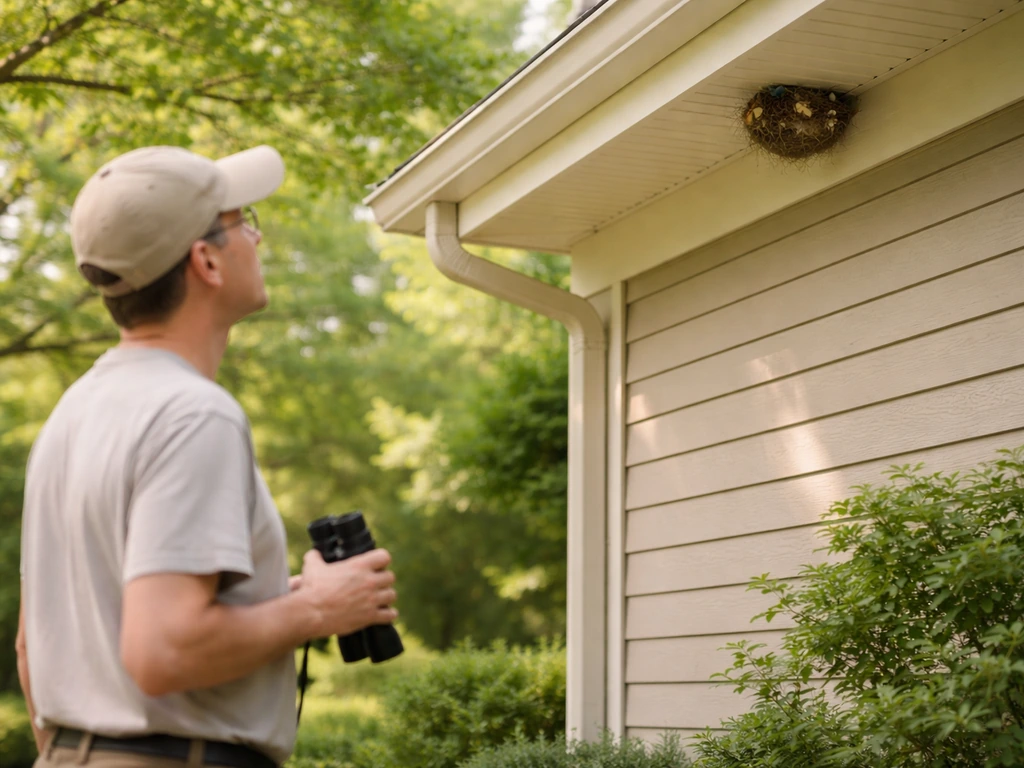
Who you call for bird nest removal depends on three things: what species built it, whether it's active right now, and where you live. Get those three things roughly sorted and the right call becomes obvious. Skip that step and you risk either breaking federal law or spending money on a service that can't legally touch the nest yet. Here's how to work through it quickly.
Who to Call for Bird Nest Removal: The Right Service Fast

Maya Bennett
18 Apr 2026
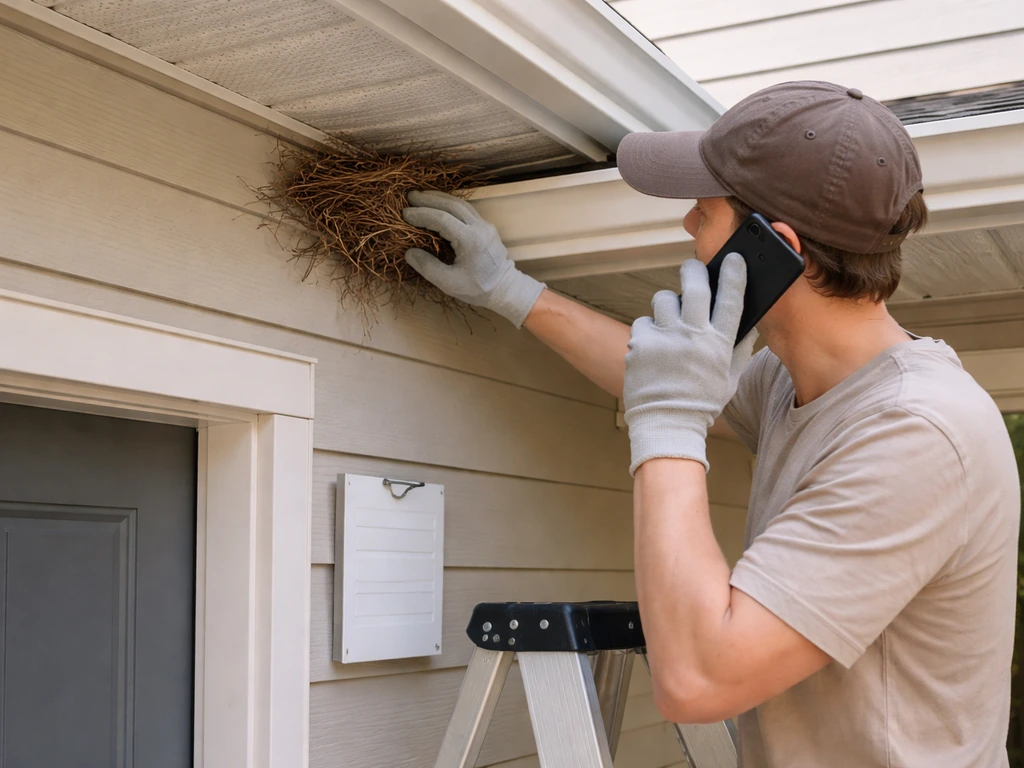
Step one: figure out what you've got before you call anyone
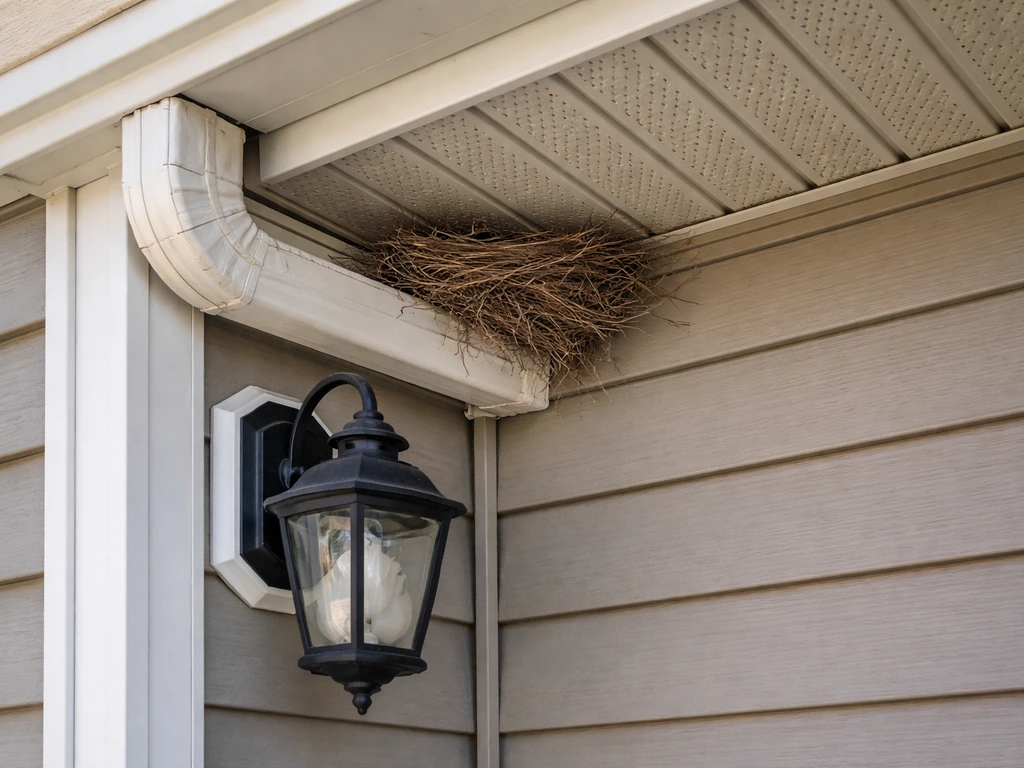
Before you pick up the phone, spend two or three minutes answering two questions: what kind of nest is it, and is it active? The answers control everything else, including whether removal is even legal.
What kind of nest is it?
Most homeowners encounter one of four nest types. Open cup nests (grass, twigs, mud) sitting on a ledge, in a shrub, or tucked under an eave are the most common. Mud pellet nests plastered directly against the underside of an overhang or bridge belong almost certainly to cliff or barn swallows. Cavity nests are harder to see because the bird is nesting inside a hole in a tree, wall, or vent pipe.
Ground scrapes are the trickiest: a shallow depression in gravel, sand, or bare dirt with camouflaged eggs that can be nearly invisible unless you see an adult standing guard nearby. Take a photo from a safe distance. You don't need a species ID to make the first call, but knowing the nest type helps whoever you reach give you faster, more accurate advice.
Is it active? This is the legal trigger
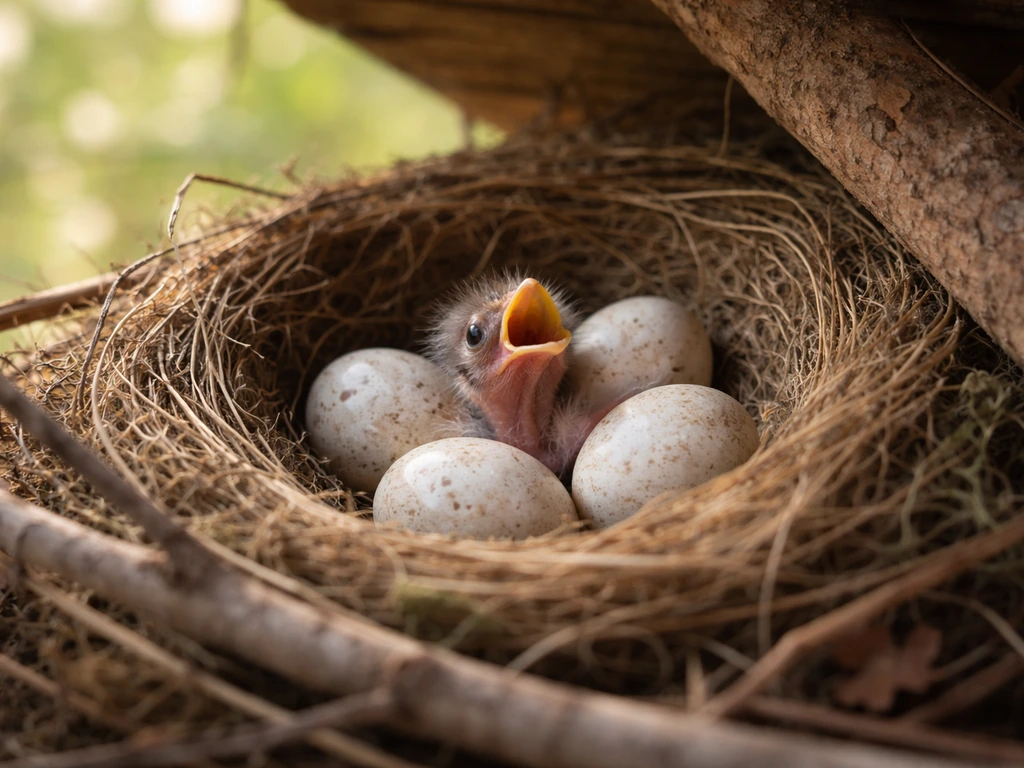
Under U. S. Fish and Wildlife Service (USFWS) guidance, a migratory bird nest becomes active the moment the first egg is laid, and it stays active until fledged young are no longer dependent on it. That is the exact definition that determines whether you need a federal permit to disturb it.
An active nest with eggs or chicks present cannot legally be destroyed without a USFWS permit. An inactive nest (no birds, no eggs, abandoned after the breeding cycle) can be removed without a federal permit, provided you destroy it rather than keep or possess it. If you can see eggs or chicks, or if you're watching adults coming and going steadily, treat it as active and proceed accordingly. When in doubt, assume active.
A few situations deserve extra caution. Swallows defending a mud nest near your front door will dive at people, so keep your distance. Ground-nesting species are easy to accidentally disturb because you may not spot the nest until you're almost on top of it. For cavity nesters, you may only notice activity by watching for adults disappearing into a hole. If you can't confirm whether eggs or young are present, do not attempt to open or probe the nest yourself.
Who to actually call for bird nest removal
There is no single universal number. The right contact depends on your situation, but here is a practical breakdown of who handles what. If you need to know who removes bird nests in your area, start by checking whether the nest is active and then call the appropriate wildlife agency or service.
Active nest with eggs or chicks: call a wildlife rehabilitator or USFWS
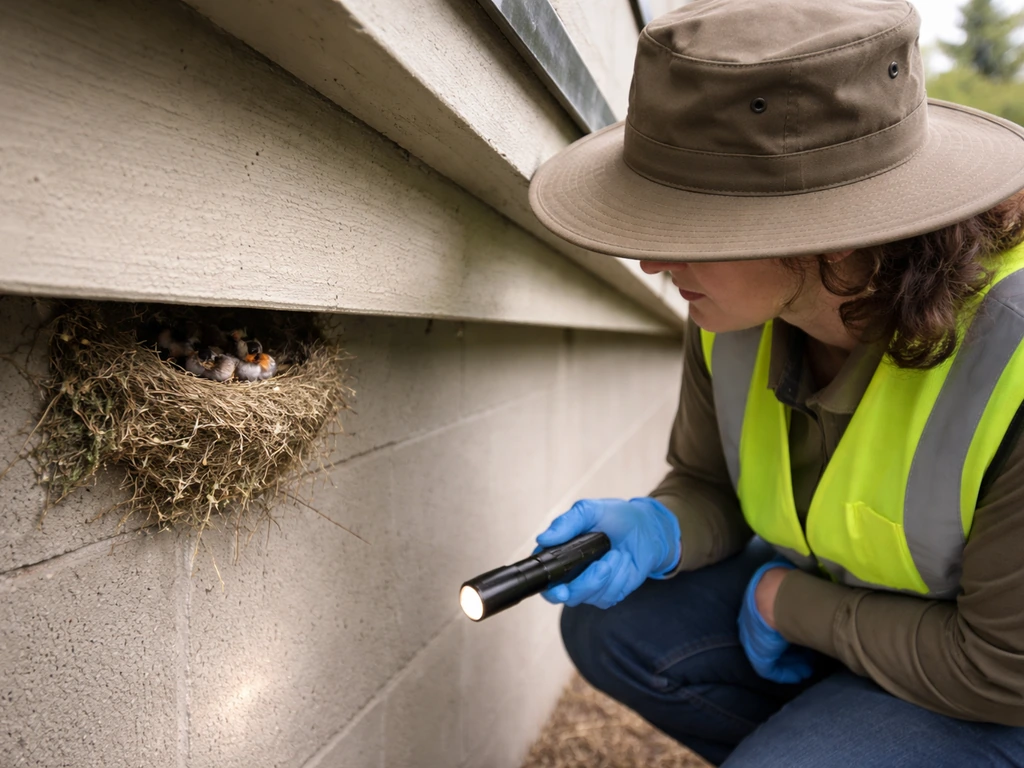
If the nest is active and you need it moved (say, a contractor must start work immediately), your first call should be to a licensed wildlife rehabilitator or your state wildlife agency. Wildlife rehabilitators are trained to handle eggs and chicks and, in some cases, can coordinate emergency nest relocation with the appropriate authorization. To find one near you, search the National Wildlife Rehabilitators Association directory or contact your state fish and wildlife agency directly.
In Florida, for example, the Fish and Wildlife Conservation Commission explicitly directs people to contact the USFWS Region 4 Migratory Bird Permit Office when federal authorization may be needed. Look up your own regional USFWS Migratory Bird Permit Office if you're unsure which office covers your state.
Active nest causing a hazard or damage: USDA Wildlife Services
If birds are causing property damage, a health hazard, or a safety risk (think a nest blocking a ventilation stack or a gutter that's overflowing), USDA Wildlife Services is the federal agency that handles migratory bird conflicts with a depredation focus. Some state wildlife agencies forward migratory bird complaints directly to USDA Wildlife Services, as Ohio does. You can reach USDA Wildlife Services through your state's Agricultural Research Service office or by searching 'USDA Wildlife Services' plus your state. Note that you do not need a federal depredation permit simply to haze or scare birds away from an area, with the important exception of bald and golden eagles and any federally threatened or endangered species, which require a separate permit.
Nuisance or unclear situation: local animal control
Your municipal animal control office is a reasonable first call when you're not sure who handles your situation. They won't always deal with wild birds directly, but they can tell you which local or county agency does, whether a nuisance wildlife control operator is the right next step, and whether there are city or county ordinances on top of federal protections that apply to your address.
Canadian readers: the Damage or Danger Permit pathway
In Canada, migratory bird nests and eggs are protected under the Migratory Birds Regulations, 2022. If a nest is causing or is likely to cause damage, landowners can apply for a Damage or Danger Permit, which includes nest relocation options. Canada’s Migratory Birds Regulations, 2022 authorize taking or destroying eggs and removing or destroying nests of specified migratory bird species only under the terms and conditions of an “egg or nest destruction permit” (section 70) [Damage or Danger Permit](https://laws-lois. justice.
gc. ca/eng/regulations/SOR-2022-105/section-70. html? txthl=manner).
Canada’s Migratory Birds Regulations, 2022 include [a “relocation permit” (Section 71)](https://laws-lois. justice. gc. ca/eng/regulations/SOR-2022-105/section-71.
html? txthl=b) that authorizes relocating migratory birds, eggs, and nests described in the permit, subject to conditions. Contact Environment and Climate Change Canada (ECCC) or your provincial wildlife office to start that application. The process takes time, so start it as early as possible if you anticipate a conflict.
When a contractor is the right call instead
Wildlife agencies and rehabilitators handle birds. Licensed pest control or wildlife exclusion contractors handle the structural side: sealing entry points, installing exclusion devices, repairing damage, and cleaning up after the birds are gone. The two roles are sequential, not interchangeable. You call the wildlife agency first, and the contractor second, once the nest is inactive and the season is right.
Specifically, a licensed contractor makes sense for: blocking re-entry points after birds have naturally vacated, installing physical exclusion devices (mesh, spikes, slope panels) to prevent nesting in the same spot next year, repairing structural damage to eaves, soffits, vents, or attic spaces, and cleaning up nesting debris and droppings, which can carry pathogens and should be handled with proper PPE.
When you hire for exclusion work, look for someone who uses one-way exit devices as part of the process rather than simply sealing holes immediately. Best practice, borrowed from bat exclusion protocols (the same principle applies to birds using cavities), is to leave a one-way exit in place for several days so any remaining birds can leave before the final seal goes in. Monitor for activity before the final closure.
How to choose the right service and what to say when you call
Before you call anyone, gather these four pieces of information. They will save you from being bounced between departments.
- Your exact address and property type (single-family home, commercial building, rental unit, etc.).
- Where the nest is located: height off the ground, surface it's attached to, whether it's inside a structure or outside.
- What you can see: nest materials, approximate size, and whether you can see eggs, chicks, or regular adult bird activity.
- Two or three photos taken from a safe distance, ideally showing the nest, the surrounding area, and any eggs or birds visible.
When you reach a wildlife rehabilitator, wildlife agency, or animal control office, ask these questions directly:
- Is this species protected under the Migratory Bird Treaty Act (or provincial regulations if in Canada)?
- Based on what I'm describing, does this sound active or inactive?
- Do I need a permit for any action here, including just discouraging the birds?
- Can you send someone, or can you refer me to someone licensed to assess it in person?
- What should I avoid doing right now while I wait for help?
When vetting a pest control or wildlife exclusion contractor, ask whether they are licensed by your state wildlife agency, whether they have experience with bird exclusion specifically (not just rodent or bat work), and whether their process includes a waiting period before final sealing. A contractor who insists on sealing everything in one visit without a waiting period is a contractor worth skipping.
What to do (and not do) while you wait
Between now and when a professional assesses the situation, there are clear do's and don'ts. Most of the risks here are legal, not just ethical.
| Do | Don't |
|---|---|
| Keep a safe distance from the nest, especially if swallows or other defensive species are present. | Handle eggs, chicks, or nesting material with your bare hands. |
| Take dated photos from a distance to document nest location, activity, and any damage being caused. | Attempt to move, destroy, or block a nest you haven't confirmed is inactive. |
| Note the times and frequency of adult bird visits to help assess active status. | Spray the nest or surrounding area with water, chemicals, or deterrents that could harm eggs or chicks. |
| Keep children and pets away from the nest area. | Seal entry points to a structure while birds may still be inside. |
| Document any property damage caused by the nest for your call to the agency or contractor. | Assume a nest is inactive just because you haven't seen a bird in a few hours. |
One practical note on swallow nests under eaves: swallows are aggressive defenders of nests near high-traffic areas. If the nest is directly above your front door and adults are present, redirect foot traffic through another entrance temporarily. It's a short-term inconvenience, but it avoids stress to the birds and avoids defensive dives at your family.
Timing matters: active vs inactive and what comes next
Right now in mid-April, many migratory species are actively nesting or about to start. That means a nest you find today has a high probability of being active or becoming active very soon. For species that raise multiple broods per season, a nest should be considered active until you can reasonably determine the birds won't return to it, which for multi-brood species can extend well into late summer.
The general sequence for handling a nest situation from spring through fall looks like this:
- Spring (now through early summer): Identify and monitor. Contact wildlife agencies if the nest is causing immediate hazard. Avoid any structural work that disturbs active nests.
- Late summer to early fall: Watch for the nest to go inactive. Young birds fledge and stop returning. Adults cease regular visits. NestWatch recommends cleaning out nest boxes at the end of the breeding season, which is a useful benchmark for open nests too.
- After confirmed inactivity: Remove the inactive nest (you can do this yourself without a permit, as long as you discard rather than keep the material), then schedule contractor work for exclusion and repairs.
- Late fall through winter: Ideal window for structural repairs, exclusion device installation, and sealing entry points before next spring's breeding season begins.
If you are dealing with a nest inside a vent, attic, or wall cavity, do not seal the opening until a contractor has confirmed the space is empty and has used a one-way exit device for several days beforehand. Sealing birds inside a structure creates a worse problem than the nest itself.
The question of whether you should remove a nest at all, and when that removal is legal, ties closely into related decisions about whether old nests in trees need to come down, whether you can do it yourself, and what species protections might apply. If you're asking “should i remove a bird nest,” the timing and legality hinge on the same factors, especially whether it is active and protected. If you are dealing with old nests in trees, you should make sure the nest is truly inactive before removal should you remove old bird nests from trees. Those questions deserve their own careful look, but the starting framework is the same: species, active status, and local law first, then action.
The short version of all this: if the nest is active today, your call is to a wildlife rehabilitator, your state wildlife agency, or USDA Wildlife Services depending on the urgency. If you want to remove a bird nest, the key is confirming whether it is active and protected before you take any action. If you are wondering, “can you remove bird nests,” the key is whether the nest is active and protected under wildlife rules bird nest removal. If the nest is inactive, you can remove it yourself and then call a licensed exclusion contractor to prevent a repeat. When in doubt, photograph it, don't touch it, and make the call.
FAQ
If the nest looks abandoned, can I remove it myself without a permit?
Yes, but only if you destroy it in a way that does not keep or transport it. If the nest is inactive and there are no eggs or chicks, you typically do not need a federal permit, but you should still avoid “keeping it,” relocating nesting material, or disturbing nearby protected areas.
What should I do if I cannot tell whether the nest is active inside a wall, vent, or attic?
Contact the wildlife agency or wildlife rehabilitator before you do anything more than observe from a distance. If you cannot confirm whether eggs or chicks are present, treat it as active, do not open the cavity, and do not start cleanup until a professional verifies the space is empty.
Can I just haze or scare the birds away until I can remove the nest?
Hazing or scaring is usually allowed for most migratory birds, but it must still avoid exceptions. Do not rely on repellents or harassment if bald or golden eagles are involved, or if the species could be threatened or endangered, because that changes the permitting rules.
Who should I call first, a contractor or the wildlife agency?
It should be a licensed wildlife exclusion contractor only after a wildlife professional confirms the space is empty and uses a one-way exit process for several days. If you hire the contractor first and they seal immediately, you can trap birds inside and create a health and welfare problem.
What information should I collect before I call for bird nest removal?
Gather the exact address (or closest cross streets), the nest location type (eave, vent, attic access point, tree species if known), when you first noticed activity, and whether you have photos or video showing adults entering and leaving. Also note any immediate deadlines like construction start dates or utilities work.
How can I tell if an exclusion contractor is qualified for bird nests?
Ask whether they handle bird exclusion specifically, not just general pest control. Confirm they are licensed/authorized as required in your state wildlife program, and ask about the waiting period and verification steps (how they confirm the area is empty).
What is the safest way to confirm nest activity without disturbing the birds?
If it is safe to do so, use a visual confirmation method such as photographing adults’ behavior and entry points without moving around the nest. For swallows and ground nesters, keep people and pets away from the immediate area because even cautious people can trigger repeated defense or accidental trampling.
What if the nest is causing urgent property damage, but it may still be active?
If removal is needed because of a blocking ventilation stack, gutter overflow, or a structural issue, start with a wildlife professional or state wildlife agency for authorization guidance, then plan the exclusion after the nest is inactive. The repair timeline should be coordinated so you do not seal birds inside while work is scheduled.
Should I call animal control if I do not know who handles wildlife in my county?
Yes. Animal control can be the right starting point when you are unsure who regulates your situation locally, especially if you need to identify the correct county or city nuisance wildlife process. They should help you route the case to the right wildlife agency or private wildlife control operator.
If I live in Canada, who do I call and what permit path applies?
For Canada, start with the relevant Environment and Climate Change Canada office or your provincial wildlife office because the permitting path (Damage or Danger Permit) and allowed actions may include relocation options. Do not proceed with removal until you know which process applies to your location and the risk level.
Next Article
When Can I Remove a Bird Nest Safely and Legally
Know when to remove a bird nest safely and legally, how to spot active nests, and what to do while waiting.