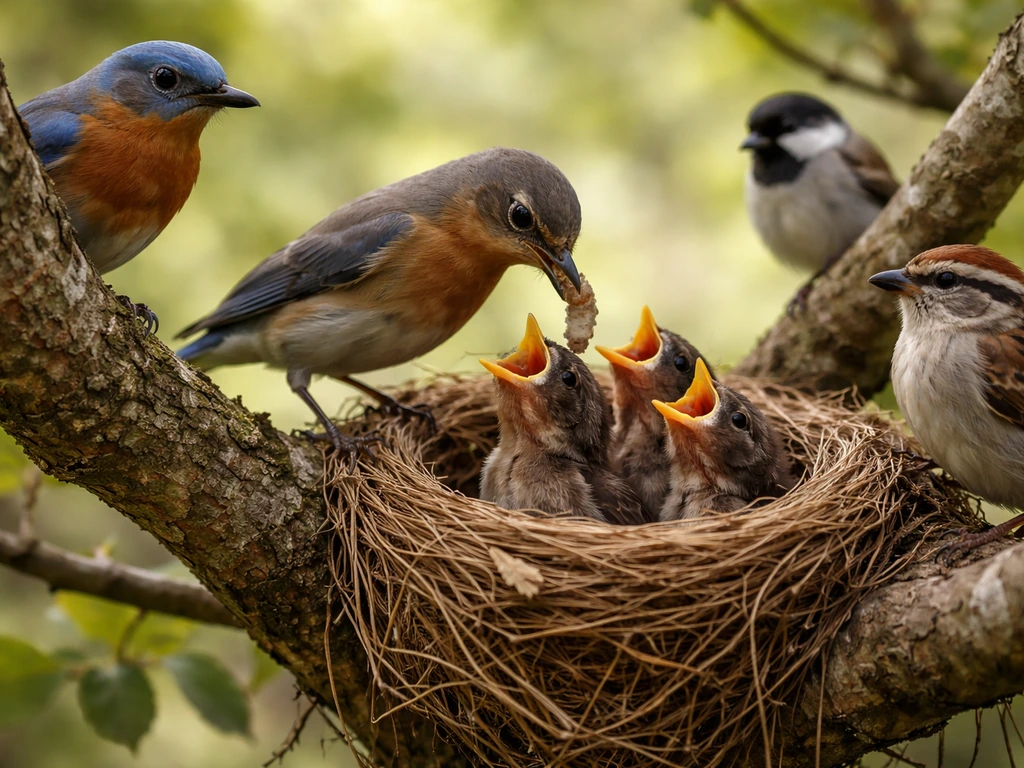
Bird nesting co-parenting, in real wildlife terms, is cooperative breeding: a system where more than just the two mating adults share incubation, brooding, or feeding duties at a single nest. blank" rel="noopener noreferrer">About 9% of bird species do this, using non-reproducing 'helper' birds (often older offspring from a previous season) to assist in raising the current brood. If you've spotted two or three birds trading off on a nest, you're likely seeing this in action, and it's normal, healthy behavior for those species. It's not abandonment, it's not confusion, and it's not brood parasitism. Knowing the difference matters a lot before you decide to do anything. This concept is sometimes compared to “co-nesting” in marriage, where people coordinate care and decision-making as a team rather than treating it like a single parent role co-nesting in marriage.
What Is Bird Nesting Co-Parenting and What to Do

What bird nesting co-parenting actually means
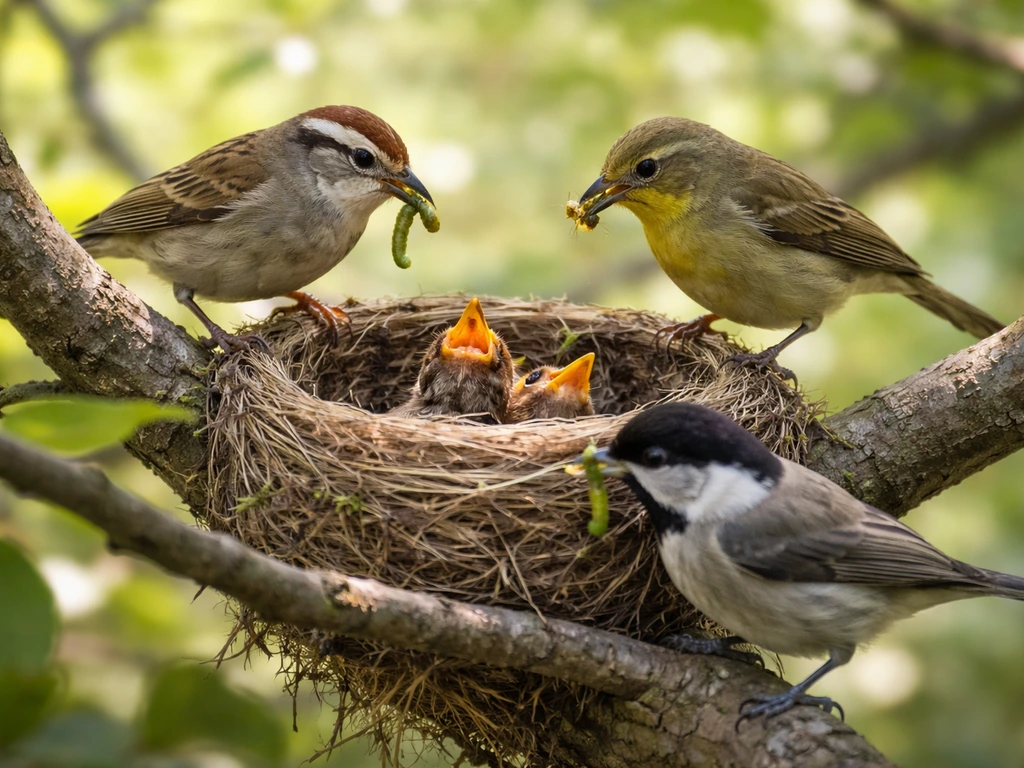
Cooperative breeding is built around alloparental care, which just means offspring are cared for by individuals beyond the two biological parents. In practice, you might see a Florida Scrub-Jay nest where the breeding pair is joined by one or two 'helpers at the nest,' often juveniles from a previous brood. These helpers incubate eggs, bring food to nestlings, and even defend the nest territory. Research documents this helper-at-the-nest behavior across species worldwide, and helpers don't have to be genetically related to the breeding pair to pitch in.
Normal pair co-parenting (just two adults, no helpers) also involves shared duties that people sometimes misread. In most songbirds, both parents incubate eggs in shifts. One sits for a stretch, then flies off to feed while the other takes over. The female may visit the nest only once per day during the egg-laying phase, which looks like near-abandonment but is completely normal. During the nestling phase, both parents make rapid food delivery trips, sometimes dozens per hour. These shift handoffs can look like a chaotic rotation of birds, but there's a clear structure to it.
Two scenarios are easily confused with co-parenting but are very different problems. Brood parasitism, most famously from Brown-headed Cowbirds in North America, involves a foreign bird sneaking an egg into the host nest. The host parents then raise the cowbird chick, often at the expense of their own. Egg dumping is another wrinkle: some species lay surplus eggs in neighboring nests of the same species, producing confusing nest compositions that aren't cooperative at all. Neither of these is co-parenting, and both can reduce the host's nesting success significantly.
How to tell if co-parenting is actually happening
The key is patient observation from a distance, ideally with binoculars, over multiple visits spaced several days apart. Watch for the following behavior patterns depending on the stage of the nesting cycle.
During incubation (eggs present)
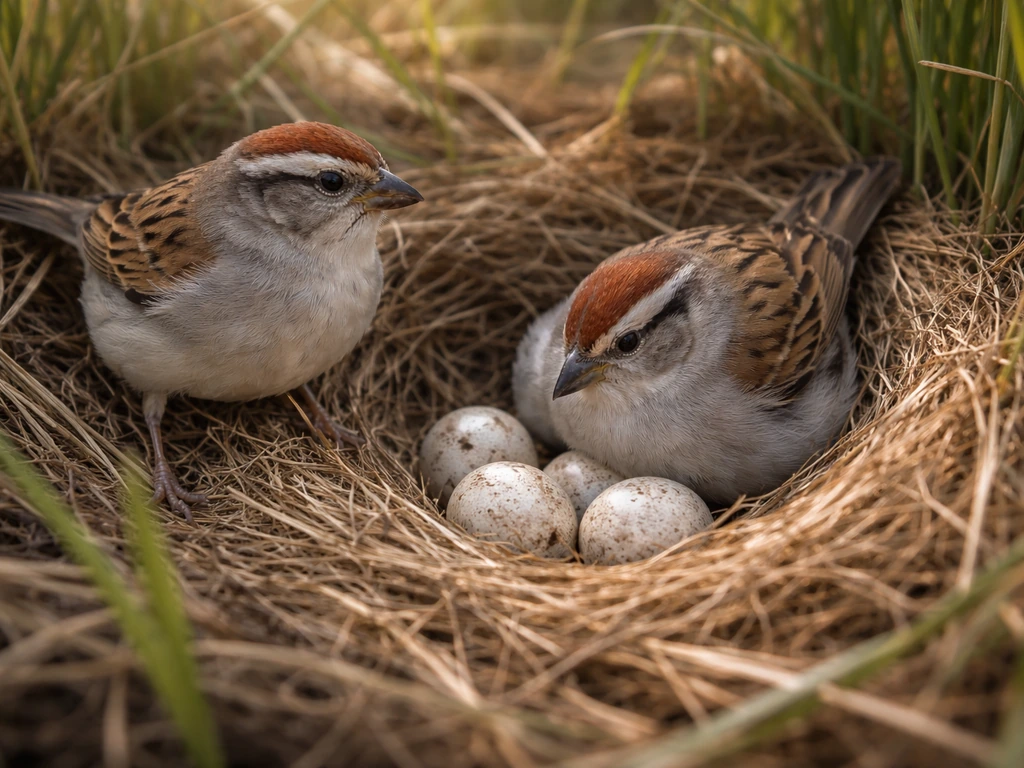
- Two or more adults take turns sitting on the nest for stretches of 20 minutes to several hours, trading off visibly.
- A helper bird may perch nearby without sitting directly on the nest but reacts defensively if a predator approaches.
- Nest is rarely fully unattended for more than a few minutes during warm weather; longer gaps are normal in hot conditions when overheating is more dangerous than chilling.
- Adults leave and return via indirect flight paths to avoid drawing attention to the nest location.
During the nestling phase (chicks hatched)
- Multiple adults make food delivery trips to the same nest. If three or more adults are delivering food, you likely have cooperative breeding.
- Helper birds may arrive with food but yield to the dominant parent at the nest rim, waiting their turn.
- Food trip frequency is high: nestlings that are fully featherless need feeding roughly every 15 to 20 minutes from sunrise through late evening.
- Brooding (adults sitting on chicks to warm them) still happens between feedings, especially in the first week post-hatch.
If you see one adult visiting repeatedly and another adult never showing up, that's single-parent feeding, which could be normal (some species are predominantly one-parent feeders) or could signal that one parent has been lost. If the nest goes completely unattended for more than two hours during daylight in mild weather, that warrants closer attention.
Species ID and nest materials: making the right call
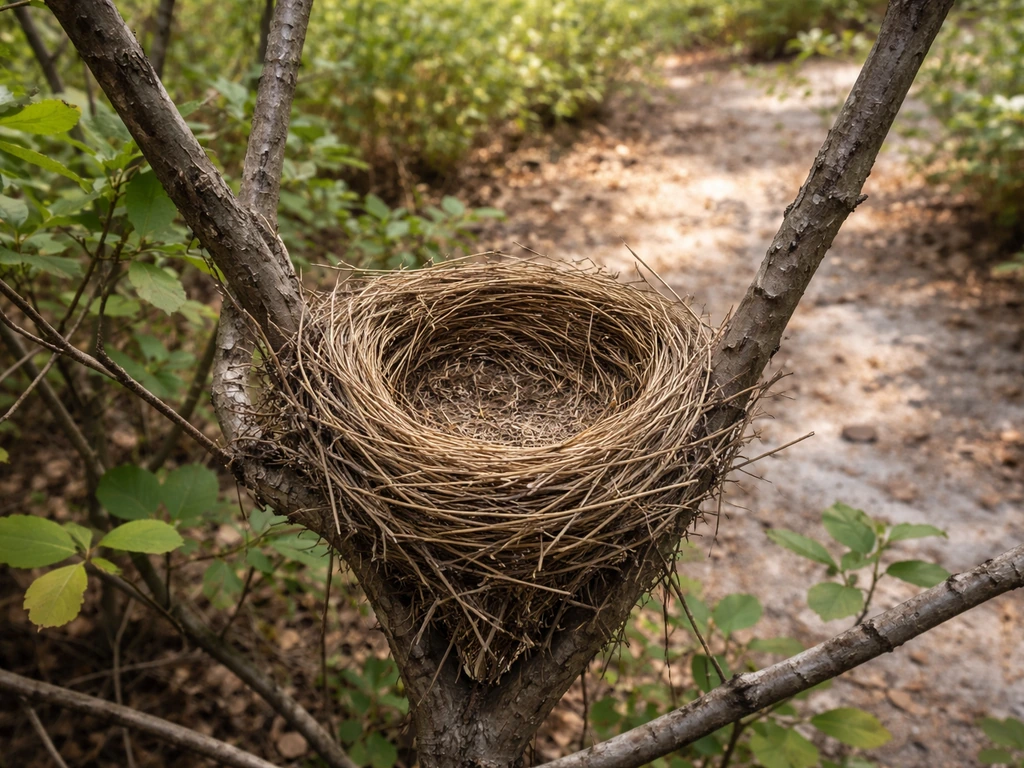
Before you interpret any behavior, identify the species. Cooperative breeding is common in specific families: corvids (jays, crows), bee-eaters, acorn woodpeckers, Florida Scrub-Jays, superb fairywrens, and certain kingfisher species. If you're watching American Robins or House Sparrows, three adults at the nest is unusual and worth a second look. A bird-nesting electrode can bird-nest because of improper setup, poor contact, or movement during use what causes the electrode to bird-nest. Species ID shapes everything about what you're seeing.
Nest material and placement give you strong ID clues. Note the nest's height, substrate (tree cavity, open cup, ground scrape, platform), outer materials (mud, bark strips, grass, moss, spider silk), and internal lining (feathers, plant down, fine rootlets). Photograph the nest from a distance with a telephoto or zoom lens. Jot down the nest's rough diameter (open cup songbird nests typically run 3 to 5 inches across), height from ground, and the surrounding vegetation. These details help you narrow down the species and cross-reference expected behavior.
Also look at the eggs if you can do so without disturbing the nest. A very large egg or egg that's noticeably different in color or speckle pattern from the others is a red flag for cowbird parasitism. A single oversized nestling that's pushing smaller chicks aside and growing faster is another cowbird sign. These are not co-parenting situations, and the management approach is different.
What you should do: observe, record, and stay out of the way
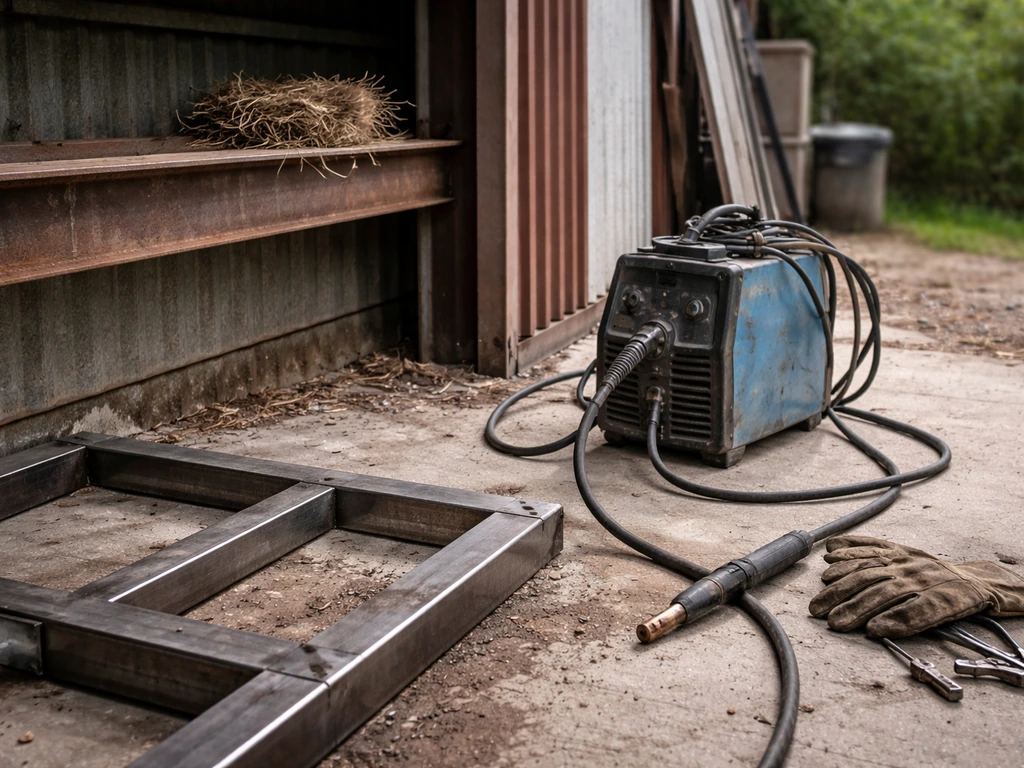
The single most useful thing you can do for an active nest is observe without disturbing. If you meant bird nesting in welding, that refers to a separate concept where welding can create conditions that attract or trap birds around the work area. Here's a practical approach that keeps the birds safe and gives you good data. When photographing bald eagle nests, Audubon recommends keeping a specific minimum distance to reduce disturbance risk, noting that the nestling period close to fledging is especially sensitive blank" rel="noopener noreferrer">keeping the birds safe while observing an active nest.
- Set up your observation point at least 30 feet away, further is better, using binoculars or a camera with a zoom lens. For sensitive species or known bald eagle nests, federal guidance suggests staying back around 330 feet.
- Limit each observation session to roughly 60 seconds of close approach if you must check the nest directly, and do this no more than once every 3 to 4 days. More frequent checks stress adults and can disrupt incubation.
- Keep a simple log: date, time, weather, which adults you saw, what they were doing (sitting, delivering food, alarm calling, defending), and how long the nest was unattended between visits.
- Photograph from a distance only. Do not use flash, spotlight, or audio playback to attract or flush birds. These are explicitly discouraged by National Park Service and Audubon guidelines.
- Do not share exact nest GPS coordinates or locations on social media or public platforms, especially for sensitive or listed species. Predators and irresponsible nest photographers are real threats.
- Do not cut vegetation around the nest to get a better view. This removes natural cover and exposes eggs or chicks to weather and predators.
Your observation log becomes genuinely useful if you ever need to report a problem to a wildlife rehabilitator or conservation authority. Documented patterns of adult activity, arrival frequency, and any anomalies give responders a much clearer picture than a vague 'something seems wrong.'
When something is actually wrong: red flags and who to call
Most nests that look like they're in trouble are fine. But there are real red flags. If any of the following apply, it's time to escalate.
- A fully featherless nestling (a true nestling, not a fledgling) is on the ground and the nest is visible and reachable. In this case, gently return the chick to the nest wearing thin gloves. The parent-smell myth is false: birds have a limited sense of smell and will not reject a chick you've touched.
- A nestling is cold to the touch. Warm it gently in your cupped hands before attempting a nest return, but be aware that returning a very cold chick to the nest may cause parents to push it out. Contact a rehabilitator for guidance first.
- No adult has visited the nest for more than two hours during daylight in mild weather, and you have confirmed this over multiple observation windows on the same day.
- An adult bird is found injured or dead near the nest.
- The nest has been physically dislodged by weather, a predator strike, or human activity.
- You hear continuous distress calls from chicks with no adult responding.
If any of these apply, contact a licensed wildlife rehabilitator in your area. In the US, you can find one through the National Wildlife Rehabilitators Association directory or your state's fish and wildlife agency. Do not attempt to raise a nestling yourself: featherless chicks need feeding every 15 to 20 minutes from sunrise to roughly 10 p.m., which is an enormous time commitment that requires proper training and nutrition knowledge. Improper feeding (bread, milk, or water) can kill a chick quickly.
If the entire nest structure has fallen but is intact, you can create a substitute nest by placing the original nest in a small berry basket or container lined with dry grass, securing it in the nearest sheltered spot on the same tree or structure, and then retreating. Watch from a distance for an hour to see if adults return to feed. If they do, the situation is resolved. If they don't, escalate to a rehabilitator.
Legal rules for nests on your property
This is where a lot of homeowners get into trouble without realizing it. In the United States, most wild bird nests are protected under the Migratory Bird Treaty Act (MBTA). The federal law explicitly makes it unlawful to 'take, possess, purchase, barter, transport, sell, or offer for sale' any migratory bird or any part of one, and that explicitly includes nests and eggs. 'Take' is interpreted broadly and includes disturbing, relocating, or destroying active nests.
Practically, this means you cannot legally move an active nest with eggs or live chicks, even if it's on your private property, even if it's built against your house, even if you need to do construction work, without a federal permit. The US Fish and Wildlife Service can issue permits under limited circumstances, but this is not a quick process. If you discover an active nest in a problematic location (say, inside a structure you need to access), the legally and ethically correct move is to wait until the nest cycle is complete. Most songbird nests complete their cycle in 4 to 6 weeks from egg-laying to fledging. Then, once the nest is inactive and the birds have left, you can legally remove it and take steps to prevent future nesting in that location.
| Situation | Legal status | What you can do |
|---|---|---|
| Active nest with eggs or chicks (migratory species) | Protected under MBTA; moving or destroying is illegal without a permit | Wait out the nesting cycle, then remove after birds have left |
| Empty, inactive nest (season over) | Generally legal to remove once confirmed inactive | Remove, then habitat-proof the site to deter future nesting |
| Non-migratory invasive species nest (e.g., House Sparrow, European Starling) | Not protected by MBTA; some states have additional rules | Check state law; removal may be legal but confirm locally |
| Nest requiring urgent safety response (e.g., inside electrical panel) | May qualify for emergency exception; contact USFWS | Call USFWS or a licensed wildlife biologist for a fast permit consultation |
| Brood parasite egg (cowbird) in a host nest | Removing cowbird eggs is illegal without a special depredation permit | Document and report to your state wildlife agency if it's a conservation concern |
Reducing predator risk without harming birds
You can do a lot to protect an active nest from predators without touching anything or breaking any laws. The key is modifying the surrounding habitat and removing attractants, not intervening directly at the nest.
- Keep cats indoors or in a secure catio. Free-roaming domestic cats are one of the most significant threats to ground-nesting and low-nesting birds. US Fish and Wildlife Service guidance is clear on this: cats belong inside.
- Remove easy predator access routes. Trim back any branches that give squirrels, raccoons, or snakes a direct highway to the nest. A metal baffle on nest box poles also works well.
- Reduce attractants that bring in nest predators: secure garbage, remove accessible food sources like spilled birdseed on the ground near the nest area.
- Avoid flagging or marking nest sites with ribbon, stakes, or brightly colored objects. These draw human attention but also signal predators and can increase nest predation rates.
- Don't mow or clear vegetation within 10 feet of a known active ground nest during the nesting season. Ground-nesting species (killdeer, for example) depend on that cover.
- Keep dogs leashed near active nesting areas during the breeding season, roughly March through August in most of North America.
If a known nest predator (a specific crow, jay, or snake) is persistently targeting a nest, the ethical response is to increase cover rather than to trap or relocate the predator. Native predators have legal protections too, and removal rarely solves the underlying habitat issue.
Common misconceptions and how to troubleshoot them
"The baby bird fell out and the parents abandoned it"
If a bird is fully feathered, hopping around on the ground, and has a short tail, it's almost certainly a fledgling, not an abandoned nestling. Fledglings leave the nest intentionally as part of normal development. Their parents are nearby, watching, and continuing to feed them on the ground. What looks like abandonment is actually a normal post-nest phase. The best thing you can do is keep pets and children away and let the process continue. Parents will keep delivering food to fledglings for another one to three weeks.
"There are two birds at the nest but they look different"
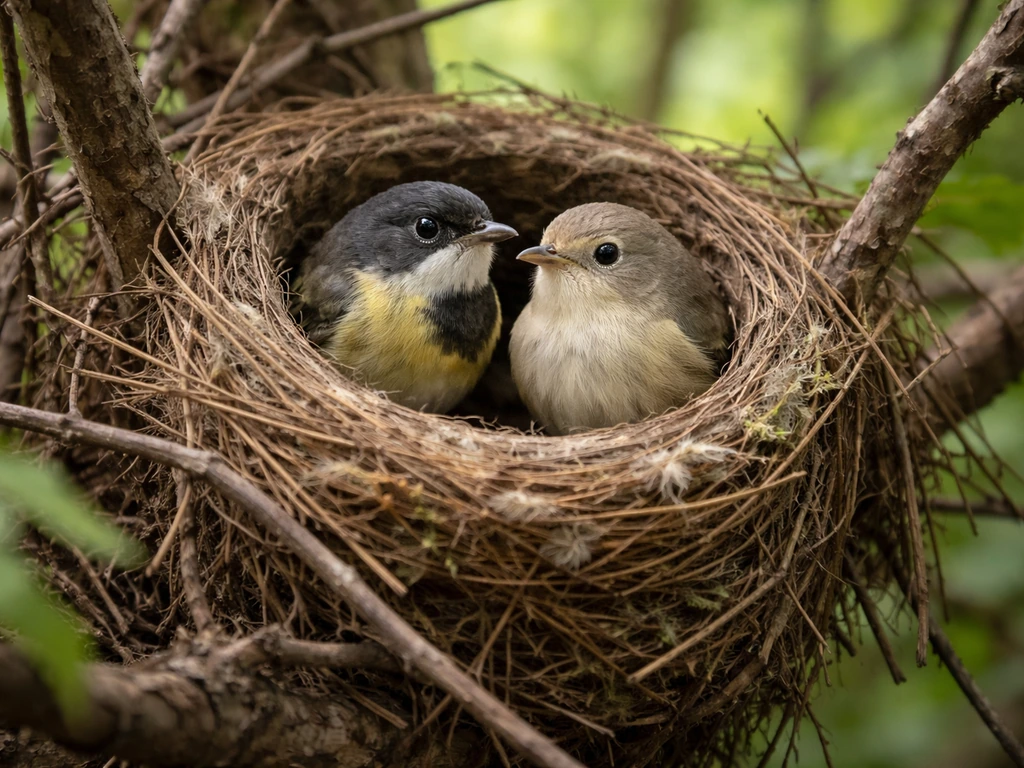
Many songbird species are sexually dimorphic, meaning males and females look quite different. A male American Redstart and a female American Redstart look like two different species to the untrained eye. Before assuming you have extra helpers or an intruder, verify whether you're seeing male and female plumage variation. A field guide or a good bird ID app will sort this out in under a minute.
"Three or four birds are all visiting the same nest"
This is worth investigating more carefully, but it's not automatically alarming. If the species is known for cooperative breeding (check a regional bird guide), you're probably watching normal helper behavior. If it's not a known cooperative breeder and you're seeing multiple adults, it could be a nest takeover attempt by a second pair, a brood parasite check, or simply birds investigating a territory boundary. Watch for whether all adults are delivering food (co-parenting) or whether some are behaving aggressively toward the nesting pair (conflict). The distinction is usually clear after 20 minutes of observation.
"I haven't seen a parent in hours. Is the nest abandoned?"
Probably not. During egg-laying, a female may visit only once per day to deposit the next egg, and the clutch isn't incubated until the last egg is laid. So a nest with eggs and no visible adult for most of the day can be completely normal. During incubation, adults also leave the nest regularly to feed, and absence of 30 to 60 minutes is normal. The actual abandonment threshold is closer to several hours of zero activity during daylight, confirmed across multiple observation windows on the same day, combined with eggs or chicks showing obvious signs of distress (cold eggs, silent but gaping chicks).
"Parents are bringing food to one nest but ignoring another nearby nest"
If you're watching birds carry food to one location and ignore what looks like a second nest nearby, the 'second nest' is likely inactive. Birds often have old nest structures, incomplete nests, or decoy nests in their territory. Only one nest is active at a time per breeding pair in the vast majority of species. Confirm activity by watching for movement inside the structure, alarm calls, or visible chicks before deciding the second nest is being neglected.
If you've worked through all these scenarios and still aren't sure whether what you're seeing is co-parenting, brood parasitism, nest conflict, or a genuine problem, the wisest move is to document everything with photos and notes and then reach out to your state or provincial wildlife agency, a local Audubon chapter, or a licensed wildlife rehabilitator. In practice, this bird nesting welding definition helps you distinguish normal helper and co-parenting roles from situations like brood parasitism. A few minutes with someone who knows your region's species can save you a lot of uncertainty and prevent well-intentioned interference that could hurt the very birds you're trying to help.
FAQ
How can I tell if “extra” birds are helpers doing cooperative breeding or just occasional visitors?
Not necessarily. Cooperative breeding is when multiple birds share care at the same active nest, often helpers that may be juveniles from a previous season. You can be seeing three adults during nesting but still not be looking at cooperative breeding if one adult is a visiting intruder or if the “extra” bird is feeding a separate active nest nearby. The practical test is whether all visible adults are repeatedly delivering food or doing incubation shifts at the same nest location over multiple visits.
If birds seem to help for a few days, will they keep helping through fledging?
Usually yes, but it depends on the species and stage. If a helper is truly part of the cooperative breeding system, their presence often remains consistent as the cycle progresses, especially around incubation and nestling feeding. If the extra bird disappears during a stage when incubation and feeding become highly regular, it may indicate a transient visitor or a misidentified second nest. Tracking who feeds, when, and at which nest over at least a couple days helps confirm.
Is it a problem if there are days with more or fewer birds at the nest?
It would be considered unusual and worth a second look, but it is not automatically bad. For example, some species may bring another adult during territory defense or pair formation, and some helpers may take over specific tasks rather than being on camera every hour. The key is whether the nest’s chicks or eggs show normal condition and whether adults maintain a structured feeding pattern, rather than just counting the number of birds at any moment.
Can I relocate the nest or “fix” it if the birds are co-nesting and it is in the way?
In most cases, do not. If you pick up eggs or move nesting material, you can chill eggs, crush delicate structures, or trigger legal issues if the nest is protected. The safest alternative is to leave the nest alone and focus on non-contact measures (keeping people and pets back, reducing nearby disturbances, improving cover). If the nest is in the way of construction or landscaping, plan around the nesting cycle and get guidance before you do anything.
Does backyard bird feeding affect nests where co-parenting or helpers are involved?
If you feed birds in your yard, it can change local behavior. Providing food away from the nest area can still be fine for many people, but close-by bird feeders and open trash can attract predators or competing species that interfere with nesting success. A common approach is to pause high-attractant sources during the nest period, especially if you notice repeated predator visits around the nesting site.
What mistakes do people commonly make when they assume co-parenting but misidentify the species?
Yes, species ID changes what “normal” looks like. Some birds can appear to have multiple caretakers simply because they trade incubation or deliver food in bursts, while others are known cooperative breeders where helpers at the nest are expected. Before interpreting behavior, note key ID cues like nest type (open cup vs cavity vs platform), nest placement, and egg appearance if you can view without disturbing.
How long is “too long” for no adult activity before I report it?
A good rule is to escalate based on sustained zero activity plus signs of distress, not on a single quiet stretch. Many species will be absent for tens of minutes during daylight due to feeding trips, even when the nest is healthy. If you consistently see long gaps over multiple observation windows, and eggs feel cold or chicks appear unusually weak, silent, or gaping without feeding, then contact a licensed wildlife rehabilitator.
If there is aggression near the nest, does that automatically mean nest conflict rather than co-parenting?
Not usually. Helper-at-the-nest behavior can look like a confusing jumble until you focus on task patterns, such as steady incubation shifts or frequent food deliveries. Nest conflict often comes with persistent aggressive interactions around the nest and one group not feeding, while brood parasitism often shows mismatched eggs or a chick that outgrows neighbors. Observing for feeding involvement versus aggression helps you distinguish these quickly.
What should I do if I have to mow, weed, or do work near an active nest on my property?
If you need to enter an area near the nest, the main decision aid is distance and timing, not “confidence.” Avoid approaching until you have verified the nest is active and stable, then schedule work for times when adults are least constrained, usually after you see them make feeding trips. Keep noise, vibration, and foot traffic to the minimum. If you cannot maintain safe distance or the activity is unavoidable, contact wildlife authorities first rather than trying to solve it yourself.
If I suspect the nest needs help, what should I absolutely not do?
Yes, using the wrong kind of “help” can turn a normal cooperative system into a worse outcome. Even if your goal is to protect the birds, raising chicks without training can cause severe nutrition errors, improper hydration, and missed feeding intervals. The safer move is non-interference plus professional guidance, and only temporary nest sheltering that keeps the nest intact while you observe adult return from a distance.
What Is Bird Nesting in Welding and What to Do
Understand bird nesting in welding, spot active nests safely, adjust work to protect birds, and complete welding without