
Quick note before we dive in: if you landed here looking for information about actual bird nests, like “what is bird nesting in welding”, the kind built by robins and sparrows, you are in the right place for that topic generally. But this article is specifically about a relationship and co-parenting concept called 'bird nesting' in marriage and separation. If you want the naturalist side of things, check out our guide on what bird nesting is in the wildlife sense. Here, we are focused entirely on what the term means for couples and families.
What Is Bird Nesting in Marriage? Steps, Rules, Pros and Cons

Maya Bennett
22 Mar 2026

What 'Bird Nesting' Actually Means in a Marriage Context
Bird nesting in a marriage context means that the children stay permanently in the family home while the parents take turns living there based on a rotating schedule. When it is your turn with the kids, you live in the house. When it is not your turn, you live somewhere else. The house stays constant. The children stay constant. The parents are the ones who move in and out.
The name comes from exactly what you would expect: in nature, birds build a nest and the chicks stay there while the adults come and go. The concept applies that same logic to a separated or divorcing family. According to Cornell Law School's Legal Information Institute, bird nesting is formally defined as a custody arrangement where children reside full-time in the family home while separated parents alternate living there during their scheduled parenting periods.
What bird nesting is NOT: it is not a way of staying married, it is not couples therapy, and it is not a legal status for your marriage. It does not mean you are reconciling, and it does not mean you are officially separated in any legal sense on its own. It is a practical logistics arrangement, full stop. Many people confuse it with simply 'staying together for the kids,' but that is a different situation where both parents live in the home simultaneously without a rotation. Nesting specifically involves one parent being in the house at a time, on a defined schedule.
Why Couples Choose Bird Nesting and When It Actually Makes Sense
The most common reason is child stability. Divorce and separation are already disruptive for kids. Moving out of their home, changing schools, losing their bedroom, splitting their toys between two places, that is a lot of upheaval at once. Bird nesting removes at least one layer of that disruption by keeping the children's physical environment unchanged. Psychology Today frames it explicitly as a child-centered arrangement, one that prioritizes routine and continuity for kids while parents figure out the longer-term situation.
The second big reason is financial. Setting up two fully functioning households immediately after a separation is expensive. You need two sets of furniture, two kitchens stocked, two places with enough bedrooms for the kids. Many families simply cannot afford that right away. Bird nesting lets you maintain one home and one operating budget while the adults find cheaper temporary housing on their off-weeks, such as staying with a parent, renting a single room, or sharing a small apartment with a friend. ABC News reporting on the arrangement specifically highlights this affordability angle as a practical short-term solution.
Bird nesting also makes sense in a few other specific situations: when the family home is tied up in legal proceedings and cannot be sold yet, when parents want to test a separation before committing to a full split, when a parent's work schedule or travel makes rotating easier than relocating kids, or when the children have special needs that make consistency especially important.
It makes the least sense when there is active conflict or hostility between the parents, when one partner is using the arrangement to delay a necessary separation, when there is a history of manipulation or coercion, or when the emotional entanglement of sharing a home is making both people worse. It is also a poor fit for very long time horizons unless the co-parenting relationship is genuinely healthy and both adults have stable, separate living situations.
What Bird Nesting Actually Looks Like Day to Day

The standard rotation setup
The most common structure is a week-on, week-off rotation. Parent A lives in the family home with the children from Sunday evening through the following Sunday evening. Then Parent B moves in for the next week. Parent A goes to their alternate housing. The children never move. A 7-7 alternating schedule, which OurFamilyWizard uses as a standard template, is the most frequently used format because it gives each parent a full, uninterrupted block of parenting time and makes the logistics of rotating adults simpler to manage.
Other families use shorter rotations, every three or four days, especially with younger children who struggle with longer separations from either parent. The key is that the schedule is written down, agreed upon, and consistent enough that children can predict it.
Where parents go on their off weeks
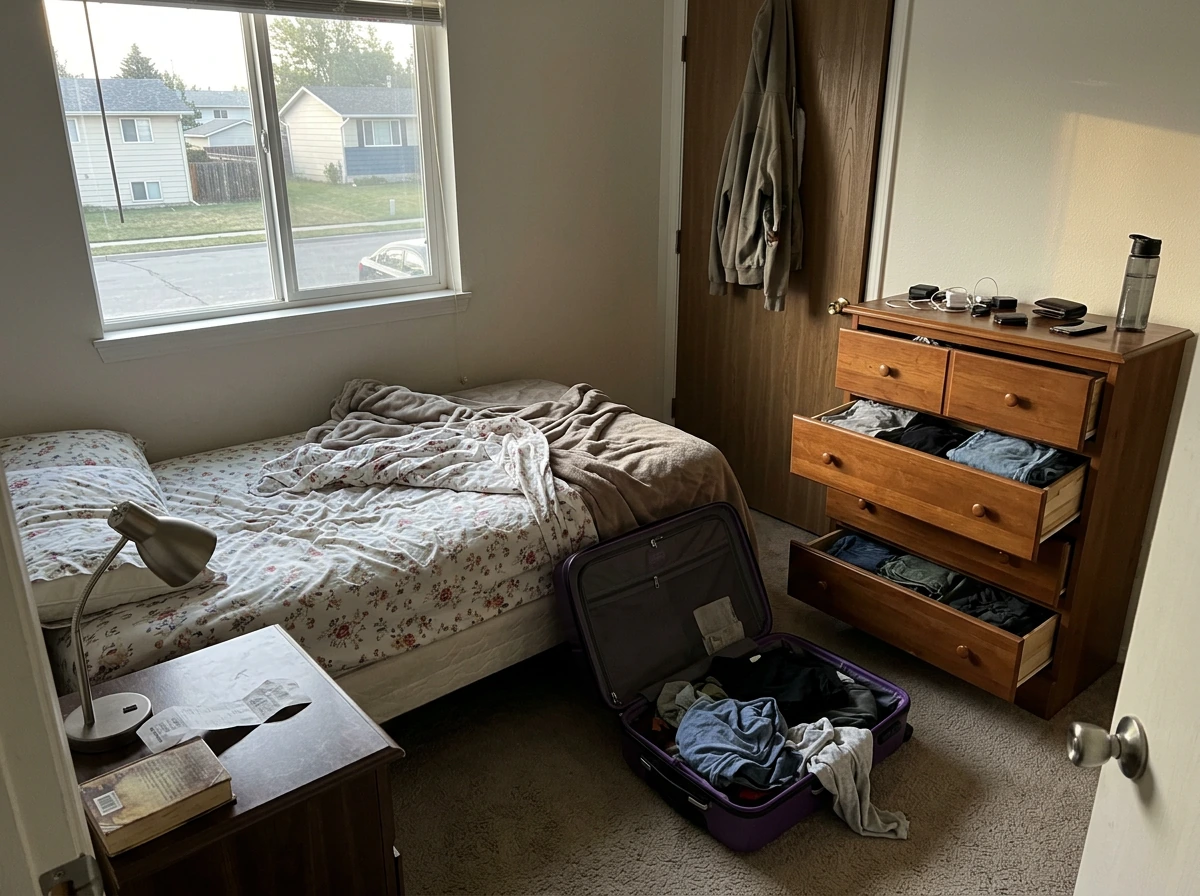
This is where the logistics get real. When you are not in the family home, you need somewhere to go. Some parents rent a small studio apartment together, splitting the cost of a second unit that each uses on alternating weeks. Some stay with their own parents or siblings. Some rent a single room in a shared house. Some families who can afford it rent two small separate units. ABC News reporting describes parents who stayed with family or friends on off-weeks as a common real-world solution, especially in the early months when finances are still being sorted.
Nesting during reconciliation or trial separation
Some couples use a nesting-style arrangement not as a post-divorce plan but as a structured way to trial a separation. One partner lives in the home full-time with the kids while the other rents temporary housing and comes back for designated parenting time. This can work as a breathing-space arrangement while both partners decide what they actually want. The critical thing here is honesty: both people need to be clear with themselves and each other about whether the goal is reconciliation or separation, because ambiguity makes everything harder, especially for the children.
Living in the home simultaneously but separately
A variation some couples use, particularly early in a separation, is continuing to share the home physically but operating as if they are not together: separate bedrooms, separate finances, separate schedules. This is not technically bird nesting as it is formally defined, since bird nesting specifically involves one parent in the home at a time. But it is a related arrangement that some families use as a very short-term bridge. It carries significant emotional risks and typically needs a firm exit date to avoid becoming an indefinite limbo.
How to Do This Ethically: Boundaries, Schedules, and Communication
Bird nesting without clear agreements tends to collapse into resentment and confusion within a few months. The families who make it work treat it like a business arrangement with written rules, not an informal understanding based on goodwill. Michelmores, a UK legal firm with published guidance on nest parenting, specifically recommends a written agreement that covers practical and financial details, not just a handshake deal.
The written agreement: what it needs to cover

- The exact rotation schedule, including start and end times for each handoff
- Who is responsible for which household expenses (utilities, groceries, repairs, mortgage or rent)
- Rules about overnight guests in the family home
- How shared spaces (bedroom, bathroom, pantry) are handled, including whether parents have separate storage areas
- How the home is left at the end of each parent's rotation (cleaning standards, food, children's belongings)
- Communication channels: what goes through a co-parenting app, what can be a text, what requires a scheduled call
- How decisions about the children are made and who has final say in emergencies
- How long the arrangement lasts and what triggers a review or end date
A co-parenting app like OurFamilyWizard is worth using even if you think you can manage with texts. It keeps a documented record of all scheduling changes and communication, which matters enormously if you end up in a legal dispute later. It also keeps parenting communication separate from personal communication, which is a healthy boundary on its own.
Communication rules that actually reduce conflict
The AFCC (Association of Family and Conciliation Courts) co-parenting communication guidance, developed specifically for separated and divorcing parents, recommends keeping communication structured, documented, and child-focused. Practically, that means: no using the children as messengers, no discussing finances or legal matters in front of the kids, and no ambushing the other parent about big decisions during a handoff. OurFamilyWizard's co-parenting communication advice is consistent on this point: keep messaging organized, keep it on the record, and keep it focused on the children's needs.
Set a standing check-in, weekly or biweekly, to discuss household logistics and parenting issues. Keep it short and agenda-driven. If you find that check-ins reliably turn into arguments, do them in writing instead. Written communication slows the emotional escalation and gives both people time to think before responding.
Dating rules and personal boundaries
This is the area where bird nesting gets most complicated, and where the most resentment builds if it is not addressed upfront. Common boundaries that families in nesting arrangements establish include: no bringing romantic partners into the family home during the nesting period, no sharing details of new relationships with the children until a defined milestone has been reached, and agreement on how and when each parent will disclose a new relationship to the other parent. Parents Inc highlights overnight guest restrictions as one of the most common and important co-parenting boundaries, and in a nesting arrangement this is even more significant because both parents share the same physical space on rotation.
There is no universally correct answer on dating rules. Some couples agree that both are free to date but keep it out of the home. Some agree to a waiting period before dating at all. What matters is that the rules are explicit, mutual, and agreed to before a situation arises rather than after.
Protecting children from false hope
One of the most consistently cited risks in bird nesting research and legal commentary is that children may interpret their parents' continued presence in the same home as a sign that the family will reunite. ParentMap reports attorney commentary specifically warning that children can develop this false hope if the arrangement is not explained clearly. You need to have an age-appropriate, honest conversation with your children about what is happening: the house is staying the same, you both love them, and you will each be there at different times, but you are not getting back together. Revisit this conversation as needed, especially after major milestones or if a child asks directly.
Signs It Is Working vs. Warning Signs to Change Course

| Signs It's Working | Warning Signs to Stop or Adjust |
|---|---|
| Children's school performance and mood are stable or improving | Children are showing increased anxiety, regression, or behavioral problems |
| Both parents are respecting the schedule and the written agreement | One or both parents are routinely violating agreed boundaries |
| Handoffs happen without conflict in front of the children | Transitions are consistently tense or children are being used as messengers |
| Both adults have functional separate lives outside the home | One parent has no stable housing or is treating the arrangement as a reconciliation |
| Communication stays child-focused and mostly calm | Arguments about the marriage are bleeding into every co-parenting conversation |
| The financial arrangement is sustainable and fair to both | One parent is carrying a disproportionate share of costs and building resentment |
| Both parents agree the end date and exit plan are reasonable | Neither person knows when or how the arrangement will end |
| Neither parent feels coerced into continuing | One partner feels pressured, trapped, or manipulated into maintaining the arrangement |
Psychology Today is clear that bird nesting works only when parents can genuinely separate their co-parenting role from their marital conflict. If every household conversation becomes a proxy fight about the marriage, the arrangement is not working. That is not a failure on anyone's part. It is a signal that the structure needs to change.
Your Next Steps Starting Today
If you are considering bird nesting or are already in an arrangement that feels shaky, here is how to move forward in a concrete way.
- Have the initial conversation using a clear frame: 'I want to talk about how we structure things for the kids while we figure out the rest. I have been reading about bird nesting and I think it could work short-term. Can we sit down and go through what that would actually look like?' Keep the first conversation about logistics, not feelings about the relationship.
- Write down your non-negotiables before that conversation. Know going in what you need: minimum notice before schedule changes, rules about overnight guests, your minimum housing budget for alternate housing, and your outside end date for the arrangement.
- Draft a written nesting agreement together or with a mediator. Cover the schedule, expenses, household rules, communication method, dating guidelines, and a review date no more than six months out.
- Set up a co-parenting communication tool. Even a shared Google Calendar is better than nothing, but a dedicated app with documented messaging is significantly better if your co-parenting relationship has any conflict.
- Secure your alternate housing before the nesting schedule starts. Do not begin rotating without knowing where each of you will go on off-weeks. Uncertainty about housing kills the arrangement fast.
- Talk to your children together, at an age-appropriate level, before the first rotation. Be clear, warm, and honest. They are staying in their home. Both parents love them. This is the new structure.
- Put a review date on the calendar for three to six months out. At that point, both parents honestly assess whether the arrangement is working for the children and for each adult, and whether to continue, modify, or end it.
When It Gets Hard: Troubleshooting and Transition Plans
Jealousy and resentment
These are the two most common reasons nesting arrangements break down. Jealousy usually surfaces when one parent suspects the other is dating or when they find evidence of another person's presence in the home. Resentment builds when one parent feels they are doing more of the household work, carrying more of the financial load, or making more compromises. Both are addressable, but only if they are named early. If you are feeling either of these things, bring it to your scheduled check-in or to a co-parenting counselor before it becomes a blow-up.
When you need outside help
Co-parenting counseling is different from couples therapy. It is specifically designed to help separated or divorced parents collaborate effectively without needing to resolve personal grievances with each other. The American Bar Association describes it as most effective in high-conflict situations, where structured communication and clear expectations are needed. If your check-ins are consistently turning into arguments, a co-parenting counselor can help you build a communication framework that works even when you do not like each other very much. This is not a sign of failure. It is a practical tool.
When nesting needs to end
Most nesting arrangements are time-limited by design. Psychology Today notes that many families set an end point tied to a specific milestone, such as when the youngest child reaches a certain age, when the family home is sold, or when one parent buys out the other's interest in the property. The Washington Post documented one family's arrangement lasting 15 months before transitioning to a more conventional two-household setup. If you reach your review date and the arrangement is not working, or if a warning sign from the table above has become a consistent pattern, transitioning to a standard two-household custody setup is the right call.
Transitioning out of nesting requires: updating or formalizing your parenting plan and custody schedule, addressing the family home financially (sell, refinance, one partner buys out the other), setting up two functioning households with the children's belongings appropriately distributed, and having another honest conversation with the children about what is changing and why. If you have been operating on an informal agreement, this is also the point to get a family law attorney involved to formalize the custody arrangement so it is legally enforceable.
Safety concerns: coercion and emotional manipulation
Bird nesting can be used as a control mechanism by a partner who does not actually want to separate. Signs of this include: pressure to continue the arrangement indefinitely without a written agreement, refusing to establish clear rules about dating or personal boundaries, using the arrangement to monitor the other parent's movements, or threatening to disrupt the children's stability as leverage in the relationship. If any of these apply to your situation, speak to a family law attorney and, if needed, a domestic violence advocate before making any further agreements. Your safety and your children's emotional safety matter more than the logistics of any housing arrangement.
Bird nesting can genuinely work well as a short-term, child-centered arrangement when both adults are committed to cooperation and honest about the arrangement's purpose. The families who do it successfully treat it as a structured, time-limited business agreement rather than an emotional compromise. Set the rules in writing, review them regularly, and keep the focus on what actually matters: giving your children the stability they need while both of you build what comes next.
FAQ
Is bird nesting the same as “living together for the kids” after separation?
No. Bird nesting requires a rotation where only one parent stays in the home at a time on a set schedule. If both parents sleep in the home at the same time, separate the bedrooms and finances, or there is no rotation, that is a different arrangement even if it feels similar for the kids.
Do we need a written agreement for bird nesting?
Yes, especially if the plan could become contested later. Written rules should cover the rotation schedule, parenting handoffs, who pays what during nesting, and boundaries like overnight guests. An informal “we’ll just figure it out” approach often turns into confusion or resentment.
How do we decide the right rotation schedule (week-on, week-off vs shorter blocks)?
Choose based on the children’s age, emotional regulation, school routine, and each parent’s housing practicality. Shorter rotations (every 3 to 4 days) can be easier for younger children, while longer blocks reduce handoff frequency. The schedule also needs to be stable enough that kids can predict it.
What if one parent cannot find housing for the off-weeks?
That can make bird nesting logistically fail, so plan before committing. Options include staying with family, renting a small room or studio, or two smaller nearby units if available. If off-week housing is repeatedly disrupted, you may need to adjust the plan or switch to a more traditional two-home schedule.
Can bird nesting work if we have conflict or ongoing hostility?
It can work only if parents can separate co-parenting communication from personal conflict. If discussions consistently escalate during check-ins, or one parent cannot follow boundaries, co-parenting counseling is a better next step than continuing the same structure. Persistent high conflict is a warning sign to change the setup.
How should we handle dating rules during bird nesting?
The safest approach is to agree on rules in advance and keep them specific, especially around where new partners can stay and what the children are told. Many families also set a waiting period and restrict overnight guests in the nesting home. If you do not define this early, jealousy and mistrust often grow.
How do we explain bird nesting to the children so they do not think we are getting back together?
Use an age-appropriate, honest script that distinguishes “same house” from “reuniting.” Emphasize that both parents love them and will be there at different times, while making it clear you are not getting back together. Revisit the explanation after milestones or if a child asks directly.
What if one parent does more childcare or household work during their week in the home?
This is a common resentment trigger. Address it explicitly during structured check-ins, and create concrete expectations like who handles meals, bedtime routines, school logistics, and cleaning. If contributions are unequal because one parent’s work schedule is different, adjust responsibilities or budgets so it is not carried by one person.
Does bird nesting need to be court-ordered?
It often starts as an agreement, but enforceability matters. If your situation might change, or you anticipate disagreements, getting the parenting schedule and boundaries into a legally enforceable parenting plan can protect both parents and reduce last-minute disruptions.
What are the red flags that bird nesting is being used to control or delay separation?
Watch for pressure to keep the arrangement indefinite, refusal to establish clear written rules, attempts to monitor the other parent’s movements, or threats to destabilize the children’s routine as leverage. If any of these are present, seek family legal advice and, when relevant, domestic violence support before making further agreements.
How do we transition out of bird nesting if it stops working?
Plan an exit date and update the custody schedule and parenting plan before the last nesting rotation. You will also need to address the home financially (sell, refinance, or buy-out), distribute children’s belongings across two households, and have a clear, honest child conversation about what changes and when.
Next Articles
Can You Help a Bird Build a Nest How to Guide
Ethically help a nesting bird: identify needs, add safe materials and habitat, avoid handling, and troubleshoot setbacks

Make a Home for the Night as a Bird Might: Safe, Ethical Help
Learn safe, ethical overnight bird roost help, spot roost vs nest, and know when to call rehab or avoid laws.

Which Bird Makes the Most Beautiful Nest? Find the Top Candidates
Compare top nest builders and learn how to identify the most beautiful bird nest by design, materials, placement, and se