If you want one honest answer: the Baltimore Oriole in eastern North America (and Bullock's Oriole in the west) builds what most birders and naturalists agree is the most jaw-dropping nest on the continent. For many people, the biggest-nest question is really about orioles and their famous woven hanging pouches biggest nest. It's a long, woven pouch, sometimes 4 to 5 inches deep, suspended from a high branch like a tiny basket, and built entirely from fibers the bird braids together with its beak. But "most beautiful" is genuinely subjective, and a few other species, including the Bushtit, the American Robin, and several hummingbird species, give orioles a real run for their money depending on your region and what you value in a nest. This guide will help you figure out which candidate lives near you, how to spot their work, and what to do when you find it.
Which Bird Makes the Most Beautiful Nest? Find the Top Candidates

What "most beautiful" actually means when you're looking at a nest
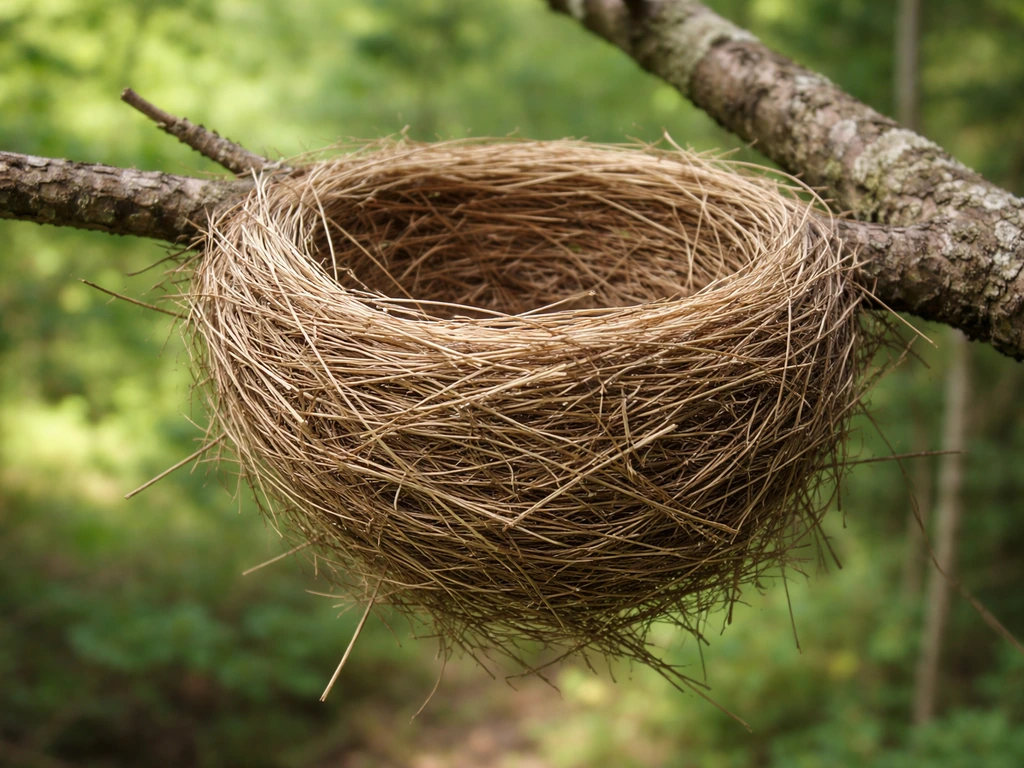
Beauty in a bird nest isn't just aesthetics. When naturalists and birders use the word, they're usually referring to a combination of measurable, observable qualities that you can actually assess in the field. Understanding these helps you make your own judgment call rather than just taking someone else's word for it.
- Structural complexity: How many different materials are woven together, and how tightly? A nest that uses six distinct materials bound with spiderweb shows more "craft" than a simple stick pile.
- Symmetry and shape: Nests that are perfectly cup-shaped, or precisely tubular pouches, tend to read as beautiful because of their geometric consistency.
- Camouflage and integration: Some nests are decorated with lichens or moss patches that make them nearly invisible against bark. That's a different kind of beauty, one that rewards close observation.
- Material selection: Nests built with animal fur, spider silk, plant down, or feathers have a softness and texture that stands out compared to rough twig constructions.
- Placement drama: A nest hanging from a single thread of fiber over open water, or perfectly centered in a flowering shrub, gains beauty from context.
- Scale relative to the bird: A hummingbird nest the size of a walnut shell, built with lichen and spiderweb, is extraordinary partly because of how tiny and precise it is.
None of these criteria produces a single universal winner. A lichen-covered hummingbird nest is beautiful for different reasons than an oriole's hanging pouch. The goal here is to give you a framework so you can recognize quality when you're standing in front of one.
The top candidates: birds with famously beautiful nests
These five species consistently appear at the top of any serious discussion about nest craftsmanship. Each has a distinct style and regional range, so you're unlikely to encounter all of them in the same backyard.
Baltimore Oriole (east of the Rockies) and Bullock's Oriole (western North America)
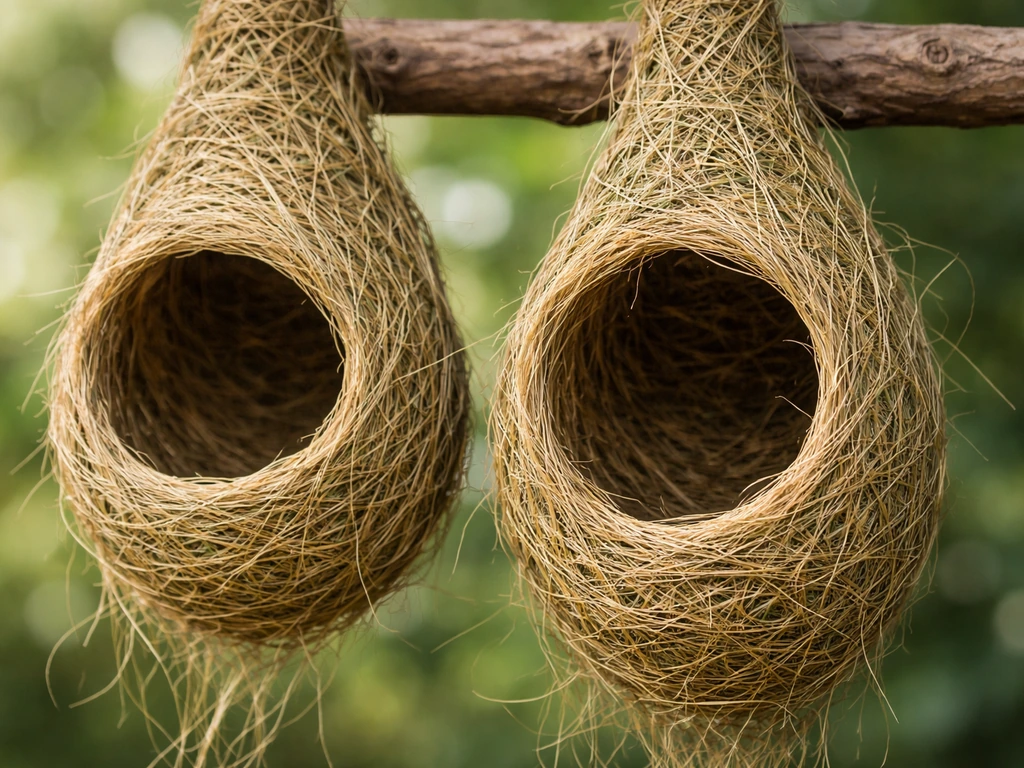
Orioles are the go-to answer for most people, and for good reason. The nest is a woven pouch, typically 3 to 5 inches deep and about 3 to 4 inches wide, suspended from the fork of a drooping branch, often an elm, cottonwood, or sycamore. The bird weaves long plant fibers, grasses, strips of bark, and sometimes synthetic string or yarn into a tight, flexible basket using only its beak. Audubon describes the finished product as suspended "like a basketball net" from high branches, and that image is exactly right. The nest swings in the wind but holds its shape completely. Inside, it's lined with softer plant fibers and sometimes animal hair. It's the combination of engineering precision, natural fiber weaving, and dramatic pendant placement that makes it so striking.
Bushtit (western North America)
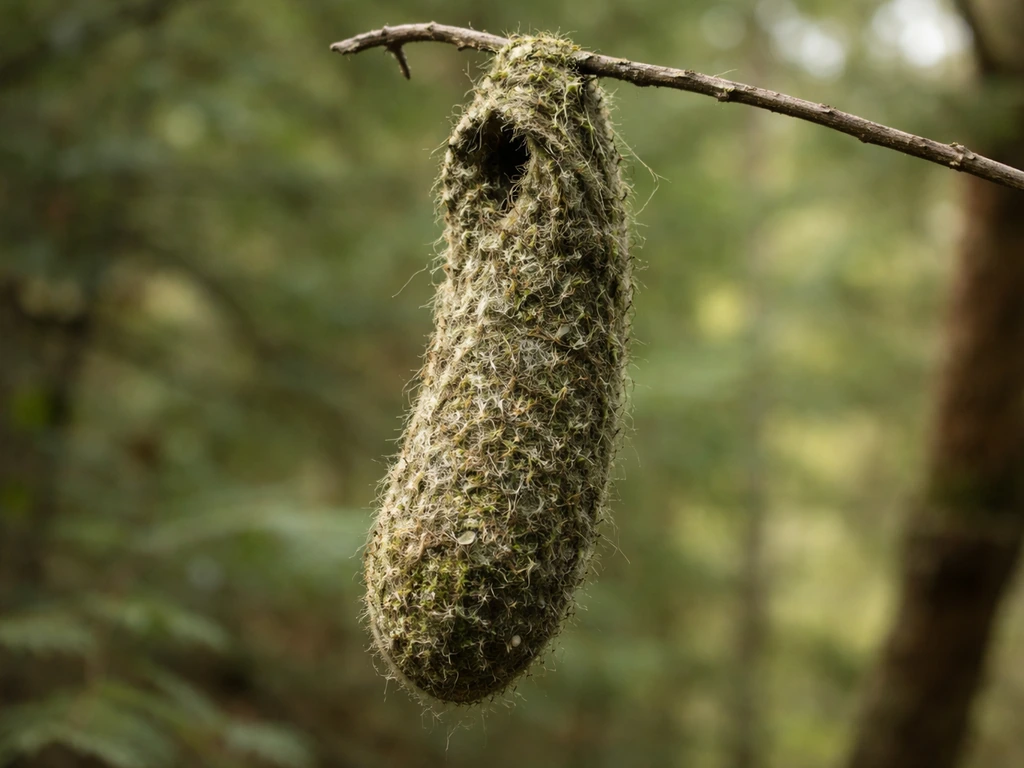
The Bushtit builds what Cornell Lab calls a "very unusual hanging nest," and that's an understatement. It's a soft, elongated sock or pouch, up to 12 inches long, woven from moss, spider webs, grasses, lichens, leaves, and rootlets, then lined inside with plant down, feathers, and animal hair. The exterior has a fuzzy, organic texture that looks almost like a cocoon or a mossy growth on a branch. It's firmly anchored to twigs and branches but sways gently. If you find one in the western U.S. or Pacific Coast shrublands, it's immediately recognizable as something extraordinary. The craftsmanship rivals the oriole but with a completely different aesthetic: soft and muted rather than structured and geometric.
Ruby-throated and Anna's Hummingbird
Hummingbird nests are beautiful on a different scale entirely. The smallest nests are typically made by certain hummingbirds, whose cups are only a fraction the size of many other songbird nests. The cup is roughly the diameter of a quarter to a half-dollar coin, built from plant down and bound together and to the branch with spiderweb silk. The exterior is decorated with lichen flakes that camouflage it as a natural knob on the branch. The elastic nature of the spiderweb construction means the nest actually expands as chicks grow. Finding one requires sharp eyes, but once you spot it, it's hard to believe something that precise exists in nature. Ruby-throated Hummingbirds are the eastern species to look for; Anna's Hummingbirds cover most of the Pacific Coast and breed year-round in mild climates.
American Robin
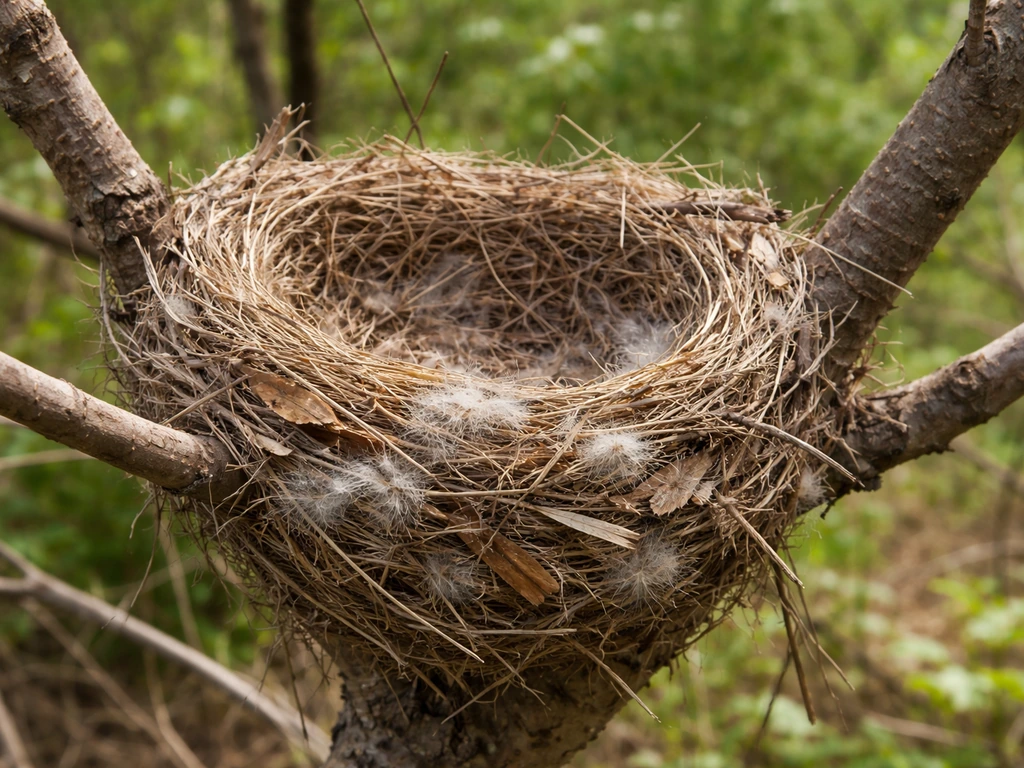
The American Robin's nest doesn't get enough credit. It's a sturdy open cup, roughly 6 inches in diameter, built from coarse grasses and twigs on the outside and then plastered on the inside with mud, which dries to a hard, smooth shell. A messy nest is most often linked to species like American Robins, which build sturdy cups that can end up looking untidy from the outside. The mud lining is then covered with fine, soft grasses. That three-layer construction, structural grass, hardened mud cup, soft grass interior, gives it a clean, finished look that other cup nests lack. Robins also place them in accessible spots (porch ledges, low tree forks, shrubs), so they're one of the most commonly observed beautiful nests for most people in North America.
Cedar Waxwing
Cedar Waxwings build loose, bulky cup nests from grasses, twigs, cattail fiber, and sometimes string or bark strips, placed in the fork of a tree branch. What sets them apart is the lining: soft grasses, fine rootlets, and often pine needles arranged in a tidy, tight cup inside the rougher outer shell. They're not as architecturally dramatic as an oriole or bushtit nest, but the contrast between the shaggy exterior and neat interior gives them a layered, crafted quality that rewards a close look.
How to ID the nest-maker quickly from what you're looking at
You don't need to see the bird to make a confident identification. The nest itself, specifically its shape, materials, placement height, and location type, narrows the field fast. Use this reference when you're standing in front of an unfamiliar nest.
| Species | Shape | Key materials | Placement | Approximate size |
|---|---|---|---|---|
| Baltimore / Bullock's Oriole | Deep hanging pouch, closed top | Woven plant fibers, grasses, bark strips, string | Tips of drooping branches, 20–45 ft up | 3–5 inches deep, 3–4 inches wide |
| Bushtit | Long hanging sock/pouch, side entrance hole | Moss, spiderweb, lichen, grass, plant down, feathers | Shrubs or trees, 4–30 ft up, western US | Up to 12 inches long |
| Hummingbird (Ruby-throated / Anna's) | Tiny open cup on branch | Plant down, spiderweb, lichen on exterior | On a horizontal branch, often over water or a path | ~1 inch deep, 1.5 inches wide |
| American Robin | Open cup with mud layer | Grass, twigs, mud plaster, soft grass lining | Ledges, tree forks, shrubs, 5–25 ft up | ~6 inches outer diameter |
| Cedar Waxwing | Loose bulky cup, neat inner lining | Grasses, bark strips, cattail fiber, pine needles | Tree branch forks, 5–50 ft up near fruiting trees | 4–5 inches outer diameter |
The single fastest shortcut: if the nest is hanging and closed at the top, you're almost certainly looking at an oriole or bushtit. If you’re trying to identify it fast, look for a hanging, closed pouch and use the nest clues in the ID section to confirm the nest-maker an oriole or bushtit. If it's hanging but long and sock-shaped with a side entrance, that's a bushtit. If it's a tiny cup with a bumpy lichen-covered exterior that blends into the branch, start looking for hummingbirds in the area. Open mud-lined cups at accessible heights are almost always robins. These clues alone will get you to the right species in most cases without any additional field guide work. For related structural comparisons, the techniques for identifying hanging nests and the largest nests in your area follow similar logic around placement height and material weight.
When and where to look right now
Since today is early May 2026, you are in the absolute best window of the year for nest-watching across most of North America. Spring migration is winding down, and resident and newly arrived breeding birds are actively building or have just finished nests. Here's what to focus on by species and habitat.
Baltimore and Bullock's Orioles
Baltimore Orioles arrive in the eastern U.S. from late April through May, and nest-building begins almost immediately after arrival. Right now, in early May, females are actively weaving. Look in tall deciduous trees, especially elms, cottonwoods, sycamores, and maples, near forest edges, parks, and suburban tree lines. The hanging pouch will be on the outer tips of long, drooping branches, often 25 to 45 feet up. Scan branch tips against the sky, especially in trees over open areas or water. In the west, Bullock's Orioles use similar habitat along river corridors and cottonwood groves.
Bushtits
Bushtits nest from February through June along the Pacific Coast and in western interior shrublands. In early May they are well into nesting. Look in chaparral, oak woodlands, suburban gardens with dense shrubs, and mixed woodland edges. The nest hangs from a branch or large shrub, typically 4 to 25 feet up, and the mossy exterior makes it hard to spot against foliage. Listen for the flock's high, thin contact calls, then scan nearby shrubs carefully.
Hummingbirds
Ruby-throated Hummingbirds are now arriving and establishing territories across the eastern U.S. Nest-building typically begins in May. Look on horizontal branches of deciduous trees, often 10 to 20 feet up, over paths, streams, or open clearings. Anna's Hummingbirds in the west may already have young in the nest by May. The lichen-covered exterior is the giveaway, but you often need binoculars and patience to spot it. Look for a female hovering repeatedly near the same spot on a branch.
American Robins
Robins are early nesters and may already be on their second clutch by May in many areas. Look on building ledges, porch beams, low tree forks, and dense shrubs. They're easy to find because they nest close to human structures and the mud-cup exterior is distinctive once you know what to look for.
How to watch responsibly without causing harm
Nest-watching is genuinely one of the most rewarding things you can do as a birder or homeowner. It's also one of the easiest ways to accidentally hurt the birds you're trying to appreciate. A few simple habits make all the difference.
- Keep your distance. For most songbirds, 10 to 15 feet is the minimum comfortable observation distance during active nesting. For hummingbirds, 6 to 10 feet is about as close as you should get. Use binoculars rather than approaching.
- Limit visit time. Keep any single observation to under 5 minutes when a bird is actively incubating or brooding. Prolonged presence stresses the adults and can cause nest abandonment.
- Never touch, move, or handle the nest, eggs, or chicks. Beyond the ethical issue, active nests of native birds are federally protected under the Migratory Bird Treaty Act. Touching is illegal, not just inadvisable.
- Don't cut branches or vegetation around an active nest. Even well-intentioned pruning can expose a nest to predators and direct sun.
- Avoid creating a trail of scent to the nest. Repeated foot traffic on the same path toward a nest can attract predators like raccoons and domestic cats that follow scent trails.
- Use a camera with a zoom lens instead of getting close. A 200mm or longer lens lets you photograph nests in sharp detail from a respectful distance.
- Take notes rather than photos when lighting is poor. Jot down: nest shape, approximate size, materials visible, height from ground, tree or shrub species, and any birds seen near it. That information is enough for a confident ID later.
If you've found an active nest: what to do (and not do)
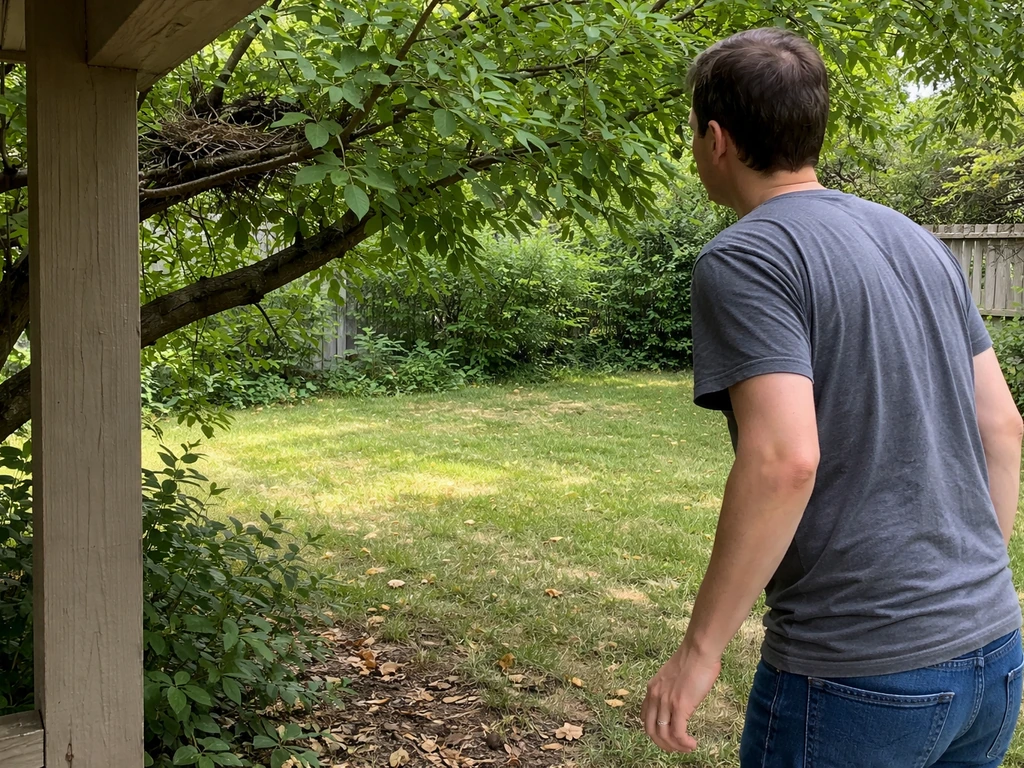
Finding an active nest on your property or in your yard is exciting, but it comes with real responsibilities. Here's the practical guidance that matters most.
The legal basics
In the United States, active nests of native migratory birds are protected under the Migratory Bird Treaty Act. This means you cannot legally disturb, relocate, or destroy an active nest (one containing eggs or live chicks) without a federal permit. The protection applies even if the nest is on your private property, on your porch, or in your garden equipment. Once nesting is complete and the nest is abandoned, the legal restriction no longer applies. Canada has similar protections under the Migratory Birds Convention Act. If you're in the UK, the Wildlife and Countryside Act 1981 offers equivalent protections for all wild bird nests in use.
Protecting the nest from common threats
The biggest immediate threats to most backyard nests are domestic cats, corvids (crows and jays), raccoons, and squirrels. You can reduce these risks without disturbing the nest itself.
- Keep cats indoors during nesting season. Outdoor and feral cats are the single largest human-associated threat to nesting birds in North America. Even a well-fed cat will raid a nest given the opportunity.
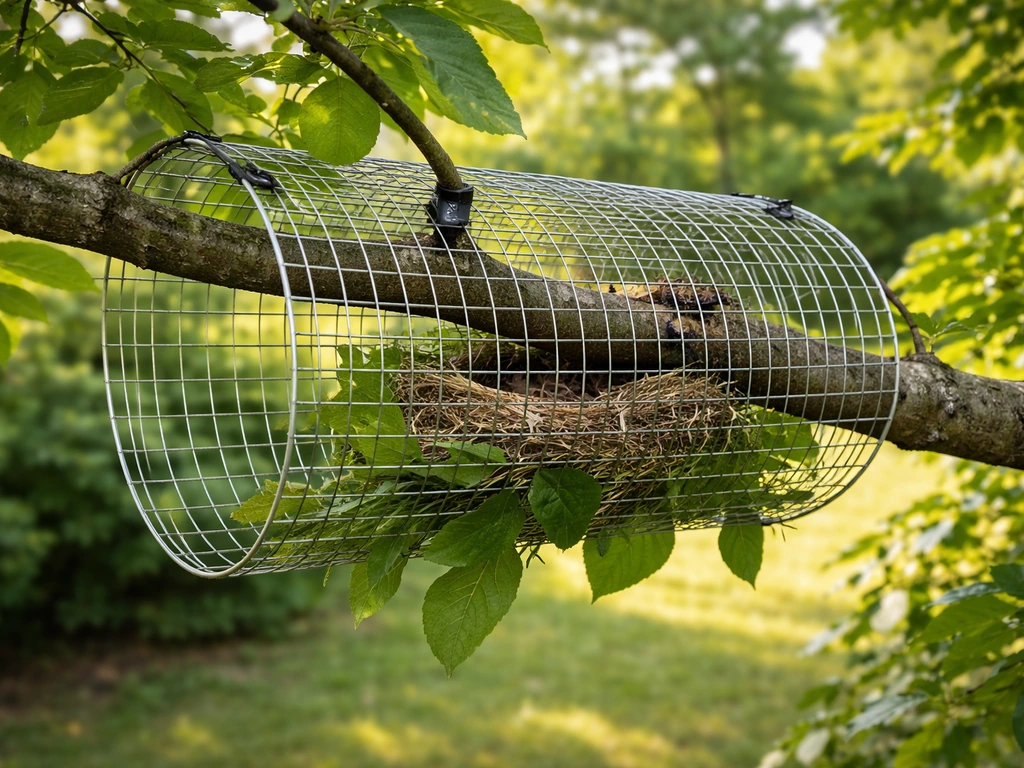
- Install a baffle on any pole or post the nest is near. A standard cone or cylinder predator baffle placed at least 4 feet off the ground blocks raccoons and squirrels from climbing.
- Avoid hanging bird feeders directly near the nest. Feeder traffic attracts corvids and squirrels that will investigate anything nearby.
- Do not use pesticides or herbicides near an active nest. Parents feeding chicks need intact insect populations, and chemical exposure can harm chicks directly.
- If the nest is on a building ledge exposed to afternoon sun, a temporary shade screen (a piece of shade cloth mounted nearby but not touching the nest) can prevent overheating without blocking adult access.
- If landscaping or construction work must happen nearby, delay it until after fledging if at all possible. Most passerine nesting cycles run 4 to 6 weeks from egg-laying to fledging, so postponing for a month is usually enough.
When to actually call for help
If you find a chick on the ground that appears injured or has no feathers, contact a licensed wildlife rehabilitator in your area. If the chick is feathered and hopping (a fledgling), leave it alone. The parents are almost certainly nearby and still feeding it. The urge to "rescue" a healthy fledgling is one of the most common and well-meaning mistakes nest-watchers make. A fledgling on the ground is not in distress; it's in a normal developmental stage. Only intervene if you see a clear injury, a dead parent nearby, or if a cat or other predator has physically handled the bird.
Finding and watching a beautiful nest well is a skill that builds over seasons. Once you know what an oriole's woven pouch looks like silhouetted against the sky, or you've spotted your first hummingbird nest by following a female's hovering pattern, you'll start seeing them everywhere. Start this week while nesting is at its peak, work through the ID clues above, and observe from a respectful distance. The nest will do the rest.
FAQ
Is it ever okay to touch, move, or relocate a nest if I think it is in a dangerous spot?
No. If it is active (eggs or chicks), moving or relocating it can be illegal without the required federal or local permits, even on private property. If there is a safety conflict, the safer option is to avoid the area, deter predators, and contact a wildlife rehabilitator or local authorities for guidance on mitigation.
How can I tell whether a nest is active without getting too close?
Use distance and indirect signs. Watch for adults repeatedly entering and leaving, food-carrying trips, begging calls, or visible egg or chick presence from a safe angle. If you cannot confirm activity without approaching, treat it as active and keep your observation from farther away.
What should I do if a nest is in a spot I need to access, like trimming a tree or working near a porch?
Plan around the nesting window. Avoid trimming or pressure near the nest until birds have fledged and the nest is no longer in use. If work must proceed, coordinate with a wildlife professional to determine the appropriate timing and exclusion steps that do not harm the birds.
Do all orioles and bushtits build the same type of hanging pouch, or can it vary a lot?
There is variation. Oriole pouches can differ in depth and exact placement depending on branch structure and local materials, and bushtit nests can range from more sock-like to more elongated shapes. Still, the fast identification rule holds: hanging, enclosed nests point you to those two groups, and you can refine using side-entrance cues for bushtits.
If I see a small lichen-covered nest, does that automatically mean hummingbirds?
It strongly suggests hummingbirds, especially when the nest is a tiny cup that blends into the branch with lichen flakes and is bound to the branch with fine silk. But to be confident, look for hummingbird behavior like a female repeatedly visiting one specific spot. Other small nest types usually do not match both the lichen camouflage and the hummingbird cup scale.
Can I use nest material to identify the bird if the nest looks incomplete or messy?
Yes, but incomplete nests are tricky. Materials can look different when the nest is mid-build, and debris from the surrounding area can confuse things. When in doubt, prioritize consistent structural cues (hanging vs open cup), placement height, and entrance shape, then confirm with adult behavior rather than relying on a single material feature.
What’s the best way to deter cats and other predators around nests without harming birds?
Use barriers and supervised access. Keep cats indoors during peak nesting, use predator guards on posts if applicable, and remove attractants like unsecured pet food. Avoid trapping or poisoning predators, and never place substances near nests that could contact eggs or chicks.
I found a fledgling on the ground. Should I always put it back in the nest?
Not automatically. If the bird is feathered and hopping, it is often a fledgling that is intentionally out of the nest while parents feed it nearby. Return it to the nest only if you are sure it was displaced from the exact nest and you can do so with minimal handling; otherwise, observe from a distance and contact a rehabilitator if there is clear injury or a predator is involved.
When is the best time of day to spot nest activity?
Early morning and late afternoon are often best because parents make frequent feeding trips and activity is easier to track visually. Midday can work for hummingbirds and some songbirds, but glare and heat can make tiny nests harder to see.
If I’m trying to identify a nest, how high should I assume it is?
Height estimates can be misleading. Use landmarks and binocular range, then note whether the nest is in outer tips of drooping branches, low and accessible human-adjacent ledges, or mid-story shrubs. The consistent placement patterns in the article are more reliable than guessing a single exact height.