A common tailorbird nest is one of the most distinctive structures you'll find in a garden. The female Orthotomus sutorius stitches one or two living leaves together at their edges using plant fiber or spider silk, forming a deep, cone-shaped cradle that stays green and camouflaged on the plant. The nest cup itself sits inside this leaf envelope, lined with soft fibers. Once you know what you're looking for, you won't confuse it with anything else. And if you've found one on your fence, in your garden shrub, or near a doorway, here's exactly what to do about it.
Common Tailor Bird Nest: Identify, Safely Leave, or Protect

Maya Bennett
30 Apr 2026
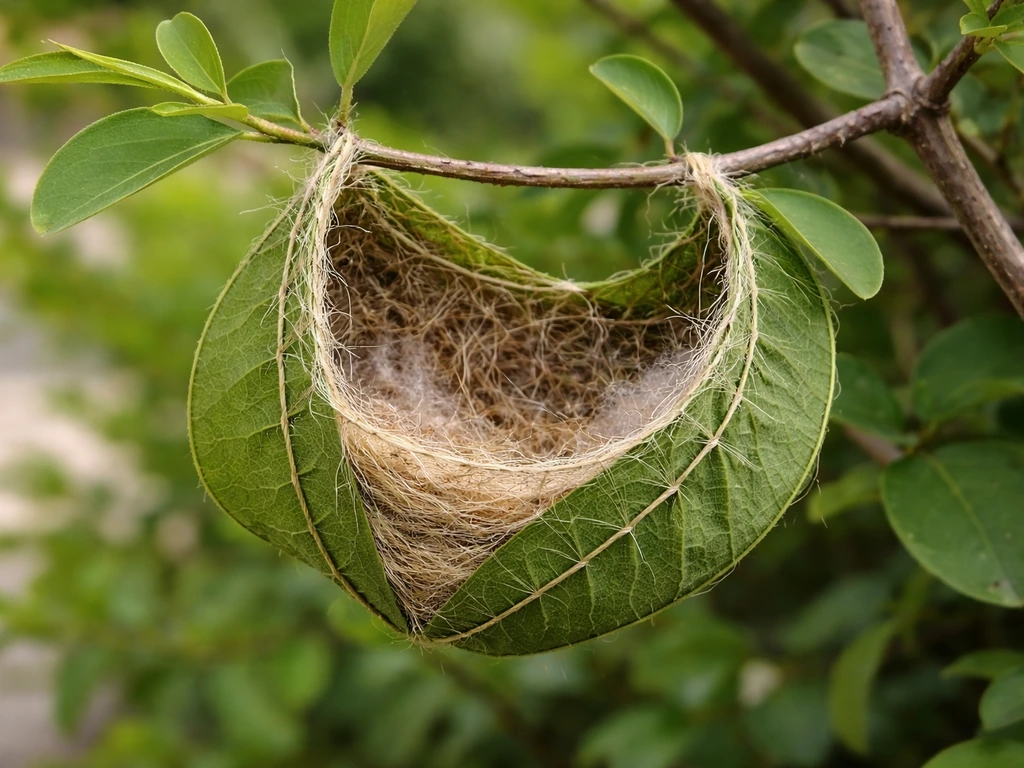
Quick ID: What a Common Tailorbird Nest Actually Looks Like
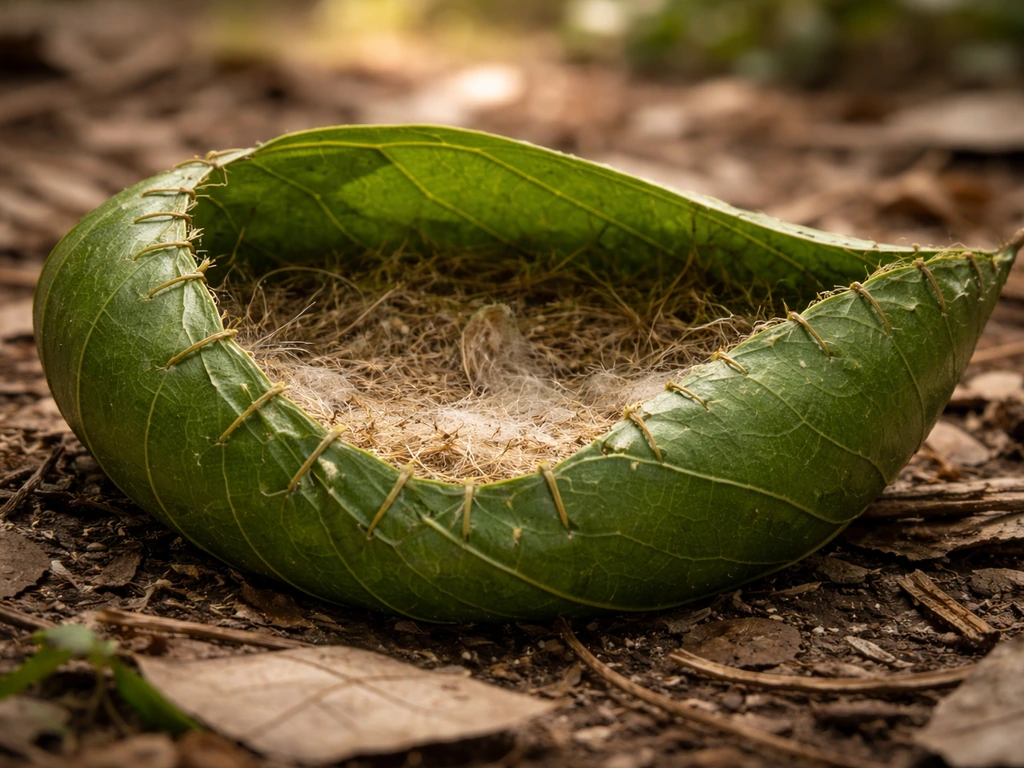
The nest of the common tailorbird is built around a leaf, not attached to a branch. The female selects a single large, strong, supple leaf or sometimes two leaves growing close together, then pierces the edges repeatedly and threads plant fiber or spider silk through the holes to draw the edges inward. The result is a tightly stitched pouch or cradle with the nest cup tucked inside. The leaf stays alive and attached to the plant, so from the outside it just looks like a slightly curled leaf. That's intentional camouflage.
Up close, look for these specific markers:
- Leaf edges pierced with small, evenly spaced holes stitched together with fine fiber or silk thread
- The leaf is still attached and living, not plucked or dried
- A deep, narrow cup inside the leaf cradle, lined with soft plant down, cotton fibers, or fine grass
- Overall nest height roughly 6 to 10 cm, narrow enough to fit inside a single rolled leaf
- Often suspended in a shrub, hedge, or small tree between 0.5 and 2 meters off the ground
How to Tell It Apart from Similar Nests
Other small bird nests in gardens are cup-shaped and attached to twigs or forks, made from grass, mud, or moss. The tailorbird nest is the only common garden nest where the outer structure is a living, stitched leaf. If the outer shell is a dead leaf or woven grass, it belongs to a different species. Weaver bird nests, which are sometimes confused with tailorbird nests in overlapping ranges, are much larger, globular, and woven from grass strips rather than stitched from a single leaf. The stitching is the definitive feature of the common tailorbird.
There are about a dozen tailorbird species across Asia, and several can overlap geographically with the common tailorbird. The common tailorbird (Orthotomus sutorius) is the most widespread, found across South and Southeast Asia from Pakistan through India, Sri Lanka, southern China, and into mainland Southeast Asia. If you're in Singapore, the common tailorbird is actually the species most likely to nest in your garden. Regional subspecies exist, such as O. s. maculicollis in parts of Southeast Asia, but nest construction is essentially the same across all of them.
Where Tailorbirds Build and What Materials They Use
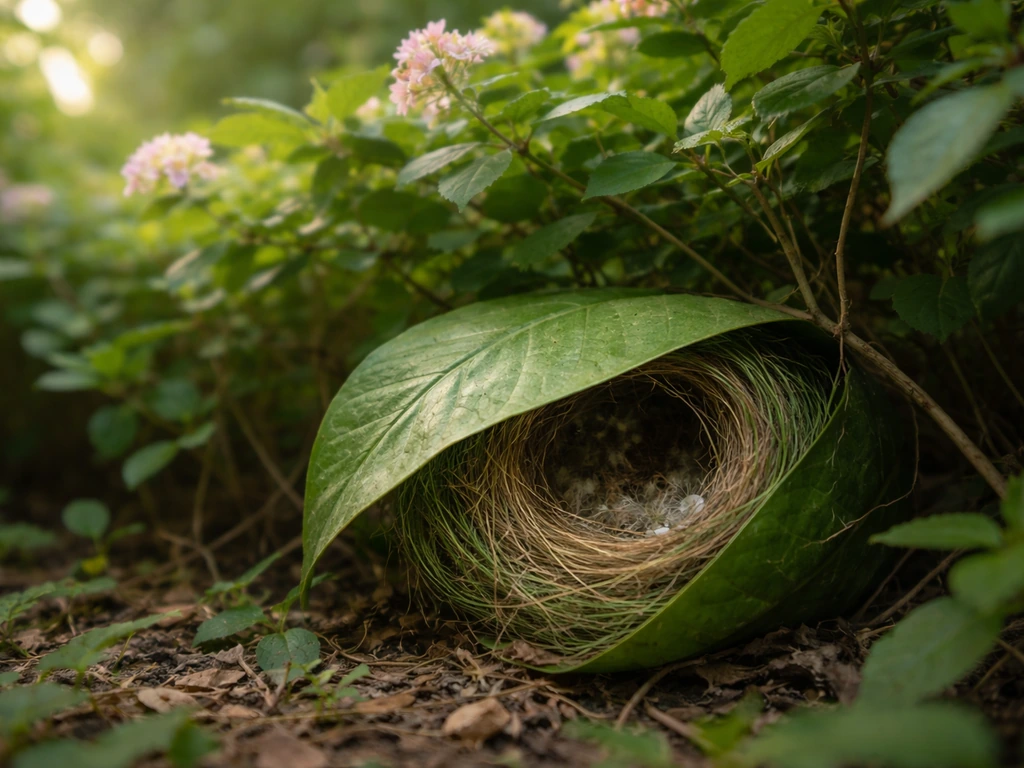
Tailorbirds are birds of dense vegetation, and they prefer garden shrubs, hedgerows, flowering plants, and low ornamental trees over tall forest canopy. They thrive in human-dominated landscapes, which is why you're more likely to find a nest in your garden than in a patch of untouched forest. Common plants used include hibiscus, banana, croton, bougainvillea, large-leafed ornamentals, and any shrub with broad, pliable leaves large enough to curl into a cradle. If you want to improve your odds, focus on providing dense low shrubs with large, flexible leaves where tailorbirds naturally choose to stitch their leaf nests.
The female does all the stitching work. She selects the leaf based on its size, strength, and flexibility. Once the leaf cradle is formed, she lines the interior cup with soft materials such as plant down, cotton, fine grass, or hair. Spider silk is used not just for stitching but also as a structural binding material because it stretches without breaking. The nest is positioned low enough in the shrub to be hidden by surrounding foliage but not so low that it sits in dense leaf litter.
Is the Nest Active? Timing, Eggs, and What You Can Safely Observe
In most of South and Southeast Asia, common tailorbirds breed across a long season, broadly from March through August, with peak activity varying by region. In warmer, wetter climates like Singapore, breeding can occur year-round. A clutch is typically 3 to 5 eggs. Incubation is handled mainly by the female and takes roughly 12 to 14 days, with research from Bangladesh reporting an average of about 14 days and a BMC-published study recording approximately 13.7 days. After hatching, chicks are fed by both parents and fledge relatively quickly. Field notes for common tailorbirds also describe incubation starting after eggs are laid and provide breeding observations that help interpret incubation timing in the nesting cycle.
To tell if a nest is active, stand at a respectful distance of at least 5 to 10 meters and watch for 10 to 15 minutes. Active nests will show adult birds making regular feeding visits, moving in and out of the leaf cradle. If you see small heads bobbing or hear quiet begging calls from inside, there are chicks present. An empty nest with no adult activity, no eggs visible from below, and a dried or browning leaf is likely abandoned or already fledged.
| Sign | What It Means |
|---|---|
| Adults entering/leaving regularly | Active nest with eggs or chicks |
| Chick heads visible or begging calls audible | Nestlings present, fledging is close |
| No adult visits over 15+ minutes of watching | Possibly abandoned or already fledged |
| Leaf still green and taut | Nest is recent and likely active |
| Leaf browned, shriveled, or open at the seams | Old or abandoned nest |
| Nest cup soiled or flattened | Fledged or failed nest, safe to leave or remove |
Keep your observations brief and from a distance. Note the time, what you saw, and whether adults returned. A simple note in your phone with the date and a photo is enough to track status over a few days without disturbing the birds.
Leave It Alone vs. Troubleshoot: Ethics, Safety, and Common Sense
What to do
- Observe from a distance of at least 5 meters, using binoculars if needed
- Photograph the nest from a safe distance to track changes over time
- Tell household members and visitors about the nest so it isn't accidentally disturbed
- Temporarily reroute foot traffic or garden activities away from the immediate area
- Keep cats, dogs, and other pets away from the nest plant during the active period
- Wait for fledging before doing any pruning, trimming, or plant maintenance in that area
What not to do
- Do not touch, handle, or move the nest while it is active
- Do not touch eggs or chicks, even if you think they've been abandoned
- Do not cut or trim the plant the nest is attached to until you are certain the nest is inactive
- Do not use pesticides on or near the nest plant during the nesting period
- Do not attempt to relocate the nest yourself
- Do not allow children to poke at or approach the nest closely
The biggest practical concern for most homeowners is that the nest is in an inconvenient spot: a garden path, near an entrance, or on a plant that needs maintenance. The good news is that the entire active period from egg-laying to fledging is short. With incubation taking roughly 12 to 14 days and chicks fledging relatively soon after, the whole process from a freshly built nest to empty can be as little as 4 to 6 weeks. That's a manageable delay for most garden tasks.
Legal and Practical Next Steps
In many countries, wild bird nests are legally protected while active. In the United States, the Migratory Bird Treaty Act (16 U.S.C. §703) makes it unlawful to take, disturb, or possess migratory bird nests, eggs, or young without a federal permit. The USFWS is explicit that moving or disturbing an active nest without authorization can result in heavy fines. Illinois's Department of Public Health, for example, advises that once a protected bird builds its nest on your property, federal law generally prohibits disturbing the bird, nest, eggs, or young, and recommends exclusion and habitat modification rather than removal.
In South and Southeast Asia, where common tailorbirds are native, national wildlife protection laws similarly prohibit nest disturbance. India's Wildlife Protection Act, for instance, protects all wild bird species and their nests. The specifics differ by country, but the common thread is: active nests are protected, and removal without proper authorization is illegal.
Relocation is not a simple DIY fix. USFWS permitting guidance makes clear that relocating migratory bird nests requires authorization and is not a blanket option for homeowners. If you genuinely need professional intervention because the nest is in a dangerous or truly inaccessible location, contact a licensed wildlife rehabilitator or your national/regional wildlife authority. They can advise on legal options specific to your jurisdiction.
Here is the fast decision framework:
- Is the nest active (eggs or chicks present)? If yes, leave it alone and protect the area.
- Is there a genuine safety emergency (structural collapse risk, medical access issue)? If yes, contact a licensed wildlife rehabilitator before touching anything.
- Is the nest inactive or already fledged? You can remove it now, legally, without any permit.
- Not sure if active? Watch from a distance for 15 minutes on two separate days before doing anything.
Solving Problem Nests Without Harming the Birds
Rerouting human activity
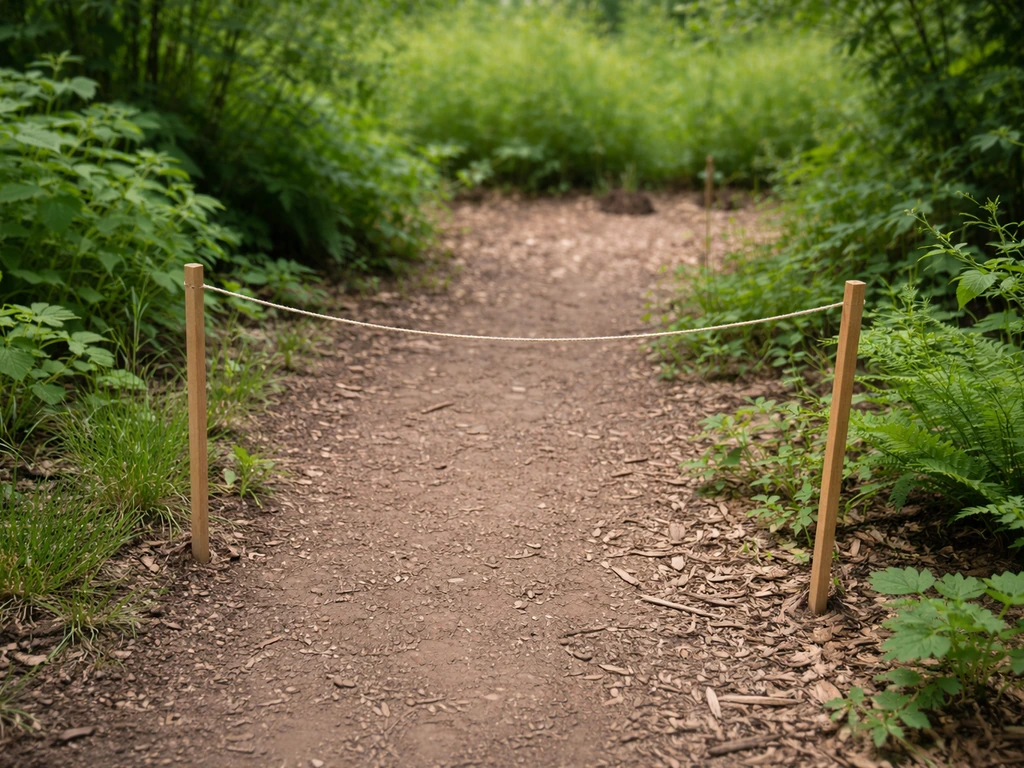
The most effective solution is almost always temporary rerouting rather than removal. If the nest is on a garden path, set up a simple visual barrier like a garden stake and string to redirect foot traffic 2 to 3 meters around the plant. If it's near an entrance, put up a small sign for household members and visitors. If it's in a plant you need to water, water the surrounding plants from a distance and skip that one shrub for a few weeks.
Protecting the nest from predators
Cats are the most common predator threat in garden settings. The single most effective non-invasive predator protection is keeping cats indoors or away from the garden during the nesting period. Placing a loose collar of wire mesh or a cone baffle around the base of the shrub's main stem can deter cats from climbing without touching the nest itself. Do not place physical deterrents directly on or immediately around the nest leaf, as that risks disturbing the structure and stressing the adults. Avoid attaching flagging tape or bright markers near the nest, as these can attract rather than deter predators by drawing attention to the location.
Exclusion: timing is everything
If the nest is in an area where you need to exclude birds in future seasons, the time to act is before nesting begins, not during it. Wildlife exclusion guidance is consistent on this point: never seal or modify a space with an active nest inside. Plan exclusion work for the non-breeding season. In temperate zones, BLM guidance treats the core nesting season as roughly May 15 to July 15, though this varies by species and region. For common tailorbirds in tropical zones, timing is more complex since breeding can occur year-round. The safe approach is to inspect the area carefully before doing any exclusion work and confirm no active nest is present.
Designing the garden to reduce future conflict
Tailorbirds are attracted to dense low shrubs with large, flexible leaves. If you consistently find nests in a particular shrub that conflicts with regular garden use, consider replacing it after the nesting season with a species that has smaller or tougher leaves, or relocating that plant to a quieter part of the garden. Conversely, if you enjoy having tailorbirds around, planting a designated quiet corner with hibiscus, croton, or banana plants gives them an ideal alternative location away from high-traffic areas.
Seasonal Checklist: Monitor Until Fledging

Use this checklist to track the nest safely from discovery to fledging. Each check-in should take no more than 15 minutes and should be done from at least 5 meters away.
| Stage | What to Look For | Action |
|---|---|---|
| Day 1: Discovery | Stitched leaf cradle, green leaf, fresh fibers | Photograph from distance, mark calendar, alert household |
| Days 2–5: Egg-laying | Adults entering and leaving, female spending long periods inside | Redirect foot traffic, keep pets away, do not approach |
| Days 5–19: Incubation | Female brooding, occasional male visits, adults alert to disturbance | Minimal observation, watch for predators, maintain barriers |
| Days 19–25: Nestlings | Frequent adult feeding visits, begging calls audible | Increase predator vigilance, continue to reroute activities |
| Days 25–32: Pre-fledging | Chick heads visible at leaf opening, adults very active | Do not trim or disturb plant at all, fledging is imminent |
| Fledging day | No chicks visible, adults calling nearby but not entering nest | Confirm nest empty over 2 days before any plant work |
| Post-fledging | Leaf browning, no adult visits over 2 days | Safe to prune, remove old nest if needed, plan future exclusion |
Keep a simple log with the date, a brief description of what you observed, and a photo if possible. This serves two purposes: it helps you track whether the nest is progressing normally, and it gives a licensed rehabilitator useful context if you ever need to call for help. Apps like NestWatch allow you to log observations formally and contribute your data to citizen science records, which is a genuinely useful thing to do if you're watching a nest through to fledging.
Once the nest is empty and confirmed inactive over at least two consecutive days with no adult activity, you are free to resume normal garden maintenance. The old nest can be left in place (it may be reused in a future season) or removed. If you want to encourage future nesting in a better location, consider growing a suitable shrub in a quieter corner of the garden before next season.
The common tailorbird is a remarkable builder. Understanding how it builds its nest, from the stitched leaf selection to the silk-threaded seams, makes it much easier to identify correctly and respond to with confidence. If you're curious about how this stitching process compares to other skilled nest builders, the weaver bird's technique is a fascinating contrast, using an entirely different approach of grass-weaving rather than leaf-stitching to achieve equally impressive results. If you want the specifics, how does weaver bird make its nest is a great next question to explore weaver bird's technique. Weaver birds make their nests by weaving grass strips into a larger, globular structure weaver bird's technique.
FAQ
Can I gently peel or trim the stitched leaf to get to the garden plant underneath?
No, do not. Even if the leaf looks like “just foliage,” the stitched pouch is part of an active nest, and handling it can stress the adults or cause abandonment. If you need access, reroute people, postpone pruning for a few weeks, and water from the side opposite the nest (or temporarily skip that shrub) until the nest has been inactive for at least two consecutive days.
What if I want to deter predators, can I put up flagging tape or a visual barrier next to the nest leaf?
Avoid it. Common tailorbirds rely on the outer leaf “envelope” for camouflage, and applying tape, stakes, or bright markers directly near the leaf can increase attention from predators. If you need a barrier, use a physical redirect placed around the plant at least a couple of meters away from the nest leaf, and keep it low and unobtrusive.
I live in a tropical area where they might breed year-round, when is it safe to do maintenance around the plant?
Timing matters, especially in warm climates. In tropical areas where breeding can occur year-round, assume there may be an active nest at almost any time. Inspect carefully before pruning, trimming, or sealing any openings, and if you find no activity, still wait until you have confirmed inactivity for two consecutive days before resuming normal work.
How can I tell the difference between an abandoned tailorbird nest and one that is temporarily quiet?
If the nest is still in place but adults are not seen, confirm before assuming it is abandoned. Watch from 5 to 10 meters for 10 to 15 minutes on a couple of different days, because feeding visits can be intermittent. A dried or browning outer leaf is a useful clue, but the best indicator is repeated lack of adult activity plus no visible signs like egg remnants.
When the nest is empty, can I remove the leaf cradle right away, or should I leave it until the season ends?
Only after the nest is fully inactive. Once confirmed inactive for at least two consecutive days, the old leaf cradle can be left or removed. If you remove it, avoid disturbing nearby plants that might still host the bird, and look for any “tucked” leaf entries or fresh stitching nearby that could indicate a second nesting attempt.
What if I can’t see eggs or chicks from below, how do I confirm the nest is active?
For tailorbirds, the nest is typically low and tucked into foliage, so you may not see eggs directly from below. Use adult behavior as your primary cue: regular feeding visits and any heads bobbing inside the leaf pouch. If you cannot find activity within your watch window, do not start searching up close, because you can accidentally disrupt a nest that is active but hidden.
What should I do if the nest is in a dangerous or truly unavoidable spot, like a gate hinge area?
Treat it like a bird-safety issue, not a relocation problem. Contact a licensed wildlife rehabilitator or your local wildlife authority if the nest blocks a walkway you cannot reroute, or if it is on a high-risk surface (like where it would be struck by regular maintenance equipment). They can tell you the legal options available for your location and whether an exclusion plan or temporary access changes are sufficient.
Can I install physical deterrents, like a mesh collar or cone, directly around the nest?
Most “cat deterrents” work best when they prevent access to the shrub without interfering with the nest leaf. A cone baffle or wire-mesh collar around the main stem can help, but do not attach anything to the leaf envelope or near the nest cup. Keep deterrents stable and check that they do not scrape the plant leaves where the bird stitched.
Can I permanently exclude tailorbirds from nesting on that plant after I remove this nest?
Yes, but it should be preventive and non-disruptive. If you plan to exclude birds in future seasons, do it only after confirming there is no active nesting present, typically outside the nesting period. Recheck right before the first major garden work window, since timing differs by region and weather, especially in warmer climates.
When should I contact wildlife authorities, and what information will they ask for?
It depends on local rules and the reason for contacting help. If you are in a jurisdiction where migratory or protected birds are regulated, get guidance rather than guessing. Provide them your photos and your observation log (dates, distance, and whether adults returned), because that helps officials decide whether it is active, abandoned, or potentially part of a documented nesting attempt.
Next Articles
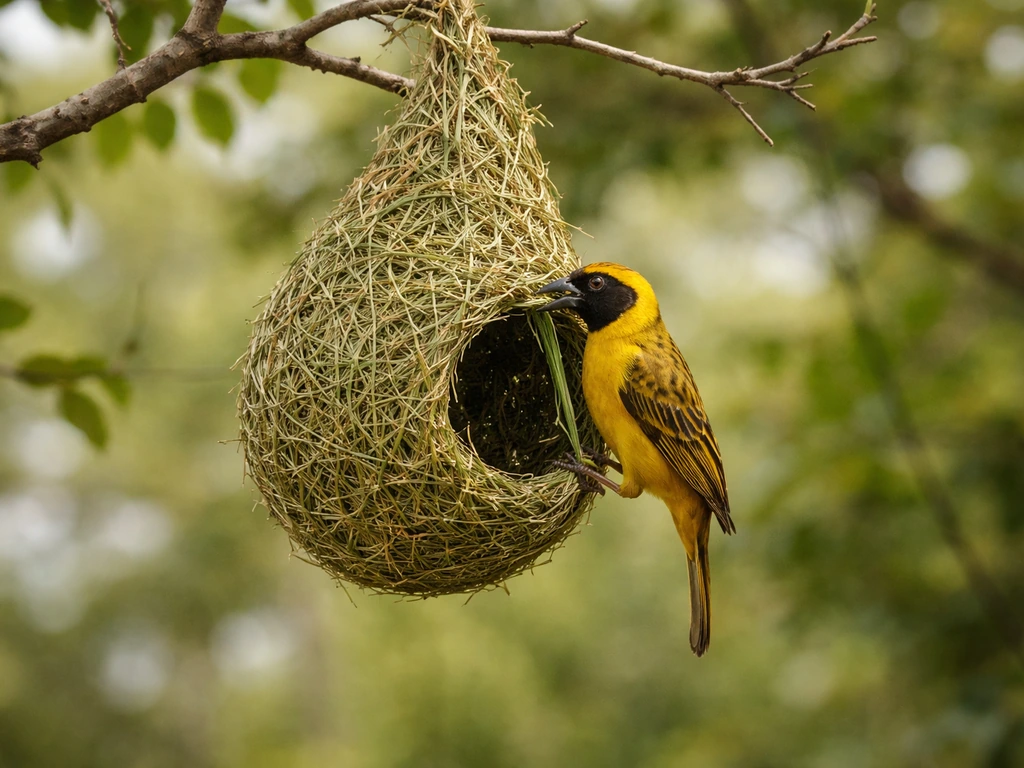
How Does a Weaver Bird Make Its Nest Step by Step
Step-by-step guide to weaver bird nests: types, materials, weaving technique, timing, and how to spot without disturbing

Who Builds the Bird Nest? How to Identify Active Nests
Learn who builds bird nests, how to spot active nests, and what to do safely and legally without disturbing birds.

Should I Let a Bird Build a Nest? What to Do Today
Decide if to let a bird nest, how to check activity, avoid disturbance, and handle conflicts safely and legally.