Bird nests are made through a remarkably precise sequence of behaviors: a bird selects a site, gathers specific materials, and assembles them layer by layer into a structure shaped to its species' needs. The process is not random improvisation. It is driven by instinct, local material availability, and the physical demands of keeping eggs warm and safe. Whether you are watching a robin press mud into a cup or trying to figure out if the nest wedged into your porch railing is still occupied, understanding how the construction actually works gives you a much clearer lens for identifying, interpreting, and responding to nests responsibly.
How Bird Nests Are Made: Materials, Steps, and Timing

Maya Bennett
17 Apr 2026
Bird nest types and who builds them
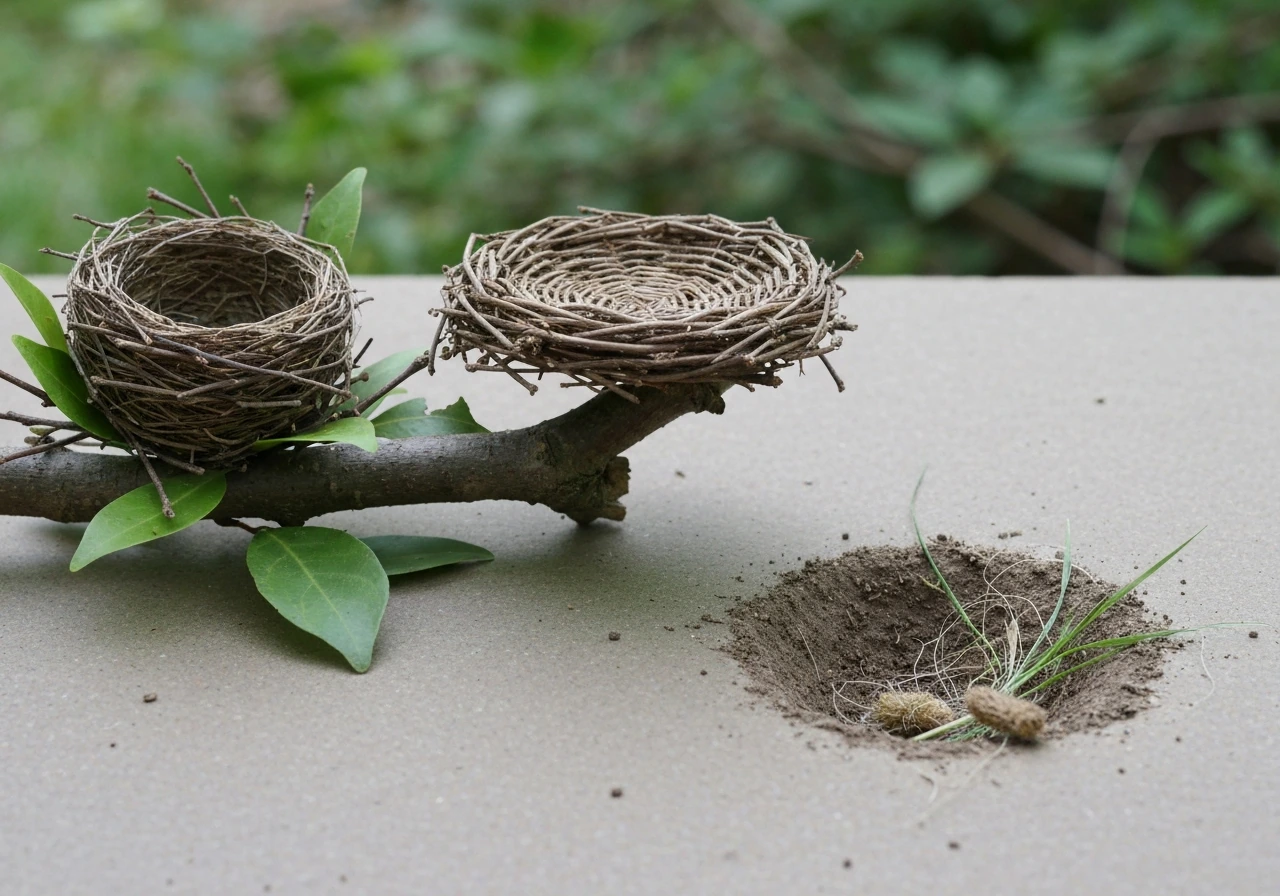
Not every bird builds the same kind of structure, and a surprising number of species do not build anything resembling a traditional nest at all. The five most commonly encountered nest types are cup nests, cavity nests, platform nests, scrape nests, and mud nests, and each one reflects a completely different set of trade-offs between site security, insulation, and construction effort.
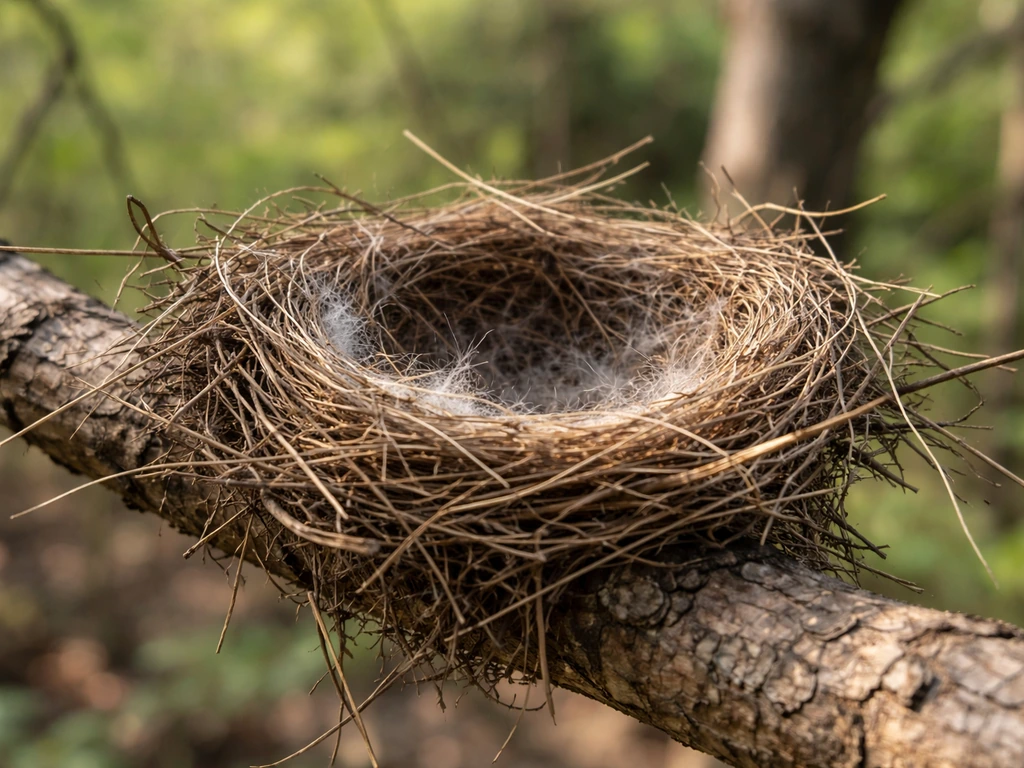
- Cup nests: The most familiar type. Robins, cardinals, finches, mockingbirds, and jays all build open cup-shaped nests, typically in shrubs or tree branches. The outer wall is coarser material; the inner cup is lined with something finer.
- Cavity nests: Woodpeckers excavate chambers directly into tree trunks; bluebirds, chickadees, and wrens use natural knotholes or nest boxes. The cavity itself provides most of the insulation, so the interior lining can be minimal.
- Platform nests: Large, flat stick structures built by herons, ospreys, eagles, and crows. These are often reused and added to year after year, growing into massive structures.
- Scrape nests: A shallow depression scratched into bare ground, sand, or gravel. Killdeer, many shorebirds, and some terns use scrapes with little or no added material. Eggs are extremely well camouflaged, which is the primary defense strategy.
- Mud nests: Built pellet by pellet using mud mixed with grass, bark, hair, or feathers. Barn swallows, cliff swallows, and cave swallows are the most common builders. Western house martins use the same technique, with both sexes collecting and placing mud pellets with their beaks, then lining the inside with grasses and soft materials.
It is also worth knowing that not every bird species builds a nest in the traditional sense. Penguins balance eggs on their feet; brood parasites like the brown-headed cowbird lay eggs in other species' nests entirely. These are not edge cases to dismiss; they matter when you are trying to identify what you are actually looking at in the field.
As for who does the building: in most species, the female does the majority of construction work. In northern cardinals, for example, the male sometimes brings materials to the female, but she handles the actual shaping and can take anywhere from 3 to 9 days to complete the nest. House sparrow nesting flips this pattern somewhat: an unmated male initiates construction as part of his display to attract a female, who then assists with finishing and lining.
Village weavers go further still, with the male tearing off roughly 300 individual leaf strips one by one and transporting them, while the female handles the fine inner lining. If you want a deeper look at these role differences, which parent builds the nest varies more than most people expect.
Materials birds use and how they collect them
The range of materials birds use is wider than most people realize, and what a bird nest is made of depends heavily on species, habitat, and what is locally available during the building window. That said, some patterns hold across nearly all cup-nest builders: the outer structure uses coarser, structural material, and the inner lining uses finer, softer material.
| Material | Role in nest | Common users |
|---|---|---|
| Twigs and sticks | Outer structural frame | Robins, jays, crows, platform nesters |
| Mud and clay | Binding agent and structural wall | Robins (cup lining), barn swallows, cliff swallows |
| Dried grass and stems | Mid-layer weaving and lining base | Cardinals, sparrows, finches, most cup nesters |
| Spider silk and spider web | Elastic binding that holds materials together | Hummingbirds, warblers, vireos |
| Lichens and moss | Camouflage outer layer and insulation | Many warblers and flycatchers |
| Animal fur and hair | Soft inner lining for insulation | Chickadees, titmice, robins, swallows |
| Feathers | Inner lining insulation | Tree swallows, bluebirds, many cup nesters |
| Human-sourced material | Inner lining (string, paper, cloth fibers) | House sparrows, starlings, urban-adapted species |
Spider silk deserves special mention because it is not just filler: it acts as an elastic binding agent that lets the nest expand slightly as nestlings grow. Hummingbird nests, which can be as small as a walnut half, rely almost entirely on spider silk to hold the structure together.
For mud nesters, the construction process is more like bricklaying: cliff swallows collect mud from wet soil or stream edges, carry individual pellets in their beaks, and press each one into the growing wall of the nest. A pair of barn swallows typically needs around two weeks to complete a nest from scratch.
An extension wildlife-damage-management resource notes that barn swallow nest construction (a mud-cup structure) may take about 1 to 2 weeks depending on mud supply and weather barn swallow nest construction (mud-cup structure). Mud-hole activity, where you see multiple swallows repeatedly landing in the same muddy patch, is one of the most reliable field clues that active nest-building is underway nearby.
House sparrows are worth flagging specifically because their material list is famously eclectic: coarse dried grass and hay-like stems form the bulk, but the inner lining includes feathers, string, paper, and cloth fibers, including material pulled from human structures. If you find a nest with obvious human debris woven into it, a house sparrow is the most likely culprit. This connects to a broader principle that a bird building a nest is an example of instinct-guided behavior that still adapts opportunistically to whatever the local environment offers.
Step-by-step nest-building behaviors (timeline)
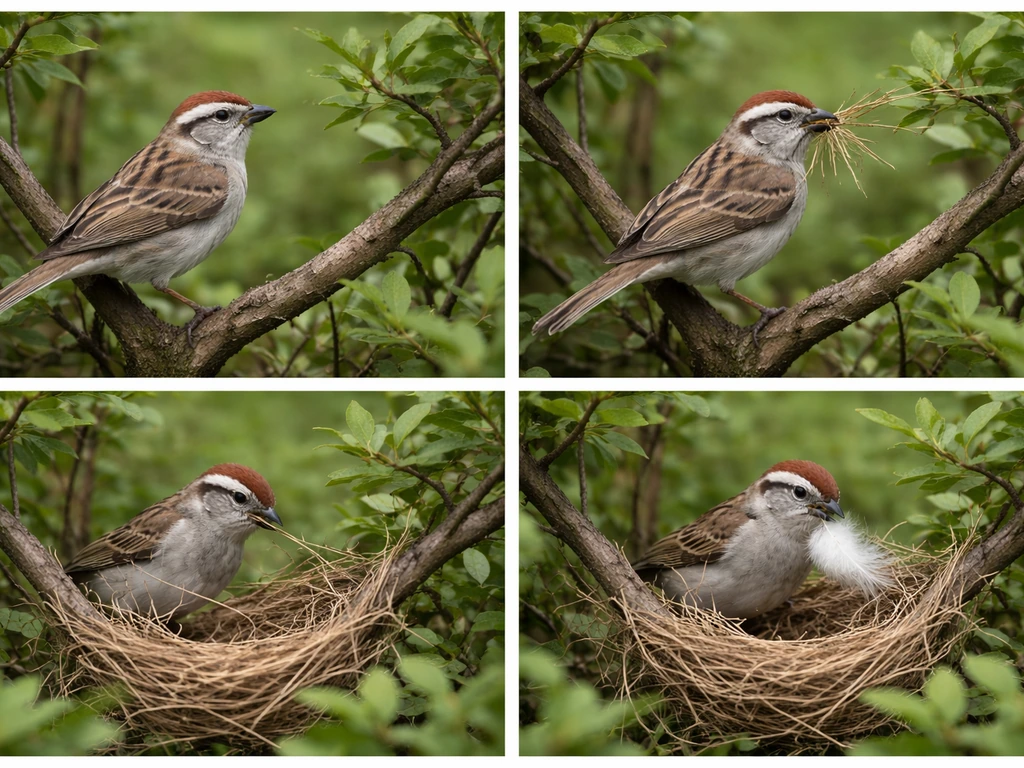
Nest construction follows a fairly consistent sequence across species, even if the exact timing varies. Understanding the stages helps you interpret what you are seeing when you observe a bird at work. For a more granular breakdown of the behavioral mechanics, how a bird actually makes a nest step by step is worth reading alongside this section.
- Site selection: The bird scouts multiple locations, often revisiting the same spot several times before committing. This phase can look like nothing is happening; the bird may just be perching in a candidate spot and looking around.
- Foundation building: Coarse materials (sticks, stems, mud) are placed first to anchor the structure to its support. For cup nesters, the bird uses its body to press and rotate against the material, beginning to shape the bowl.
- Wall building: Additional structural material is added and woven or pressed into place. This is the most labor-intensive phase. A robin building a cup nest will make dozens of trips per hour during peak construction.
- Mud or binding layer: Many species add a mud or spider-silk layer at this stage to consolidate the structure. Robins are famous for plastering a thick mud lining inside the grass outer wall.
- Inner lining: The final phase. Softer, finer materials are added: feathers, fur, fine grass, plant down. Female bluebirds, for example, build a tight inner cup of finer material on top of a looser outer base built earlier.
- Final shaping: The bird sits in the nest and rotates its body repeatedly, compressing and rounding the cup into its final shape. This is visible behavior and a clear sign that a nest is nearly complete.
The full timeline from first material placement to a nest ready for eggs varies from as few as 2 to 3 days for small songbirds to several weeks for large platform nesters like ospreys. Most backyard cup nesters fall in the 4 to 10 day range. Spring is the dominant building season for most North American species, though many birds attempt second or third broods in summer, which means active construction can continue well into July or August. If you want to know exactly when birds typically make nests in your region, timing varies by latitude and species.
Where birds choose to build and why it matters
Nest placement is not accidental. Birds are making calculated decisions about predator exposure, microclimate, structural support, and material proximity all at once. Habitat and local material availability directly shape both where a bird builds and what it builds with. A bird that cannot find mud nearby simply will not build a mud nest in that spot.
- Ground and scrape sites: Open beaches, gravel bars, tundra, and agricultural fields. Killdeer, plovers, and terns nest here. The main defense is camouflage, not structure. Eggs are often impossible to spot from standing height.
- Shrubs and low vegetation (0.5 to 3 meters): Common for song sparrows, cardinals, catbirds, and many warblers. Shrubs offer concealment from aerial and terrestrial predators.
- Tree canopy (3 meters and above): Robins, orioles, tanagers, and many others. Height provides predator distance; dense foliage adds concealment.
- Tree cavities and snags: Woodpeckers, chickadees, bluebirds, owls. Cavities provide excellent thermal insulation and protection; competition for these sites is intense.
- Cliff faces and overhangs: Swallows attach mud nests to vertical rock faces or the undersides of bridges and eaves. The overhang protects the nest from rain.
- Human structures: Barn swallows nest inside structures; house sparrows pack cavities in soffits and gutters; robins build on ledges and window units. The availability of these sites has expanded many species' ranges significantly.
When a bird decides to nest on or in a human structure, it creates a genuinely tricky situation. Finding a bird nesting on your porch is one of the most common homeowner encounters, and it requires a specific and legally careful response that is covered in the guidance section below.
It is also interesting to note that nest-building instinct is not unique to birds in the broader animal world. Some fish species build nests using surprisingly similar site-selection logic and construction behaviors, which is a useful reminder that nest-building is a convergent survival strategy, not a bird-exclusive trait.
How to tell if a nest is active or abandoned
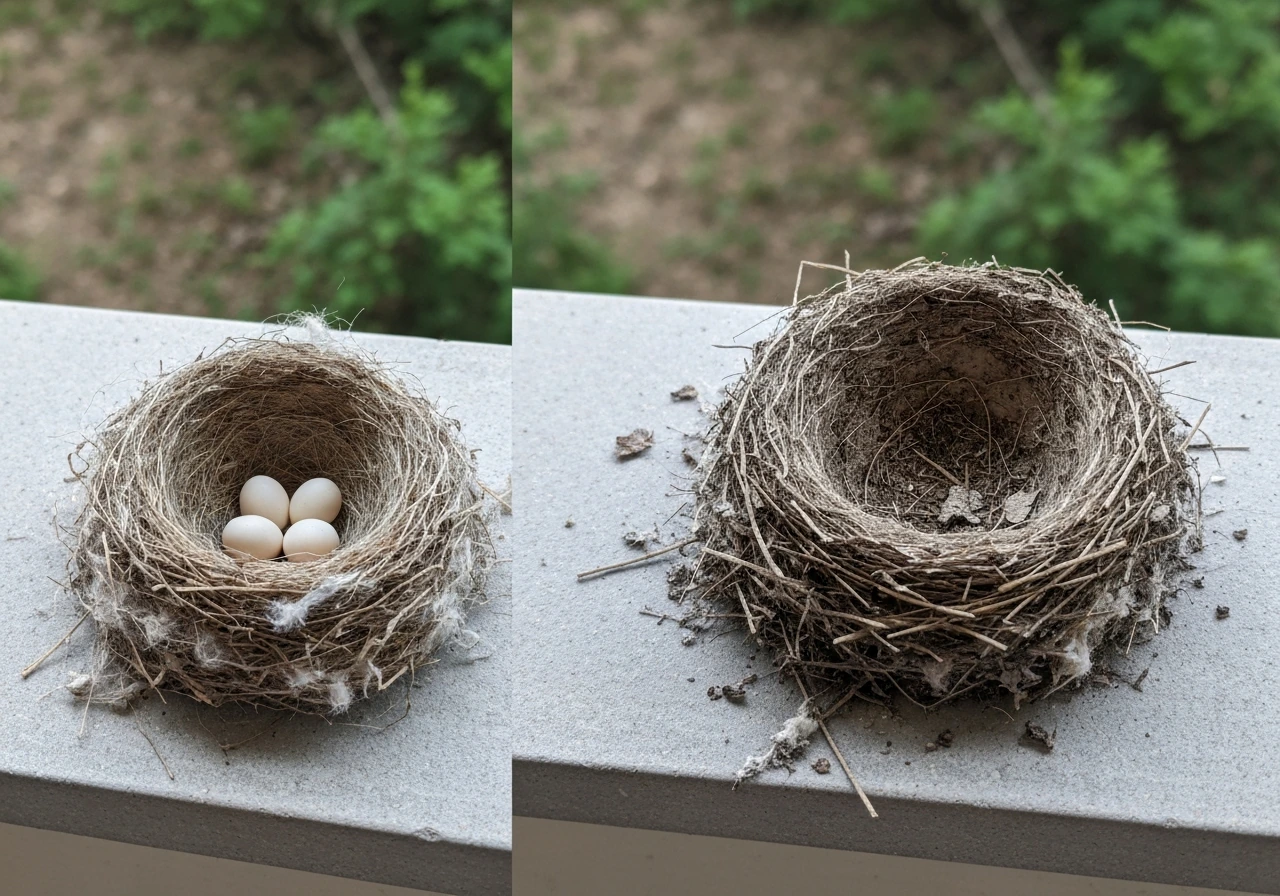
This is one of the most practically important skills for anyone who finds a nest near their home. The default assumption should always be that a nest is active unless you have clear evidence otherwise, because NestWatch and Cornell Lab data show that monitors frequently assume a nest is abandoned while adults are still tending eggs or young. NestWatch monitoring guidance stresses leaving nests undisturbed between laying and fledging, since adults may briefly leave the nest during normal incubation and care NestWatch guidance to leave nests undisturbed between laying and fledging. Getting this wrong has real consequences: handling or removing an active native bird's nest is illegal under the Migratory Bird Treaty Act.
Here are the field signs to look for, broken down by nest stage:
| Stage | What you will see | What it means |
|---|---|---|
| Under construction | Adult repeatedly arriving with material in beak; nest structure visibly growing day to day | Actively building; back off and observe from distance |
| Egg laying / incubation | Adult sitting still in nest for long periods; brief departures when disturbed | Incubation underway; do not approach |
| Nestling stage | Adults arriving frequently with food; white fecal sacs carried away from nest; chick sounds audible | Young are present; nest is very active |
| Post-fledging | Adults and juveniles moving in/out of nearby vegetation; nest may appear empty but adults nearby | Fledglings may still be dependent; nest recently active |
| Abandoned (genuine) | No adult visits over 48+ hours in good weather; nest is cool to the touch; eggs are cold and may be cracked or discolored | Likely abandoned, but confirm over multiple observation sessions |
The white fecal sac clue is one of the most reliable and underused indicators. When nestlings are present, adult birds carry away fecal sacs (small white mucus-coated droppings) and drop them some distance from the nest. If you see adults flying away from a nest site carrying what looks like a small white packet, nestlings are almost certainly inside. Watching where birds go after stuffing their beaks with food is the other key behavior: if they fly to the same spot repeatedly, that is your nest location.
For ground-nesting species, the active vs. abandoned question carries extra urgency. Eggs and chicks can be so well camouflaged that you may be standing within a meter of them without realizing it. Florida Fish and Wildlife conservation data specifically flags the risk of people accidentally crushing eggs or killing young because chicks near humans often freeze in place rather than fleeing, making them nearly invisible.
Ethical guidance: what humans can and can't do
The Migratory Bird Treaty Act protects the vast majority of native bird species in the United States. Under the MBTA framework, destroying or removing an active nest (one containing eggs or live young) is illegal without specific federal authorization. The USFWS does issue permits in genuine safety or public health situations, but standard homeowner scenarios (a nest on a porch light, a swallow nest under an eave) do not qualify. The one commonly cited exception involves resident Canada geese, which have a separate permit registration system under specific state and federal programs. For every other native migratory species, the rule is clear: active nests are off limits.
Here is practical guidance for the most common situations homeowners and birdwatchers encounter:
- Do observe from a distance using binoculars. Get close enough to confirm activity, then step back. Repeated close approaches stress the adults and can cause nest abandonment in sensitive species.
- Do keep cats indoors. This is one of the highest-impact actions a homeowner can take. Cats are a leading cause of fledgling mortality, and fledglings spend days on the ground before they can fly reliably.
- Do take photos from a distance using a zoom lens if you want documentation. Do not approach the nest for a better shot.
- Do wait out the nesting cycle. Most passerine nests are active for 4 to 6 weeks from egg-laying to fledging. Waiting is almost always the right answer.
- Do not remove or relocate an active nest. This is illegal for protected species and genuinely harmful to the birds.
- Do not assume a nest is abandoned after one or two observation sessions. Adults may be away foraging; incubating females often take short recesses. Check across multiple days and multiple times of day before drawing any conclusion.
- Do not handle eggs. Even well-meaning handling can transfer scent, damage delicate shells, or disrupt incubation temperature.
- Do not use pesticides or repellents near an active nest. Residues can affect eggs and nestlings directly.
If a nest is genuinely empty and you have confirmed it is fully abandoned (no activity for several days in reasonable weather, cold and damaged eggs or none at all), removal for safety or structural reasons is generally legal for most native species once the nesting cycle is complete. If you are uncertain, contact your regional USFWS office or a licensed wildlife rehabilitator before doing anything. The few minutes it takes to make that call can save you from a legal problem and, more importantly, from harming a brood you did not realize was still active.
The broader takeaway is that nest-building is one of the most observable windows into bird biology that most people will ever have access to. From the first mud pellet pressed onto a barn beam to the last fledgling stepping off the edge of a cup nest into open air, the whole process is visible, documentable, and genuinely fascinating if you approach it with patience and the right field signs in mind. Your job as a homeowner or birdwatcher is not to intervene; it is to observe carefully, stay back, and let the process run its course.
FAQ
How can I tell whether a nest is active if it looks unfinished or newly built?
If you see nest-building behavior, treat the nest as active immediately. Many birds start incubating soon after the first eggs are laid, so a nest can be “partly built” and already legally protected if eggs or live young are present.
What should I do if I think there are no eggs or chicks in the nest but birds keep returning?
The safest approach is to avoid touching until you have confirmed abandonment. Signs like ongoing visits by adults, food delivery, or fresh fecal sacs strongly suggest young are present, even if the nest bowl looks empty or you do not see chicks.
Can I remove a nest if I had disturbed it earlier and the birds stopped coming for a bit?
A small number of birds (especially some cavity nesters) may appear to abandon a nest after disturbance, but that does not guarantee it is empty. Wait for multiple days of confirmed inactivity in good weather, or contact your local wildlife authority if you need to remove something for repairs.
Do birds reuse nests, and does that affect the “how nests are made” timeline?
Yes, but it changes what you are seeing. “Year-round” is often relocation or reuse, not new construction every season. Some species repair old structures, and older nests can still be occupied if a new clutch is started.
Why do some birds seem to build nests with almost no materials?
Not always. Some nest types, like scrapes, are minimal structures, while cavity nests rely on site selection rather than construction materials. If the bird is using a hollow or space it considers suitable, the “construction” may mostly be lining and grooming rather than building a visible structure.
What is the practical way to handle a nest on a porch or building without accidentally harming the birds?
If your porch or railing has nesting activity, the key is to reduce attraction and disturbance without physically removing the nest. Keep people and pets away, reduce outdoor light at night if possible, and delay repairs until the nesting cycle ends or you have official guidance.
How close can I watch a nest while it is being built or occupied?
Watching from a distance is usually enough, but you should not hover at the nest entrance for long periods. Quick observation using a phone zoom or binoculars is better than repeated close passes, since frequent disturbance can cause adults to reduce feeding.
What are the most reliable “field signs” that nestlings are inside, even if the nest looks dirty or damaged?
Fecal sacs, repeated food-carrying flights, and adults defending or arriving at consistent times are stronger indicators than the presence of loose debris. Degradation after bad weather can make a nest look messy while still being actively used.
If I see human string or cloth in a nest, does that always mean it is a house sparrow?
House sparrows and some other opportunists readily incorporate human fibers, but you should not assume the species from one material alone. Feathers and strings can also appear in nests of native cavity or cup nesters, so pair material clues with location and bird identity.
How long do I need to wait to be confident a nest is truly abandoned before removing it?
For safety and legal reasons, “empty” should mean confirmed inactive, not just “no birds visible.” Confirm inactivity over several days in reasonable weather, and check whether the nest has become part of ongoing activities like fledgling roosting or post-fledging feeding nearby.
Do birds always finish the whole nest before they start laying or incubating eggs?
It depends on the species and timing. Many backyard cup nesters build faster than large raptors, and some birds lay eggs before the structure is fully “finished.” Your best cue is the change in adult behavior, like start of consistent incubation or frequent brooding visits.