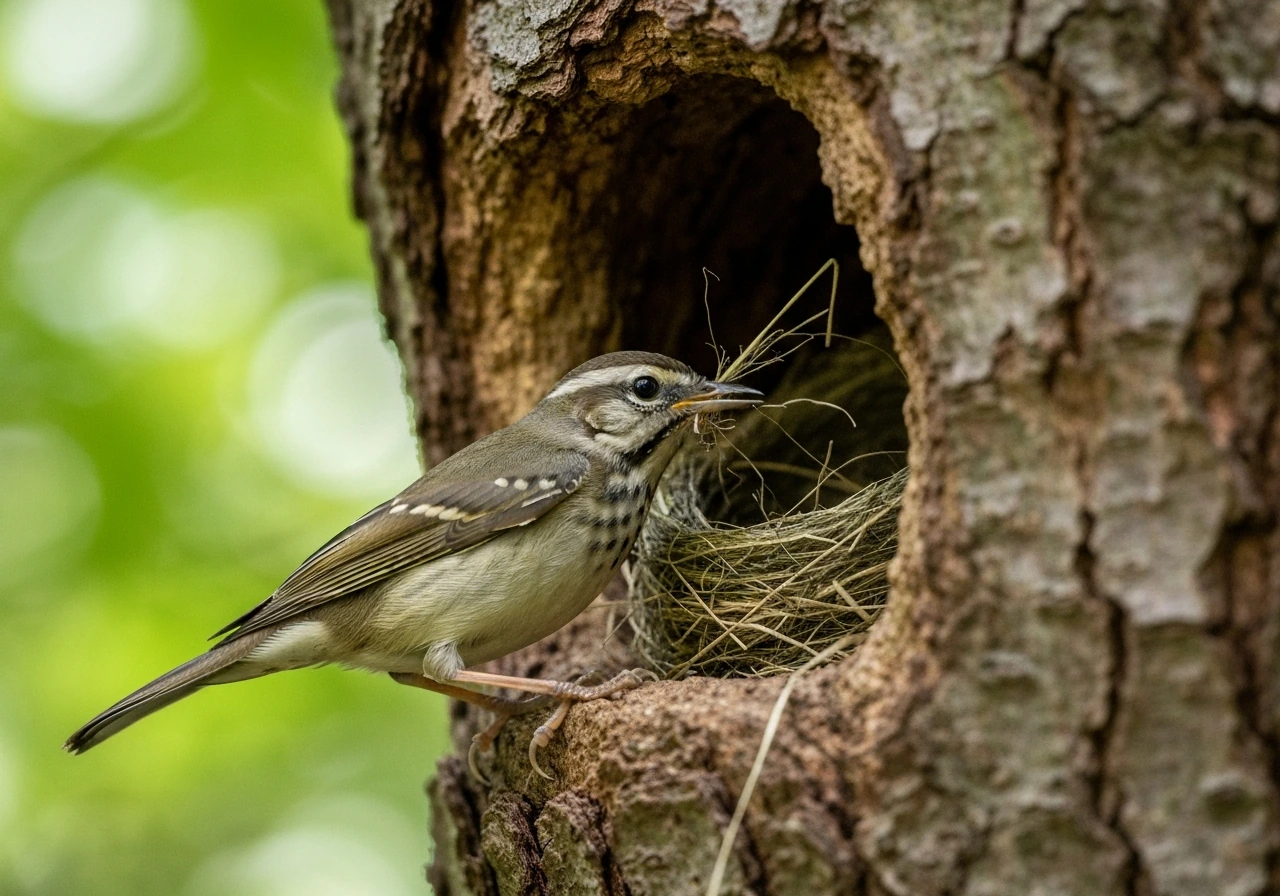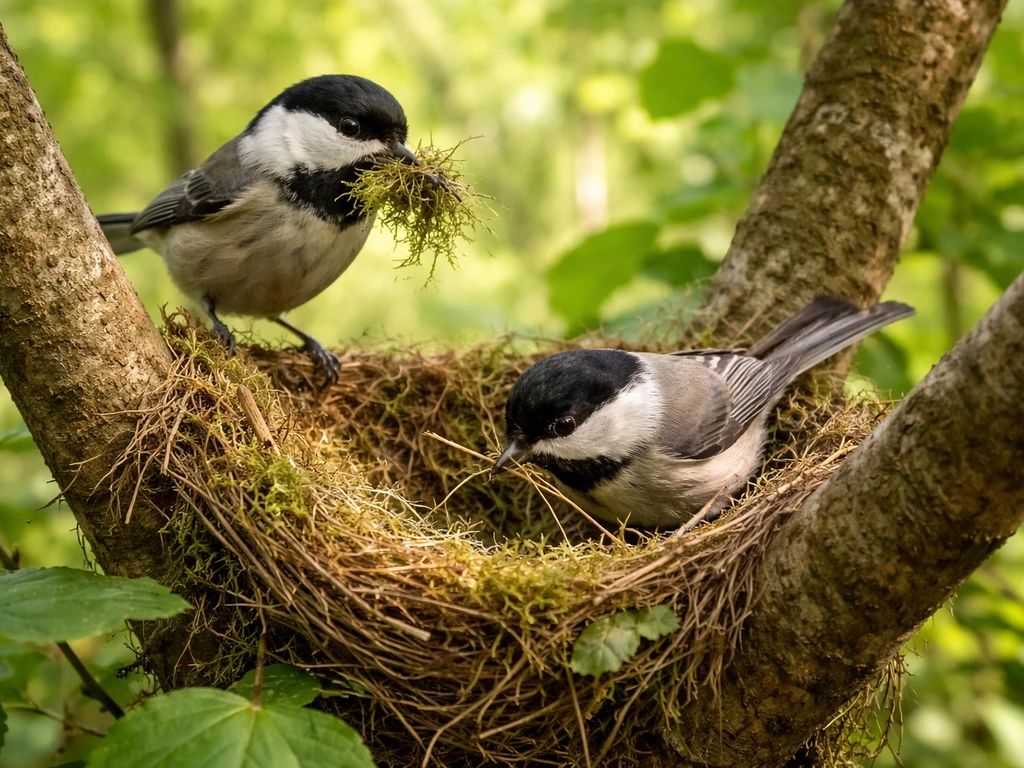
Most birds build a nest in 2 to 5 days, but the real range runs from a single afternoon to nearly two weeks depending on species, experience, and conditions. A barn swallow can slap together a mud cup in roughly 10 days. A house wren stuffs a cavity with twigs in about a week. A red-winged blackbird weaves a marsh nest in 3 to 6 days. If you're watching a bird on your property right now and wondering whether it's on track, those are your ballpark numbers.
How Fast Can a Bird Build a Nest? Timeline and Checklist

Maya Bennett
24 Apr 2026
Typical nest-building timelines by species
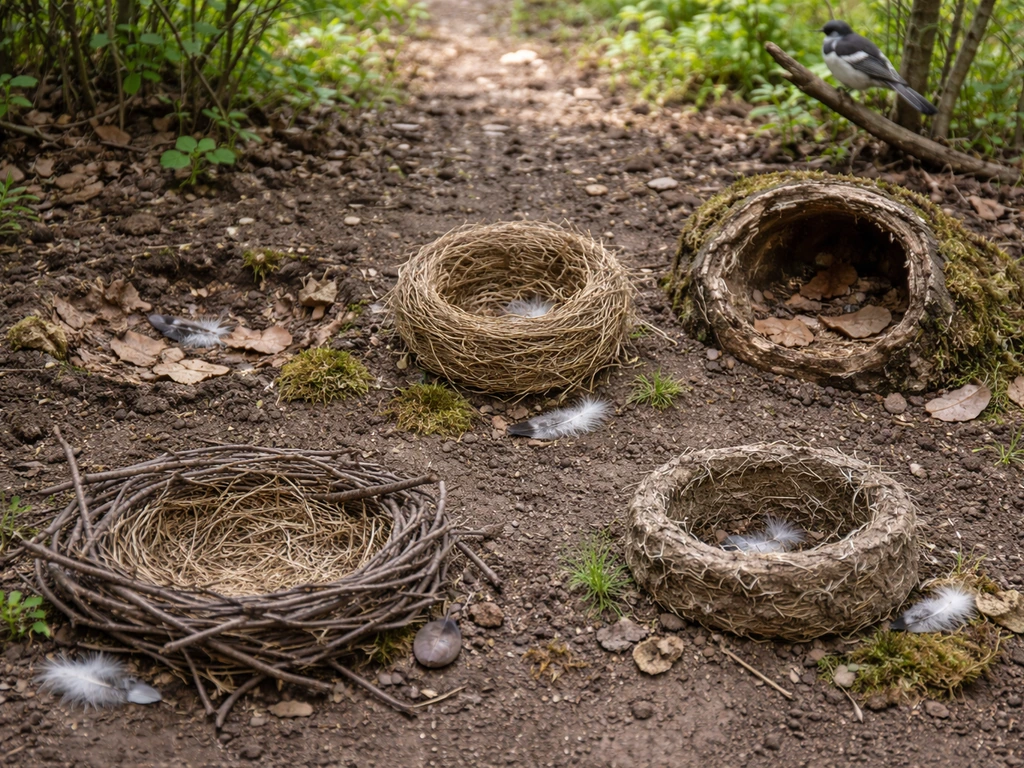
Species vary dramatically in how long they take, mostly because nest architecture varies dramatically. A simple scrape in the ground takes almost no time at all. A tightly woven cup nest takes longer. A mud nest has to dry between layers. Here's a practical reference for common North American species:
| Species | Nest Type | Typical Build Time | Notes |
|---|---|---|---|
| American Robin | Mud-reinforced cup | 2–6 days | Female builds alone; mud lining must dry before egg-laying |
| Barn Swallow | Open mud cup | 10–14 days | USFWS notes they may reuse old mud traces, which cuts time significantly |
| House Wren | Twig-filled cavity + cup | About 1 week | Male may start multiple nests simultaneously to attract a mate |
| Red-winged Blackbird | Woven grass cup | 3–6 days | Female weaves alone; wet or windy weather can stall progress |
| Mourning Dove | Loose twig platform | 2–4 days | Notoriously minimal structure; male gathers, female places |
| House Sparrow | Loose cavity fill | 1–2 weeks | Adds material gradually; nest grows messier over time |
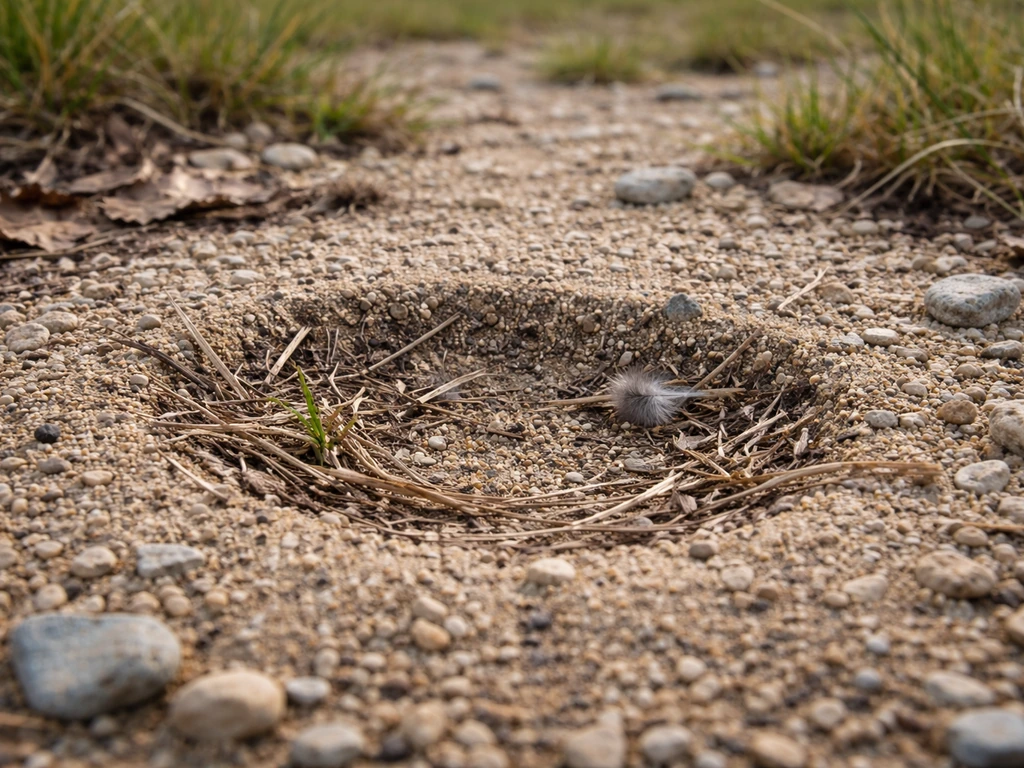
| Killdeer | Ground scrape | 1–3 days | Barely a nest; mostly pebble arrangement around a depression |
| Baltimore Oriole | Woven hanging pouch | 1–2 weeks | One of the most complex North American nests; female weaves solo |
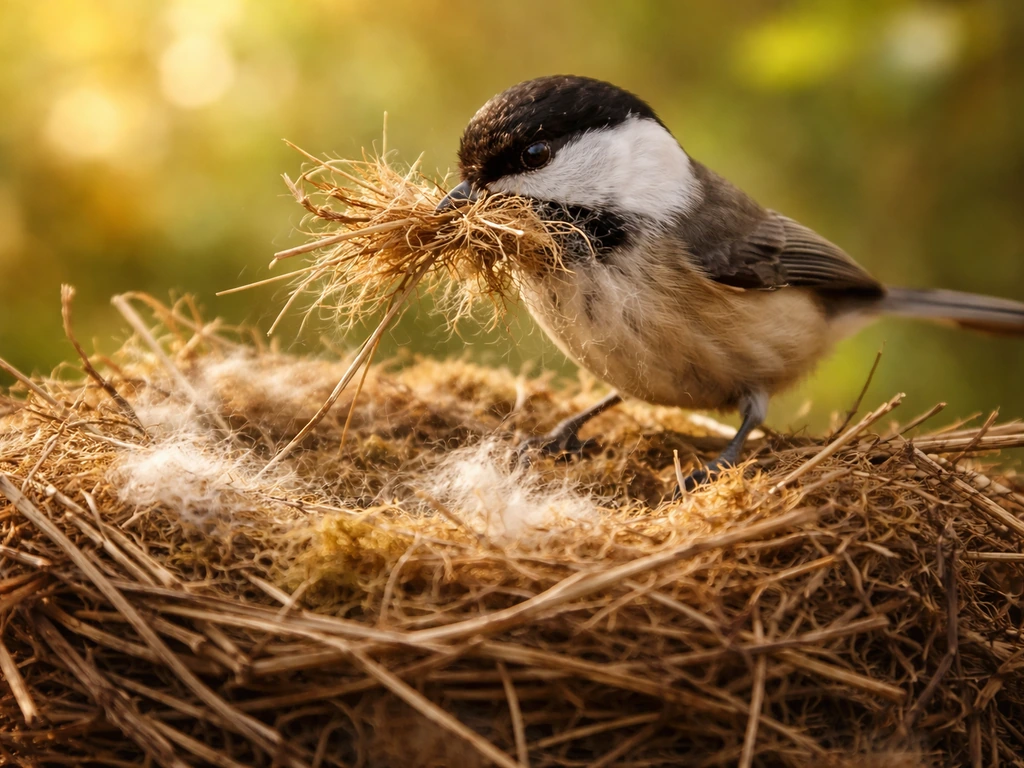
| Black-capped Chickadee | Moss and fur cup in cavity | About 1 week | Female excavates or expands cavity before lining begins |
One important caveat: the timer starts when serious construction begins, not when a bird first scouts the area. Site selection can add several days before you ever see a twig placed. The total time from first visit to incubation-ready nest is usually longer than the build time alone.
What controls how fast nest building happens
Building speed isn't fixed. The same species can finish in three days under ideal conditions or drag it out over two weeks when things go wrong. Four factors matter most.
Species behavior and nest complexity
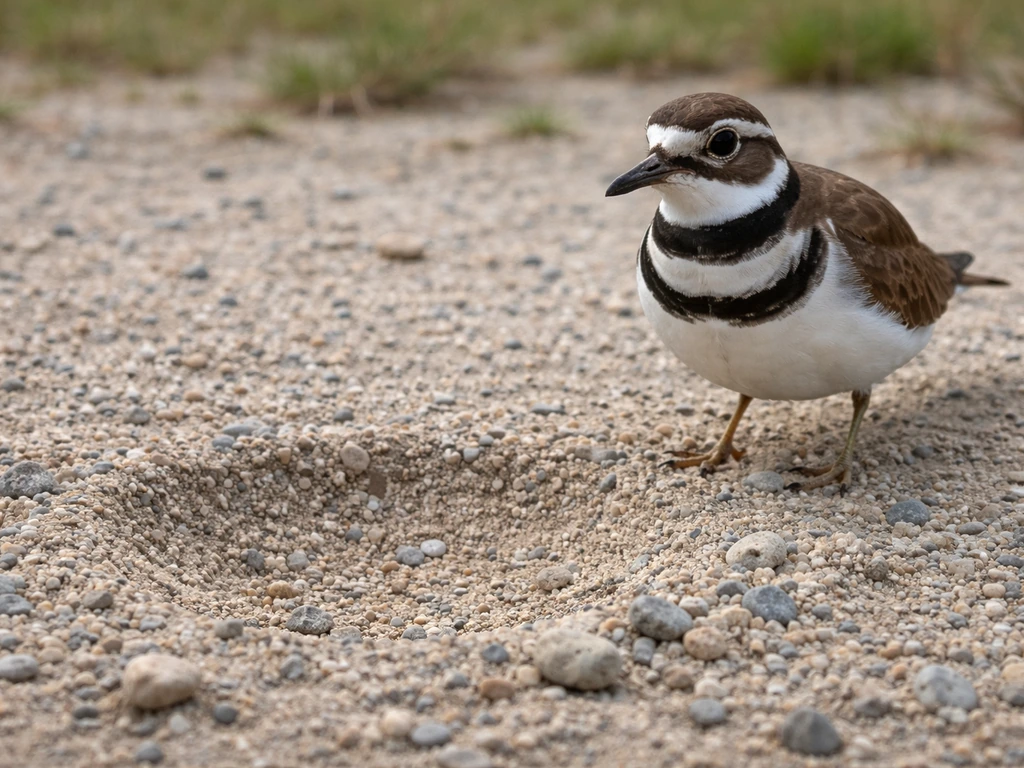
Architecture is the biggest variable. A killdeer scrapes a shallow depression in gravel and calls it done. If you’re trying to identify it, a quick way to start is by checking what bird builds a nest on the ground in your region. A Baltimore oriole weaves a hanging pouch that can take over 10,000 individual fiber placements. In between, you have cup nesters (robins, blackbirds), cavity stuffers (wrens, chickadees), and platform builders (doves, ospreys). Complexity directly predicts time. A house wren building a twig platform inside a nest box takes about a week, which is typical for cavity-style builds.
Experience level of the bird
Experienced birds build faster. First-year birds often make false starts, pick suboptimal sites, and sometimes abandon a half-built nest to try again. Male house wrens, for example, commonly start several nests at once while courting a female, which means some of those builds are never finished. Whether male or female birds build the nest varies by species, but many pairs share the work while others rely mostly on one sex does male or female bird build nest.
If you're watching what looks like slow progress, you may be watching a young bird or a bird that hasn't committed to that site yet. Even if it looks like instinct, nest building is often a mix of learned behavior and practice that varies by species.
Weather and season
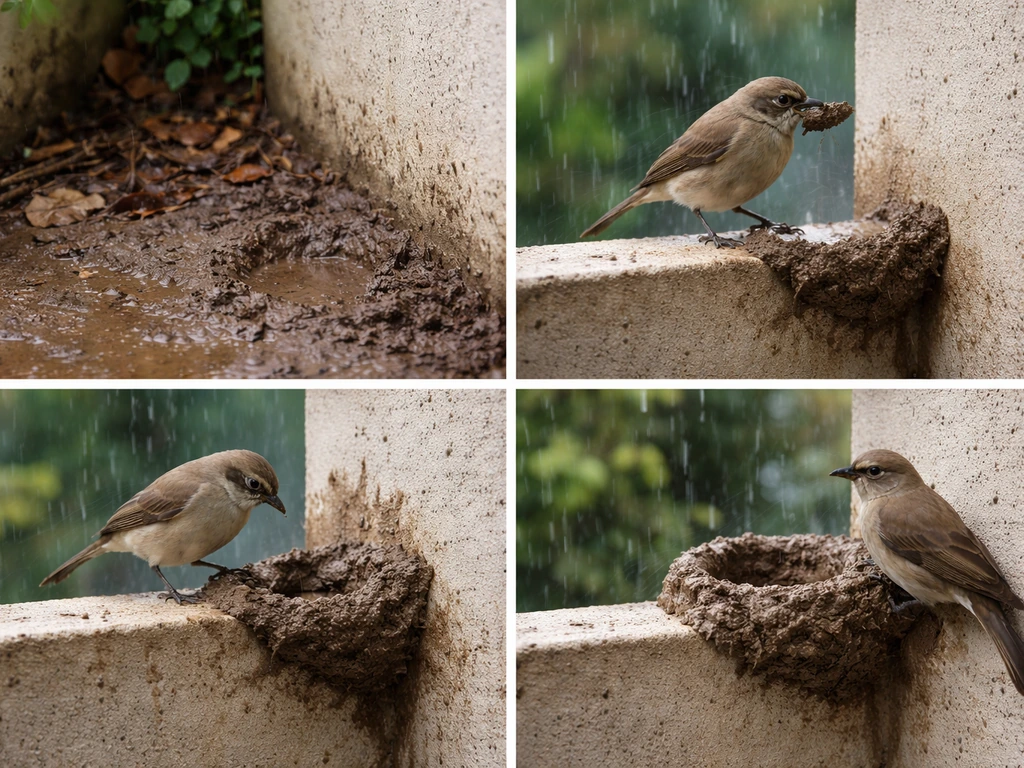
Cold snaps, heavy rain, and strong wind all pause construction. Mud nest builders like swallows and robins are especially vulnerable because wet mud won't cure properly and fresh mud is harder to shape. Day length also plays a role: birds do most of their nest building in the morning hours, so longer spring days give them more productive time. A late cold spell in April or early May can delay completion by several days.
Habitat quality and material availability
If a bird has to travel far to collect materials, the build slows down. A robin that finds wet mud within 30 feet of its nest site will finish much faster than one that has to scout for it. Short grass, bare soil, and nearby water make a real difference for cup nesters. For cavity nesters like wrens, the limiting factor is usually the size and placement of the cavity itself. Offer a nest box with the right entry hole (1.25 inches for a house wren) and you remove one of the biggest variables entirely.
Stage-by-stage nest building: from site selection to completion
Nest construction isn't a single continuous activity. All About Birds notes that blank" rel="noopener noreferrer">barn swallows explore potential nesting spots when choosing where to nest. It happens in distinct stages, and knowing what stage you're watching helps you estimate how much time is left before eggs arrive.
- Site selection (1–3 days): The bird visits multiple candidate locations, often perching at each one, hovering nearby, or briefly entering a cavity. You may see the bird in the area but not doing anything that looks like building. This is normal and can be the longest stage for first-year birds.
- Foundation and structure (1–3 days): The first coarse materials go in. Twigs, grass stems, bark strips, and mud form the outer shell or base. For cup nesters, you'll see the rough shape emerging. For cavity nesters, this is when the twig pile starts building up.
- Cup shaping and weaving (1–4 days): The bird begins pressing and rotating inside the nest to shape the cup, often turning in place repeatedly. Finer grasses, plant fibers, and strips of bark are woven in. This is the most time-intensive stage for species like orioles and blackbirds.
- Lining (1–2 days): Soft materials come in last: feathers, animal fur, plant down, spider silk, moss, or dry grass. This final layer is what makes the nest incubation-ready. You can tell lining is happening when the bird arrives with visibly soft or fluffy material.
- Completion check and egg-laying: The female typically inspects and adjusts the nest for a day or two before the first egg appears. Egg-laying usually begins within 1–5 days of the nest being finished.
If you're tracking a nest right now, the lining stage is your clearest signal that eggs are coming soon. Keep that in mind when deciding how carefully to give the nest space.
How to observe nest progress without disturbing birds

The goal is to gather useful information while keeping your footprint as small as possible. Cornell Lab's NestWatch program recommends weekly checks as a minimum for meaningful data, which is a useful reminder that you don't need to be there every day. In fact, daily close-up checks do more harm than good during active building and incubation.
- Observe from at least 10 to 15 feet away using binoculars. Most of what you need to know about build progress is visible at that distance.
- Keep visits brief: 5 minutes of focused watching beats 30 minutes of hovering nearby.
- Never check a nest at dusk or after dark. NestWatch explicitly warns against this because females often return to roost on the nest in the evening, and disturbing that return can cause nest abandonment.
- Take notes or photos from a distance rather than approaching for a closer look. A simple log with date, time, and what materials you saw the bird carrying is enough to track progress.
- If the nest is in a nest box, wait until you have not seen the bird enter for at least 30 minutes before doing a quick box check. Keep it under 30 seconds.
- Watch for behavioral cues: a bird arriving with soft material means lining; a bird sitting still in the nest cup for more than a few minutes likely means eggs have been laid.
- Avoid handling or moving anything near the nest, including trimming nearby branches or adjusting anything the nest is attached to.
What to do if a nest appears abandoned or unusually slow
This is where most well-meaning people make mistakes. A nest that looks abandoned almost never is. NestWatch data shows that females may visit a nest only once per day during egg-laying, which means a full day of no visible activity is completely normal. Studies of red-winged blackbirds found that apparent abandonment rates during building and laying stages varied from 3% to 20% across different monitored populations, which tells you two things: actual abandonment does happen, but it's much rarer than it looks, and it's genuinely hard to judge without consistent monitoring.
Before assuming anything, ask yourself these questions:
- Have you been watching consistently, or are you basing this on a few hours of observation? A bird may have visited while you weren't watching.
- Is the nest at the lining stage or earlier? Half-built nests are abandoned more often than finished ones. A bird that piled a few twigs and stopped may simply be choosing a different site.
- Has there been unusual weather in the last 48 hours? Heavy rain, cold nights, or strong wind can pause building for 1 to 3 days without indicating abandonment.
- Are there signs of predator activity nearby, such as disturbed material around the nest, feathers on the ground, or a missing nest structure?
If you've watched carefully for 3 to 5 days with no activity at any time of day, the nest may genuinely be abandoned. But even then, the right move is usually to wait. NestWatch documents cases where monitors assumed abandonment but eggs later hatched. The nest may still be in play.
When not to intervene: if there are eggs or young in the nest, do not touch it. If the nest is structurally intact and in its original location, leave it. If you find a nest that has fallen or been knocked loose, you can carefully reposition it in the same spot or as close as possible, but do not move it to a new location or add materials to it.
Ethical and legal considerations for homeowners and birdwatchers
In the United States, nearly all native bird species are protected under the Migratory Bird Treaty Act. This means it is illegal to destroy, move, or disturb an active nest without a federal permit, and USFWS guidance is explicit that heavy fines can apply. An active nest is any nest that contains eggs or young, and in practice, this includes nests in inconvenient locations: on your porch light, inside your grill, under your deck, or on a construction site.
- If a nest is being built in a location you need to use (a doorway, a piece of equipment), the only legal window to discourage it is before the first egg is laid. Once eggs are present, the nest is legally protected.
- To discourage building before eggs arrive, you can remove early nesting material (twigs, grass) and cover the site. This must happen during active construction, before completion.
- Do not attempt to relocate a nest with eggs to a different location. The adult birds are unlikely to follow it, and the relocation itself is technically a disturbance under federal law without a permit.
- Barn swallows and cliff swallows are specifically cited in USFWS nuisance guidance as species that often trigger conflicts with homeowners. They are fully protected under the MTBA. Exclusion and deterrents before nest completion are the legal approach.
- If you are in Canada, the Migratory Birds Convention Act provides similar protection. Many state and provincial laws add additional layers.
- When in doubt, contact your state's wildlife agency or a licensed wildlife rehabilitator. They can advise you on permits and legal next steps specific to your situation.
Understanding why birds build nests in the first place, and whether nest building is driven by instinct or learned behavior, can help you anticipate when and where nesting activity is likely to happen on your property. This instinct question is closely related to whether you see nest building as driven by instinct or something more learned is a bird building a nest an instinct. A key part of the answer is why nesting helps birds survive and raise healthy young why birds build nests. Being proactive before the season starts is almost always easier than managing an active nest later.
Practical next steps for your specific situation

Here is a simple checklist you can work through today based on what you're seeing:
- Identify the species if you can. Look at the bird's size, coloring, and the materials it's using. The nest type (cup, cavity, platform, mud) narrows it down quickly. This is the most important step because everything else depends on it.
- Determine the build stage. Is the bird still scouting, laying structure, shaping the cup, or adding soft lining? Use the stage guide above to estimate how many days are left before eggs.
- Check the date and weather forecast. If a cold front or heavy rain is coming in the next few days, add 2 to 4 days to your estimate.
- Decide if the location is a problem. If yes, you have a narrow window to act before eggs are laid. Cover the site or gently remove early material now, while the nest is still in early construction.
- If eggs or young are present, stop and leave it alone. Set a calendar reminder to check again in 2 weeks, which covers most incubation periods for small songbirds.
- If you want to monitor, set up a single weekly observation point at least 15 feet away. Keep a simple log: date, time, bird behavior, and materials observed. Photos from a distance are ideal.
- If the nest is in a nest box you own, record the build date so you can estimate when to expect eggs and fledging, and plan any maintenance around those dates.
Most nest-building situations resolve themselves without any action on your part. The bird knows what it's doing. Your job is to stay patient, keep your distance, and know the few situations where early, careful action is legally and practically appropriate. A Caltrans research document summarizes deterrence and exclusion approaches for cliff swallow nesting, including chemical, visual, and auditory deterrents, habitat modification, and exclusion methods. When you get to the point of watching a finished nest, you're already close to one of the most rewarding parts of backyard birding.
FAQ
Is the nest-building time the same as the time until eggs hatch?
No. The timeline in the article describes the period from serious construction to a nest that is ready for egg-laying. After that, incubation adds additional days that vary by species, temperature, and whether the pair starts laying right away. If you only count construction, you can easily underestimate the full timeline.
If a bird starts and then stops building, does that always mean abandonment?
Not always. Many birds pause to defend the site, wait for mate availability, or gather materials intermittently, so there can be quiet stretches with no visible activity. Look for stage clues like new lining material appearing, renewed carrying trips, or changes at the entrance rather than assuming a full abandonment after a few inactive days.
How can I tell what stage a bird is in, if I only see the nest sometimes?
The most useful indicator is what the nest looks like. Early stages often show sporadic material drops and an uneven structure, while the lining stage is when you see soft fibers, grasses, or feathers added and the interior becomes more finished. If you only see the bird at irregular times, focus on changes to the interior rather than whether the bird is present every day.
What counts as “serious construction” for estimating how fast a bird can build a nest?
Serious construction usually begins when the bird starts repeatedly carrying and placing materials in the chosen site, not when it initially scouts or tests potential spots. If you started timing when you first saw the bird near the area, add extra time because site selection and repeated checks can precede the first real build.
Will putting up a nest box make birds finish faster, or can it backfire?
It can speed up cavity-style nesting by removing the cavity-placement variable, but timing matters. If the box is available before nesting season, birds can start earlier. If it’s added mid-season, they may ignore it, or the bird may choose to use the box but still take time for acceptance, lining, and adjustments to the entry hole and interior.
Is it okay to feed birds or attract them near a nest while they are building?
In many cases, yes, but the key is avoiding increased disturbance or crowding around the active nest area. Place feeders far from nest sites and keep foot traffic away. The goal is to reduce stress, not create conditions where the bird must repeatedly abandon the site to avoid constant activity.
What should I do if I find a nest on my porch light or another awkward spot?
Avoid moving it or attempting to “correct” the location once it is active. The article notes active nests include nests with eggs or young, which makes disturbance illegal without proper permits in the U.S. The practical next step is to restrict access to that area and, if needed, contact a local wildlife rehabilitator or bird authority for advice on non-invasive ways to protect the nest.
Can I move a nest if it fell because of wind or landscaping?
Only as an exception, and only to return it to its original general area. If it is knocked loose, the article advises carefully repositioning it in the same spot or as close as possible, but not relocating it to a new location or adding materials. If eggs or young are present, handle risk carefully and consider contacting local wildlife guidance first.
If I do not see the bird for several days, how long should I wait before concluding the nest is abandoned?
The article’s practical rule is to wait even when you’ve watched carefully for 3 to 5 days with no activity at any time of day. Apparent abandonment during building or laying can be misleading. The safer decision aid is to continue monitoring from a distance rather than acting on the first gap you notice.
Does nest building happen every day, and is “no visible activity” always a problem?
No. Many birds do not visit the nest daily or do not spend long periods visible at the nest, especially during egg-laying. A full day without obvious activity can still be normal, so base decisions on changes over time, not a single day of silence.
How should I monitor without increasing disturbance?
The article recommends weekly checks as a minimum and warns that frequent close-up checking can do more harm than good during active building and incubation. If you monitor, keep visits brief, stay far enough away that the bird is not repeatedly flushing, and avoid moving objects that might draw attention to the nest.