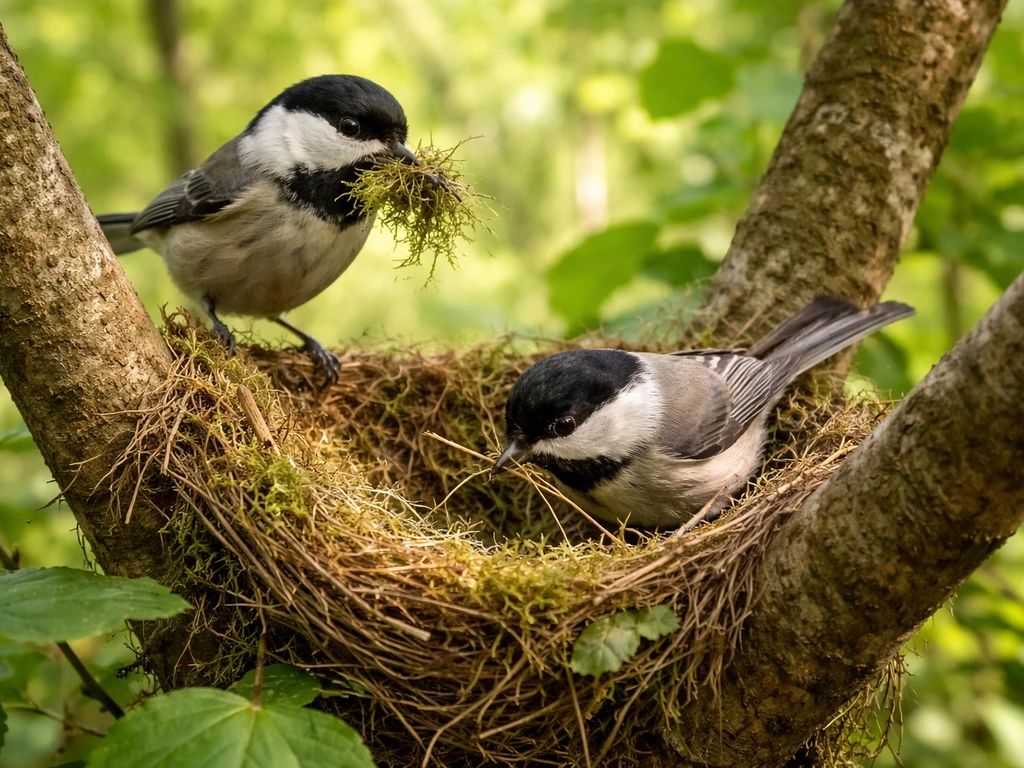
Nest-building in birds is both instinct and learned behavior. The honest answer is: it's mostly instinct, but with a meaningful layer of learned refinement on top. Birds don't need to be taught to build a nest the way a human apprentice learns carpentry. The basic architecture, the timing, and the general site preferences are all hardwired into the species. But what materials a bird chooses, how efficiently it manipulates them, and even where it ultimately settles can all shift based on experience, practice, and what the bird has observed from others. That nuance matters a lot if you're watching a nest in your yard and trying to figure out whether what you're seeing is normal.
Is a Bird Building a Nest a Learned Behavior? What to Know

Maya Bennett
17 Apr 2026
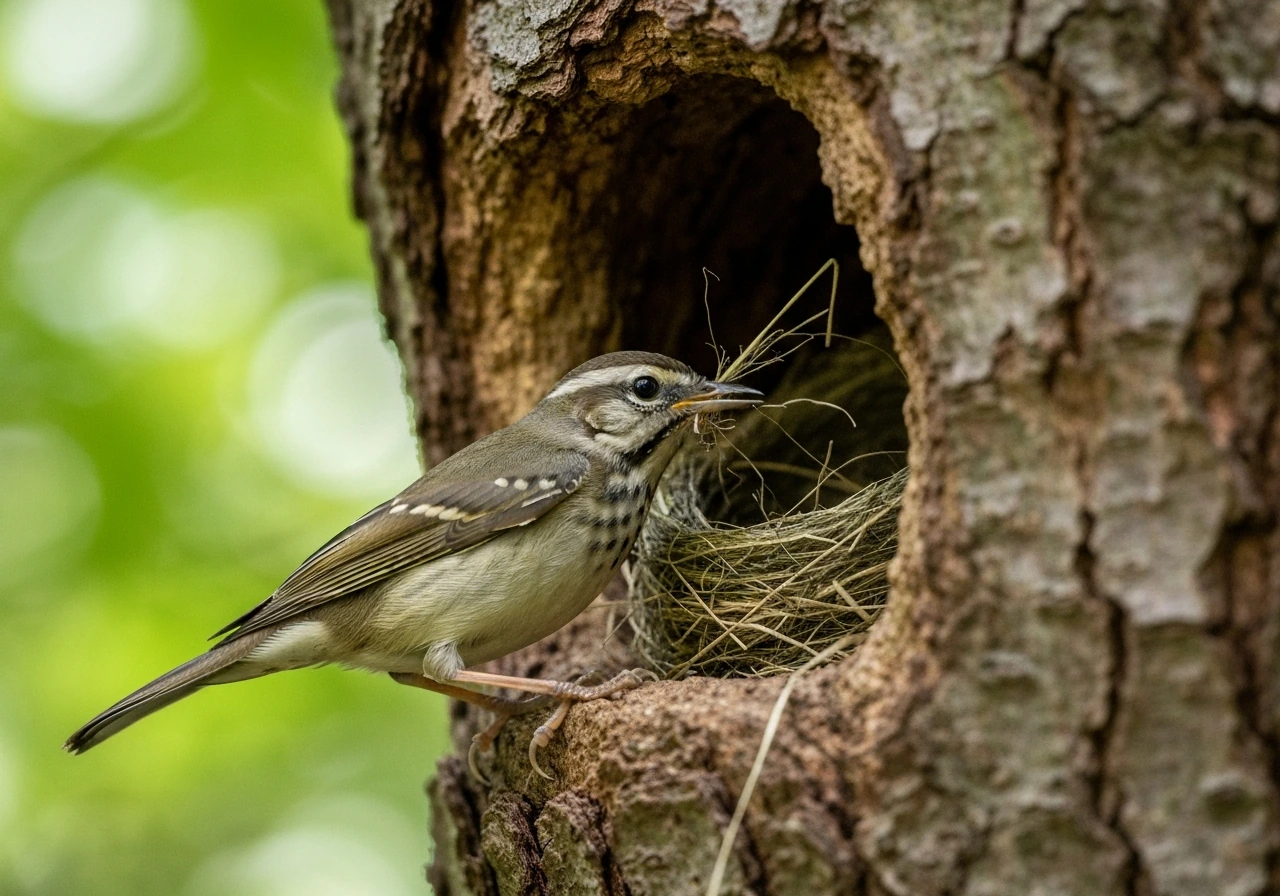
Instinct vs. learning in nesting, what's really going on
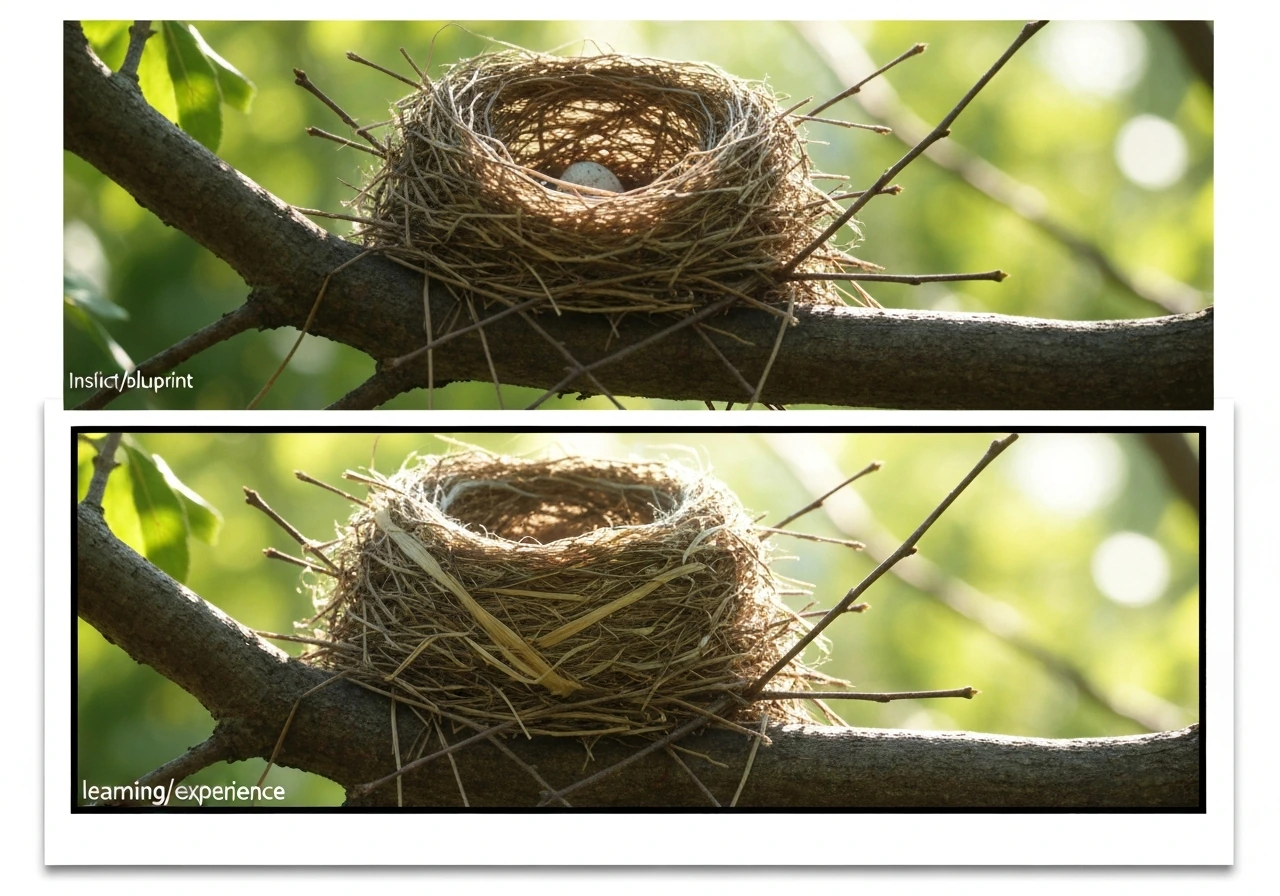
The old textbook view, that nest-building is a pure fixed-action pattern, locked in by genetics and executed the same way every time, has been the dominant assumption since the mid-20th century. But that framing turns out to be an oversimplification. A major synthesis on nest-building behavior published in a comparative cognition review put it plainly: 'instinct alone is insufficient' to explain the full range of nest-building decisions birds make. The field increasingly recognizes that birds gather information both from their own experience and from watching others, and they use that information to make real choices during construction.
The practical way to think about it: picture instinct as the blueprint and experience as the craftsmanship. The blueprint tells a robin to build a cup-shaped nest in a shrub or tree fork at a certain time of year. The craftsmanship, how neatly it weaves, how quickly it finds the right materials, how it responds when the first attempt fails, that part improves with practice. If you want to dig deeper into whether nest-building is purely instinctive, the distinction gets even more fascinating at the level of individual species.
What's hardwired: species patterns, timing, and site selection
The core structure of a nest is species-specific and doesn't need to be taught. A house sparrow will always build a messy, domed grass nest stuffed into a cavity. A barn swallow will always make a mud cup on a vertical surface under an overhang. An American robin will always construct that tidy mud-reinforced cup. No individual bird learned those designs from watching a parent, the basic architecture is encoded in the species. Same goes for timing: the hormonal triggers that push birds into nest-building mode in spring are innate responses to day length and temperature cues, not decisions the bird makes consciously.
Site selection also has a hardwired foundation. Each species has evolved preferences for height, vegetation type, substrate, and proximity to food or water. Ground-nesting birds like killdeer and certain sparrows are programmed to seek open areas with minimal overhead cover, while cavity nesters like bluebirds seek enclosed spaces regardless of whether they grew up near a nestbox. These preferences don't require experience to activate, they're defaults baked into the species.
Sex-specific roles in nest-building are similarly hardwired across many species. In zebra finches, for example, males collect and deliver materials while females do most of the shaping, with male assistance. A cross-species analysis of which sex builds the nest shows this division of labor varies widely across bird families, but within any given species, the roles are largely consistent and not learned from scratch each season.
What can be learned: materials, technique, experience, and copying
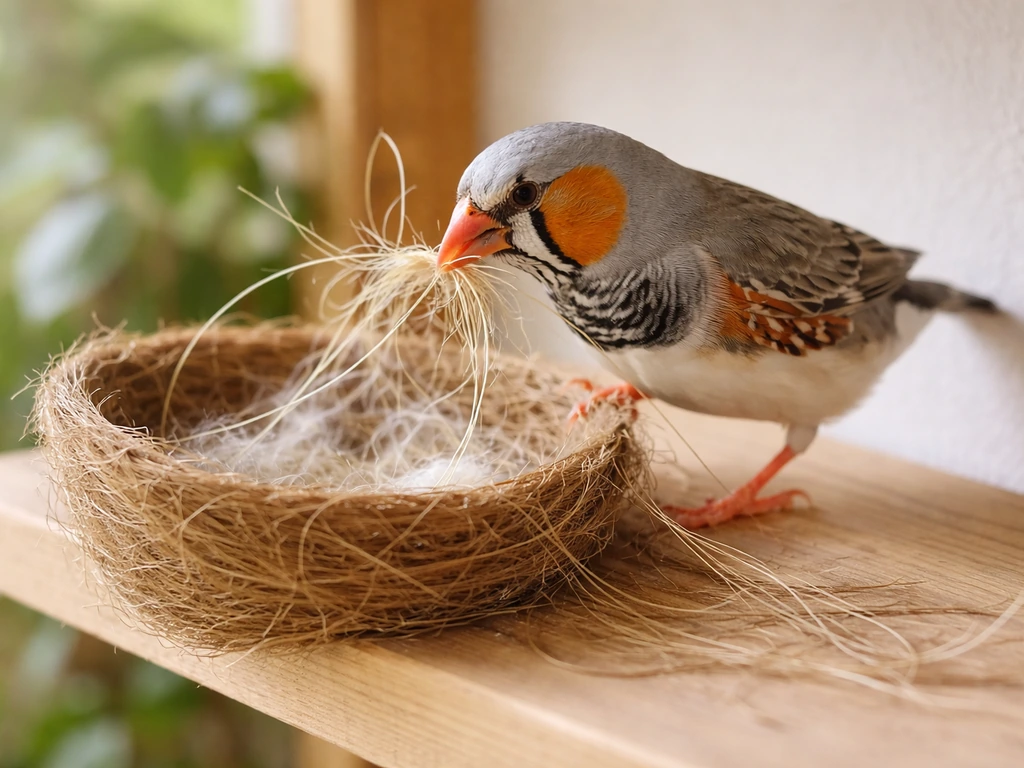
Here's where things get genuinely interesting for anyone watching birds up close. While the blueprint is innate, the execution gets sharper with practice. Research on zebra finches found that birds given the opportunity to build multiple nests develop better motor skills and handle materials more efficiently over time. First-time builders are clumsy compared to experienced ones, they fumble materials, take longer to weave strands, and produce structurally looser nests. That improvement is real learning, not just maturation.
blank" rel="noopener noreferrer">Material choice is another area where learning plays a documented role. Male zebra finches that observed familiar individuals using a specific color of nest material were more likely to adopt that same material preference, a clear example of social learning influencing nest construction. Critically, this copying only happened with familiar individuals, not strangers, which tells us the social learning is selective and context-dependent. Understanding why birds build nests in the first place helps frame why investing in better materials and technique matters so much to reproductive success.
Local adaptation is another layer. Birds in urban environments increasingly incorporate synthetic materials, plastic fibers, string, cigarette butts, into nests that would traditionally use only natural plant matter. This isn't instinct; it's opportunistic learning driven by what's available. Birds notice what works and what their neighbors use, and they adjust. That flexibility is part of why many species thrive in human-altered landscapes.
There's also evidence that early in the nesting season, some birds start construction at multiple nearby sites before gradually committing to one. Research on blue tits documented behavior consistent with this pattern, birds may begin at several locations and only gradually focus their effort, potentially as they learn which site has the best conditions. It's a form of trial-and-error site assessment, not a purely hardwired single-site commitment.
How to read what you're seeing in your yard
Most of the time, a bird building a nest in your yard is doing exactly what it should be doing. But knowing what's normal and what's a signal of trouble is useful, especially if you feel the urge to intervene. The key is learning the baseline for your species first. If you're not sure what you're watching, note the nest shape, materials, placement height, and the bird's coloring, then compare against a regional field guide or a species account. How long it takes to build a bird nest varies widely by species, from a few days for simple cup nests to two or three weeks for elaborate woven structures, so don't assume slow progress means something is wrong.
That said, there are genuine signals worth paying attention to. Here's how to interpret the most common scenarios:
- Bird carries materials but never seems to make progress: This is often normal early-stage behavior, especially in experienced birds that assess materials before committing. Give it 3 to 5 days before worrying.
- Bird starts a nest, abandons it, and begins again nearby: Consistent with early multi-site exploration. As long as the bird is still active in the area, this is normal. If the bird disappears entirely, a predator or severe disturbance may have displaced it.
- Nest appears partially built and then untouched for 5 or more days: This warrants gentle observation from a distance. Predation, weather damage, or human disturbance are common causes of nest abandonment mid-build.
- Nest is complete but no eggs appear after 7 to 10 days: Some pairs delay laying during cold snaps or food shortages. If the adults are still visiting, be patient.
- Adults are feeding at the nest but no movement from chicks: Could indicate chick loss, but parents sometimes brood quietly for extended periods. Use binoculars to check from a distance rather than approaching.
Speed of construction is another useful diagnostic. How fast a bird builds a nest can tell you something about experience level and environmental pressure. An experienced pair building quickly during a warm stretch of weather is a good sign. A bird that's been at it for two weeks and still has a structurally thin, incomplete cup in a high-disturbance area may be dealing with repeated interruptions.
Ethical, conservation-minded do's and don'ts around active nests

This is where understanding behavior translates directly into doing the right thing. The legal baseline in the US is clear: the Migratory Bird Treaty Act (MBTA) prohibits touching, disturbing, or removing active nests of protected species.
During the core nesting window (broadly March 1 through September 15, though active nests are protected any time they contain eggs or chicks), the rules include: do not touch birds, do not disturb active nests, do not handle eggs or chicks, and do not remove nests from buildings or structures. In Canada, the framework is similar, guidelines explicitly frame nest protection as requiring you to change your plans, not move the nest.
In Canada, the Migratory Birds Regulations (2022) prohibit damaging, destroying, disturbing, or removing migratory bird nests when they contain a live bird or viable egg, effective July 30, 2022 Migratory Birds Regulations (2022) prohibit damaging, destroying, disturbing, or removing nests that contain a live bird or viable egg.
Beyond the legal floor, responsible nest ethics come down to distance and minimizing disturbance. The Smithsonian National Zoo's nest-monitoring guidance recommends using as little disturbance as possible and using binoculars rather than approaching closely when checking on young birds. Some state wildlife agencies go further: Indiana DNR, for instance, recommends maintaining a buffer of up to 330 feet from a nest when observing. That number will feel extreme to many homeowners with a nest in their porch rafters, but it illustrates the principle, the more distance you give, the less you stress the birds.
For homeowners with an active nest near high-traffic areas, the practical guidance from All About Birds is to minimize disturbance and postpone any construction or landscaping projects in the immediate area if at all possible. Nest abandonment caused by repeated human disturbance is real, especially during incubation. If you must work in the area, move quietly, limit your time near the nest, and avoid stopping to observe directly, a brief pass is far less disruptive than a prolonged stare.
| Situation | What to do | What to avoid |
|---|---|---|
| Active nest with eggs or chicks | Observe from distance with binoculars; postpone nearby projects | Touching, approaching closely, removing or relocating the nest |
| Nest under construction (no eggs yet) | Keep distance; don't disrupt site or nearby vegetation | Clearing nesting materials, loud power tools nearby, direct handling |
| Abandoned nest (no adults for 5+ days, no eggs/chicks) | Wait a full week to confirm abandonment; photograph before removing | Immediate removal without confirming it's inactive |
| Predator threat (cats, crows) near active nest | Install smooth predator guards on poles/trees; keep cats indoors | Disturbing the nest while installing deterrents; using sticky traps or poisons near the site |
| Nest in a dangerous location (above a door, near machinery) | Contact a licensed wildlife rehabilitator or your state wildlife agency for guidance | Moving the nest yourself without legal authority or wildlife professional guidance |
Practical next steps when a nest fails, gets disturbed, or faces a real threat
Nest failure is common, studies across species show that many nesting attempts don't produce fledglings, even in healthy populations. If you witness a nest fail or get disturbed, here's how to think through your options in order of priority.
- Confirm the nest is actually failed or abandoned. Wait at least 5 to 7 full days without adult activity before concluding it's inactive. Weather, predator scares, and human disturbance can cause temporary pauses that look like abandonment.
- If eggs or chicks are present and adults are gone, contact a licensed wildlife rehabilitator immediately. Do not attempt to incubate eggs yourself or raise chicks — it's illegal under the MBTA for most species and rarely successful without professional equipment and diet knowledge.
- If the nest is physically damaged but still contains live eggs or chicks with parents present, stay well back. Parent birds can often continue to use a partially damaged nest. Observe from a distance for 24 to 48 hours before drawing conclusions.
- For predator threats, focus deterrence on the approach path rather than the nest itself. A smooth metal baffle on a nest pole, or keeping cats indoors during nesting season, is far more effective and less disruptive than trying to 'guard' the nest directly.
- If a nest must be cleared after it's fully inactive (no eggs, no chicks, adults gone for at least a week), document it with photos first, then remove it with gloves. Inactive nests can legally be removed in most jurisdictions once confirmed empty — but confirm your state or provincial rules, as a few localities have additional protections.
- Report unusual nest behavior, nest failures tied to environmental contamination, or repeated predation in your area to your local Audubon chapter or wildlife agency. Citizen data on nest success and failure is genuinely useful for conservation monitoring.
The bottom line is that nest-building is a remarkably layered behavior, mostly instinct in its broad strokes, but shaped by experience, social observation, and local conditions in ways that matter for the individual bird's success. When you watch a bird building in your yard, you're watching both ancient programming and active problem-solving at the same time. Understanding that mix should make you a better, more patient, and more ethical observer, and give you a clearer sense of when to act, when to wait, and when to simply stay out of the way.
FAQ
If nest-building is mostly instinct, why do birds make different looking nests in the same area?
Partly, but not in the same way as a human learning a craft. The basic nest design and the timing to start are largely built-in to the species, while “how well” the nest is built (weaving efficiency, material handling, and the willingness to switch sites) improves with experience and can be shaped by observing other birds.
How can I tell whether a bird is learning during nest building versus just behaving normally?
Look for improvement over time, not perfection on day one. A first attempt may be loose or incomplete, and later attempts are often tighter and faster. If the bird keeps retrying after a failure or interruption, that pattern fits learning through practice and trial-and-error.
Do birds copy nest-building from other birds I see nearby?
Yes. Social learning can be selective, as shown when some birds copy nest-material choices from familiar individuals but not from strangers. That means a bird may ignore what other, unfamiliar birds near the site are doing and still adopt the choices of known neighbors.
Why would a bird start a nest in one spot and then switch to another nearby?
In many species, both can be true depending on the stage. A bird may begin constructing at multiple nearby sites to compare conditions (a kind of trial-and-error), then gradually concentrate effort once it learns which location works best.
Is it normal to see a bird using plastic, string, or other unusual materials in its nest?
It can, especially in cities. Birds may incorporate what is easiest to obtain, including man-made fibers, string, or other synthetic debris, then “optimize” the choice based on what seems to hold shape or be readily available at that moment.
Why do nests look different from one yard to another even in the same town?
Often the difference comes from species-specific defaults, plus varying local resources. Even experienced builders may use different materials or placement heights if vegetation, shelter, and available nesting substrates differ across neighborhoods.
If nest building seems slow, does that mean the nest will fail?
Consider the “species baseline” before concluding anything is wrong. Time to build varies widely by species and nest style, from simple structures that take only days to elaborate woven nests that can take weeks, so slow progress alone is not a reliable problem signal.
What signs suggest a nest is being disrupted by the environment or people?
Re-check for environmental stressors rather than assuming it is illness. Repeated interruptions, frequent disturbance near the site, or poor weather can lead to thin or incomplete nests, repeated starts, or prolonged construction as the bird adjusts.
What should I do if I find an active nest on my property and I am unsure whether I can move it?
In the US, do not touch, move, or disturb an active nest, eggs, or chicks. If you discover an active nest on your property, adjust your plans to avoid the area, and if needed contact a local wildlife agency for guidance instead of “relocating” anything yourself.
Is it okay to go outside and watch closely, or should I keep my distance?
If a nest is active, stay back and use passive viewing tools. A practical mistake is approaching repeatedly to “get a better look,” which can raise stress and contribute to abandonment during incubation. Using binoculars from a distance is usually a safer approach than returning close by multiple times.
If a nest fails, does that mean something I did caused it, and can I prevent the next attempt?
Yes, and the reason matters. Many birds fail to fledge young even under good conditions. If you see a nest fail, wait for the outcome rather than assuming you can intervene, because repeated human interference can reduce the chance of any later nesting attempt succeeding.
Next Article
Does Male or Female Bird Build the Nest? Easy Guide
Learn whether male or female builds nests, how to spot roles by behavior, and how to observe active nests safely.