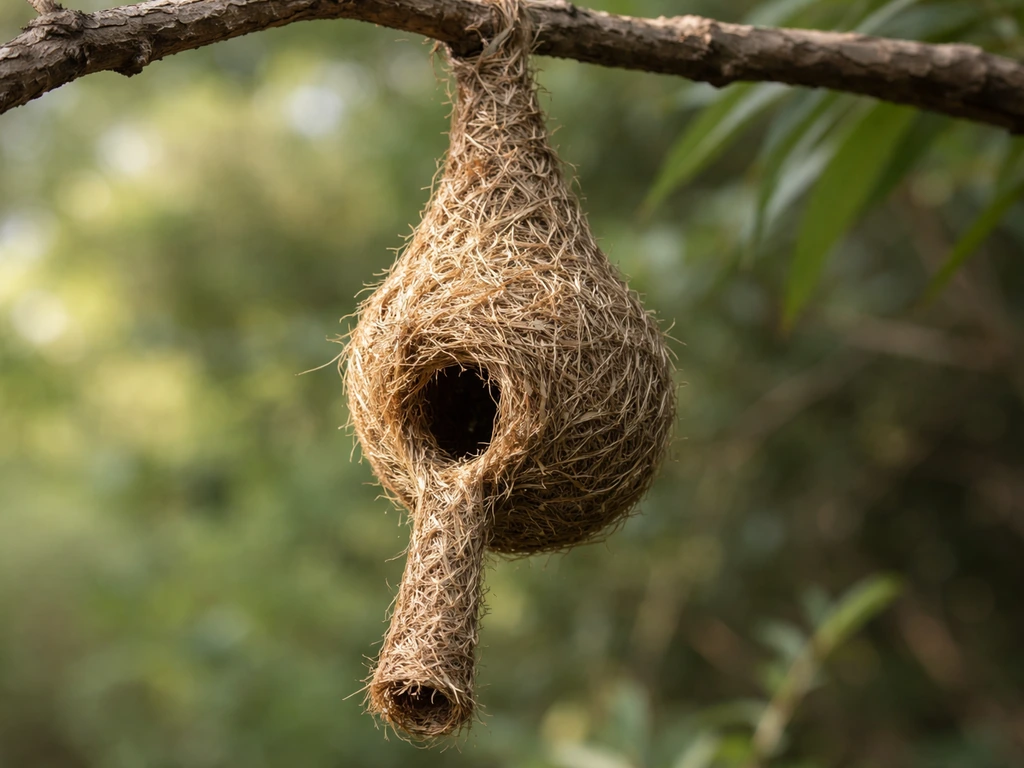
The bird most likely making that cone-shaped nest is a Baltimore Oriole, whose tightly woven, hanging pouch nest tapers to a rounded bottom and sways from the end of a high branch. In most cases, a Baltimore Oriole is the bird that makes a cup-shaped or hanging pouch nest. From the ground, that dangling structure reads as a cone or teardrop, and it's one of the most striking nests you'll spot in a North American yard or park. That said, a few other birds and even paper wasps produce structures that get called 'cone-shaped' by homeowners, so it's worth taking a closer look before drawing conclusions.
What Bird Makes a Cone Shaped Nest? ID Guide and Next Steps

Maya Bennett
14 May 2026
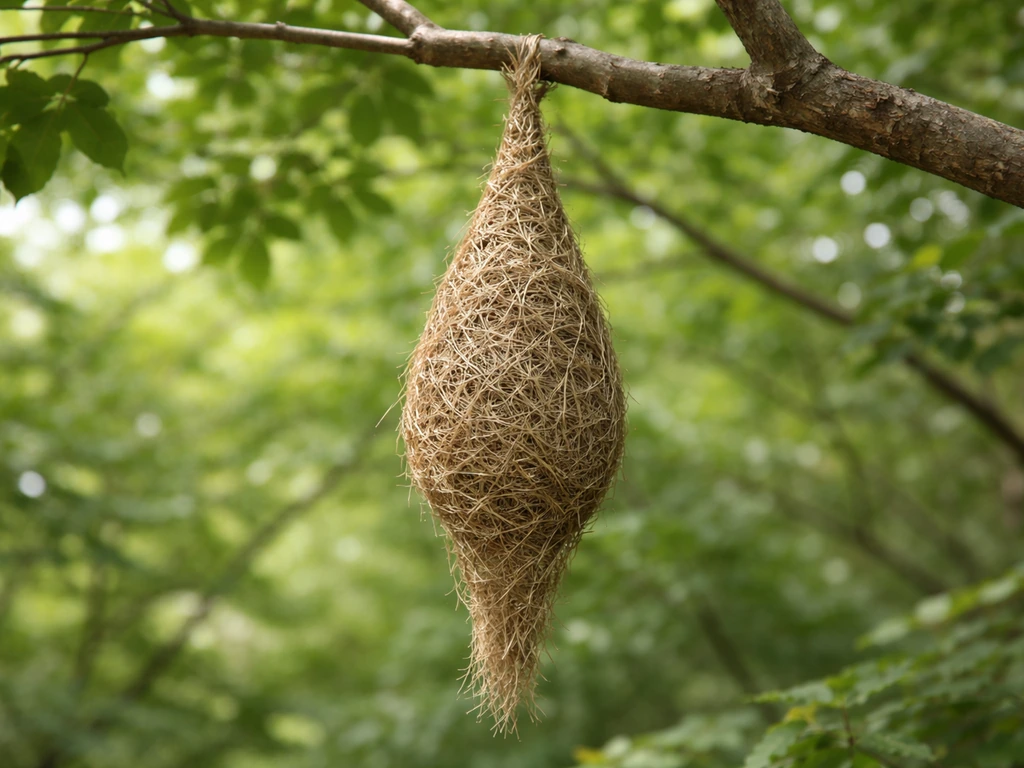
What a 'cone-shaped' nest actually looks like in the wild
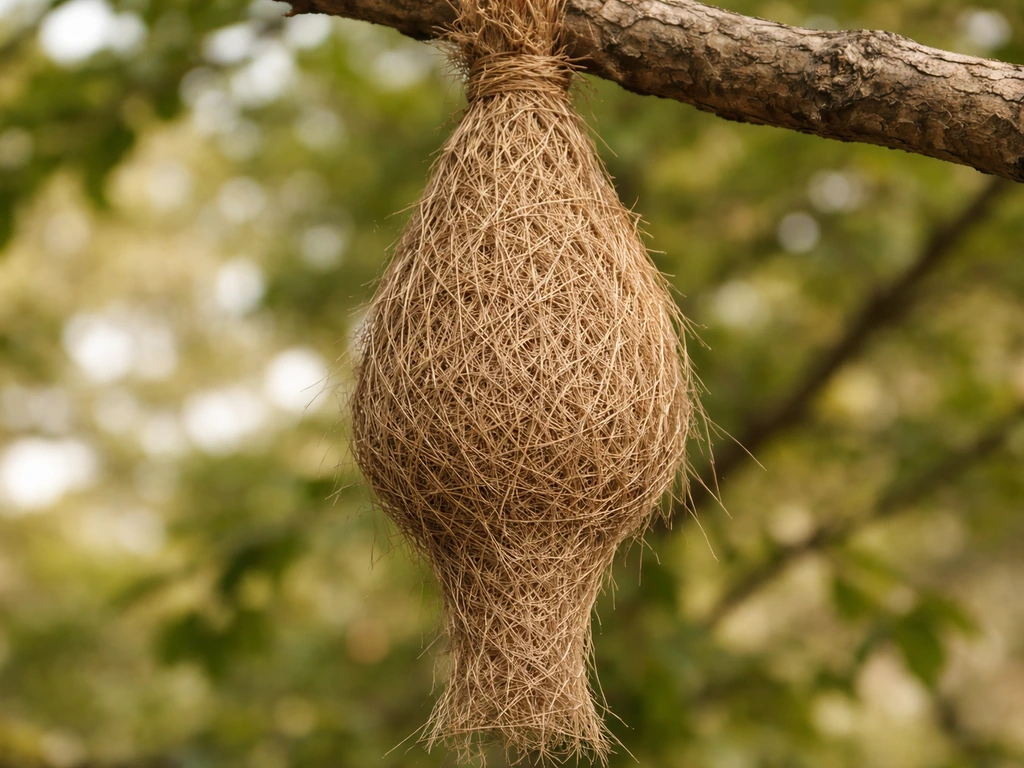
When people search for a cone-shaped bird nest, they usually mean one of two things: a hanging, pouch-like structure that narrows toward the bottom (like an inverted cone or teardrop), or a true ground or shrub nest built up into a conical mound. Both exist, but they belong to very different birds and situations.
The hanging type is far more common to spot and far more dramatic. Oriole nests hang from the underside of a branch tip, often 20 to 40 feet off the ground. The rim at the top is woven tight to the branch, and the nest expands into a deep, flexible pouch before tapering toward the bottom. That taper is what gives it the cone appearance. The whole structure is usually 3 to 4 inches wide at the rim and 4 to 5 inches deep, made of plant fibers, strips of bark, and sometimes synthetic string or yarn. It sways in the wind and has a grayish or yellowish-green color when fresh.
The more important look-alike to rule out right away is a paper wasp nest. Paper wasps build an open, upside-down cone of gray papery material under eaves, deck railings, or shaded horizontal surfaces. You'll see individual hexagonal cells visible from below, and there's no enclosed pouch. If the 'cone' is under a roof overhang, is paper-gray, and you can see the honeycomb structure, you're not looking at a bird nest. That's a wasp situation and a different problem entirely.
Birds most likely to build cone or conical-looking nests
Here are the main candidates worth knowing, ranked by how often homeowners encounter them and how closely the nest matches a 'cone' description.
| Bird | Nest Type | Height | Materials | Key Identifier |
|---|---|---|---|---|
| Baltimore Oriole | Hanging woven pouch (teardrop/cone shape) | 20–40 ft, branch tips | Plant fibers, grass, bark strips, sometimes yarn | Deep flexible pouch, swaying from single branch tip |
| Bullock's Oriole | Hanging woven pouch (very similar to Baltimore) | 15–30 ft, branch tips | Plant fibers, hair, spider silk | Common in western North America; nearly identical shape to Baltimore |
| House Wren | Cavity/cup nest, sometimes mounded entrance | 3–10 ft, tree cavities or nest boxes | Twigs, grass, feathers | Enclosed cavity entrance; never truly hanging; can look mounded from front |
| Ovenbird (warbler) | Domed/oven-shaped ground nest | Ground level, hidden in leaf litter | Dead leaves, grass, hair | Side entrance, looks more like a rounded dome than a cone; forest floor only |
Baltimore Orioles are the main answer for most of the continental United States east of the Rockies, arriving in May and nesting through July. Bullock's Orioles fill the same role in the West. If you're in May right now and you see a woven hanging pouch in a tall elm, cottonwood, or willow, orioles are the leading suspect by a wide margin.
How to pin down the exact species: a field checklist

You don't need to handle the nest or get close to make a confident ID. Grab binoculars, stand back at least 50 to 100 feet, and work through these checkpoints in order.
Location and height
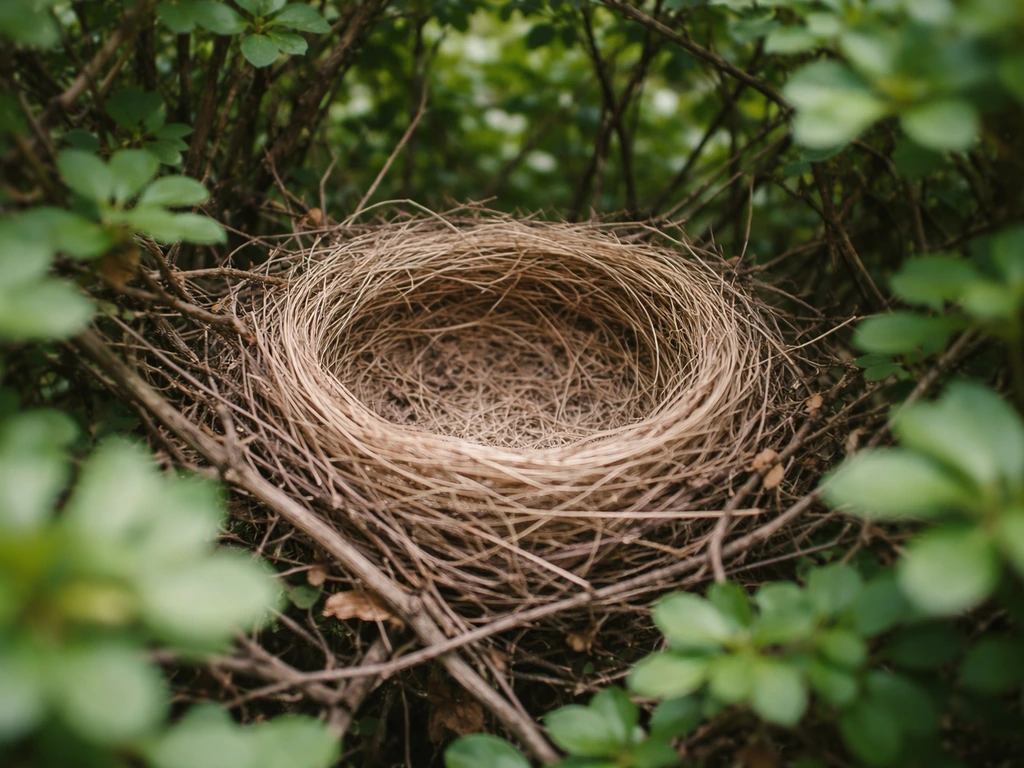
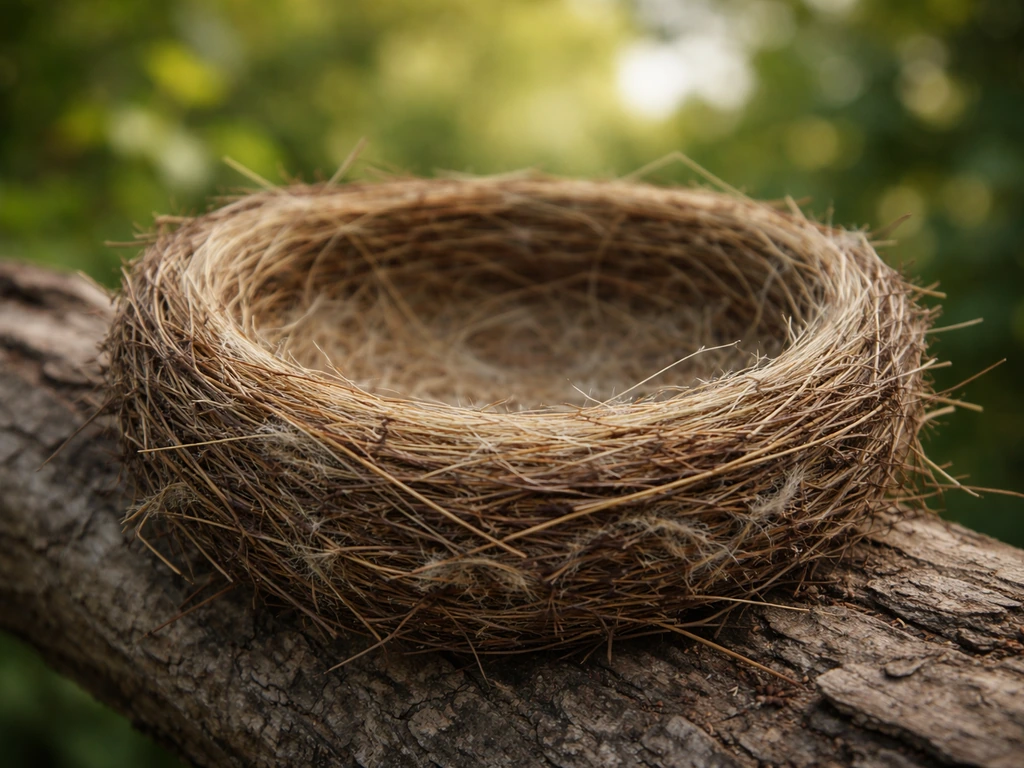
Oriole nests are almost always high in tall deciduous trees, attached to the tips of flexible, hanging branches over open areas like lawns, roadsides, or stream edges. If the nest is under 10 feet, in a dense shrub, or tucked into a cavity, you're likely looking at a different species. Ground level with leaf litter covering? That's more consistent with an Ovenbird or similar warbler. If you're trying to pin down a cup shaped nest in bushes, the type of bird will depend on location and nest placement.
Entrance placement and nest opening
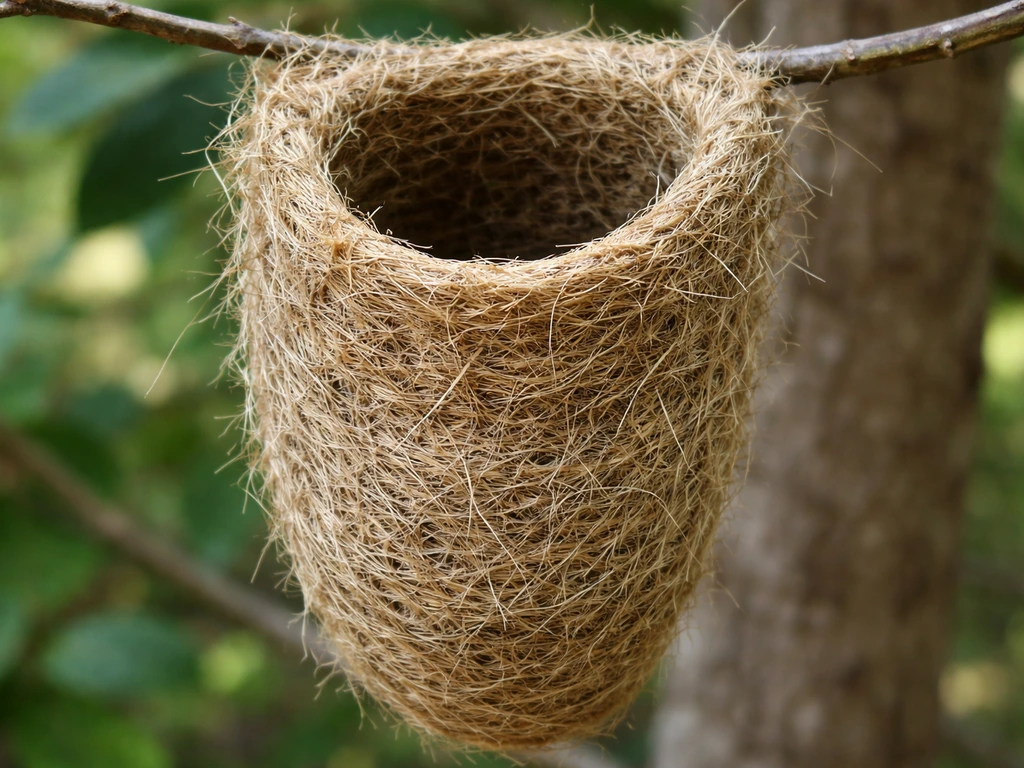
A true oriole nest has an open top rim woven to the branch. There's no side entrance or tunnel. The inside is a deep, sock-like pouch. If you see a small round entrance hole on the side or front, think wrens or other cavity nesters. If you instead find a small round nest, look closely at cavity nesters like wrens and other species that hide their entrances what bird makes a small round nest. A side entrance with domed roof at ground level points toward Ovenbird.
Materials and texture
Oriole nests are woven tight and look almost knitted. You'll often see long plant fibers, grass, or even pieces of string or synthetic yarn incorporated into the weave. The nest has visible texture from a distance and moves fluidly in wind. Mud-heavy nests point elsewhere. A papery, thin, geometric structure with visible cells is a wasp nest, not a bird nest.
Timing and the birds themselves
Baltimore Orioles arrive in the eastern United States in early to mid-May. Nest building takes roughly one to two weeks, sometimes up to 15 days in bad weather. Incubation runs about 11 to 14 days, and chicks leave the nest about 12 to 14 days after hatching. So from the time you see nest construction to when fledglings take off, you're looking at a window of roughly five to seven weeks total. The adult male is unmistakable: bright orange-and-black with a clear, whistled song. If you see or hear him near that hanging pouch, you've confirmed your ID.
What to do if the nest doesn't match
If you've gone through the checklist and the nest still doesn't quite fit, use these quick elimination questions.
- Is it under a roof overhang, not in a tree? More likely paper wasps or a mud dauber wasp. Check for open cells or a smooth gray papery surface.
- Is it in a dense shrub below 10 feet with a woven cup shape? You may be looking at a cup-nesting species like a catbird, robin, or vireo. Cup-shaped nests in shrubs are a related but distinct category.
- Is it a small, round, tightly woven ball with no visible entrance? That's more consistent with species like a Marsh Wren or certain vireos, closer to a round nest than a cone.
- Is it made of mud or clay with a bottle-shaped entrance? That points to cliff swallows or similar species that build bottle or gourd-shaped nests, which is a completely different nest type.
- Is the structure more like a dome with a side entrance at ground level or near it, in the woods? Ovenbird is the call here.
- Does it look like a large, messy pile of sticks high in a tree, reused every year? That's a raptor platform nest, not a cone shape.
If you're still unsure after eliminating the obvious mismatches, photograph the nest from multiple angles without approaching it, note the tree species it's attached to, and submit the photos to a resource like the Cornell Lab's eBird or Merlin app. Both can help confirm species from behavioral and location data.
What to do when you find one: ethical observation guide
Finding a nest on your property is exciting, but the best thing you can do for the birds is mostly nothing. Here's how to observe responsibly.
Do these things
- Observe from at least 50 to 100 feet away using binoculars or a telephoto lens. You'll see everything you need without getting close.
- Keep visits brief and infrequent. One or two short observation sessions per day is plenty.
- Note behaviors from a distance: adults bringing food, fledglings calling, alarm calls. These tell you more than any close inspection.
- Take photos from distance if you want to confirm the species or report it to a citizen science project.
- Mark a quiet perimeter around the nest area, especially if you have kids or pets, so accidental disturbance is minimized.
Don't do these things
- Don't touch the nest, eggs, or chicks under any circumstances. The 'birds won't come back if you touch the eggs' myth is largely false, but handling is still harmful, stressful to the adults, and in most cases illegal.
- Don't trim or prune the branch the nest is on during the active nesting period.
- Don't approach so closely that the adult birds show alarm behavior: dive-bombing, loud chip calls, or faking injury to draw you away are all signs you are too close.
- Don't repeatedly walk the same path near the nest, as this can create a scent trail that guides predators directly to it.
- Don't attempt to relocate the nest, even if it's in an inconvenient spot. Relocating active nests almost never works and is illegal without a permit.
- Don't use pesticides near the nest site, as orioles eat insects and spray residue can affect both adults and developing chicks.
Legal and safety considerations for homeowners
This is the section most homeowners wish they'd read first. In the United States, almost every bird nest you'll encounter in your yard is protected by the Migratory Bird Treaty Act (MBTA). Baltimore Orioles are a federally protected migratory species, which means intentionally destroying their nest, eggs, or harming the adults is a federal violation that can result in criminal penalties, including fines and in serious cases, felony charges. The law applies whether the nest is on your property or not.
Practically speaking, this means you cannot remove an active nest (one with eggs or chicks) without a federal permit. An 'active' nest is any nest currently being used for nesting, even if eggs haven't appeared yet. Once the breeding season is completely over and the nest is definitively abandoned, the situation changes in most jurisdictions, but it is always worth confirming current local and state rules before doing anything.
Keeping pets and kids safe
If the nest is lower and accessible, your main job is keeping curious cats and dogs away from the nest zone. Cats especially pose a significant threat to fledglings once they leave the nest. During the fledgling period (roughly two weeks after hatching for orioles), keep cats indoors or supervised in the yard. For kids, turn it into a learning moment: explain why we watch from a distance and let the adults do their job. A pair of binoculars and a notebook turns this into a genuine naturalist experience rather than a frustration.
If a fledgling ends up on the ground after leaving the nest, leave it alone unless it's clearly injured (bleeding, unable to move one wing or leg). Fledglings on the ground being watched by a nearby adult are doing exactly what nature intended. Picking them up and bringing them inside does more harm than good in almost every case.
Your next steps: confirming the ID and knowing when to call for help
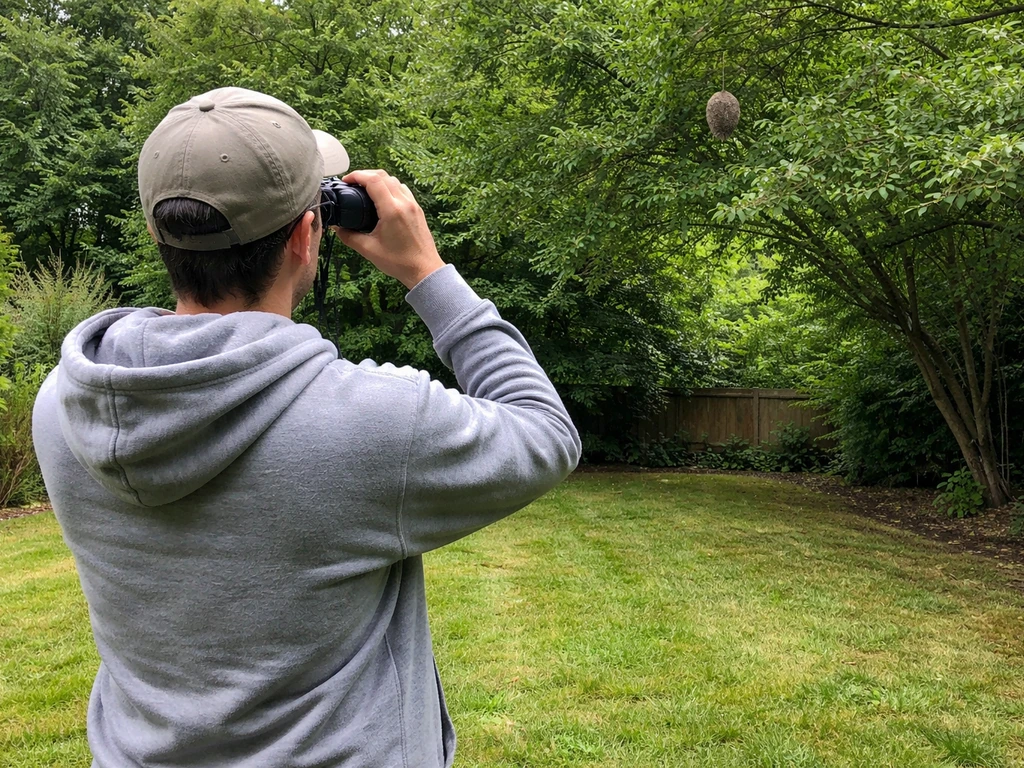
Here's a practical sequence for right now, today, if you've just found a cone-shaped nest and want to do this right.
- Stay back and observe for 10 to 15 minutes without approaching. Note the height, the tree species, the nest materials you can see, and any adult birds nearby.
- Take several photos from your current distance. Even blurry photos from 50 feet are enough to get a second opinion.
- Upload your photo to the Cornell Lab's Merlin Bird ID app or eBird to get a species suggestion based on your location and the date.
- Check the seasonal calendar: if it's May through July in North America and you see a hanging woven pouch in a tall tree, Baltimore or Bullock's Oriole is almost certain.
- If you're confident in the ID, mark a gentle buffer zone around the tree, brief your household on the no-approach rule, and settle in for a few weeks of watching. Orioles are worth it.
- If you suspect the nest may be a wasp structure rather than a bird nest, do not disturb it without identifying it first. Contact a licensed pest control professional for wasp nest removal.
- If you find an injured bird or abandoned chick (confirmed: no adult nearby after two full hours of observation), contact a licensed wildlife rehabilitator in your area. The National Wildlife Rehabilitators Association directory or your state wildlife agency can connect you with someone permitted to help.
The whole nesting cycle from construction to fledgling departure runs about five to seven weeks for most oriole pairs. If you give them space and resist the urge to intervene, you'll likely watch the whole thing from start to finish without any problems for you or the birds. That's a genuinely rare and worthwhile experience right in your own backyard.
FAQ
How can I tell if it is really a bird cone nest, not a paper wasp nest?
Often, the nest may look cone shaped from the outside, but you can confirm it is a bird by checking for a pouch interior (deep, sock-like), an open woven rim attached to a branch tip, and no visible paper cells from below. If you can see hexagonal comb cells or the structure is papery and geometric, treat it as a wasp nest, not a bird nest.
If there are no eggs visible, can I remove the nest because it might be unused?
Yes. If you see no eggs or chicks, it still counts as active during the breeding season. For orioles specifically, they may be incubating early or building and already using the site, so you should assume it is protected unless a qualified authority or your local wildlife guidance confirms it is abandoned.
What is the safest way to get a confident ID without disturbing the birds?
Stand back and do not touch the nest, even if it is hard to see. A practical approach is to use binoculars and take photos from distance at multiple angles, then observe from a window or sidewalk. Avoid climbing to the nest height or cutting branches, since contact can cause desertion.
Why might an oriole nest look different than the “cone” description in photos?
Before assuming it is a different species, check whether the “cone” is actually a hanging pouch under a flexible branch tip. Oriole nests often read as teardrops or inverted cones from the ground, and their colors can shift from greenish-yellow when fresh to more muted grayish tones as materials weather.
What if the nest is low to the ground or in a shrub, does that rule out orioles?
If the nest is extremely low, in a dense shrub, or clearly built into a cavity, the odds shift toward other birds or even different nest types. In that case, rely on the structural clues instead of geography alone, especially whether there is a side entrance tunnel (cavity nesters) or whether it is truly a conical mound (ground or shrub mound nesters).
What should I do if I’m not sure whether the cone is a wasp nest or a bird nest?
If you discover wasps, do not mix the situation with birds and start treating everything like a wasp. First verify the material and structure from a distance, since bird nests and wasp nests often attract the same homeowners’ attention. If you cannot confirm, contact a local wildlife rehabilitator or pest professional for non-destructive identification advice.
How long should I plan to avoid the area around the nest?
For orioles, expect the overall active period to be roughly 5 to 7 weeks from nest building through fledging, but timing can shift with weather. The most important practical rule is behavioral, not the calendar, if adults are repeatedly visiting or feeding, keep distance and keep pets supervised.
What is the best way to protect the nest if I have cats or dogs?
Cats are the biggest immediate risk once fledglings are around the time they begin hopping or fluttering outside the nest area. Use a simple prevention plan, keep cats indoors, supervise outdoor time, and block access to the exact landing zone under the branch until the young are fully mobile and no longer being fed at that spot.
If I find an oriole or small bird fledgling on the ground, should I pick it up?
Leave fledglings alone unless you see clear injury signs like bleeding or inability to move or stand, or if they are in immediate danger (for example, in the path of lawn equipment). If they seem uninjured, watch from a distance and ensure pets stay away, parents typically continue feeding nearby.
What photos and details should I collect if I want to confirm the species with an ID app or local expert?
If you want to submit photos to confirm species, include wide shots showing the surrounding tree or shrub, close shots of the entrance and interior depth, and at least one image from below to rule out paper comb. Also record the date, general location (state or region), and approximate height from the ground.