If a snake has found your bird nest, the fastest thing you can do right now is make the area less attractive to it. Snakes don't target nests out of spite. They follow food, warmth, and cover. Once you understand that, most of the practical fixes become obvious. This guide walks you through why snakes show up, how to assess the risk safely, what to do immediately, and how to set things up so it doesn't happen again.
How to Keep Snakes Away From Bird Nests Safely

Maya Bennett
19 Apr 2026
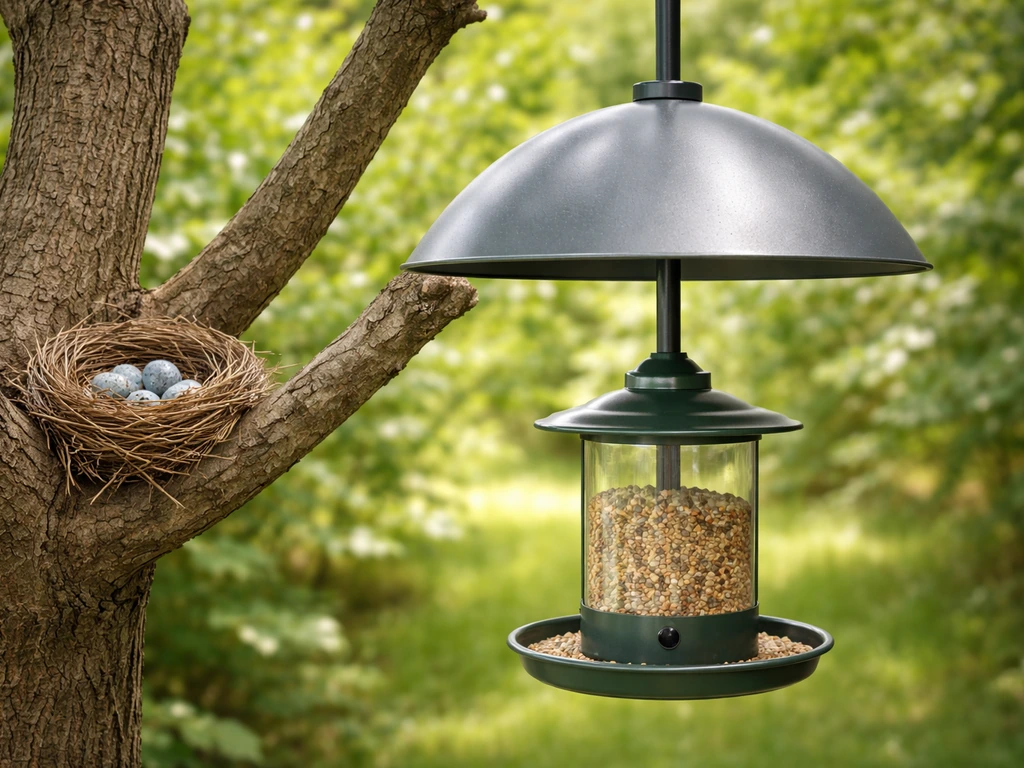
Why snakes go near bird nests in the first place
Snakes are opportunistic. They don't seek out bird nests specifically so much as they follow a chain of attractants that leads them there. The most common nest-raiding culprit in suburban backyards is the eastern rat snake (also called the black rat snake in some regions). Rat snakes are documented predators of small birds and bird eggs, and they're active hunters that use their tongue to follow scent trails, which means they can track a nest location without ever having seen it directly.
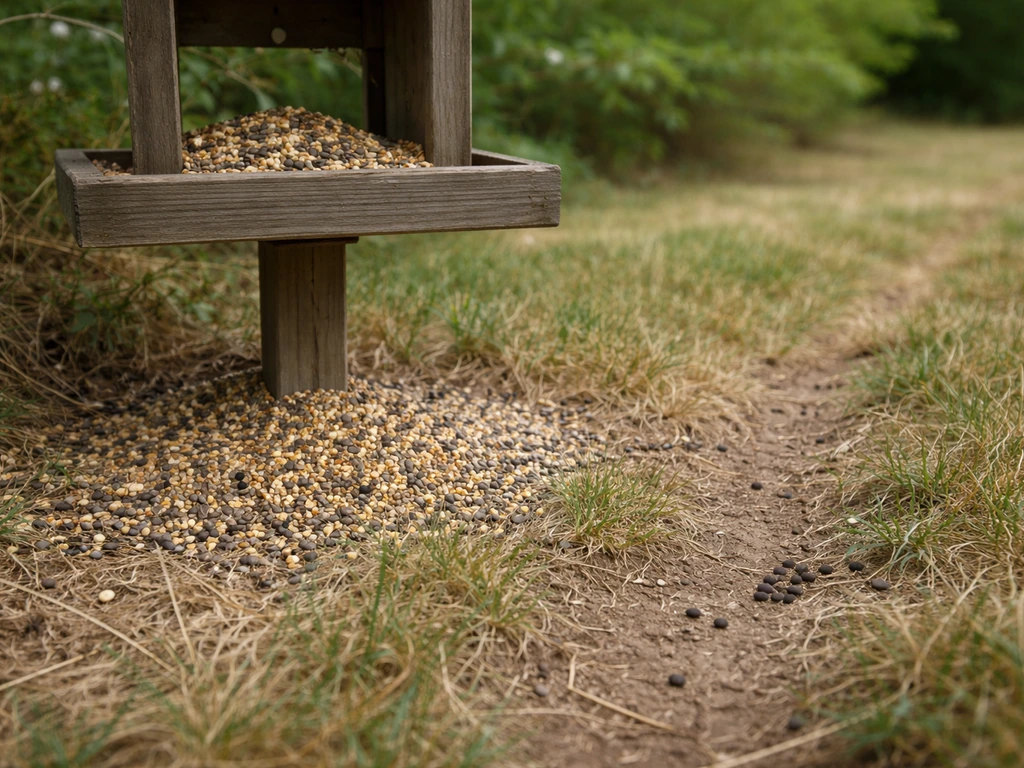
Here's the chain that usually brings a snake to a nest: rodents are attracted to spilled birdseed or pet food left outside, snakes follow the rodents, and once they're already in the area, eggs and nestlings become an easy secondary target. Spilled birdseed and pet food are specifically flagged as snake attractants by wildlife agencies for exactly this reason. Tall grass, woodpiles, rock piles, and ground-level debris give snakes the cover they need to move around and ambush prey undetected. Remove those and you've already made the area much less hospitable.
The timing matters too. Snake activity peaks in spring and summer, which aligns almost perfectly with nesting season for most backyard birds. That overlap is not a coincidence from the snake's perspective. Nests full of eggs or newly hatched chicks represent a concentrated, relatively stationary food source. If your yard has a lot of cover and a reliable rodent population, you're likely to see more snake activity near any nest.
Assess the situation before you do anything else
Before you put any deterrents in place, take a few minutes to understand what you're dealing with. You need to know three things: what species of snake is involved, whether the nest is active (eggs or chicks present), and how the snake is accessing the nest. Do not handle the snake or get close to it. Most snakes will move on if not cornered, but some species are venomous, and even non-venomous snakes can bite if startled.
Use your phone camera with the zoom function to observe the snake from a safe distance. Take a photo if you can. Key things to note: body color and pattern, head shape (triangular heads are common in pit vipers, though this alone isn't a reliable ID marker), size, and behavior. If you're in North America and the snake is dark, slender, and climbing, it's likely a rat snake. If you're unsure of the species, contact your local wildlife agency or submit a photo to a reputable ID resource before taking any action.
Next, look at the nest itself. Is it in a nest box, on a branch, in a shrub, on a structure? Is the nest currently active, meaning do you see eggs, chicks, or an adult bird sitting on it? An active nest with eggs or chicks is protected under federal law in the United States (the Migratory Bird Treaty Act covers most native songbirds), so you cannot move it without a permit. Your job is to protect the nest where it sits, not relocate it. If you're unsure whether the nest is active, watch from a distance for 20 to 30 minutes to see if an adult bird returns.
Do these things right now to protect the nest immediately
If a snake is actively near the nest or you've just spotted one in the area, here are the highest-priority immediate steps. These are things you can do today, most within an hour. Rain protection can be achieved by using sheltering that still allows birds to access the nest area while keeping it dry and secure how to protect a bird nest from rain.
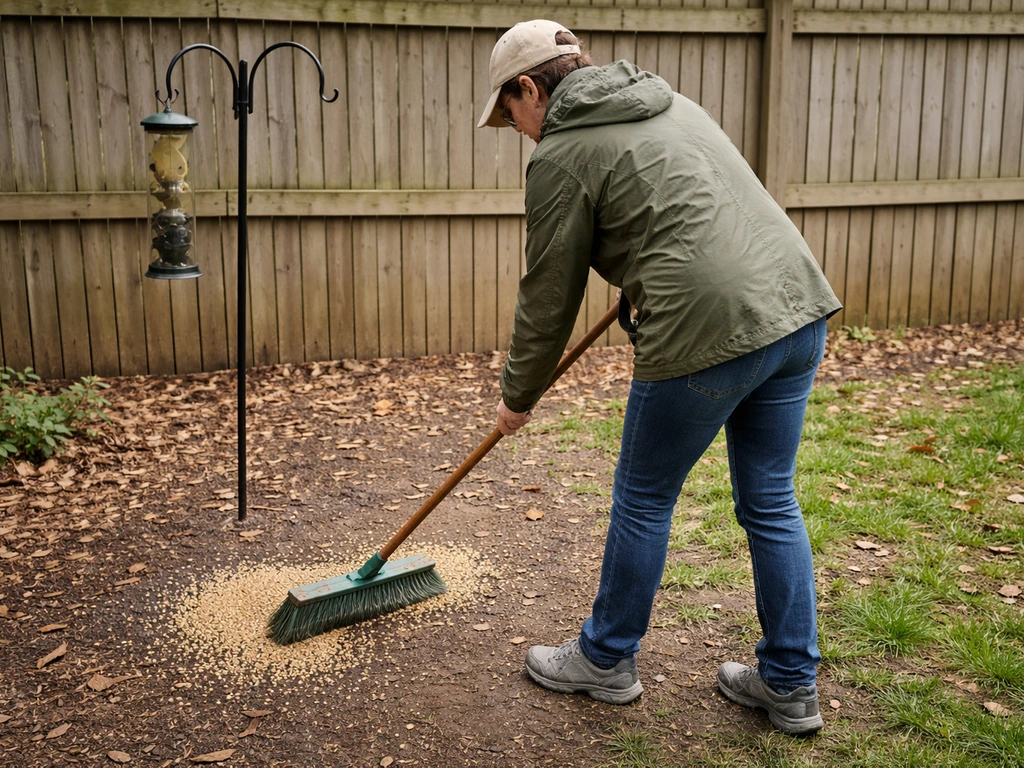
- Remove all spilled birdseed from the ground beneath feeders. Sweep or vacuum it up. This is the single fastest way to cut the rodent-attractant chain that brings snakes into the area.
- Bring in any pet food that's sitting outside. Even a bowl left out for an hour can attract mice, which then attract snakes.
- If the nest is in a bird feeder or nest box on a pole, add a snake guard or baffle immediately (see the exclusion section below for specifics).
- Clear a 10-foot radius around the nest site of any ground-level cover: leaf litter piles, stacked boards, low-growing dense shrubs, and debris. Snakes need cover to approach undetected.
- If the nest is low to the ground in a shrub or on a structure, suspend a temporary physical barrier around it if possible (hardware cloth cylinder, details below).
- Keep children and pets away from the area while you work. A cornered snake will defend itself.
Do not spray repellents as your first response. Wildlife agencies including Washington Department of Fish and Wildlife explicitly note that snake repellents have mixed results and should not be relied on as the primary method. You'll waste time and money on something unlikely to work while the nest remains exposed.
Physical barriers and exclusion: the most reliable method
Physical exclusion is the gold standard for keeping snakes away from a specific nest location. Repellents and habitat changes reduce risk broadly, but a well-installed barrier stops a snake at the nest itself. The approach depends on where the nest is located.
Nest boxes on poles
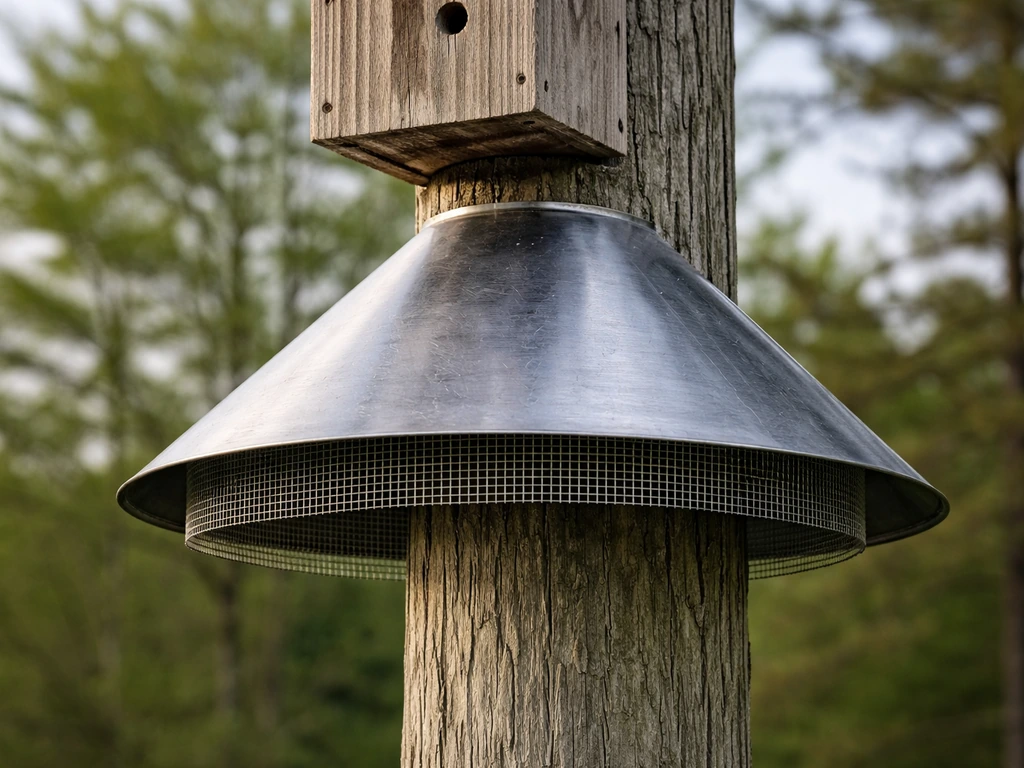
A stovepipe baffle or cone guard installed on the pole below the nest box is one of the most effective and widely recommended solutions. Loudoun Wildlife Conservancy's nest box predator guard guidance calls for half-inch hardware cloth formed into a cylinder around the pole, installed below the box. The cylinder should be wide enough that a snake can't reach across it and tall enough (at least 18 inches) that a snake can't climb over the top. Make sure the pole itself isn't touching any surface a snake could climb from, including nearby branches, fences, or structures.
For mesh sizing, use quarter-inch hardware cloth for the tightest exclusion. Canadian reptile exclusion technical guidance specifies quarter-inch hardware cloth for snake exclusion because larger mesh sizes, including half-inch, can allow smaller snakes to pass through or find a grip for climbing.
Suspended feeders and nesting platforms
Florida Fish and Wildlife Conservation Commission recommends suspending bird feeders at least 10 feet from the ground and keeping them at least 4 feet away from any attachment point (tree trunk, wall, post) that a snake could climb. This same logic applies to nesting platforms. A feeder or platform that hangs from a wire in the center of open space is dramatically harder for a snake to reach than one screwed to a post or hanging close to a wall.
Ground nests and shrub nests
Ground nests are the hardest to protect from snakes because there's no pole to guard. For nests in low shrubs or on structures, you can create a temporary hardware cloth cylinder around the perimeter of the shrub or structure. Use quarter-inch mesh formed into a cylinder at least 24 inches tall and staked firmly into the ground. This won't stop a determined climber indefinitely, but combined with habitat clearing it significantly reduces risk. Ground nests in open lawn are naturally at higher risk and there's limited physical exclusion you can do without disturbing the nest itself.
Vents, gaps, and entry points on structures
If birds are nesting inside a structure (a barn, shed, or eave) and snakes are entering through gaps, cover all vents and openings with galvanized hardware cloth screening. If you want the same kind of protection for exposed nesting spots, such as nests built near porch lights or fixtures, use exclusion barriers and reduce available cover around those light fixtures how to keep bird nests off light fixtures.
NPIC guidance specifically recommends this as part of snake management near buildings. Use quarter-inch mesh and secure all edges so there are no gaps a snake can push through. If a snake is already inside and you want it to leave on its own, a one-way door (an opening that allows exit but prevents reentry, as described in Maine and Washington wildlife agency guidance) is a humane option that doesn't require handling the animal.
Long-term deterrents and habitat changes that actually work
Once you've dealt with the immediate threat, it's time to make your yard consistently less inviting to snakes. To keep bird nest away from snakes long-term, focus on reducing attractants and using physical barriers at the nest location make your yard consistently less inviting to snakes. The goal isn't to eliminate every snake from your property. Many snakes are harmless and ecologically beneficial. The goal is to reduce the conditions that draw snakes close to nesting areas specifically.
- Mow grass regularly and keep it short, especially within 20 feet of nest sites. Tall grass provides ambush cover.
- Eliminate woodpiles, rock piles, and debris piles within 20 to 30 feet of any nest location. These are prime snake sheltering spots.
- Store firewood on a raised rack, at least 12 inches off the ground, and away from the nest area.
- Seal gaps under sheds, porches, and outbuildings with quarter-inch hardware cloth so snakes can't establish a den close to nesting habitat.
- Use a tube-style bird feeder rather than a platform feeder, and catch fallen seed with a debris tray that you empty daily. Less seed on the ground means fewer rodents, which means fewer snakes.
- Control rodent populations around your property. Snakes follow mice and rats. Reducing the rodent population removes the primary attraction.
- Trim back tree branches that overhang nest boxes or nest sites, so snakes can't use them as a highway to the nest.
On the question of repellents: products containing cinnamon oil, clove oil, or naphthalene are marketed as snake deterrents, but wildlife agency guidance consistently notes mixed and unreliable results. If you want to try one as a supplemental measure (not a primary defense), apply it around the perimeter of the cleared zone rather than near the nest itself. Never apply anything directly to a nest or to a snake.
Comparing your main protection options
| Method | Effectiveness | Best For | Cost | Notes |
|---|---|---|---|---|
| Pole-mounted baffle or snake guard | High | Nest boxes on poles | Low to moderate | Most reliable single step for nest boxes; use quarter-inch hardware cloth |
| Habitat clearing (grass, debris, cover) | High | All nest types | Free (labor) | Reduces snake presence yard-wide; must be maintained seasonally |
| Suspended feeder placement (10 ft up, 4 ft out) | High | Suspended feeders and platforms | Free (repositioning) | Eliminates climbing access; works best with open-space hanging |
| Hardware cloth cylinder around shrub/structure | Moderate | Low shrub and structure nests | Low | Reduces access but not foolproof for persistent climbers |
| One-way exclusion door | Moderate to high | Snakes inside structures near nests | Low | Humane; requires all other gaps sealed first |
| Rodent control | Moderate (indirect) | All nest types | Low to moderate | Removes primary snake attractant; best long-term investment |
| Chemical repellents | Low to mixed | Supplemental perimeter use only | Low to moderate | Not reliable as primary method per wildlife agencies |
The clearest recommendation: if your nest is in a box on a pole, install a snake guard today. That single step is the most effective immediate action available. If the nest is in a shrub or on a structure, habitat clearing combined with a hardware cloth perimeter barrier is your best bet. Repellents are a distant last resort.
What not to do: harm, illegal traps, and risky DIY
This section matters as much as the rest of the guide. A lot of the advice floating around online will get you injured, fined, or both. Here's what to avoid.
Don't use glue traps
Glue traps are genuinely cruel and counterproductive. Wildlife Center of Virginia documents that animals caught in glue traps die from dehydration, starvation, or injuries sustained while struggling to escape, sometimes over hours to days. Rat snakes are among the species they've treated after glue trap incidents. Beyond the animal welfare issue, a glue trap placed near a nest can catch the nesting bird itself, which in most cases would be a federal crime.
Don't relocate snakes yourself
Moving a snake off your property without a permit is illegal in many jurisdictions. New York State DEC explicitly states it is illegal to move or relocate an animal off your property. Oregon Department of Fish and Wildlife notes that wildlife relocation requires a permit. New Jersey sets limits on how far wildlife may be moved and distinguishes between releasable and non-releasable animals. The rules vary by state, but the risk of a violation is real. If you genuinely need a snake removed from inside a structure, contact your local wildlife agency or a licensed wildlife control operator.
Don't disturb or move the active nest
Most native songbird nests are protected under the Migratory Bird Treaty Act. The Animal Legal & Historical Center (Michigan State University) summarizes the Migratory Bird Treaty Act’s prohibitions, including that it is generally unlawful to take, kill, or possess migratory birds (as well as nests or eggs) except as permitted by regulations or permits. Destroying, moving, or handling an active nest (one with eggs or chicks) without a federal permit is illegal. Virginia's wildlife code, as one example, explicitly prohibits destroying or harassing wild bird nests and eggs without authorization. Your job is to protect the nest where it is, not move it to a "safer" spot.
Don't use poison
Poison-baited traps or rodenticides placed near a nest create a secondary poisoning chain. If a rodent dies from poison and a snake eats it, the snake is harmed. If that snake is then found near the nest by a bird or scavenged by another animal, the poison spreads further. Wildlife Center of Virginia notes this secondary poisoning risk explicitly. Rodent control near nests should be done with snap traps in enclosed bait stations, not open poison bait.
Legal and safety checklist before you act
- Confirm the snake species before taking any action. If it may be venomous, do not approach. Call your local wildlife agency.
- Check whether the nest is active (eggs or chicks present) before installing any barrier that touches the nest or nest structure.
- Do not handle or attempt to relocate the snake without checking your state or provincial wildlife law first.
- Do not use glue traps, poison bait, or any lethal method near a nest site.
- If the snake is inside a structure, use a one-way exclusion door rather than sealing it in. Seal all other entry points first.
- If you're in the U.S., most native songbird species are protected under federal law. Disturbing an active nest, eggs, or chicks requires a federal permit.
- When in doubt, call your state wildlife agency or a licensed wildlife control professional before acting.
When your fixes aren't working: a troubleshooting mindset
If you've installed a snake guard and cleared the area but a snake is still getting to the nest, work through this systematically. First, check the guard installation. Is the pole touching a wall, fence, or branch within a foot or two? Snakes are more capable climbers than most people expect, and a single contact point bypasses the guard entirely. Second, check for gaps in any hardware cloth you've installed. A snake can compress its body significantly, and half-inch mesh is too large for small rat snakes. Third, consider whether there's a persistent rodent population nearby that's actively drawing snakes in. Habitat clearing and rodent control are ongoing tasks, not one-time fixes.
Keep in mind that snake activity is seasonal. Spring and early summer are peak periods because that's when both snake foraging activity and bird nesting overlap most intensively. If you're dealing with repeated intrusions during this window, intensify your habitat management: mow more frequently, empty seed debris daily, and inspect the barrier every few days. Once the nesting cycle ends (most songbird nests fledge within two to three weeks of hatching), the pressure drops significantly.
This topic connects naturally to broader nest protection strategies, since snakes are just one of several predators that target eggs and chicks. how do bird nests stay together. In the same way you block snake access, you can protect bird nests from other predators by reducing cover and securing access points. Raccoons, jays, and squirrels use many of the same access routes. The same pole guards and hardware cloth barriers that stop snakes will deter most of them. If you're dealing with predator pressure from multiple directions, a broader predator protection plan built around the nest's specific location will serve you better than snake-specific fixes alone.
Your next steps: start with what you can do today (clean up seed, check the pole for contact points, add a guard if needed), then spend an hour on habitat clearing this weekend, and build rodent control into your routine. Those three layers together give you a genuinely effective, legal, and humane defense for any bird nest in your yard.
FAQ
How long should I watch before assuming the nest is active?
If you are unsure whether eggs or chicks are present, watch from a distance for 20 to 30 minutes, ideally at the time birds commonly return to the nest. Look for repeated adult arrivals or feeding behavior. If you cannot confirm activity but see no adult return after multiple checks, assume it may still be active and proceed with exclusion that does not move the nest.
Can I trap the snake or call animal control to remove it right away?
You should avoid trapping or handling. In many places, relocating wildlife off your property requires permits, and moving a snake that is discovered near an active nest can increase disturbance. If the snake is inside a structure or you believe it poses an immediate safety risk, contact your local wildlife agency or a licensed wildlife control operator, and ask specifically about one-way exit options and humane exclusion.
What if the nest is in a tree limb, not a pole or shrub base?
Pole and stovepipe guards work best on vertical access points. For limb nests, focus on blocking the most likely approach routes, such as removing nearby climbing cover (branches or fences touching the area) and installing localized barriers that prevent direct reach from below or from adjacent branches. If you cannot fully exclude without disturbing the nest, prioritize habitat clearing and creating a safer approach path away from the nest.
Will habitat clearing alone keep snakes away from nests permanently?
Clearing cover and removing attractants reduces risk, but it is not a one-time action. Snakes can return if rodents rebound or if seeds and debris accumulate again. Keep up routine cleanup, reduce ground clutter, and inspect any exclusion barriers every few days during peak nesting season.
Is it safe to put deterrents near the nest while birds are actively nesting?
Avoid applying anything directly on or near the nest itself. If you use a marketed repellent as a supplemental measure, apply only around the perimeter of the cleared zone, not on the nest, eggs, chicks, or adult birds. Also expect mixed results, so treat repellents as secondary to physical exclusion and habitat changes.
How do I choose the right mesh size for a snake guard?
For snake exclusion, quarter-inch hardware cloth is typically preferred because larger openings may allow smaller snakes to slip through or find a climbing grip. When building a cone guard or cylinder, ensure there are no gaps at seams, edges, or where the guard meets the pole or structure.
What’s the most common mistake that makes a snake guard fail?
One frequent failure is leaving a contact path that lets the snake bypass the barrier, such as a pole touching a fence, wall, or nearby branch within roughly a foot or two. Another is improper sealing, when hardware cloth is not tightly secured and a snake can probe or compress through weak spots. After installation, inspect for any bridging surfaces and fix them before relying on the guard.
Should I use poison or snap traps to reduce rodents near the nest?
Avoid poison or any rodenticide use near the nest because it can cause secondary poisoning of snakes and other wildlife. If you need rodent control, use snap traps in enclosed bait stations positioned away from the nest area, and focus on eliminating the food source that draws rodents in first.
Are glue traps ever appropriate near nests?
No. Glue traps are inhumane and can catch birds along with snakes, creating legal and animal welfare risks. If a trap is needed, use humane approaches and wildlife-approved methods, and only after confirming how to protect the active nest.
What if the nest is under an eave or inside a shed and snakes are getting in through gaps?
Seal entry points by covering vents and openings with galvanized hardware cloth screening, and secure all edges so there are no gaps. If birds are already nesting, avoid disturbing the nesting area, and focus on closing the access route. If a snake is inside, ask about a one-way door that permits exit without reentry.
How far from feeders or nesting platforms should I keep them from possible snake access points?
Use the principle of removing climbable reach. Suspending feeders or platforms farther from vertical attachment points (posts, tree trunks, walls) makes access much harder. As a practical target, keep feeders suspended well above ground and maintain separation from any surface a snake could climb to reach the feeding platform.
If I remove birdseed or clean up debris, will snakes stop showing up immediately?
Often risk drops quickly after cleanup because you cut the scent and food trail that supports the chain of attractants. However, snakes may linger while local rodents remain active. Combine cleanup with ongoing habitat management and periodic inspection of guards during peak spring and summer nesting overlap.
What should I do if I suspect the snake is venomous?
Do not approach for closer identification. Use your zoom on a phone camera from a safe distance, keep people and pets away, and prioritize protecting access routes rather than confronting the animal. If you need help, contact your local wildlife agency for guidance on exclusion and safe next steps.