A finch nest, and specifically an American Goldfinch nest, is a compact open cup about 6. 5 cm (roughly 2. 5 inches) across on the inside, built in the fork of a shrub or sapling anywhere from 4 to 20 feet off the ground. It looks tidy and almost felted on the inside, because the female weaves plant down from milkweed, thistle, or cattail so tightly that the finished cup can actually hold water.
What Does a Finch Bird Nest Look Like? Goldfinch Guide

Maya Bennett
17 May 2026
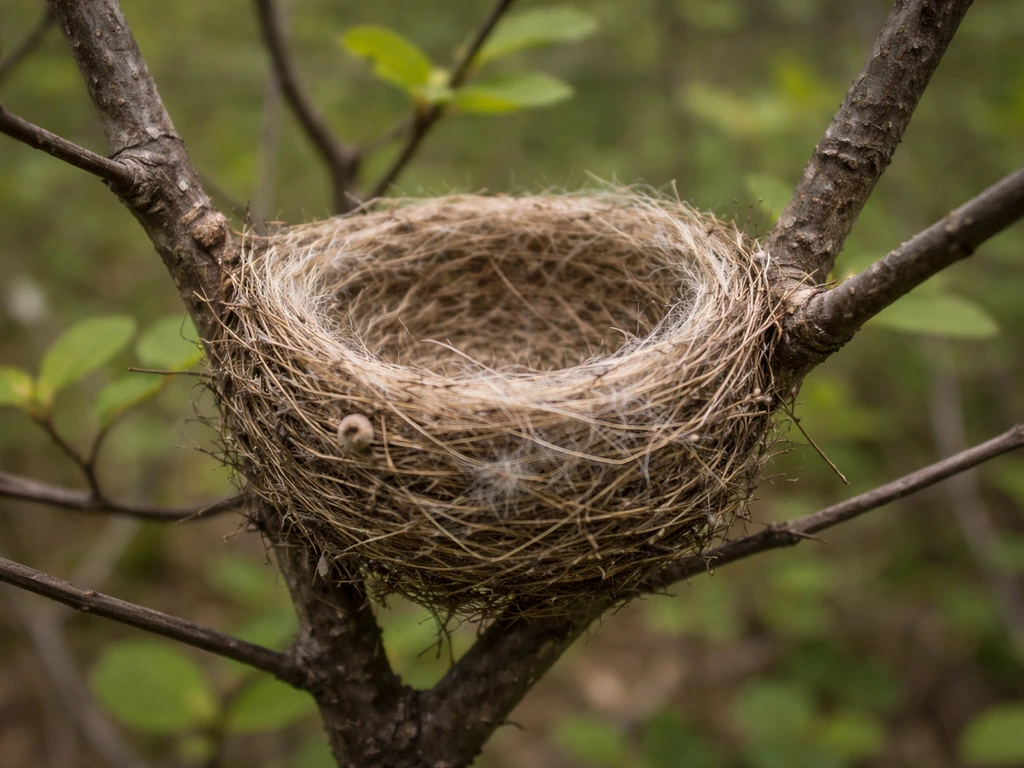
If you are comparing open-cup styles across species, see what does a sociable weaver bird nest look like for another related nesting form. The rim is reinforced with bark strips bound together with spider silk or caterpillar silk, giving it a slightly firmer, tidier edge than many other small songbird nests.
If you spot a small, deep, smooth-lined cup in a shrub or young tree in late June through August, sitting in an open or semi-open setting rather than deep woods, there is a good chance you are looking at a goldfinch nest. If you want to compare what a goldfinch nest looks like with other options, see what does a bird nest look like for broader visual clues.
Goldfinch vs other finches: who built this?
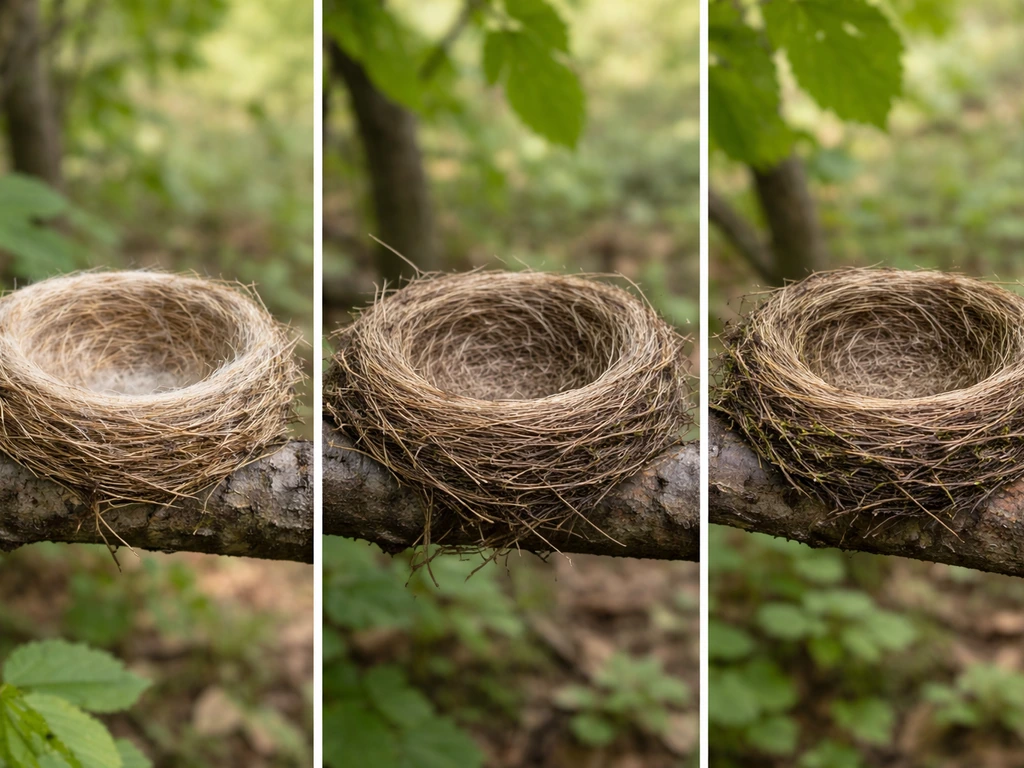
When people search for 'finch nest,' they usually mean one of three birds: the American Goldfinch, the House Finch, or the Purple Finch. They are related, but their nests are noticeably different once you know what to look for. The American Goldfinch is the most distinctive builder of the three, so most of this guide focuses there. Here is a quick comparison to orient you before we go deeper.
| Feature | American Goldfinch | House Finch | Purple Finch |
|---|---|---|---|
| Cup tightness | Very tight, can hold water | Moderate, well-made but looser | Compact but not water-tight |
| Key lining material | Thistle/milkweed/cattail down | Twigs, debris, feathers, string | Fine grasses and animal hair |
| Rim reinforcement | Spider silk and bark strips | Not typical | Not typical |
| Typical height | 4–20 ft in shrubs/saplings | Often lower, roughly 1–6 ft | Mid to upper canopy in conifers |
| Nesting timing | Mid-summer (July–Aug) | Early spring onward | Spring |
| Setting | Open/semi-open shrubland | Near structures, eaves, ledges | Conifer forest edges |
If the nest you found is in an eave, a hanging planter, or jammed into a porch light fixture, it is almost certainly a House Finch. If it is high in a spruce or fir at a forest edge in early spring, lean toward Purple Finch. The deep, silky, mid-summer cup in a roadside shrub or young deciduous tree? That is your goldfinch.
What a goldfinch nest looks like: size, shape, and placement
Picture a small teacup made of pale, felted plant fiber sitting snugly in the fork where two branches meet. That hanging-basket look is a helpful clue, but the real identifier is the goldfinch’s small, deep open cup with no dangling strings or roof. The inside diameter is about 6. 5 cm, roughly the width of a tennis ball.
The cup is noticeably deep relative to its width, which helps keep eggs and nestlings from rolling out. From the outside, the nest looks compact and almost sculptural, not messy or bulky. There are no dangling strings, no mud smear on the outside, and no enclosed roof or tunnel entrance. It is a simple open cup, neat enough that it can be mistaken for something hand-crafted.
A chickadee nest is usually different from a finch nest, so comparing the size, lining, and placement can help you tell them apart.
Placement is a strong clue. Goldfinches almost always build in a shrub, sapling, or small deciduous tree in a fairly open setting, not deep inside a dense forest. Think field edges, roadsides, overgrown meadows, suburban backyards, or the margins of parks. Height ranges from 4 to 20 feet, with most nests sitting somewhere between 6 and 12 feet off the ground in the crotch of a young tree or multi-stemmed shrub. The female typically selects a spot where several upright stems form a natural cradle, and she weaves the nest around those stems so it is anchored firmly, not just balanced on top.
Timing is also a diagnostic clue that many people overlook. Goldfinches nest later than almost every other songbird in North America. The peak building and egg-laying window falls in July and August, because the female times her nesting to coincide with thistle and other composite plants going to seed. That seed provides food for the nestlings and also supplies the soft plant down used to line the nest. If you find an active small cup nest in mid-summer in an open shrub, the goldfinch is your leading candidate.
Materials and construction: the details that confirm ID
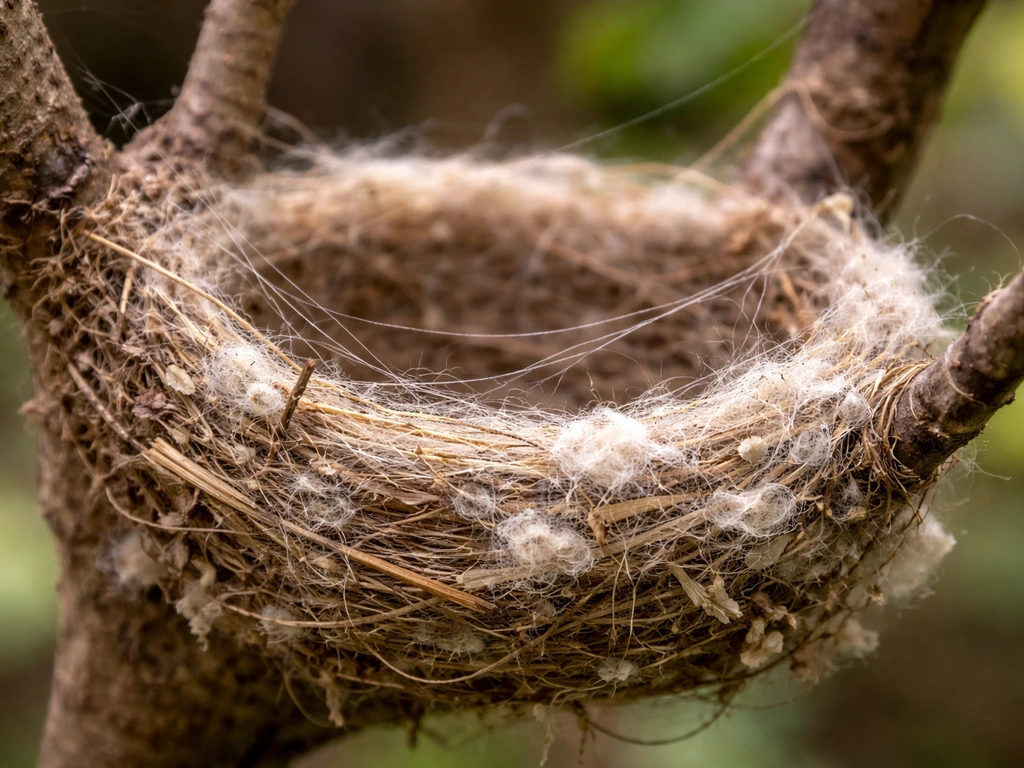
The goldfinch nest is built in recognizable stages. The female starts with a loose framework of fine plant stems, rootlets, and strips of bark, then weaves spider silk and caterpillar silk into and around the structure to bind it together and attach it to the supporting branches. This silk gives the nest its characteristic elasticity and that slightly shiny, wound appearance on the outside. At the final stage she packs the interior with plant pappus, which is the fluffy, seed-attached down from thistles, milkweed, and cattail. That lining is so densely packed and tightly interlocked that it forms a near-waterproof surface on the inside of the cup.
From a distance, the nest often looks pale cream or grayish-white on the inside, with a slightly browner or more fibrous exterior. If you can see the rim clearly (without approaching closer than about 10 feet), look for the slightly raised, firm edge and the way bark strips are wrapped around it with silk. That bound-bark rim is one of the most reliable goldfinch-specific field marks at nest level. The whole structure takes the female about six days to complete.
- Outside surface: fine plant stems, rootlets, and bark strips woven with spider or caterpillar silk
- Rim: reinforced with bark bound by silk, slightly raised and firm
- Interior lining: thick, felted plant down from milkweed, thistle, or cattail
- Overall texture: tighter and smoother inside than most songbird nests of similar size
- Inside diameter: approximately 6.5 cm (about 2.5 inches)
- No mud, no feathers hanging out, no enclosed roof or side entrance
Eggs and nestlings: confirming what you found
If you can safely see into the nest from a distance without disturbing the female, the eggs are a strong confirmation. American Goldfinch eggs are pale bluish-white, sometimes with very faint, small brown spots concentrated near the large end. They are small, consistent with the cup size, and a typical clutch runs 4 to 6 eggs (the range in the literature is 2 to 7, but 4 to 6 is most common).
The female incubates alone for about 12 to 14 days, so she will often be sitting tight on the nest during the day. If the bird you see sitting in that small cup is yellow and black (male coloring absent from incubation duty, but visible nearby) or streaky olive-yellow, you are very likely watching a goldfinch pair.
Once hatched, nestlings stay in the nest for about 11 to 17 days. Young altricial nestlings, meaning ones that hatch helpless, go through visible developmental stages you can use as a distance confirmation. In the first few days the chicks are mostly naked with eyes closed. By the end of the first week, pin feathers appear along the wings and back. By day 10 to 12, the chicks are clearly feathered and starting to look like birds. If you observe the nest from a safe distance and see a parent returning repeatedly to stuff seeds into gaping mouths, that behavioral cue combined with the nest appearance is about as confident an ID as you can get without handling.
How to observe without causing harm

The most important rule is to observe from a distance that does not change what the birds are doing. In practice, that means staying at least 10 to 15 feet back from the nest and using binoculars rather than closing the gap. If the female flushes off the nest when you approach, you are already too close. Back up until she returns, and make a note of how far away you were when she flew. That flushing distance is your boundary for future visits.
Keep visits short and infrequent. A quick 2 to 3 minute observation once a day is far less disruptive than repeated long sessions. Avoid visiting during the early morning feeding rush, during rain, or at dusk when birds are settling in for the night. If you want to document the nest, take photos from your standing distance with a telephoto or zoom lens. Do not use flash near the nest and do not push branches aside to get a clearer shot. Parting vegetation to expose the nest is one of the fastest ways to help a predator locate it.
Do not touch the nest, the eggs, or the nestlings. This is not just best practice; it is the law. Under the Migratory Bird Treaty Act, American Goldfinches (like virtually all native songbirds) are protected, and disturbing an active nest, its eggs, or its young without a federal permit is a federal offense. State laws typically add another layer of protection on top of that. The legal standard from the U.S. Fish and Wildlife Service and guidance from organizations like Mass Audubon is clear: do not move an active nest, do not touch eggs, and do not handle chicks unless you are a licensed wildlife rehabilitator responding to a genuine emergency.
When not to look closer
- When the female is actively incubating and does not leave on her own
- When the nest contains eggs that are being kept warm (abandonment risk if she flushes repeatedly)
- When nestlings are very young (first 5 days), when they are most vulnerable to chilling
- When you have already visited once that day
- When you would need to push, cut, or move any vegetation to reach the nest
Look-alikes and how to tell them apart
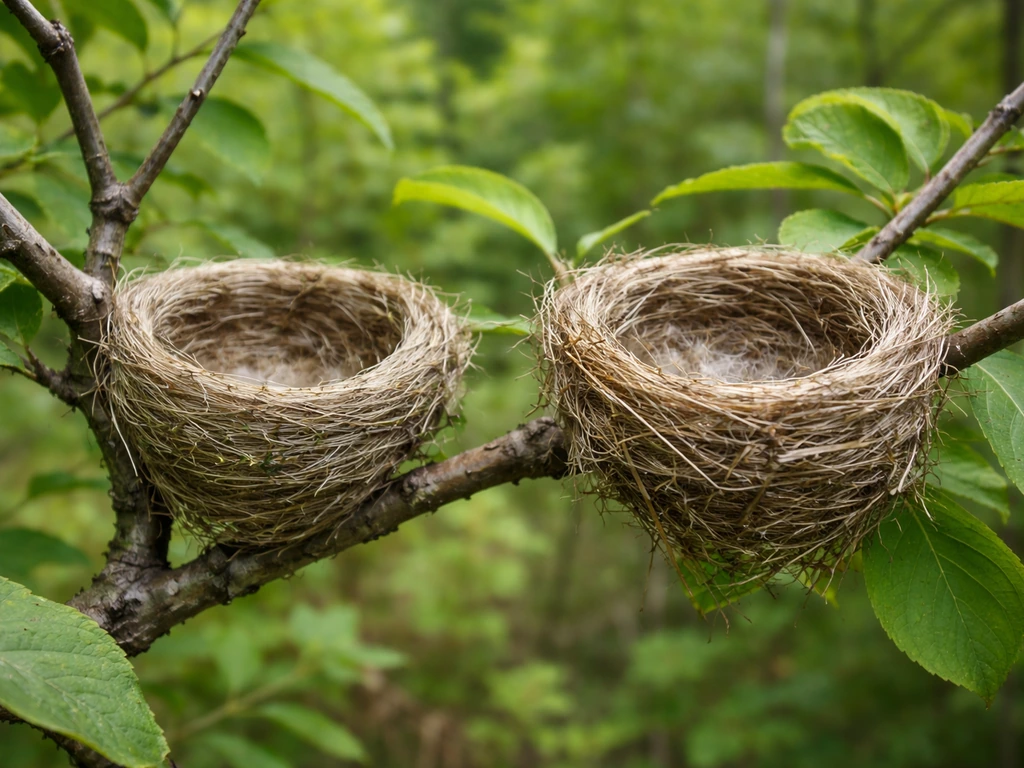
The goldfinch nest is distinctive, but a few other species build similar small open cups in shrubs and saplings, and you may run into them in the same habitat. The most common sources of confusion are Yellow Warbler nests, Chipping Sparrow nests, and occasionally Song Sparrow nests.
Yellow Warbler nests are also compact open cups in shrubby, open settings at similar heights, and they even use plant fibers. The key difference is that Yellow Warbler nests lack the tightly packed, water-holding plant-down interior that is the goldfinch's signature. Yellow Warbler lining tends to be softer and less compressed, and the nest wall is usually thinner. The yellow warbler also nests much earlier in the season (May to June vs the goldfinch's July to August), which is one of the most reliable separators.
Chipping Sparrow nests are extremely fine-fibered, loosely built cups almost always lined with animal hair (often horse or dog hair). If you see a small cup lined with hair rather than fluffy white plant down, lean toward Chipping Sparrow. The nest is also typically flimsier and less structured than a goldfinch cup. Song Sparrow nests are usually lower in vegetation or on the ground and bulkier with coarser grass and weed stems before the finer inner lining.
If you are still unsure, the combination of mid-summer timing plus plant-down lining plus silk-reinforced bark rim plus pale bluish-white eggs is enough to identify a goldfinch nest with high confidence. No other common shrub-nesting species in most of North America checks all four of those boxes simultaneously. For a broader look at how bird nests vary across species, the general principles of nest identification apply across many songbirds, and comparing species like the Baltimore Oriole (a hanging woven pouch, very different from a goldfinch cup) or the Chickadee (a cavity nest with fur and moss) can help sharpen your eye for what makes the goldfinch nest stand out.
What to do after you find the nest
If the nest is in a safe location where the birds are not being threatened, the best thing you can do is leave it alone and enjoy watching from a distance. The whole cycle from nest completion to fledging runs roughly 3 to 4 weeks (12 to 14 days incubation plus 11 to 17 days nestling period), so you will not be waiting long to see the outcome.
If the nest is in a location where it faces a specific risk, like a shrub that a dog or cat routinely patrols, or a branch that is directly in the path of foot traffic, there are things you can do without touching the nest. You can temporarily redirect foot traffic, put up a simple wire barrier a few feet away from the nest site to keep pets at a distance, or add a predator guard to a nearby post if the nest is on a structure. Do not apply repellents, do not disturb the birds with noise, and do not attempt to relocate the nest yourself. Relocating an active nest without a permit violates federal law under the Migratory Bird Treaty Act, regardless of your intentions.
After the fledglings leave, the nest is no longer legally protected as an active nest under most interpretations of the MBTA. At that point you can remove it if it is in an inconvenient spot, leave it in place (it will not be reused by goldfinches, who build fresh each season), or preserve it as a specimen for educational purposes. If you are unsure whether a nest is still active, the safest rule is to wait an additional week after you stop seeing any adult or juvenile birds at or near the nest before making any decision.
Quick visual ID checklist
- Compact open cup, approximately 6.5 cm inside diameter
- Located 4 to 20 feet up in a shrub, sapling, or small deciduous tree
- Open or semi-open setting (not deep forest)
- Found in mid-summer, July through August
- Exterior woven with plant stems, rootlets, and silk
- Rim reinforced with bark bound with spider or caterpillar silk
- Interior lined with thick, white or pale plant down from thistle, milkweed, or cattail
- Inside surface smooth and compressed, not fluffy or loose
- Eggs pale bluish-white, sometimes faint brown spots at large end, clutch of 4 to 6
- Adult birds nearby are bright yellow and black (male) or streaky olive-yellow (female)
If you can check off most of those ten points, you have a goldfinch nest. Take a photo from your observation distance, note the date, and enjoy it. Then step back, give the birds their space, and let mid-summer do its work.
FAQ
What if I find a finch cup nest that looks unfinished, is it still likely a goldfinch nest?
In the first week after it is started, a finch cup may look like an unfinished framework (loose stems and bark) rather than a fully felted bowl. If you see silvery spider silk binding the structure and the interior is still sparse, it can still be a goldfinch nest, but the “water-holding” look is usually more obvious once the interior pappus lining is packed in.
How can I tell a goldfinch nest from a similar cup when I cannot clearly see the eggs or lining?
Most “goldfinch lookalikes” are seasonal. Yellow Warblers build earlier (often May to June), while goldfinches peak in July and August. If the nest is active in mid-summer and the interior looks densely packed and smooth compared to the wall, that combination generally points to goldfinch even if the nest seems slightly smaller or the rim is less visible from your angle.
Does “cream inside” always mean it is a goldfinch nest?
A finch nest can look pale inside from a distance even when it is not waterproof. What you can check safely from afar is whether the inside surface looks tightly compressed and “uniform” rather than fluffy and loose. Also look for a bound rim made of bark strips with visible silk wrapping, since that edge detail is more reliable than interior color alone.
What are the most reliable field marks if I only have a partial view of the rim?
From a safe distance, goldfinch rims are often slightly raised and firmer than the rest of the cup because bark strips are wrapped and bound with silk. If your view is limited, try using binoculars to focus on the rim and whether there is any enclosed roof or tunnel opening (goldfinch cups are open, not tunneled).
How does rain or fog change what a goldfinch nest looks like?
Temperature and rain can alter appearance. During or right after wet weather, plant down may look darker or clumped, which can make the interior seem less water-holding than usual. The nest still tends to have a deep cup shape and a tidy, compact wall compared with looser cups built earlier in the season.
Can goldfinches reuse a nest, and how do I know if a cup is old?
Yes, sometimes the same shrub can hold multiple nests close together in different seasons, but goldfinches do not reuse the same cup. If you find a cup that appears intact but you also do not see adult activity at the site, it may be an older nest. The safest approach is to treat it as active until you have waited after activity stops, as described in the article.
What can I do to protect a goldfinch nest that is in a yard where pets keep getting close?
If a nest is on the edge of a property where birds are likely to be disturbed, you can reduce risk without touching it by redirecting foot traffic, adding a temporary wire barrier a few feet away, and keeping pets indoors or leashed during the nesting period. Avoid spraying repellents or making noise near the shrub, since these can cause the female to abandon the nest.
How do I estimate whether the cup is the right size without climbing or handling anything?
Do not measure the nest directly, but you can estimate cup size by comparing it to nearby objects you already have, like the diameter of a standard tennis ball you keep for yard use. If the inside opening appears around tennis-ball width (about 6.5 cm), and the cup is deep and open, that supports goldfinch. If it looks much larger or flatter, consider other species.
What behavior confirms the nest is active without getting too close?
If you see a parent repeatedly bringing seeds into the cup, that is stronger confirmation than egg color alone. However, avoid lingering if the bird flushes. Use the observation distance you established before, watch briefly, and rely on the overall “open deep cup, tidy felted lining, silk-bound rim, mid-summer timing” pattern rather than trying to count visits.
When is it okay to remove the nest after the birds have left?
After fledging, the cup may remain but it usually will not be used again. If you stop seeing adults and fledglings at the nest, wait an additional week before removing anything, since some young may still be around and some activity can be easy to miss. Once you confirm it is inactive and in a safe, non-protected context, removal is usually permitted where local rules allow.
How do I avoid confusing wind-sway with a nest that hangs or has a roof?
Some branches sway in wind, so the nest can look like it is “dangling” slightly even though it is firmly anchored in the fork. True stringing or a hanging woven pouch shape is not typical for goldfinches. If you see any roof or tunnel entrance, that points away from goldfinch and toward other nesting types.
What if the goldfinch nest is not in a typical roadside shrub or young tree?
A key edge case is nests in unusual microhabitats, like a hedge or ornamental shrub in a suburb. The overall structure still matters: deep, open cup; compact and tidy wall; silk-reinforced bark rim; and lining that looks tightly packed and smooth. Location can be atypical, but the construction details remain the strongest identifier.