Several common birds build nests with sticks, but the three you're most likely to encounter are the American robin, the common grackle, and the osprey. Robins and grackles build open cup nests from twigs and grasses (robins add a distinctive mud layer; grackles sometimes do too), while ospreys construct massive flat stick platforms near water. Which one you're looking at comes down to nest size, shape, location, and height. Some birds create structurally different nests, like the ones where you may wonder which bird make nest of pebbles instead of sticks. If you're asking what bird made this nest, use size, shape, materials, and the placement to narrow it down quickly. Read on and you'll have a confident ID in a few minutes.
What Bird Builds a Nest With Sticks? How to Identify It

Maya Bennett
23 May 2026
Birds that commonly use sticks for nests
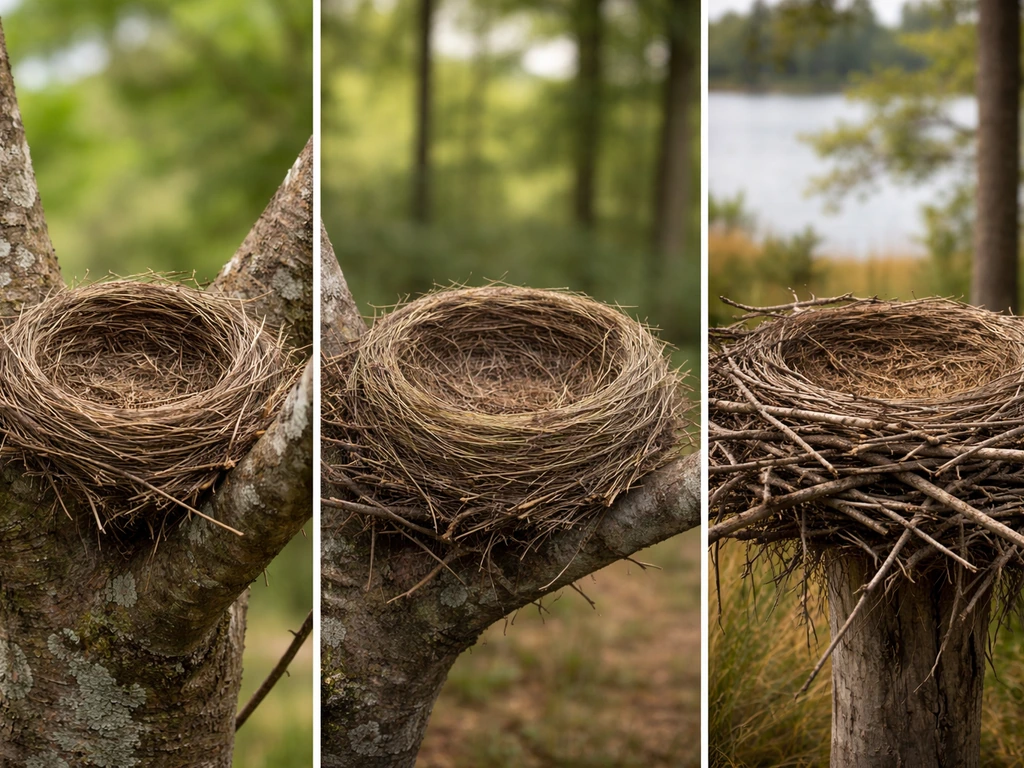
"Stick nest" covers a surprisingly wide range of structures, from a compact robin cup to a multi-decade osprey platform the size of a hot tub. Here are the species you're realistically likely to encounter in backyards, parks, and natural areas across North America.
American robin
The robin's nest is probably the most-recognized stick nest in the country. Females build a tidy open cup using twigs and coarse grasses, then work in a solid foundation of mud before lining the inside with fine dry grass and plant fibers. The mud layer is the giveaway: press a finger gently near the outside and you'll feel a firm, almost plaster-like wall. Robins typically place nests 5 to 25 feet up on a horizontal tree branch, in a dense shrub, or on a sheltered ledge of a house, barn, or bridge. Clutch size averages four eggs; incubation runs about 13 days, and nestlings leave around day 15. NestWatch phenology data for the American robin report an average clutch size of four eggs, an average incubation period of 13 days, and an average nestling period of 15 days.
Common grackle
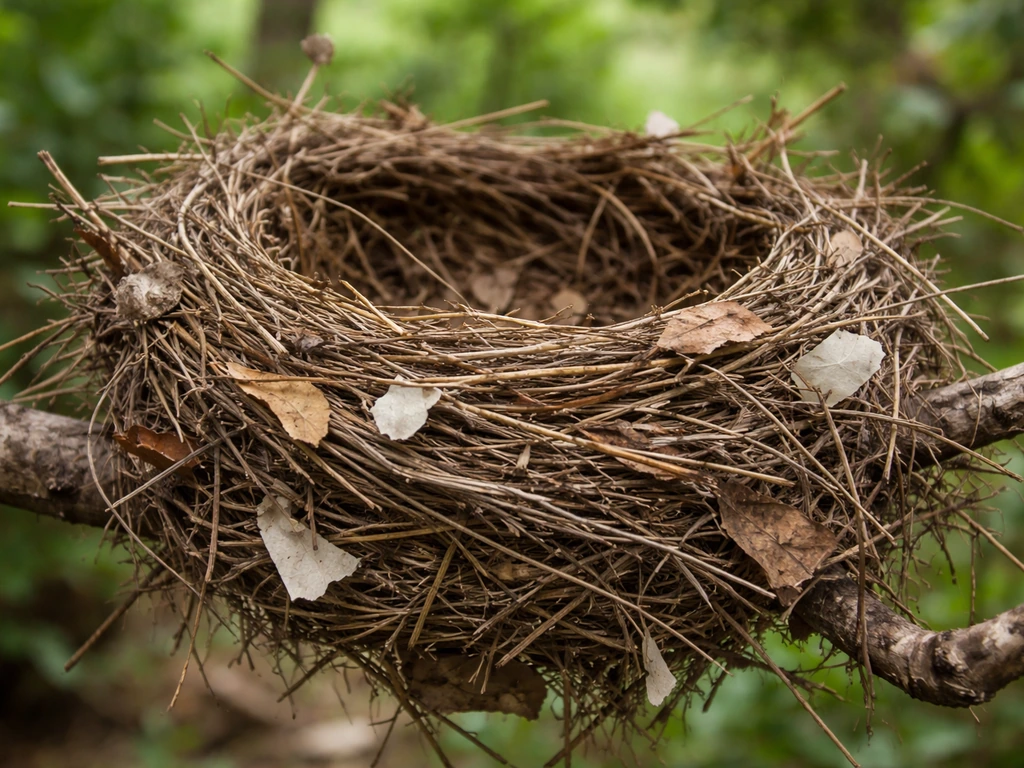
Grackle nests are bulkier and messier-looking than robin nests. They're open cups made from twigs, leaves, and grasses, and females often incorporate incidental scraps like paper, string, and cloth. Some grackle nests include mud, but it's patchier than in a robin's. Grackles are opportunists about placement: you'll find their nests in dense trees or shrubs near water, but also in birdhouses, old woodpecker cavities, cliff crevices, barns, and even on top of active osprey or heron nests. The sheer variety of placement is itself a useful ID clue.
Osprey
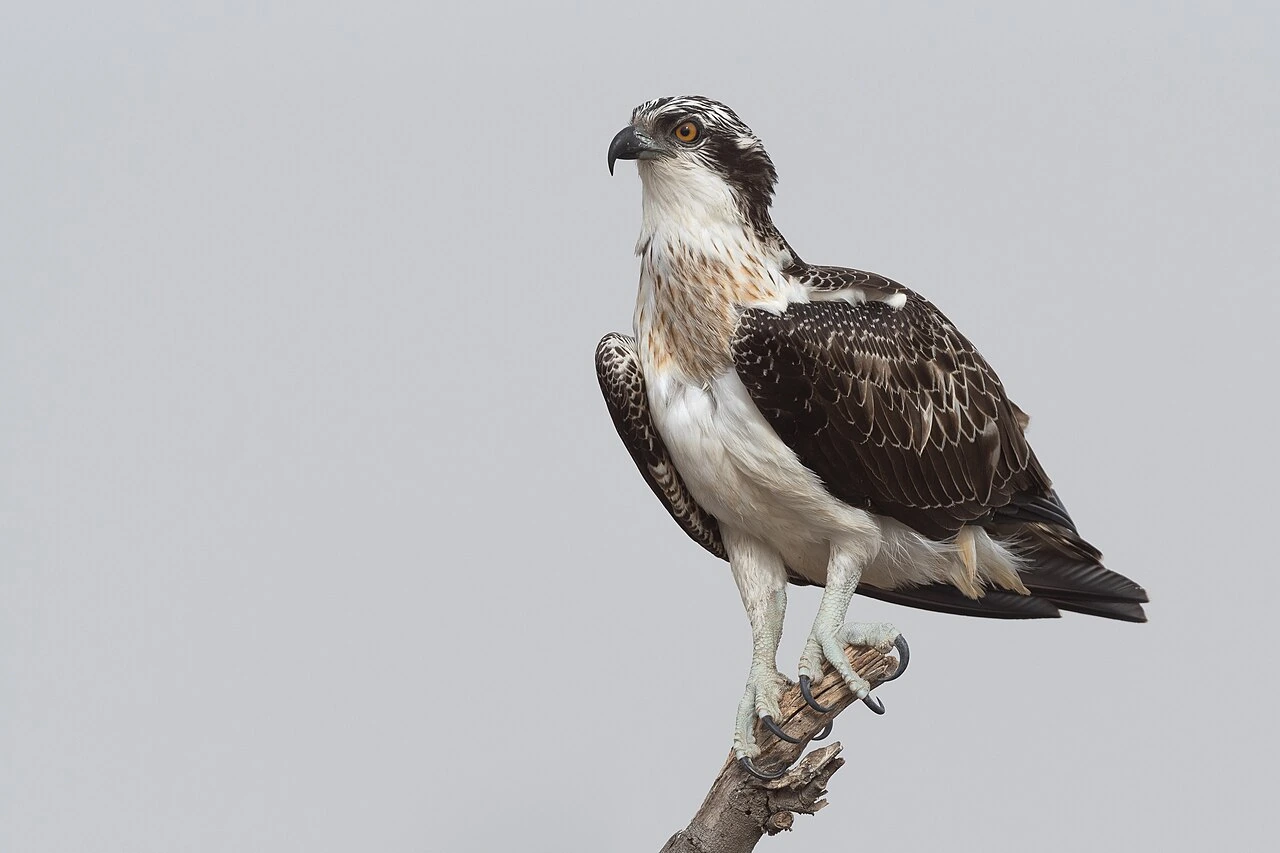
If you're near a lake, river, or coastline and you're looking up at a wide, flat stack of sticks on top of a tall structure (dead tree snag, channel marker, cell tower, or dedicated nest platform), that's almost certainly an osprey nest. Osprey nests grow over years, eventually reaching 3 to 6 feet in diameter and 10 to 13 feet deep. The outer structure is large sticks and branches; the inside is packed with softer material like grass, mud, bark, and moss. Ospreys fish, so water within reasonable flying distance is essentially required.
Other stick-nest builders worth knowing
Several other birds use sticks as primary building material and may show up depending on your region. Bald eagles and red-tailed hawks build large stick platforms similar to ospreys but often higher in mature trees away from water. American crows build bulky stick-and-bark cups lined with softer materials, usually high in conifers or tall deciduous trees. Great blue herons nest colonially in treetops, building flat twig platforms 20 to 100 feet off the ground. Mourning doves build notoriously flimsy, thin stick platforms in shrubs and trees, so loose you can often see the eggs from below.
How to identify stick nests by shape, materials, and location
You can sort most stick nests into the right category without touching them. Here's what to look for from a safe observation distance using binoculars.
| Feature | Robin | Grackle | Osprey / Large Raptor |
|---|---|---|---|
| Shape | Neat open cup | Bulky open cup | Flat stick platform |
| Outer materials | Twigs, coarse grass | Twigs, leaves, grass, scraps | Large sticks, branches |
| Mud present? | Yes, thick solid layer | Sometimes, patchy | Sometimes, mixed in lining |
| Inner lining | Fine dry grass, plant fibers | Fine grass | Grass, bark, moss, soft debris |
| Typical height | 5–25 ft | Varies widely | 20–100+ ft |
| Typical location | Branch, shrub, ledge | Tree/shrub near water, structures | Treetop, tower, platform near water |
| Diameter (approx.) | 4–6 inches inside | 5–8 inches inside | 3–6 feet overall |
| Water nearby? | Not required | Often near water | Almost always |
Start with height and habitat. A nest under 25 feet in a suburban tree or on a building ledge narrows you to robin or grackle territory quickly. A massive stack of sticks on a tall structure near water is osprey or eagle until proven otherwise. Then check for mud: a hard, plastered outer wall points firmly at robin. Robins are the bird most often associated with mud nests, with the distinctive mud layer forming part of the outer cup. Finally, look at the lining through binoculars if you can: fine, pale dry grass on the inside is a consistent robin signature.
Look-alikes: confusing twig nests vs reeds, branches, and abandoned nests
A few common sources of confusion are worth addressing directly, because misidentifying a nest changes how you should respond to it.
Sticks vs reeds and plant stems

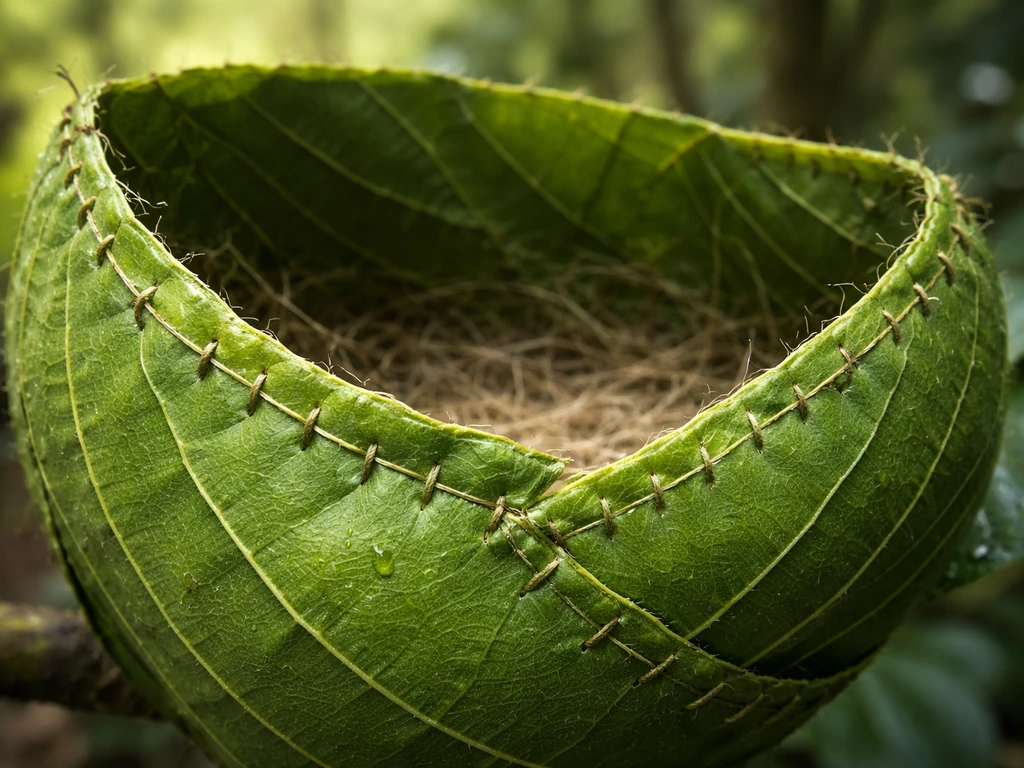
True sticks are woody, rigid, and branch-like. Reeds, cattail stems, and dried plant stalks are hollow or pithy and bend rather than snap. Birds that weave reeds and plant fibers (think marsh wrens or red-winged blackbirds) build structurally different nests that are woven tight and often suspended between vertical stems. The nests of the bird that stitches leaves together are a great example of how material choices can reveal species. Some birds weave and stitch leaves and plant fibers into their nests, so those woven-leaf structures can point to different species than classic stick nests nests woven from moss, nests stitched from leaves. If the material bends without snapping, you're likely looking at a wetland weaverbird-type nest, not a stick nest.
Stick nests vs fallen branches
Occasionally a pile of wind-dropped twigs in a tree fork or on a ledge can look like a nest. The difference is structure: a real nest has a deliberate cup or platform shape, with materials interlocked and oriented inward. Fallen debris tends to be randomly oriented, with no concave center and no lining material beneath.
Active vs abandoned nests
This is where people go wrong most often. A nest that looks empty does not mean it's abandoned. During incubation, a parent may visit only once a day to lay a new egg, then sit quietly in a way that's easy to miss. NestWatch research confirms that low or absent adult activity is normal during incubation and does not signal abandonment. A genuinely abandoned nest typically looks weathered and flattened, with damaged lining and no behavioral cues (alarm calls, adults nearby, fecal sacs) over multiple days of watching. When in doubt, assume active and observe from a distance for 24 to 48 hours before drawing a conclusion. This is different from what you might find with mud nests or nests built with other distinctive materials, where the species options are narrower and abandonment cues can differ.
Quick on-the-ground troubleshooting checklist (if you found a nest today)
Run through this when you first discover a nest. You don't need to get close. Binoculars and a phone camera with zoom are all the tools you need.
- Stop and stay back at least 10 to 15 feet. Watch quietly for 5 to 10 minutes before moving any closer.
- Note the height. Under 25 feet? Likely robin or grackle. Over 25 feet on a tall structure near water? Think osprey or large raptor.
- Check the shape. Is it a cup (concave center) or a flat platform? Cup = songbird or medium bird. Platform = raptor or heron.
- Look at outer materials. Rigid woody sticks with a plastered mud exterior = robin. Loose twigs with scraps and debris = grackle. Large branches stacked flat = osprey/eagle.
- Try to see the interior without disturbing the nest. Fine pale grass lining inside a mud cup = robin. Looser grass in a bigger cup = grackle.
- Check for eggs, chicks, or a brooding adult. If any are present, do not touch, move, or disturb the nest under any circumstances.
- Listen. Alarm calls from nearby adults, chip notes, or begging calls from inside the nest all confirm the nest is active.
- Photograph the nest from where you're standing before approaching any closer. Get the surrounding habitat, the attachment point, and if possible a top-down angle.
- Note the date. Cross-reference with the seasonal timing section below to assess how far along the nesting attempt likely is.
What to do and avoid: ethical observation, safety, and nest disturbance rules
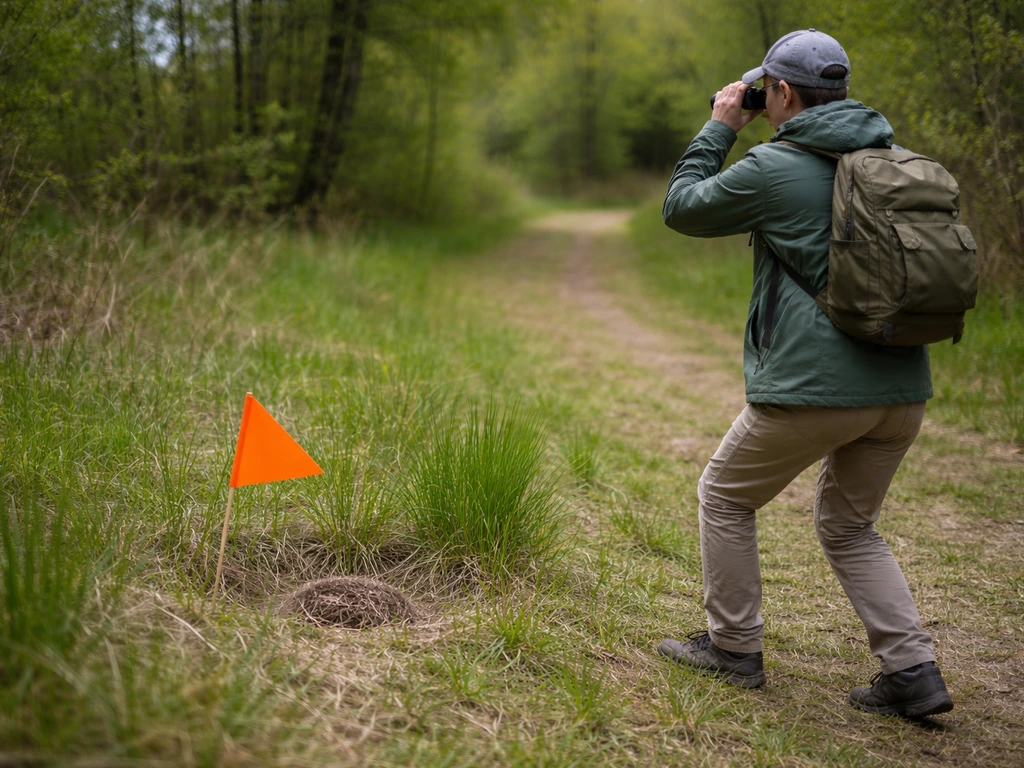
The legal baseline in the US is the Migratory Bird Treaty Act (MBTA). Under the MBTA, it is blank" rel="noopener noreferrer">illegal to destroy, move, or disturb a nest that contains eggs or chicks, or where young birds are still dependent on the nest for survival. Penalties are real: violations can carry fines up to $15,000 and up to six months in jail depending on the state and circumstances. The MBTA covers the vast majority of native songbirds, raptors, and waterbirds, including every species listed in this article.
For safe, ethical observation: use binoculars or a phone camera zoom rather than walking up close. NestWatch protocol recommends monitoring nests from a distance and using angle mirrors or long-lens cameras rather than standing over a nest repeatedly. If the adults show stress behaviors (alarm calls, dive-bombing, leaving repeatedly and not returning), back off immediately. Reduce the frequency and duration of checks: once a day from a distance is enough to track nest status without causing harm.
- Do not touch, move, or remove a nest with eggs or live chicks. This is illegal under the MBTA.
- Do not trim branches, clear shrubs, or do any yard work within 5 to 10 feet of an active nest during breeding season.
- Do not let cats or dogs near an active nest. Nest predation by domestic animals is one of the leading causes of nest failure.
- Do not repeatedly check the nest up close. Once daily observation from a distance is the safest approach.
- Do photograph nests for ID purposes, but keep your presence brief and calm.
- Do record dates, behaviors, and materials. This kind of citizen science data is genuinely useful to researchers via NestWatch (Cornell Lab of Ornithology).
If a nest is in the wrong place: practical non-destructive solutions and when to call help
Finding a nest in an inconvenient location is genuinely common. Robins love porch lights, door wreaths, and HVAC equipment. Grackles nest in parking lot trees. Ospreys land on boat docks and channel markers. Here's how to approach it practically without breaking the law or harming the birds.
If the nest is already active (eggs or chicks present)
You wait. Under the MBTA, you have no legal option to move it. The good news is that most songbird nesting attempts from egg-laying to fledging take roughly 4 to 6 weeks total (for robins: about 13 days of incubation plus 15 days of nestling time). Mark a calendar, use the back door, and make it work temporarily. If the nest is posing a genuine safety hazard (blocking a fire exit, on critical equipment), contact a licensed wildlife rehabilitator or your state wildlife agency. They have permits and can advise on legal options.
If the nest is empty (no eggs, no chicks, no active use)
An empty nest outside of active breeding season is generally legal to remove, but verify that it's truly inactive first using the 24 to 48 hour observation rule. Once confirmed empty and inactive, you can remove it and then install deterrents to prevent re-nesting in the same spot: physical barriers (hardware cloth, bird spikes on ledges), visual deterrents, or simply removing the structure the nest was attached to (a wreath, a shelf bracket, a ledge cover).
Deterrence before a nest is built
The easiest intervention is prevention. If robins or grackles returned last year, start exclusion measures in late February or early March before nest-building begins. Cover ledges, remove horizontal platforms near entrances, and consider adding slope covers to flat surfaces so birds can't get purchase. This is 100% legal and avoids the whole problem.
When to call a professional
Call a licensed wildlife rehabilitator or your state wildlife agency if: the nest contains injured or fallen chicks (do not attempt to move them yourself), if the nest is posing a structural safety hazard you cannot work around, or if you're dealing with a raptor nest (ospreys, eagles, hawks) which may have additional protections and require specific permits to relocate. USFWS-permitted wildlife control operators are the right call for large raptor nests on structures where removal is genuinely necessary.
Seasonal timing: when stick nests are most likely active
Knowing the seasonal window changes how urgently you need to act when you find a nest. Here's a practical seasonal breakdown for the most common stick-nest builders in North America.
| Species | Nest Building Begins | Peak Active Period | Fledglings Gone By |
|---|---|---|---|
| American robin | March (South), April (North) | April through July (up to 3 broods) | Late July to early August |
| Common grackle | March to April | April through June | Late June to July |
| Osprey | March to April (return from migration) | April through July | August |
| Bald eagle | October to February (pre-season build) | February through July | Late July to August |
| Mourning dove | March | March through September (multiple broods) | October |
The current date of May 23, 2026, puts you squarely in the middle of peak nesting season for all of these species. Any stick nest you find right now should be treated as potentially active unless proven otherwise. This is not the time to do trimming, ledge cleaning, or deterrent installation near a nest you haven't confirmed is empty. If you're reading this in late August or September, the calculus shifts: most first and second broods have fledged, and nests from those attempts are genuinely likely to be empty. Winter is the safest time to remove old nests and install deterrents for the following spring.
One last practical note: stick nests are just one part of the nesting world. If the nest you're looking at doesn't quite match any of the descriptions above, it may use different primary materials entirely. Mud-plastered nests with little visible stick structure, nests woven from moss, nests stitched from leaves, or nests anchored with spider silk are all built by different birds with different ID cues and different care considerations. The identification approach is the same: start with materials, then shape, then location and height, and observe behavior from a distance before drawing conclusions.
FAQ
What bird builds a stick nest on a platform or tower, but it is not near water?
Ospreys are the classic stick-platform builder near water, but in the absence of nearby water look first at large raptors like bald eagles, then consider human-made nest platforms on cell towers or other structures. Height and scale help, if it is a very tall structure and a long-term, huge platform, eagle becomes more likely than robin or grackle.
How can I tell if a stick nest is actively being used when I never see the parent birds?
During incubation many parents reduce their time at the nest, so absence of activity alone is not proof. Use the 24 to 48 hour observation rule from a distance, watch for predictable visits to the same area, and check for behavioral cues such as alarm calls when you are nearby. Also look for fecal material or altered debris on the lining over time.
Do robins always use mud on the outside of the nest?
Mud layering is a strong robin indicator, but it may be less obvious if the nest is partially sheltered from rain or if the nest is young and not yet fully reinforced. If you do not see a clear mud wall, rely on the cup shape plus fine dry grass lining you can spot through binoculars, then narrow by height and placement.
Can grackles reuse old stick nests or nest in the same area year after year?
Yes, grackles are opportunistic and may return to reliable nesting locations, including human structures like birdhouses and cavities, so you can find fresh construction layered on top of older material. Look for mixed materials and a bulkier, messier look compared with a typical robin cup to separate an active grackle attempt from a weathered abandoned nest.
What if the “nest” looks like a twig pile in a fork, but there is no clear cup shape?
That is usually wind-dropped debris unless the materials form a deliberate concave center and interlocked orientation, with nesting lining underneath or within the structure. Re-check from a distance over 1 to 2 days, active nests tend to receive consistent material additions or show a defined platform/cup from the parent’s perspective.
How can I distinguish a stick nest from a woven nest when the materials look similar from far away?
If the primary materials are plant stalks that bend without snapping, or if the structure looks tightly woven and integrated around vertical stems, it is more likely a woven or marsh-type nest rather than a true stick cup/platform. A stick nest typically has woody, rigid pieces arranged to create a cup or flat base, not a tight woven mesh.
Is it okay to trim nearby branches or clean the ledge if the nest is already there?
Treat it as potentially active unless you have confirmed the nest is empty and inactive using the 24 to 48 hour observation rule. During peak season, trimming or ledge cleaning near an active nest can trigger abandonment or violate wildlife protections, so wait or involve your state wildlife agency if access is necessary for safety.
If a nest is on a porch light, how do I make it safe without disturbing it?
Start with non-contact solutions that do not require moving the nest, such as adjusting your access route and temporarily managing human traffic around the area. If you need physical changes, use prevention only when the nest is confirmed empty and inactive, then add barriers or modify the ledge surface so the birds cannot get purchase next season.
When is it legal to remove a nest, and what should I confirm first?
In the US, the general baseline is that destroying or disturbing nests with eggs or chicks is illegal, so removal is typically only considered for nests that are truly inactive and empty. Confirm inactivity by observing from a distance for 24 to 48 hours, then check whether the structure is part of an active rearing attempt before proceeding.
What should I do if I find a nest with fallen or injured chicks?
Do not move chicks or the nest yourself. Contact a licensed wildlife rehabilitator or your state wildlife agency right away, and keep pets and people away from the area to reduce stress and predation risk while you wait for guidance.
Next Article
Which Bird Stitches Leaves to Make Its Nest? Identify It
Learn which bird “stitches” leaves into its nest, plus how to spot, place, and safely observe the behavior.