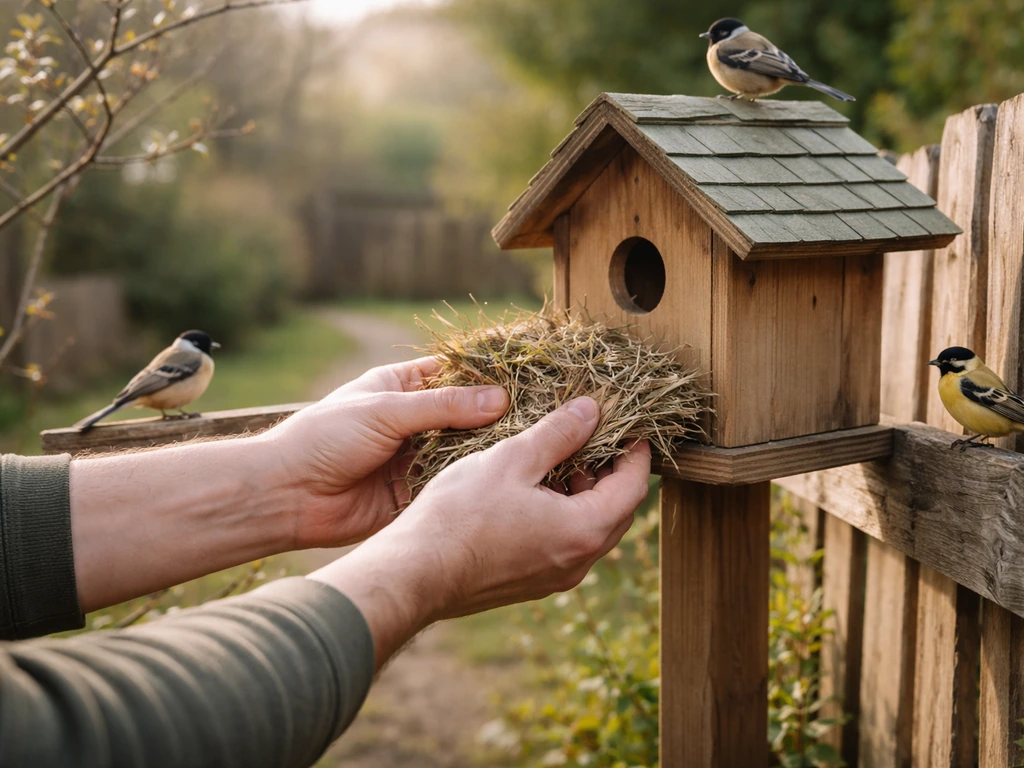
Put out nesting material in late winter to early spring, roughly 4 to 6 weeks before your local birds typically begin building. In most of the U.S., that means late February through March for early nesters like Eastern Bluebirds and American Robins, and late March through April for the majority of songbirds. In southern states, some birds start scouting nest sites as early as January. Choosing the right nesting materials matters too, including what you can put out and what to avoid what can i put out for bird nesting material. If you can see birds actively carrying material or defending a specific spot, you haven't missed the window entirely, but you're in the thick of nesting season and need to shift from offering materials to leaving things alone.
When to Put Out Bird Nesting Material: Timing Guide
Timing by species and season
Not all birds nest at the same time, and getting the timing right means knowing a little about who visits your yard. Cavity nesters like Eastern Bluebirds, Tree Swallows, and Carolina Wrens are among the earliest starters. Audubon recommends having bluebird nest boxes and associated soft materials ready by January in the South and by late February in the mid-Atlantic and lower Midwest. Open-cup nesters like American Robins and House Finches typically begin building in March to April in temperate zones. Later-season nesters, including American Goldfinches (which time their nesting to coincide with thistle seed availability), may not begin until June or even July.
Geography matters just as much as species. Smithsonian's Neighborhood Nestwatch program notes that nesting season timing shifts meaningfully across regions. Birds in coastal California or the Gulf South may be collecting material a full month or two before birds at the same latitude but higher elevation, or the same species in New England. A practical rule: watch your local weather and plant phenology. When forsythia blooms and temperatures are consistently above 45°F at night, most early-spring nesters are considering building. That's your cue to get materials out.
| Bird | Typical Nest-Building Start | Region Note |
|---|---|---|
| Eastern Bluebird | January (South), late February (North) | Cavity nester; needs box ready early |
| American Robin | March to April | Open-cup builder; needs dried grass, twigs |
| House Finch | March to April | Adapts to urban areas; uses soft plant fibers |
| Tree Swallow | Late March to April | Cavity nester; loves feathers for lining |
| Baltimore Oriole | May to early June | Weaves long plant fibers; arrives after migration |
| American Goldfinch | June to July | Waits for thistle; one of the latest nesters |
Keep in mind that nest building itself is not considered part of the formal nesting period under Canadian and U.S. wildlife guidelines, which typically define nesting as beginning with first egg-laying. This matters practically: you have a window between when birds start exploring sites and gathering materials (your opportunity to help) and when eggs are laid (when you must step back entirely).
How to tell if nesting has started (and what 'late' looks like)
There's a meaningful difference between 'nesting season has started' and 'this nest is active.' Before you put out any material or change anything in your yard, take five minutes to watch and look. Here's what each stage actually looks like.
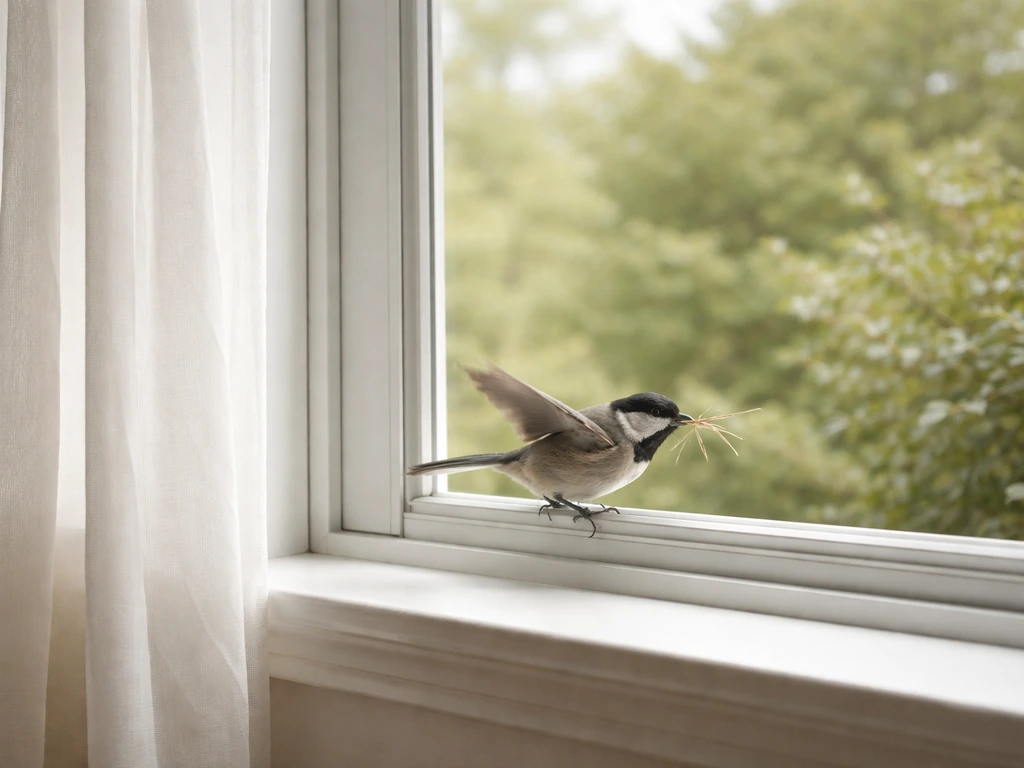
Signs birds are scouting or building (your window is open)
- Birds are visiting nest boxes or shrubs repeatedly but not staying long
- You see a bird carrying a single piece of grass, a feather, or a small twig and flying off purposefully
- Males are singing persistently from a fixed perch, often near dense cover
- A nest structure is visible but looks incomplete, with no lining material yet
Signs an active nest is underway (too late to change anything)
- A female is sitting still in the nest, not just poking around
- You can see eggs if you carefully glance in (don't linger or touch)
- Parents are returning to the same spot at predictable intervals with food
- The adults give alarm calls when you approach, then return immediately
- Nestlings are visible or audible (cheeping from inside)
Once eggs are present, putting out new material nearby is pointless at best and disruptive at worst. The birds have made their choices. Adding a fresh pile of nesting fiber near an active nest just gives you something to watch that the birds will probably ignore. More importantly, repeated human presence near an active nest can cause adults to abandon it, and flushing sitting birds or nearly fledged chicks before they're ready can be fatal. The U.S. Fish & Wildlife Service is explicit: disturbing nesting activity, including causing young birds to leave the nest prematurely, is the kind of harm the Migratory Bird Treaty Act is designed to prevent.
Choosing and setting up the right nesting material (without harming birds)
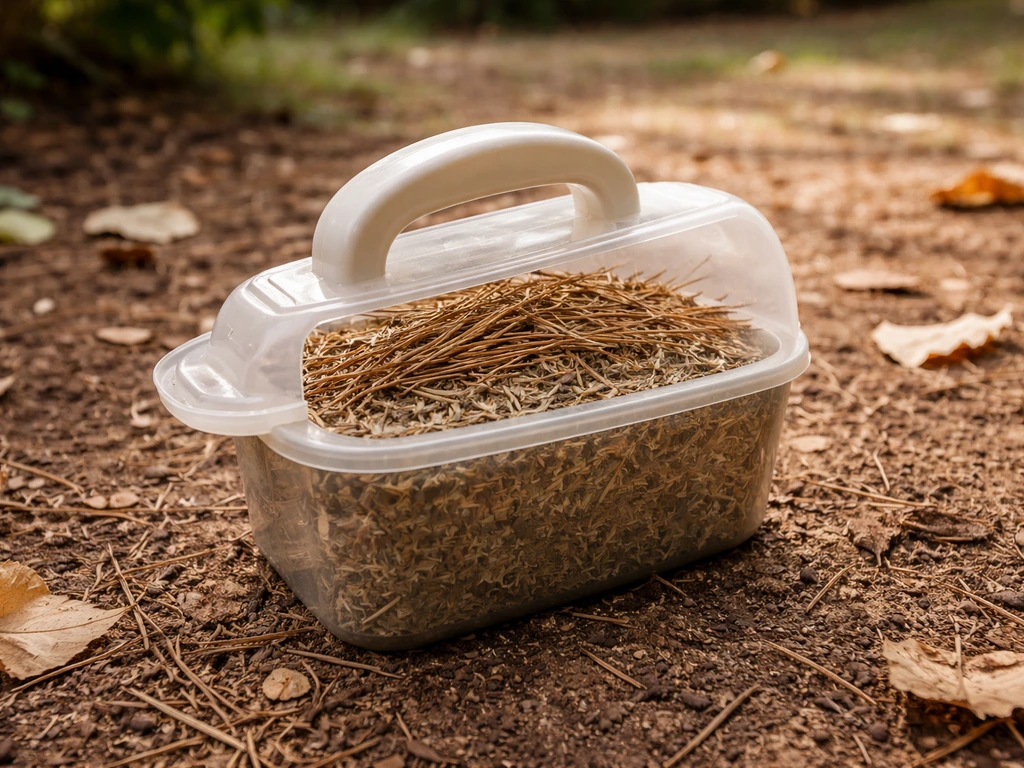
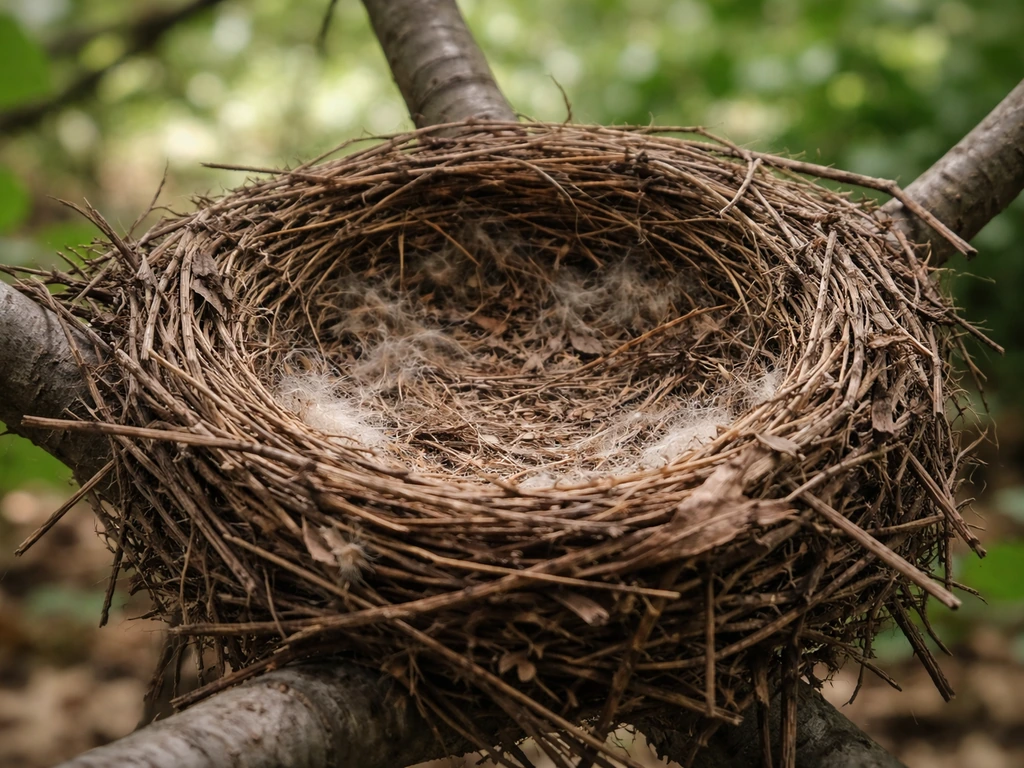
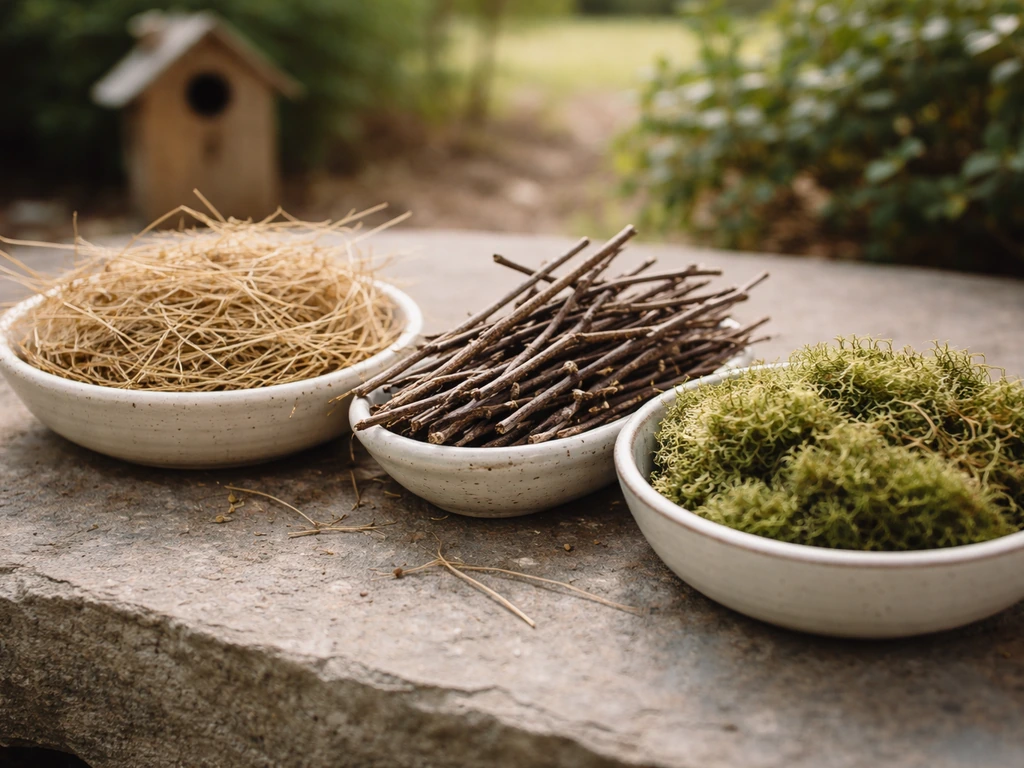
The best nesting materials are the ones that most closely mimic what birds find in the wild: short plant fibers, dry grasses, small twigs, bark strips, moss, pine needles, and natural feathers. The worst are things that look harmless but aren't: string, yarn, dryer lint, human hair, and pet fur.
Safe materials to offer
- Dry grass clippings cut into pieces no longer than 4 to 6 inches
- Dead plant stems and leaf material, broken into small pieces
- Pine needles (loose, dry)
- Strips of natural bark from fallen wood
- Moss (collected sustainably or bought from a garden center)
- Clean feathers from poultry suppliers or molt feathers you've found (not from hunted birds)
- Natural plant fluff such as cattail down or milkweed fiber
- Thin strips of untreated natural burlap or cotton (kept short, under 3 inches)
Materials to avoid, and why
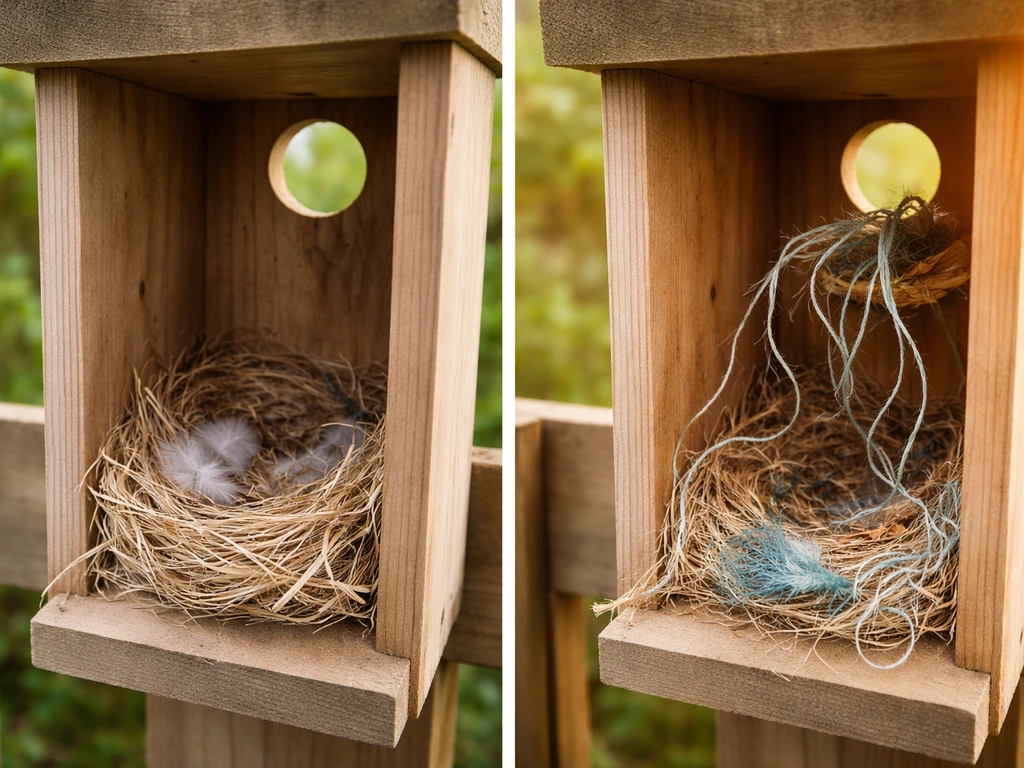
Yarn and string are the most commonly offered and most commonly problematic materials. Both Audubon and NestWatch are direct about this: long, strong fibers can wrap around a bird's leg, wing, or neck, restricting circulation and preventing fledging. This applies to natural twine too, not just acrylic. Even if a bird successfully incorporates yarn into a nest, a nestling's tiny foot can catch in a loop overnight with fatal results. Dryer lint looks soft and nest-like but compacts when wet and can trap moisture against eggs. Pet fur is a concern if the animal has been treated with flea or tick medication because the pesticide residue can harm delicate nestlings. Human hair carries the same entanglement risk as string. The Canadian Wildlife Federation recommends a clean, simple test: if a material could wrap around your finger and tighten with a little tension, don't offer it. If you are wondering whether cotton balls are good for bird nests, treat them like a “safe material” question and look for clean, chemical-free options and low entanglement risk safe materials.
For presentation, the easiest and most effective method is a mesh onion bag or a suet-style wire cage stuffed loosely with your safe materials. Hang it where birds can pull fibers out in short lengths. Loose piles on the ground work too, but they scatter in wind and attract fewer birds than an elevated, visible offering. Keep the total quantity modest, roughly a loosely packed handful to start. You can refresh it every few days during active building season.
Where to place it: locations, height, and shelter from weather
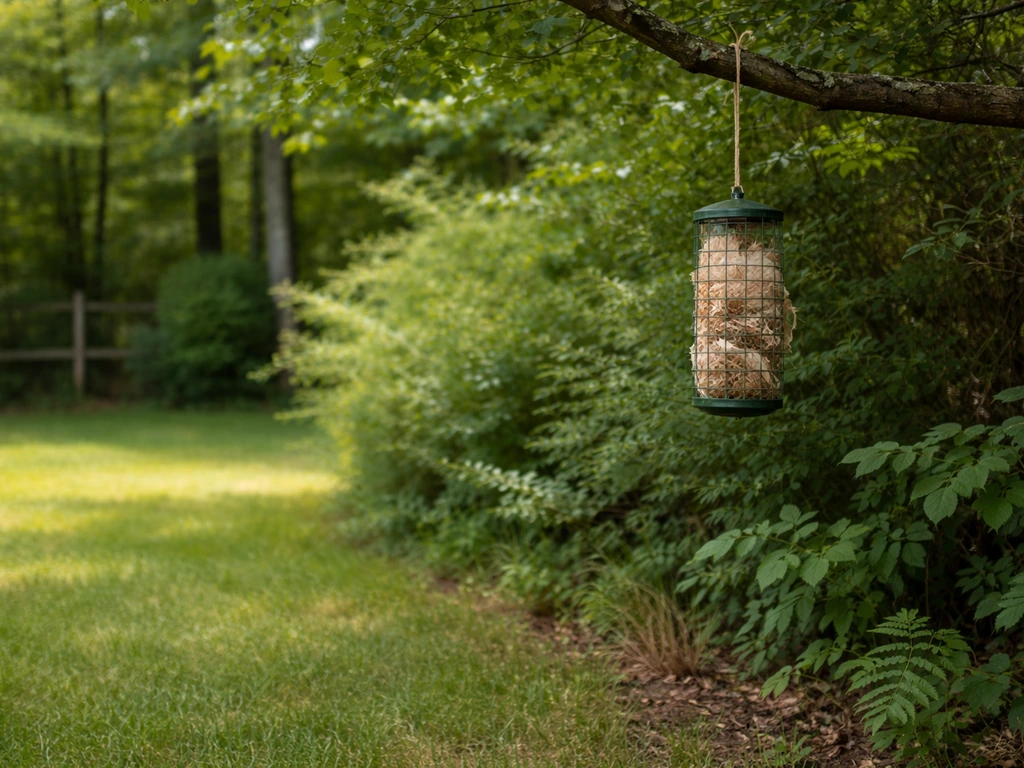
Placement is almost as important as timing. Birds need to feel safe collecting material, which means they won't use a dispenser sitting in the open middle of a lawn 30 feet from cover. Put your material dispenser within 10 to 15 feet of a shrub, hedgerow, or tree edge where birds already land and perch. The goal is a short, low-risk flight from cover to material and back.
- Hang dispensers at 4 to 6 feet high, at or just above typical shrub height, to appeal to most songbirds
- Place near (but not directly on) existing nest boxes or known nesting shrubs
- Keep at least 10 feet from active feeders to avoid competition and congestion at one spot
- Position under a roof overhang, tree canopy, or add a small weather cover to keep materials dry
- Avoid placing near cat lounging areas, open fences where cats can stalk, or directly against a building wall where predators can approach undetected
- Keep away from high foot-traffic areas like walkways or patios where human disturbance is constant
Direct sun will dry out moss and plant fluff quickly, which is actually fine for some materials but can make others brittle and less appealing. A location with morning sun and afternoon shade tends to keep materials at the right moisture level and temperature. If you get heavy spring rain, check that your dispenser isn't holding standing water, which can introduce mold and parasites into materials before the birds even use them.
Step-by-step: what to do when you see birds using the material
- Note the date and species in a small log or phone note. This tells you exactly when building started in your yard and helps you predict the following year.
- Watch from a distance of at least 20 to 30 feet. Use binoculars or a window. Don't approach the dispenser to 'see if they're using it' once activity begins.
- Refresh the material supply every 3 to 4 days as long as birds are actively taking from it. Don't overfill; a loosely packed handful at a time is enough.
- Do not move the dispenser once birds are using it. Even a few feet can disrupt the pattern a bird has established.
- If you can track where the bird is carrying material (watch its flight direction), note the general area but do not go searching for the nest. Let the bird build without surveillance.
- Stop refreshing the dispenser once you observe the birds have stopped taking material or once you know eggs have been laid. The building phase is over.
- Leave the empty dispenser in place until after fledging. The birds may use it for a second brood (many songbirds raise 2 to 3 broods per season).
- After fledging and at the end of the season, remove the dispenser, clean it with a dilute bleach solution (1 part bleach to 9 parts water), rinse well, and store it dry for next year.
Ethical and legal considerations
Offering nesting material is perfectly legal and encouraged. What shifts the legal picture dramatically is interfering with an active nest. Under the Migratory Bird Treaty Act, it is illegal to destroy, move, or possess a nest that contains eggs or chicks, or to disturb young birds that are still dependent on the nest. This applies to virtually all native North American songbirds, raptors, waterfowl, and shorebirds. Non-native species like European Starlings and House Sparrows are not covered under the MBTA, which is why wildlife managers sometimes recommend different management approaches for those birds.
State laws can add additional layers of protection. California Fish and Game Code Section 3503, for example, makes it unlawful to take, possess, or needlessly destroy a bird's nest or eggs regardless of whether the nest is active, going beyond the federal standard. Before touching any nest for any reason (even one that looks abandoned), it's worth checking your state's wildlife regulations.
The practical takeaway: once a nest is being built in your yard, your job is observer, not manager. Do not prune the shrub it's in. Do not move branches to get a better look. Do not let curious pets near the area. Missouri's Department of Conservation puts it simply: if the parents are alarm-calling and watching you, you're too close. Back up until they calm down. Smithsonian's nest monitoring guidelines add one more important boundary: never approach a nest when chicks are close to fledging, because you can trigger them to leave before they're ready, which dramatically reduces their survival odds.
If you discover a nest in an inconvenient spot, like inside a wreath on your front door or in an outdoor light fixture, the guidance from both Audubon and the Cornell Lab is consistent: do not move it. Birds will almost always abandon a relocated nest. If the location is genuinely hazardous (a nest in a gutter you need to clear to prevent water damage), contact your local wildlife rehabilitator or state wildlife agency for guidance on what options, if any, are legal and safe.
Safety: protecting yourself and the birds
Old nesting material from previous seasons can harbor mites, lice, parasites, and fungal spores. When cleaning out nest boxes in late fall or early winter (before putting fresh bedding in), wear gloves and a simple dust mask, and dispose of old material in a sealed bag rather than composting it. Never handle material from an active nest. Wash hands after handling any nesting material, used or new, before touching your face or food.
Troubleshooting: when things don't go as planned
Birds are ignoring your material
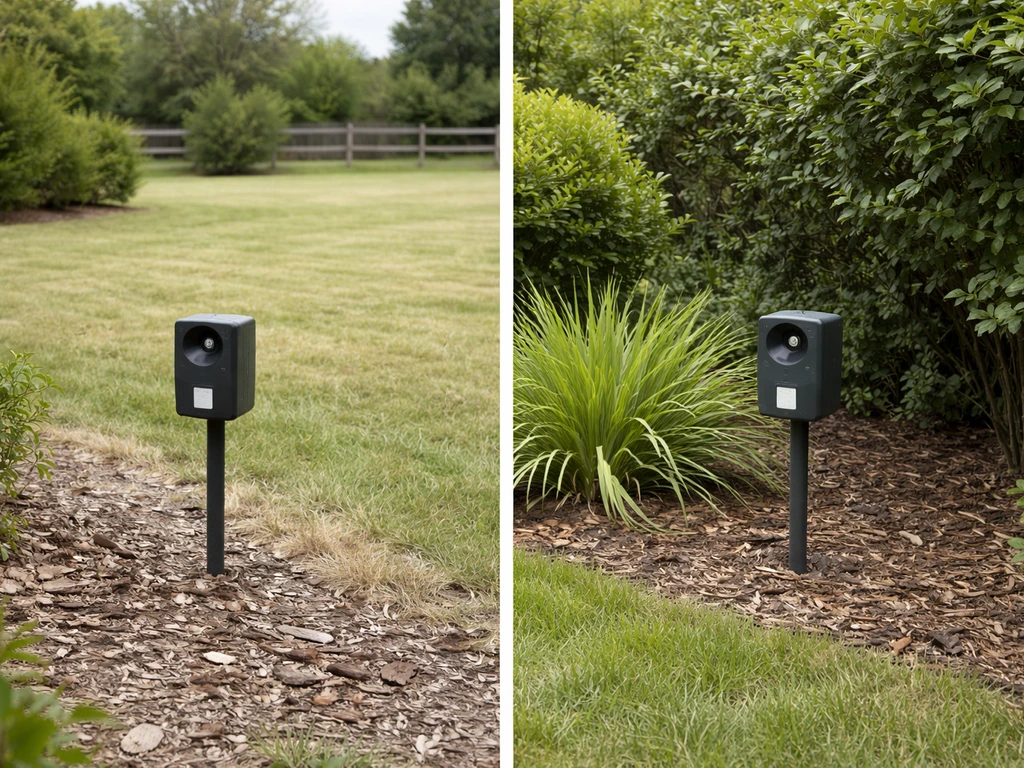
The most common reason is placement. If the dispenser is too far from cover, too exposed, or near a spot where predators are active, birds won't risk stopping. Try moving it closer to shrubby cover and farther from open lawn. The second most common reason is timing: if you've put it out too early (before birds are in building mode) or too late (after a nest is already finished), they simply don't need it yet or at all. A third possibility is material type. Some species are selective. Robins prefer wet mud and dry grass. Finches gravitate toward soft plant fibers and feathers. Tree Swallows will make repeated flights just for white feathers. Offering one or two specific materials suited to your target species is more effective than a mixed pile.
Birds are using materials you didn't provide
This is completely normal and actually ideal. Birds are selective builders and will supplement your offering with whatever they find superior in the environment. If you see a bird taking plastic wrap, string from a garden label, or fiber from a doormat, those are hazards worth removing from your yard where possible. But if they're choosing natural materials from the garden over your dispenser, take it as a compliment: your yard habitat is doing its job.
Predator problems at the nesting area
Predators following birds to a nesting material dispenser is a real risk, especially with outdoor cats. The best deterrents are the same ones used to protect nest boxes: keep dispensers away from fences and low structures that give cats a launch point, use baffles on pole-mounted dispensers, and keep your yard clear of dense ground cover directly below the dispenser where a cat can crouch undetected. Do not use chemical repellents near nesting areas as they can contaminate the materials birds take. If corvids (crows, jays) are following smaller birds back to nest sites, temporarily moving the dispenser to a more enclosed location (under a dense shrub rather than in the open) can help.
Nest ferns, displays, and preserving found nests
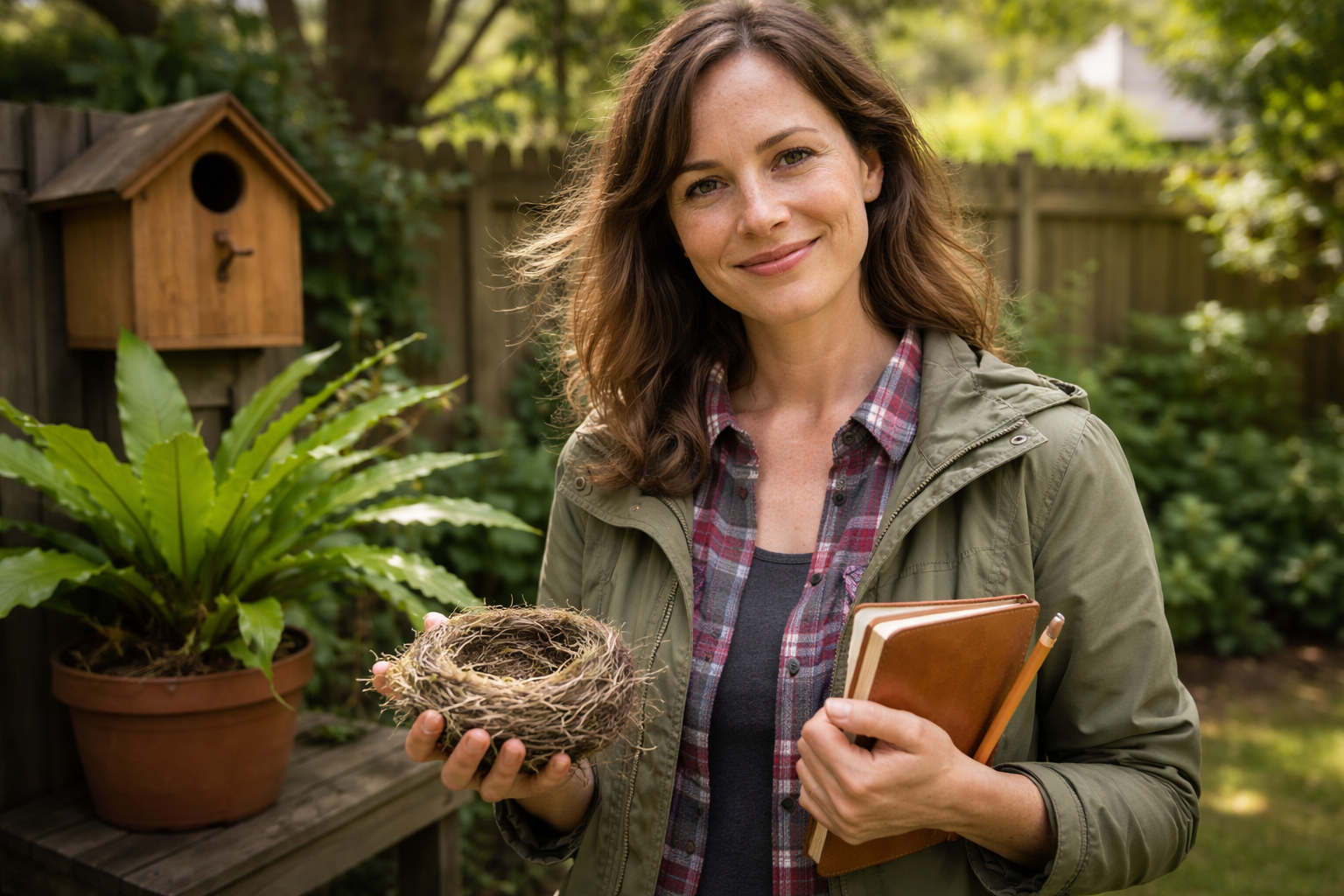
If you're interested in bird nest ferns (the tropical houseplant Asplenium nidus) or in displaying or preserving a found bird nest as a decorative object, the legal and ethical rules are worth knowing. Under the MBTA and most state laws, possessing a native bird's nest (even an empty, abandoned one) without a permit is technically illegal in the U.S. In practice, enforcement focuses on commercial trade and active nest disturbance rather than a homeowner who keeps a found nest in a shadow box. But the safest approach is to photograph rather than collect, or to only display nests from non-native species like House Sparrows. If you do want to preserve a nest for educational display, confirm it is fully abandoned (no activity for at least three weeks after fledging), handle it with gloves, and treat it with a light freeze in a sealed bag for 72 hours to kill any mites before bringing it indoors.
FAQ
Can I put out nesting material year-round, or should I only offer it seasonally?
Seasonal is usually better. Outside the normal building window, many birds are not actively constructing, so the material just sits and accumulates moisture, mold, and parasites. If you want to offer it longer, reduce the quantity, refresh frequently, and stop as soon as eggs are laid in your yard so you do not create extra disturbance and clutter near active nests.
What should I do if I put out nesting material and then notice an active nest using my shrub?
Stop adding or refreshing materials immediately and leave the area alone. Keep people and pets away from the flight path, do not prune nearby branches, and avoid peeking or relocating the dispenser. The goal is to reduce repeated adult trips that can raise stress and increase abandonment risk.
How can I tell whether my yard birds are actually building a nest versus just grabbing fibers?
Look for sustained behavior over time, not one-off trips. Indicators include repeated visits to the same exact spot, carrying material in both directions (from cover to the site), and birds spending time perching and positioning rather than just sampling fibers. If eggs are present, treat it as active even if you never see the nest directly.
Is it okay to compost nesting material or should it be bagged and trashed?
Bagging is safer, especially for material that has been in a nest box or near active nesting sites, because it can contain mites, lice, fungal spores, and droppings. If you compost, assume you are spreading pathogens and do not use compost on edible gardens. For typical backyard use, seal it in a bag and dispose with regular trash.
How often should I refresh the nesting material during the building season?
Every few days is a reasonable cadence early on, but only if the material stays dry and clean. If you see dampness, clumping, or a sour smell, remove the old offering and replace it with fresh, dry material. Avoid topping off a deteriorating pile near an active nest.
What if my feeder style or dispenser attracts the wrong birds or aggressive species?
Some species are not selective and may dominate a location, which can discourage smaller cavity nesters or open-cup nesters. If larger birds keep monopolizing the area, try moving the dispenser closer to dense cover and farther from open ground, or reduce the quantity. For species like European Starlings and House Sparrows, management is more complicated, so consider focusing on attracting native birds with nest boxes rather than constant open offerings.
Are nesting materials safe to offer near a busy bird feeder area?
It depends on how close the activity is to potential nesting sites. If the feeder draws crowds and predators, placing a nesting dispenser right in the middle of that may increase risk to adults and nestlings. Prefer a quieter spot near shrubs or a tree edge where birds feel concealed during short trips to collect fibers.
Will offering nesting material increase the chance that birds nest in a hazardous location?
It can if the hazardous spot is the one they already like. If you have known risks (windows that reflect, exterior lights, gutters you must access, or places pets can reach), do not encourage nesting there. Use deterrents that do not involve chemicals, and for situations like wreaths or fixtures, follow guidance to avoid moving an established nest and instead consult a local agency if safety work is required.
Can I use artificial or dyed fibers, or should everything be natural and untreated?
Stick to clean, natural, and untreated fibers when possible. Many dyed or chemically processed materials increase the risk of residue and unexpected brittleness when wet. If a material would not be safe for entanglement, it is not safe for nesting even if it looks natural.
If I find a nest after the season, is it safe to remove it later?
Often yes, but it is still worth checking local rules. Some states restrict taking or possessing nests even when abandoned, and some nests can still be protected under other wildlife laws. If you remove it, do it after the nesting period is clearly over, wear gloves and a dust mask, and do not handle material from any nest that shows recent activity.
Citations
Audubon notes that in southern states, Eastern Bluebirds may start looking for nesting sites as early as January, and suggests having nest boxes ready early.
https://www.audubon.org/news/how-build-bluebird-nest-box
The U.S. Fish & Wildlife Service describes that most birds’ nests are protected under the Migratory Bird Treaty Act (MBTA), and it’s illegal to destroy nests that contain eggs or chicks (young birds dependent on the nest for survival).
https://www.fws.gov/story/bird-nests
Environment and Climate Change Canada explains that “nesting periods” estimates begin with first egg-laying time and that nest building before egg-laying is not included; actual nesting can start earlier/later due to factors like early spring.
https://www.canada.ca/en/environment-climate-change/services/avoiding-harm-migratory-birds/general-nesting-periods/overview.html
Smithsonian notes nesting season timing varies geographically; in their Neighborhood Nestwatch context, the nesting season can begin at different times in different regions.
https://www.smithsonian.org/nationalzoo/migratory-birds/nest-monitoring-guidelines
Audubon warns that human hair and yarn/string can be dangerous because long, strong fibers can wrap around birds and may restrict circulation and growth (entanglement risk).
https://www.audubon.org/news/what-nesting-materials-are-safe-birds
NestWatch states yarn and other stringy items can be dangerous and should not be given as nest material, citing that stringy fibers can wrap around feet/wings/neck and restrict airflow or prevent fledging.
https://nestwatch.org/blog/what-kind-of-nest-materials-are-best-to-provide-for-birds/
U.S. Fish & Wildlife Service advises to avoid string, twine, yarn, dryer lint, and pet hair because these materials can create risks for birds (e.g., entanglement and other hazards).
https://www.fws.gov/apps/story/helping-wildlife-while-avoiding-common-pitfalls
CWF recommends using mesh onion bags filled with materials like dead twigs, pine needles, leaves, feathers, moss, dry grass, strips of bark, and plant fluff, and explicitly says not to provide hair (human/animal), string, yarn, or loose thread because birds can become entangled.
https://www.cwf-fcf.org/en/resources/DIY/habitat-projects/map-your-backyard/provide-nesting-materials-for.html
FWS states MBTA prohibits take/possession/transfer of migratory birds and their parts, nests, or eggs without a valid permit; it also notes that nest destruction is illegal when eggs/chicks are present or young birds are still dependent.
https://www.fws.gov/story/bird-nests
NestWatch’s Code of Conduct emphasizes minimizing disturbance and notes that disturbing or handling sitting birds is unsafe; it also states that under current laws in the U.S., Canada, and Mexico it’s illegal to possess/import/export/transport/buy/sell native birds or their nests/eggs without a valid permit.
https://nestwatch.org/learn/how-to-nestwatch/code-of-conduct/
All About Birds says they don’t recommend moving a nest because birds will often abandon it if moved.
https://www.allaboutbirds.org/news/theres-a-bird-nesting-near-my-house-what-should-i-do/
All About Birds (via NestWatch guidance) recommends not checking nests at or after dusk when females return for the night and suggests that disturbing can cause adults to move elsewhere.
https://www.allaboutbirds.org/news/i-found-a-nest-near-my-house-and-want-to-observe-it-but-i-am-worried-about-disturbing-it-can-you-give-me-any-advice/
Mass Audubon advises “Do Not Move the Nest,” and describes using methods like encouraging adults to leave and then blocking openings to prevent re-use in building-nesting situations.
https://www.massaudubon.org/learn/nature-wildlife/birds/bird-nest-situations-solutions/nests-in-on-buildings
Audubon explains that native bird nests/eggs/babies are protected by law and cannot be moved or destroyed; in contrast, some non-native invasive species (e.g., European Starlings and House Sparrows) are treated differently.
https://www.audubon.org/birding/faq
FWS notes that the MBTA does not specifically prohibit destroying a bird nest alone (without eggs/chicks) but it emphasizes protections when nests contain eggs/chicks or dependent young are present.
https://www.fws.gov/story/bird-nests
California Fish & Game Code § 3503 provides that it is unlawful to take, possess, or needlessly destroy a bird’s nest or eggs except as provided by other regulations (illustrating state-level protections for nests/eggs).
https://law.justia.com/codes/california/code-fgc/division-4/part-2/chapter-1/section-3503/
The NestWatch Manual discusses avoiding dislodging nesting material and gives monitoring guidance (e.g., where to look, what not to do) to avoid disturbing nesting attempts.
https://nestwatch.org/wp-content/uploads/2013/03/NestWatch_manual_130326.pdf
Missouri DNR guidance says if parents are alarm-calling or watching closely, move back to a distance that lets them calm down, and don’t move branches out of the way to see into a nest.
https://www.mdc.mo.gov/magazines/conservationist/2017-04/whats-nest
Smithsonian’s Nest Monitoring Guidelines advise not approaching nests when baby birds are close to fledging (when they may leave before they’re ready).
https://nationalzoo.si.edu/migratory-birds/nest-monitoring-guidelines
Audubon specifically calls out pet fur as potentially dangerous if treated with flea medicine; that’s one “why” for caution even when fur seems natural.
https://www.audubon.org/news/what-nesting-materials-are-safe-birds
NestWatch notes yarn can be treated (e.g., acrylic/nylon or dyed/chemically treated) and that even natural-looking skeins may have chemicals that could harm delicate nestlings.
https://nestwatch.org/blog/what-kind-of-nest-materials-are-best-to-provide-for-birds/
FWS frames common backyard “pitfalls” as avoidable sources of harm, including string/twine/yarn and dryer lint—useful for writing “unsafe materials” sections in nesting-material guidance.
https://www.fws.gov/apps/story/helping-wildlife-while-avoiding-common-pitfalls
FWS describes consequences of disturbing nesting activities (e.g., flushing birds/young birds leaving nests prematurely and suffering when parents return only nearby), supporting the “too late/unsafe to disturb” rationale.
https://www.fws.gov/story/bird-nests