If you find an unknown bird egg today, start by looking at three things before you touch anything: where the nest is located, how big the egg is, and what color or pattern it has. Those three clues together will narrow down the species faster than any single detail alone. In almost every situation, the right move is to observe first, photograph second, and handle the egg only if it is in immediate, unavoidable danger. Most eggs you encounter in a backyard or on a walk are protected under federal law, and the parent bird is almost certainly closer than you think.
Guide to Bird Eggs: Identify Nests and What to Do Safely

Maya Bennett
16 May 2026
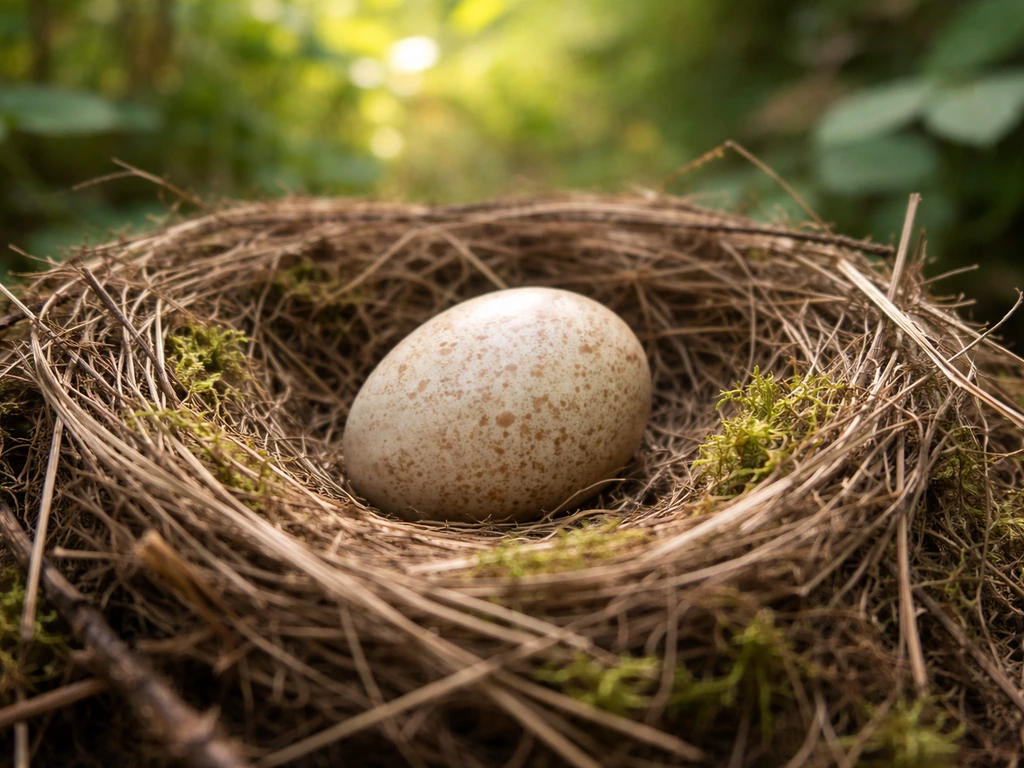
How to identify a bird egg by nest, shell, size, color, and season
Egg identification is a puzzle with five pieces: nest location, nest construction, egg size, egg color and pattern, and the time of year. Work through all five and you will usually land on a short list of candidates within minutes.
Nest location and construction
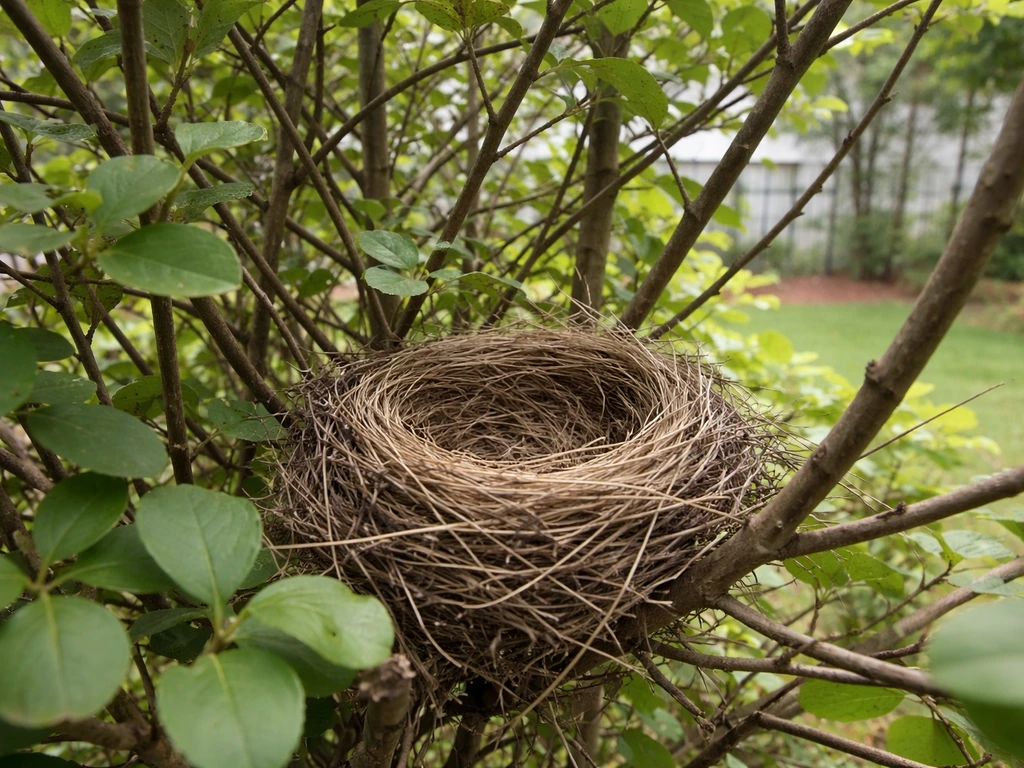
Where a nest sits tells you a huge amount. A cup nest tucked in a dense shrub or small tree near your house is almost certainly a songbird: think cardinals, robins, or finches. A nest in a cavity (a tree hole, nest box, or gap in your eaves) points immediately toward cavity nesters like house wrens, chickadees, or house sparrows. A nest on a ledge or flat surface, including gutters and window sills, is often a mourning dove or even a pigeon. Ground nests hidden in grass or leaf litter are typical of killdeer, meadowlarks, or towhees. A nest made of mud on the side of a building or under an overhang almost always belongs to a barn swallow or cliff swallow. Construction materials matter too: fine grass and plant fibers suggest sparrows or finches, while coarser sticks with a muddy lining are classic American robin.
Egg size and shape
Carry a small ruler or use your phone camera with a coin for scale. Small songbird eggs typically run 0.6 to 1.2 inches (about 1.5 to 3 cm) in length. House finch eggs are on the smaller end at 0.6 to 0.8 inches (1.6 to 2.1 cm). Northern cardinal eggs measure 0.9 to 1.1 inches (2.2 to 2.7 cm). Robin eggs are noticeably larger, around 1.1 to 1.2 inches. Dove eggs are oval and relatively smooth at about 1.1 to 1.2 inches. Blue jay eggs are roughly 1.0 to 1.3 inches and look stockier than most songbird eggs. If the egg is larger than an inch and a half, you are probably looking at something in the crow family, a duck, or a wading bird.
Color, pattern, and shell texture
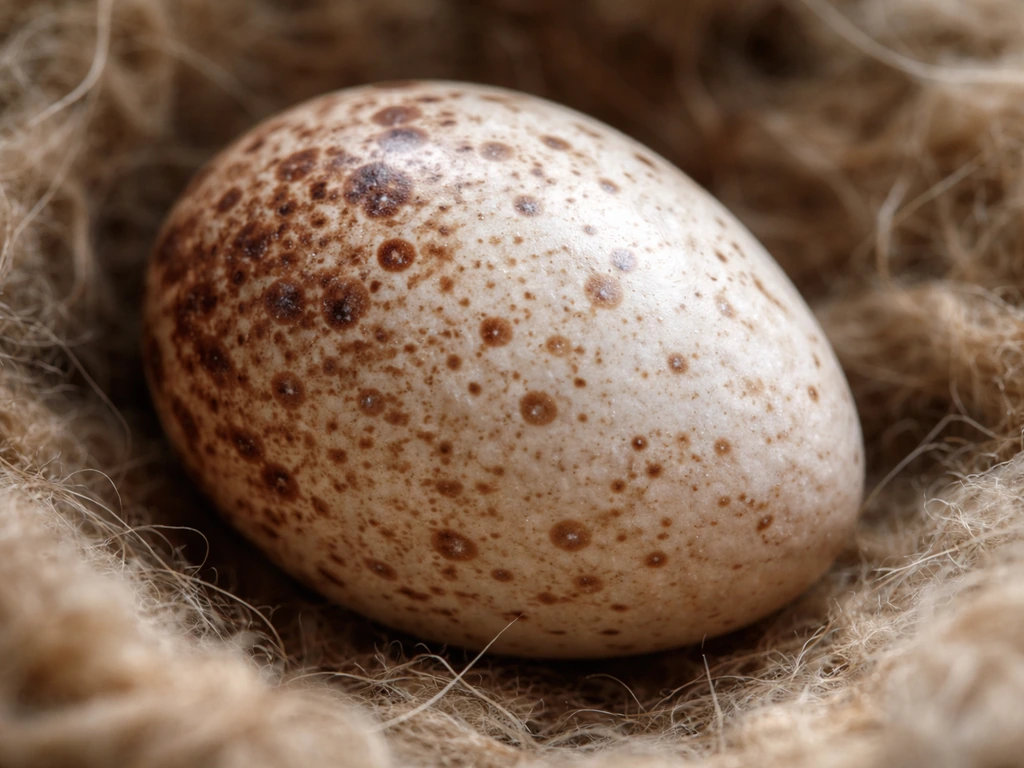
Color and spotting are the most visually obvious clues but also the trickiest, because pigmentation fades and varies within a species. That said, some patterns are very reliable. A pure, unmistakable sky blue with no spots is almost always an American robin egg. Pale greenish or bluish eggs with small brown or reddish-brown speckles concentrated at the wider end point to house finch or house sparrow. Olive or buff eggs heavily blotched with brown and gray are common in blue jays and many thrushes. White or off-white eggs with little or no patterning are typical of cavity nesters like house wrens, chickadees, and mourning doves. Killdeer lay cryptically patterned buff eggs with large dark blotches that blend almost perfectly with gravel or bare dirt. Shell texture can help too: songbird eggs generally feel smooth to slightly glossy, while some waterfowl eggs have a waxy, almost greasy feel.
Season and timing
Timing matters more than most people realize. Most backyard songbirds in North America nest between late March and early August, with peak activity in May and June. American robins are often among the first, starting as early as March in warmer regions. Cardinals nest from March through September and commonly raise two or three broods. House finches and house sparrows nest early and persistently, sometimes from February onward. Blue jays typically nest in April and May. Mourning doves can nest almost year-round in mild climates. If you find an egg in late fall or winter, cavity nesters or non-migratory species are the most likely candidates, and an out-of-season egg may also signal a failed or unusual nesting attempt.
Which eggs you're probably looking at: common backyard species profiles

Here is a quick-reference breakdown of the species most homeowners and backyard birdwatchers encounter. These are the eggs you are statistically most likely to find in suburban and semi-rural North America.
| Species | Egg size | Color / pattern | Clutch size | Incubation | Typical nest site |
|---|---|---|---|---|---|
| American robin | ~1.1–1.2 in | Solid sky blue, no spots | 3–5 | 12–14 days | Cup in tree or shrub, often near buildings |
| Northern cardinal | 0.9–1.1 in | Pale greenish-white with brown speckles | 2–5 | 11–13 days | Dense shrub or vine tangle, 3–10 ft up |
| House finch | 0.6–0.8 in | Pale blue-green, faint dark spots | 2–6 | 13–14 days | Ledges, ivy, hanging baskets, cavity |
| House sparrow | 0.6–0.9 in | White to pale green, brown spots | 3–7 | 10–14 days | Cavity, nest box, building gap |
| Blue jay | 1.0–1.3 in | Olive-buff to blue-green, brown blotches | 2–7 | 16–18 days | Dense tree fork, 10–25 ft up |
| Mourning dove | ~1.1 in | Plain white, no markings | 2 | 13–15 days | Flat platform in tree, ledge, or gutter |
| House wren | ~0.6 in | White with fine reddish-brown speckles | 3–10 | 13–15 days | Cavity or nest box |
| Killdeer | ~1.5 in | Buff with large dark blotches | 3–5 | 24–28 days | Bare ground, gravel, mulch (no cup) |
A note on brown-headed cowbirds: if you find an egg that seems noticeably larger than the others in the same nest, or that has a different pattern from siblings, it may be a cowbird egg. Cowbirds are brood parasites and will lay in the nests of many smaller species. The cowbird egg is typically white with heavy brown spotting and slightly larger than most songbird eggs. Do not remove it; that decision has legal and ethical dimensions covered below.
What to do right now if you find an egg
Walk through this decision path in order. Do not skip steps or jump to action before observation.
- Stop and observe from at least 10 to 15 feet away. Watch for two to five minutes before approaching. Is there a nest visible? Is a parent bird nearby, alarm-calling, or watching you?
- Photograph the egg and nest from a respectful distance. Get shots that show size context (with a coin or hand for scale), color, pattern, and nest construction and location. These photos are your best ID tool.
- Check for immediate danger. Is the egg on the ground away from any nest? Is it cracked but whole? Is it in a nest that is structurally intact? A whole egg in an intact nest requires no action from you.
- Do not pick up, rotate, or reposition eggs unnecessarily. Turning a developing egg can kill the embryo. Handling eggs leaves scent that, contrary to popular myth, does not cause parent abandonment in most songbirds, but unnecessary contact is still risky and potentially illegal.
- If the egg is on the ground and you can see the nest within a few feet, place it back using a gloved hand or a spoon, touching it as little as possible. This is the one exception where brief, careful handling is justifiable.
- If you cannot locate the nest, note the exact location, take photos, and watch from a distance for up to two hours to see whether a parent returns.
- Do not take the egg home. Even temporarily possessing a migratory bird egg without a federal permit is illegal under the Migratory Bird Treaty Act.
Legality and ethics: what you're actually allowed to do
The Migratory Bird Treaty Act protects the vast majority of wild birds in the United States, including their eggs and active nests. Collecting, possessing, or transferring a migratory bird egg without a federal permit is illegal, full stop. This applies even if you find a single egg on the sidewalk and want to hatch it at home. The USFWS is clear that an empty nest with no eggs or chicks can be removed or destroyed without possession-related violations under the MBTA, but once eggs or birds are present, the nest is protected and interference is restricted.
The American Birding Association's Code of Birding Ethics reinforces this with a practical principle: minimize disturbance at nesting sites and stay aware of regulations around protected habitat. The Cornell Lab's NestWatch program, which trains citizen scientists to monitor nests legally, requires participants to follow a code of conduct that prohibits handling nest contents or removing vegetation near nests, and warns against any action that could jeopardize bird well-being.
Practically, here is what this means for common scenarios. You can watch, photograph, and document a nest at any time, as long as you do so without disturbing the parents or damaging the site. You can replace an egg that has fallen from a nearby nest using minimal handling. You cannot remove a cowbird egg from a nest, collect eggs as specimens, relocate an active nest to a more convenient location, or keep an egg for any reason without a federal permit. If you are facing a genuine conflict, such as an active nest in a location that creates a hazard, your legal path is to contact your state wildlife agency or a licensed wildlife rehabilitator for guidance before doing anything.
Caring for abandoned eggs or chicks: triage and the right handoff
The first thing to know is that "abandoned" is almost always the wrong diagnosis. NestWatch strongly advises against assuming abandonment too quickly. Parent birds leave nests routinely to forage, and some species, particularly during the incubation phase, may only sit on eggs a portion of the time. Their guidance is to wait about four weeks from the last time you saw an adult at the nest before concluding it has been abandoned, because eggs can still hatch normally with intermittent parent attention.
If you have chicks rather than eggs, the timeline is shorter. The Wisconsin Humane Society recommends watching from a distance and calling a licensed wildlife rehabilitator if parents have not returned to feed nestlings within two hours. The Wildlife Center of Virginia frames it similarly: observe from a safe distance, and if there is no parent visitation for more than half a day, contact a permitted rehabilitator for advice. Do not attempt to feed nestlings water, bread, worms from a can, or any human food. These can injure or kill young birds.
For unhatched eggs in a nest where you suspect failure, NestWatch recommends waiting four weeks past the expected hatch date before concluding the clutch will not hatch. Removing unhatched eggs from an active nest prematurely is not only premature but also potentially illegal if the nest is still active.
If you have confirmed abandonment or a genuine emergency, the correct next step is always to contact a licensed wildlife rehabilitator, not to attempt home incubation. Home incubation without proper equipment, permits, and species-specific knowledge has an extremely low success rate and is illegal for protected species. The USFWS notes that if a baby animal is in an immediately dangerous location, moving it a short distance to safety is defensible, but this is a short-distance repositioning, not a takeover of parental care. Find a rehabilitator through your state wildlife agency, the National Wildlife Rehabilitators Association, or by searching the USFWS website.
Protecting nests from predators without causing harm
Predation is the leading cause of nest failure for most songbirds, and it is also the area where homeowners can make a real, legal difference without touching the nest at all. The key is using physical barriers and habitat modifications rather than trapping or harming the predator.
For nest boxes and cavity nests
- Install a predator guard (a smooth metal baffle) on the pole below a nest box. A 6-inch diameter stovepipe baffle is highly effective against raccoons, squirrels, and snakes.
- Use a nest box with the correct entrance hole diameter for your target species. An opening of 1.5 inches excludes most predators capable of reaching in for eggs.
- Mount boxes on smooth metal poles rather than wooden posts or trees, which are easy for climbing predators to scale.
- Keep boxes away from fences, overhanging branches, and structures that predators can use to bypass a baffle.
For open-cup nests in shrubs and trees
- Do not trim or disturb the vegetation around an active nest. Dense foliage provides the concealment that is the nest's primary defense.
- Keep cats indoors during nesting season. Free-roaming domestic cats are a major documented source of nest predation. This is one of the highest-impact things a homeowner can do.
- If a nest is in a low shrub that has been discovered by a predator, you can loosely drape a piece of hardware cloth or chicken wire as a cage around the shrub, leaving enough space that the parent can enter and exit freely. Remove it once the chicks have fledged.
- Avoid placing bird feeders immediately adjacent to nesting shrubs during active nesting. Feeders concentrate activity and can attract corvids and other opportunistic predators to the area.
For ground-nesting birds
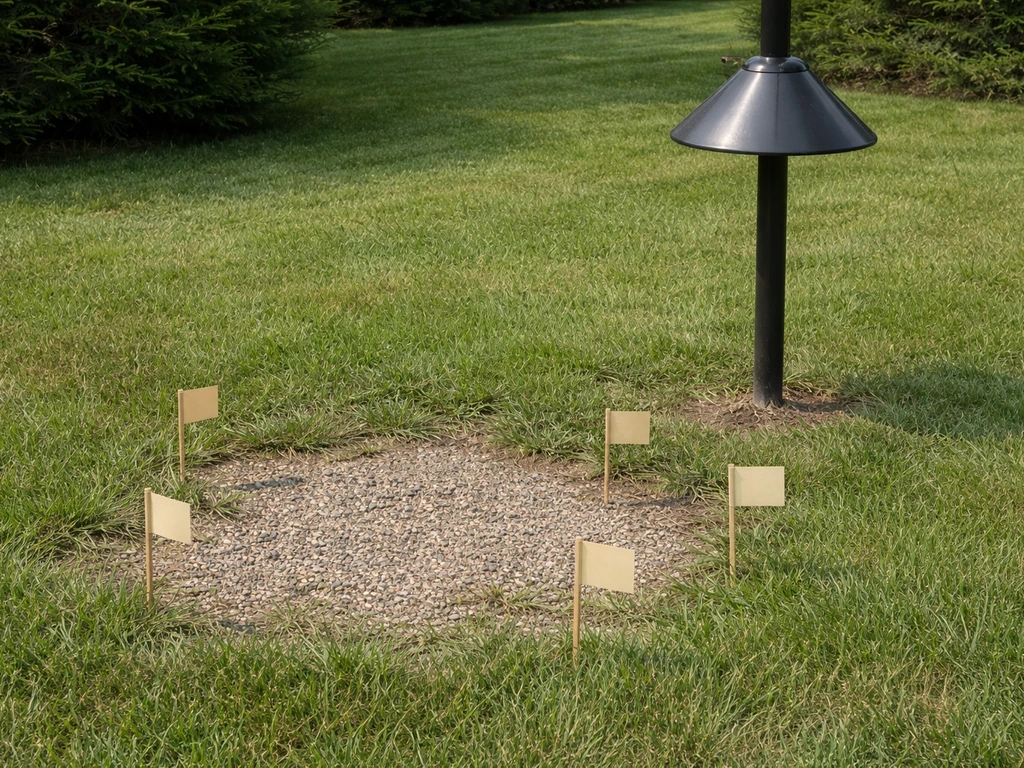
Ground nesters like killdeer are particularly vulnerable. If a killdeer nest is on your property in gravel, a driveway, or a lawn, marking the area with small flags or stakes at a 6-foot radius keeps lawnmowers, foot traffic, and vehicles at bay. Do not rope off the area in a way that prevents the parent from leaving and returning quickly. Killdeer will perform broken-wing distraction displays when predators (or people) approach, so if you see that behavior, back away immediately.
When you should not handle eggs: risks, disease, and protected species
Beyond legality, there are genuine health reasons to keep your hands away from wild bird eggs and nests. The CDC recommends washing hands thoroughly with soap and water after any contact with birds, their droppings, or materials from bird nests or cages. Use hand sanitizer as a backup when soap and water are not immediately available. If you have had any direct contact with wild bird material during a period of elevated avian influenza concern, follow the CDC's guidelines for risk reduction, which include avoiding touching your face, removing and washing any contaminated clothing, and monitoring yourself for symptoms.
Bird nests and eggs can also harbor mites, ticks, bacteria like Salmonella, and fungal spores. These risks are generally low for brief, incidental contact, but they are real. Children and people with compromised immune systems should not handle wild bird material at all. If you find a nest in a location where children or pets regularly play, barrier it off rather than handling it.
On the species protection side: raptors, eagles, owls, and most migratory songbirds are all protected under the MBTA. Even species that feel common, like house sparrows and European starlings (which are actually non-native and not protected under the MBTA in the US), can create confusion. When in doubt, treat any egg as protected. If you find a nest or egg belonging to a threatened or endangered species, do not approach at all. Back away, note the location, and contact your state wildlife agency or USFWS.
How to document what you found and what to watch for next
Good documentation is both personally satisfying and genuinely useful for conservation science. When you find a nest, take a moment to record five things: the date, the exact location (a GPS pin on your phone works perfectly), the nest height and substrate, the egg description (size, color, pattern, number), and any parent bird sightings. Photos are the best record: take a wide shot that shows the nest in context, a medium shot of the nest construction, and a close-up of the eggs with a coin or ruler for scale.
The NPS recommends keeping records by species, date, location, and notes, and emphasizes avoiding any use of audio playback or artificial lighting near nest sites. Pointing a flashlight or phone torch into an active nest stresses the birds and can cause the parents to flush at a critical moment.
If you want to monitor the nest through the season, Cornell Lab's NestWatch program is the best structured framework for doing it responsibly. It trains you to check nests at appropriate intervals (typically no more than once every three to four days), record clutch size, hatch dates, and fledging events, and contribute your data to a national database. Monitoring without that structure can inadvertently increase predation risk by creating a trail to the nest.
Seasonal calendar: what to expect and when
| Month | What to expect in most of North America |
|---|---|
| February–March | Early nesters begin: house finches, mourning doves, great horned owls already incubating. Watch for nest-building activity in shrubs and on ledges. |
| April–May | Peak nest-building and first clutch laying for most backyard songbirds: robins, cardinals, blue jays, house sparrows, wrens. Best time to find and document nests. |
| June–July | Second and third broods underway for multi-brooded species. Fledglings appearing. Many 'orphaned' reports come in during this period; most fledglings are fine. |
| August–September | Most songbird nesting winds down. Late nesters like goldfinches peak in late summer. Watch for fledglings still being fed by parents. |
| October–January | Minimal nesting in most regions. Non-migratory cavity nesters may roost in nest boxes. A good time to clean boxes for next season. |
For small songbirds, a rough timeline to keep in mind: incubation typically runs 10 to 14 days after the last egg is laid, and nestlings fledge after another 10 to 14 days in the nest. For example, All About Birds reports that house finch incubation lasts about 13 to 14 days and the clutch size is typically 2 to 6 eggs blank" rel="noopener noreferrer">incubation typically runs 10 to 14 days. Cardinal eggs incubate in 11 to 13 days; house finch eggs in 13 to 14 days; blue jay eggs take longer at 16 to 18 days. Killdeer, being a shorebird that nests on the ground, have notably longer incubation at 24 to 28 days. Knowing these windows tells you how long to monitor and what a realistic outcome looks like.
If you want to go deeper on any of these areas, the related guides on how to identify bird eggs, how to find bird eggs in your backyard, what to do if bird eggs fell out of the nest, and how to check whether eggs are developing are all natural next steps depending on exactly what situation you are dealing with. If you want a more complete species-level reference, a peterson field guide to north american bird nests can help you match nests to the birds that make them how to find bird eggs in your backyard. Start with what you observed today, build a record, and let the bird do the rest of the work. Most of the time, the parent bird has everything under control.
FAQ
Is it ever okay to touch an egg if it is already on the ground?
Usually, yes only in limited cases. If the egg fell from a nearby nest, you can replace it using minimal handling, but avoid checking it repeatedly. Do it quickly, keep your movements calm, and leave the area right after, because repeated returns can draw predators or cause adults to abandon the site.
What should I do if an egg is in my yard and parents do not come back right away?
Do not assume the nest is abandoned based on a short absence. Many species incubate intermittently and forage off the nest. Follow a longer wait period, and watch from a distance for adult visitation before taking any further action or contacting anyone, unless the location is immediately hazardous.
How can I tell whether a nest is active if I cannot see the adults?
Look for indirect signs, like fresh nest material, recent droppings near the entrance, or eggshell fragments nearby, rather than relying on adult birds sitting in view. Also note that incubation can involve long off-bouts, so one quiet hour does not equal failure or abandonment.
If the egg appears “empty” or cracked, can I keep it as a souvenir?
No. Even if you believe an egg is unhatched or a nest looks abandoned, it can still be protected. The safer approach is to treat any egg or nest content as protected and avoid possession, cleaning, or keeping unless you have verified permission through the proper wildlife authorities.
Can I move the nest away from a hazard like a porch light or busy walkway?
Relocating active nests or nests containing eggs is generally not allowed without permits. Instead, adjust the environment without touching the nest, for example, reduce foot traffic, cover the hazard area with a barrier that does not block parent access, and use observation from a distance until the nesting period ends.
Is it safe to put up a camera or motion sensor near the nest to monitor activity?
It can be safe if it does not alter the habitat or cause repeated disturbance. Avoid mounting equipment so it shines light into the nest, emits noises, or requires frequent checks. Place it farther away than you think and keep access routes natural to avoid increasing predation risk.
What is the best way to photograph eggs without making it worse for the birds?
Use zoom rather than approaching, and take photos quickly from a consistent, safe distance. Avoid flash and torch/spotlight use, and do not crouch or hover over the nest. After photographing, leave the area so the adults can resume normal behavior.
Should I bring my kids or pets near a nest to “help” identify the eggs?
No, children and pets should not be brought close. Barrier the area instead of handling eggs or nests, and keep dogs on leash. For health reasons, people with compromised immune systems should not handle nest materials at all, and even incidental exposure can be a problem around mites and bacteria.
What if I find a bird egg inside a chimney, wall, or tight cavity and it is stuck?
Keep people away and do not try to reach in if eggs or chicks may be present. Contact a licensed wildlife rehabilitator or your state wildlife agency for a species-appropriate removal plan, because cavity nests can be protected and access methods often determine legal and welfare outcomes.
Are house sparrows and starlings treated the same as other backyard birds under egg rules?
In the US, European starlings are not protected under the MBTA the same way as native migratory birds, but house sparrows can still create legal confusion. When you cannot confidently determine legal status, treat the egg as protected and follow the same observe-only approach.
How long should I monitor a nest, and when should I stop checking it?
Plan based on species-specific timelines, then limit disturbance by checking infrequently. If you still cannot confirm hatch or fledging, stop repeated visits because additional visits can increase risk. Instead, keep your records from a distance and let the process complete.
What should I do if I suspect a brood parasite egg, like a cowbird egg, is present?
Do not remove it, even if it seems wrong or out of place. Brood parasites are part of the ecosystem, and interference can cause legal and welfare issues. Document the nest location and appearance, then contact wildlife professionals if you have a conflict that cannot be resolved with observation alone.
If I suspect disease risk or avian influenza concern, can I still observe from a distance?
Yes. Observation from a distance with no contact is the preferred approach. If you ever do touch anything associated with the nest, follow strict hand hygiene guidance, avoid touching your face, and wash contaminated clothing before contact with others.
Is it okay to clean up eggshells or nest debris after the birds leave?
Avoid cleaning until nesting activity has fully ended and you are confident it is no longer active. Even then, minimize handling and wear gloves if you must remove debris, because mites, bacteria, and spores can be present. If you are unsure, ask a wildlife professional before disturbing the area.
Next Articles
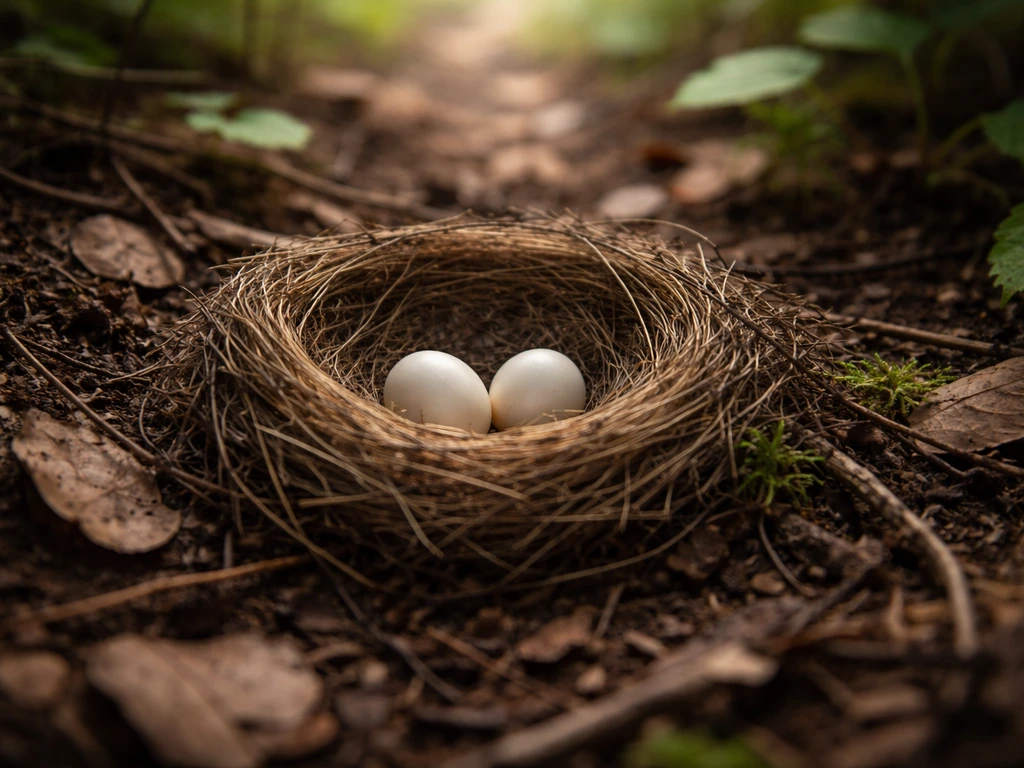
How to Check Bird Eggs Safely Without Disturbing Nests
Learn how to check bird eggs safely, with legal basics, visual-only inspection, timing, and what not to do.
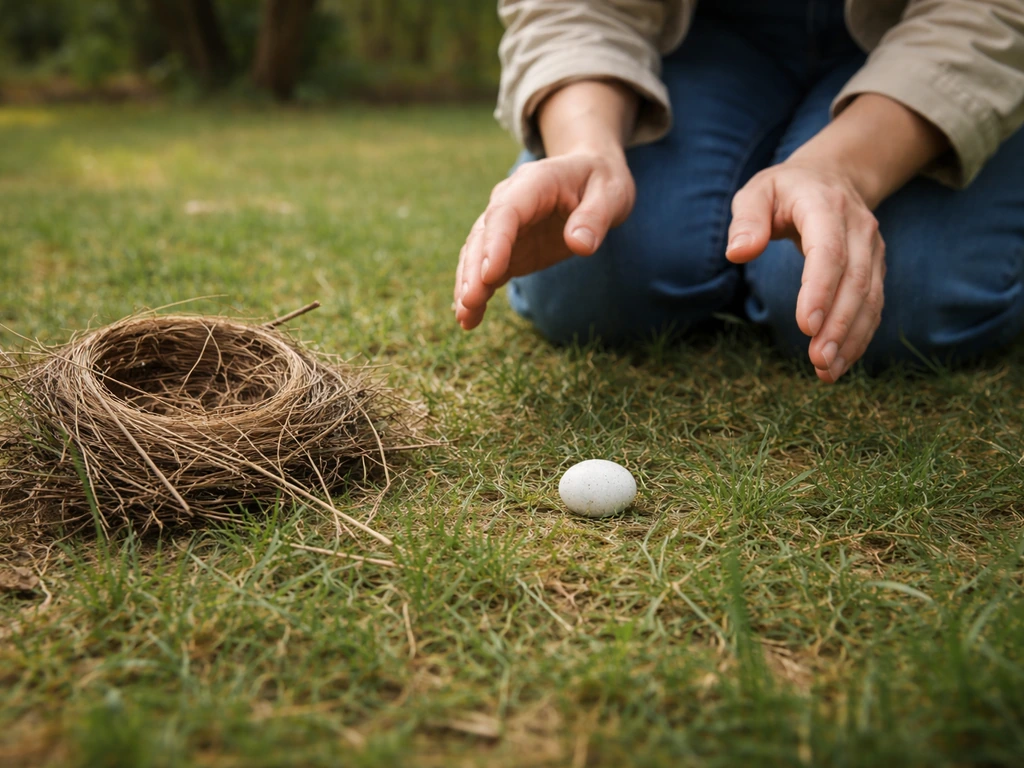
What to Do If Bird Eggs Fell Out of the Nest
Step-by-step actions for finding bird eggs on the ground, including legality, handling safety, and when to return or cal
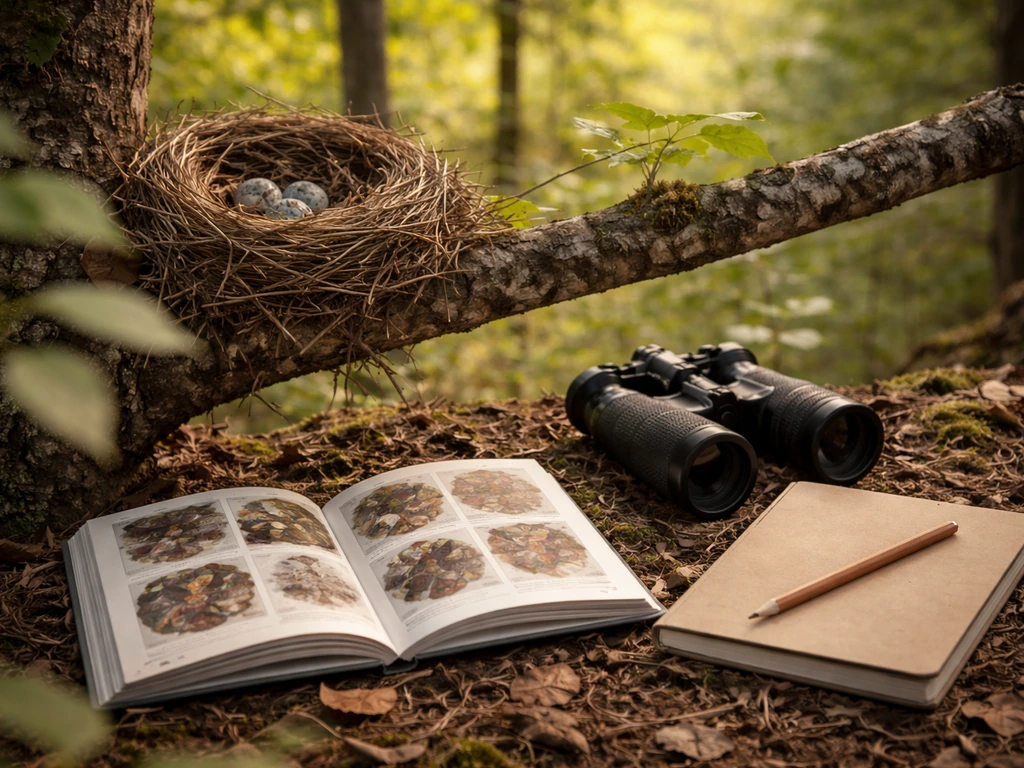
Peterson Field Guide to North American Bird Nests: How to Use It
Use Peterson bird-nest guide to identify nests by structure, eggs, and placement ethically and legally, with next-step t