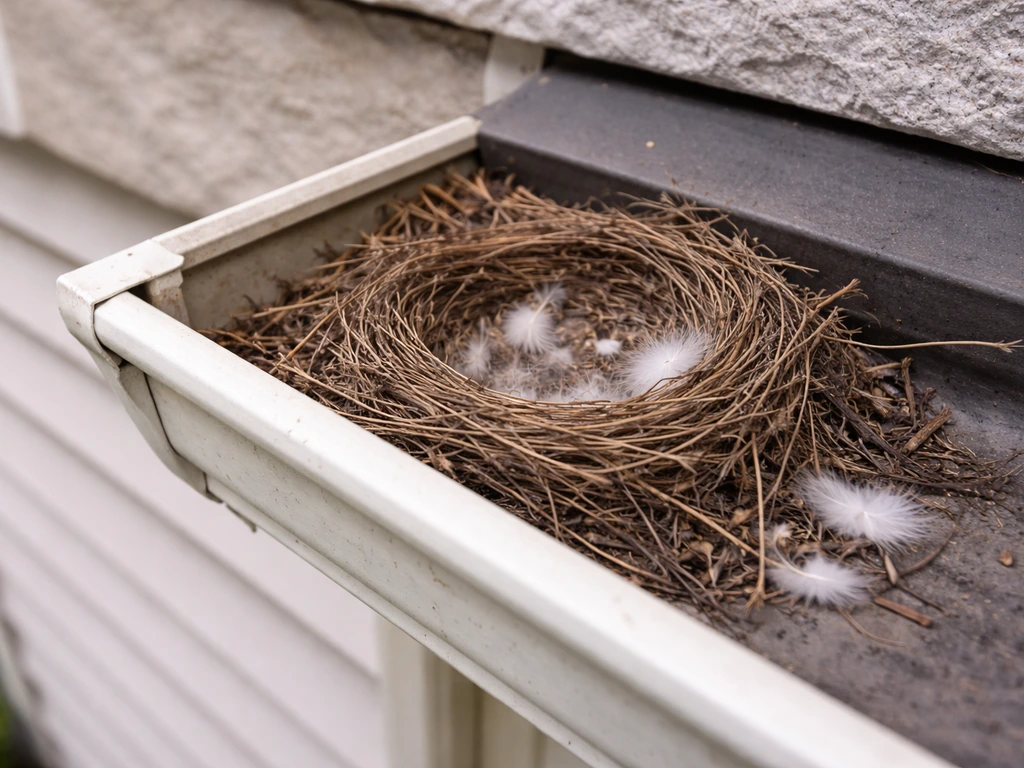
You can remove a bird nest legally and safely only when it is completely inactive: no eggs, no live young, and no adult birds actively tending it. That's the clear rule. The harder part is figuring out whether you're actually there yet, because a nest that looks quiet from your back door might still have a parent bird returning every hour. Before you touch anything, you need to observe, confirm, and then act in the right order. Here's exactly how to do that.
When Can I Remove a Bird Nest Safely and Legally

Maya Bennett
17 Apr 2026
Is the nest active right now? Start here
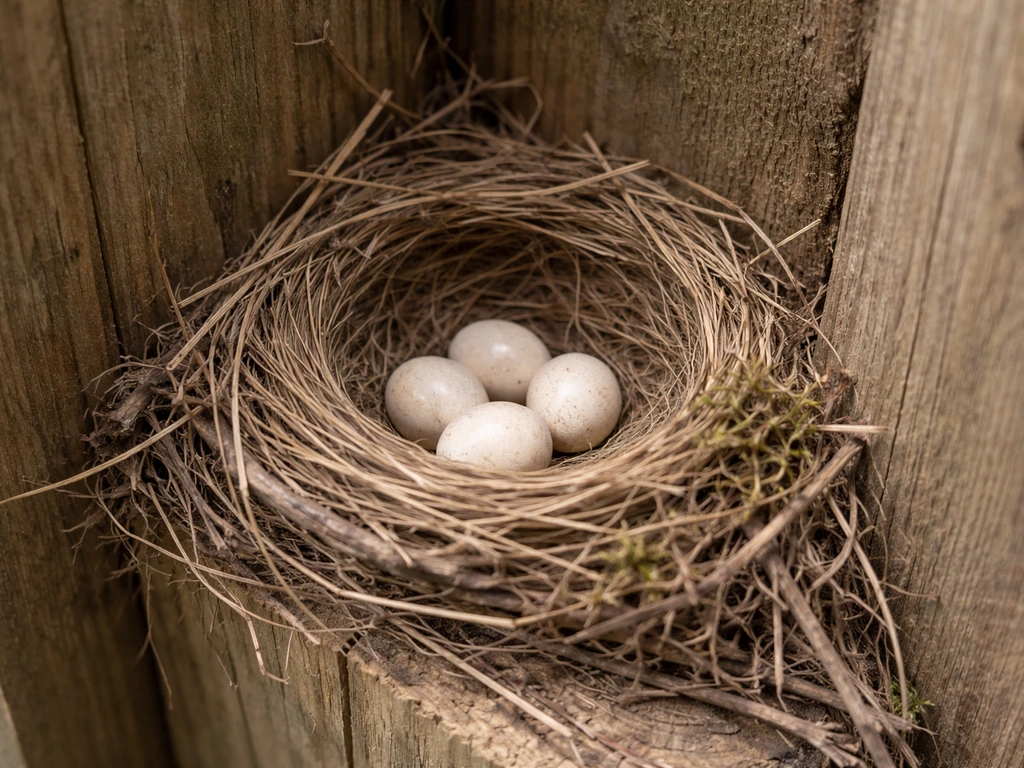
The first thing you need to do is figure out what stage the nest is in. Active means any of three things: eggs are present, nestlings (hatchlings still in the nest) are present, or fledglings are nearby and still dependent on their parents. Each of those stages has its own timeline, and the rules are the same for all of them: don't touch it yet.
A nest can look empty and still be active. Adults leave briefly to forage, and eggs can be sitting there uncovered while the parent is gone. Conversely, a nest that has visible activity one week may genuinely be empty two weeks later. The only way to know for sure is to watch it consistently over several days before drawing any conclusion.
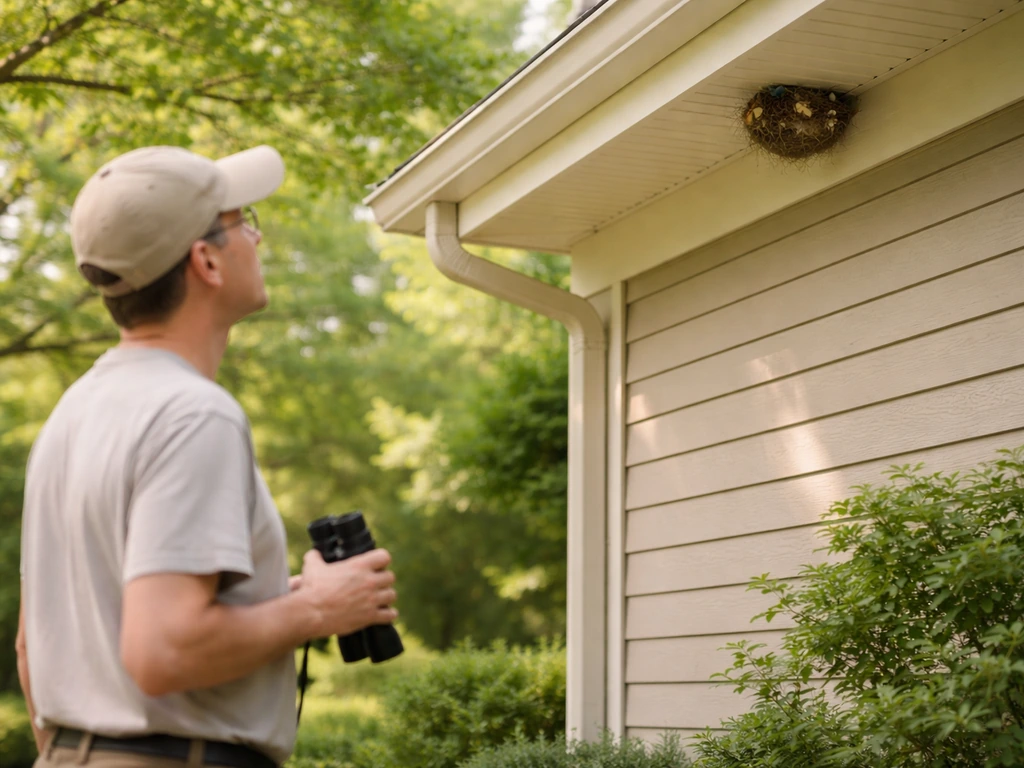
Use binoculars and watch from a comfortable distance. Note whether adult birds approach the nest, carry food to it, or sit on it. If you see any of those behaviors, the nest is active. Egg color and markings can support your identification, but they're rarely enough on their own to confirm what stage you're at. What you're really watching for is adult behavior, not just what's inside the cup of the nest.
One important trap to avoid: many people assume that once eggs have hatched, the nest is done. It isn't. After hatching, nestlings typically spend 10 to 21 days in the nest (depending on species), and adults continue feeding them the whole time. Then fledglings leave the nest but stay nearby for another 1 to 3 weeks while parents still bring food. The nest isn't abandoned just because it looks empty to you.
Step back before you step in: safety and distance first
Your first action right now, before you do anything else, is to stop and create distance. Do not approach the nest, do not shake the branch or eave it's attached to, and do not attempt to see inside without a tool that lets you do it from a distance (like a camera on a long pole or binoculars). Florida Fish and Wildlife's disturbance guidance recommends staying at least 300 feet from active waterbird colonies and up to 500 feet from concentrated nesting areas. For a nest on your porch or in a shrub near your door, that's obviously not practical, but the principle is the same: minimize your presence near the nest.
Physical disturbance is a real hazard, and not just for you. Startling adult birds off a nest can knock eggs or young out of the cup, expose nestlings to temperature swings that kill them within minutes, or leave them vulnerable to predators. Even well-meaning human observation at close range can be enough to cause nest failure. So your first job is to get away from it and observe from a safe, non-intrusive position.
There are also personal safety considerations. Accumulated droppings under a nest can carry histoplasmosis, a fungal infection caused by Histoplasma capsulatum. The CDC notes that spores can become airborne during any disturbance of dried droppings, including cleanup. If you have a nest with significant droppings below it, wear an N95 respirator, gloves, and eye protection before you get anywhere near the area, even just to look. The Illinois Department of Public Health advises that large accumulations of bird droppings should be handled by a professional experienced with hazardous waste. Save the cleanup for after the birds are gone, and then do it properly.
The legal picture: what you can and can't do
This part matters a lot and is often misunderstood. In the United States, the Migratory Bird Treaty Act (MBTA) makes it unlawful to pursue, take, capture, kill, or possess migratory birds, and that protection extends to their nests and eggs. The MBTA covers the vast majority of native bird species in the U.S., which means that nest you found in your gutters or on your dryer vent almost certainly belongs to a protected species. Removing that nest while it's active, even if it's inconvenient, is a federal violation.
The question of whether you can remove bird nests at all is really a question of timing and nest status. Inactive nests (no eggs, no live young) generally don't carry the same protections, because the birds are no longer using them. But active nests, regardless of how inconvenient the location is, must be left alone until the birds complete the nesting cycle naturally.
A few species carry even stricter protections. Bald eagles and golden eagles are protected by the Bald and Golden Eagle Protection Act, a separate federal law that prohibits disturbing nests even when they're not actively in use during a given season. If you suspect you have an eagle nest on your property, stop and get professional guidance before doing anything at all.
State laws layer on top of federal ones. Some states require a Migratory Bird Nest Removal Permit for removing active nests even for legitimate reasons like public safety. Rhode Island, for example, requires a state permit that also references a USFWS permit number for any active nest removal. Florida has a similar permit system. If you think you have a genuine safety emergency involving an active nest, talk to a professional before acting. Permits exist but they're not instant, and removing a nest without one can result in real consequences.
When is the right time to remove a nest?
The timing answer has two layers: where you are in the breeding season, and where the specific nest is in its life cycle. Breeding seasons in the continental U.S. generally run from approximately late February through August, peaking in spring and early summer. Many songbirds raise two or even three broods in a single season, so a nest that finishes one brood in May might be used again immediately after. Don't assume one empty-looking phase means the nest is done for the year.
| Nest Stage | What You'll See | Typical Duration | Can You Remove? |
|---|---|---|---|
| Nest building (no eggs) | Adult birds carrying nesting material | 3 to 14 days | Technically possible if absolutely necessary, but birds will just rebuild nearby; consult a professional first |
| Incubation (eggs present) | Adult sitting on nest; eggs visible if adult leaves | 10 to 21 days depending on species | No. Federally protected under MBTA |
| Nestling stage (hatchlings in nest) | Adults arriving with food; hatchlings visible or audible | 10 to 21 days depending on species | No. Nest is active and protected |
| Fledgling stage (young birds near nest) | Young birds on branches near nest; adults still feeding | 1 to 3 weeks | No. Young are still dependent; nest is still active |
| Inactive (nest abandoned or fully fledged) | No adult returns, no young present over 3 to 5 days of monitoring | Permanent until next season or species reuse | Yes. Safe and legal to remove |
Outside the breeding season, late fall through early winter (roughly October through January in most of the U.S.) is generally the safest window for removal if a nest has been confirmed inactive. You're less likely to interrupt a new nesting attempt, and the nest itself is easier to see clearly once leaves have dropped. But the season doesn't override the nest status rule: you still need to confirm inactivity before touching anything, even in December.
How to confirm the nest is actually inactive

Don't guess. Watch. Set up a consistent observation routine over 3 to 5 days minimum. You're looking for a complete absence of adult bird activity: no approaches, no food deliveries, no sitting. Keep a simple log with the date, time of day, and what you observed (or didn't). This record is useful both for your own confidence and as documentation if you're ever questioned about your removal.
A phone on a tripod or a wildlife camera pointed at the nest from a non-intrusive angle is one of the most useful tools you can use here. It removes the need for you to hover nearby and gives you a clear record. NestWatch recommends this kind of systematic tracking and specifically notes that adults may continue tending a nest even after observers have assumed it's been abandoned.
Pay particular attention to the fledgling transition. Fledglings look like small adults and hop around on branches near the nest, but they can't fly well and still depend on parents for food. This is the stage most commonly mistaken for departure. If you see small, slightly fluffy birds with stubby tails and wide gape lines (the fleshy edges of the beak) anywhere near the nest, the nest is still active. Wait until those birds are fully mobile and adults stop returning to the area.
If you're uncertain whether a baby bird on the ground near your nest is injured or simply a fledgling doing what fledglings do, the question to ask is whether a parent bird is nearby and still coming to feed it. If yes, leave it alone. If no adult has returned within a few hours and the bird seems lethargic or injured, contact a licensed wildlife rehabilitator. NestWatch specifically advises against forcing fledglings back into the nest.
Removing an inactive nest: the right way to do it
Once you've confirmed over 3 to 5 days of observation that no birds are returning, you're ready to act. Here's the process to follow to protect yourself and clean up properly.
- Gear up before you touch anything. Wear disposable gloves, an N95 or better respirator, and eye protection. Old nests carry mites, bacteria, and dried droppings that can carry pathogens. Don't skip this step.
- Double-check from close range before removal. Look into the nest carefully before pulling it down. Confirm there are no eggs, live nestlings, or any moving creature inside.
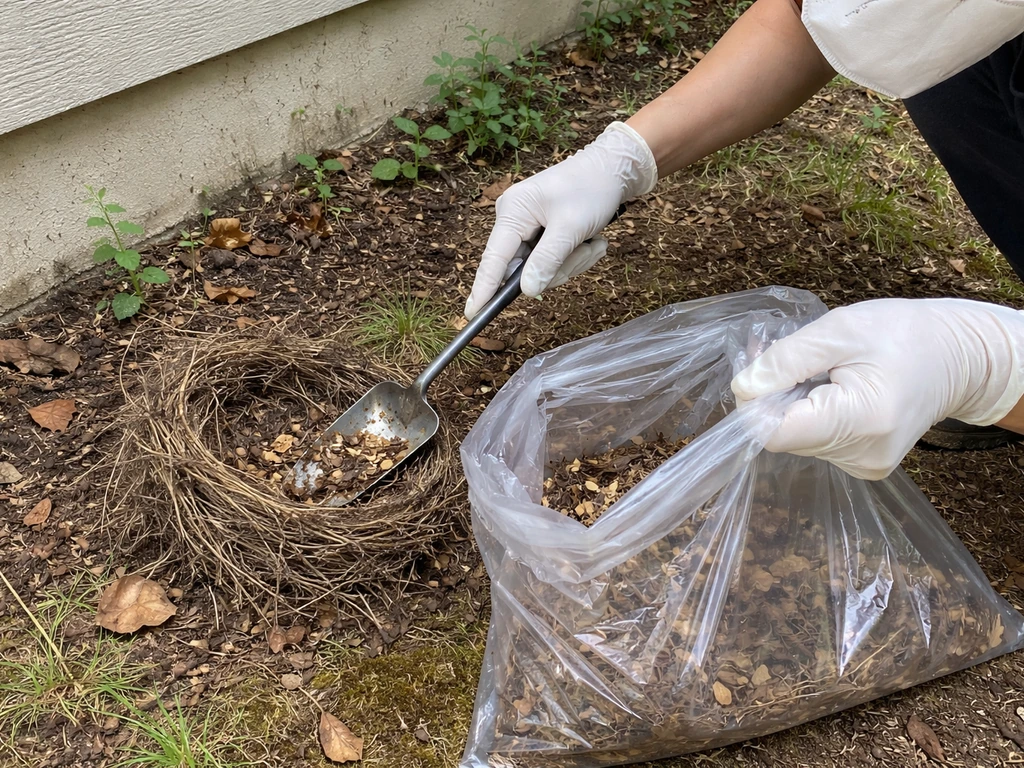
- Remove the nest intact if possible. Place it in a sealed plastic bag. Don't shake or crumble it in place, as that aerosolizes any fungal spores or dust present.
- Clean the surface. Use soap and water to remove visible dirt and organic material from the surface where the nest sat, then disinfect with an EPA-registered disinfectant following label instructions. The CDC recommends this two-step process for surfaces potentially contaminated by bird waste.
- Dispose of PPE and the bagged nest appropriately. Seal everything and dispose of it in an outdoor bin. Wash your hands thoroughly.
- Address the location. If the nest was in a problematic spot, now is the time to act: install physical deterrents (metal spikes, sloped ledge covers, hardware cloth), seal gaps in soffits or siding, or trim back the branch that offered a sheltered attachment point. This is your best chance to prevent the same issue next season.
If you found multiple nests around your property (common on larger lots or in homes with many eaves and shrubs), treat each one as a separate zone and go through the monitoring process for each individually. A nest on the north side of your house might be inactive while one on the south side is still mid-brood. The question of whether to remove old bird nests from trees follows the same inactive-first rule, though tree nests are sometimes reused by the same or different species the following season, so consider leaving them if they're not causing a problem.
If the nest is still active: what to do instead
If your nest is active and you can't remove it, your options are about reducing conflict rather than forcing a resolution. The core guidance from USFWS is clear: if an active nest is present, stop the activity that would disturb it and wait until the young have fledged and departed. In its June 2017 timing recommendations for land disturbance and vegetation clearing, USFWS emphasizes avoiding destruction or disturbance of nests with eggs or nestlings and recommends leaving areas undisturbed until eggs hatch and young have departed, with additional protections potentially applying under other federal laws (such as for bald and golden eagles) USFWS timing recommendations for land disturbance and vegetation clearing. That's not just advice, it's federal conservation policy for land disturbance planning.
Practically, that means: redirect foot traffic away from the area, delay any construction or maintenance work in that zone, and if a door or vent is temporarily being avoided by your household, put a polite note on it for guests explaining the situation. Most active nesting periods for a single brood are done within 4 to 6 weeks from egg-laying to fledging. That's your waiting window.
Soft exclusion (discouraging the birds without disturbing the active nest) is generally not effective mid-cycle and can cause harm if it prevents adult birds from accessing eggs or young. Save exclusion work for after the nest is confirmed inactive. At that point, a physical barrier installed properly will be far more effective than anything you do while the birds are actively present.
If the nest location poses a genuine immediate hazard (a nest in an active electrical panel, for example, or directly blocking emergency egress), this is the situation where professional help becomes non-negotiable. Knowing who to call for bird nest removal in an urgent situation matters: start with a licensed wildlife control operator who understands MBTA requirements, and in some cases they may help you initiate a permit application with USFWS. Don't attempt this on your own.
Getting professional help vs. handling it yourself
Most inactive nest removals from common locations (gutters, porch lights, dryer vents, window boxes) are genuinely something a homeowner can handle on their own once the nest is confirmed empty. The process above is straightforward if you've done your monitoring diligently and protected yourself properly.
But there are situations where you should bring in someone who knows who removes bird nests professionally: if you suspect a protected species beyond the standard MBTA coverage (eagles, certain owls, endangered species), if the nest is in a location that requires structural work to address, if there's a large accumulation of droppings beneath the nest, or if you're genuinely uncertain whether the nest is active. A licensed wildlife control professional can also help you think through deterrence and exclusion strategies so you're not dealing with the same problem every spring.
It's also worth asking yourself honestly whether removal is necessary at all. The question of whether you should remove a bird nest isn't always a yes. If the nest is in a tree away from your house, not blocking anything, and not creating a mess, the most conservation-minded answer might simply be to leave it and enjoy the birds for a season. Many species return to the same location year after year, and encouraging that by not removing harmless nests is genuinely good for local bird populations.
Your action checklist for today
- Stop: don't approach or touch the nest until you've done at least 3 to 5 days of observation from a safe distance
- Watch: use binoculars or a camera to observe for adult activity (approaches, feeding, incubation) without disturbing the birds
- Log: write down what you see at different times of day so you have a clear record of activity or inactivity
- Identify: try to identify the species if you can; this affects the legal protections that apply and the expected timeline to fledging
- Confirm: only proceed to removal once you've had 3 to 5 consecutive days with zero adult activity and no eggs or young visible
- Gear up: before any removal or cleanup, put on gloves, a respirator, and eye protection
- Prevent: once the nest is gone, seal gaps and install deterrents so the same spot isn't reused next season
FAQ
If I don’t see birds sitting on the nest, can I remove it right away?
You should remove it only after you can confirm no adults are returning and there are no eggs or live young present. A practical rule is to keep watching from a distance for 3 to 5 days, using a camera or binoculars, because adults often leave briefly to forage even when the nest is still active.
What if the eggs are there but I never see the parent bird?
No. Egg presence or any sign of dependent young means it is considered active. Even if eggs look unattended, the parent may be away for short periods, and touching can cause nest failure from temperature changes or knocked-out eggs.
After the eggs hatch, when is the nest actually safe to remove?
Treat it as active. Nestlings typically spend about 10 to 21 days in the nest, and adults keep feeding during that period. A nest can look empty to a casual observer while feeding still happens on a schedule.
The babies look like they left the nest, so can I remove it?
Usually not. Fledglings can appear like they are “gone,” but they often stay nearby for 1 to 3 weeks while still relying on parents for food. If you see small dependent birds near the nest, wait until adults stop bringing food and the area is quiet.
I see droppings under the nest, but no birds right now. Should I clean it up anyway?
If a nest is active, avoid cleanup and repairs in that immediate area until the nesting cycle ends, especially if there are droppings underneath. Dried droppings can become airborne during disturbance, so if cleanup is unavoidable, wear N95 respirator, gloves, and eye protection, or hire a professional for heavy buildup.
What should I do if the nest is in the way of an urgent repair or safety issue?
If you think you have an active nest you cannot confirm conclusively, the safest approach is to stop work and switch to monitoring. If there is genuine risk (for example, blocking emergency egress), use a licensed wildlife control operator who can advise on MBTA compliance and permits rather than deciding yourself based on timing alone.
How do I know if my nest might be protected beyond the Migratory Bird Treaty Act?
First, check whether the situation could involve a protected species, such as eagles or certain owls, since those have additional federal protections. If you are uncertain, contact a wildlife control operator or local wildlife agency before removing anything, even if the nest appears inactive.
Can I prevent birds from nesting there by installing barriers during the breeding season?
Yes, but only after the nest is confirmed inactive. If a homeowner’s primary goal is prevention, use measures that do not disturb active nesting, such as waiting out the cycle, then installing proper exclusions or sealing entry points afterward.
What are the most common reasons people mistakenly remove an active nest?
Common mistakes include assuming a nest is inactive because it looks abandoned, checking only once, and handling the branch or vent to “look closer.” Avoid approaching the nest, do not shake anything, and rely on multi-day observation rather than one-time sightings.
Does it help to document that the nest was inactive, and what should I record?
A consistent log helps, especially if you are ever questioned. Record dates, times, and what you observed (for example, adult visits and food deliveries or complete absence), and if possible use a non-intrusive camera to reduce time spent near the nest.
Next Article
Can You Remove Bird Nests? Legal and Safe Options
Learn if you can remove a bird nest, what laws restrict, how to spot active nests, and safe next steps.