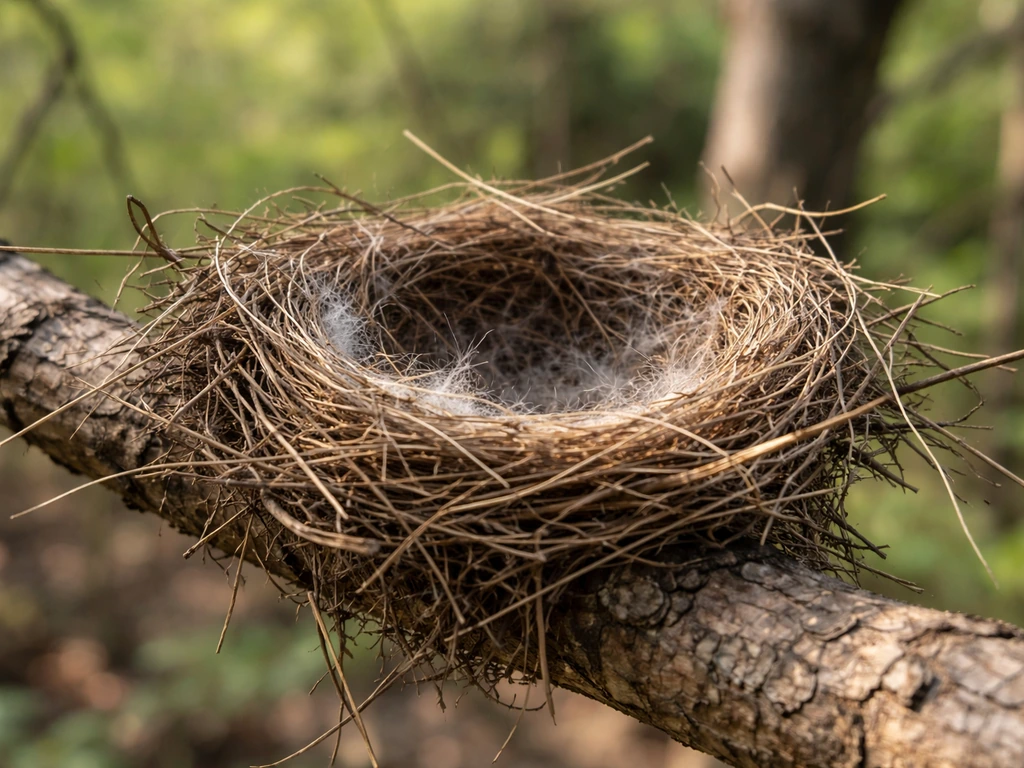
Three fish groups are famous for building nests that genuinely parallel what birds do: bettas (and their gourami relatives), three-spined sticklebacks, and cichlids. If you are curious how a bird makes a nest, the key idea is that birds use materials and instinctive behaviors to create a safe place for eggs and young what birds do. Each one constructs a real, purposeful structure, guards it actively, and cares for eggs inside it.
Which Fish Builds a Nest Like a Bird? Key Signs

Maya Bennett
6 May 2026
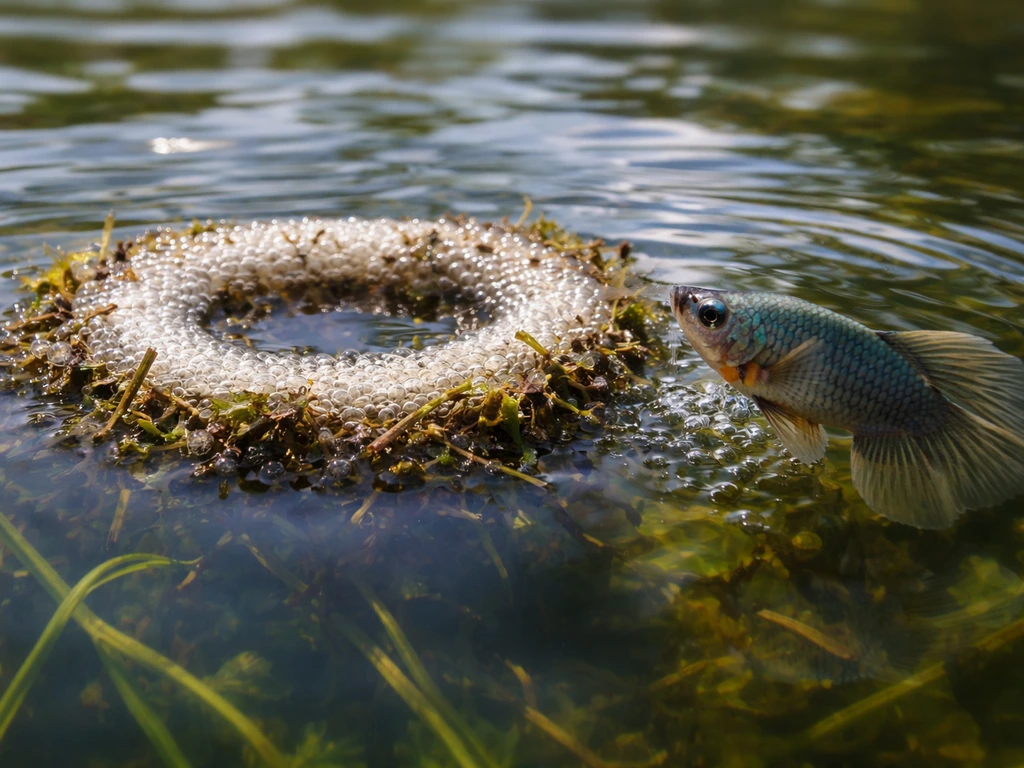
The betta builds a floating raft of saliva-coated bubbles. The stickleback builds a tiny barrel of plant fibers glued together with a blank" rel="noopener noreferrer">protein secreted by its own kidneys. Cichlids sculpt sand craters, pits, or castle-like mounds on the lake or pond floor. All three behaviors are driven by reproduction, and in every case it is almost always the male doing the building.
In these fish species, the male does the nest building, rather than the mom or dad bird male doing the building.
The fish species that actually build nests
Betta fish and labyrinth fish (bubble nesters)
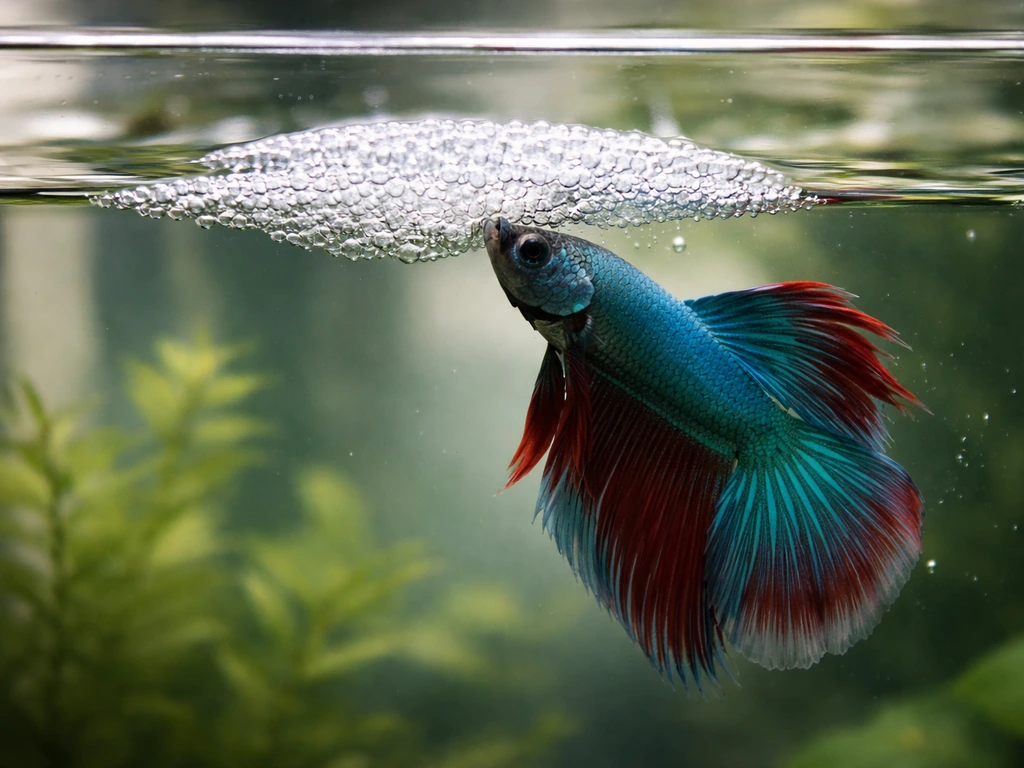
Siamese fighting fish (Betta splendens) are the most recognizable blank" rel="noopener noreferrer">bubble-nest builders in the world, but they are not alone. Gouramis and related labyrinth fish share the same behavior. Scientists group these animals under the term aphrophils, meaning they associate their reproduction with foam. The male betta gulps air at the surface and coats each bubble with saliva, which makes the bubbles tougher than they look.
He stacks them into a floating cluster that can be the size of a coin or cover a large portion of the water surface. After spawning, he picks up every sinking egg in his mouth and tucks it back into the nest. Eggs hatch in roughly 24 to 48 hours, and the male keeps guarding and retrieving fry until they can swim freely on their own.
Three-spined sticklebacks (plant-and-glue nest builders)
The three-spined stickleback is the fish most likely to surprise you with a genuinely bird-like nest. The male collects filamentous algae, plant fragments, twigs, and small debris, then binds it all together using [spiggin, a sticky protein his kidneys produce specifically for this purpose. ](https://pmc. ncbi.
nlm. nih. gov/articles/PMC4020685/) The finished nest is roughly 2. 5 cm (about 1 inch) in diameter, barrel-shaped, and sits on the bottom substrate in a sheltered spot.
He then fans the eggs constantly to aerate them, and they hatch in about 7 to 8 days at water temperatures around 18 to 20°C. Even after hatching, the male sucks up wandering fry in his mouth and spits them back into the nest.
The ninespine stickleback does something slightly different, suspending its nest about 1 inch above the substrate on waterweed rather than on the bottom.
Cichlids (sand sculptors and pit builders)
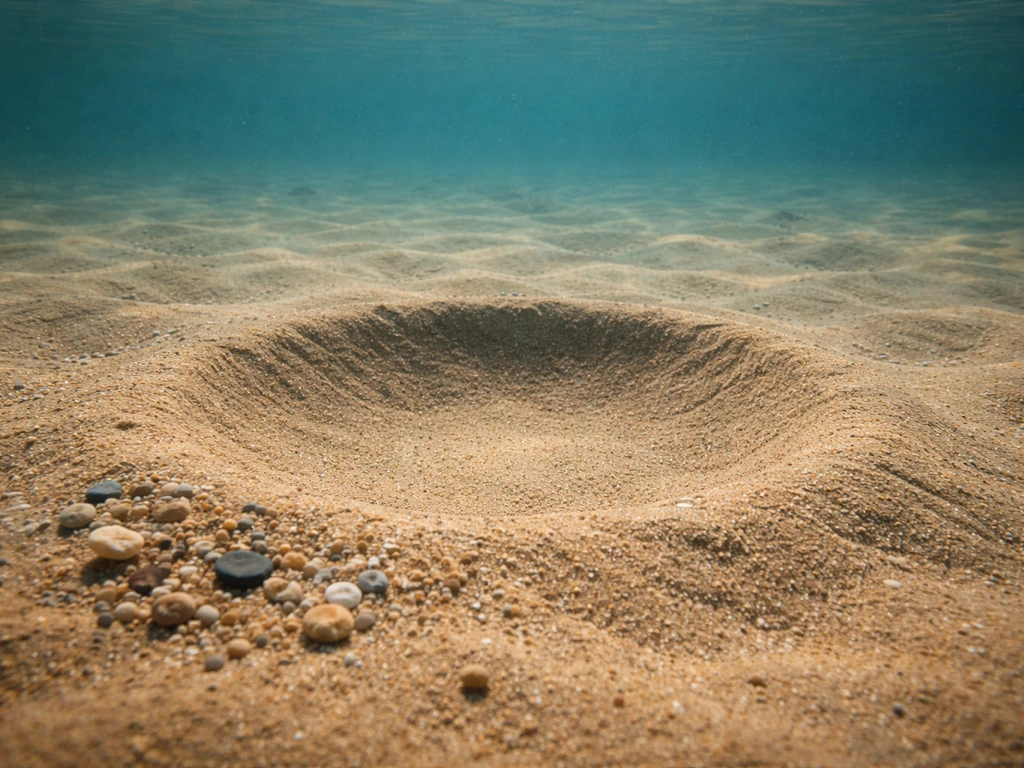
Cichlids are the most architecturally ambitious fish nesters. In Lake Malawi alone, roughly 200 species of sand-dwelling cichlids are classified as bower builders: males that use their mouths and fins to sculpt elaborate sand structures used for courtship and spawning. These bowers come in two basic types, pits (shallow depressions) and castles (raised mounds), and the exact shape is species-specific, which is why researchers can sometimes identify the cichlid from the structure alone. Other cichlid species spawn in burrows under rocks, in pit nests in sandy substrate, or on flat surfaces. The substrate-brooding strategy means eggs stick to the nest surface and parents guard them intensely until the fry can swim.
What these nests actually look like and how they are built
| Fish | Nest Type | Materials | Size/Shape | Who Builds | Hatching Time |
|---|---|---|---|---|---|
| Betta / Gourami | Bubble nest (floating) | Air bubbles coated with saliva | Coin-sized to large mat at water surface | Male only (females rarely build) | 24 to 48 hours |
| Three-spined Stickleback | Barrel nest (bottom) | Algae, plant fragments, debris, spiggin glue | ~2.5 cm diameter, barrel-shaped, sheltered on substrate | Male only | 7 to 8 days at 18 to 20°C |
| Ninespine Stickleback | Suspended nest | Plant material, waterweed | ~1 inch, suspended ~1 inch above substrate | Male only | Similar to three-spined |
| Lake Malawi Cichlids | Sand bower (pit or castle) | Sand manipulated by mouth and fins | Species-specific craters or mounds on sandy bottom | Male only | Eggs typically mouthbrooded after laying |
| Substrate-brooding Cichlids | Rock burrow or pit nest | Natural substrate, rock surfaces | Burrow or depression beneath rock/flat surface | Both parents guard | Variable; parental care up to ~10 weeks |
The stickleback nest is the closest structural analog to a bird nest: it is a discrete, woven, glued container sitting in a defined spot. The betta bubble nest is more like a floating foam raft than a cup, but the intentionality and parental investment are very similar to what birds do. Cichlid bowers are landscape-scale sculptures rather than containers, but the courtship and guarding behaviors around them mirror what you see at a bird's nest site.
Where and when to see these nests
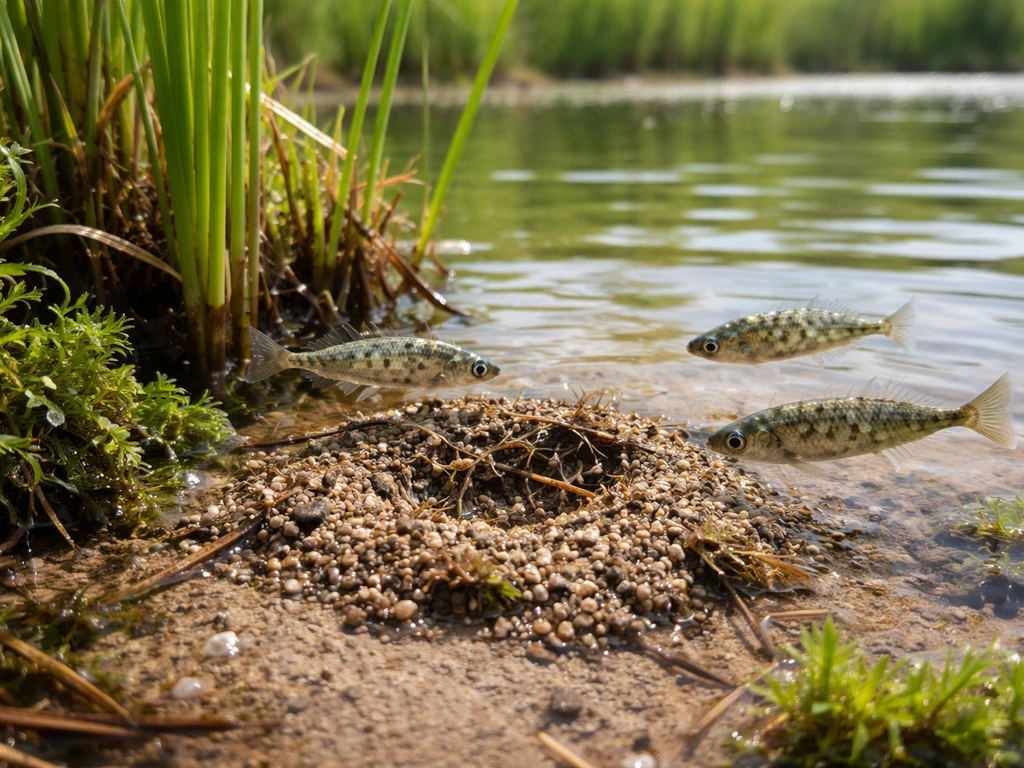
Sticklebacks in the wild
Right now, in early May 2026, three-spined sticklebacks are in full breeding mode. Their season runs from late April through July in ponds, slow rivers, lakes, and drainage canals across North America and Europe. Look for the male's bright red belly near vegetated, sheltered shallows. The nest will be on or very close to the bottom in areas with filamentous algae. Males fan the nest visibly with their pectoral fins, which is one of the easiest behavioral cues to spot. Shallow, clear water ponds with aquatic vegetation are your best bet for a sighting right now.
Bettas in the wild and in aquariums
Wild bettas live in slow-moving or stagnant water in Southeast Asia, including rice paddies, ponds, and marshes. In the wild, a male builds his bubble nest under floating vegetation or debris to give it structural support and protect it from rain disturbance. In home aquariums, bubble nests can appear on the water surface, under a leaf decoration, or against the side of the tank. Temperature changes, barometric pressure shifts, and the presence of a female (or even a male's own reflection) can all trigger building. If you keep a betta and suddenly see a cluster of bubbles at the surface, that is almost certainly your fish constructing a nest, not equipment malfunction.
Cichlids in lakes and aquariums
Wild Lake Malawi cichlid bowers are found in sandy, open-bottom zones of the lake at various depths. For most observers, the accessible viewing opportunity is in a public aquarium or a well-maintained home cichlid tank with a sandy substrate. Male cichlids in spawning condition actively move sand with their mouths, creating visible excavation activity that is hard to miss. In the wild in Belize and other neotropical rivers, researchers documented cichlid nest sites tied to specific sediment types, water depth, and flow velocity, which confirms these fish are genuinely selective about placement, just like nesting birds.
Confirming what you are looking at: a practical identification guide
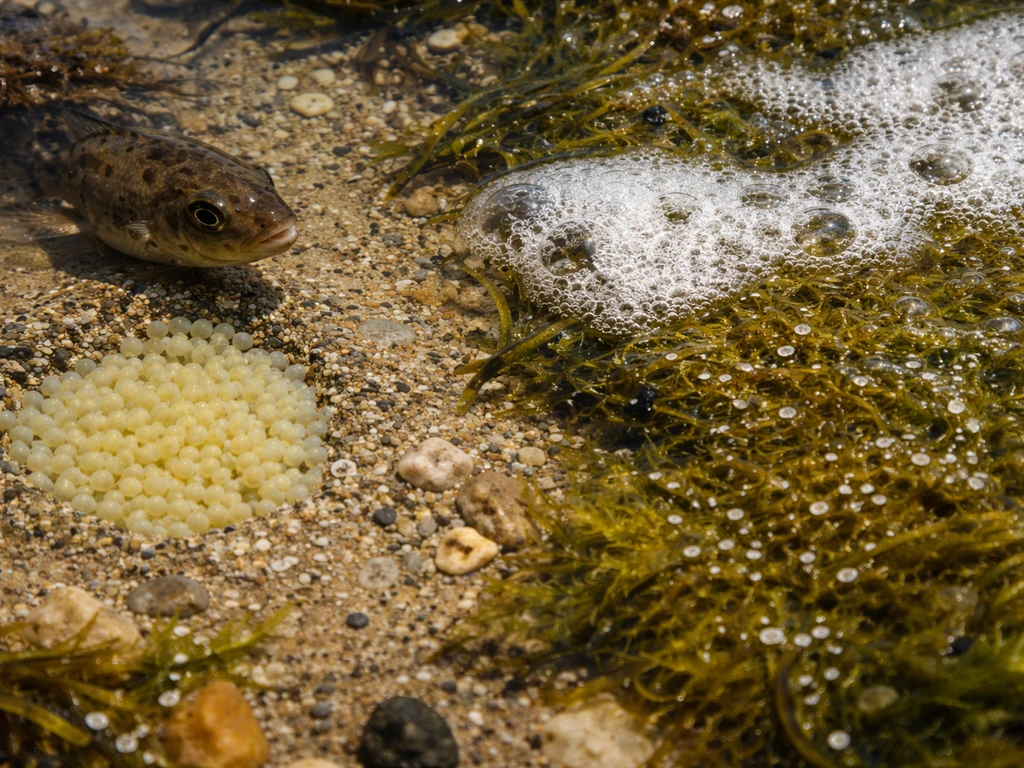
The most common misidentification is mistaking random surface foam, algae mats, or fish spawning behavior (where eggs are scattered rather than placed in a structure) for a real fish nest. Here is how to confirm you have the real thing.
- Look for a guarding male. In every fish species described here, the male stays close to the nest, actively chasing away other fish, retrieving eggs or fry, and fanning the nest. If nothing is guarding the structure, it may be debris or incidental foam.
- Check if the structure holds together. A betta bubble nest stays cohesive: bubbles are saliva-coated and do not disperse easily if you disturb the water gently nearby (though do not disturb the nest). Random surface foam from agitation or decomposition disperses quickly.
- Look for the fanning behavior. Male sticklebacks fan eggs continuously with their pectoral fins. This is one of the clearest behavioral markers: a small fish, hovering in place, pumping water through a small structure on the substrate.
- Note the time of year. If you are at a temperate pond in May through July and see nest-guarding behavior in a small, spiny fish with a reddish belly, it is almost certainly a stickleback.
- In an aquarium, check your species. If you have a betta or gourami and see surface bubbles, the identification is straightforward. If you have a community tank with no labyrinth fish, surface bubbles are probably from filtration or surface agitation.
- Photograph the structure and the fish before doing anything else. A good photo from above and the side, plus a shot of the fish near the nest, is enough for an expert or online community to confirm the species and behavior.
One specific 'bird-like nest' confusion worth flagging: the stickleback nest is small, tight, and made of plant material on the substrate. If you find what looks like a tiny clump of tangled algae in a protected spot with a small fish nearby, do not assume it is plant debris. Look for a tunnel entrance into the structure and the fanning behavior described above. That combination is a reliable confirmation.
How to watch ethically without disturbing the nest
The principle here is the same whether you are watching a bird's nest on your porch or a stickleback nest in a pond: disturbance causes abandonment, and abandonment means the brood fails. Not all bird species build nests in the same way, but nest-building is common across many groups a bird's nest. Fish nests are just as vulnerable to human interference as bird nests, and the guarding parent is working extremely hard. Following a few straightforward rules means you get better observations and the fish gets a successful spawn.
- Keep your distance and stay still. Approach slowly and stop well before you get close enough to cast a shadow over the nest. Fish are very sensitive to overhead movement, which they associate with predators.
- Do not touch, prod, or scoop the nest. Reaching into water to touch a betta bubble nest or stickleback nest will destroy it immediately and may cause the male to abandon the eggs.
- Do not net or collect the nesting fish. Even if you want a closer look, removing the guarding male means the eggs die. In many jurisdictions, collecting wild fish requires a license.
- Watch from the bank or side of the tank without tapping the glass. Vibrations and sudden movements trigger stress responses in nesting fish.
- Keep pets and children at a safe distance from wild nest sites.
- Take photos rather than videos requiring you to lean closer. A longer lens or phone zoom is all you need.
- If you are at a public park or nature reserve, follow posted wildlife guidelines, which typically include the advice to never feed, touch, or disturb animals and to move back if they approach you.
This is directly parallel to the guidance around bird nests: the same conservation ethic that applies to not touching a robin's nest on your porch applies here. Minimal footprint, maximum patience, and you will actually see more interesting behavior because the fish will act naturally.
Safety and legal considerations for ponds and aquariums
Wild fish and natural water bodies
In the United States, collecting wild fish, including sticklebacks or wild cichlids, typically requires a valid fishing or scientific collection license depending on your state and the species involved. Some stickleback populations are protected under the Endangered Species Act (certain subspecies like the unarmored threespine stickleback are federally listed). Before you collect any wild fish from a pond, creek, or lake, check your state fish and wildlife agency's regulations. The U.S. Fish and Wildlife Service and U.S. Forest Service guidance consistently emphasizes that no observation is worth endangering an animal or its offspring, and that you should stay well back from active nesting sites.
In your home pond
If you have a garden pond and discover what looks like a fish nest, resist the urge to remove, relocate, or 'protect' it by physically handling it. Do not drain or significantly disturb the pond during breeding season (typically April through July for temperate species). If you use chemicals or treatments in your pond, check that they are safe for fish larvae, since fry are far more sensitive to water chemistry than adult fish. If predators like herons are visiting your pond, a net or wire deterrent over the pond is a legitimate and recommended solution that does not require you to touch the nest or the fish.
In your aquarium
If your betta has built a bubble nest and you want to encourage a successful spawn, the main practical rules are: avoid large water changes that would destroy the nest structure, keep surface agitation from filters low (bubble nests are fragile in strong currents), and maintain stable water temperature in the range the species prefers (around 26 to 28°C for betta splendens).
If you are not planning to breed your fish, the nest is harmless and will dissipate on its own. You do not need to remove it. If you are planning a breeding attempt, research the specific requirements for your species before introducing the female, since the male's courtship behavior can be aggressive and the female needs a way to retreat. Gourami species have similar needs but often vary in temperature and tank size requirements, so treat each species individually.
A quick legal checklist before you act
- Verify whether the fish species you are observing has any protected status in your state or region before collecting, moving, or handling it.
- If you are in a national park, state park, or nature reserve, do not collect or disturb any wildlife, including fish or their nests. Check posted rules before you approach any nest site.
- For aquarium fish, source animals from reputable captive breeders rather than wild-caught stock wherever possible, particularly for cichlid species from Lake Malawi or Lake Tanganyika, where wild populations face collection pressure.
- If you believe a fish nest in a public waterway is being damaged or destroyed by human activity, contact your state fish and wildlife agency rather than intervening yourself.
The underlying logic here is identical to the approach this site takes with bird nests: observe carefully, document with photos, keep your hands off, and know the rules before you act. Fish nests are genuine wildlife behavior deserving the same respect as a swallow's mud cup or a robin's grass-and-twig bowl. The fact that they are underwater just makes them a little harder to see and a little easier to accidentally destroy.
FAQ
How can I tell if the foam on top of my aquarium is a real betta bubble nest or just bubbles from equipment?
Not always. Bubbles and surface foam can also come from filtration, aeration, or feeding. A true betta nest is typically a clustered, anchored foam raft under or near cover (leaf, decoration, or vegetation) and the male will repeatedly retrieve any sinking eggs back into the cluster.
What aquarium changes most commonly cause bettas to abandon a bubble nest?
Small changes can be enough. Betta nests are especially sensitive to strong surface disturbance, so aim for gentle water movement, and avoid turning on or redirecting powerheads once the male starts building. Also watch for temperature swings from heaters cycling or drafts near windows, because timing changes can interrupt guarding.
Can I clean the tank or pond while fish are actively nesting?
Yes, but it depends on the species and the exact setup. If the nest is clearly tied to a specific spot, removing the substrate, decorations, or plant cover can cause abandonment. If you must clean, do it outside the breeding period and use partial, careful maintenance rather than gravel vacuuming directly through the nest area.
Do I need to worry about water oxygen when a betta is guarding fry under a bubble nest?
For bettas, the article already mentions avoiding large water changes, but also plan around oxygen and CO2 balance. If your tank is heavily planted and CO2 is used, monitor how it affects dissolved oxygen, because larvae and fry can be vulnerable if oxygen drops when the nest is fragile or when fry disperse.
After the stickleback eggs hatch, what signs confirm the male is still caring for the brood?
With sticklebacks, yes, but the behavior is less about the egg being visible and more about ongoing male care. After hatching, the male continues actively retrieving wandering fry and bringing them back into the woven structure, so you can confirm by observing repeated “suck and spit back” behavior, not just the presence of algae.
If I see cichlids digging, does that always mean spawning is happening?
You might, especially with cichlids that use pits, burrows, or mound “castles.” If you see excavation activity but no stable structure, that can indicate courtship without spawning, or it can mean the substrate is not suitable for the species’ digging style. A full bower is usually persistent for days, not a one-off scrape.
If the male builds the nest, does that always guarantee the eggs will survive and hatch?
Often, but it is not guaranteed. In many of the species described, the male does the building, yet the outcome can shift if the female cannot access a proper retreat, if aggression prevents spawning, or if there is repeated disturbance. If eggs are found but the structure seems disrupted, breeding may fail even though building occurred.
What can I do if I have herons or other predators visiting the nesting area?
Yes. Predators, including birds like herons, can cause fast abandonment or egg loss because guarding is time-critical. A net or simple visual and physical barrier that deters wading birds can reduce risk without touching the nest or disturbing the substrate.
Is it ever okay to relocate a nest if I’m worried about safety or flooding?
Avoid it if your goal is successful brooding. Disturbing the nest site, draining the pond, or moving rocks can physically break the structure or scatter eggs, and the parents may not re-build. If you must relocate anything for safety, do it before the breeding season and keep the nest area intact during active nesting.
What if my fish are building a nest outside the usual season, should I assume something is wrong?
Use species-specific timing and water conditions. The article gives a general breeding window for temperate sticklebacks and typical betta temperature preferences, but local populations can shift. If your observation is outside the expected season, double-check temperature and photoperiod because delayed or premature breeding can change whether nest-building occurs.
Next Article
How Bird Nests Are Made: Materials, Steps, and Timing
Step-by-step guide to how bird nests are made: materials, builders, timing, placement, and how to identify active nests