
Bird nests are not just for eggs. They serve the entire breeding cycle: courtship and nest building, egg laying, incubation, brooding and chick rearing, and in some species, roosting and shelter long after the chicks have gone. If you've found a nest and it has no eggs in it, that doesn't mean it's empty in a meaningful sense. It might be freshly built, it might be sheltering fledglings nearby, or it might be in between uses. What you do next depends on which stage you're actually looking at.
Are Bird Nests Only for Eggs? Uses, Activity Signs, What to Do

Maya Bennett
30 Apr 2026
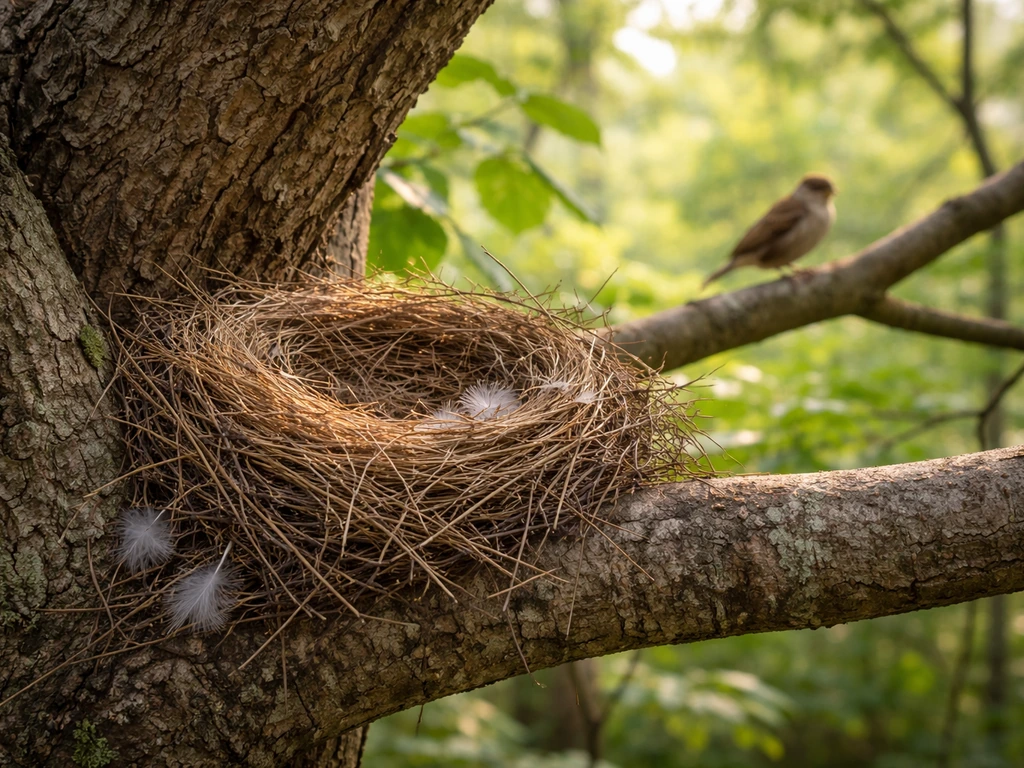
What bird nests are actually used for
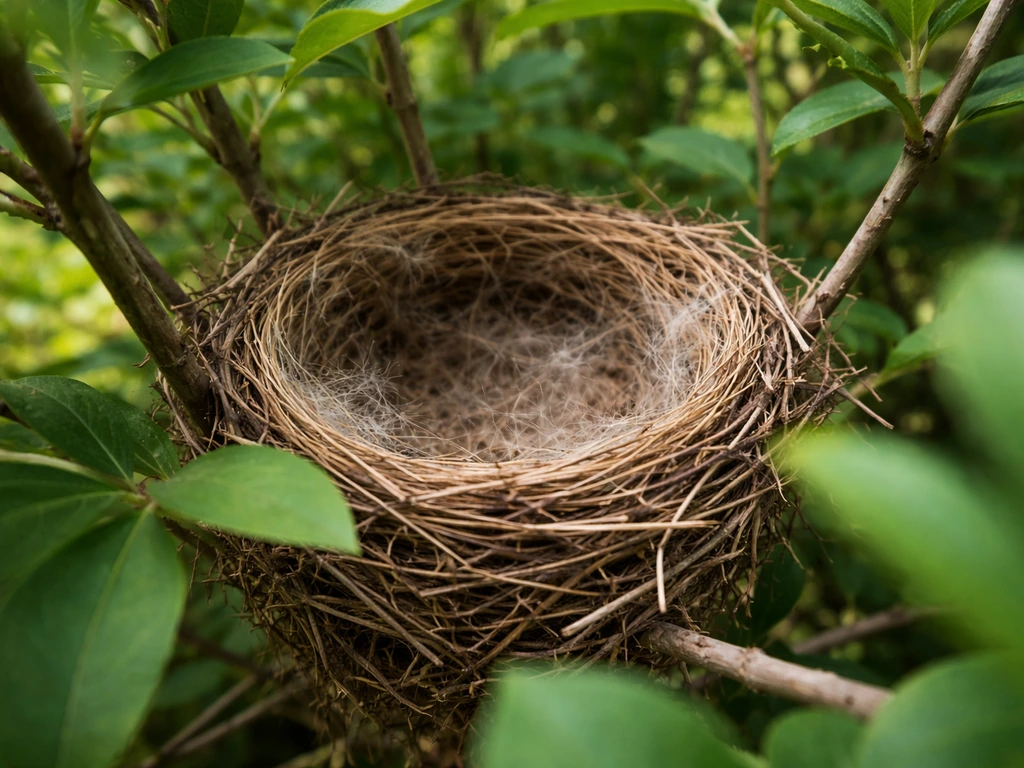
Eggs are just one chapter in a nest's story. Here's the full picture of how birds use them:
- Courtship and construction: Many species build nests as part of attracting a mate. The nest itself is a display of fitness. Males of some species build multiple nest starts and let the female choose.
- Egg laying and incubation: Once eggs are laid, adults incubate them using a brood patch, a bare, warm area of skin on the belly that transfers body heat directly to the eggs. This phase lasts about two weeks for most songbirds.
- Brooding and chick rearing: After hatching, the nest becomes a nursery. Adults brood young nestlings to keep them warm (eggs and young nestlings can chill quickly when parents are away), and they use the nest as a landing pad for food delivery for another one to two weeks.
- Fledgling staging: Once chicks are fully feathered and alert, they may perch on or just outside the nest before their first flights. The nest structure gives them a stable base during this critical window.
- Roosting and shelter: Some species, including House Sparrows, wrens, and certain raptors, return to old nests or purpose-built roost structures for overnight shelter, especially in cold weather. A few birds construct dedicated 'winter nests' separate from breeding nests.
- Reuse across seasons: Some platform nesters like ospreys and eagles add material to and reuse the same nest year after year, building structures that can weigh hundreds of pounds over decades.
Cornell Lab educational material frames nests as structures built for incubating eggs and raising chicks, which is accurate, but the shelter and reuse functions are real and documented. Whether a nest is reused, and by whom, varies a lot by species, and that's worth knowing before you decide what to do with one you've found.
What an active nest looks like at each stage
Learning to read a nest's stage from a distance is one of the most useful skills you can develop as a homeowner or birdwatcher. You don't need to get close. In fact, you shouldn't.
Nest building
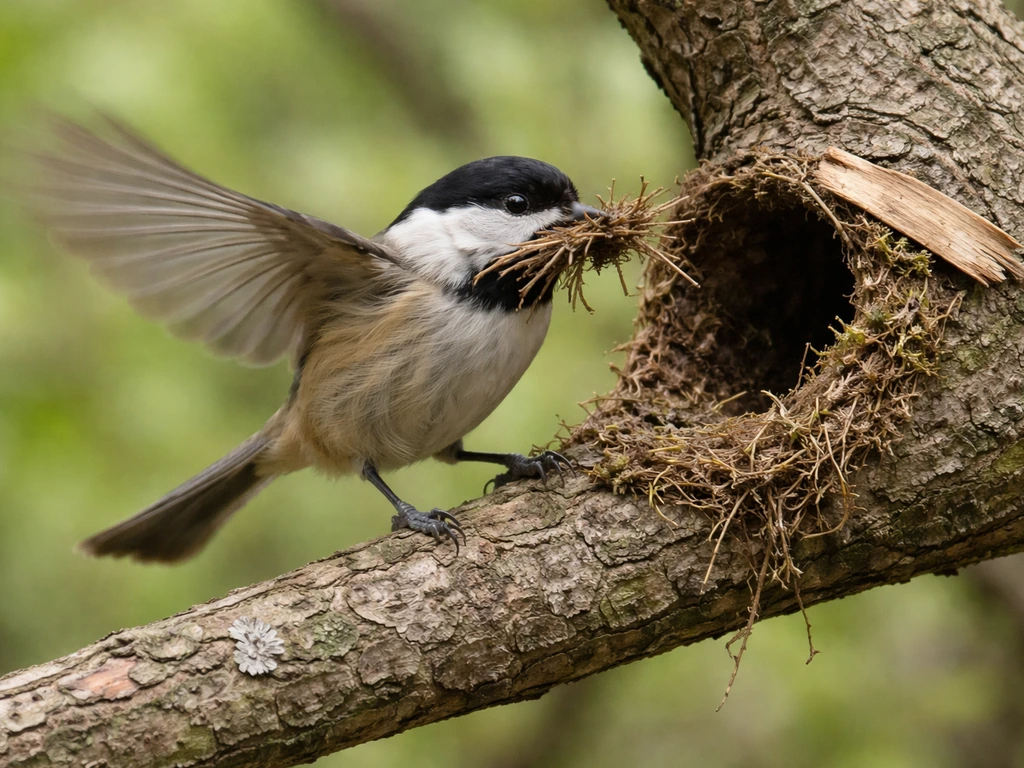
Adults are actively ferrying materials: twigs, grass, mud, feathers, spider silk, or strips of bark depending on the species. You'll see frequent trips to and from the nest, often carrying obvious material in the bill. The nest may look rough or unfinished. This stage can last anywhere from a few days to a couple of weeks.
Egg laying and incubation
An incubating bird often seems to disappear. The female (in most songbirds) sits low and still in the cup of the nest, blending in. Males may increase singing nearby as a kind of distraction display. If you watch from a distance through binoculars and see a bird sitting motionless and low in a nest for long stretches, incubation is almost certainly underway. Nest activity drops dramatically compared to the building phase. A peek that reveals smooth, whole eggs with a sitting adult nearby confirms this stage.
Nestlings (hatchlings to near-fledging)
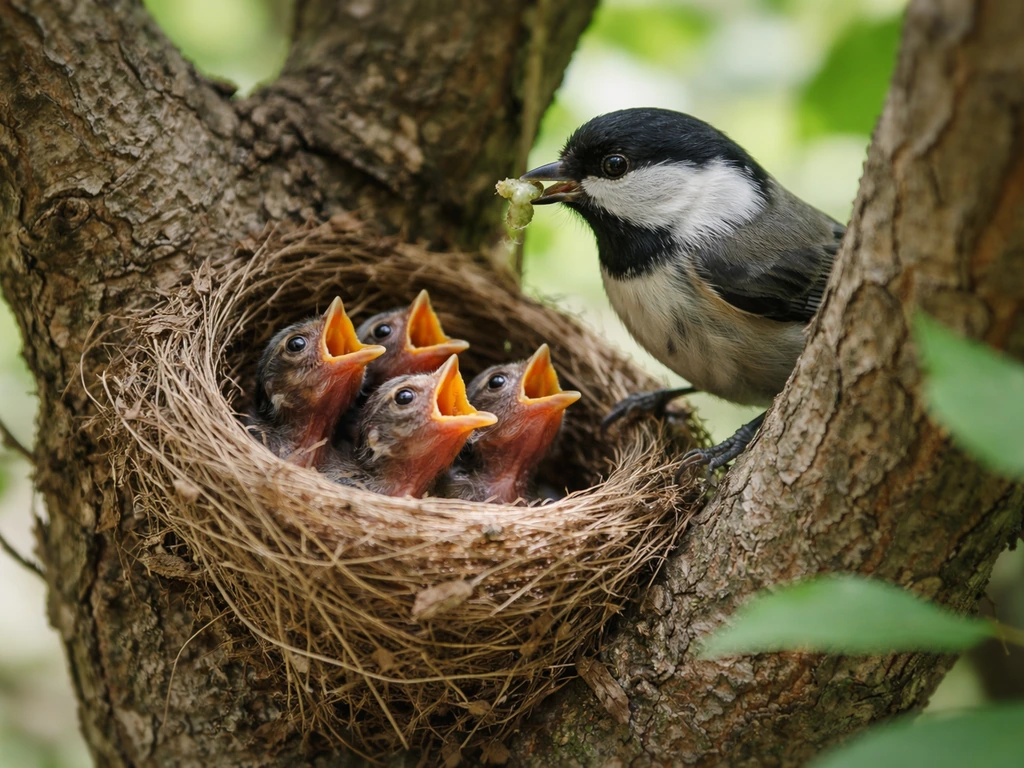
After hatch, nest traffic surges again. Both parents make frequent food delivery trips, sometimes every few minutes for small songbirds. You may hear begging calls from inside the nest. Early nestlings are naked and helpless; by the end of this phase they are feathered and visibly crowded in the cup. This stage runs roughly two weeks for most songbirds.
Fledglings (near departure)
Fully feathered chicks that are bright-eyed and alert are close to fledging. You may find them perched on the nest rim, on nearby branches, or already on the ground near the nest. This is when many people mistakenly think a bird is abandoned or injured. In almost all cases, the parents are still nearby feeding them. NestWatch's Code of Conduct specifically warns against approaching nests at this stage because disturbance can trigger premature fledging before the chick is ready to fly.
After fledging
The nest goes quiet. No adults are making regular trips. The cup may be matted, soiled, or show signs of wear. At this point the nest is likely inactive, though some species will re-nest in the same structure in the same season, and others return in following years. Some birds, like cuckoos, use other birds' nests instead of building their own.
How to tell if a nest is empty, abandoned, or just between uses
This is where most homeowners get stuck. A nest with no eggs and no visible activity could be: freshly built and waiting for egg laying, currently between clutches, temporarily quiet during mid-incubation, or genuinely abandoned. Here's how to read the signs without getting too close.
- Watch from a distance for 30 to 60 minutes using binoculars. If adults are making regular trips (building, feeding, sitting), the nest is active. If there's zero traffic over an hour or more, step back even further to rule out your own presence causing the silence.
- Check the time of day. Mid-morning is the most active period. Avoid watching at dusk: females often return to roost on the nest at night, and you may misread a late-day absence as abandonment.
- Look at the nest's physical condition. A freshly built nest is clean, structurally tight, and smells faintly of vegetation. An abandoned nest starts to look weathered, matted, or flattened. Scattered feathers, broken eggshells on the ground below, or fecal sacs outside the nest rim can all indicate a recently active nest that's progressing normally.
- Note the season. Most songbird nesting runs from April through July across North America. A nest you find in August with no activity is much more likely to be finished than one found in May.
- Check for eggs, but only with a quick look and no touching. If you see intact eggs with no adult present, wait and observe. Cold eggs aren't necessarily dead or abandoned: adults leave briefly, especially when disturbed. If an hour or two passes with no adult return, back away further to see if your presence is the problem.
- If the nest fails to show signs of hatching by mid-July (a rough practical benchmark based on USFWS seasonal activity guidance), it may genuinely be inactive.
NestWatch uses a structured activity-code system for nest monitoring that assigns codes based on what adults and young are doing. Even without formal training, the underlying logic is useful: what are adults doing, and are young present? Those two questions tell you almost everything you need.
What to do (and not do) when you find a nest at home
Finding a nest on your porch, in your eave, on a door wreath, or in a shrub right next to the patio is genuinely inconvenient. Here's the honest practical guidance.
Do these things
- Observe from a distance using binoculars. Ten to twenty feet of buffer is a good starting point for most songbirds; more for larger or more sensitive species.
- Keep cats indoors. A cat in the yard while fledglings are present is one of the biggest causes of nest failure. Keep them inside until the chicks can fly.
- Keep dogs leashed or supervised in the yard during the nesting period.
- Reduce foot traffic near the nest. If it's on your front porch, use a side door temporarily. If it's near a frequently used gate, find an alternative route.
- Postpone construction, landscaping, or pruning in the immediate area until chicks have fledged. Most songbird nests go from egg to empty nest in about four weeks (roughly two weeks incubation plus two weeks as nestlings), so the wait usually isn't long.
- Take photos and notes. Documenting the nest with photos from a distance lets you track progress without repeated close approaches. Record dates, species if known, and what you observe.
- If a chick is on the ground and a cat is nearby, gently pick up the chick (your scent will not cause rejection, that's a myth) and place it back in or very near the nest, then watch from a distance to confirm the parent returns.
Don't do these things
- Don't remove or relocate an active nest. It's almost certainly illegal (more on that below), and moving even a few feet can cause parents to abandon it.
- Don't check the nest repeatedly. Every visit risks flushing the adult, chilling eggs or young nestlings, or triggering premature fledging in older chicks.
- Don't check after dusk. Females roost on the nest at night; disturbing them then is stressful and disorienting.
- Don't assume a quiet nest is abandoned within the first hour or two of watching.
- Don't try to hand-raise a nestling yourself. It requires specialized feeding schedules and diet, and in most places it is also legally restricted.
- Don't seal or block access to a nest site while a nest is active.
- Don't use pesticides or repellents near an active nest.
The legal reality: when you must leave it alone and when you can act
In the United States, roughly 1,100 native bird species are protected under the Migratory Bird Treaty Act of 1918. That protection covers eggs, nests, and the birds themselves. Intentionally destroying or removing an active nest is a federal offense. In the UK, the Wildlife and Countryside Act 1981 makes it illegal to intentionally damage, destroy, or take the nest of any wild bird while it is in use or being built. EU countries operate under the Birds Directive, which prohibits deliberate destruction or damage of nests and eggs and significant disturbance during breeding and rearing periods. In short: if there are eggs or live young in the nest, you cannot remove it without legal authorization in most jurisdictions.
The USFWS does recognize limited exceptions: a nest may be removed if it poses a direct threat to human health or safety, risks injury to the birds themselves, or genuinely conflicts with the normal use of equipment or critical property function. But 'it's inconvenient' doesn't meet that bar. If you believe your situation genuinely qualifies for removal, contact your local wildlife agency before taking any action.
Once a nest is confirmed inactive (no eggs, no young, adults no longer using it), removal is generally legal, and you can then take steps to make the site less attractive for future nesting if needed. blank" rel="noopener noreferrer">Mass Audubon recommends attaching netting above ledges or sealing gaps only after the nesting season concludes, not during it.
When to call a wildlife professional
- A nestling or fledgling appears injured (not just grounded) and the parent has not returned after a full hour of observation from a genuine distance.
- An active nest is in a location that creates real safety risk (inside electrical equipment, directly in a construction zone with no feasible alternative).
- You're unsure whether a nest is protected or what category of bird built it.
- A nest is in a location that may require licensed removal and you want to do it legally.
- You find eggs that appear to have been abandoned for more than a day or two with no adult return.
Wildlife rehabilitators are the right contact for injured or orphaned birds. Your local animal control, state wildlife agency, or a university extension office can usually point you toward the nearest licensed rehabilitator.
How nest type and species change what you'll see
Not all nests look or behave the same way, and the species using them changes a lot of what's normal.
| Nest Type | Common Examples | What You Might See Inside | Reuse Tendency |
|---|---|---|---|
| Open cup | Robins, sparrows, warblers | Eggs or nestlings in a tight mud-lined cup | Rarely reused; new nest each season or clutch |
| Cavity (natural or birdhouse) | Bluebirds, chickadees, wrens, woodpeckers | Deep soft lining, eggs or nestlings visible only if you look down into cavity | Frequently reused site, but new lining built each season |
| Platform | Ospreys, eagles, herons | Large sticks, may have multiple eggs or large chicks; added to year after year | Very high reuse; same pair may use same nest for decades |
| Hanging/pendant | Orioles, some weavers | Woven pouch hanging from branch tip; eggs inside a deep sock-like chamber | Rarely reused; new nest each year |
| Ground nest | Killdeer, turkeys, some sparrows | Eggs or chicks directly in a scrape or sparse lining on the ground | Location may be reused but structure is minimal |
Cavity nests deserve a special note for homeowners with birdhouses. Because the box is the cavity, birds build fresh lining inside each season. An empty, clean birdhouse in spring is not abandoned: it may simply be between tenants or early in the prospecting phase. A box with a thick cup of moss, feathers, and grass that a bird is actively visiting is very much in use. Clean out birdhouses only after the nesting season concludes, typically in late summer or fall, to prepare them for next year.
Species-level variation also matters when thinking about whether a nest might be reused. Whether another bird will use an abandoned nest, whether the original pair comes back, and whether a nest that looks empty is actually finished for the season are all questions that depend heavily on species behavior. Whether another bird will use an empty nest is species-dependent, but it can happen in some cases whether another bird will use an abandoned nest. Whether a bird will reuse a nest depends on the species and what stage the nest is in will a bird reuse a nest. Some birds will reuse older nests, depending on the species and the nest's condition. Whether another bird will use an abandoned nest depends on the species and how that nest fits their nesting habits. These patterns vary widely and are worth understanding for the specific birds you're watching.
Your quick next-steps checklist for a nest in your yard
- Stop and observe from a distance before doing anything else. Give it at least 30 to 60 minutes. Use binoculars.
- Identify what's in the nest: eggs, young, nothing, or materials only. Don't touch. A quick visual is enough.
- Determine the stage using the signs above: building, incubating, nestlings, fledglings, or post-fledge.
- If the nest is active (any eggs or live young), leave it alone and assume it is legally protected.
- Keep pets indoors or supervised. This is the single highest-impact action you can take right now.
- Reduce all disturbance in the immediate area: lower foot traffic, postpone loud projects, use alternative doors or paths.
- Take a photo from a distance and note the date. This helps you track the roughly four-week songbird timeline and know when to expect fledging.
- If you're concerned about the nest location long-term (on a ledge, in equipment, in a doorway), wait for the nest to go fully inactive, then plan exclusion measures for the off-season.
- If a bird appears injured or a chick is in danger from a pet and you can't reach a rehabilitator quickly, place the chick gently back near the nest, remove the immediate threat (bring the cat in), and watch from a distance.
- Contact a licensed wildlife rehabilitator if the parent hasn't returned after a genuine full hour of observation from a respectful distance, or if you suspect injury.
The core takeaway is patience. Most songbird nests complete their full cycle in about a month from first egg to empty nest. That's not very long to work around. The law, the birds, and honestly the experience of watching a brood develop are all pointing in the same direction: observe, minimize disruption, and wait. You'll have a better outcome, the birds will have a better outcome, and you'll end up knowing a lot more about what's actually happening in your yard than you did before.
FAQ
If I find a bird nest with no eggs, does that always mean it is abandoned?
Maybe. Some birds lay eggs after the nest has been finished for a while, and others pause briefly between clutches. If there are no adults coming and going and you see no nestling signs, watch for activity patterns over 24 to 72 hours before assuming it is abandoned.
Can a nest be active even if I cannot see eggs inside?
Yes, in a sense. You can see adults making frequent trips or carrying nesting material, even if no eggs are visible yet. Another clue is that an “empty” nest that looks recently built may still be part of courtship and lining, not a finished, unused structure.
How can I tell the difference between nest building and incubation when I am viewing from a distance?
Look for heat and posture, not just movement. During incubation, adults often sit low and still for long stretches, and nest activity drops compared with the building phase. If you spot an adult frequently returning to the same cup and staying down, incubation is likely even if eggs are hard to see.
What should I avoid doing if I think the nest has chicks but I cannot confirm it?
Avoid any plan that requires close inspection, especially around suspected nestlings. Disturbance can cause premature fledging, which increases predation risk and can make chicks appear “orphaned” shortly afterward. Use binoculars to check for feather development and parental presence instead of approaching.
I found a chick on the ground, does that mean it needs to be rescued immediately?
Many ‘fledglings’ are still being fed on the ground. If you see a young bird with fully feathered body, alert posture, and nearby parents, the best next step is usually to keep people and pets back and monitor from a distance. Contact a rehabilitator only if the bird is obviously injured, lethargic, or there is no parental activity for an extended period.
What should I do if I am unsure whether a nest is active but it is blocking my walkway or doorway?
If you are unsure whether a nest is active, treat it as active. Don’t remove, relocate, or block the structure until you have clear evidence of inactivity (no adults using it, no eggs or young, and it has gone quiet for a while). When in doubt, call local wildlife professionals for guidance.
How do birdhouse “empty” periods work, and when is it safe to clean out a box?
Cavity-nesting birds often inspect and add lining frequently, so a birdhouse that looks empty at one moment can still be in early use. Check for fresh debris, repeated visits, and material being carried in, then clean out only after the nesting season ends in your region.
Can nests be used by other species, even if it looks like a normal bird nest near my home?
Yes, sometimes. Some species lay eggs in other birds’ nests (brood parasitism), so the presence of a nest does not always mean the “host” bird built it for its own eggs. If you see adults attending a nest but the egg pattern seems unusual for the local species, expect parasitism as a possibility and avoid interference.
If activity stops for a day, does that mean the nesting cycle is over?
Yes, and it matters for what you can do next. A nest can be inactive briefly, then receive eggs later in the same season. If adults resume carrying material or incubation-like sitting behavior after a quiet period, it was not truly finished. Use activity monitoring over several days rather than a single snapshot.
Can bad weather make a nest look abandoned even when birds are still using it?
Insect prey can be affected, and some parents may reduce activity temporarily in bad weather without abandoning the nest. If conditions are windy, rainy, or very cold, activity might be lower than normal. Recheck after the weather clears before deciding it is abandoned.
How likely is it that an old, empty-looking nest will be used again?
Sometimes, nests are reused by the same pair or other birds depending on the species and nest condition. Before you remove anything, confirm whether the nest structure is still intact and whether adults are reappearing to attend the same site. If a bird is reusing it, it may look “old” but still be actively maintained.